Oct 29, 2015

Your Family's Genealogical Records May Have Been Digitized by a Prisoner

Shane Bauer
Mother Jones
Aug. 13, 2015

Twenty miles outside Salt Lake City, a massive man-made bunker known as The Vault stretches nearly 700 feet into a mountain of granite. Sealed behind colossal doors designed to survive a nuclear attack, the climate-controlled cavern is home to the world's largest collection of genealogical records—3.5 billion at last count. The Church of Jesus Christ of Latter-day Saints has been collecting these records since the late 1800s so its members may identify and posthumously baptize ancestors who might then join them in the afterlife. The public isn't allowed inside The Vault. But many of its holdings, which include everything from US census records to Jamaican marriage certificates, are available for free on the church's FamilySearch website, which has information on more than 4 billion people.

Before they can be used to track down long-gone relatives, the church's records first must be indexed so they're searchable. Even with thousands of volunteers entering information from scanned documents, the church can't process the data fast enough. "People come and they go," says Mike Judson, who's in charge of recruiting data entry volunteers. "They do a little bit here, a little bit there." So the church has tapped into a more consistent source of labor: prisoners.

For about a decade, the Mormons have enlisted inmates in two Utah prisons to index records, explains Paul Starkey, the church's manager of indexing operations. Prisoners who get a job scanning government documents earn between $0.60 and $1.75 an hour. Yet those doing genealogical work for the church are considered volunteers and are not paid a dime.

For Mormon inmates, who make up a third of Utah's prison population, the Family History Project provides an important link to the church. Church members who are convicted of a crime may be "disfellowshipped" or put on a probationary period during which they must repent or be excommunicated. Volunteering for the genealogy project "would certainly help" prevent excommunication, says Michael Wilder, an ex-Mormon and former High Council member.*

Non-Mormon inmates have more temporal reasons to volunteer in the prison "family history centers." Greg Johnson, the administrative coordinator of the Utah Parole Board, says the work may be looked at favorably when inmates come up for parole. In addition, Judson says it helps them develop important research skills like paleography, the deciphering of historical handwriting.

Over the past three years, the indexing project has expanded to 32 prisons and jails across Utah, Idaho, and Arizona. In 2013, inmates supervised by missionaries and using church-supplied computers processed around 2 million records. Last year, they logged 7.5 million. The church is currently exploring expanding the program to prisons in California, Florida, Ohio, Oregon, and Washington.

Asked whether non-Mormon inmates were informed that their genealogical work might be used to baptize the dead, Judson replies, "I don't know what they are told, exactly." When I tried my hand at indexing documents in the Salt Lake City Family History Center, the volunteers stressed that my efforts would contribute to the publicly accessible FamilySearch database. They were cagey when I asked about posthumous baptism. Originally meant to extend the church's blessings to church members' deceased ancestors, the practice has also baptized millions of non-Mormons, including Mahatma Gandhi, Elvis Presley, and Adolf Hitler. In 1995, the church promised to stop the controversial practice of posthumously baptizing Holocaust victims. The church states that the practice is not an imposition since "the validity of a baptism for the dead depends on the deceased person accepting it."

Judson says that Mormon or no, the main reason inmates sign up to digitize old records is the "good feeling that comes from it." He also recalls asking an inmate why he participated in the program; the inmate replied, "I would have done anything to get out of my cell."

Correction: An earlier version of this article incorrectly stated that the High Council is the church's governing body. High Councils supervise groups of local congregations, or stakes.

http://www.motherjones.com/politics/2015/05/mormon-church-prison-geneology-family-search
FW: All Your Questions About Seventh-Day Adventism And Ben Carson Answered

Jessica Taylor
NPR
October 27, 2015

Ben Carson has surged into a lead in Iowa and is climbing nationally thanks to his appeal to evangelicals. But could his own beliefs as a Seventh-day Adventist make him anathema to many of those same voters?

Donald Trump seemed to question the Republican neurosurgeon's faith over the weekend.

"I'm Presbyterian," Trump said at a Saturday rally in Florida. "Boy, that's down the middle of the road, folks, in all fairness. I mean, Seventh-day Adventist, I don't know about. I just don't know about."

Trump later denied he was trying to send up a "dog whistle" questioning Carson's faith, but he seemed to be trying to exploit the fact that the faith largely remains a mystery to many Americans.

Just look at the top Google trends for Seventh-day Adventists. Questions people are Googling: Are they a cult? Are they Mormon? Are they anti-Catholic? Are they Protestant? Are they vegetarian?

Here are some background and some answers to those questions and others. First, the background:

When did the Seventh-day Adventist Church begin?

The Adventist movement can trace its influences back to William Miller, a farmer turned Bible teacher who predicted that Jesus would return to Earth sometime between March 1843 and March 1844, based on his interpretation of Old Testament passages and other Scriptures. His followers began selling their possessions, anticipating the rapture. When that didn't happen, Miller said it would happen on a new date: Oct. 22, 1844. That prediction didn't come true either, of course.

The church still considers his original prophecy (though wrong on its dates) one of the central tenets of its faith — that Jesus will soon return. "He was wrong in his prediction, because he predicted the date of when Christ would come," says G. Alexander Bryant, the executive secretary for Seventh-day Adventists of North America "What we learned from William Miller is that no man knows the date or the hour when Jesus will return."

What happened next?

After Miller's prophecy didn't come true, there was a period the church refers to as the "great disappointment" that led to much soul-searching — but the ensuing reflection eventually led to the church's official founding. Its name, the Adventists, reflects that its adherents are awaiting the Second Advent of Christ.

"Many were quite disappointed and disenchanted with the beliefs," Bryant says. "Others began to think more diligently, 'Where did we go wrong?' and continued studying and searching."

One of those people was Ellen G. White, who along with others officially founded the Seventh-day Adventist Church in 1863. A prolific writer on faith and health, she is seen by the church as a prophetess who was instrumental in cementing many of the church's early beliefs. Overall, she wrote more than 40 books and over 50,000 articles.

While the influence of White's writings has drawn scrutiny, Bryant emphasizes that her writings are not seen as divine or meant to supersede the Bible.

"She was a complement to the Bible and a prophetic writer in her own right," he says. "She is viewed as a co-founder of a mission."

How many Seventh-day Adventists are there?

The Adventist Church boasts 1.2 million members in North America; with more than 18.7 million members worldwide it is among the fastest-growing denominations. The Pew Research Center found it to be the most racially diverse religious group in the U.S. earlier this year.

What makes Adventists unique?

Unlike most other Christian denominations, Seventh-day Adventists attend church on Saturdays, which they believe to be the Sabbath instead of Sunday, according to their interpretation of the Bible.

"It's not just that we worship on the Sabbath; we honor that day as a day of rest," Bryant says. "We don't engage in secular activities, we don't work during that time, and we look at that time to be rejuvenated."

There is also an emphasis placed on health and wholeness, partly drawn from White's writings. That includes abstention from alcohol, tobacco, illicit drugs and even meat. The church has an approach it abbreviates as "NEWSTART" — nutrition, exercise, water, sunlight, temperance, air, rest and trust in divine power.

So, are all Seventh-day Adventists forbidden to do anything on Saturdays and to eat any meat?

Not really. Bryant emphasizes that the church takes very seriously setting aside and respecting the Sabbath, but that it also recognizes that some work must take place, such as in the medical field. (The church also has a vast network of hospitals.)

Carson has said he tries to respect the Sabbath, but he has campaigned and made stops on his book tour on Saturdays. "Sabbath is still a precious day for us. We go to church as often as we can. Even if we're on the road we treat it as a different day than all the others," he told an Adventist news network in 2013.

"We do not believe that the only way you can be saved is to keep the Sabbath," says Bryant, noting that the Bible is their only source for their doctrine and that Adventists don't believe other churches to be heretical if they worship on Sundays instead of Saturdays.

As for some of the dietary guidelines, they're just that — guidelines. Not eating meat also isn't a requirement to be a Seventh-day Adventist, though it is encouraged.

"We don't beat people up if they don't choose it, because we still believe it is a personal choice," Bryant says. "But we believe [vegetarianism or veganism] is the healthier choice."

Do their beliefs differ from traditional evangelicals?

Not much. Aside from different days of worship and an outsize emphasis on health and nutrition, doctrinally the two are about the same. Evangelicals and Adventists believe in salvation through faith in Jesus Christ alone, and many of their original members came from other related denominations, like Methodism, or even some from Roman Catholic traditions. The current Seventh-day Adventist Church considers itself to be Protestant.

"If you know our faith, you can't say we don't have the same beliefs as other Protestants," Bryant says.

Randall Balmer, a professor of religion at Dartmouth College, concurred that there weren't many differences in beliefs or theology. But some of the notable stylistic differences may be why Adventists can be viewed very skeptically by some evangelicals.

"I think there's kind of a cultural difference and a residual suspicion because they worship on Saturday rather than Sunday," Balmer said. "My observation is that Seventh-day Adventists are looked askance [at] to some degree. It's not because of anything heretical in what they believe, but it's just kind of a cultural difference."

Do some evangelicals believe Adventists are a cult or are not Christian?

Some may, and there is still some residual skepticism. Earlier this year, Carson was disinvited from speaking at the Southern Baptist Convention's Pastors' Conference because of theological concerns.

On the website of the SBC's North American Mission Board, the church classifies Adventists as a "sect" of Christianity, not a cult, "because it has a number of distinctive doctrines not in accord with the mainstream of historic Christian faith."

Could Carson's faith impact his standing in the GOP primary?

Probably not. Evangelical voters are far more skeptical of Mormonism, which deviates more from their brand of Christianity than do Seventh-day Adventist beliefs. So if Republicans could nominate Mitt Romney, a devout Mormon, Carson's own religion shouldn't be a stumbling block either.

And if Trump is trying to throw doubt on Carson's own faith, there remain plenty of questions about his own — including the fact that the church he says he attends says he isn't an active member.

Carson has drawn scrutiny for some of his comments on abortion and other social issues. Where does the church stand on those?

The church says it does not condone abortion except in cases to save the life of the mother, and abortions are not performed in any of its hospitals.

It also recognizes marriage as solely between a man and a woman. But Bryant says that Adventists "also have a compassionate heart in terms of fellowship and acceptance for all those who come in fellowship and worship in our churches [and] do not condone singling out any group for scorn or derision, let alone abuse."

But while a same-sex couple would be welcome to fellowship with their church, they would not be allowed to join as members or be baptized.

Are Seventh-day Adventists endorsing Carson?

Definitely not. When he announced in May, the church released a statement reiterating its neutrality and reaffirming its belief in separation of church and state.

"We have a very strict and very strong focus on religious liberty," Bryant says. "We advocate and we believe deeply that church and state should be separated."

These beliefs would seem counter to Carson's assertion last month that a Muslim shouldn't be allowed to be president.

Are there other notable Seventh-day Adventists in politics?

Senate Chaplain Barry Black, who gained notoriety for his pointed prayers during the government shutdown two years ago, is the first Seventh-day Adventist chaplain in Congress. Two House members also hail from the church: Sheila Jackson-Lee, D-Texas; and Raul Ruiz, D-Calif., who like Carson is a doctor. Former Rep. Roscoe Bartlett, R-Md., was also a Seventh-day Adventist.

http://www.npr.org/sections/itsallpolitics/2015/10/27/452314794/all-your-questions-about-seventh-day-adventism-and-ben-carson-answered

Oct 28, 2015

Scientology Belgium trial sets off with vitamins, personal files and purification saunas

Umberto Bacchi
International Business Times UK
October 27, 2015

 
Scientology
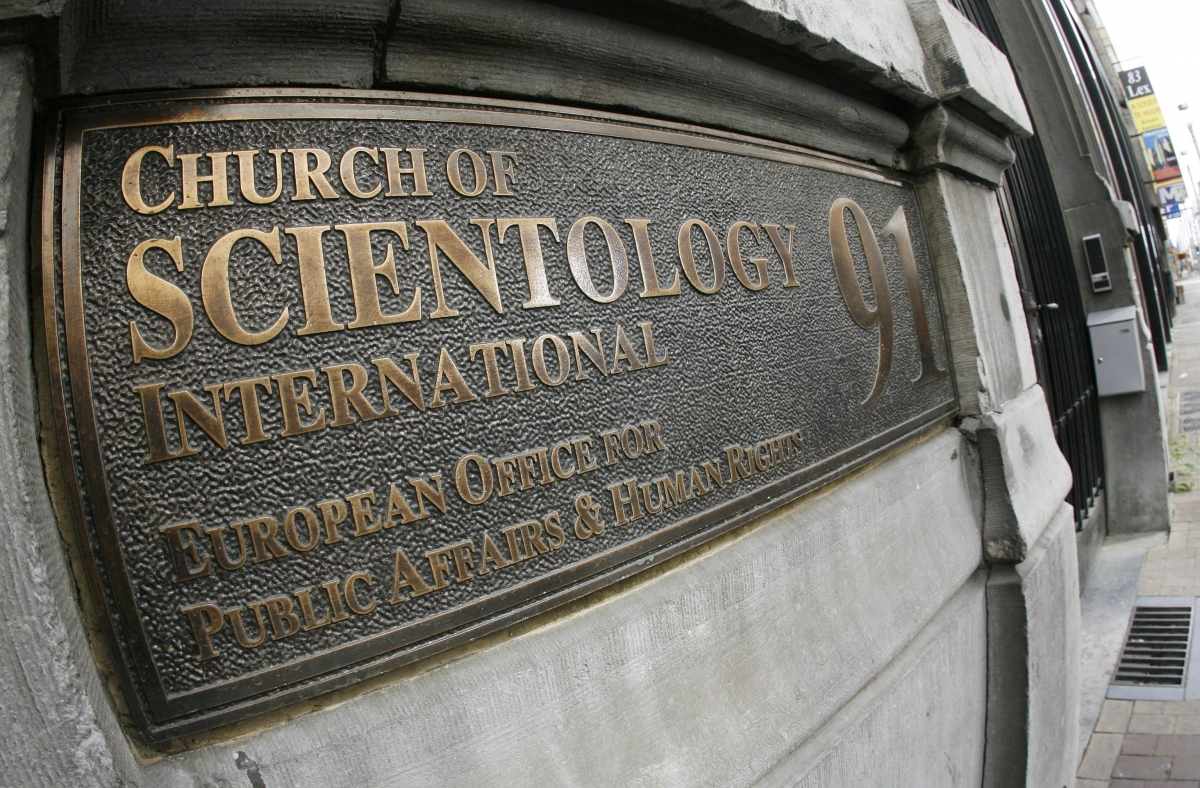
Followers and former members of Scientology appeared before a Belgian court, as the church is facing a possible ban from the country on a series of charges including fraud, extortion and illegal practice of medicine. Judges in Brussels heard about the church's financing and rituals on the first two days of the trial that opened earlier in October at the end of an 18-year investigation.

A defendant said worshippers paid up to €2,000 (£1,440, $2,200) for a 10-day "purification programme" they believed helped them become a better person. "It involves sauna sessions, plenty of sleep, running, healthy eating and taking supplements," the man, who chaired the Scientology's Belgian branch in the early 2000s, told the court, La Libre newspaper reported.

The vitamin supplements were in particular the focus of allegations church members illegally provided medical treatments without the necessary qualifications. Purification programme attendees were given a package of vitamins by another defendant who told the court she prescribed them according to the writings of Scientology founder L Ron Hubbard and "her own readings".

"I had read that vitamins themselves are never a problem. It's when they are badly balanced that issues may arise," she told the court according to 7sur7 news website. She denied her activity was consistent with practising medicine.

The hearings revealed the church kept files detailing sanctions imposed on its adepts for minor breaches such as delays and discourtesy. A bonus system was also in place, which, according to presiding judge Yves Régimont, considered reporting deficiencies of fellow Scientologists to church authorities a good deed.

The proceedings took a bizarre twist when the former chairman, identified only as Vincent G, won a reprimand from the judge for telling the court he received orders from Hubbard, who died in 1986. "You received your orders from the afterlife, then," the judge said. "We speak French here, not scientologist," the judge snapped later at an evasive reply, La Dernière Heure reported.

Earlier, the congregation's former treasurer said Scientology Belgium made about €5,000 a week from book sales and classes. The woman said 9.5% of all income went to the mother church in Los Angeles, while 3% was transferred to the European head office in Copenhagen, according to Le Soir newspaper.

A total of 11 church members and former members as well as two church bodies are on trial on a series of allegations, including running a criminal organisation and violating privacy. Scientology Belgium denied the charges and, in a statement, accused authorities of abuses during the investigation.

The case came as actress Leah Remini, a former Scientology member, spoke out against the church and its most known follower, actor Tom Cruise in an interview with ABC. "Being critical of Tom Cruise is being critical of Scientology itself," she said. "As time goes on, you start to lose touch with the real world. The mindset becomes 'Us against them'," she said of what critics describe as a cult.

http://www.ibtimes.co.uk/scientology-belgium-trial-sets-off-vitamins-personal-files-purification-saunas-1525990

Indian utopian sect under scrutiny as religious tolerance debate rages

Rupam Jain Nair and Frank Jack Daniel
Reuters
October 26, 2015


Sananta Sanstha ashram

PONDA, India (Reuters) - The arrest of a member of India's Sanatan Sanstha sect following the murder of a well-known atheist has prompted renewed calls from some politicians to ban the Hindu group, as concerns grow the country's tradition of religious tolerance is being eroded.

Opening the doors of its Goa headquarters to foreign journalists for the first time this month, Sanatan Sanstha told Reuters it had nothing to do with the February murder of Govind Pansare, and its mission was opposed to violence in all forms.

Instead, its members are preparing for the advent of a divine Hindu kingdom in India within eight years.

"The aim is to prepare people for a divine kingdom, or Ram Rajya, by 2023," said Durgesh Shankar Samant, a founding member of the group that believes India's secular democracy has failed. "Right now an awakening is going on."

The movement, which claims thousands of followers and produces newspapers, books and websites, is one of a number of Hindu groups that are growing in prominence.

Emboldened by the return to power of the mainstream Hindu nationalist Bharatiya Janata Party (BJP), the groups have taken up causes with renewed vigor, including the protection from slaughter of cows they consider to be sacred.

In recent weeks, three Muslims were killed for allegedly killing cows; one of the murders sparked violent protests in the Muslim-majority region of Kashmir.

And in attacks reminiscent of a spate of killings of secular bloggers in neighboring Bangladesh, Pansare was one of three prominent Indian atheists to have been slain, two this year.

Pansare was known for attacking discrimination, superstition, caste politics and religious fundamentalism.

President Pranab Mukherjee, an apolitical figurehead, has publicly voiced concerns that multi-faith India, dominated by Hindus but with sizeable minorities including around 180 million Muslims, is becoming less tolerant.

Prime Minister Narendra Modi has spoken against the lynching by a Hindu mob of a man near Delhi, and more generally called for peace between Hindus and Muslims.

But critics said the BJP leader's response was too slow at a time when religious polarization could favor his party as it fights an important state election.

At the Sanstha's retreat, a three-storey white building that overlooks a lush valley, volunteers known as seekers work at flat screens on a suite of publications.

The content produced by volunteers in Goa, mostly young women, covers everything from the length of hair and style of clothes to best capture cosmic vibrations, to black energy emitted by Western birthday cakes.

It also strays into the political.

After the 2013 murder of Narendra Dabholkar, an atheist who founded a group of self-styled rationalists, its daily newspaper published an article calling his death a "blessing from God."

"Life and death are a matter of fate. Every person gets the result of his actions," the paper wrote.

Neither Sanatan Sanstha nor any of its members have been implicated in the murder.

The sect was founded in 1990 by hypnotist Jayant Balaji Athavale, who followers say is an incarnation of the Hindu god Vishnu.

Seekers have spirituality measured in percentage terms, and once they reach 70 percent they can call themselves saints.

Sanatan Sanstha hopes to open a university to teach people this technique, and uses electronic instruments to photograph "auras" that Samant said were able to strengthen around people and objects in line with the group's version of Hindu practices.

Athavale, reportedly in his 70s, is rarely seen in public, although the group does print his pronouncements.

Hindu Janajagruti Samiti, a political organization drawn mainly from Sanatan Sanstha ranks, last year published Athavale's thoughts on slaughtering cows.

"Hindus, who are indifferent towards cow-slaughter and attacks on 'Gou-rakshaks' (saviors of cows), are not fit to live," Athavale is quoted as saying. (http://www.hindujagruti.org/quotes/39720.html)

GROUP UNDER SCRUTINY

Public scrutiny of Sanatan Sanstha increased after police arrested one of its workers in September as a suspect in the February shooting of Pansare.

The worker, Sameer Gaikwad, has not been charged and Sanatan Sanstha says he is innocent.

India's counter terrorism National Investigation Agency (NIA) has named another follower of the group, fugitive Rudra Patil, as chief suspect.

Patil was already on the NIA's "most wanted" list in connection with bomb blasts near a religious procession in 2009.

Hindu Janajagruti Samiti spokesman Ramesh Shinde said Patil should turn himself in.

Sanatan Sanstha says the group has not been named by courts, it opposes violence and its members have been unfairly accused.

But brushes with the law and sometimes outspoken publications have triggered calls for successive governments to ban it, including fresh demands from politicians from the southern state of Goa and neighboring Maharashtra.

Junior home minister Kiren Rijiju said the last government chose not to ban the group, and that Goa, Maharashtra and Karnataka had not presented him with new evidence to act on.

"Any organization that is perpetrating any kind of violence ... you've got to be concerned about, but to ban an organization, you have to have a basis," he said.

(Additional reporting by Shilpa Jamkhandikar in Mumbai; Jatindra Dash in Bhubaneshwar; Sandhya Ravishankar in Chennai; Editing by Mike Collett-White)

http://news.yahoo.com/indian-utopian-sect-under-scrutiny-religious-tolerance-debate-211650796.html

THE SOUND OF DOOMSDAY IN AMERICA: HOW A CULT LEADER MADE A CHERISHED TAPE FREAK CLASSIC

Chris Kissel
Vice
October 26, 2015

 
Elizabeth Clare Prophet

“Together,” a man's voice intones. And then an onslaught of voices. Two are in front, a man and a woman; if they’re actually saying words, they're impossible to decipher. It's just syllables rolling together, the sound of lips flapping and tongues rolling over a single note. There’s something insectine about it, its nasality and its density, like a fog of cicadas descending. Occasionally—every few minutes or so—both of the leads stop to take a breath. You can really hear the congregation then: hundreds, maybe thousands of voices droning in a cavernous room, every tone and pitch in the musical spectrum. It is a great, heaving cloud of voices. 

I’ve heard mantras and chants before but this sounds different. It’s insistent, for one thing. The energy is turned outward, instead of inward. And the intensity jacks upward every five minutes or so, the voices all become louder together and raise pitch a half-step, like a phalanx of semi trucks shifting up at the same time. After 27 minutes of these intensifications, the chanting is fast, high-pitched, the kind of thing that makes your eyeballs want to jump out of their sockets. The image in the mind is a congregation in the thousands, knelt down, eyes rolled back, filling their lungs with their intentions. What are they asking for? Then, abruptly, it stops. “Please be seated,” says the woman.


I looked it up right after the first time I heard it—on a late night show on WFMU, New York’s venerable free-form radio station—and located it online right away. It’s an old recording of the Church Universal and Triumphant, from an album entitled Sounds of American Doomsday Cults, Vol 14, released by a mysterious imprint called Faithways International. The cover, which had been copied and posted online along with mp3 files, is austere, an obvious homage to the old Smithsonian Folkways releases—a picture of a lighthouse, lime green and pink background. As far as anyone on the internet knew, there were no Sounds of American Doomsday Cults Volumes 1 through 13. The label, according to the internet, had only one other release to its name: a collection of original tunes by Aum Shinrikyo, the cult that killed 12 Japanese subway commuters in a terrorist attack in 1995.

History and half-researched mythology blend together in the internet’s accounting of the Church Universal and Triumphant recording’s origins. CUT was a group in rural Montana that was at one time centered around Elizabeth Clare Prophet, who believed herself a reincarnation of Marie Antoinette and Guinevere who could channel a pantheon of saints that included Jesus, Hercules, and Shiva. Pictures show a woman with a perm and a dead-eyed grin—perhaps the most homespun-looking doomsday cult leader of all time. It was Prophet's voice I’d heard leading the chant. The recording originated sometime in the mid-80s. No one knew who had made the recording. No one knew who Faithways International was. No one knew where Sounds of American Doomsday Cults, Vol. 14 had come from. I reached out to the DJ who’d played it on his show—they were just some mp3s he’d found online a few years ago, he said.

I downloaded them. The entire recording is plainly amazing. Sitting through the entire 27-minute chant is a rush, consuming and burying, like being swallowed up by human voices. It has a touch of the supernatural; it exists somewhere beyond music. It’s thoroughly of its own making, science fictional. The rest of the recording is maybe even more fascinating: an entire Church Universal and Triumphant service dedicated to “the tackling of the beast and the dragon—the momentum of rock ‘n’ roll.” Mostly, it’s Prophet’s voice, preaching about the sexual perversion of rock music, saying outrageous things that are both hilarious and truly inspired. Chanting alone, she prays for those “subverted by the syncopated rhythm of the fallen ones and the misuse of the 4/4 time.” She “calls on the electronic solar rings of the great central sun.” She plays the music video for Tina Turner’s “Better Be Good to Me." The man, when it’s his turn, "calls forth the sacred fire” in nasally solemnity on a list of 71 contemporary rock and roll celebrities including Michael Jackson, Kenny Loggins, the Alan Parsons Project, “Cyndi Looper,” and “Scooby Dooby Doo."

I felt like I’d found a buried amulet. There was something slightly morbid and voyeuristic about my interest—these are, after all, real people’s prayers. I wanted to know what I was hearing; what the room looked like; what they were saying. And who was this shady Faithways International label that put the album out? With slightly nosy intentions—like flipping through the pages of someone else’s family bible—I tried to find where it had come from. 

I was joining a group of curious listeners, sound artists, and avant garde music obsessives who have been fascinated by the recordings for decades. The spoken parts of the album—the parts about Tina Turner and Cyndi Looper—had been a hit for years with underground DJs and experimental composers. Genesis P-Orridge of Throbbing Gristle once said they brought it with them every time they DJed. Negativland, dissident sound collagists and copyright crusaders who’d once thrown down with U2, sampled the “sacred fire” rock ‘n’ roll-call on a piece called “Michael Jackson” way back in 1987. Fatboy Slim sampled it in 1996 and also called his piece “Michael Jackson.”

Negativland's Mark Hosler said they found the original tape of the Church Universal and Triumphant service back in the mid-80s. It was titled “Rock ’n’ Roll Exposé #1,” copyright Church Universal and Triumphant, Inc. This wasn’t the Sounds of American Doomsday Cults CD, but the source material.

"It sure wowed us back then,” Hosler told me. “[It] cried out to be used.” But it wasn’t Hosler who found the tape—he said it was either band members Ian Allen or Don Joyce. Could either of them have been behind Faithways International? We might never know—they both sadly passed away earlier this year—though it doesn’t seem likely.

A hard copy of Sounds of American Doomsday Cults, Vol. 14, which was issued by Faithways in 2000, is not easy to find. It’s out of print; every once in awhile, someone puts a CD or vinyl copy of it on sale for $100 (outside my writerly budget). I called Aquarius Records, the oldest record store in San Francisco, the city where everyone who discovered the recording seemed to have found it. But since the CD is out of print, the store doesn’t carry it anymore. And none of the people I talked to there knew where it came from (though one clerk said he still subscribes to new recordings from the church—they still put them out on CD-R and ship through the US Postal Service—because “they’re awesome”).

I eventually found a copy on the internet’s back pages—a guy named Earl Kuck was selling them on his website, Tedium House. He told me he bought a box of the CDs at a record fair in San Francisco ten years ago. He sent it to me in a package along with a wooden snake, the last page of an angry hand-written note, and a copy of Le Carillon by the Autumns. The packaging of the CD is simple—a pink booklet with two reprint news articles about the cult and nothing in the way of credits.

Kuck said he didn’t know where the CDs he bought had come from, but he thought someone in Australia had made them. He connected me with another San Francisco friend, a guy named “Seymour Glass” who’d reviewed the “Rock ’n’ Roll Exposé” version of the tape for his underground zine Bananafish. “Glass" had an experience similar to mine when he heard it. “The first time I listened to the tape, I sat staring at my stereo with mouth agape for the duration,” he wrote. “I returned to the bookstore and bought every copy they had. I’ve made more recordings of this tape than any other.”

I managed to get a hold of “Glass” (the name on his email was “Maria Estevez”) who confirmed he found the tape at a since-shuttered bookshop in San Francisco, which led him to lament "the plague of start-ups and luxury condos” in the city.

"I have a long history of exploiting (I guess you could say) these recordings I love,” he wrote me, "and have been told numerous times that I am suspected as, if not assumed to be, the disc's midwife. It's nice to be remembered."

Now, I had it on background that “Glass" and Kuck are the same person and that neither name (surprise!) is real. It would make sense that they/he were the one/s who put together the Doomsday Cults CD from the original tape. Both claimed they didn’t know its origins, which was, of course, in keeping with the tone and tenor of this whole affair. I became convinced—and still am— these merry pranksters were, in fact, the “midwives” of the CD; that they'd taken the old tape and cleverly repackaging it. But they’d never tell me if they did, so I kept poking around for good measure. (I told Kuck I had heard him and "Glass" had never been seen together in the same room. He replied: "He and I are in the same room together frequently. People just aren't observant enough to notice.")

Brian Turner was, as far as I could tell, the first WFMU DJ to spin Doomsday Cults 15 years ago, when it was first released by Faithways. He’s also the music director. I was sure he would have some insight. He didn’t know where it came from, but he said that when it first came out in 2000, he’d gotten his own copy in the mail. That’s not that weird for him—he’s the music director at a radio station, after all—but when he opened the package, he was startled to find he was thanked by name in the credits. He ventured a couple guesses about who put it out. "Elizabeth Clare Prophet has been touted by weird sound connoisseurs like [Gregg] Turkington, [Germs and Ariel Pink drummer] Don Bolles, and the ilk,” Turner told me. Otherwise, he had no clue.

Gregg Turkington is famous in the comedy world for creating the Neil Hamburger anti-comedian character. He’s also Australian. I felt like I might have been on the right track. I reached out to him right away, but got only a brief message in reply: "I had nothing to do with that record,” he wrote. “I have no idea who actually was behind it… though if I recall correctly, I'm thanked in the liner notes.”

I got a reply back from Don Bolles right after. “No,” he wrote. “But my name was on it.” Elizabeth Clare Prophet laughed at us from beyond the grave.

In 1875, a Russian immigrant in New York City named Helena Blavatsky formed the Theosophical Society with her friends. Blavatsky claimed to communicate with a host of spirits, including Jesus. The society sought to unite world religions into a single belief system, and by the time she died in 1891—of influenza, at the top of a growing organization, besieged with accusations of fraud—she’d launched Theosophical Society enclaves in India, Europe, and Russia.

Forty years later, Theosophy had made headway in America—including to Chicago, where Guy Ballard, a Blavatsky acolyte, founded the I AM movement in the early 30s with his wife Edna. Ballard, like Blavatsky, believed he could communicate with a spiritual dream team, whom he referred to as the Ascended Masters and expanded to include Buddha, Confucius, and the Virgin Mary. (He believed himself to be the reincarnation of George Washington.) The Ballards led their growing membership through marathon “decrees”—composed prayers shouted out loud by the entire congregation during services. In 1939, Ballard died suddenly, and immediately afterward, Edna and their son Don were both indicted by the federal government for mail fraud (which they fought and won before the Supreme Court in 1946). The I AM movement, like the Theosophy Society, had sprouted many groups of followers.

One of those followers, Mark L. Prophet (his honest-to-God birth name) founded the Summit Lighthouse in 1958. Like Ballard, Prophet claimed to communicate with venerable ghosts (he adds Hercules and Shakespeare and many more to the list). Like Ballard, claimed to have been reincarnated (in his case, Sir Lancelot and Henry Wadsworth Longfellow); and, like Ballard, Prophet's wife Elizabeth Clare could chat with Ascended Masters, too.

The New Age movement of the 70s provided a glut of washed out and disenchanted hippies that swelled the Summit Lighthouse's membership rolls. Like the Ballards before them, the Prophets wrote decrees for the congregation to chant, but with less shouting and more of a controlled drone. During services, the Prophets would specify an intention—for example, the judgment and destruction of rock music—and the congregation believed their decrees, if they were forceful enough, could make the intentions come true. They could turn the tides of history without going outside the walls of their sanctuary. (In other words, what I’d heard as music, church members considered serious prayer.) Sometimes, while the congregation decreed, Elizabeth would swing an actual steel sword over her head, sometimes for hours. The faithful called her “Guru Ma."

When Mark Prophet died in 1973, Elizabeth moved the church to Los Angeles and renamed it Church Universal and Triumphant. In 1986, as she amassed members and money, she moved again, to a 30,000 acre ranch just north of Yellowstone National Park she bought from Malcolm Forbes.

In these days, Elizabeth Clare Prophet is on fire. She’s built the Church Universal and Triumphant into a religion with something like 30,000 adherents. She’s leading marathon services to 2,000-or-so believers who live with her in Montana. And she’s starting to get messages from the Ascended Masters about doomsday. She shifts the church into full-on prepper mode. The church commenced building underground fallout shelters big enough to house 750 people, started stocking weapons, and stored thousands of gallons of gas in giant tanks.

In the early 1990s, she told followers that Soviet nuclear missiles would fall on the United States at midnight on March 15. Local pharmacies reported being sold out of medicine, Band-Aids, bottles of water; banks said customers were lining up to close their savings accounts. "It's bizarre,” a bank official told the Los Angeles Times in March. "They don't want to wait, they want it now, and they want it in cash."


One night near the apocalypse, one of the church’s members, packing up his things, had his own kind of religious epiphany. It centered on the band Rush. 25-year-old Sean Prophet, only son of Elizabeth and Mark, often helped his mother spread her anti-rock and roll propaganda, but he nursed a secret: He loved prog rock.

That night, Sean impulsively put on his headphones and listened to Power Windows—for research, he told himself—and was surprised to find himself moved to tears. He listened to at least five more Rush albums that night. Later, he wrote, "the idea that such talented musicians could be 'fallen ones' as the church taught just didn’t add up. They felt like brothers to me.” The experience changed him. He decided he’d stick around to see if the world did in fact end (never hurts to hedge your bets) and if it didn’t, he was out.

On the night of March 15, hundreds of adherents crouched in the cult’s homemade shelters, amid fetid buckets of human waste (the plumbing wasn’t finished yet). The sun set on the compound that night and (surprise!) rose again the next morning. Devotees started to pack up and go home. Sean and his family cut their final ties with the cult in 1993. (Incidentally, one of Sean's sons, Chris, grew up to play drums in Horse the Band.) In 1999, Elizabeth stepped down from the church—she’d developed Alzheimer’s—and died in 2009. The Church Universal and Triumphant does still exist, albeit diminished both in its scale and mission.

I like Sean. He’s affable, doesn’t mind digging into the details of the church, and seems as inspired now, as a radical free-thinker, as he ever could have been the child of a cult leader. We talk about growing up in the cult. I couldn’t wait to ask him about the decrees.

“I haven’t talked to anyone about this in years,” he told me. It turns out, Sean is the one who recorded the “Rock ’n’ Roll Exposé #1” tape—the one that Seymour Glass and Ian and Don from Negativland found at local junk stores. The one that someone out there had released as Sounds of American Doomsday Cults, Vol 14. In the 80s, Sean had headed a 25-person team that made audio and video tapes to mail to devotees scattered around the world. The team cranked out tapes like “Rock ’n’ Roll Exposé" on a weekly basis.

"We produced more ‘commercial' recordings of decrees that were meant for beginners,” Sean told me. "We duplicated tens of thousands of those. They were slow and clearly audible. The high speed version of the decree on this [Sounds of American Doomsday Cults] CD would have been from one of the smaller mailings, probably produced in a quantity of a few hundred copies.” He said the service documented on the CD was fairly ordinary—Elizabeth Prophet spent lots of time decrying rock music and leading decrees meant to destroy it.

I ask Sean what he thinks of the 27-minute decree—the one that first stunned me on the radio, the one that makes my neighbors peer curiously into my living room window, the one I fall asleep to sometimes. I confessed to him how much I enjoyed it. “If you had to listen to that for 20 years, you wouldn’t be so enamored of it,” he said flatly. "As a vocal novelty, it’s interesting."

"But you’ve got to realize that a lot of people spent years of their lives thinking they would change the world with these sounds, and it was a massive waste of energy,” he continued. "There was a human toll taken based on these ideas. When you start to believe that intentions themselves can lead to a change, you’re lost. That’s what the decrees were about. And it sickens me to think people are still doing these. I can totally appreciate how this would be very interesting to avant garde and sound collages. But these were real people going down the wrong path. A lot of them, children [for example], against their will. It’s destructive. It’s not harmless."

(The decrees aren’t gibberish, either, Sean reveals to me. A sample line no untrained ear would ever pick out: "O Hercules thy splendid shining, shatter failure and opining. Open the way in love divining, seal each one in crystal lining.”)

I know what Sean Prophet says is true, and in fact, it articulates something I’d been struggling with. It’s not just voyeuristic, listening to these old tapes—it’s tapping into a world I know nothing about, extracting a 27-minute sample, and burying myself in it like it’s any old experimental recording. There’s a world beyond the recording I'll never grasp; a web of believers who were (and perhaps still are) enraptured, mislead, and manipulated. I feel in some way that it’s unfair to dig into the recording without fully appreciating its origins. It’s a door I’m not ready to open. But I can’t just stop my fascination with the tape, either.

I think back on the conversation I had with Mark Hosler of Negativland—a pioneer of this tape, in a weird way as much an expert as anyone. Hosler and other artists are able to appreciate these sounds as wholly independent—as much a product of the geeks who’ve dubbed it thousands of times as it is of a secluded doomsday cult in Montana.

“We have a true love and tender appreciation for all the weird things we have collaged in our work over the last 35 years, this tape included,” Hosler told me. "It's never a patronizing or sneering or hateful thing, though perhaps some listeners mistakenly guess otherwise. It's more like amazement and stunned admiration that humans being can be so incredibly odd and unusual."

Chris Kissel is on Twitter - @chris_kissel

Written by: Chris Kissel
Oct 26 2015
Tags: Sounds of American Doomsday Cults, Vol 14, Church Universal and Triumphant, Rock ’n’ Roll Exposé #1, Elizabeth Clare Prophet, cassettes

http://noisey.vice.com/blog/the-sound-of-doomsday-in-america-how-a-cult-leader-made-a-cherished-tape-freak-classic

Half-Brother Arrested for “Witchcraft” Murders in Pensacola

J.B. Biunno and Debbie Williams
WKRG
October 27, 2015


On the left is the Oct. 27 mug shot of Wayne Hartung, who is charged with the triple murder of his family in Pensacola. On the right is an older photo of Hartung alongside his two half-brothers, John and Richard, who he is accused of killing.
On the left is the Oct. 27 mug shot of Wayne Hartung, who is charged
with the triple murder of his family in Pensacola. On the right is an
older photo of Hartung alongside his two half-brothers,
John and Richard, who he is accused of killing.

Half-brother of the Smiths arrested and charged with triple homicide

News 5 has learned that authorities have made an arrest in the ritualistic “witchcraft” murders that left a family of three dead in Pensacola this summer.

Wayne Hartung Sr., 58, the half-brother of the three victims found savagely murdered in late July has been charged with the triple homicide.  News 5 is told a plethora of DNA evidence required a long time to process, which is why the arrest comes approximately three months after the bodies were discovered.

As News 5 reported this summer, 77-year-old Voncile Smith and her two sons, 49-year-old Richard Thomas “R.T.” Smith and 47-year-old John William Smith, were found dead by deputies conducting a welfare check at their home on Deerfield Drive.

“We’re relieved an arrest has been made,” the Smith family told News 5 on Tuesday. “We are looking forward to prosecution.”

Hartung was there for the Smith’s funeral in August, seen speaking to other family members.

The story of the triple homicide went national after Escambia County Sheriff David Morgan famously said at a press conference that “witchcraft” was to blame for the murders.

According to authorities, all three bodies were found beaten with claw hammers. All three had their throats slit, and Richard Smith was found with a gunshot wound to the head.

However contrary to Morgan’s original report, investigators are now telling News 5 that the bodies were not found laid out in a ritual pattern. All three bodies were discovered in separate rooms of the house, sources told News 5.

Family members tell News 5 that Hartung “loosely” practiced some form of witchcraft or Wiccan religion, and kept at least one Wiccan book in his office.

Richard Smith was described by Sheriff David Morgan as a “critical member” of the Department of Homeland Security. Morgan had to communicate with several national agencies to ensure his investigation didn’t pose a threat to national security.

John Smith worked at a local Walmart. Their mother, affectionately known at “Bonnie,” lived at home with both her sons.

Authorities said in August they had gathered evidence that led them to believe witchcraft was somehow involved in their deaths, saying it was a “ritualistic” act. Investigators noted that their murders occurred near the night of a blue moon, which is heavily referenced in witchcraft lore, and occurs once every three years.

At the August press conference, investigators say they spoke to a person of interest in the case, but didn’t release a name or photo. They did say, however, the person of interest was a white male with ties to a faction of witchcraft. Authorities are yet to confirm whether Hartung is the person of interest they had interviewed.

Many other details pertaining to the murders were considered extremely odd by investigators. The Smith family had a safe containing $7,000 in their home, but the suspect didn’t take anything of value in the aftermath of the crime, they said.

http://wkrg.com/2015/10/27/breaking-half-brother-arrested-for-witchcraft-murders-in-pensacola/

Homeopathy Is a Bitter Sugar Pill

Yvette d’Entremont
Slate
October 27, 2015


A pharmacist in the homeopathic department of a pharmacy in Germany in 1967.
It won’t cure what ails you, but it can get you drunk.

“Relief of flu-like symptoms.” “Safe, non-habit forming.” “Flower essences to calm down your unruly pets.”

With claims like these, homeopathic wonder products must be good, right? These are some of the claims made by the purveyors of homeopathy, but what can homeopathy actually cure?

Low blood sugar and dehydration. Also, some homeopathic products make a fabulous margarita.

So what is homeopathy? The practice was proposed in 1796 by Dr. Samuel Hahnemann. He wasn’t unintelligent, but he suffered from living at a time before modern technology. He spoke 10 languages and objected to many ancient medical treatments, including the practice of bloodletting, but he also suggested that coffee was responsible for many diseases. (As I sit here with my pumpkin spice coffee, I seriously question the man’s grasp of reality.) It was that skeptical mindset of questioning 18th-century medical treatments that led Hahnemann to propose his new system, homeopathy, based on his “like cures like” theory. He alleged that if a substance could produce the symptom an ill person was experiencing, an extremely small dose of that same substance could cure the symptom. Furthermore, he reasoned, the more dilute you made a preparation of the substance, the stronger its ability would be to treat those symptoms.

Instead of following in the spirit of Hahnemann’s work and questioning ancient medical practices as we so often do in science, homeopaths today are continuing where the ancient medical practitioner left off. Modern homeopaths start by diluting a substance in water, then taking a hundredth of that solution and diluting it further, than taking a bit of that solution and diluting it in even more water until the original substance is exceedingly dilute. How dilute? In most cases, dilutions are performed until there is no measurable active ingredient still present in the medication.

You might think that a tincture of tap water would be medically inert. But homeopaths propose that their treatments work because water has a memory. Really. Some homeopathic remedies are sold in pill form. In such cases, transferring the diluted liquid (again, pure water) onto a sugar tablet and then letting it evaporate works because the sugar has a memory of the water that has a memory of the chemical.

Yes, a sugar cube with no chemicals other than sugar will heal you.

I’m a scientist. I’m really not into this whole magic medicine thing, so let’s start dismantling this, shall we?

Does homeopathy work? No. Water does not have a memory because water is just another chemical. The most it’ll help with is dehydration.

Homeopathy supposedly works because the sugar has a memory of the water that has a memory of the chemical.

Some people have felt relief from homeopathy, but feeling relief is not the same as proving that something is scientifically valid as medication. The placebo effect is a very real thing, and that’s all homeopathic medications are: expensive placebos.

Once in a while, a preparation isn’t so dilute that it’s pure water, and you get some active ingredients. But this can lead to deleterious effects because substances like arsenic and belladonna may be present in the medication. (Homeopathic products are lightly regulated in the United States.) Every major meta-analysis has shown that homeopathy is no more effective than a placebo.

My biggest concern with homeopathy is the labeling. I’m a scientist and science writer who wants consumers to understand what they’re buying, but what do any of these homeopathy labels mean? “200C.” “10x.” “3C.” “Humulus lupulus.” “Arsenicum alb.” “Natrum Muriaticum.” What language are they even written in? Why do natural health advocates demand that products with GMOs be labeled but ignore that homeopathic products are labeled in another language and without clear denotations of the quantities of active ingredients? If you want further proof that this is true, pick up any homeopathic medication and try to decipher how many grams there are of just one active ingredient. Odds are that you will not be able to conjure a clear answer by simply reading the label. Furthermore, in most cases, there probably isn’t much more than sugar in your pill.

With claims like these, homeopathic wonder products must be good, right? These are some of the claims made by the purveyors of homeopathy, but what can homeopathy actually cure?

There’s one exception to the rule that homeopathic products are basically sugar and water. Many of them list alcohol as an “inactive” ingredient. Because labeling laws on homeopathy are so different from regulations on real medicine with proven ingredients, the only actual drug in a bottle of homeopathic medicine—ethanol, the same active ingredient in vodka—doesn’t have to be listed as a drug. This is not an isolated case.

CVS sells a store-brand homeopathic constipation medication labeled “safe and non-habit forming.” It is conveniently 20 percent ethanol, meaning it is a 40-proof hard liquor and saving you the trouble of hitting the liquor store. Because who doesn’t enjoy doing shots when they’re trying to beat constipation?

Being the scientific type, I created a short video to explore the claims made on the bottle. The supplies cost me about as much as a bar tab: $36. In the video, after describing the product, I popped open and downed each of the bottles (for 6 ounces total of the product). Twenty minutes later, I was back on camera to take a breathalyzer, revealing my blood alcohol level was 0.11 percent. I got legally drunk from a CVS-brand homeopathic remedy … and then I was visibly drunk and saying more ridiculous things than usual on camera, because YouTube is built on people rambling like drunken idiots. Well, that and videos of cats.


Watch Video


I did not get carded. I also, ahem, did not experience any of the intended effects of the medication.

Additionally, after I contacted NBC about this discovery, a reporter investigating the story sent a visibly underage person to purchase the product. The 15-year-old, slightly embarrassed to be buying constipation medication, was able to purchase a shot of hard liquor on camera.

When I contacted CVS for comment about this, its defense was to say that the company abides by current regulations for homeopathic products:

Homeopathic products are legal under federal law and regulated by FDA. The FDA's Compliance Policy Guide provides guidance on the regulation of [over the counter] and prescription homeopathic drugs and delineates those conditions under which homeopathic drugs may be marketed in the U.S. 

I believe that’s lawyer-speak for ,“It’s legal, suck it.” However, the company’s employee handbook states that “on and off the job, CVS Caremark expects all colleagues to comply with the law,” presumably including laws against selling alcohol to minors.

Which leads one to question: How the hell is this legal?

I’m far from the only one who feels this way. With mounting pressure from the public, the Food and Drug Administration held meetings earlier this year to review how homeopathy is labeled in an attempt to give consumers more accurate information. Reform would standardize the labeling and make it easier for consumers to glean accurate information about how they’re deciding to manage their health.

Can homeopathy help you feel better? It can make you think you’re feeling better, but I implore you to think critically about the decisions you make with your health and your wallet. Hahnemann may have birthed the field, but he could be considered a skeptic by our standards and might even question homeopathy today. Consumers deserve to give homeopathy that same degree of skepticism. Consult with your doctor and choose proven, science-based remedies rather than overpriced and poorly regulated placebos. Homeopathy is quite the bitter sugar pill to swallow, especially when you find out you’ve just been served an overpriced, watered-down shot of cheap vodka.

Anyway, I much prefer bourbon.

http://www.slate.com/articles/health_and_science/medical_examiner/2015/10/homeopathy_contains_alcohol_and_can_be_sold_to_minors.2.html

Oct 27, 2015

Ultra-orthodox Jews are using WhatsApp to defy their rabbis' internet ban

Amar Toor
The Verge
October 27, 2015

Like most people, Moshe spends a lot of his time messaging friends on his smartphone. Unlike most people, he can’t openly talk about it.

As a Hasidic Jew living in Brooklyn, Moshe’s online activities are extremely limited. His ultra-orthodox sect has long banned internet use, on the grounds that exposure to the secular world would lead to moral corruption, sexual promiscuity, and infidelity. The insular community has allowed for some exceptions, acknowledging that smartphones and computers are now essential for business, though its leadership still requires members to install web filters on their devices, blocking all social media services and all but a few whitelisted websites. Internet use among children remains strictly forbidden.

Moshe, like many other Hasidim, regularly skirts these rules with WhatsApp — the popular messaging application that Facebook acquired for $19 billion in 2014. On his second, unfiltered smartphone, he uses the app to share news articles and local gossip across several group chats, some of which include up to 100 members.

WhatsApp has become popular among the Haredi community — an umbrella term for ultra-Orthodox Jewish sects that include the Hasidim. For Moshe and other Hasidim, the app provides a window into the outside world, and a forum for candid debate and discussion. In their view, it’s a closed network that’s not explicitly connected to the open web. For Hasidic leaders, it’s the latest threat to centuries of tradition and insularity.

Earlier this year, a forum of leading Haredi rabbis in Israel issued an injunction against using WhatsApp, which they described as "a great spiritual danger." A 2014 article in a Yiddish-language newspaper pointed to WhatsApp as the “number one cause of destruction of Jewish homes and businesses," citing rabbis who oversee divorces. Hasidic leaders have yet to fully ban the app, though they only allow it to be used with strong filters that block images and video. Those found to be using non-filtered phones could be ostracized from the community and have their children thrown out of ultra-Orthodox schools.

Hasidic leadership has in recent years mounted a concerted campaign to control the web. In 2012, ultra-orthodox leaders held a massive anti-internet rally at Citi Field baseball stadium in New York, where they called for tighter restrictions on internet use. Ultra-orthodox rabbis have effectively limited outside media in the past, with edicts against television and radio, and tight controls over Yiddish-language newspapers. But the internet has proven more insidious, and with the rise of smartphones, it’s become even harder to control.

Ysoscher Katz, a former ultra-orthodox rabbi, says the community’s insularity stems from the belief that strict adherence to tradition is the best way to preserve Jewish identity. "The idea is that once you adopt contemporary names, contemporary clothing, and contemporary language, then eventually that’ll lead to assimilation and dissolution of the Jewish community," says Katz, who grew up in the Hasidic sect but eventually left to become a rabbi and teacher at a more progressive orthodox community in New York.

He recalls Hasidic leaders "aggressively fighting back" when the internet began gaining traction more than a decade ago, with strict bans on household computers, and those efforts have only amplified as technology has evolved. "I would lie to you if I said I don’t sympathize with their concerns," Katz says. "They’re very worried and very afraid. And very anxious."

So far, the community has policed smartphone use through a small group of approved filtering companies. Whitelisted sites and services are determined by local rabbinical boards, and the parameters can change from one community to another. But the guiding principle is that if it’s not business-related, it’s blocked. "The assumption is that any website could potentially lead to something inappropriate, or something dangerous or titillating," Katz says. "So the starting point is very low and the bar is very high."

With WhatsApp, Haredi leaders face a new dilemma. At its core, the app is a messaging service, and ostensibly permissible for business use; but it also incorporates elements of social networks, which remain strictly forbidden. And with more community members, like Moshe, secretly carrying unfiltered phones and sharing links from the wider web, it’s become nearly impossible to keep the outside world at bay.

Samuel Heilman, a professor of sociology at Queens College CUNY who has spent his career studying contemporary orthodox Jewish communities, describes Hasidic WhatsApp groups as vibrant forums where users share "everything from jokes to news accounts." He says that the group’s moderators are very "plugged in" to the news cycle. Last month, for example, Heilman first learned of the deadly stampede at Mecca through one of the group chats he was invited to join.

"There’s nothing now of the outside world that doesn’t find its way into these Haredi enclaves," he says. "And so this represents a real threat for their insularity."

Last week, Moshe added me to a few of the dozen WhatsApp groups he created. One is devoted to business (he works in marketing and finance), and another for a small group of his close friends. The largest, and most active group, is primarily for general news and discussion. It includes around 100 members, though Moshe estimates that he personally knows around 30.

Much of the discussion last week focused on the latest developments in Israel, and the escalating violence there, though group members shared links and media about other stories, as well — everything from the presidential primary race to local news. The conversation would shift between Yiddish and English, and at times, it was difficult to keep up. One minute, I would be scrolling through photos of Jimmy Kimmel shooting a segment in their neighborhood, or videos of young Hasidic men dancing at a recent event. Seconds later came videos of a bus that had caught fire near LaGuardia Airport, or news that a New York police officer had been gunned down.

There was plenty of debate, and things sometimes got heated. But Moshe says that’s exactly the kind of dialogue that’s too often stifled by censored Yiddish media. He sees himself as a kind of editor for the group, dropping in links to spark discussions that wouldn’t happen in public. For him, it’s a quiet form of rebellion.

"What is a filter? A filter censors you," he told me last week. "He wants to censor my mind. And I show him the middle finger, that I still have an opinion. He cannot censor my opinion."

Yet despite his misgivings about the community and its approach to the internet, Moshe admits that he would never leave. That would involve abandoning his family, isolating his children, and leaving the only life he’s ever known. Instead, he’s forced to lead a double life. In public, he dutifully uses his flip phone and feigns ignorance of the outside world; in private, he scours the web for news stories and memes to share. It’s a delicate balance that he maintains for the sake of his children.

When parents enroll their children in ultra-orthodox schools, known as yeshivas, they’re often obliged to register their phone numbers and sign a form saying that they won’t allow their children to access the internet at home. "The goal of that letter is either to discourage people from having internet or to make it very clear that if they do have internet, this kid better not have access to it," says Naftuli Moster, a former Hassid who left the community to start an advocacy group for yeshiva reform. "And that part is very strictly enforced."

Proving that people have internet for the wrong reasons can be difficult, Moster says, though authorities can be tipped off if children talk about it at school, or through community gossip. And the threat of having their kids pulled out of yeshiva is serious enough for parents to keep quiet. "They need their kids to go to that school," Moster says. "It’s not like there are options."

For now, it appears that the leadership is treading lightly with regards to WhatsApp. A representative from Geder, a New York-based filtering company, says community leaders decided that the app is necessary as a messaging tool for business purposes, but ordered all images and videos sent within it be blocked. All of the major Hasidic filtering companies use the same basic software, called Livigent, though Geder’s incorporates "live filtering" technology that automatically scans every web page and blocks any offending content. If it detects an image with skin tones, for example, it will replace it with a black box.

Moster believes rabbis could effectively crack down on WhatsApp if they wanted to, though he says they would risk backlash if Hasidic businesses begin suffering, adding that the app has already become ingrained within the community. Perhaps in anticipation of a crackdown, many within Moshe’s social circle have begun using Telegram — a similar messaging app that offers encrypted texting and doesn’t link user accounts to phone numbers. Moshe believes the app offers stronger privacy protections than WhatsApp, underscoring fears that their online

In a phone interview, the Geder representative said a local rabbinical board decided to block it after determining that it wasn’t necessary for business use, and denied that the move had anything to do with the encrypted communications that Telegram allows. He added that customer data is stored on secure servers and not shared with anyone else, though Moshe and some others in his WhatsApp groups remain wary.

For Moshe and other Hasidim carrying unfiltered phones, stronger censorship won’t make much of a difference. They’ll continue sharing links and information through WhatsApp or other messaging platforms, and they’ll continue pretending like it doesn’t happen. Less clear is how the leadership will respond going forward.

"I think it could go both ways," Katz, the former Hasidic rabbi, says of a potential crackdown. "It could either be a huge success, and they will ultimately succeed to isolate those who don’t adhere to their wishes, or it might be a failure and they might ultimately concede."

In the long run, though, he thinks change is inevitable. "There’s no way in the world that the ultra-orthodox community in 30 years will look in any shape or fashion the same way it looks now."

http://www.theverge.com/2015/10/27/9620752/whatsapp-hasidic-jewish-internet-ban

Children also have the right to freedom of religion or belief, and that must be protected

United Nations Human Rights

NEW YORK / GENEVA (23 October 2015) – The United Nations Special Rapporteur on freedom of religion or belief, Heiner Bielefeldt, on Thursday called on all Governments represented at the UN General Assembly “to respect religious practices by children and their families and support families in fulfilling their role in providing an enabling environment for the realisation of the rights of the child.”

“Every individual child is a rights holder in his or her own capacity as recognised in Article 14 of the Convention on the Rights of the Child,” Mr. Bielefeldt recalled during the presentation of his special report* on the rights of the child and his or her parents in the area of freedom of religion or belief.

“Violations of freedom of religion or belief often affect the rights of children and their parents,” he said. “Children, typically girls, from religious minorities for example, are abducted and forcibly converted to another religion through forced early marriage.”

The rights expert also urged religious communities across the world to ensure respect for the freedom of religion or belief of children within their teaching and community practices, bearing in mind the status of the child as a rights holder. 

“Religious community leaders should support the elimination of harmful practices inflicted on children, including by publicly challenging problematic religious justifications for such practices whenever they occur,” he said.

With regard to possible conflicts, the Special Rapporteur stressed the need for due diligence by the State when dealing with conflicting human rights concerns, ensuring non-discriminatory family laws and the settlement of family-related conflicts, and combating harmful practices.

“While in many situations of violations the rights of the child and the rights of his or her parents may be affected in conjunction, it is not always the case,” Mr. Bielefeldt noted. “The interests of parents and children are not necessarily identical, including in the area of freedom of religion or belief”.

The expert highlighted that parents or legal guardians have the right and duty to direct the child in the exercise of his or her freedom of religion or belief. “Such direction should be given in a manner consistent with the evolving capacities of the child in order to facilitate a more and more active role of the child in exercising his or her freedom of religion or belief, thus paying respect to the child as a rights holder from early on,” he said.

“Parents are also not obliged to provide a religiously ‘neutral’ upbringing in the name of the child’s right to an ‘open future,’” he added. “The rights of parents to freedom of religion or belief include their rights to educate their children according to their own conviction and to introduce their children to religious initiation rites.”

In his report, the Special Rapporteur discusses issues related to religious socialization; religious instruction within the family; participation in religious community life; religious education in schools; the voluntary display of religious symbols in schools; respect for the evolving capacities of the maturing child; and non-discrimination on the basis of religion or belief.

(*) Check the Special Rapporteur’s report to the General Assembly (A/70/286): http://ap.ohchr.org/documents/dpage_e.aspx?m=86

Mr. Heiner Bielefeldt (Germany) assumed his mandate in August 2010. Mr. Bielefeldt is Professor of Human Rights and Human Rights Politics at the University of Erlangen-Nürnberg. From 2003 to 2009, he was Director of Germany’s National Human Rights Institution. The Special Rapporteur’s research interests include various interdisciplinary facets of human rights theory and practice, with a focus on freedom of religion or belief.
He was the first human rights expert that conducted an official country visit to Cyprus in the March/April 2012. Learn more, log on to: http://www.ohchr.org/EN/Issues/FreedomReligion/Pages/FreedomReligionIndex.aspx

The Special Rapporteurs are part of what is known as the Special Procedures of the Human Rights Council. Special Procedures, the largest body of independent experts in the UN Human Rights system, is the general name of the Council’s independent fact-finding and monitoring mechanisms that address either specific country situations or thematic issues in all parts of the world. Special Procedures’ experts work on a voluntary basis; they are not UN staff and do not receive a salary for their work. They are independent from any government or organization and serve in their individual capacity.

Check the Declaration on the Elimination of All Forms of Intolerance and of Discrimination Based on Religion or Belief: http://www.ohchr.org/EN/ProfessionalInterest/Pages/ReligionOrBelief.aspx

For more information and media requests please contact:
In New York:
André-Michel Essoungou, (+1 917 367 9995 / Cell: +1 917 940 0685 / essoungou@un.org) 
Nenad Vasic (+1 212 963 5998 / Cell: +1 917 941 7558 / vasic@un.org)
In Geneva:
Jon Izagirre (+41 22 91 79715 / jizagirre@ohchr.org)
Chian Yew Lim (+41 22 928 9310 / clim@ohchr.org) or write to freedomofreligion@ohchr.org

http://www.ohchr.org/EN/NewsEvents/Pages/DisplayNews.aspx?NewsID=16647&LangID=E

UN official: Children have a right to religious freedom, too

Gregory Tomlin
Christian Examiner
October 27, 2015

NEW YORK (Christian Examiner) – A high-ranking United Nations official has expressed concern over the growing loss of religious freedom among children around the world, especially in places where young girls are treated as property or bounty from conquests.

Heiner Bielefeldt, a German diplomat and the UN's special rapporteur on freedom of religion and belief, said in a statement Oct. 23 that all governments represented in the UN General Assembly had an obligation to "respect religious practices by children and their families and support families in fulfilling their role in providing an enabling environment for the realization of the rights of the child."

On the surface, the statement might seem like an attempt to emancipate children from their parent's instruction, but that is not Bielefeldt's goal. He said parents play a key role in leading children into religious belief.

Parents, he said, "are not obliged to provide a religiously 'neutral' upbringing in the name of the child's right to an 'open future.' The rights of parents to freedom of religion or belief include their rights to educate their children according to their own conviction and to introduce their children to religious initiation rites."

"Every individual child is a rights holder in his or her own capacity as recognized in Article 14 of the Convention on the Rights of the Child," Bielefeldt said in his report on the rights of the child and parents in the area of freedom of religion or belief.

"Violations of freedom of religion or belief often affect the rights of children and their parents," he said. "Children, typically girls, from religious minorities for example, are abducted and forcibly converted to another religion through forced early marriage."

Recent examples have illustrated the problem. In April 2014, more than 200 Nigerian school girls were abducted by the Islamist terror group, Boko Haram. According to numerous reports, the girls were forced to wear Muslim dress, marry jihadist fighters and serve as sex slaves. Other reports indicate some of the girls have been killed.

In the Middle East, the Islamic State – marching across land once safeguarded by the U.S. military – has also abducted children and forced them into underage marriages or sex slavery. Christian children who refused to convert to Islam have been killed, while others have been forced to train for jihad and even serve as executioners for the Islamic State.

Bielefeldt said religious communities should ensure respect for the religious viewpoints and activities of children, and oppose religiously-motivated practices that seek to alter the natural development of religion in children by "publicly challenging problematic religious justifications for such practices whenever they occur."

Bielefeldt also claimed that the traditional family is the environment in which the child best develops his or her religious ideals and first learns to express them. As a result, he said, any attempt by the state to remove the child based on the pretext that the religious opinions of the parents may be harmful is "illegitimate."

"As a matter of fact, in some countries, far-reaching State interventions into families in the spheres of religious initiation, socialization and education of children actually do occur — at times also by invoking an alleged interest of the child. Such problematic State interventions disproportionately affect families belonging to religious minorities, new religious movements or small communities often stigmatized as 'sects.' Depending on the country, families not professing any religion may also be under increased threat of undue State interference. In extreme cases, children have been taken away from their families, for instance under the pretext of saving them from ill-defined 'superstitious' religions — a pretext often invoked against indigenous families in the past."

It isn't just minority sects who have been threatened in this manner. In Germany in April 2014, a conservative Christian family was threatened with legal action for providing religiously-based homeschool instruction during the school year. The couple fled to the United State and eventually won the right to stay, temporarily.

Bielefeldt said parents or legal guardians have the right and duty to direct the child in the exercise of his or her freedom of religion or belief.

"Such direction should be given in a manner consistent with the evolving capacities of the child in order to facilitate a more and more active role of the child in exercising his or her freedom of religion or belief, thus paying respect to the child as a rights holder from early on," he said.

The diplomat also argued that the State should steer clear of making any pronouncements over a family's right to teach religion as they see fit – even if they avoid religious instruction all together.

"Some parents may take a deliberate decision not to socialize their children in a religious manner. Of course, such a decision must be respected as falling within their parental rights, however, that cannot serve as the general model to be promoted, let alone enforced, by the State. Attempts made by the State to enforce a religiously 'neutral' upbringing of children within their families would amount to a far-reaching violation of parental rights to freedom of religion or belief, as enshrined, inter alia, in article 14, paragraph 2, of the Convention on the Rights of the Child."

Bielefeldt's full report discusses issues such as religious socialization, religious instruction within the family, participation in religious community life, religious education in schools; the voluntary display of religious symbols in schools; respect for the evolving capacities of the maturing child; and non-discrimination on the basis of religion or belief.

http://www.christianexaminer.com/article/un.official.children.have.a.right.to.religious.freedom.too/49701.htm