Showing posts with label Eternal Values. Show all posts

Jun 13, 2026

Summary of El País: “How Hoyt Richards, the World's Best-Paid Male Supermodel, Was Abducted by a Brain-Washing Cult”

Hoyt Richards
Summary of El País: “How Hoyt Richards, the World's Best-Paid Male Supermodel, Was Abducted by a Brain-Washing Cult”

The article profiles Hoyt Richards, often described as the first male supermodel, and recounts how he spent approximately 15 years involved with Eternal Values, a New Age group led by former model Frederick von Mierers. The story is being revisited through the HBO documentary Bring Me the Beauties: A Model Cult. 

Richards appeared an unlikely recruit. He came from an affluent Philadelphia-area family, graduated from Princeton with a degree in economics, and became one of the highest-paid male models of the late 1980s and early 1990s, working for major fashion brands and earning millions. Yet he was searching for meaning and direction after a football injury disrupted his original career plans. Von Mierers, whom Richards had known since his teens, offered spiritual answers and gradually drew him deeper into the group. 

According to the article, Eternal Values presented itself as an elite spiritual movement. Von Mierers specifically recruited attractive, successful, and affluent young people, telling followers they were being prepared to become leaders of a coming New Age after an anticipated global catastrophe. Members were encouraged to view themselves as part of a chosen group destined for salvation. 

Former members describe increasingly controlling conditions inside the group. Richards recalls strict behavioral rules, pressure to sever ties with family and friends, public humiliation sessions for those who questioned leadership, and intense devotion to von Mierers. He has also alleged sexual abuse within the organization. Critics and former members characterize these practices as coercive and psychologically manipulative. 

Despite earning millions as a model, Richards says he surrendered most of his income to the group. By the time he escaped in 1999 from the group's compound near Asheville, North Carolina, he reportedly had no savings, little contact with the outside world, and relied on fellow model Fabio Lanzoni to help him start over. 

The article emphasizes the contrast between Richards' glamorous public image and his private life inside the group. It also highlights a broader lesson: vulnerability to high-control groups is not limited to the isolated or uneducated. Richards was successful, educated, and socially connected, yet still became deeply involved. Today, he speaks publicly about cultic influence, supports survivors, and reflects on how similar manipulation techniques continue to appear in modern society and online communities. 

Key Takeaway

El País presents Richards' story as a cautionary example of how charismatic leaders can attract highly accomplished individuals by offering purpose, belonging, and certainty. The article argues that Eternal Values combined elite social networks, spiritual promises, and increasing psychological control to create what Richards now describes as a "mental prison." 

https://english.elpais.com/society/2026-06-12/how-hoyt-richards-the-worlds-best-paid-male-supermodel-was-abducted-by-a-brain-washing-cult.html

Jun 12, 2026

CultNEWS101 Articles: 6/12/2026

Culture & Media

New Docuseries

Variety: ‘Bring Me the Beauties’: Inside the Doomsday Alien Sex Cult That Ensnared the First Male Supermodel

The Variety article provides an overview of "Bring Me the Beauties," a three-part HBO docuseries directed by veteran filmmaker Chris Smith (Fyre, Bad Vegan). The series exposes Eternal Values, a bizarre doomsday "alien sex cult" that operated during the pre-Internet era of the late 1970s and 1980s.


At the center of the story is Hoyt Richards, who was a Princeton football recruit before becoming the world's first male supermodel, working for top fashion houses like Versace and Ralph Lauren. While Richards was raking in millions, almost all of his earnings were secretly funding the cult.

Here are the key takeaways from the article:


The Leader and the Hook

  • The "Talented Mr. Ripley" Figure: The cult was led by a charismatic New York socialite named Frederick Von Mierers. In reality, he was Freddy Miers—a working-class kid from Brooklyn who fabricated a high-society backstory to climb the social ladder.

  • The Cosmic Backstory: Von Mierers claimed that an alien from the star Arcturus had entered his body. He told his followers he had ten years to train other "Arcturians" to survive an apocalyptic "pole shift" predicted for 1999. They believed they would be rescued by UFOs and placed in rejuvenation chambers.

  • Targeting "Beauties": In 1978, Von Mierers approached a 16-year-old Richards on a beach. He used his access to exclusive high-society spaces like Studio 54 to lure young, attractive people into his orbit, moving them into his East 54th Street apartment under the guise of helping them become more "evolved."


Cult Life and Financial Exploitation

  • Control Tactics: Followers were subjected to intense psychological "life readings" based on astrology charts that preyed on their insecurities. They were forced to buy expensive "healing" gemstones, follow strict fruit-and-vegetable diets, endure mandatory tanning sessions, and completely disown their families.

  • The UFO Business Empire: Von Mierers turned the cult into a highly lucrative corporate entity called Ultimate Fitness Opportunities (UFO), selling supplements, exercise gear, and costly astrology readings.

  • Funding the Compound: Hoyt Richards estimated that he poured millions of his modeling earnings into the cult. Much of this money was used to purchase a lake compound in Lake Lure, North Carolina, which was designated as the ideal UFO landing spot.


The Dark Turn and Downfall

  • Violence and Abuse: Over time, the environment became increasingly abusive. Members were forced to "watchdog" one another. Rules were enforced through "slamming sessions" (vicious verbal berating), physical violence, and food/water deprivation.

  • The Sex Rings: Despite teaching his followers that romantic love and sex were "the downfall of mankind," Von Mierers forced members to take ecstasy and engage in incestuous sex with each other or strangers. Furthermore, his assistant revealed that followers were forced to hire male gigolos from places like Times Square to pleasure Von Mierers multiple times a week.

  • The Collapse: Following an embarrassing appearance on The Richard Bey Show and a damning 1990 Vanity Fair exposé titled "The Ford Models and the Alien from Arcturus," the cult began to unravel. Von Mierers died of AIDS just five days before the article hit newsstands.

  • The Armed Aftermath: Following his death, a power struggle ensued. The remaining members retreated to the North Carolina compound, hoarding gold, silver, and massive stockpiles of weapons in anticipation of the 1999 cataclysm.


Richards' Escape

Richards eventually broke free after falling in love with a woman named Donna. When the cult tried to punish him for entering a romantic relationship by shaving his head, forcing him to do menial labor, and making him quit modeling, he escaped. He returned to his biological family and spent his mother's final years serving as her primary caregiver while she battled cancer, using the time to reconnect and prove he was finally back.


New Video

Yes Theory: 100 Hours in America's Strange "Cult City"

This video follows Yes Theory hosts Thomas Brag and Staffan Taylor as they spend 100 hours in Fairfield, Iowa, a city known for its large community of Transcendental Meditation (TM) practitioners. Arriving without a plan, the hosts aim to objectively explore whether the community functions as a supportive, peaceful "paradise" or an insular "cult."


Throughout their four-day immersion, they:

  • Participate in a formal TM course: They are initiated into the practice, learn a personal mantra, and experience group meditation techniques.

  • Engage with the community: They meet long-time practitioners, including their teacher, Wall-E, and the president of the Maharishi University, to understand the movement's philosophy of stress reduction and consciousness.

  • Explore local culture: They experience the town's unique, creative side, including an immersive "art house" installation and local sound-healing events.

Ultimately, the hosts reflect on their experience, noting that while they encountered no evidence of a cult-like environment during their visit, they remain aware of the critical external perspectives surrounding the organization. They conclude that the meditation technique itself has become a positive, lasting tool in their daily lives.


New Podcasts 

Vox: Unexplainable: Lost on the Road to Enlightenment

"So many of us have been told that meditation can make us less stressed, more productive, and happier. But for a small group of people, it has a dark side. What's going on?"


Check out this podcast from Vox with Willoughby Britton from Cheetah House and Richie Davidson.


AI Research Disclosure: To bring you the most relevant stories, parts of this newsletter utilize artificial intelligence (AI) tools to search the web, source articles, and assist with content curation. This content is for informational purposes only; we recommend verifying critical facts independently.

News, Education, Intervention, Recovery


CultMediation.com   

Intervention101.com to help families and friends understand and effectively respond to the complexity of a loved one's cult involvement.

CultRecovery101.com assists group members and their families make the sometimes difficult transition from coercion to renewed individual choice.

CultNEWS101.com news, links, resources about: cults, cultic groups, abusive relationships, movements, religions, political organizations, and related topics.

Facebook

Twitter

Instagram


The selection of articles for CultNEWS101 does not imply that Patrick Ryan, Joseph Kelly or Ashlen Hilliard endorse the content. We provide information from multiple perspectives to foster dialogue.

Jun 10, 2026

CultNEWS101 Articles: 6/10/2026

Culture & Media

New Docuseries

Time: The True Story Behind Bring Me the Beauties and the Eternal Values Cult

Cult recovery advocates are praising the series for its deep look into susceptibility, proving that even highly successful, wealthy, and intelligent individuals can be systematically isolated through psychological pressure, public shaming, and charismatic manipulation.


Yahoo: Who Was Frederick von Mierers? All About the ‘Bring Me the Beauties’ Cult Leader

"Frederick von Mierers was an extraterrestrial reincarnated from the giant star Arcturus—or at least that’s what he told followers. The Manhattan socialite was the leader of Eternal Values, a doomsday UFO-centered cult composed of high-fashion models.


Von Mierers, who founded the cult in the 1980s, lured in top modeling professionals with his peculiar brand of new-age mysticism and used his spiritual authority to exploit his devotees financially.


His influence is explored in the new HBO documentary series Bring Me the Beauties: A Model Cult, which includes extensive interviews with his most prominent former follower, supermodel Hoyt Richards.

Here’s what you should know about Frederick von Mierers."


Ongoing Focus

A 24-year-old artificial-intelligence researcher has pleaded not guilty to charges of cutting the throat of an 82-year-old man in January 2025. The young man was part of a loose network called the Zizians: self-proclaimed rationalists who believe a misaligned AI superintelligence could one day torture humanity the way factory farms torture animals.

They believe direct action is required to stop the descent of this AI judgment. The group is linked to six violent deaths in California, Pennsylvania, and Vermont. Multiple Zizian trials are pending, and federal prosecutors are seeking the death penalty in one case.


The Zizians haven’t labeled their own activity AI worship, but they’ve organized themselves around the practice. The Zizians are convinced that a coming superintelligence will decide the fate of every living thing and that violence now is justified to shape what that AI will become.


This is what the first AI-centered extremist movement in America looks like. It won’t be the last. New religions are forming around artificial intelligence, and the focus of their worship is the large language model itself—a piece of software treated as a personal deity.


AI Research Disclosure: To bring you the most relevant stories, parts of this newsletter utilize artificial intelligence (AI) tools to search the web, source articles, and assist with content curation. This content is for informational purposes only; we recommend verifying critical facts independently.

News, Education, Intervention, Recovery


CultMediation.com   

Intervention101.com to help families and friends understand and effectively respond to the complexity of a loved one's cult involvement.

CultRecovery101.com assists group members and their families in making the sometimes difficult transition from coercion to renewed individual choice.

CultNEWS101.com news, links, resources about: cults, cultic groups, abusive relationships, movements, religions, political organizations, and related topics.

Facebook

Twitter

Instagram


The selection of articles for CultNEWS101 does not imply that Patrick Ryan, Joseph Kelly, or Ashlen Hilliard endorse the content. We provide information from multiple perspectives to foster dialogue.


Cults in the News: Recent Stories Drawing Public Attention

The topic of cults continues to attract public interest, especially when new documentaries, investigations, and historical retrospectives bring these groups back into the spotlight. This week, several stories have highlighted both contemporary groups and well-known organizations from the past.

Eternal Values: Apocalyptic Beliefs Revisited
One of the most discussed stories involves Eternal Values, a New Age movement led by a figure who claimed to be an extraterrestrial being from Arcturus. Recent reporting and documentary coverage have examined how followers were persuaded to relocate and prepare for an anticipated apocalypse. Former members have shared their experiences, providing insight into how charismatic leadership and apocalyptic messaging can influence group behavior.

Gloriavale Under Renewed Scrutiny
The isolated Christian community of Gloriavale in New Zealand is receiving renewed attention through a documentary that explores allegations of abuse, strict social control, and the challenges faced by former members who have left the community. The story continues to raise broader questions about authority, accountability, and individual freedom within closed religious groups.

Heaven's Gate Returns to Public Discussion
The infamous Heaven's Gate movement is once again making headlines due to the release of the film The Leader, which focuses on co-founder Bonnie Nettles. The renewed attention has prompted discussions about the group's beliefs, recruitment methods, and the tragic mass suicide of 39 members in 1997. The story remains one of the most widely studied examples of a destructive cult in modern American history.

Scientology and Public Curiosity
Recent news coverage involving social media personalities entering Scientology facilities has reignited public discussion about the Church of Scientology. While the incidents themselves are not directly related to the organization's teachings, they have generated renewed interest in Scientology's history, practices, and ongoing controversies.

Ongoing Investigations of Alleged Cult-Like Groups
Law enforcement investigations and court proceedings involving several alleged cult-like organizations continue to receive media attention. These cases often involve allegations of coercive control, financial exploitation, or abuse. While outcomes vary and allegations remain subject to legal review, such stories contribute to ongoing public conversations about how high-control groups operate and how authorities respond.

Understanding the Term "Cult"
The term "cult" remains controversial. Scholars often prefer terms such as "high-control group" or "new religious movement," while critics use "cult" to describe organizations that exert significant psychological, social, or financial control over members. As a result, the label is frequently debated, and readers are encouraged to evaluate each case based on documented behaviors and evidence rather than terminology alone.

References
People Magazine. "Cult Leader Who Claimed to Be an Alien Moved His Followers to House in North Carolina to Escape 'Apocalypse'."
People Magazine. "Inside New Zealand's Gloriavale Cult."
People Magazine. "Vera Farmiga on Playing Heaven's Gate Founder Bonnie Nettles in The Leader."
Vanity Fair. "UFOs, Sex Bans, and a Mass Suicide: Inside the Sinister Heaven's Gate Cult."
The Guardian. Coverage of recent Scientology-related incidents and public reactions.

May 19, 2026

Bring Me The Beauties: A Model Cult

HBO Original Documentary Series BRING ME THE BEAUTIES: A MODEL CULT Debuts June 1
Media Release
Tuesday, May 19, 2026
 
The Three-Part Series Explores Male Supermodel Hoyt Richards’ Experiences With The 1980-90s Cult “Eternal Values” And The Guru Obsessed With Youth And Beauty


The HBO Original three-part documentary series BRING ME THE BEAUTIES: A MODEL CULT, directed and executive produced by Chris Smith (HBO’s Emmy®-winning “100 Foot Wave”), debuts MONDAY, JUNE 1 at 9:00 p.m. ET/PT on HBO and will be available to stream on HBO Max. Subsequent episodes will debut Mondays at the same time.
 
Synopsis: BRING ME THE BEAUTIES: A MODEL CULT chronicles Hoyt Richards, who, at 16 years old, meets an enigmatic Manhattan socialite on a Nantucket beach and is pulled into his spiritual group, Eternal Values. Soon after, Richards ascends to fame as one of the first male supermodels of the 1980s.

Eternal Values, the cult-like group, and its larger-than-life leader Frederick von Mierers, leveraged the glamorous world of 1980s New York to prey upon a community of young models and professionals, seducing them with his New Age cocktail of metaphysical and spiritual teachings, and entangling them in a web of fabrication and exploitation.

Told through intimate, first-person narration, the series tracks Hoyt’s involvement with the group and its charismatic guru. Richards, who met von Mierers in high school, was captivated with his worldly wisdom and teachings on spirituality, love and self-improvement. After graduating college, Hoyt moved into Frederick’s New York City apartment where he became a devoted follower of von Mierers, all while rising to fame as one of the world’s first male supermodels.

As he was drawn further into Eternal Values, Hoyt, now well-paid and well-connected, helped fund von Mierers’ group while living an ascetic lifestyle — sleeping on a mat and sharing the apartment with other devotees. As Hoyt’s story unfolds, the series reveals how von Mierers gained celebrity by claiming to be an alien “walk-in” from the planet Arcturus. His mission was self-realization and he convinced his acolytes to buy expensive “healing” gems that would save them from tribulation, while also encouraging them to recruit attractive new followers.

Incorporating archival footage from the group’s public access television shows, the series reveals how its ideas were presented to a broader audience. Former members describe how the group’s early emphasis on abstinence shifted over time, giving way to pressure to engage in sexual relationships while discouraging emotional intimacy that might threaten the group — an evolution that unfolded in the shadow of the AIDS crisis. As these accounts deepen, questions also emerge about von Mierers, including whether he was who he claimed to be.
 
Episode Descriptions:
Chapter 1: “The Promise”
Debut date: MONDAY, JUNE 1 (9:00-10:00 p.m. ET/PT)

Hoyt Richards recounts how, in 1978, he met Frederick von Mierers, a self-proclaimed guru preaching a seductive gospel of Eastern philosophy, astrology, and New Age spirituality. To the outside world, Hoyt was a successful, jet-setting model, but at the same time, he lived an ascetic life while espousing Frederick’s teachings and funding much of his lifestyle.

Chapter 2: “The Antichrist Tapes”
Debut date: MONDAY, JUNE 8 (9:00-10:00 p.m. ET/PT)
In preparation for Frederick’s prediction of a coming global cataclysm in 1999, the group sets up a compound in North Carolina, where he claims alien spaceships can land to take them to safety. Jacki Adams, another top model, joins the group, only to trigger a series of events that end up publicly exposing the true nature of the Eternal Values.

Chapter 3: “Mind Games”
Debut date: MONDAY, JUNE 15 (9:00-10:00 p.m. ET/PT)
The group splinters and eventually dwindles in North Carolina. As 1999 approaches, Hoyt grows skeptical and escapes to California where he grapples with the shame and regret of recruiting others while hurting his own family, as he reconnects and reflects on his experiences with former members. 
 
Featured Participants: Former Eternal Values members Hoyt Richards, Paul Hinton, Dar Dixon, and Elissa Melaragno; models Fabio Lanzoni, John Pearson, and Jacki Adams; modeling agents; family members of Hoyt Richards; and archival footage of Frederick Von Mierers.

 https://press.wbd.com/us/media-release/hbo-0/bring-me-beauties-model-cult/hbo-original-documentary-series-bring-me-beauties-model-cult-debuts-june-1

Jun 3, 2017

John Hoyt's Journey from Male Supermodel to Cult Member

John Hoyt
John Hoyt
The Main Line native discusses his shockingly unconventional path.
MICHAEL BRADLEY 
Mainline Today
May 30, 2017

The golden hair has thinned and those vivid blue eyes have dimmed a shade or two, but it’s hard to imagine anything could happen to John Hoyt’s jawline, made up of two I-beams connected at the chin by a ball-peen hammer’s divot. Sitting at the bar at Casey’s Pour House in Berwyn on a frosty afternoon before New Year’s, watching meaningless college football bowl games and enjoying a few beers, Hoyt looks like he could easily jet to Milan, stride into a studio and command the lens, just as he did 25 years ago.

Back then, Hoyt claimed the title of “First Male Supermodel” under the name Hoyt Richards (his middle name is Richards). He did things like serve as the delighted sandwich meat between Christy Turlington and Naomi Campbell on the New York party scene.

But Hoyt doesn’t do that anymore. He’s more interested in filmmaking and the occasional acting gig. More than anything else, though, he wants to use his art to help others who’ve endured what he has—and tell the world that, just because you spend almost 20 years in a cult and bestow $4.5 million of your earnings upon its membership, you aren’t some simple-minded person capable of being brainwashed by anyone with a Manhattan apartment and a wild story about intergalactic reincarnation. “I’ll never be boring at cocktail parties,” says Hoyt with a laugh.

You want stories? Hoyt has them. Some are incredible, like how a kid from Princeton turned down an offer—and a fat payday—to fly to Europe for a photo shoot because he had an econ exam that day. But not all of them are upbeat—like the mental image of Hoyt having his head shaved by angry Eternal Values cult members tired of his preferred status. A bit more amusing, perhaps, is how Fabio helped him escape.

It’s tough to listen as Hoyt talks about recovering some sanity and esteem after being berated for hours by EV acolytes about his unworthiness. He speaks willingly about his time in Eternal Values, his struggle to regain his life after leaving, and how important it is for him now to help others heal from similar experiences.

Hoyt’s smile is ready, and his wit is more than just a defense mechanism. He’s reached a point in his life where his time in Eternal Values no longer defines him. He may look pretty much the same on the outside, but Hoyt has changed on the inside.

“It’s been a hard process,” says Hoyt’s older sibling, Rory. “He’s grown a lot and matured. He left Eternal Values when he was 37, and he was still 20 in terms of his maturity. Now, he seems like a regular 54-year-old.”

Rory has seen his brother do a lot of growing in a short time. “And it’s taken a lot of personal effort on his part,” says Rory. “Part of it has been looking in, and part of it has been looking out and saying, ‘What can I do to help people avoid this?’”

That’s the story now. Hoyt is working on a documentary about the ordeal, plus a book he’s writing with a former EV member. Hoyt once looked at Eternal Values founder Frederick von Mierers as a spiritual talisman of sorts, capable of opening fascinating worlds to a young man whose life to that point had been pretty much out of the “Preppy Handbook.” He wasn’t stupid—Hoyt holds diplomas from the Haverford School and Princeton—but he was vulnerable. As a result, what started as fun and games became a sad story of manipulation, humiliation and regret.

“When I was in that situation, I thought, ‘Nothing like this could ever happen,’” Hoyt says. “That was my greatest vulnerability. It started simply, and as I got further and further into it and it got cultier and cultier, the thing I said was: ‘This isn’t a cult. It can’t happen to me.’ Mind control works on everybody.”

John Hoyt didn’t want to go to the Haverford School. He was perfectly happy at Conestoga High School, where he was at the top of his class. But after his sophomore year, his mom insisted he make the switch.
Hoyt was 2 when his family moved to Berwyn from Fayetteville, N.Y., a village of about 4,300 just east of Syracuse, in 1964. He was the fourth of six
children—four boys, two girls—raised by Bob and Terry. His mother’s reasoning for the change in school was based on the success Hoyt’s brother Rory had at Haverford, where he tightened up his academics and gained admittance to Princeton. “Rory was a notorious procrastinator and was struggling in public school, while I was succeeding,” Hoyt says. “When Rory went to Haverford for his senior year and got into Princeton, my mother said, ‘That’s the solution.’ I said, ‘No.’”

It didn’t matter. He started at Haverford in the fall of 1978—but at least he got the chance to play football, something he hadn’t been allowed to do while he was at Conestoga. Preseason practices introduced him to a group of guys who would help facilitate a soft landing. During his two years at Haverford, Hoyt played fullback under the late Mike Cunningham and ran track in the winter and spring seasons, standing out particularly in the hurdles. “He was an athletic, Adonis-looking guy who had dropped out of nowhere into the school,” says Mark Mayock, who graduated from Haverford in 1980 with Hoyt. “There were only about 80 guys in our class, and there was a little bit of assimilation. But the nice thing was that he could start right away in football and at least know the guys on the team before he got into classes.”

Hoyt’s school situation may not have been his ideal, but his summers were idyllic. His family spent long stretches in Nantucket, where he would join siblings, cousins and friends in typical seaside adventures at Nobadeer Beach. “We called it ‘No Brassiere Beach,’” Hoyt says.

It was there, when he was 16, that Hoyt first encountered Frederick von Mierers. “Nantucket is not where you think you’re going to meet a cult leader,” Hoyt says.

Von Mierers was a charismatic type, with blond hair and striking good looks. He spoke about ancient cultures and astrology, topics that interested Hoyt and ones he didn’t generally discuss with those close to him. Hoyt and his friends attended von Mierers’ parties, looking to get free beer. “I thought I was working him and taking advantage of him,” says Hoyt, not understanding at the time that von Mierers was actually working him.

After graduation and a year at Haileybury boarding school outside of London, Hoyt began at Princeton, where he majored in economics and played football. Being in Central Jersey gave him greater access to von Mierers, who had an apartment in Manhattan and was a fixture on the New York social scene. Hoyt and his friends would head north for parties, again thinking they were fortunate to have such a connected patron. “I thought it was awesome,” Hoyt says. “I saw Truman Capote and Andy Warhol.”

During a stretch after his sophomore year, Hoyt lived rent free in von Mierers’ apartment, where he met a Brooks Brothers designer who encouraged him to consider modeling. It was an awful lot for a college student, although Hoyt didn’t suspect anything untoward. “We shared spiritual values, but we were also having a good old time,” he says. “I was experiencing life, and it seemed innocuous at the time.”

About those “shared” spiritual values: Von Mierers said he was from the star Arcturus, which is in the constellation Boötes and is located 36.7 light-years from the sun. According to the cult leader, Arcturus is the “spiritual center of the universe,” and it was there that the members of Eternal Values—in a previous incarnation—had gained the necessary knowledge to save planet Earth from the coming apocalypse.

As Hoyt heard more about Arcturus and met those who’d come back from the star, he felt a desire to join them in their quest to preserve the planet. For almost seven years, von Mierers had given Hoyt the soft sell, enticing him with parties, lodging and friendship. In 1985, having just graduated from Princeton and at the genesis of what would become a remarkably successful modeling career, Hoyt was ready for more.

Von Mierers had built steadily to a crescendo. When he met the teenaged Hoyt on the beach, he didn’t lead with the post-apocalyptic tale. He worked up to it. “I wanted to be on the inside of the club,” Hoyt says. “Everybody else was Arcturian. What about me? For me, [von Mierers’ Arcturus story] wasn’t far-fetched. How far-fetched is it that someone can walk on water?”

As Hoyt has learned more about the psychology of cults, he has come to understand that their main manipulative tool is eroding people’s ability to think critically. Once the information is introduced, “recruits” become intent on learning more. After a period of indoctrination, any instinct to question the story or those telling it is looked at as a lack of faith and a stepping away from the group that has become their primary social network.

Hoyt’s move toward the Eternal Values world took him further from his friends and family. Mayock says he and his Haverford classmates didn’t see Hoyt much, if at all, after they finished school there. Mayock taught at Haverford from 1985 to 1988, and during that time, Hoyt’s younger brother, Garth, graduated from the school. “I was talking to [Garth] at graduation and asked him about John and how he was doing,” Mayock says. “[Garth] said, ‘He’s a little unreachable these days. I’d love him to be here today, but I haven’t seen him in a while.’”

The rest of the Hoyts didn’t see too much of John, either. By that time, he’d become Hoyt Richards, the star of the Ford Modeling Agency and a sensation in fashion capitals across the globe. His family referred to the other members of Eternal Values as Hoyt’s “friends from New York,” but didn’t look at EV as a cult. Just as Hoyt was dissociating himself from his friends, he wasn’t visiting his family.

Part of it was the job. Hoyt was spending time all over the place, filming commercials, doing photo shoots, and enjoying the spotlight. But when he wasn’t working, he was with von Mierers and the other cult members.

In 1990, Vanity Fair ran an article that exposed Eternal Values. As one might expect, von Mierers and the members—including Hoyt—denied this vehemently. While they were performing damage control, Hoyt’s family and friends were getting an education. “We came to the stark realization that the group of friends he had been talking about was really a cult,” Rory says. “It was dangerous, and he was into bad stuff. We thought that John was a victim of all of this and he didn’t know it.”

Not long after the article ran, Rory, cousin Stephen Williams and Nick Donatiello, a friend of both Rory and John’s from Princeton, visited Hoyt in Newport, R.I., to stage an intervention. Donatiello had called Steven Hassan, a former Moonie who had become one of America’s foremost authorities on cults, to talk about some techniques that might be successful. Hassan recommended consulting an “exit counselor,” someone trained in helping people escape cults. They prepared carefully for the confrontation, but despite their efforts and concern, the intervention failed. “Because it was unsuccessful at the time, a door slammed,” Rory says. “We had one shot. All his friends in the group had vilified his family and friends. They told him, ‘These people tried to take you away. We’re your friends.’”

Later in 1990, when von Mierers died of AIDS-related causes, Eternal Values continued on, albeit without the same philosophical bent. Members relocated to a house in North Carolina, and as the ’90s moved forward, EV’s personality became a little edgier. In 1999, the other members thought Hoyt was losing enthusiasm for the cult, and they became nasty. “They needed to indoctrinate me more,” Hoyt says. “I needed to spend more time with them.”

They shaved his head so he couldn’t model and made him perform demeaning household chores. “My nickname was Dipshit,” Hoyt recalls.

When the members were in better moods, they’d call him “Dippy.” But those moments weren’t too common.

Often, the other members would spend hours berating Hoyt. He was no good; he was stupid. “My brain was put into a high-stress environment, and my fight-or-flight instinct was triggered,” Hoyt says. “Once I was off the hot seat, I had a couple hours to decompress and let the adrenaline drain out of my brain.”

After nine weeks of this treatment, Hoyt came to the conclusion that the hazing wasn’t going to end. Instead of being angry at his fellow cult members, he felt shame, believing he was unworthy of them and that his leaving would allow them to move forward.

It took three tries, but he finally escaped. He was bald, with two or three thousand dollars on a credit card and nowhere to go. Then he remembered that his buddy Fabio had said he could crash with him anytime he wanted. So, he went west. “It was the perfect place for me to decompress and go through the post-traumatic stress phase,” Hoyt says.

The healing had begun. But it wouldn’t be easy.

Combine John Hoyt’s Princeton degree and Kim Wong Keltner’s graduation from Cal-Berkeley in three-and-a-half years, and you have two pretty smart people. So how in the world did they both end up in a cult? That’s the question Keltner is trying to answer as she works with Hoyt on a book about their Eternal Values experiences.

Keltner met von Mierers in the mid-1980s, when she was a high school freshman, and spent a good amount of time in Manhattan with the Eternal Values group—though she told her parents she was visiting friends in Lake Tahoe. A student at an exclusive prep school in Northern California, Keltner was dealing with the expectations of her extremely demanding “tiger mom,” for whom any grade less than an A was not tolerated. “An A-minus is the Chinese F,” says Keltner, an accomplished author whose most recent book, Tiger Babies Strike Back, is a response to the strict parenting of Chinese-American tiger moms.

During the few years she was associated with EV, Keltner got to know Hoyt. She sent him a Facebook message a couple of years ago, hoping to reconnect and find some answers. How did it all happen? The title of their new book, Do You Remember Me?, refers to the first line of her message
to Hoyt.

“If I can use the access I have to help somebody who feels stupid for falling for [a cult’s methods], that’s great,” Keltner says. “What led us to Eternal Values was a camaraderie and the belief that we could do good. That’s nothing to be ashamed of.”

Hoyt is doing more than just working on the book. He’s produced a documentary, tentatively titled Who Is Hoyt Richards?. He calls it a “cautionary tale” and hopes it will show people how to “make life work” after such a harrowing cult experience. Hoyt would like to take it to the Venice Film
Festival in September, and then Toronto. His production company, Tortoise Entertainment, has had some movies make it to festivals before. Ultimately, he hopes to see the final product on HBO or as a Netflix Original.

It’s all part of his healing process. Hoyt says he’s become “fascinated with telling stories,” but he doesn’t limit his work to being behind the camera. He coaches actors and writers and also does some acting of his own. Mostly, he’s looking to live a happy and full life in West Hollywood.

Hoyt has reached out to other EV members and counseled people who’ve been in cults. In 2015, when Islamic extremists bombed targets in Paris, Hoyt went on Dr. Drew to discuss how people are indoctrinated into groups like ISIS. It’s important to him to share his experiences with others. “John is so transparent and willing to talk about any aspect of the group,” Keltner says. “It made me feel safe to talk.”

The most important work Hoyt has done in his recovery is with his family. After the intervention attempt, Hoyt “hated” Rory and didn’t want to have any contact with him. Once he left Eternal Values, he went about the business of rebuilding his relationships with all involved.

In 2003, Hoyt spent several months caring for his mother, who was dying of cancer. He has since become close again with Rory, who describes Hoyt as “the fun uncle” to his four children. He spends summers on Nantucket with his family and enjoys being part of their lives. “After I got out of Eternal Values, I developed such a love and admiration for Rory, because he was willing to [attempt the intervention],” Hoyt says.

The time is right for Hoyt to tell his story. He might still look a lot like he did at his modeling peak, but inside he’s so much more.

“I’m hoping all of my information helps people make choices that are healthier for them,” he says. “If this hadn’t gone down, I wouldn’t be doing the work I am today. It’s the most rewarding work I’ve done.”

http://www.mainlinetoday.com/Main-Line-Today/June-2017/John-Hoyts-Journey-from-Male-Modeldom-to-a-Cult/

Jan 15, 2016

Fabio Helped Me Escape From a Cult

Medium
January 12, 2015

A male supermodel on surviving an apocalyptic, vegetarian cult

When you’ve been in a cult and you meet new people at a dinner party, you’re never quite sure when to bring it up. But I know one thing: If I do bring it up, nobody ever finds my story boring.

The cult was called Eternal Values. There was a big Vanity Fair exposé at one point in the early ‘90s; I was involved with them for more than 20 years, from 1978 through 1999.

The leader was a man named Frederick Von Mierers. We met on a beach in Nantucket when I was 16 — he was drawing this cool yin and yang diagram in the sand, talking all this Eastern philosophy. He was older and cool and unbelievably charismatic. When you’re 16 and going through a rebellious stage, having an adult who will talk to you like an adult really gets your attention. I saw him again the next summer; two years later, when I went to Princeton, I started visiting him in Manhattan. On the weekends I would bring up a couple friends with me from school. We would party, go to Studio 54 and crash at his apartment.

Frederick Von Mierers

In my mind I was working him, kind of taking advantage of this guy and all his cool connections. He told us to call him Freddy. He claimed to be an alien reincarnated from the distant star Arcturus. He said he had come to Earth to warn people of an impending apocalypse, and to train his students to become leaders in the aftermath.

He lived in this awesome apartment and had all these young, intelligent and wealthy followers. It was the go-go ‘80s. There were a lot of drugs and greed in the air, but we considered ourselves people who were seeking a greater understanding of the universe. Freddy did astrological charts and life readings. He also sold gems to his followers, a practice he said he’d adopted from a Hindu belief in the healing properties of certain precious stones. “The gems are God’s thoughts condensed,” he always told us. Within the group, the number of gems and carats possessed was treated as a sign of devoutness. Over the years, I spent more than $150,000 on gems. They all came with bogus appraisals. Later, when I got out and sold them, I found out they were worth less than $8,000.

The whole time I was involved with Eternal Values, I was working pretty successfully as a model. I’d hurt my shoulder playing football at Princeton; I’d come to the city for a doctor’s appointment. Purely by coincidence I met a modeling agent; the next summer I was cast in a big ad campaign for Geoffrey Banks. After that things were pretty crazy. I’d fly to Tokyo for a shoot and have to be back by Monday to take an exam; I was proud I was able to graduate with my class, in 1985.

As my career picked up, people began calling me the first male supermodel. It was right at that time when models were becoming celebrities. I hung out with Cindy Crawford, Linda Evangelista, Christy Turlington and Naomi Campbell. I worked with photographers like Bruce Weber, Richard Avedon and Helmut Newton. In 1992, the Italian men’s magazine Mondo Uomo did a 58 page spread on me.

Hoyt Richards

Meanwhile, after every job, people would be going off to parties at, like Madonna’s, and I would fly back to my life in Eternal Values. We all lived together in the same apartment building. The inner circle called itself “the group.” At its peak, there were about 100 active members, some at the Manhattan apartment, some in a big loft building in Brooklyn. We spoke what you’d call New Age jargon. We talked a lot about becoming “highly evolved personalities.” We did a lot of “ego renunciation.” Freddy talked a lot about the coming apocalypse, which made the need for personal wealth and relationships unnecessary. I gave Freddy every penny I earned. We thought the end was at hand. Who needed money?

After Freddy died of AIDS in 1990, there was a power struggle within the group. Freddy’s successors were even more extreme. Without Freddy to focus on, there were an increasing number of strict rules and codes of punishment. As the years passed, we re-located to North Carolina. Even though I earned most of the money that supported us, the leaders seemed to be growing more and more disdainful of me. I was in this weird catch-22. We were supposed to be renouncing vanity and worldly possessions and living in a monastic community. And here I was, a male model, a symbol of all we were supposed to hate. Plus, I was supporting them. I was the living symbol of their hypocrisy. My nickname in the group was Dipshit. When I wasn’t in trouble, they’d call me Dippy, but generally I was just called Dipshit. As I came and went to work, I was often accused of being “resistant” to our rules and way of life. Any job they could think of that was a pain in the ass, they’d assign it to me. Mostly it was menial jobs — doing dishes and laundry, scrubbing toilets, doing vacuum packing. We had four years of stored food and a whole lot of weapons by this point.

One time, toward the end, they said I was guilty of vanity because I supposedly looked in the mirror too much. For that offense they shaved my head. The house was on a lake. Sometimes I would have to go out to the end of the dock and do 15 belly flops as a form of self-punishment because supposedly I’d been a “dickhead” that day. The weird thing was, in this crazy screwed up way, I believed they were right to punish me. I hated myself beyond loathing. No matter what I did, I couldn’t seem to measure up. Later, in therapy, I would figure out I was repeating a pattern from my childhood. Let’s just say I come from a family of six, from the main line of Philadelphia, and that I had a mother who was hard to please.

The first time I tried to leave the group, I fled to New York. They came after me and talked me into coming back. Finally, on the night of July 3, 1999, I escaped for good. I would never have made it without the help of my old friend Fabio, the spokesmodel. At one time we were both with the Ford Modeling agency. I called him in the middle of the night and he paid for a plane ticket to L.A. He put me up in his house for almost 18 months. His maid did my laundry. He even let me drive one of his Porches. To this day I owe him everything. While I was at Fabio’s, I began doing a lot of reading. One afternoon, I don’t even remember what I was reading, but it just hit me like a thunderbolt. I was like, “Oh my God. I’m a textbook cult victim.”

As unbelievable as it sounds, never once during my two decades with the group did I ever consider I might be a member of a cult. I guess that’s why they call it brainwashing. To me, I was in a special group on an important mission; I believed I was one of the Chosen who would lead the Earth into a new era of peace and prosperity. Like anyone suffering from Stockholm syndrome — where a hostage identifies with his captors — I had no ability to objectify my experience. Eternal Values was my reality. It is embarrassing to admit, but looking back, I didn’t finally leave the group because I was being abused or because I was mad about giving them my money. The real reason I left was because I felt like a failure. No matter how hard I tried, I was always Dipshit. I couldn’t seem to live up to the community standards. That’s how twisted around you can become.

From then until now, I’ve worked to rebuild my life. I sought counseling and have a little bit of a film career — writing, acting and producing several movies. I’ve also tried to deal with some of the deep-seated family issues that may have made me a bit more susceptible to joining a cult than someone else. A lot of it I think has to do with learning to find acceptance within yourself, and not relying on others for your self esteem. Ha, that seems so simple when you say it. We all know it’s not. I also got a lawyer and brought a civil suit against Eternal Values. I won back some of my money; the group went broke after that and eventually disbanded — as you can imagine, that victory went a long way toward some sort of closure and vindication.

Life after a cult has been challenging and terrifying and liberating. It has also been eye-opening. When I look around, I see that, to a greater or lesser extent, we all have cultic relationships with people — relationships where the person we love, the person from whom we’re seeking approval, is also the one who is dishing out the abuse. A cult is sort of like that same relationship — on crack.

The hardest part, really, has been forgiving myself. Nobody forced me or twisted my arm to waste 20 years of my life. For that, you feel a sense of shame. It’s like: I was a promising kid from a good (if somewhat screwed up) family. How could I have been so stupid? How could I have been so gullible? How could I have been duped like that for so long?

That is the crux of the recovery process. You have to do all the therapy and the research. You come to realize that given the circumstances you experienced, many other humans react the very same way. You realize it didn’t happen to me because I’m especially flawed or have some defect. You realize it’s kind of happening to everyone in a way. Look around. With marketing, with the news, with politics, with the military and different religions and forms of government, I see forms of mind control all the time, everywhere. We’re all in one kind of cult or another. Of course, some conditions are more extreme than others. Some are more abusive. Still, they control our mind.

Basically, at this point, I’ve shifted the shame to a place where I think of myself as a survivor. I’m here. I’m making it. I see it as my form of the school of hard knocks. I would not recommend the path I took, but I’m grateful now for the life that is mine. I like who I am now. If this was the road it took to get me here, so be it.

Hoyt Richards was one of the world’s biggest male supermodels in the ’80s and ’90s. Since then, he has acted and started his own film and TV production company, Tortoise. Richards’ most recent film isIntersection, a romantic thriller he produced and stars in. Released in 2015, the film has been an official selection in over fifty film festivals and has won more than forty awards, including 15 for Best Picture and 10 for Best Actor.

https://medium.com/mel-magazine/fabio-helped-me-escape-from-a-cult-d6f468fb8d6d#.uaf2spi8c

Jan 14, 2015

A Shocking Life Story

Mike Sager
DUJOUR

Heads turn as Hoyt Richards saunters through the low light and fashionable din inside the Petty Cash Taqueria, in Los Angeles’ Fairfax District. Six-foot-one with a chiseled jaw and a dimple, a forelock of gray-blonde hair cascading rakishly over one brow, he makes an immediate impression: That guy must be someone.

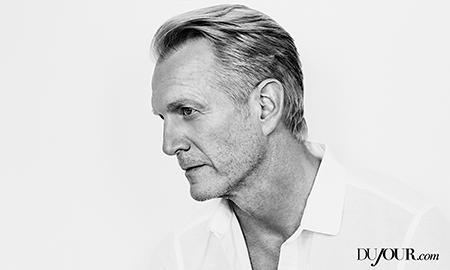
Picture of Hoyt Richards
And he was. During the 1980s and ’90s, Richards was one of fashion’s most in-demand models. He traveled the world, appearing in campaigns for Versace, Valentino, Ralph Lauren and Cartier and was a favorite subject for photographers like Bruce Weber, Richard Avedon and Helmut Newton. In 1992, the Italian men’s magazine Mondo Uomo gave him a 58-page spread, while Vogue named him one of the top 25 male models of all time. He worked and socialized with the era’s A-list models, including Cindy Crawford, Linda Evangelista, Christy Turlington and Naomi Campbell, and has a ribald story about being sandwiched between the latter two—they were nearly naked; Richards was sporting a bustier—at a birthday party for photographer Steven Meisel. He was, no doubt, the first male supermodel. 

As successful as Richards was professionally, however, he harbored a harrowing secret. For years, he was enmeshed within a shadowy religious sect called Eternal Values, which kept him psychologically enslaved with convoluted forms of love and abuse, reassurance and disapproval. 

Eventually he would save himself, but he would never be the same.  

At the end of the summer between his junior and senior years at Princeton, Hoyt Richards was discovered by a modeling agent and cast in an ad campaign for Jeffrey Banks. He was John Richards Hoyt back then—the professional name change would happen later. “The pictures came out that fall and all of a sudden I was one of the ‘new faces,’ ” he says now. “The agency was calling. They were like, ‘We’ve got a job for you in Tokyo on Tuesday.’ And I was like, ‘Listen, sorry, I’ve got a test.’ ” 

It was an intoxicating experience for an All-American kid who just months before counted Friday night football games as among the more exciting events in his life. 

Richards was the fourth of six children, born in 1962 in Syracuse, New York. His father was a Lehigh University–trained engineer and his mom, Terry, a Mount Holyoke alumna. Both families claimed roots in the American Revolution. When Richards was two, the family moved to a wealthy enclave on Philadelphia’s Main Line. Later on, at Princeton, he majored in economics and played varsity football. 

Richards’ mother, however, had a difficult upbringing that Richards says likely influenced how she related to her own children. When her mother, an alcoholic, died at an early age, Terry Richards had assumed full care for her younger siblings. “When you come from that background,” Richards says, “you try to control everything because you don’t want to ever get hurt again. You develop this kind of bubble that you live in where it’s never your fault, and if anything goes wrong, you’re the victim.” As a child and teen, he tried very hard to please her. “[My mother] was very clear about what she expected me to be,” he says. “In order to get the love I wanted from her, I felt I had to try to become the thing she wanted me to be, even though that didn’t feel necessarily like who I really was.”

A gifted athlete from an early age, Richards gravitated to sports. “I was always drawn toward things that would have a crowd; with sports, you had that stadium,” he says. “All those eyes on me felt like maybe it would heal something. It’s the same reason I think I ended up modeling.”

Like many affluent families, the Hoyts summered in Nantucket, in an area called Shimmo and in a house his mom named Shimmo the Merrier. One day during the summer before his junior year of high school, Richards was at Nobadeer Beach—a kids’ hangout referred to by locals as “No Brassiere Beach”—when he encountered an older but still youthful-looking man drawing a yin and yang diagram in the sand. 

Frederick von Mierers was full of ideas. Tall, gaunt and handsome, he spoke about Eastern philosophy, Hinduism and reincarnation. The attention he paid to the young Richards was invigorating. At the time, Richards was being forced by his parents to transfer out of his public school to attend the prestigious Haverford School, and he was not, he says now, in a particularly good place. “I was 16, he was in his thirties,” Richards says. “When you’re that age, having an adult who will talk to you like an adult gets your attention.”

Von Mierers invited a bunch of the underage kids from the beach back to his place for beer. “I remember arriving there and knowing very quickly that this was clearly the cheapest beer you could buy,” Richards says. “I was not very impressed.” But the next summer von Mierers was back, and again the summer after that, and Richards continued to be drawn to him for reasons he can’t really explain. Freddy, as he came to be called, did Richards’ astrological chart and Richards, in turn, began reading Hindu texts and other books von Mierers suggested. He went from unimpressed to infatuated. “One year I was going to England. He told me the experience would really change my life—which it absolutely did, but it doesn’t take a rocket scientist to figure that out,” Richards says today. “I remember thinking, when stuff was happening to me, Freddy really is clairvoyant!”

While he was at Princeton, and in the early days of his modeling career, Richards began visiting Freddy in Manhattan on the weekends. He and other young acolytes would go with Freddy to Studio 54, where it was impossible to get in without connections. Once inside, the group would see clubbers having sex on the dance floor and doing cocaine in the bathrooms, but Richards and his coterie had nobler pursuits. Freddy was against drinking and drugs. He thought the body was God’s temple. In the wee hours, the group would return to Freddy’s ornately decorated apartment to discuss Eastern philosophy. 

“In my mind I was thinking that I was working him,” Richards says. “I was bringing up a couple friends with me from school, and we knew he could get us into Studio 54 and we could crash at his apartment. I was looking at it like I was taking advantage of this guy!” 

By his senior year in college, Richards had signed with Ford Models and proudly paid for his last two semesters of college tuition himself. He graduated in the spring of 1985 and moved into an apartment in the same Manhattan building as Freddy’s. But there was much more to it than being neighbors. Richards was becoming part of Eternal Values, a cult led by von Mierers that counted a number of the building’s residents among its ranks. Starting then and for years after, Richards donated almost all of his earnings to the group, helping to cover the rent on the apartments Freddy kept in the building, as well as others he began to acquire as the group grew in number. When he wasn’t jetting off to a modeling or commercial job, Richards spent his days and nights doing menial tasks around the building or studying alongside Freddy and, despite his financial importance to the group, sleeping on a mat on the floor.  

Eternal Values was founded in the early 1980s by von Mierers, himself a former model, interior decorator and socialite. An astrologer and self-styled prophet, he claimed to be an alien reincarnated from the distant star Arcturus. He said he had come to Earth to warn people of an impending apocalypse to be triggered by a change in the planet’s magnetic poles, and to train his students to become leaders in the aftermath. 

Based out of von Mierers’ apartment building on the east side of Manhattan—the group also kept a loft in the Bronx and, later, a large house in North Carolina—Eternal Values attracted young, intelligent and often wealthy followers. Most were seeking a greater understanding of the universe; some were rewarded with a life of mind control and fanaticism. At its peak, there were perhaps 100 active members. They spoke in New Age jargon, with much talk about “highly evolved personalities,” “ego renunciation,” “the white light and the violet light” and the coming apocalypse, which made personal wealth and relationships unnecessary. Astrological charts and life readings, performed by von Mierers or one of his acolytes, played a central role. Included was often a “gem prescription,” adopted from Hindu belief in the healing properties of certain precious stones. “The gems are God’s thoughts condensed,” he told Vanity Fair in a 1990 interview.

Von Mierers told followers he had connections for great deals on stones, which he often sold to them for more than $100,000; payments were only accepted in cash or traveler’s checks. “The gems were supposed to be the most pure forms of matter on our planet,” says Richards, who bought a fortune’s worth over the years. “They were supposed to strengthen your inherent weakness and enhance your strengths.” 

Within the group, the number of gems one possessed was treated as a sign of devoutness. “I spent over $150,000,” Richards says. “The gems all came with bogus appraisals. When I sold them later, I found out they were worth less than $8,000.” 

When Freddy’s story was included in a popular 1985 book, Aliens Among Us—“Dazzling true testimony that extraterrestrials are on earth,” the book promised—Eternal Values became a national phenomenon. Thousands of hopefuls contacted Freddy for astrological readings at $350 per session. Hundreds were drawn into his gemstone scams. Richards, then in his modeling heyday, was trotted out for interviews and appearances.

But while von Mierers was getting rich, Richards found in Eternal Values something more grounding. “The economy was kicking ass, there was opulence everywhere: a lot of drugs, a lot of cocaine,” says Richards. “Being in [Eternal Values], you had this sense that there was an alternative to all that. The message was, don’t be attached to this wealth and decadence because there’s really a higher meaning to it all. Freddy was basically saying, ‘Get your head out of your ass because the world is coming to an end—you better get your shit together because you’ve spent lifetimes preparing for this opportunity.’ ”

Gilberto Picinich joined the group in 1981 after hearing Freddy speak on the radio. A lifelong seeker, Picinich remembers the sense of purpose Eternal Values gave him. “We all had the feeling that we were on this critical mission that would help save ourselves, friends and family from the coming apocalypse,” he says. “The message self-validated over the years. You started to fear that if you left, you might miss something important, something that you’ve sacrificed for.”

Because Richards was the group’s golden goose, some felt he was given special privileges, “like flying around the world fucking beautiful models,” says Picinich. Yet while they lived off his money, the group felt that Richards’ work was inherently evil. “The fact that the world puts so much importance on someone who won a genetic lottery—to the point of putting a billboard in Times Square and paying that person hundreds of thousands of dollars—is the exact reason why the world needs to be destroyed,” Richards says in an attempt to explain the cult’s point of view. 

He tried to downplay his secret life with the people he met as a model while making choices those colleagues didn’t understand. “Everyone else was living it up. It was like, ‘Hey, let’s go to Madonna’s for the weekend!’ ” Richards has said. “But I was like, ‘No, no. I can’t. The end of the world is coming.’ ”

As it was with his mother, it was with the cult. Nothing he did was good enough, but Richards kept trying. “More than anything, I felt like I’d made a commitment and I couldn’t give up,” he says. “Freddy had told us that we were responsible for our own lives—which I could deal with—but we were also responsible for the millions of people we were supposed to help, and that was a heavy trip that I couldn’t screw up.” 

The hold Eternal Values had on him became so strong that he stayed on even after von Mierers’ death in 1990 from AIDS-related causes. According to Richards, the Manhattan district attorney’s office was investigating von Mierers’ gemstone scams at the time of his death, but discontinued after he died, when it was discovered that the self-proclaimed alien’s real name was Freddie Miers. He’d been raised Jewish in Brooklyn. 

After Freddy died, there was a power struggle within Eternal Values. Freddy’s successors were even more extreme. As the years passed and the group relocated to a big house on Lake Lure, North Carolina, Richards continued to earn money and fame but the group became increasingly hateful toward him. He was often interrogated for hours on end about what they called his “ego lapses.” 

“He was a good guy and a bit of a people pleaser,” Picinich recalls. “After Freddy’s death, the [new] leader was pretty cruel to him. You could see the toll it took.” Richards recalls some truly terrible behavior: “They said I was resistant and resentful of my chores, and that I was guilty of vanity and looking in the mirror—for that offense they shaved my head,” he says. “Mostly I would do menial jobs like scrubbing toilets and vacuuming. Any job they could think of that was a pain in the ass, they’d get me to do it.” 

The abuse was also emotional. “My nickname was Dipshit. When I wasn’t in trouble, they’d call me Dippy, but generally I was just called Dipshit,” Richards says. “And this was after I’d been financing this thing for 15 years. Sometimes I would have to go out to the end of the dock and do belly flops as a form of self-punishment.”  

Finally, on the night of July 3, 1999—after two previous unsuccessful attempts to leave the cult—Richards escaped, having tithed to Eternal Values the majority of his earnings, estimated at nearly $4.5 million dollars over almost two decades of work. He hadn’t spoken to his parents in 12 years. He turned to an old friend from his modeling days: Fabio Lanzoni, the long-haired and pectorally gifted spokesmodel best known for gracing the covers of hundreds of romance novels. 
“When the shit hit the fan, he knew I would help,” Lanzoni says. “The other models used to make fun of him because he believed in aliens, but I’d tell them, ‘Listen, you shouldn’t make fun of him because there was something that happened in his life that put him in this situation.’ ” Richards lived in Lanzoni’s house in Los Angeles—and drove one of his Porches—for nearly a year. 

On a recent afternoon, Richards sits on the sofa in his West Los Angeles apartment. He’s in bare feet and shorts; his forelock looks a bit limp. He recently wrote, produced and starred in a movie called Dumbbells, playing a guy who escapes from a cult and opens a gym. Another movie, Invisible Prisons, is in the works.

After he left Eternal Values, Richards says, he began doing a lot of reflection. As unbelievable as it sounds, never once during his two decades with the group did he ever consider he might be a member of a cult. In his mind, he was in a special group on an important mission; he believed he was one of the Chosen who would lead the earth into a new era of peace and prosperity. Like anyone suffering from Stockholm syndrome, he had no ability to objectify his experience. The reason he finally left the group, he says, was because he felt like a failure, unable to conform to their standards.

“And then one day I was doing some research, and it hit me,” Richards says, unabashed. “I was like, Oh, my God! I’m a textbook cult victim.” 
In recent years, Richards has sought counseling and worked to build a film career. A civil lawsuit recouped some of his funds and effectively killed the remnants of Eternal Values. These days Richards feels that he’s finally reached a place of peace within himself. “I’ve come to understand that all this didn’t happen because there was something wrong with me,” he says. “It wasn’t because my mother didn’t love me enough. I was able to forgive myself. It’s how I was able to relieve myself of all that shame.” His great hope is that his story will be useful to others, “to make it cool for others to talk about their abusive situations, their fuck-ups.” 

Likewise, he tries to make the best of his years with Eternal Values. “When you meet new people, you’re never quite sure when to mention it,” Richards says. “But I know one thing for sure: If I do bring it up, nobody ever finds my story boring.”

http://dujour.com/news/hoyt-richards-model-cult/