Showing posts with label Wat Phra Dhammakaya. Show all posts

Dec 27, 2016

Thai police call off raid on scandal-hit Buddhist temple

The temple complex is located near the Thai capital's Don Muang International Airport. (Credit: Reuters)
Radio Australia
27 December 2016


Thai police call off a raid to arrest a prominent Buddhist monk wanted for suspected money laundering after devotees barricaded entrances to his sprawling temple complex in a Bangkok suburb.

Thai police have called off a raid to arrest a prominent Buddhist monk wanted for suspected money laundering after devotees barricaded entrances to his sprawling temple complex in a Bangkok suburb.

The Wat Phra Dhammakaya temple commands a huge following and is supported by influential Thai politicians and business folk, but critics say it exploits people and religion for money.

Thailand's Attorney-General said in November it would charge Abbot Phra Dhammachayo and four others on charges of conspiracy to launder money and receive stolen goods.

Police have tried in vain over the past few months to question the abbot and enter the temple complex, located near the Thai capital's Don Muang International Airport.

With police poised to make another attempt on Tuesday, hundreds of monks and devotees were seen inside the temple.

Some were barricading entrances, while others wore face masks and chanted Buddhist sutras.

Police removed part of a metal fence outside the complex but by early afternoon they had withdrawn from the site.

"We have cleared the fence from the area because it was illegally constructed," Khempak Photipak, the officer in charge of the police operation said.

"We did not move into the temple today because there are too many people and we did not receive orders to do so."

He gave no further details nor did he say when police might try to get into the temple again.

Temple officials said there were around 10,000 people in the entire complex.

A series of corruption, sex and drugs scandals involving monks at various temples has cast Thai Buddhism under a harsh light in recent years.

Reuters


http://www.radioaustralia.net.au/international/2016-12-27/thai-police-call-off-raid-on-scandalhit-buddhist-temple/1642202

Dec 21, 2016

Where Buddhism's Eight-Fold Path Can Be Followed With a Six-Figure Salary

White-clad devotees at Dhammakaya Wat, Thailand’s largest temple, in February. The number of adherents has grown into the hundreds of thousands both in Thailand and abroad.
ASIA PACIFIC | PATHUM THANI JOURNAL
New York Times
By
SETH MYDANS
December 20, 2016

PATHUM THANI, Thailand — It is a temple for a changing Thailand: clean, unadorned, high-tech and unashamed of praying for wealth.

“Sit here and get rich,” read small medallions embedded in the floor under each white plastic chair in a vast, open-sided meditation center. In his sermons, the temple’s charismatic 72-year-old leader, Phra Dhammachayo, often exhorts his adherents, “Be rich, be rich, be rich!”

With its endorsement of worldly comforts and its no-nonsense approach to ritual, the temple, known as Wat Dhammakaya and the largest in
Thailand, has attracted the allegiance of growing numbers of followers in a movement whose popularity has unsettled the government and the Buddhist hierarchy.

The authorities have long tried to clip its wings, and for the past month the police have been threatening to arrest Phra Dhammachayo despite a warning by the temple that it would mobilize a human shield of chanting monks to protect him.

The charge against him is embezzlement, the latest of many accusations that stretch decades, while the top body of Buddhism has accused him of heresy. Last week, it stripped him of his title, though that does not seem to have threatened his status on the grounds of Wat Dhammakaya.

The temple is the spiritual embodiment of the social and economic dislocations that have shaken Thailand. The economic boom of the 1980s created a well-to-do middle class for whom moneymaking rivaled Buddhist tradition as a core value. They needed something that brought the two together.

Cash machines are placed conveniently near a meditation hall with screens that declare, “Shortcut to making merit,” the important virtue of doing good deeds. As a merit-making bonus, credit card points earned by the transaction can go directly to the temple.

“Buddha never taught us to live in hardship,” said the temple spokesman, Phra Pasura Dantamano. He added: “Buddha teaches moderation, but there are different levels of society. If I were a businessman or a farmer I would define moderation in a different way.”

This perspective is a departure from traditional Thai Buddhism, in which there is less acceptance of wealth, said Suwanna Satha-Anand, a professor of philosophy at Chulalongkorn University.

“They crafted a possibility of a new form of Buddhism which is friendly to capitalism or wealth,” she said. “This is the voice of the urban middle or upper class who are looking for a more modern image of what a Buddhist can be.”

Well-designed websites promise a form of meditation that is “simple, easy and effective.” The temple itself manifests cleanliness and efficiency alongside tech-savvy sophistication. Its huge boxy buildings are aggressively plain, finished with unpainted gray concrete. It has no spire, few bells and little incense.

But it does not lack grandeur. Its centerpiece is a huge, flat dome more than 2,000 feet in diameter that even the temple concedes looks like a flying saucer. It radiates wealth. The dome’s surface consists of 300,000 small Buddha statues made of silicon gold, each as tall as an open hand and engraved with the name of a donor — suggested donation 10,000 baht, or about $300.

On special occasions, the vast plaza around the dome is the scene of spectacular gatherings — tens of thousands of monks in orange and worshipers in white — that rival an Olympics opening ceremony. The monks circle the dome as if the little statues had come to life, and they sit in perfect, ordered rows that seem to stretch to the horizon. At night, they march with glowing lights, and thousands of lighter-than-air lanterns float into the sky.

In keeping with the stark design of the temple, even these extravagant displays are marked by almost militaristic order and precision.

The same rapid rise to prosperity that inspired the popularity of Wat Dhammakaya also underlies the political divisions and outbreaks of violence that have shaken Thailand in recent years.

Those divisions are being held in check by a military junta that seized power in 2014. “When you have hundreds of thousands of devotees, some people with power would be scared of that,” Phra Pasura said.

He compared the Dhammakaya movement to the populist rise of Thaksin Shinawatra, a prime minister who was ousted in another coup, in 2006, and now lives in exile.

“People are afraid that if we get too large we could be a threat,” Phra Pasura said. He would not estimate the number of followers, but said they were in the hundreds of thousands.

At the moment, the government is pursuing several cases against Phra Dhammachayo, the foremost of which is a charge that he embezzled $40 million from a credit union. He has said he was unaware of the source of the funds, and his followers have paid off the debt.

But the government is still trying to bring him to court. For weeks, the police have been threatening to seize him, at one point saying they were ready to deploy 2,000 officers to confront what was likely to be a phalanx of monks.

It is a common pattern in Thailand of threat and retreat, whether for the surrender of “red shirt” demonstrators in 2010 or for monks
at another temple earlier this year to give up their tame tigers at a moneymaking petting zoo.

Phra Dhammachayo has refused to turn himself in, asserting that he suffers from diabetes and Turner syndrome, a chromosomal disorder. He has not been seen in public for six months, and there is no confirmation that he is still inside the temple.

Wherever he is, Phra Dhammachayo remains a magnetic figure who draws intense devotion from his followers.

“I am what I am because of him,” said Watjana Suriyatham, 51, an assistant professor of English at Thammasat University.

Mirella Kampus, 34, a Swiss member of the staff, said she had been at the temple for six years and had found her calling there. “If I had not known him, my life would be difficult,” she said. “I would not have found a reason for my life.”

The son of an engineer, Phra Dhammachayo studied economics at Kasetsart University, but he had already dedicated himself to Buddhism. Soon after graduation, he founded the little meditation center that grew to become the largest temple in Thailand, with a territory that it says comprises 1,000 acres.

He also seems to be a man of unusual visions.

In 2012, in an account disseminated by the temple’s websites, he told his followers that
Steve Jobs, the co-founder of Apple, had been reincarnated and was living in a six-story heavenly palace made of silver and crystal glass and served by a staff of 20 not far from Apple’s Cupertino, Calif., headquarters.

The vast temple grounds today seem hushed and still. Meditation halls are filled with the chanting of hundreds of monks and worshipers, sometimes with the aid of a karaoke-style scroll on a large screen.

For the temple, cleanliness and order are an important element of good karma. Devotees are expected not only to dress in white, but also to remove their sandals and place them in regimented rows when entering meditation rooms.

Not everyone is chanting. With its vast underground parking garage, clean toilets, free food and sheltered plazas, the temple is a refuge from the noisy outside world. Families often come to meditate together, to picnic and even to stay the night in tents that are provided for them.

Ms. Kampus compared the pristine temple to Switzerland.

“My country is very clean,” she said. “When I came to Thailand, oh my god! But the temple is very clean.” She added, “If you keep orderliness outside, you are orderly inside and it is easier to meditate.”

A version of this article appears in print on December 21, 2016, on Page A4 of the New York edition with the headline: Parsing Buddhism in a Shrine to Abundance.
http://www.nytimes.com/2016/12/20/world/asia/thailand-buddhist-temple-praying-wealth.html

Dec 19, 2016

CultNEWS101 Articles: 12/19/2016 Scientology, Baba Ramdev, ​Wat Phra Dhammakay, Unification Church, Brain biology, Religion Research, Thailand

cult news
Scientology, Baba Ramdev, ​Wat Phra Dhammakay, Unification Church, Brain biology, Religion Research, Thailand


"The second episode in Leah Remini's series about the cult of Scientology shows just how far the religion's leaders will go to destroy you."


Baba Ramdev
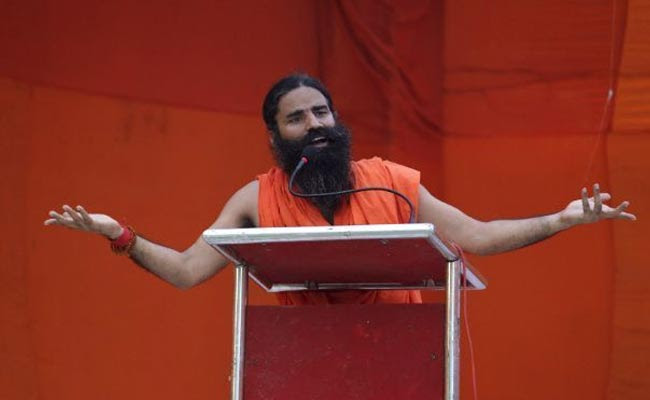
Baba Ramdev promoted Patanjali Ayurveda's five production units will have to cough up a fine worth Rs 11 lakh for "misbranding and putting up misleading advertisements" of their products.


LRH
"If you get your family in, you'd better make sure you get them on board with getting out before it all hits the fan for you," Kahn says on the show. "If I could have a do-over, I would start communicating to my family well ahead of when it all came crashing down. Because once that happens ... you won't have a chance to get to them."


​B
angkok
​ P
ost
​: ​
​
Temple 'broke law' building six bridges 

Wat Phra Dhammakaya
​"​
Pathum Thani: Authorities confirmed Wednesday that 
​​
Wat Phra Dhammakaya in Klong Luang district, as previously suspected, had broken the law in building a number of public bridges to control access to the
​ temple.​"


"CHARISMATIC political, religious and cult leaders may owe their power and influence to brain biology, new research suggests.

The human brain is geared to make us value the opinions of confident individuals with a strong belief in themselves, scientists have found."


Unification Church
​"​
12/1977 - Members of the local clergy, a cult deprogrammer, a representative of the American Civil Liberties Union, Unification Church members, YMCA staff, many members of borough council, mayor-elect Tom Chambers, interested residents and five West Chester policemen turned out for the hour long talk by Marc Lee, director of the Unification Church in Pennsylvania.
​"​


Pew Research
"Christians are least educated group in US, but US Christians are among most highly educated worldwide."


News, Intervention, Recovery

Cults101.org resources about cults, cultic groups, abusive relationships, movements, religions, political organizations and related topics.
Intervention101.com to help families and friends understand and effectively respond to the complexity of a loved one's cult involvement.
CultRecovery101.com assists group members and their families make the sometimes difficult transition from coercion to renewed individual choice.
CultNews101.com news, links, resources.
Flipboard
Twitter
Cults101 Bookstore (500 books/videos)

Selection of articles for CultNEWS101 does not mean that Patrick Ryan or Joseph Kelly agree with the content. We provide information from many points of view in order to promote dialogue.

Please forward articles that you think we should add to CultNEWS101.com.

Thanks

Nov 23, 2016

Thai prosecutors charge controversial abbot of powerful Buddhist sect over money laundering

South China Morning Post
23 November, 2016

Thailand’s attorney general said on Wednesday it would charge the abbot of a powerful Buddhist sect and four others suspected of money laundering in the latest twist of a long-running saga that has divided Thai Buddhism.

Police in the predominantly Buddhist country have tried several times to arrest Phra Dhammachayo, abbot of Wat Phra Dhammakaya, a futuristic-looking monastery located some 50km north of Bangkok.

“Prosecutors have agreed to charge Phra Dhammachayao of Dhammakaya temple on charges of conspiracy to launder money, money laundering and receiving stolen goods,” Somnuek Siangkong, spokesman of the Office of the Attorney General, told Reuters.

Thailand’s Department of Special Investigation in 2015 summoned Phra Dhammachayo for questioning after his temple was accused of receiving more than 1 billion baht (US$28 million) of embezzled funds.

Prosecutors in charge of the case have postponed a decision to charge the monk four times while Phra Dhammachayo has failed to show up for police questioning, citing ill health.

The controversy over Phra Dhammachayo, 72, has fuelled a feud between traditionalists in Thai Buddhism and those who support more modern sects.

The country’s dominant religion has come under repeated scrutiny following a series of sex, drugs and money scandals involving several temples and monks over the years.

Critics say that the Dhammakaya Temple, which says it has millions of followers around the world, is too money-focused and encourages financial donations as a way to gain good karma.

They also say it strays from the Theravada Buddhism practised by millions of Thais. The temple denies this.

The attorney general’s office on Wednesday said the statute of limitations in the case against Dhammachayo was 15 years and that police would have to arrest Dhammachayo within that time.

Phra Sanitwong Wuttiwangso, the temple’s public relations chief, said Dhammachayo was at the temple and has not fled abroad. “Our abbot is very sick and cannot travel outside the temple grounds,” he said.

http://www.scmp.com/news/asia/southeast-asia/article/2048615/thai-prosecutors-charge-controversial-abbot-powerful

Thai prosecutors charge controversial abbot of powerful Buddhist sect over money laundering


November 23, 2016
REUTERS IN BANGKOK

Thailand’s attorney general said on Wednesday it would charge the abbot of a powerful Buddhist sect and four others suspected of money laundering in the latest twist of a long-running saga that has divided Thai Buddhism.

Prosecutors have agreed to charge Phra Dhammachayao of Dhammakaya temple on charges of conspiracy to launder money, money laundering and receiving stolen goods. --
SOMNUEK SIANGKONG, ATTORNEY GENERAL SPOKESMAN

Police in the predominantly Buddhist country have tried several times to arrest Phra Dhammachayo, abbot of Wat Phra Dhammakaya, a futuristic-looking monastery located some 50km north of Bangkok.

“Prosecutors have agreed to charge Phra Dhammachayao of Dhammakaya temple on charges of conspiracy to launder money, money laundering and receiving stolen goods,” Somnuek Siangkong, spokesman of the Office of the Attorney General, told Reuters.

Thailand’s Department of Special Investigation in 2015 summoned Phra Dhammachayo for questioning after his temple was accused of receiving more than 1 billion baht (US$28 million) of embezzled funds.

Prosecutors in charge of the case have postponed a decision to charge the monk four times while Phra Dhammachayo has failed to show up for police questioning, citing ill health.

The controversy over Phra Dhammachayo, 72, has fuelled a feud between traditionalists in Thai Buddhism and those who support more modern sects.

Media-savvy monks wage PR war to defend scandal-hit abbot

The country’s dominant religion has come under repeated scrutiny following a series of sex, drugs and money scandals involving several temples and monks over the years.

Critics say that the Dhammakaya Temple, which says it has millions of followers around the world, is too money-focused and encourages financial donations as a way to gain good karma.

They also say it strays from the Theravada Buddhism practised by millions of Thais. The temple denies this.

Thai police fail to arrest abbot accused of embezzlement as thousands of devotees ‘block’ compound.

The attorney general’s office on Wednesday said the statute of limitations in the case against Dhammachayo was 15 years and that police would have to arrest Dhammachayo within that time.

Phra Sanitwong Wuttiwangso, the temple’s public relations chief, said Dhammachayo was at the temple and has not fled abroad. “Our abbot is very sick and cannot travel outside the temple grounds,” he said.

http://m.scmp.com/news/asia/southeast-asia/article/2048615/thai-prosecutors-charge-controversial-abbot-powerful