Showing posts with label Winston Blackmore. Show all posts

Jul 27, 2018

Convicted Bountiful polygamists unrepentant: court documents

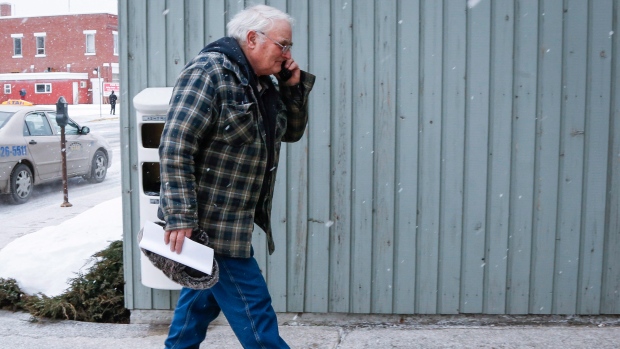
Winston Blackmore (left) and James Oler (right) are currently serving six-month and three-months house arrest, respectively, for polygamy convictions
Winston Blackmore (left) and James Oler (right)
Two Mormon fundamentalists told probation officers they feel no remorse for multiple marriages
TREVOR CRAWLEY
Terrace Standard
July 26, 2018

Pre-sentencing reports for two Mormon fundamentalists convicted of polygamy concluded that while neither expressed remorse for their actions, they were willing to comply with conditional sentencing orders.

Winston Blackmore and James Oler were sentenced to six months and three months house arrest respectively on one count of polygamy in June by Justice Sheri Donegan.

The Canadian Criminal Code identifies a five-year maximum sentence for polygamy, however, there is no modern case precedent for the courts to rely on as it has been over 100 years since it was last prosecuted.

The reports, written by probation officers, compiled information gathered through interviews from varying sources connected to both Blackmore and Oler — the identities of which are protected by publication bans.

Blackmore was charged and convicted of practicing polygamy with 24 women, while Oler was charged and convicted of the same offence involving five women.

During the trial, the court heard evidence that both Blackmore and Oler had entered into marriages with underage girls.

Charges were approved by Special Prosecutor Peter Wilson in 2014, after years of constitutional polygamy vagueness and investigations stemming back to the early 1990s.

Under the Mormon fundamentalism doctrine followed by Blackmore and the Bountiful community south of Creston, polygamy — or plural marriage — is a central tenet to achieving salvation.

Blackmore, 61, told the probation officer that he no longer intends to enter into any more polygamous marriages, however the report also notes concerns that he may continue to facilitate and support polygamous unions of other Mormon fundamentalists.

Blackmore has been adamant throughout the entire legal proceedings against him that he will not deny his faith, which he reiterated in the pre-sentencing report.

“No outcome will stop my faith — (not) a firing squad or jail,” Blackmore told the author of the document.

Blackmore added that his only regret was no longer being able to travel to the United States, where some of his family members reside.

Blackmore asserts that no harm was done by entering into plural marriages, which is contradicted by another source in the report that describes Blackmore as holding a great of power and authority over the community, particularly women.

Blackmore resides in Bountiful where he lives in a building central to the community and participates in gatherings at a dining hall for buffet-style meals.

The report identifies 149 children resulting from Blackmore’s plural marriages, some of which only see him at breakfast as he works seven days a week operating a wood post business outside Creston.

Blackmore told the probation officer he was audited by the Canada Revenue Agency, which determined that appropriate taxes had not been paid. Blackmore said he defended himself unsuccessfully, while others within the report suspect he may be bankrupt.

Sources told the probation officer that a custodial jail sentence would carry significant financial and emotional impact to wives and children.

At the trial, the court heard evidence that the Bountiful community split in 2002 as the death of Fundamentalist Church of Jesus Christ of Latter Day Saints (FLDS) leader Rulon Jeffs touched off a leadership struggle between his son, Warren, and Blackmore.

That dispute ended with the community splitting allegiances between both Blackmore and Jeffs, causing rifts even between family members.

Oler, 54, also expressed no remorse in his pre-sentencing report, indicating to a probation officer that he doesn’t see any victims from polygamy.

According to the report, Oler has 24 children with five wives.

Oler currently lives in isolation outside of the province working as a mechanic, but a police officer interviewed said he would resume his polygamous way of life if he returned to Bountiful.

Appointed as bishop of the community by Warren Jeffs following the FLDS leadership dispute, Oler was kicked out in 2012 for participating in public polygamy hearings, according to a police officer interviewed by the probation officer.

Oler said he is no longer involved with the church but would not explain why to the report author.

https://www.terracestandard.com/news/convicted-bountiful-polygamists-unrepentant-court-documents/

Jun 28, 2018

B.C. polygamy sentence will be a 'wake-up call,' some experts say, but others disagree

LAURA KANE
Toronto Star
June 28, 2018

VANCOUVER—British Columbia’s former attorney general says a strong message against polygamy has been sent even though two men at the centre of a long-running legal case received only house arrest for having multiple wives.

A judge ruled earlier this week that Winston Blackmore and James Oler, former leaders of a secluded religious community in Bountiful, B.C., will each have to spend a few months at home for marrying multiple women and underage girls.

The sentence dismayed some observers, but Wally Oppal says the years in court and millions of dollars spent on the prosecution were worth it.

“This should be a wake-up call to other people in Bountiful who may be doing the same things,” said Oppal, who ordered a review into the community in 2007.

“For years, they thought they were immune to any prosecution because they relied on the principle of freedom of religion. Well, the courts have now spoken that freedom of religion is a principle in our charter, but like all freedoms, it’s not absolute.”

Justice Sheri Ann Donegan gave Blackmore a sentence of six months of house arrest and Oler three months.

Both men can only leave home for work, necessary errands and medical emergencies. They must also complete community service and probation.

The judge found Blackmore married 25 women. Nine of them were under 18 and four under 14 on their wedding days. Oler had five wives, including one that was 15 and another who had just turned 17 at the time of their marriages.

Oler, 54, was excommunicated from the church around 2012 and now lives in Alberta, while Blackmore, 61, continues to live in Bountiful and holds a prominent position there.

The sentence will do little to deter people in Bountiful or elsewhere from practising polygamy, said Stephen Kent, a University of Alberta sociology professor who has written about plural marriage.

“I don’t think it’ll have any impact at all,” he said. “For critics of polygamy, they will feel tremendous disappointment and frustration.”

He noted that Blackmore is likely to have spent millions defending himself from numerous court actions, so the case could send a message that there might be financial consequences to polygamy.

But the province’s decades-long struggle to lay charges and secure convictions also indicates that additional charges against people in the community are unlikely, he said.

“The community probably is just going to continue practising polygamy as it always has.”

The RCMP began investigating plural marriages in Bountiful in the early 1990s, but the Crown declined to lay charges due to questions about the constitutionality of the law banning polygamy.

Oppal appointed a special prosecutor in 2007, but the prosecutor also declined to lay charges. The attorney general went on to appoint two more special prosecutors until one finally laid charges in 2009. But those were tossed after a judge found the additional prosecutors had been improperly appointed.

The province filed a constitutional reference case and, in 2011, the B.C. Supreme Court ruled that polygamy is inherently harmful and represents a justifiable limit on religious freedom. The decision led to Oler and Blackmore to be charged and go to trial in 2017.

It was the first trial under Canada’s polygamy law in 127 years.

“The polygamy laws are there for a purpose,” said Oppal. “(Polygamy) has a horrible effect on children. It has a horrible effect on women. It treats, in many cases, women as being chattel, property.”

There have been significant legal achievements arising from the case, said Nick Bala, a Queen’s University law professor who has written extensively about polygamy.

The constitutionality of the law has been upheld twice, he noted.

“The justice system has not done nothing. We have a lot more clarity in the law,” Bala said.

The criminal prosecutions have also had an educational and symbolic role in changing attitudes in Bountiful, especially among younger people, he suggested.

However, Blackmore and Oler “knowingly, flagrantly violated the law,” Bala said.

“They have apparently no real remorse. In those circumstances, a jail sentence would be appropriate.”

https://www.thestar.com/vancouver/2018/06/28/bc-polygamy-sentence-will-be-a-wake-up-call-some-experts-say-but-others-disagree.html

Jun 16, 2018

Five things you need to know about polyamory after Newfoundland court ruling

Winston Blackmore, right, the religious leader in the community of Bountiful located near Creston, B.C., was found guilty last July of polygamy. He was married to two dozen women.  (JONATHAN HAYWARD / THE CANADIAN PRESS FILE PHOTO)
MICHAEL MACDONALD The Canadian Press
Toronto Star
June 15, 2018

This week, a court in Newfoundland and Labrador recognized three unmarried adults as the legal parents of a child born within their “polyamorous” family. It was believed to be a legal first in Canada. However, many Canadians were left with one big question: What does polyamorous mean? Here’s five things you need to know:

1. There is no definitive definition, but there are a few basic principles.

The term appears to have emerged in the early 1990s, but there is no single definition that has universal acceptance.

John-Paul Boyd, executive director of the Calgary-based Canadian Research Institute for Law and the Family, says people who consider themselves polyamorous prefer to have intimate relationships that involve more than two people, where marriage is not considered necessary.

And there’s an added dimension that typically involves a high degree of openness and trust about the voluntary arrangement.

“Polyamorous relationships have been in the open since the late 1960s, but it has really picked up steam in the last 10 years,” Boyd says.

Those who describe themselves at polyamorous typically reject the notion that exclusivity is required for long-term, loving relationships.

2. Polyamorous relationships have nothing to do with bigamy or polygamy.

Under Section 293 of the Criminal Code, it is illegal to be married to more than one person. Polyamorous relationships do not violate that provision of the law.

However, it would be wrong to assume that is the only difference between polygamy and polyamory.

Last July, two men in British Columbia were found guilty of polygamy. Winston Blackmore, 62, was married to two dozen women, while James Oler, 54, was found to have married five women. Both are leaders of the Fundamentalist Church of Jesus Christ of Latter-day Saints in Bountiful, B.C.

Boyd said these arranged marriages were part of a patriarchal structure that led to “serious, negative social effects within that community.”

“They were mandated by God and there’s no pretence of equality,” he said. “And it’s mandatory.”

By contrast, polyamorous relationships are voluntary.

“The key is that whatever (polyamorous) relationships look like, they are consensual,” he said. “Everybody knows what’s going on. Honesty and transparency are at the core of it all.”

Boyd said his research has found that among those who consider themselves polyamorous, there’s a heavy emphasis on equality, regardless of gender, sexual identity and parenting status.

3. We really have no idea how many people are polyamorous, but there has been some fascinating research.

There’s no way of knowing how many Canadians consider themselves polyamorous. Statistics Canada doesn’t collect that kind of data.

However, a 2009 American study suggested that one in 614 Americans lived in openly polyamorous relationships. Another U.S. study the following year suggested about one in 500 Americans described themselves as polyamorous.

In 2016, Boyd used social media to ask polyamorous Canadians to take part in an online survey. More than 500 people responded.

“That’s a huge number,” he says. “Getting people to fill out surveys is like pulling teeth.”

Of the 480 responses that were analyzed, 82 per cent agreed that the number of people who identify as polyamorous in Canada is increasing.

Meanwhile, the website for the Canadian Polyamory Advocacy Association includes more than 100 links to sites for advocacy, support and dating.

4. Polyamory is not just another term for what “swingers” do.

According to the Electronic Journal of Human Sexuality, there’s a big difference between swingers and those who are polyamorous.

Swinging is non-monogamous sexual activity “treated much like any other social activity,” says an October 2000 paper published in the journal, titled “Today’s Alternative Marriage Styles: The Case of Swingers.”

“Emotional monogamy, or commitment to the love relationship with one’s marital partner, remains the primary focus.”

By contrast, those who are polyamorous may not be interested in sex: “It’s just consensual non-monogamy,” says Boyd.

Polyamorous relationships emphasize emotional and egalitarian aspects, while swingers focus on sexual non-monogamy and emotional monogamy.

That said, a polyamorous person may engage in swinging, while swingers sometimes develop emotional bonds with their sexual partners.

5. Children are frequently part of polyamorous families.

The data compiled from Boyd’s 2016 survey showed that 40 per cent of respondents said there were children living in their homes full- or part-time.

“What that shows is that it is hardly uncommon for people to have children in their polyamorous relationships,” Boyd says.

Still, the recent case in Newfoundland and Labrador drew attention to the fact that the law hasn’t kept up with the evolution of Canadian families.

In that case, released Thursday, the St. John’s family included two men in a relationship with the mother of a child born in 2017. The adults had been together for three years, but the biological father of the child was unknown.

In his decision, Justice Robert Fowler of the provincial supreme court said: “Society is continuously changing and family structures are changing along with it. This must be recognized as a reality and not as a detriment to the best interests of the child.”

https://www.thestar.com/life/2018/06/15/five-things-you-need-to-know-about-polyamory-after-newfoundland-court-ruling.html

May 14, 2018

Daphne Bramham: A call for an amnesty on future prosecutions as two polygamists prepare for sentencing

Gail Blackmore (right) leaves court during a lunch break in her sentencing hearing. She was convicted of taking a 13-year-old girl into the United States to marry the now-imprisoned leader of a religious sect that practices plural marriage.
DAPHNE BRAMHAM
Vancouver Sun
May 13, 2018

As two convicted polygamists — 61-year-old Winston Blackmore and James Oler, 53 — prepare for their sentencing hearing Tuesday in B.C. Supreme Court in Cranbrook, there are growing concerns within the fundamentalist Mormon community that more people — both men and women — may be charged.

That fear is keeping some from fleeing the religious community of Bountiful in southeastern B.C. and from seeking help to make that transition, say several women who have left, according to a group called SafetyNet in the Kootenays.

Formed by women who have left the Bountiful community, the group is lobbying governments to provide more and better services to those who leave, including education, housing, legal assistance in gaining access to their children, and help in obtaining permanent residency for mothers who came here illegally from the United States.

They are also urging the federal and provincial government to declare an amnesty from prosecution for anyone who leaves.

Currently, about six people a year leave Bountiful and the Fundamentalist Church of Jesus Christ of Latter-Day Saints, whose prophet, Warren Jeffs, continues to predict the end of the world and has ordered his followers not to have sex within marriage or even marry as long as he is in a Texas jail where he is serving sentence of life plus 25 years for sexually abusing under-aged girls, according to Esther Palmer.

She is one of SafetyNet’s founders. Palmer was deemed “unworthy” and asked to leave in 2011. One of 46 children and a mother of nine, Palmer was not only forced to leave behind several children as well many other family members, they are forbidden to speak to her because she is an apostate.

As difficult as it was to be cut off from family and lifelong friends, Palmer had the unique advantage of having an education and a profession. Most of her siblings and children have been denied that.

What they were taught was to fear the government, fear the police, and expect at any moment that authorities would come knocking to arrest fathers and separate mothers from their children.

That has never happened in Canada. But it did happen at the Yearning for Zion Ranch in Eldorado, Tex. in 2014, and in Short Creek, Ariz. in 1953.

Even though this hasn’t been the route that Canada has taken, Palmer says that fear of reprisals remains a barrier to anyone thinking of leaving, especially women and children whose husbands and fathers may still have multiple wives.

In Canada, Blackmore and Oler were the first men in modern history to have been charged with the offence of polygamy, a law which dates back to the 1890s. And even those charges were nearly two decades in the making.

In the 1990s, Blackmore and Oler’s father, Dalmon, were investigated and RCMP recommended polygamy charges, but the attorney-general’s ministry refused to prosecute, saying that the polygamy law may be unconstitutional.

More than a decade later, Blackmore and James Oler were charged with one count each of polygamy. Those 2009 charges were stayed after a B.C. Supreme Court justice ruled that the special prosecutor who approved the charges had been improperly appointed.

It was only after B.C. and Canada got a ruling from the B.C. Supreme Court in 2011 that the RCMP was ordered to reopen its Bountiful investigations.

Blackmore and Oler were charged in August 2014 with one count each of polygamy.

There were 24 women listed on Blackmore’s indictment. Four were listed on Oler’s, but a fifth was added during the trial.

Oler was also charged with the unlawful removal of a child for illegal purposes along with Winston’s older brother, Brandon James Blackmore, and one of Brandon’s wives, Emily Ruth Gail Blackmore. Oler was acquitted, but the Crown is appealing. The Blackmores were found guilty. Brandon is serving his one-year jail term, while Gail is out pending her appeal, which will be heard along with Oler’s on June 20 and 21.

Gail Blackmore’s conviction has heightened anxiety among FLDS women since she is the first woman ever arrested on polygamy-related charges.

In the past, police and prosecutors have regarded women as victims. Certainly, the religion’s teachings leave little room for women and girls to make their own decisions. As Esther Palmer said when she testified against her brother, James Oler, at the removal trial, unquestioning obedience to husbands, fathers, church leaders and the prophet is the primary lesson for girls.

Two NDP MPs — Murray Rankin and Wayne Stetski, whose riding includes Bountiful — plan to raise the issue of an amnesty both in meetings with B.C. Attorney-General David Eby and the parliamentary committee that is debating Bill C-75, which amends the Criminal Code including the sections on polygamy, forced marriage, under-age marriage and “pretending to solemnize a marriage.”

If approved, all of those sections would continue to be considered as indictable offences with a maximum penalty of up to five years in prison. But they would also allow for summary convictions, which have maximum of only six months in jail and/or a fine of not more than $5,000.

While those amendments might provide some comfort to polygamists and their families — both those leaving and remaining — it may prove anathema to many British Columbians who have fought for years to try to protect Bountiful’s women and children from polygamy’s harms.

dbramham@postmedia.com

Twitter: @daphnebramham


http://vancouversun.com/opinion/columnists/daphne-bramham-a-call-for-an-amnesty-on-future-prosecutions-as-two-polygamists-prepare-for-sentencing

May 1, 2018

Some of polygamist Winston Blackmore's 149 children make video asking he not go to jail

Nate Carlisle
Salt Lake Tribune
April 26, 2018

With his sentencing date approaching, children of Winston Blackmore are taking to social media to ask a Canadian judge not send the man to jail for polygamy.

Some of Blackmore’s 149 children posted a video online Tuesday, saying the Canadian justice system had unfairly targeted him because of his religion. They also discussed how it would affect them and their families if Blackmore, who is facing up to five years in jail but is free pending sentencing, were to be incarcerated.

“He is a huge part of our [lives], and he works very hard,” said Hanna Blackmore, one of the defendant’s daughters. “He needs to be able to go to work. He supports a large part of our family. And not only that, he is a great source of physical and emotional support for so many of us, too, who have left home.”

Some of Blackmore’s sons also appear in the video saying they fear they would lose their jobs without their father. The elder Blackmore, 61, over the years has owned logging and trucking companies.

Blackmore and another man, James Oler, 53, were convicted in July in a court in Cranbrook, British Columbia, of one count of polygamy. It was the first such conviction in Canada in a century. Sentencing is scheduled for May 15.

Blackmore has 27 wives. Sixteen remained in his family as of 2016, when some of his wives and children spoke at a Sunstone Symposium in Salt Lake City.

In the last month, some of Blackmore’s family have become more active in discussing his case on Facebook.

Hanna Blackmore also started an online campaign seeking $25,000 for her father’s legal expenses. As of Thursday afternoon, $2,100 had been raised.

Blackmore never denied he was a polygamist. Prosecutors have said Blackmore and Oler always knew they were at risk for prosecution, even if Canada’s Constitution was vague on the matter.

Then in 2011, the British Columbia Supreme Court held that the Canadian Charter of Rights and Freedoms did not protect polygamy, which the court called inherently harmful to women and children.

https://www.sltrib.com/news/polygamy/2018/04/26/some-of-polygamist-winston-blackmores-149-children-make-video-asking-he-not-go-to-jail/

Mar 17, 2018

B.C. Supreme Court decision in polygamy case raises due process issue: law expert

Ian Burns
The Lawyer’s Daily
March 16, 2018

A B.C. Supreme Court justice has rejected a stay of proceedings for two men convicted of having multiple wives, rejecting arguments that the government’s lack of prosecuting them in the past was an admission they believed the Criminal Code’s provisions against polygamy were unconstitutional. But a law professor says the judge’s interpretation of one defendant’s additional claim was incorrect and could serve as grounds for an appeal.

The two defendants, Winston Blackmore and James Oler, are associated with the Fundamentalist Church of Jesus Christ of Latter Day Saints (FLDS), a fundamentalist Mormon faith community based in Bountiful, B.C., which has long been associated with plural marriages. They were convicted in July 2017 under s. 293 of the Criminal Code, which makes polygamy illegal.

Both men applied for a judicial stay of proceedings on the grounds of officially induced error. In October 1991, the RCMP conducted an investigation of Blackmore and others living in Bountiful, but declined to press charges on the basis of several expert legal opinions that s. 293 was in conflict with the Charter’s s. 2 guarantee of religious freedom. The defendants cited a 1992 news release from the province’s Criminal Justice Branch (CJB) that s. 293 was unconstitutional. They argued it was unfair they should be convicted in relation to conduct occurring during that period when the province’s highest criminal law authority considered the law invalid and did not enforce it against them.

Justice Sheri Ann Donegan rejected that argument, saying the press release was not an announcement that Blackmore or Oler’s conduct, or polygamy in general, was lawful, nor was it a declaration that s. 293 was unconstitutional, which is a matter for the courts or Parliament to determine (R. v. Blackmore2018 BCSC 367).

“Legal opinions, even if unanimous and offered by eminent jurists, are not a determination of the constitutional status of a legislative provision,” she said. “Moreover, the CJB does not have the authority to pronounce upon the lawfulness of a Criminal Code offence.”

Officially induced error is an exception to the principle that ignorance of the law is no excuse, where an error in law arises out of an error of an authorized representative of the state (Lévis (City) v. Tétrault 2006 SCC 12). Justice Louis LeBel said a stay in proceedings can be granted if a defendant considered the legal consequences of his or her actions, the advice obtained came from an appropriate official and the defendant relied on that advice in committing the act.

But Justice Donegan held the Crown’s non-enforcement of s. 293 does not constitute a representation or advice that polygamy was legal.

“The Crown’s decision not to prosecute for the years it held the opinion s. 293 was unconstitutional was an exercise in prosecutorial discretion in a particular case, made in the upmost good faith,” she said. “It was not a declaration by the state that the polygamy law was invalid or the applicants’ conduct was lawful.”

Justice Donegan said both Blackmore and Oler were “well aware” that polygamy is illegal but have not stopped the practice. She noted the 2011 reference by then-B.C. Supreme Court Chief Justice Richard Bauman that said s. 293 was constitutionally sound (Reference re: Section 293 of the Criminal Code of Canada 2011 BCSC 1588).

“Polygamy is illegal in Canada,” she said. “By choosing to criminalize polygamy, Parliament recognized the harm implicit in its practice and enacted the provision to prevent those harms.”

Blackmore submitted a further argument that prosecuting him for polygamy infringed on his s. 2 freedom of religion Charter rights. Justice Donegan noted Blackmore was not challenging the constitutional validity of s. 293, but said it was not open to him to collaterally attack the constitutionality of the polygamy ban by challenging an exercise of prosecutorial discretion to enforce what has been determined to be a valid law.

“The substance of his grievance appears to be with the impact of s. 293 on his religious liberty,” she said. “While the effects of the offence are manifested through prosecution, it is s. 293, not the prosecution of it, which causes the interference with Mr. Blackmore’s religious freedom.”

Blackmore also claimed the circumstances of the state’s dealings with him over the last 25 years, culminating in the prosecution for polygamy, demonstrated an abuse of process. But Justice Donegan said there was no conduct that could be considered misconduct by the state, apart from Blackmore’s claim that former provincial Attorney General Wally Oppal appointed successive special prosecutors in 2007 until one was prepared to prosecute him.

“The harm in the Attorney General’s conduct is that it … undermined the administration of justice by leaving the perception of political interference and of an oppressive or unfair prosecution,” she said. “However, I also conclude that the prejudice or harm to the integrity of the justice system occasioned by this conduct will not be manifested, perpetuated or aggravated by proceeding to the outcome of this trial.”

As a result, Justice Donegan dismissed the applications of both Blackmore and Oler for a stay of proceedings and registered the convictions. Her decision was released March 9.


Beverley Baines, professor of public and constitutional law at Queen’s University faculty of law, said it was “curious” Justice Donegan raised the constitutionality issue in her judgment.

“I’m surprised she interpreted Mr. Blackmore’s argument about the Charter as a challenge to the constitutionality of s. 293, given that he didn’t do that,” she said. “She gave no indication that she gave notice to the parties she intended to raise the constitutionality issue, so there’s a due process issue here.”

Baines said a “dilemma” with Justice Donegan’s ruling is her decision the polygamy reference decided by Justice Bauman in 2011 was a judgment and it was binding.

“I think that is wrong on both counts. In this case there’s a constitutional principle she didn’t raise, which is the separation of powers between the executive and the judiciary,” she said. “According to the separation of powers principle, reference opinions are decisions issued by judges who are performing non-judicial functions — in other words, their opinions are purely advisory and not judgments. It’s a constitutional principle and could be used to challenge her interpretation of the B.C. question.”

Baines said the issue of the constitutionality of s. 293 needs to be reopened, and the governments of B.C. and Canada need to give evidence-based information about the harm that is caused by polygamy to the women and children involved in such relationships.

“There’s no question this issue is not about religious freedom or freedom of expression, it’s about harm to women and children,” she said. “If they want to rely on that claim, there is no substitute for evidence from women who are currently living in polygamous relationships.”

Blair Suffredine, who represented Blackmore, declined to comment on the decision, as did special prosecutor Peter Wilson. Oler was self-represented. In a statement, the B.C. Ministry of the Attorney General said it would be “inappropriate to comment on the case” as it still before the courts.

“Dates for sentencing in this case will be scheduled in the coming weeks,” the Ministry said.


A B.C. Supreme Court justice has rejected a stay of proceedings for two men convicted of having multiple wives, rejecting arguments that the government’s lack of prosecuting them in the past was an admission they believed the Criminal Code’s provisions against polygamy were unconstitutional. But a law professor says the judge’s interpretation of one defendant’s additional claim was incorrect and could serve as grounds for an appeal.

The two defendants, Winston Blackmore and James Oler, are associated with the Fundamentalist Church of Jesus Christ of Latter Day Saints (FLDS), a fundamentalist Mormon faith community based in Bountiful, B.C., which has long been associated with plural marriages. They were convicted in July 2017 under s. 293 of the Criminal Code, which makes polygamy illegal.

Both men applied for a judicial stay of proceedings on the grounds of officially induced error. In October 1991, the RCMP conducted an investigation of Blackmore and others living in Bountiful, but declined to press charges on the basis of several expert legal opinions that s. 293 was in conflict with the Charter’s s. 2 guarantee of religious freedom. The defendants cited a 1992 news release from the province’s Criminal Justice Branch (CJB) that s. 293 was unconstitutional. They argued it was unfair they should be convicted in relation to conduct occurring during that period when the province’s highest criminal law authority considered the law invalid and did not enforce it against them.

Justice Sheri Ann Donegan rejected that argument, saying the press release was not an announcement that Blackmore or Oler’s conduct, or polygamy in general, was lawful, nor was it a declaration that s. 293 was unconstitutional, which is a matter for the courts or Parliament to determine (R. v. Blackmore2018 BCSC 367).

“Legal opinions, even if unanimous and offered by eminent jurists, are not a determination of the constitutional status of a legislative provision,” she said. “Moreover, the CJB does not have the authority to pronounce upon the lawfulness of a Criminal Code offence.”

Officially induced error is an exception to the principle that ignorance of the law is no excuse, where an error in law arises out of an error of an authorized representative of the state (Lévis (City) v. Tétrault 2006 SCC 12). Justice Louis LeBel said a stay in proceedings can be granted if a defendant considered the legal consequences of his or her actions, the advice obtained came from an appropriate official and the defendant relied on that advice in committing the act.

But Justice Donegan held the Crown’s non-enforcement of s. 293 does not constitute a representation or advice that polygamy was legal.

“The Crown’s decision not to prosecute for the years it held the opinion s. 293 was unconstitutional was an exercise in prosecutorial discretion in a particular case, made in the upmost good faith,” she said. “It was not a declaration by the state that the polygamy law was invalid or the applicants’ conduct was lawful.”

Justice Donegan said both Blackmore and Oler were “well aware” that polygamy is illegal but have not stopped the practice. She noted the 2011 reference by then-B.C. Supreme Court Chief Justice Richard Bauman that said s. 293 was constitutionally sound (Reference re: Section 293 of the Criminal Code of Canada 2011 BCSC 1588).

“Polygamy is illegal in Canada,” she said. “By choosing to criminalize polygamy, Parliament recognized the harm implicit in its practice and enacted the provision to prevent those harms.”

Blackmore submitted a further argument that prosecuting him for polygamy infringed on his s. 2 freedom of religion Charter rights. Justice Donegan noted Blackmore was not challenging the constitutional validity of s. 293, but said it was not open to him to collaterally attack the constitutionality of the polygamy ban by challenging an exercise of prosecutorial discretion to enforce what has been determined to be a valid law.

“The substance of his grievance appears to be with the impact of s. 293 on his religious liberty,” she said. “While the effects of the offence are manifested through prosecution, it is s. 293, not the prosecution of it, which causes the interference with Mr. Blackmore’s religious freedom.”

Blackmore also claimed the circumstances of the state’s dealings with him over the last 25 years, culminating in the prosecution for polygamy, demonstrated an abuse of process. But Justice Donegan said there was no conduct that could be considered misconduct by the state, apart from Blackmore’s claim that former provincial Attorney General Wally Oppal appointed successive special prosecutors in 2007 until one was prepared to prosecute him.

“The harm in the Attorney General’s conduct is that it … undermined the administration of justice by leaving the perception of political interference and of an oppressive or unfair prosecution,” she said. “However, I also conclude that the prejudice or harm to the integrity of the justice system occasioned by this conduct will not be manifested, perpetuated or aggravated by proceeding to the outcome of this trial.”

As a result, Justice Donegan dismissed the applications of both Blackmore and Oler for a stay of proceedings and registered the convictions. Her decision was released March 9.


Beverley Baines, professor of public and constitutional law at Queen’s University faculty of law, said it was “curious” Justice Donegan raised the constitutionality issue in her judgment.

“I’m surprised she interpreted Mr. Blackmore’s argument about the Charter as a challenge to the constitutionality of s. 293, given that he didn’t do that,” she said. “She gave no indication that she gave notice to the parties she intended to raise the constitutionality issue, so there’s a due process issue here.”

Baines said a “dilemma” with Justice Donegan’s ruling is her decision the polygamy reference decided by Justice Bauman in 2011 was a judgment and it was binding.

“I think that is wrong on both counts. In this case there’s a constitutional principle she didn’t raise, which is the separation of powers between the executive and the judiciary,” she said. “According to the separation of powers principle, reference opinions are decisions issued by judges who are performing non-judicial functions — in other words, their opinions are purely advisory and not judgments. It’s a constitutional principle and could be used to challenge her interpretation of the B.C. question.”

Baines said the issue of the constitutionality of s. 293 needs to be reopened, and the governments of B.C. and Canada need to give evidence-based information about the harm that is caused by polygamy to the women and children involved in such relationships.

“There’s no question this issue is not about religious freedom or freedom of expression, it’s about harm to women and children,” she said. “If they want to rely on that claim, there is no substitute for evidence from women who are currently living in polygamous relationships.”

Blair Suffredine, who represented Blackmore, declined to comment on the decision, as did special prosecutor Peter Wilson. Oler was self-represented. In a statement, the B.C. Ministry of the Attorney General said it would be “inappropriate to comment on the case” as it still before the courts.

“Dates for sentencing in this case will be scheduled in the coming weeks,” the Ministry said.


https://www.thelawyersdaily.ca/articles/6117/b-c-supreme-court-decision-in-polygamy-case-raises-due-process-issue-law-expert

Nov 9, 2017

Daphne Bramham: Court to hear polygamist Winston Blackmore's constitutional challenge

DAPHNE BRAMHAM
Vancouver Sun
November 5, 2017

In 2011, the B.C. Supreme Court ruled that Canada’s anti-polygamy law was valid and “demonstrably justified in a free and democratic society.”

But Canada’s best-known polygamist Winston Blackmore — a man with at least 24 wives and 149 children — disagrees. And he is challenging that law starting Tuesday in a Cranbrook courtroom in the hope that his conviction on one count of polygamy will be stayed, the trial declared an abuse of process, or an order is granted to stop any further prosecutions against him based on evidence prior to 2011.

In July, Blackmore was found guilty of having married 24 women between 1990 and 2004, but that verdict has yet to be registered pending the outcome of the constitutional challenge. If it is upheld, the former Canadian bishop of the Fundamentalist Church of Jesus Christ of Latter Day Saints faces a maximum penalty of five years in jail.

The 60-year-old Blackmore, who leads a splinter group of several hundred in the community known as Bountiful in southwestern B.C., contends that the law breaches his constitutionally guaranteed right to freedom of religion and freedom of expression.

In addition to claiming a constitutional right to practice polygamy, Blackmore will argue that his right to a fair and speedy trial has been denied because, for years, the provincial Crown refused to approve polygamy charges due to concerns about the law’s validity. Blackmore has been investigated off and on for nearly 30 years.

Also in July, James Oler was found guilty of polygamy and of having married five women in religious ceremonies. Oler, Blackmore’s former brother-in-law and another past FLDS bishop, refused legal counsel for the trial. Whether Oler is joining Blackmore in the appeal is only expected to become clear when the hearing begins on Tuesday.

What will be up for debate is whether or when Parliament can limit constitutionally guaranteed rights. The measuring stick used by Robert Bauman, who is now B.C.’s chief justice, was whether the harm caused by the exercise of those freedoms justifies limiting them.

His decision was overwhelmingly yes and included a catalogue of harms to women, including: Higher rates of domestic violence, physical and sexual abuse; elevated rates of depression and other mental health disorders, including lower self-esteem; competition for material and emotional access to a shared spouse; higher risk of death during childbirth because they tend to marry younger and have more children; less autonomy; and higher poverty rates because of inequitable division of familial wealth or simply lack of sufficient income for the larger-than-average families.

He provided an equally long list of harms to children. Infant mortality rates are higher even when controlled for economic status. Children in polygamous families have more emotional, behavioural and physical problems and lower educational achievement than those in monogamous families.

There is also polygamy’s cruel arithmetic that results in boys and young men being forced out of their communities or choosing to leave because there are simply not enough young women to meet the skewed demand for wives.

Both during and since the reference case, legal scholars criticized parts of Bauman’s analysis, especially his contention that the polygamy ban is essential to protect the institution of monogamous marriage.

One of polygamy’s greatest harms, he wrote, is that it “directly threaten(s) the benefits felt to be associated with the institution of monogamous marriage.”

“The prevailing view through the millennia in the West has been that exclusive and enduring monogamous marriage is the best way to ensure paternal certainty and joint parental investment in children,” he wrote. “It best ensures that men and women are treated with equal dignity and respect and that husbands and wives (or same-sex couple), and parents and children, provide each other with mutual support, protection and edification through their lifetimes.”

Although inequality, domestic assault and child abuse clearly exist within monogamous families, Bauman said that wasn’t relevant to his analysis.

During the reference hearing, some — including from the FLDS lawyer — urged him to adopt the broadest possible reading of the law so that it would only apply to relationships where there was exploitation or undue influence. Bauman refused.

Blackmore’s lawyer Blair Suffredine has provided few clues about how intends to deal with these complex issues. His rambling, 12-page draft application was almost entirely focused on the improper appointment of special prosecutors that eventually led to the constitutional reference case being called in 2009, rather than any analysis of the reference decision or legal arguments.

As for Blackmore? “Anybody can explain the Constitution,” he said outside the courtroom in July.

“Twenty-seven years ago, adultery was a criminal act. Twenty-seven years ago, when they started with us, same-sex marriage was criminal.”

After nearly 30 years of waiting for his day in court, Blackmore is banking on his application having the same result for polygamy.

dbramham@postmedia.com

Twitter: @daphnebramham

http://vancouversun.com/opinion/columnists/daphne-bramham-winston-blackmore-launches-new-challenge-against-anti-polygamy-law

Nov 7, 2017

Daphne Bramham: Court adjourns polygamist Winston Blackmore's constitutional challenge hearing

DAPHNE BRAMHAM
Vancouver Sun
November 7, 2017

VIDEO
CRANBROOK, B.C. — Winston Blackmore’s application challenging the constitutionality of Canada’s polygamy law was adjourned Tuesday before it even started.

The problem is that Blackmore’s lawyer, Blair Suffredine, has missed a long string of filing deadlines that were meant to keep this court process on track.

He failed to give notice of a constitutional challenge in the original pretrial conferences. He missed the deadline for filing the application after he indicated during Blackmore’s polygamy trial in April that he intended to make a constitutional application.

Suffredine also missed Justice Sheri Ann Donegan’s Oct. 2 deadline for filing the Blackmore affidavit, a set of agreed upon facts and a book of authorities.

On Tuesday, Crown prosecutor Peter Wilson told the judge that he only received Blackmore’s latest affidavit late Monday night and in a format that he couldn’t open on his computer.

Normally, Wilson said he would object to the filing, “I am painfully aware that Mr. Blackmore is due his day in court.”

And while the prosecutor said he he hadn’t intended to cross-examine Blackmore on the original affidavit, he needed time to review the new one and to prepare to question Blackmore on what he’s filed.

As for the material that he needs to review? It’s in Wilson’s office in Vancouver.

“In 35 years, I have never stood up to cross-examine a witness without being prepared and I’m not prepared to do that,” he said. “It’s not fair that I’m put in that position now.”

As Wilson predicted when he began his remarks, the judge was not happy.

“This is an important case and fairness is integral to the entire process including fairness to the Crown to be properly prepared,” she said. “With reluctance I will adjourn even after all of the steps that have been taken to manage to get to this point.”

In court, Suffredine said, “Certainly, I agree I have difficulty meeting deadline. But the affidavit is 80 per cent the same as what given recently.”

That said, he didn’t object to the adjournment.

http://vancouversun.com/news/local-news/daphne-bramham-court-adjourns-polygamist-winston-blackmores-constitutional-challenge-hearing

Aug 25, 2017

Winston Blackmore gets pass to travel to U.S. for fellow polygamist's funeral


DAPHNE BRAMHAM
Vancouver Sun
August 25, 2017

If polygamist Winston Blackmore believes he’s invincible, the Canadian court system hasn’t exactly done a lot to prove him wrong.

On Saturday, Blackmore had planned to officiate at a cousin’s funeral in the Church of Jesus Christ of Latter-day Saints’ chapel in Hurricane, Utah.

(And yes, you read that right. Canada’s best-known fundamentalist Mormon was supposed to have been officiating at another polygamist’s funeral in a mainstream Mormon chapel. But we’ll come back to that.)

Blackmore is out on bail, pending sentencing. He was found guilty last month of having 24 wives — half of whom are American and 10 were under 18 when they were married. A conviction carries a maximum penalty of five years in prison.

On Monday, Supreme Court Justice Dev Dley amended Blackmore’s bail conditions. While it’s up to judges to set bail conditions based on the recommendations of both the defence and prosecution, Dley (who was filling in for the trial judge who wasn’t available Monday) punted the decision to the RCMP.

Dley’s order essentially said it was OK for Blackmore to travel to the US for the funeral, as long as the RCMP wrote a permission note. The RCMP declined to comment on whether a note had been provided.

Regardless, there’s a very good chance that the Americans won’t let Blackmore cross the border. A spokesman for U.S. Customs and Border Protection couldn’t comment specifically on Blackmore because of privacy laws.

However, Jason Givens did say in an email: “Under the Immigration and Nationality Act, polygamy is considered to be a crime involving moral turpitude. A conviction for a crime involving moral turpitude will render an individual inadmissible to the United States.”

Blackmore is challenging the constitutionality of the polygamy law and has not been convicted.

All of this just adds to so much that’s already odd about this case that has taken more than 20 years to get to a verdict, that depended heavily on evidence collected in Texas.

Blackmore already had laxer bail conditions than James Oler, his co-defendant who is also awaiting sentencing. Unlike Oler, Blackmore was allowed to keep his passport during the trial.

Also, Blackmore’s bail conditions have been loosened to expand his range beyond British Columbia and Alberta to include Saskatchewan.

Yet Blackmore has always seemed the more likely of the two to follow in the grand tradition of fundamentalist Mormons fleeing polygamy charges and convictions by disappearing across the border.

He has several wives living in the US, including in the Hurricane area, and the American subsidiary of his company, J.R. Blackmore and Sons, owns two airplanes.

Besides, he’s always framed RCMP investigations into the community of Bountiful, B.C. and him in particular as “political persecution.”

In fact, the purpose of Monday’s meeting with the judge was not primarily to change his bail conditions. Rather, it was to set a date for three days of hearings on Blackmore’s application to challenge the constitutionality of the polygamy law before his sentencing. However, with the trial judge absent, that decision has been put off until Aug. 29.

Beyond the legal morass, Blackmore’s planned trip to Hurricane highlights a long-standing religious one as well.

For all that the Mormon hierarchy insists that polygamy is long in its past, extinguished by its prophet’s 1890 Manifesto, there remains enough fellow-feeling that members of the Church of Jesus Christ of Latter-day Saints (LDS Church) in Hurricane initially agreed to let the convicted polygamist officiate at the funeral of another polygamist within their sanctuary.

It seemed extraordinary since the LDS Church sued Blackmore in 2014 for having stolen its name and incorporated it in British Columbia as his sect’s own.

In its suit, the LDS Church claimed that Blackmore’s group had “generated notoriety and controversy in British Columbia and elsewhere” because of its “activities and tenets.”

Among those listed were: the practice defence and promotion of polygamy, marriage of underage girls, trafficking in women, forced marriages and “turning out of the community young men or boys who have few or no skills, no support and little education.”

So, I called the LDS Church headquarters in Salt Lake City on Thursday to find out why the funeral for Arthur Blackmore, the son of Bountiful’s founder with three wives and 32 children, was being held in an LDS Church chapel.

A few hours later, spokesman Eric Hawkins said the funeral will not be held there after all. When local leaders agreed that the chapel could be used, Hawkins said, they “did not understand the situation.”

Ordinarily, he said the LDS Church allows other religious and community groups to use its venues. But this is different. The mainstream church has worked too hard to distance itself from polygamy to risk any confusion about where it stands now.

If Winston Blackmore does make it across the border, the funeral should be an interesting family reunion because not only does Arthur have a son named Winston, he has a daughter named Carolyn Jessop. She is one of North America’s most outspoken opponents of polygamy and, among the numerous trials she has testified at, was the constitutional reference case held in B.C. Supreme Court in 2011.

dbramham@postmedia.com

twitter.com/daphnebramham

http://vancouversun.com/opinion/columnists/polygamist-winston-blackmore-gets-pass-to-travel-to-us-for-fellow-polygamists-funeral-subject-to-rcmp-approval

Aug 11, 2017

Sentencing expected for man and woman in B.C. child bride case

Brandon Blackmore
Brandon Blackmore
Bill Graveland
CTV News
August 11, 2017

CRANBROOK, B.C. - A B.C. judge is expected to sentence today a man and woman who took a 13-year-old girl into the United States over a decade ago to marry the now-imprisoned leader of a polygamous sect.

Former husband and wife Brandon Blackmore and Gail Blackmore were found guilty by a B.C. Supreme Court judge in February of the charge of taking a child under the age of 16 out of Canada for sexual purposes.

The trial heard that in 2004, the girl was secreted into the United States to marry Warren Jeffs, the prophet of the Fundamentalist Church of Jesus Christ of Latter-Day Saints, who is serving a life sentence for assaulting two of his child brides. Jeffs was 49 at the time.

At a sentencing hearing last month, special prosecutor Peter Wilson argued that Brandon Blackmore, 71, should serve a jail sentence of 12 to 18 months, while Gail Blackmore, who is 60, should get six to 12 months.

Wilson said the sentence must deter other members of the secluded community of Bountiful in southeastern British Columbia, where plural marriage is practised.

"Deterrence might have particular importance in this case because other persons who could potentially commit the offence are, I would say, a very, narrow group," Wilson said. "The likely group of potential offenders is probably small and could very well be limited to other adherents of the FLDS as it's being espoused by Mr. Jeffs."

Wilson said Brandon Blackmore is more culpable than his ex-wife, but both were present at the wedding of the girl and knew what would happen. He said the girl and many women in the church live cloistered lives.

"The fact that the victim was 13 ... had spent her whole life in Bountiful, and was not what I would call a worldly person, which I submit would have rendered her more vulnerable."

The identity of the teenager is protected by a publication ban.

John Gustafson, Brandon Blackmore's lawyer, told the sentencing hearing his client was ex-communicated in 2012 and has no contact with any of the members of his former church.

He asked for a conditional sentence, a form of house arrest.

A former bishop of the community, James Oler, was acquitted of the same charge in connection to a 15-year-old girl. Justice Paul Pearlman ruled that there wasn't proof Oler crossed the border with the girl, who was later married to a member of the sect.

Oler was convicted last month in a separate trial of practising polygamy. That trial heard he had five wives.

http://www.ctvnews.ca/canada/sentencing-expected-for-man-and-woman-in-b-c-child-bride-case-1.3541407

Jul 23, 2017

Daphne Bramham: Even guilty verdicts in polygamy trial unlikely to end Bountiful saga

A photo of 124 of Winston Blackmore's children taken more than a year ago. With three babies born recently, Blackmore now has 148 children.
A photo of 124 of Winston Blackmore's children taken
 more than a year ago. With three babies born recently,
Blackmore now has 148 children.
Daphne Bramham
Vancouver Sun
July 21, 2017

On Monday, two former bishops of the Fundamentalist Church of Jesus Christ of Latter Day Saints will hear the verdict in their polygamy trial, Canada’s first such trial since 1906.

Winston Blackmore is Canada’s most outspoken, prolific and unapologetic polygamist. His indictment lists 24 women as wives and he is known to have fathered 148 children, three of whom have been born since his trial on one count of polygamy concluded in April.

His co-defendant is James Oler. Originally, four women were named on his indictment, but a fifth was added during the trial. It’s not known how many children he has.

If guilty, they face the prospect of up to five years in jail.

But even they are found guilty, it’s unlikely to end the long-running saga of Bountiful, which the two men’s fathers founded 70 years ago as a discreet place to practice polygamy just like Mormonism’s early leaders did.

If the verdict is guilty, Blackmore plans to make an application to challenge the validity of the polygamy laws, arguing they infringe on his constitutionally guaranteed right to freedom of religion, according to his lawyer, Blair Suffredine.

Listen to Daphne Bramham detail the upcoming verdict expected Monday in B.C.’s polygamy trial.

During the trial, the judge refused to hear Suffredine’s constitutional argument because he failed to properly notify the judge, the other lawyers and the federal Justice Department of a challenge under the Charter of Rights and Freedoms.

(Oler refused legal counsel and made no effort to defend himself during the trial.)

Both Blackmore and Oler were raised in polygamous families.

At various points, each of their fathers was Bountiful’s spiritual leader, just as they have both been.

At home, in school and at church, they were taught that it was a holy order bestowed on only the worthiest of men. They were also taught to obey God’s laws over the laws of Canada.

Blackmore’s father, Ray, had six wives and 31 children. Winston was born into the first family on Aug. 25, 1956. His mother was Anna Mae, Ray’s first and only legal wife, and the family’s powerful matriarch. Winston was her fifth son and the ninth of her 13 children.

At his 2012 tax trial, Blackmore testified that between 2000 and 2006, he didn’t live with any of his 22 wives or 67 children. He lived with his mother in a two-bedroom apartment.

After Ray died, James Oler’s father became Bountiful’s spiritual leader. To dislodge him, Blackmore convinced Anna Mae to sign over the family’s property — title to most of the Bountiful townsite — to the church and its United Effort Plan trust.

It caused a split in the family that was cemented when Blackmore was excommunicated in 2002. Some refused to follow him when he set up a breakaway sect that Winston audaciously named the Church of Jesus Christ of Latter Day Saints. When the mainstream church, the Church of Jesus Christ of Latter-day Saints, suddenly realized three years ago that its name had been appropriated, it successfully sued Blackmore and got back its name.

Brandon James Blackmore was one of the Blackmore siblings who stuck with the FLDS. Intensely loyal to its erratic and abusive prophet, Warren Jeffs, Brandon and his wife, Gail, took their 13-year-old daughter to Utah in 2004 to marry Jeffs.

On Aug. 11, the pair will be sentenced for the unlawful removal of a child from Canada for an illegal purpose.

Their co-defendant was James Oler. His acquittal is being appealed.

Oler’s mother is Winston’s and Brandon’s sister, who was 16 when she became Dalmon Oler’s second wife.

Three of James’s five ‘mothers’ were teenagers when they joined the family. One had been legally adopted by Ray and Anna Mae Blackmore and was 14 when she became one of Dalmon’s plural wives. When she had a child at 15, provincial child protection officials stepped in and took both mother and child into care. But no charges were laid and within a few months, she was back with Oler.

In the early 1990s, RCMP investigated both Dalmon Oler and Winston Blackmore following complaints of abuse and recommended charges. None was ever laid.

Government lawyers and a couple of retired judges advised the attorney general that the polygamy law was invalid, an unjustifiable infringement of religious freedom.

More than a decade later, more abuse complaints prompted another investigation. Again, no charges were laid because while special prosecutor Richard Peck concluded that the polygamy law “may well be upheld by the courts,” he recommended the government get “an authoritative statement” from the B.C. Court of Appeal on its validity.

Wally Oppal, a former Court of Appeal judge, was attorney general. He disagreed and two special prosecutors later, charges were laid.

But this time, it was Dalmon’s son, James, who was charged with one count of polygamy along with Blackmore.

Those charges were eventually stayed after Blackmore convinced a judge that the two prosecutors were improperly appointed.

So, finally, in 2010, another attorney general ordered a reference case. But instead of sending it to the appeal court, that attorney general, Mike de Jong, sent it to the B.C. Supreme Court. The law was upheld, clearing the way for charges against Oler and the three Blackmores.

But a decision from the B.C. Supreme Court, a trial court, doesn’t carry the weight of an appellate court. It’s only an opinion and it’s one that Blackmore believes is wrong.

dbramham@postmedia.com
Twitter.com/daphnebramham

The polygamy offence

The Criminal Code’s polygamy section 293 says: “Every one who practises or enters into or in any manner agrees or consents to practise or enter into

(i) any form of polygamy, or (ii) any kind of conjugal union with more than one person at the same time, whether or not it is by law recognized as a binding form of marriage, or celebrates, assists or is a party to a rite, ceremony, contract or consent that purports to sanction a relationship mentioned in subparagraphs (i) or (ii),

is guilty of an indictable offence and liable to imprisonment for a term not exceeding five years.”

It goes on to say : “Where an accused is charged with an offence under this section, no averment or proof of the method by which the alleged relationship was entered into, agreed to or consented to is necessary in the indictment or on the trial of the accused, nor is it necessary on the trial to prove that the persons who are alleged to have entered into the relationship had or intended to have sexual intercourse.”

http://vancouversun.com/news/crime/daphne-bramham-even-guilty-verdicts-in-polygamy-trial-unlikely-to-end-bountiful-saga

May 6, 2017

Polygamy case a wrap

Winston Blackmore
The Canadian Press
May 4, 2017

The prosecution in the trial of two B.C. men accused of having multiple wives has wrapped up its case.

Winston Blackmore is the head of a religious group in Bountiful, a community in southeastern B.C. where residents follow the Fundamentalist Church of Latter-Day Saints, a faith that condones plural marriage.

Blackmore is standing trial in B.C. Supreme Court in Cranbrook alongside James Oler, and each is charged with one count of polygamy.

Blackmore allegedly has 24 wives, while Oler is accused of marrying four women.

Crown attorney Peter Wilson summarized his evidence against the pair on Wednesday, emphasizing the importance of marriage records seized by law enforcement from a ranch in Texas that is owned by the FLDS church.

He said the records are important because testimony from experts on Mormon doctrine and church history shows that practitioners of the faith believe that what is sealed on Earth is sealed in Heaven and the afterlife.

"The evidence supports that record-keeping was of significant spiritual importance to the FLDS church," Wilson said.

The trial has also heard from Blackmore's first legal wife, Jane Blackmore, who said she sometimes attended ceremonies where Winston Blackmore married other women.

Jane Blackmore is also James Oler's sister and testified that he had three wives, at least one of whom she had provided prenatal care for in her job as a midwife.

Other key pieces of evidence for the Crown include a video-recorded interview between an RCMP officer and Blackmore, and statements Oler made to the police.

The trial heard that both men told police officers they had multiple wives.

https://www.castanet.net/news/BC/196224/Polygamy-case-a-wrap

May 4, 2017

Charter notice delayed till end of polygamy trial

Jim Oler (front left) and Winston Blackmore (right) are currently facing a polygamy charge and are standing trial in Cranbrook Supreme Court.
Prosecution closes case, wraps up closing arguments in polygamy trial.

TREVOR CRAWLEY
Cranbrook Townsman
May 3, 2017

A judge has banished a notice of application that would launch a charter challenge in the trial of two fundamentalist Mormon leaders charged with polygamy until the end of the proceedings in Cranbrook Supreme Court.

Justice Sheri Donegan ruled that a charter challenge alleging abuse of process in the prosecution of Winston Blackmore for polygamy needs to be reframed by his lawyer and addressed at the end of the trial proceedings once a verdict has been reached.

“The notice lacks clarity and is deficient in many respects,” Donegan said.

Donegan added that the application by Blair Suffredine — Blackmore’s lawyer — needs to address what sections of the Charter of Rights and Freedoms were infringed and provide precise factual, evidentiary and legal basis for what type of relief he is seeking.

Filing a notice for a charter challenge also requires a response from the federal Ministry of Justice and the Attorney General, who have 14 days to decide whether to intervene.

Jim Oler, Blackmore’s co-accused, has expressed interest in filing a similar charter challenge notice, however, he is self-represented and needs to consult with legal counsel. Though Oler doesn’t have a lawyer, he has the services of an amicus — a court-appointed lawyer who attends the proceedings to ensure a fair trial.

Donegan also ruled in favour of the Crown’s application to amend Oler’s indictment to add a fifth woman to the polygamy charge based on evidence that emerged during the trial.

Following Donegan’s rulings, special prosecutor Peter Wilson closed the crown’s case, summing up all the evidence called against Blackmore and Oler over the last 11 days.

A video-recorded interview between an RCMP officer and Blackmore in 2009 and statements that Oler made to police in 2006 are key pieces of evidence for the Crown.

Blackmore admitted to having multiple wives to Sgt. Terry Jacklin after his arrest on a polygamy charge in 2009.

Blackmore was married to his first legal wife, Jane Blackmore, in 1975 but is accused of taking 24 additional wives through religious ‘celestial’ marriages between 1990 and 2014.

Wilson relied on marriage records seized by Texas law enforcement during a raid on the Yearning For Zion (YFZ) Ranch in April 2008. The ranch, a Fundamentalist Church of Jesus Christ of Latter-Day Saints compound, contained marriage and personal records for members sealed in a bank vault structure.

The records are important, says Wilson, because of testimony from experts on Mormon doctrine and church history, who said that record-keeping is so important to the faith because they believe what is sealed on Earth is sealed in Heaven and the afterlife.

“The evidence supports that record-keeping was of significant spiritual importance to the FLDS church,” Wilson said.

He also highlighted the significance of Jane Blackmore’s testimony, noting that as his first legal wife, she sometimes attended the ceremonies of her husband’s marriages to other celestial wives.

In the case against Oler, who is accused of practicing polygamy with four wives between 1990 to 2009, Wilson pointed to similar marriage and personal records seized during the same raid at the YFZ ranch

He also noted Oler made admissions to police in 2005 and 2006 during an investigation into sexual exploitation at Bountiful.

During that investigation, Oler told police he had three wives and helped set up interviews with all three. Though the wives did not cooperate with police, the admission of having three wives is significant for the current polygamy trial, Wilson argued.

Wilson again pointed to Jane Blackmore, Oler’s sister, who knew he had three wives and provided prenatal care in her job as a midwife for at least one.

The trial adjourned Wednesday afternoon, with Suffredine planning on delivering his closing submissions on Thursday.

http://www.cranbrooktownsman.com/news/charter-notice-delayed-till-end-of-polygamy-trial/

May 3, 2017

A polygamy trial in Canada tests the limits of conjugal freedom

Marriage and religious fundamentalism - The case illustrates the tension between religious freedom and human rights in democracies

P.F. and ERASMUS | VANCOUVER, BRITISH COLUMBIA
The Economist
May 2, 2017

Many of today’s hottest arguments about religious freedom involve idiosyncratic micro-communities which impose on themselves (and on their children) norms of life which the rest of society finds bizarre or worse.

That is one reason why a polygamy trial which recently opened in the Canadian province of British Columbia has attracted attention throughout the country and among law-and-religion pundits across the world.

The trial focuses on a fundamentalist religious community called “Bountiful”. The group is home to Canada’s best-known avowed polygamist, Winston Blackmore, as well as his former brother-in-law James Oler. Both have been charged with polygamy under legislation which has existed for more than a century but has proved virtually impossible to apply because of countervailing considerations about religious freedom. "Bountiful", which was founded in 1946, has its roots in offshoots from the American Mormon church whose mainstream leadership eschewed polygamy in 1890. The Mormons now take a very dim view of small holdout communities across North America who still engage in multiple marriage, and have fought legal battles against them.

The indictment in the current trial lists 24 women who have been ceremonially married to, or had conjugal relations with Mr Blackmore, while four women are listed as wives of Mr Oler. Mr Blackmore has never hidden the fact that he has multiple wives who have borne him at least 145 children.

During the trial so far, the two men have been sitting side by side in the small courthouse in the town of Cranbrook, never speaking to each other. Mr Blackmore was excommunicated in 2002 from a fundamentalist sect of American polygamists in whose ranks he had served as “bishop”. The leader of that sect, Warren Jeffs, is serving a life sentence in Texas after he was convicted in 2011 of raping two of his under-age brides.

The Bountiful community has been under investigation by the Royal Canadian Mounted Police for at least 25 years. Several moves to charge its leaders foundered after the provincial government received legal advice that Canada’s Charter of Rights of Freedoms, underpinning religious liberty, might take precedence. The province’s former attorney general, Wally Oppal, spent years looking for strategies to prosecute, arguing that polygamy was demeaning to women and damaging to minors. The Charter does allow for “reasonable limits” on religious freedom when they are “demonstrably justified in a free and democratic society,” as critics of polygamy have noted.

In 2011, the Supreme Court of British Columbia issued a landmark decision running to 335 pages: it opined that although anti-polygamy legislation does indeed impinge on religious freedom, it is necessary in view of the harm which multiple marriage causes to children, women and society. It was that ruling which paved the way for the current trial.

Blair Suffredine, Mr Blackmore’s lawyer, is defending his client on grounds that society recognises the legitimacy of other non-traditional unions, including common-law marriage. He has said: “Because of Blackmore’s religious belief, because he has more than one relationship, he’s being prosecuted. If he didn’t have a religious ceremony and just had all these children with different women, it would be fine. The sole distinction is [that] Blackmore went and had ceremonies for each one.”

Evidence presented at the trial has included dozens of “marriage certificates” for weddings that took place on the same day. If convicted, Mr Blackmore and Mr Oler could each face up to five years in prison. A verdict is not expected until the autumn.

The decision will be watched with interest in many democracies. There is no liberal democratic state where polygamy is legal, but the practice is recognised, either formally or de facto, in around 60 countries round the world, mostly Muslim. In practice, courts and authorities in democratic countries have often accorded some recognition to polygamous unions forged elsewhere when adjudicating, say, social-security benefits or child custody. That includes Canada, where immigration authorities insist, of course, that each newcomer must declare only one spouse but have been willing in principle to allow children from a father’s other marriages to enter the country.

Still, there is virtually no tolerance for multiple marriages within the boundaries of a single democratic state across the Western world. It remains axiomatic that a person who enters a marriage ceremony while still legally wedded to somebody else is a bigamist. That rule invalidates the second marriage and renders the bigamist liable to prosecution.

Yet even that simple-sounding principle is not easy to apply. What if the “ceremony “ is some new-fangled rite which has been dreamed up by a recently constituted community, with no real social or legal standing? Does that make the situation better or worse than simply living with multiple partners, which is not illegal? Such questions will remain hotly contested through this trial and beyond.

http://www.economist.com/blogs/erasmus/2017/05/marriage-and-religious-fundamentalism?utm_source=Pew+Research+Center&utm_campaign=630bc1c48e-EMAIL_CAMPAIGN_2017_05_03&utm_medium=email&utm_term=0_3e953b9b70-630bc1c48e-400018169

Apr 29, 2017

Daphne Bramham: Two child brides gave birth at 16. So why wasn't Blackmore charged with sexual exploitation?

Daphne Bramham
National Post
Postmedia News
April 25, 2017 

VIDEO

CRANBROOK, B.C. – It doesn’t matter that both Winston Blackmore and James Oler had child brides because that’s not what they’re on trial for.

What matters for a conviction in this trial where each man is charged with a single count of polygamy is that the prosecutor proves that they married multiple times in religious ceremonies.

Still, evidence entered Monday points to an inescapable conclusion that some of their wives were younger than 18. Two of Blackmore’s were only 15.

It does once again raise the question: Why isn’t Blackmore on trial for sexual exploitation? Why isn’t Oler?

It’s a question that RCMP investigators have been trying to get an answer for since 2006 when they filed a lengthy report to the B.C. Attorney General’s criminal justice branch recommending both men be charged with sexual exploitation and polygamy.

Under cross-examination, the lead investigator Sgt. Terry Jacklin said it remains an open question.

“We have had no communication why sexual exploitation charges were not laid,” he said. “We have never had an explanation and no communication.”

But Jacklin noted that as bishops in positions of authority, Blackmore and Oler engaged in sexual relations with girls who were young enough that it constituted an offence under the criminal code.

Although not charged with sexual exploitation, the criminal justice branch did charge each of them with one count of polygamy in 2009.

Those charges were stayed after Blackmore’s lawyer successfully argued that the special prosecutor had been improperly appointed.

RCMP were asked to reopen the investigation after the polygamy law was found to be constitutional in 2011 because there was new evidence.

Boxes of marriage records, personal records and other church documents had been found in 2008 in the Fundamentalist Church of Jesus Christ of Latter-Day Saints’ Yearning For Zion ranch in Texas. Among those boxes were marriage and personal records for both Oler and Blackmore.

Those records have already been entered as evidence in this case by Jacklin and Texas Ranger Nick Hanna.

But even with those records, the criminal justice branch and special prosecutor Peter Wilson only approved polygamy charges.

On Monday, the B.C. birth certificates for Blackmore’s 24 wives and for one of each of their children were entered along with the records for Oler’s five wives and children. (Only four women are named on Oler’s indictment, despite the five marriage records.)

Earlier in the day, Jacklin played the videotape of the interview he did with Blackmore in 2009. Blackmore didn’t deny that he was a polygamist.

“If I’m guilty of something it’s being Mormon,” he said.

(It’s a comment certain to raise the ire of mainstream Mormons. The Church of Jesus Christ of Latter-day Saints ended the practice in 1890. Mormon fundamentalists including Blackmore and, before him, his father refused to accept that and have splintered off. While Blackmore calls himself a Mormon, other fundamentalist describe themselves as “true Mormons.”)

Blackmore went on to say: “In our faith, so many people never ever had a chance to get married. Why that is I don’t know. To have family like I have is a huge reason for people to be jealous.”

He claimed that he’s opposed to under-aged marriages. Under-aged marriages only began after 1998 when FLDS prophet and president Rulon Jeffs had a stroke. His son, Warren, began influencing his father.

“All of a sudden our president told us that we were no longer going to participate in plural marriages of people (who were) not 18,” said Blackmore.

“When I marry them, people have to prove how old they are. They need to be educated. That’s what I want for my children.”

During the 2009 interview, Blackmore bragged that because of his arrest, a crew from CNN was probably on its way and that “Larry King has probably emailed a couple of times.”

It was on King’s show in 2006 that Blackmore first said that he’d married a girl who was only 15. He told King that she’d lied about her age, joking that that’s common for women. But he said to both interviewers that the girl was 17 before she had her first child.

Birth records entered Monday indicate that the wife whose parents allegedly lied and said their daughter was 17, was only 15 on the wedding day. Her first child was born 16 months later.

The records also indicate that another wife was six months shy of her 16th birthday as well. Ten months later, when she was barely 16, their first child was born.

Despite that, Justice Sheri Donegan is limited to the charges before her.

So, instead of facing the prospect of a maximum jail sentence of 10 years and a mandatory minimum of one year if convicted, the maximum these two men now face is five years.

The RCMP investigators would still like to know why the more serious charges weren’t laid. So too, I suspect, would most British Columbians.


http://news.nationalpost.com/news/daphne-bramham-two-child-brides-gave-birth-at-16-so-why-wasnt-blackmore-charged-with-sexual-exploitation

Apr 28, 2017

Daphne Bramham: Former wife testifies against husband, brother in B.C. polygamy trial

Jane Blackmore, ex-wife of fundamentalist Mormon leader Winston Blackmore, is shown in an undated
DAPHNE BRAMHAM
Vancouver Sun
April 25, 2017

CRANBROOK, B.C. – Winston Blackmore already had 12 wives and 46 children and he didn’t seem to have any intention of stopping there.

That’s when his first and only legal wife, Jane Blackmore, confronted him.

“I did go to him and ask where are you taking this,” she testified Tuesday in B.C. Supreme Court where Blackmore is facing a single count of polygamy.

“I told him I am feeling a heavy responsibility for the number of children we have and the number of women in this family that need care and support. I just felt a huge weight of responsibility for children and for them to get what they needed.”

When her husband told her he was doing God’s work, Jane said she replied: “I’m sorry I believe in a God that wouldn’t ask you to do something that was impossible.”

Winston insisted that he would lose his position as bishop if he didn’t accept all the wives being assigned to him by the prophet of the Fundamentalist Church of Jesus Christ of Latter Day Saints.

“I thought that was not a bad idea,” Jane said tartly during her testimony. “But he was unhappy with my confrontation.”

Winston Blackmore, 60, is alleged to now have had 24 wives and he’s said to have 145 children.

James Oler, 53, who is also being tried on one count of polygamy, has had five wives. It’s not clear how many children. Oler is Jane’s half-brother.

As a plural wife, sister-wife and midwife, Jane has a unique perspective on the fundamentalist Mormon community known as Bountiful, which she left in 2003. She divorced Winston two years later.

She testified that she was present for three of Blackmore’s marriages including the day that he married two sisters. One young woman had come to Canada with her sister from the “mother community” of Short Creek on the Utah-Arizona border knowing that she was to marry Winston.

But after the ceremony, FLDS prophet Rulon Jeffs asked whether her sister was with her. When told that she was, Jane said that Jeffs told the witnesses present, “The Lord has just inspired me that she also should be married to Winston.”

And, a few minutes later, the sister was.

Jane was also a witness when Winston married another young American woman. It was the same day that their oldest daughter was married. Winston’s new bride and his daughter’s groom were sister and brother.

Jane said she expected that her husband would have multiple wives since it is a core principle of fundamentalist Mormon belief. Without plural or celestial wives, not only can men not hold the FLDS’s highest positions, the FLDS don’t believe that righteous men will be able “to become a God in their own right in the hereafter.”

In her testimony, Jane confirmed that all of the women listed on the two men’s indictments were their plural or “celestial” wives.

During her daylong testimony and cross-examination, Jane said she had attended the births of at least one child of each of Oler’s five wives – either as a nurse at Creston Valley hospital or as the busy midwife of Bountiful, where she delivered an average of 50 babies a year.

Earlier in the trial, birth certificates of one child for each of the women named on the two men’s indictments were entered as evidence. Their father’s names are on those documents.

Also in evidence are church marriage records that give the date and place as well as who officiated and who witnessed the ceremonies along with church’s personal records for Blackmore and some of his wives and for Oler and all of his wives.

The records indicated that two of Blackmore’s wives were only 15 when they were married and nearly half were under 18. At least two of Oler’s wives were under 18, according to Jane Blackmore.

But the wives’ ages aren’t relevant. The men are only be prosecuted for having multiple wives.

Also not relevant is the religious nature of the alleged marriages even though a great deal of court time has been devoted to the FLDS teaching. Neither Blackmore nor Oler will argue that it is their religious right to have multiple wives.

In fact, Oler doesn’t have legal counsel and isn’t expected to put up any defence at all.

Blackmore does have a lawyer, but his lawyer did not give notice that the constitutional validity of the Criminal Code’s polygamy section would be challenged.

The trial continues with the prosecution now expected to shift its focus to Oler.

dbramham@postmedia.com

twitter.com/daphnebramham


http://vancouversun.com/news/crime/daphne-bramham-former-wife-testifies-against-husband-brother-in-b-c-polygamy-trial

Polygamy trial now to include a constitutional challenge of the law

Winston Blackmore, who is accused of practising polygamy in a fundamentalist religious community, returns to court after a lunch break in Cranbrook, B.C.
DAPHNE BRAMHAM
Vancouver Sun
April 27, 2017

CRANBROOK, B.C. – Two weeks into the polygamy trial of fundamentalist Mormon leaders, Winston Blackmore’s lawyer is making an application to challenge the law’s constitutionality.

Blair Suffredine suddenly gave notice Thursday he would be making an application to argue that his client had a religious right to practise polygamy under the Charter of Rights and Freedoms. If he’s successful, Suffredine says he is seeking to have the single count of polygamy against Blackmore quashed.

The notice has yet to be filed and it comes after weeks of Suffredine saying he would not be making a Charter argument.

The Criminal Code section has already been the subject of a constitutional reference case. In 2011, the Supreme Court of British Columbia determined that the law was valid and that the harms of polygamy were enough to limit the constitutional guarantee of religious freedom.

Making a constitutional argument requires lawyers to give 14 days’ notice both to the other lawyers involved in the case at trial as well as to the federal Crown counsel’s office.

Suffredine said he hoped to have his application filed later Thursday or before the weekend.

Until then, provincial Crown prosecutor Peter Wilson said he couldn’t comment. But since he has had no prior notice, it’s likely that he will ask Justice Sheri Donegan for an adjournment to give him time to prepare for the constitutional arguments.

The case is set to resume in B.C. Supreme Court on Monday when the judge will rule on the admissibility of evidence, following a two-day voir dire.

dbramham@postmedia.com

twitter.com/daphnebramham


http://vancouversun.com/news/crime/polygamy-trial-now-to-include-a-constitutional-challenge-of-the-law