Showing posts with label Grace Road Church. Show all posts

Jun 22, 2026

A Cult-ural Exchange

A Cult-ural Exchange
Natalia Banos Delgado
Brown Political Review
June 21, 2026

In November 2025, Colombian immigration authorities and army forces raided a hotel in Yarumal, Antioquia. Following a tip from a local shop owner, authorities found nine members of Lev Tahor, an ultra-Orthodox Jewish sect, with 17 minors. Originally founded in Israel during the late 1980s before moving around the globe, locals claim the members of Lev Tahor arrived in Colombia in October 2025, looking to rent a property to set up a community. The news of the arrest came as a surprise to the Colombian town, but it was not the first time Lev Tahor—or other cults from the Global North—had been uncovered overseas. In fact, a combination of low-capacity states in the Global South and ambiguity in cross-border prosecution creates the perfect conditions for cults to export their teachings, leaving members isolated and vulnerable.

What constitutes a “cult” is fiercely debated, but prominent definitions often feature a personalist leader who uses manipulation tactics to isolate members from the outside world. When a cult employs religion in its structure or rhetoric, a fine line appears between balancing freedom of religion and tackling abuses that take place within these groups, creating a legal grey area that hinders regulation. 

The liberal tenet of religious freedom provides a legal sanctuary through which plausibly well-meaning cults can devolve into reigns of terror, shielded under the guise of “sincerely held” religious beliefs and thus avoiding state intervention. Look to the case of the Peoples Temple, a cult that was founded in 1955 professing Christian, communist, and socialist values with a focus on racial equality. As the movement gained traction, it also began engaging in dubious behavior, including “loyalty tests” that involved sleep deprivation and physical pain. Founder Jim Jones relied on his close relationship with former San Francisco mayor George Moscone to avoid investigation. It was not until these violations came to light in a New West magazine exposé that Jones fled to a tract of land in Guyana. 

"When a cult employs religion in its structure or rhetoric, a fine line appears between balancing freedom of religion and tackling abuses that take place within these groups, creating a legal grey area that hinders regulation."

The United States is not the only country whose legal system turns a blind eye to cults. In 2014, Grace Road Church, a South Korean cult known for its ‘threshing floor’ practice, which entailed beating adherents to expel the Devil from their bodies, fled to Fiji after mainstream churches classified it as heretical. Curiously, the South Korean government—whose constitution guarantees religious freedom for all citizens—recorded no instances of scrutiny before this point. 

While the circumstances prompting Peoples Temple, Grace Road Church, and Lev Tahor to flee to the Global South vary, all three groups share a trend of mounting human rights abuses upon exodus, enabled by weak or corrupt host country governments. In Guyana, Jones compelled his group to commit ‘revolutionary suicide.’ Authorities later found over 900 People's Temple members—some of whom were locals—dead from mass suicide. Prior to the massacre, the Guyanese government did not conduct any formal criminal or human rights investigations into the group, likely because Jones was politically shielded by close government partnerships. 

"While the circumstances prompting Peoples Temple, Grace Road Church, and Lev Tahor to flee to the Global South vary, all three groups share a trend of mounting human rights abuses upon exodus, enabled by weak or corrupt host country governments."

In Fiji, Grace Road Church developed close ties with former dictator and prime minister Frank Bainimarama, establishing several businesses on the archipelago and employing over 300 Koreans and 100 locals. Bainimarama allegedly threatened the local Deuba tribe to drop complaints of land infringement. When the group’s founder was arrested in Seoul on charges of “enslaving” workers in Fiji, the Fijian government did not follow suit in pursuing a criminal investigation of its own.  

Cult relocation abroad not only enables unobstructed criminal violations but also complicates legal jurisdiction. In the case of Grace Road Church, though suspicion of abuse existed in Korea, the moment the cult left the country’s borders, Korean authorities could not reach them, let alone intervene once the group was backed by the Fijian government. In the case of Lev Tahor in Colombia, a lack of a local warrant limited the possibility of prosecution, leaving Colombian authorities to focus on expelling the cult rather than tackling underlying issues.

"Elusive and hard to regulate, these groups not only endanger their own members when exported to countries with fewer regulations, but they can also harm local communities like the displaced native Fijians and Guyanese victims of mass suicide."

Escalating crises have fueled public fascination with cults. As individuals face increasingly complex realities, Raphael Aaron, director of Cult Consulting Australia, says that “cults provide simple answers.” But while these answers might offer temporary solace, they also invite profound risk. Elusive and hard to regulate, these groups not only endanger their own members when exported to countries with fewer regulations, but they can also harm local communities, like the displaced native Fijians and Guyanese victims of mass suicide. Groups flee due to legal action only after they have been indicted on charges outside the realm of “religious deviance”—Lev Tahor only fled Canada for Guatemala after Canadian youth protection services launched child abuse investigations. These cases show a pattern where prevention is nearly impossible, as groups can only be prosecuted after a crime has already been committed.


Feb 20, 2025

CultNEWS101 Articles: 2/20/2025 (764, Sextortion, Legal, Fiji, Grace Road)


764, Sextortion, Legal, Fiji, Grace Road
" ... The court documents show that, between April 2023 and September 2023, Tinajero engaged in a systematic series of criminal acts. Tinajero targeted minors by entering discord and telegram chatrooms and other online spaces where underage individuals were present. One primary victim, later designated as Jane Doe 1, first communicated with him when she was approximately 14 years old. Operating under multiple aliases (including "dreamer370" and "Christus"), he initially presented himself in a benign manner to establish trust before gradually escalating to explicit requests. The method of online grooming seen in this case follows patterns observed in other child exploitation cases, as well as in ways that minors are recruited into violent extremist networks.

Predators often join publicly accessible chatrooms or forums—spaces that are loosely moderated and where minors are likely to be present. Initial contact is usually made on communication apps, video games or safe spaces for vulnerable youths. Tinajero operated under names like "dreamer370" and "Christus" to appear more relatable and less threatening. This tactic is designed to build rapport and mask his true identity. In these settings, offenders typically start with benign or friendly conversation. As trust builds, they incrementally steer the dialogue toward more personal and ultimately explicit topics. This "slow burn" approach helps normalize the inappropriate behavior in the eyes of the victim before any explicit requests are made. After establishing a connection in public spaces, the offender then shifts the conversation to private channels—Telegram and Discord are explicitly mentioned in Tinajero's case. This move allows for the exchange of explicit content, the use of financial incentives (via platforms like Cash App), and even the dissemination of a "Lorebook" containing the victim's personal details. As part of the grooming process, Tinajero used online payment platforms—most notably Cash App was used to send money in exchange for explicit photographs and videos from his victims. This financial exchange not only reinforced the exploitative relationship but also provided a transactional model that normalized the abusive behavior.

When his demands for additional explicit material (particularly from Jane Doe 1) were not met, Tinajero escalated his behavior. He began issuing explicit death threats and discussing murder plots against the victim Jane Doe 1, even outlining plans to dispose of her body in acid . These threats were disseminated on Telegram where he also published a "Lorebook." This document compiled the victim's personal details (including her images and the identities of her family members), thus serving as a tool for intimidation and blackmail. Evidence from the court filings indicates that, between July and September 2023, Tinajero engaged in discussions with at least one co-conspirator regarding the murder of Jane Doe 1. The conversations reveal a coordinated plan, suggesting that Tinajero's violent intentions were shared by others within his network. In addition to his exploitative and violent online behavior, Tinajero was involved in other criminal activities. Court records document an arrest for driving while intoxicated and an attempt to purchase an AR‑15, which ultimately failed due to a delayed background check. These incidents further demonstrate his predisposition to high-risk behavior and a willingness to acquire tools for violence."
"At 12-years-old, despite her parents' objections, Chelsea (pseudonym) made an Instagram account, easily fudging her real birthday to meet Instagram's age requirement. But things quickly went south.

Not long after downloading the app, a sexual predator found Chelsea and pretended to be romantically interested in her. He manipulated and groomed her to gain her trust, which he then leveraged to convince her to send sexually explicit images.

After sending these images, the predator began requesting more and more, threatening her if she refused: he would kill her friends and family, he knew where she lived. He even forced her to turn over her password so he could use her account to lure other kids into his criminal web.

This is sextortion.
Sextortion is the use of sexual images to blackmail the person depicted in those images. It often encompasses a financial element as well, where predators demand money, threatening to publish explicit images of children if they do not comply. While an extremely pervasive problem, tech companies are seldom doing enough to prevent it.

"Instagram makes billions of dollars from kids like my daughter using their platform. They owe our kids better protection," said Chelsea's mom.

" ... Over the past decade, Fiji – a tropical nation whose name summons visions of cocktails under verdant palm trees and luxurious oceanside resorts – has become a haven for Grace Road, one of many shadowy Korean cults that have found footholds abroad. Since it arrived in Fiji in 2013, Grace Road has been accused by local and foreign police of forcing its 400-odd followers to work in its businesses, abusing them with violence and sleep deprivation, and kidnapping their family members. The cult has also been accused of corrupting members of Fiji's former government, which allegedly helped fund Grace Road's commercial ventures and resisted international warrants to arrest its members.

Most Fijians have turned a blind eye to these allegations. Locals have become enamoured with the products and services offered by Grace Road – and the promise of economic development represented by its businesses, which are as omnipresent on the island as Starbucks is in America. The bizarre, parasitic relationship that has developed between Grace Road and Fiji exemplifies the risks that arise when a small, poor nation chases prosperity by sacrificing some of its sovereignty to mysterious outsiders – in this case, a cult preparing for the world's end – and the immense difficulty of expelling these groups once they have put down roots."

"In the latter half of the 20th century – as South Koreans grappled with the legacy of Japanese colonial rule (which came to an end with the second world war), the traumatic division of the Korean peninsula, a series of brutal military dictatorships and nuclear threats from their northern neighbour – cults sprouted throughout the country. According to Tark Ji-Il, a professor at Busan Presbyterian University who is an expert on South Korean cults, the country's social and political troubles were "turning points" that made doomsday messages particularly appealing to people who were desperately seeking stability. Most of the nascent cults had their roots in Christianity, but with an alarming twist: their founders typically claimed to be the modern incarnation of Jesus, demanded obsessive devotion and predicted the imminent end of the world. Today, about a third of South Korea's population consider themselves Christians; of that number, Tark estimates that around a tenth are members of cults.

Most Fijians have turned a blind eye to these allegations. Locals have become enamoured with the products and services offered by Grace Road

In recent decades, cults have played roles in some of the country's biggest scandals. Tark's own father, a prominent theologian, was fiercely opposed to them; in 1994, three days after criticising a cult on television, he was stabbed to death in what appeared to be a retaliatory attack. In 2016 South Korea's president was impeached after it emerged that the family of a shamanistic cult leader (whom many in the country called a "Korean Rasputin") had edited her speeches, advised her on policy and used government connections to press the country's largest businesses into donating $69m to cult-controlled charitable foundations. In 2023 a Netflix documentary alleged that leaders of several of South Korea's largest cults raped and sexually exploited many of their followers.
Some of these groups have established outposts among the Korean diaspora in countries such as America, South Africa, Singapore and Japan. The best known is the Unification church – often referred to as the "Moonies", after the surname of its founder – who came to global attention for organising mass weddings between members. (In 2022 Abe Shinzo, a former prime minister of Japan who had ties to the Moonies, was killed by a man whose mother bankrupted herself through donations to the cult.)

But even as Korean cults have become notorious for their eccentricity, their growth abroad has gone relatively unscrutinised. Partly this is due to confusion about who has jurisdiction over them – the governments of the countries where they have outposts or South Korea itself – as well as the difficulties authorities face in gaining the trust of Korean immigrant communities."

News, Education, Intervention, Recovery


CultMediation.com   

Intervention101.com to help families and friends understand and effectively respond to the complexity of a loved one's cult involvement.

CultRecovery101.com assists group members and their families make the sometimes difficult transition from coercion to renewed individual choice.

CultNEWS101.com news, links, resources about: cults, cultic groups, abusive relationships, movements, religions, political organizations, and related topics.

Facebook

Flipboard

Twitter

Instagram


The selection of articles for CultNEWS101 does not mean that Patrick Ryan or Joseph Kelly agree with the content. We provide information from many points of view to promote dialogue.


Please forward articles that you think we should add to cultintervention@gmail.com.


Thanks,


Ashlen Hilliard (ashlen.hilliard.wordpress@gmail.com)

Joe Kelly (joekelly411@gmail.com)

Patrick Ryan (pryan19147@gmail.com)

Feb 7, 2025

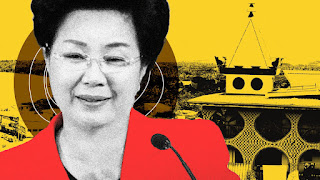
The doomsday cult’s guide to taking over a country

The doomsday cult’s guide to taking over a country
Pete McKenzie
The Economist
February 7, 2025


The doomsday cult’s guide to taking over a country" ... Over the past decade, Fiji – a tropical nation whose name summons visions of cocktails under verdant palm trees and luxurious oceanside resorts – has become a haven for Grace Road, one of many shadowy Korean cults that have found footholds abroad. Since it arrived in Fiji in 2013, Grace Road has been accused by local and foreign police of forcing its 400-odd followers to work in its businesses, abusing them with violence and sleep deprivation, and kidnapping their family members. The cult has also been accused of corrupting members of Fiji’s former government, which allegedly helped fund Grace Road’s commercial ventures and resisted international warrants to arrest its members.

Most Fijians have turned a blind eye to these allegations. Locals have become enamoured with the products and services offered by Grace Road – and the promise of economic development represented by its businesses, which are as omnipresent on the island as Starbucks is in America. The bizarre, parasitic relationship that has developed between Grace Road and Fiji exemplifies the risks that arise when a small, poor nation chases prosperity by sacrificing some of its sovereignty to mysterious outsiders – in this case, a cult preparing for the world’s end – and the immense difficulty of expelling these groups once they have put down roots."

"In the latter half of the 20th century – as South Koreans grappled with the legacy of Japanese colonial rule (which came to an end with the second world war), the traumatic division of the Korean peninsula, a series of brutal military dictatorships and nuclear threats from their northern neighbour – cults sprouted throughout the country. According to Tark Ji-Il, a professor at Busan Presbyterian University who is an expert on South Korean cults, the country’s social and political troubles were “turning points” that made doomsday messages particularly appealing to people who were desperately seeking stability. Most of the nascent cults had their roots in Christianity, but with an alarming twist: their founders typically claimed to be the modern incarnation of Jesus, demanded obsessive devotion and predicted the imminent end of the world. Today, about a third of South Korea’s population consider themselves Christians; of that number, Tark estimates that around a tenth are members of cults.

Most Fijians have turned a blind eye to these allegations. Locals have become enamoured with the products and services offered by Grace Road
In recent decades, cults have played roles in some of the country’s biggest scandals. Tark’s own father, a prominent theologian, was fiercely opposed to them; in 1994, three days after criticising a cult on television, he was stabbed to death in what appeared to be a retaliatory attack. In 2016 South Korea’s president was impeached after it emerged that the family of a shamanistic cult leader (whom many in the country called a “Korean Rasputin”) had edited her speeches, advised her on policy and used government connections to press the country’s largest businesses into donating $69m to cult-controlled charitable foundations. In 2023 a Netflix documentary alleged that leaders of several of South Korea’s largest cults raped and sexually exploited many of their followers.
Some of these groups have established outposts among the Korean diaspora in countries such as America, South Africa, Singapore and Japan. The best known is the Unification church – often referred to as the “Moonies”, after the surname of its founder – who came to global attention for organising mass weddings between members. (In 2022 Abe Shinzo, a former prime minister of Japan who had ties to the Moonies, was killed by a man whose mother bankrupted herself through donations to the cult.)

But even as Korean cults have become notorious for their eccentricity, their growth abroad has gone relatively unscrutinised. Partly this is due to confusion about who has jurisdiction over them – the governments of the countries where they have outposts or South Korea itself – as well as the difficulties authorities face in gaining the trust of Korean immigrant communities." [ ...]

Sep 10, 2023

A Fugitive Cult's Dream Life in Fiji Threatens to Fall Apart

PARADISE LOST

Doomsday cult that bought up huge swathes of Fiji after fleeing South Korea faces annihilation as the Pacific nation turns against them.


The Daily Beast

Donald Kirk


Updated Sep. 10, 2023 2:57AM EDT / Published Sep. 09, 2023 10:48PM EDT 

SEOUL—Authorities in Fiji have smashed a South Korean cult that threatened to take over the South Pacific nation’s economy, arresting four of its leaders and sending two of them back to Korea.

The crackdown on the Grace Road Church shocked its 400 Korean and foreign adherents, who had moved to Fiji after being warned of an apocalypse about to annihilate South Korea. They submitted to regular thrashings, some of them caught on camera, in what their founder, a middle-aged woman named Shin Ok-su, claimed were needed to knock the devil out of them.

Shin was expelled back to Korea, arrested for child abuse, assault and false imprisonment, and sentenced to six years in prison in 2019, but the church survived until Fijian authorities this week rounded up church members in a drive to stamp out the influence of a cult that’s been madly buying up Fijian companies and property. The church, founded in South Korea in 2002, decided in 2014 that Fiji, an archipelago with a population of slightly less than 1 million people, was “the center of the world.”

Fijian authorities turned a blind eye as the church took over construction companies, beauty salons, restaurants and much else, establishing a mini-conglomerate called GR Group, modeled after the chaebol or conglomerates that dominate Korea.

The leaders of the church allegedly controlled their adherents by confiscating passports, forcing some to live in virtual imprisonment, ordering them to work on church-owned projects and beating them periodically into submission.

It was not until a new government took over early this year that authorities recognized the seriousness of the inroads the cult had made into Fijian life and decided to clean house. Fiji’s previous prime minister, Frank Bainimarama, six years ago gave Grace Road an award for business excellence, recognizing it had “invested heavily in Fiji.”

Now the seven top leaders of the church are listed as “prohibited immigrants” while authorities search for two of them, including Daniel Kim, son of founder Shin Ok-su. In charge of the church’s sprawling business interests, he remains on the lam while the GR Group, “very enraged by all the lies,” claims to have been “working proudly as owners.”

All the stories of “passport confiscation, forced labor, incarceration and violence,” said GR Group, were “unspeakable lies” created by “those who wish to slander us.”

“A strong leader with a stirring message resonates deeply in the Korean psyche.”

— Rev. Tim Peters

The grip that the church has held on Fiji, however, epitomized the rise of Korean cults in recent years in the face of efforts by mainstream churches to wipe out instinctive adherence to shamanism, a form of folk religion with origins deep in Korean history.

Koreans are “likely to worship different gods because they have a spiritual hunger for salvation,” said Chang Sung-eun, a woman working in Seoul. “Christianity had a lot of impact on Korean mentality and spirituality. Koreans are already spiritually crazy. The Christianity brought by westerners created the extremism in cults.”

Michael Breen, a former member of the Rev. Sun Myung Moon’s Unification Church which has been labeled a cult, told The Daily Beast that physical contact and strict teachings were often accepted by the members of Korea’s wild array of modern churches.

“There is a tradition of laying on of hands—called ‘ansu kido’ in Korean—which the Koreans can get over-enthusiastic about,” he said “Weird to outsiders. But OK for insiders until they leave and decide they do not like it.”

Besides Moon’s unification church—also known as the Moonies—the greatest cult-like religion to emerge from Korea in recent years is the Shincheonji Church, whose members were blamed for spreading COVID-19 to South Korea after attempting to win converts in Wuhan, the Chinese city where the COVID-19 virus originated in 2019.

“The reason for so many new religions among Koreans is that a) there is real freedom of religion in Korea even compared to Christian countries,” said Breen, a long-time businessman in Seoul. “That’s one reason they thrive. People come up with all sorts of interpretations and shifts in theology and practice.”

Like Moon’s Unification Church, smaller cult-like groupings feel the urge to expand overseas in the same spirit as Korean big business and K-pop. Blind adherence to the dictates of a single leader is characteristic of Korean life.

Abe’s Assassin Succeeds in Turning Japan Against ‘Cult’

MOONIE MADNESS


Discipline, however, is not always easy to enforce when foreigners are caught in the web. Four years ago, the physical abuse inflicted by church leaders was exposed when a young American woman sneaked out of the Grace Road Church building, got to a phone and reported that the church had seized her passport and cut her off from her family.

Had the woman been caught, she likely would have faced “ground thrashings,” severe beatings inflicted before all the members. A Korean court, in sentencing founder Shin, said her victims “suffered helplessly from collective beatings and experienced not only physical torture but also severe fear and considerable mental shock.”

Shin’s son, Daniel Kim, who has so far eluded arrest, left no doubt GR Group will fight hard against deportation to South Korea, which could lead to trials and even jail terms, and also continue to battle for its business empire. Grace Road, he said, was “in compliance with all laws and regulations.”

Kim boasted that the church had gotten a court order barring deportation of two of the seven whom authorities want to send back to Korea and laughed at the failure to find him and one of the others. (The seventh has already left Fiji.)

“I’m here,” he told the media in the Fiji capital of Suva. “If I did wrong, you come and arrest me. Why did you describe us as criminals?” Grinning, waving his arms, he asked, “Do I look like a runner?” And, “If I’m a runner, do I need to come in front of the media?”

Kim also took issue with the definition of “cult” as applied to Grace Road Church, whose members he said believed in God, not idols.

The Rev. Tim Peters, a Protestant pastor in Seoul with a long background working with North Korean defectors, placed the rise of Grace Road in the context of “the 5,000-year history of Korea.”

“A strong leader with a stirring message resonates deeply in the Korean psyche,” Peters told The Daily Beast.

Charisma helps. “A congregation’s appetite for an emotionally stirring sermon often eclipses a congregant’s individual spiritual growth,” Peters said. “Joining a new religious movement that has radical doctrines sometimes fulfills a need for young adults to break free from their parents’ or grandparents’ suffocating spiritual traditions.”

Chang Sung-eun explained the appeal of Grace Road Church more simply. “Koreans are passionate and energetic,” she said. “They have a strong yearning for salvation. They believe somehow, ‘God will save me.’ That’s the baseline. They tend to fall victim to pastors and ministers who have strong disciplinary policies.”

The Grace Road Church parishioners marooned on a paradise island may need to return to Korea in search of an even newer form of salvation if their cult is badly damaged by the Fijian crackdown.


Donald Kirk

kirkdon4343@gmail.com

https://www.thedailybeast.com/grace-road-churchs-dream-life-in-fiji-threatens-to-fall-apart

Aug 16, 2019

CultNEWS101 Articles: 8/16/2019


Pentecostalism, Grace Road, Legal, Religious Research, Podcast


"Johanna Bard Richlin, an assistant professor at the University of Oregon, did her research among Brazilians who had moved to the environs of Washington, DC. Many had been middle-class in Brazil but emigrated after some personal or macro-economic disaster. They found manual or domestic work but were homesick and had a feeling of being trapped. The United States seemed cold and atomised compared with home.


For such people, evangelical churches, including charismatic ones, offered a sense that they mattered as individuals, which was absent elsewhere in their lives. They formed a personal bond with pastors, who were usually compatriots, and were urged to feel a personal relationship with God. The dignity which they had lost by emigrating was restored to them as they dressed up for Sunday worship and were given tasks in the religious community. Many described the church as a "hospital" and God as a "consoler", as Ms Richlin writes in the journal Current Anthropology.


Rafael Cazarin, a scholar at the University of the Basque Country in Bilbao, looked at African Pentecostal communities both in his home town in Spain, and in Johannesburg. The scenes in the two cities were quite similar: pastors from Nigeria or Congo ministered to economic migrants from their native countries, offering a connection with home in a familiar style. The fact that the pastors themselves had made difficult journeys across several countries made them credible as purveyors of "spiritual power".


The pastors "played successfully with ambivalence" as they delivered messages that were designed to restore self-understanding and self-respect, Mr Cazarin says. They encouraged a sense of pride in being African, and in African notions of gender and family; but they also stressed the advent of a "new Africa", which renounced witchcraft and superstition. Especially in Spain, the faithful were also warned against the decadent secularism of the modern West. Congregations were separated, for part of the time, by generation, sex and marital status, and each group got instructions as to how to behave at their age and stage. Structures were imposed on an otherwise chaotic social reality, as Mr Cazarin describes in the journal Religions.


Pentecostalism's appeal to the transient and insecure is also portrayed in a study of a little-known micro-community: Brazilians of Japanese descent who move to Japan (ie, the land their forebears left a few generations back) to work in the car industry. Speaking Portuguese better than Japanese, and feeling economically and socially insecure, such people found comfort in the warmth, dignity and inclusiveness of Latino-style Pentecostalism, says Suma Ikeuchi of the Art Institute of Chicago, writing in the Journal of the American Academy of Religion. She has set out her conclusions in a book called "Jesus Loves Japan"."


"The jailing of a South Korean cult leader for imprisoning hundreds of followers in Fiji is unlikely to end their plight.


The leader of Grace Road Church, Shin Ok-ju, was jailed for six years last week.


To her followers, Fiji was the promised land, and hundreds moved to endure ritual beatings and forced labour at Grace Road's network of businesses in Fiji.


An expert in Korean cults, Ji-il Tark from Busan University, said those businesses had extensive links with the Fiji government.


He said with the group ostracised in South Korea, the remaining followers will likely be keen to stay in Fiji."


Pew Research Center: Religious Belief and National Belonging in Central and Eastern Europe
"Roughly a quarter of a century after the fall of the Iron Curtain and subsequent collapse of the Soviet Union, a major new Pew Research Center survey finds that religion has reasserted itself as an important part of individual and national identity in many of the Central and Eastern European countries where communist regimes once repressed religious worship and promoted atheism.

Today, solid majorities of adults across much of the region say they believe in God, and most identify with a religion. Orthodox Christianity and Roman Catholicism are the most prevalent religious affiliations, much as they were more than 100 years ago in the twilight years of the Russian and Austro-Hungarian empires.

In many Central and Eastern European countries, religion and national identity are closely entwined. This is true in former communist states, such as the Russian Federation and Poland, where majorities say that being Orthodox or Catholic is important to being "truly Russian" or "truly Polish." It is also the case in Greece, where the church played a central role in Greece's successful struggle for independence from the Ottoman Empire and where today three-quarters of the public (76%) says that being Orthodox is important to being "truly Greek."

Many people in the region embrace religion as an element of national belonging even though they are not highly observant. Relatively few Orthodox or Catholic adults in Central and Eastern Europe say they regularly attend worship services, pray often or consider religion central to their lives. For example, a median of just 10% of Orthodox Christians across the region say they go to church on a weekly basis.

Indeed, compared with many populations Pew Research Center previously has surveyed – from the United States to Latin America to sub-Saharan Africa to Muslims in the Middle East and North Africa – Central and Eastern Europeans display relatively low levels of religious observance."


What is a cult, and what makes people join them? Are there any unifying traits amongst people who join cults? What about in cult leaders?

This week, we have Cult Interventionist & Exit Counselor Joseph Szimhart to answer all of those questions and more, even shedding light on the fact that there are a LOT more cults in this world than you'd realize. After the interview, Justin tells his firsthand account of accidentally joining a Los Angeles rape cult for actors.

1:33 - Intro & Welcome.

3:53 - Interview with Cult Interventionist Joseph Szimhart.

41:52 - Justin Xavier explains his cult experience using the terms & themes Joseph Szimhart explained in his interview.


News, Education, Intervention, Recovery

Intervention101.com to help families and friends understand and effectively respond to the complexity of a loved one's cult involvement.
CultRecovery101.com assists group members and their families make the sometimes difficult transition from coercion to renewed individual choice.
CultNEWS101.com news, links, resources.
Cults101.org resources about cults, cultic groups, abusive relationships, movements, religions, political organizations and related topics.

Selection of articles for CultNEWS101 does not mean that Patrick Ryan or Joseph Kelly agree with the content. We provide information from many points of view in order to promote dialogue.

Please forward articles that you think we should add to CultNEWS101.com.

Thanks,

Patrick Ryan (pryan19147@gmail.com)

If you do not wish to be subscribed to this list, or you think you are being maliciously subscribed to the list, or have any other questions, send them to: pryan19147@gmail.com or send an email to: cultnews101+unsubscribe@googlegroups.com.