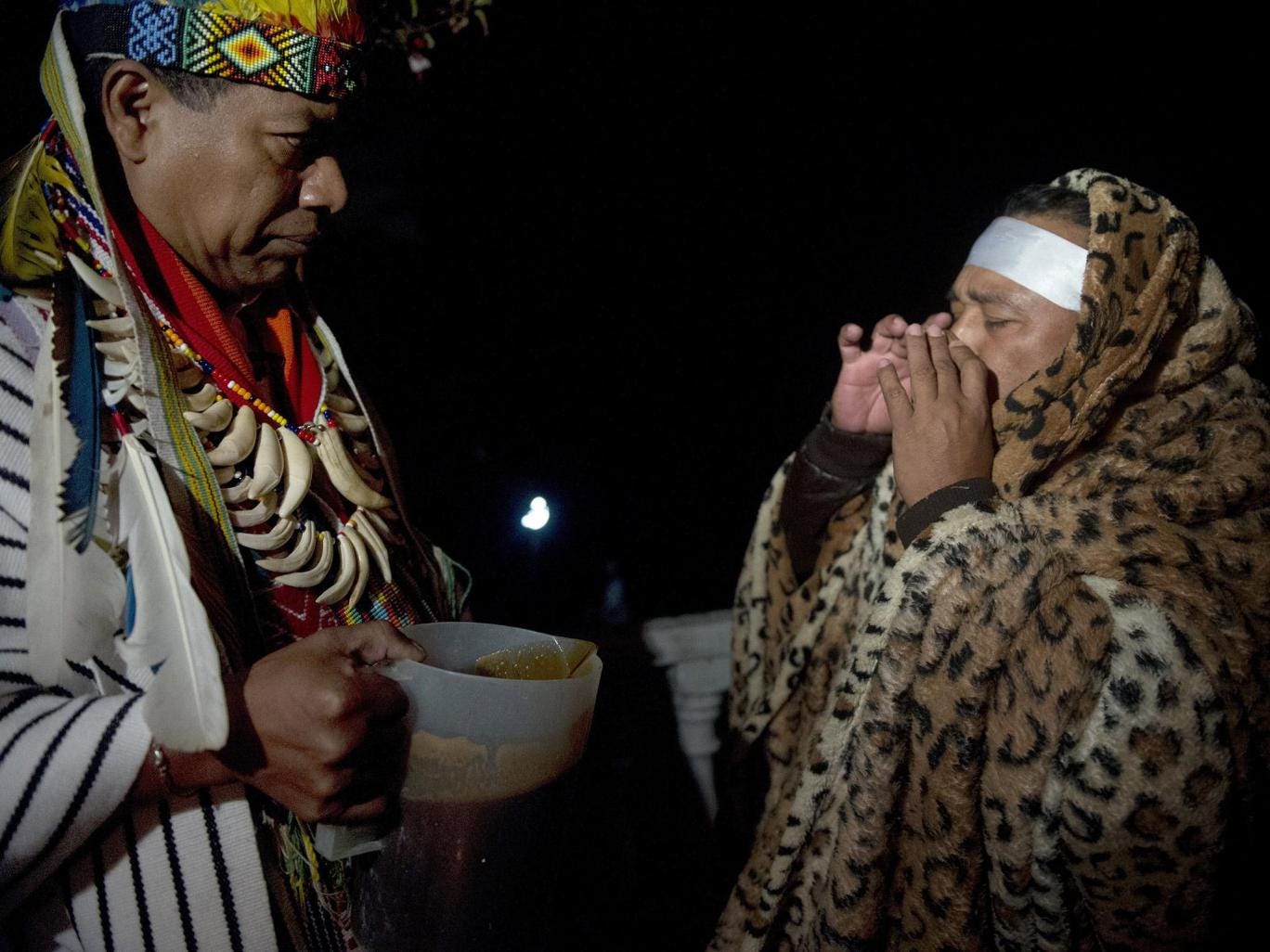
Showing posts with label Ayahuasca. Show all posts

Jul 16, 2024

CultNEWS101 Articles: 7/16/2024

Jehovah's Witnesses, Exclusive Brethren, Australia, Homosexuality, Unification Church, Japan, Ayahuasca

Mental Health, Religion & Culture: Characteristics of health and well-being in former Jehovah's Witnesses in Austria, Germany, and Switzerland
"This study collected quantifiable data on the characteristics, health, and well-being of individuals who left or were expelled from a fundamentalist Christian faith community in Austria, Germany, or Switzerland. Methods: Data were collected using an online survey. Results: This study assessed a sample of former Jehovah's Witnesses (N = 424, Mage = 42.14, SDage = 12.57, 65% female). Most participants (66%) were born into this faith community. Half the sample left voluntarily, 21% were expelled, and 31% left due to having experienced abuse or maltreatment. One third reported suicidal thoughts; 10% had attempted suicide. The sample (especially women) reported relatively high levels of child maltreatment, moderate current health, clinically significant symptoms, high levels of stress, and low quality of life. Participants who left due to abuse or maltreatment reported more symptoms and child maltreatment. Discussion: Women and survivors of child maltreatment may represent particularly vulnerable sub-groups of former Jehovah's Witnesses."

Guardian: Years at Exclusive Brethren school were 'darkest moments of my life', former student says
Ben Woodbury, who has since come out as gay, never felt safe at school. Homosexuality is forbidden in the Exclusive Brethren.

"Students in need of psychological support at schools set up by the Exclusive Brethren sect cannot access external counselling services without getting approval from up to a dozen members of the school and church community, according to multiple former staff members.

The school says the approval process is to ensure that students "are provided with the right type of school-funded support for their individual needs".

But former teachers and students of the Brethren's OneSchool Global network – which operates 31 campuses in Australia, teaching 2,500 students – say the new policy undermines confidentiality for students struggling with mental health problems at the school who need help."

Nippon: Unification Church in Tough Position 2 Yrs after Abe
"-As Monday marks the second anniversary of the fatal shooting of former Japanese Prime Minister Shinzo Abe, the Unification Church finds itself in a difficult position as the incident shed light on the religious group's controversial practices, such as collecting massive donations from its followers.

The controversy was fueled by media reports that the shooter, Tetsuya Yamagami, 43, cited his personal grudge against the Unification Church as a motive for the attack. He reportedly believed Abe had ties with the group, to which his mother is said to have donated at least 100 million yen.

Since November 2022, the culture ministry has repeatedly exercised its right to have the group respond to its inquiries. And in October last year, the ministry asked Tokyo District Court to issue an order to dissolve the group, alleging violations of the Civil Code."

The Telegraph: Young barman 'beaten' to death after Ayahuasca ceremony in Venice
"A barman was found "beaten" to death in Venice after taking part in an Ayahuasca ceremony in a deconsecrated abbey.

Alex Marangon was likely murdered while attending the shamanic ritual before his body was dumped in the river Piave, Italian prosecutors said.


Mr Marangon, a 25-year-old barman from a small town north of Venice, disappeared from the Santa Bona di Vidor abbey near Treviso after reportedly drinking hallucinogenic tea made from the South American plant.


Count Giulio De Sacco, owner of the ex-monastery, said he was shocked and devastated by the man's death which occurred during an event billed as a healing ritual to celebrate Sol de Putumayo.


Mr Marangon was last seen around 3am on July 30 by at least two other people at the event who said they saw him running barefoot into the wooded abbey gardens. 

He was reported missing around 6am after failing to return to his room where he had left belongings including his mobile phone.


Mr Marangon's body was found three days later on a sandy inlet a few kilometres downstream of the Piave river. However, an autopsy did not detect water in his lungs, suggesting he had not drowned.


Wounds found on the body indicated that the young man had actually been beaten with a blunt object, according to Treviso prosecutor Marco Martani.


The injuries included a skull fracture and broken ribs which had caused internal bleeding to the chest area, but the fatal blow was one to the head.


On Sunday, police and prosecutors intensified their questioning of the attendees at the shamanic ritual as Mr Marangon's family grew impatient with the reluctance of authorities to divulge information.


Among the 20 people cooperating with the police were Andrea Gorgi Zuin and Tatiana Marchetto, known as "Zu and Tati" of Zu Music, who specialise in spiritual music with frequencies of 432hz. They are not considered suspects by police.

Prosecutors were also awaiting toxicology reports to determine exactly what substances were in Mr Marangon's blood.  


Witnesses reported that he drank Ayahuasca, a psychoactive beverage traditionally used by South American indigenous cultures and folk healers in the Amazon basins.

The decoction, which is illegal in Italy, is made from the stems of the Banisteriopsis caapi vine and leaves of the psychotria viridis shrub.


Friends said Mr Marangon had confided that he was anxious about going through the shamanic ritual again on the second night.


Investigators were also looking into whether he had ingested Kambo, a waxy poison scraped from the skin of the South American giant monkey frog. 

The hallucinogenic substance is typically applied to freshly burnt holes in the skin during ceremonies designed to cleanse the body and mind of negative energy."


News, Education, Intervention, Recovery


CultEducationEvents.com

CultMediation.com   

Intervention101.com to help families and friends understand and effectively respond to the complexity of a loved one's cult involvement.

CultRecovery101.com assists group members and their families make the sometimes difficult transition from coercion to renewed individual choice.

CultNEWS101.com news, links, resources.

Facebook

Flipboard

Twitter

Instagram

Cults101.org resources about cults, cultic groups, abusive relationships, movements, religions, political organizations and related topics.


Selection of articles for CultNEWS101 does not mean that Patrick Ryan or Joseph Kelly agree with the content. We provide information from many points of view in order to promote dialogue.


Please forward articles that you think we should add to cultintervention@gmail.com.


Jan 27, 2023

Psychedelic church asks panel to let it seek religious exemption for drug use

A Florida church known for its use of ayahuasca tea in religious retreat ceremonies wants an appeal court to revive its challenge to a DEA decision prohibiting its use of the hallucinogenic drink.
 
Courthouse news service
KAYLA GOGGIN / January 25, 2023

ATLANTA (CN) — An attorney for an Orlando church asked an 11th Circuit panel on Wednesday to overturn a Florida federal judge’s dismissal of its challenge to a Drug Enforcement Administration decision prohibiting the church from using psychedelic ayahuasca tea in its religious retreats.

Billing itself as a “spiritual learning and healing center,” Soul Quest Church of Mother Earth offers three-day retreats at its facility where participants can imbibe ayahuasca, a tea that contains the hallucinogen dimethyltryptamine, or DMT, in search of a religious awakening. For a $999 donation, Soul Quest Church extends participants the chance to join in on weekend retreat ceremonies to experience the “healing” attributes of the tea.

There’s just one problem: federal drug enforcers say the church is not entitled to a religious-based exemption to the Controlled Substances Act, the federal law designating DMT as a Schedule I substance with no currently accepted medical use.

Regardless of the DEA’s decision and a wrongful death lawsuit arising from one of its retreats, the ceremonies have continued unabated for the last seven years.
An attorney representing Soul Quest Church and its leader, Christopher Young, told a panel of the Atlanta-based appeals court that a Florida federal judge unfairly dismissed his clients’ lawsuit against the DEA last March.

The church sued the agency under the Religious Freedom Restoration Act, claiming in legal filings that its refusal to issue a religious exemption for the sacramental use of ayahuasca violates the First Amendment’s free exercise clause. Soul Quest Church had previously sued to block the DEA from enforcing the Controlled Substances Act against its use of the tea.

U.S. District Judge Wendy Berger ruled that the court did not have jurisdiction over the case and dismissed it.

The plant-based brew made from Amazonian vines and leaves originated with indigenous cultures in Latin America but in recent years has become popular among westerners seeking to treat physical, spiritual and mental ailments, including depression.

According to a 2016 review published in the journal Frontiers in Pharmacology about the therapeutic potentials of ayahuasca, the perception-altering tea often produces visions of beautiful scenery, “power animals, spirit guides, topical motifs, vibrant and varying geometric patterns” and induces self-reflection.

In its decision rejecting the church’s petition for a religious exemption to use the tea, the DEA determined that Soul Quest Church did not show that its use of ayahuasca is “pursuant to a religious exercise and based on a sincerely held religious belief.” The agency determined that the church promotes the use of ayahuasca for self-help and therapeutic reasons, not for religious ritual purposes.
But the church has claimed that the DEA failed to properly conduct an investigation into the sincerity of its religious use of ayahuasca, calling the process “defective in practice” in court filings.

Arguing on behalf of Soul Quest Church, attorney Derek Brett of the Burnside Law Group reiterated that claim on Wednesday.

Asked by U.S. Circuit Judge Britt Grant whether anyone could look at the evidence and question the religious sincerity of the group, Brett said it was not up to the DEA to make that call. Brett told the panel the church was entitled to “the same robust protections” that Congress anticipated under the Religious Freedom Restoration Act.

Justice Department attorney Lowell Sturgill, Jr. asked the panel to uphold the lower court’s decision, arguing that the church has failed to follow the appropriate procedures to appeal the DEA’s decision.

Instead of filing a petition for review within 30 days, the church elected to challenge the denial in federal court by adding it to the initial lawsuit against the agency. This type of legal maneuvering doomed the church’s appeal, DOJ attorneys argued in an appellate brief.

The government has also argued in legal filings that its denial of Soul Quest Church’s exemption request is in the interest of public health and safety. Although the church lists common side effects of drinking ayahuasca tea on its website – including panic, paranoia, vomiting and diarrhea – it claims that the brew “seems to be safe” for healthy individuals.

According to Berger’s ruling, church members are educated and evaluated for suitability before participating in the ceremony. But an investigation by the DEA revealed that the church does not always follow its own policies.

Soul Quest Church was sued in March 2020 for wrongful death after a 22-year-old participant in one of its ceremonies died. According to the lawsuit filed in Orange County Circuit Court, Brandon Begley began behaving “erratically” and making “abnormal bodily movements” after taking part in a Kambo session.

The session involved the administration of poisonous secretions from South American giant monkey frogs through holes burned into Begley’s skin with a heated stick.

The lawsuit filed by Begley’s father alleged that Soul Quest Church's employees waited three hours before calling 911. The action claims that employees failed to properly monitor Begley or prevent him from drinking an unsafe amount of water, leading to his hospitalization for respiratory failure and an anoxic brain injury.
Begley died several days later.

Another lawsuit filed by Kevin Rupchand the following year alleged that he had a seizure and lost consciousness after drinking too much water during a ceremony in which participants consumed a poison from tree bark.

In light of the allegations, the DEA argued in its appellate brief that refusing to grant the church a religious exemption “is the least restrictive means of protecting the public health and safety.”

Grant and fellow Trump appointee U.S. Circuit Judge Kevin Newsom were joined on the panel by U.S. Circuit Judge Jill Pryor, an Obama appointee.
The panel did not indicate when it would reach a decision in the case.
 
https://www.courthousenews.com/psychedelic-church-asks-panel-to-let-it-seek-religious-exemption-for-drug-use/
 

Apr 11, 2022

'We expect to win.' Ayahuasca churches vow to remain as court case largely dismissed.

'The DEA is attempting to close off all avenues for us to practice or engage in our spiritual practice,' said Scott Stanley, founder of the Arizona Yagé Assembly.


Alejandra Molina
Religion News Service
April 8, 2022


(RNS) — Every other weekend, Scott Stanley, founder of the Arizona Yagé Assembly, facilitates sacred ceremonies where congregants share ayahuasca, a plant-based psychedelic they say “has the capacity to heal the entire human being.”

This January, the congregation held its first ceremony at a new 50-foot-wide yurt it built on the western edge of the Tucson desert. Arizona Yagé Assembly was founded in 2015.

Stanley said the Yagé Assembly will continue to hold ceremony there even as an Arizona federal judge recently dismissed many of the claims they filed — along with the North American Association of Visionary Churches, the Vine of Light Church and its late founder Clay Villanueva — to try to block federal and local law enforcement from regulating their use of ayahuasca.

“The DEA is attempting to close off all avenues for us to practice or engage in our spiritual practice,” Stanley added. “We’re fighting this and we expect to win.”

In a March 30 order, U.S. District Judge Roslyn O. Silver said the religious groups haven’t “suffered any legal wrong” to justify moving forward with an Administrative Procedure Act claim against Attorney General Merrick Garland and officials with the Drug Enforcement Administration.

A big component of this case is a DEA process by which a group can file a petition for a religious exemption in its use of the ayahuasca plant, which contains dimethyltryptamine (DMT) — a Schedule I drug that’s illegal under federal law.

Known as “huasca” or “yagé,” ayahuasca has been traditionally consumed by Indigenous people in liquid form “as part of shamanic rituals designed to communicate with celestial supernatural forces or the spirits of the forest,” Andrew Dawson, professor of modern religion at Lancaster University, wrote for The Conversation.

Consuming it often induces vomiting and may result in the involuntary evacuation of the bowels, Dawson writes, adding that its “purgative nature is positively construed as an external physical manifestation of inner spiritual cleansing.”

The religious groups, in a May 2020 lawsuit filed in a U.S. District Court of California, claimed the DEA “has a policy of denying regulatory services to visionary churches and refusing all requested religious exemptions from the (Controlled Substances Act) until and unless compelled by court order.”

Their lawsuit highlights that as part of the DEA process, “no petitioner may engage in any activity prohibited under the Controlled Substances Act or its regulations unless the petition has been granted.”

Neither of the religious groups has filed for an exemption. The North American Association of Visionary Churches has said the DEA’s process “forces all visionary churches to remain in a gray area, where submitting an application for exemption will shut down their church.”

This led the judge in her March 30 order to proclaim they “have not suffered any legal wrong because they have not participated in the exemption process.” If the DEA denied the petition or refused to respond to it, then they “could argue they were harmed,” the judge said.

The judge also dismissed the religious groups’ claims under the Religious Freedom Restoration Act, but with the opportunity to submit an amended complaint.

The groups have tried to secure a pre-enforcement injunction to prevent federal authorities from prosecuting them or seizing the ayahuasca they import, but the judge said that wouldn’t be possible because they “failed to allege a ‘concrete plan'” to violate the Controlled Substances Act.

“The sacrament is being seized. This is the biggest problem we have,” said attorney Charles Carreon, who is representing the religious groups. “It’s being seized at an accelerating rate to the point of where I really question how many people are going to be able to practice Ayahuasca in this country.”

The religious organizations have attempted to establish that they have the “right to import and use ayahuasca for religious purposes” and to obtain relief for an allegedly unconstitutional search of Villanueva’s home, according to the order.

They claim that four shipments of ayahuasca, from Peru to Arizona Yagé Assembly and/or the North American Association of Visionary Churches, were seized by the federal government between April and December 2020. The Maricopa County Sheriff’s Office allegedly investigated Villanueva for production, use and distribution of DMT and marijuana, according to the order.

Villanueva’s home, which is the location of the Vine of Life Church, was raided just two weeks after the case was initially filed in May 2020. Authorities found marijuana, 91 pounds of ayahuasca paste, 15 bottles of ayahuasca liquid, suspected psilocybin mushrooms and more than $14,000.

Months later, on Aug. 23, Villanueva was arrested at Los Angeles International Airport before leaving for Peru “to participate in alleged religious ceremonies,” according to the order.

Additionally, the religious groups alleged that a “conspiracy” between the agency and Maricopa County resulted in the violation of Villanueva’s civil rights. The judge, however, said this merely demonstrates the “DEA communicates with other law enforcement — a practice which is not unlawful.”

Villanueva died April 1, just after the judge issued the order, Carreon said. He suffered from cancer.

Carreon said Villanueva’s health deteriorated after his August arrest.

“He really died for his religion,” Carreon said.


https://religionnews.com/2022/04/08/we-expect-to-win-ahuayasca-churches-vow-to-remain-amid-court-case-largely-dismissed/


Sep 21, 2020

Legal Ayahuasca Churches Are Spreading Across Canada

Ayahuasca Churches
A sixth religious group in Canada has been granted an exemption to use the hallucinogenic tea, known for causing visions and vomiting, as part of its ceremonies.

Rachel Browne
VICE
September 17, 2020

A church in Winnipeg, Manitoba just became the latest to get a government exemption to legally import and use daime tea, known as ayahuasca, VICE News has learned.

The Centre for Universal Illumination Luz Divina is part of a growing number of religious groups with special permission to use ayahuasca, as advocates and scientists continue to push for more research into the potential benefits of the substance—and the decriminalization of all psychedelics.

To date, Health Canada has granted six federal exemptions for churches in Montreal, Toronto, and Winnipeg to allow them to import and use ayahuasca, a tea brewed from plants from South America containing harmaline and dimethyltryptamine, otherwise known as DMT, which is banned in the U.S. and Canada. The brew has been used for centuries in healing ceremonies in Central and South America, and its effects can last several hours and include visions and vomiting.

In an email, Health Canada spokesperson Maryse Durette told VICE News exemptions are issued after a “comprehensive assessment” that ensures the “risk of diversion and any other health risks” is minimized.

The Winnipeg church received support for their Health Canada exemption application from Jessica Rochester, the founder of the Ceu do Montreal, which uses ayahuasca, referred to as “the sacrament” in its ceremonies according to the tenets of the Brazilian religion Santo Daime. The mission of her church, founded in 1996, is to “provide for transformation and evolution of all persons seeking enlightenment,” according to its website.

As VICE previously reported, Rochester’s Montreal church was one of the first two in Canada to receive an ayahuasca exemption in 2017 after more than a decade of trying. Since then, four other exemptions were granted to churches that use ayahuasca in Quebec, in Toronto, and now in Winnipeg.

“Somebody in Winnipeg found out about our church and actually for a couple of years flew from Winnipeg to participate in our work [rituals] and … just fell in love with the path,” Rochester told VICE News in an interview.

Someone who identified as the president of the Winnipeg Centre for Universal Illumination Luz Divina, but would not reveal their identity over concerns that doing so would compromise their job, told VICE News in an email that the group was founded in 2019 and has three members.

“We were not open to new members until now because without an exemption it was illegal to import, possess and serve the Daime Tea in Canada. Now things have changed for us,” the spokesperson wrote. “We will begin our calendar of ceremonies this fall.”

On average, the spokesperson said ceremonies involving ayahuasca last six hours.

There are two types of ceremonies. Concentrations—silent meditations combined with hymns and prayers—are shorter while Hinarios, involving singing and dancing in a formation on special festive days such as Christmas, may last longer.

The spokesperson said they expect more Santo Daime churches to open in the future, but at a slow pace, as the existing groups “demonstrate the benefits of the Daime so more can follow the trail.”

Rochester said she is not aware of any other groups with pending exemption applications for ayahuasca, but warned there are plenty of unregulated, “underground” ayahuasca ceremonies across the country taking place.

An advisory on her church’s website cautions members to “assure themselves of the authenticity, legality and accountability of any event they choose to attend.”

Drug policy and psychedelics experts say these types of exemptions that allow for the legal use of psychedelics can help demystify it and also help support calls for decriminalization. Health Canada has also been issuing exemptions for people with terminal illnesses to legally use psilocybin, known as magic mushrooms, to support their end-of-life care.

“The more we talk about psychedelic medicine, the more we reframe psychedelics into popular culture, the more popular it becomes,” Mark Haden, Chair of the Board of MAPS (Multidisciplinary Association for Psychedelic Studies) Canada, told VICE News.

“And that changes public opinion, and eventually it becomes relatively less painful for politicians to support it.”

Haden’s group is currently involved in researching supporting final-phase clinical trials on MDMA-assisted psychotherapy for post-traumatic stress disorders.

Unlike cannabis or other psychedelics that can be manufactured into standardized doses, ayahuasca is more difficult to study because it’s in the form of a tea and is usually taken within ceremonial settings, Haden said. Brazilian researchers recently found that ayahuasca may help with depression, however the pharmacology of it is not completely understood and may carry some risks.

One Canadian study from 2013 followed 12 people in an Indigenous community in British Columbia as they participated in treatment that included the use of ayahuasca. The researchers found that ayahuasca-assisted therapy may have potential benefits for people struggling with drug addiction and that there was “no evidence of harm associated with the administration of ayahuasca in a controlled ceremonial context.”

Another Canadian researcher at the Centre for Addiction and Mental Health in Toronto has also been evaluating an ayahuasca-based treatment program in Peru, where the substance is legal.

But Haden added that ayahuasca specifically probably does not need to go through clinical trials in order to become legalized in Canada.

“The more the Santo Daime churches become legalized, the more people have access to it, and they’re not having access to it through a stage one, two, and three clinical trial and prescription process, they’re having access to it through the shamanic process,” Haden said.

“There are many different roads to legalization, and I think different medicines are on different roads. And that’s probably a good thing.”

Durette would not say how many pending ayahuasca exemption applications Health Canada has received. People can apply for the special exemptions from the federal minister health to use illicit substances for medical or scientific purposes. They last for two years and are renewable.

Follow Rachel Browne on Twitter

https://www.vice.com/en_us/article/4ay9y9/legal-ayahuasca-churches-are-spreading-across-canada


Sep 5, 2018

Chile: A 33-year-old engineer dies after taking ayahuasca


RIES Secretariat

Info Catolica
September 4, 2018

Google Translation 

It is a well-known brew of Andean and Amazonian origin that allows hallucinogenic experiences, which some describe as true  "mystical journeys" . We talked about the ayahuasca , the same that the Chilean leader Antares de la Luzconsumed   with his group of followers of the sect that he headed, and that ended up murdering a baby in 2012, as El Morrocotudo recalls.

According to  La Estrella de Arica , a 33-year-old civil engineer died on September 2 in his home located in the Chile town of Arica. The publication details that the police have an important clue to determine the cause of death of the man. It turns out that a colleague of the fatal victim informed the PDI that his friend had traveled to Tacna (Peru), where he supposedly  got ayahuasca, which he introduced into the country in a coolant can  for vehicles.

According to the background that is handled, the engineer  died minutes after having ingested the liquid. "Although the autopsy of rigor declared the death as indeterminate, similarly the expert opinions will follow to determine if the fatal victim finally ingested the liquid and if it was precisely ayahuasca, which should be checked after the chemical tests , " hetold  La Estrella  the Deputy Commissioner of the BH of the PDI, Rafael Herrera.

As reported by  El Mercurio , people close to the deceased, who underwent an autopsy to determine the causes of his death, would have testified about  the purchase of the plant in Peru , and its subsequent transfer and eventual consumption in Chilean territory.

In  Ahora Noticias  we read that according to the first data provided by the Investigative Police, the 33-year-old professional worked for the Natural Resources Information Center (CIREN) of the Ministry of Agriculture, and was at the northern gate of the country performing work for that company.

http://www.infocatolica.com/blog/infories.php/1809040742-chile-muere-un-ingeniero-de-3

Apr 12, 2018

Two Montreal Religious Groups Can Now Legally Import Ayahuasca

Ayahuasca
Ayahuasca
Simon Coutu
VICE
April 12, 2018

This article first appeared on VICE Quebec.

With little fanfare, Health Canada granted exemptions last summer to two Montreal religious groups to allow them to import and serve ayahuasca to their members. The drug, originating from the Amazon, is otherwise banned in Canada since it contains dimethyltryptamine (DMT) and harmaline, two prohibited hallucinogens.

The eclectic Center of Sparkling Universal Light, also known as Céu do Montréal, and the Beneficient Spiritist Center União do Vegetal, have so far been very discreet about their exemption. Beyond an announcement on Céu do Montreal's website, the news has gone virtually unnoticed in Quebec.

"Our legal counsel warned us of the unintended negative consequences of participating in interviews that could jeopardize our continued exemption by Health Canada," said Céu do Montreal vice president Robert Ferguson in an email to VICE. "The freedom to practice our religion is still fragile in Canada, despite our new status."

Health Canada confirmed that it has exempted both groups under section 56 of the Controlled Drugs Act. "The Minister of Health may, on the conditions he considers necessary, exempt a person or a substance from the application of any provision of this Act or its regulations," said spokesperson André Gagnon.

The two-year exemptions, first granted in June 2017, are renewable. Health Canada refused to provide VICE with the quantities allowed, claiming the information is confidential. "These exemptions were for religious purposes only."

The Céu do Montreal and the Beneficient Spiritist Center União do Vegetal are religions originating in Brazil. The main sacrament at the heart of their practice is called Santo Daime and consists of consuming ayahuasca to meet the divine. "Health Canada recognizes that the use of Daime tea is an integral part of religious practices in some cultures," Gagnon said.

The mixture is mainly composed of two ingredients: the ayahuasca liana, which contains harmine and harmaline, and the chacruna, a bush whose leaves contain DMT. These plants are used to make a tea.

In Amazonia, Indigenous people have been consuming ayahuasca for hundreds of years, well before the arrival of Europeans. In the 1930s, in the state of Acre in Brazil, Raimondo Irineu Serra founded the syncretic religion Santo Daime, which incorporates elements of Christianity, South American shamanism and African animism, among others. Both groups in Montreal come from this tradition.

Ayahuasca is a drug with dangerous side effects, if consumed without supervision. "It may be incompatible with certain substances, including certain antidepressants," says Jean-Sébastien Fallu, a drug addiction specialist at the University of Montreal. "Some people with mental health issues...may also be at risk for toxic psychoses. This is not an experience to be taken lightly. It is a journey that can reactivate trauma. Hence the importance of being surrounded by experienced people."

Canadian followers of these religions have fought for more than 15 years to obtain an exemption from the Canadian federal government. Jeffrey Bronfman, a third-generation heir to one of Montreal's wealthiest families, was at the heart of the negotiations. Ironically, his great-uncle, Samuel Bronfman made his fortune in the 1920s with the Seagram liquor company, while alcohol was banned in the United States.

Jeffrey Bronfman discovered the Beneficient Spiritist Center União do Vegetal (UDV) during a trip to Brazil in the early 90s. Fascinated by his experience with ayahuasca, he learned Portuguese and then became a "mestre," a title given to the clergy of religion. He then founded the US branch of the UDV in 1994 in Santa Fe, New Mexico. He is also a director of the Montreal chapter.

In 1999, US federal authorities raided his church and seized more than 110 liters of ayahuasca. No one was arrested in connection with the seizure. In response to the raid, Jeffrey Bronfman sued Washington saying that the prohibition violates the freedom of religion of members of the UDV. The battle lasted for a decade.

In 2004, the US Supreme Court finally ruled in favor of the Bronfman UDV, which can now import the plants and distribute them in the United States. "The Court cannot conclude, based on the evidence presented by the parties, that the government has proved that ayahuasca poses a serious risk to the health of the members of the UDV who drink tea ceremonially" reads the judgment.

The exemption in Canada closely follows the protocols established under an agreement negotiated with the drug control authorities in the United States, Bronfman writes, in an email sent to VICE. Previously, Canadian members of the UDV had to cross the border to participate in religious services. "To obtain permission from the Canadian government for our tradition to be recognized stemmed from the need to care for our members so that they would not have to travel so far to practice our religion. "

In 2000, Canada Customs intercepted a number of plants destined for Ceù do Montreal and turned it over to the Royal Canadian Mounted Police. The president of the organization, Dr. Jessica Rochester, made an initial request for an exemption from Health Canada. On the group's website, she writes that the Conservative years in Canada, from 2006 to 2015, completely froze the process. Health Canada officially rejected her application in 2012. (Dr. Rochester refused all our requests for an interview.)

Rochester then called on her long-time friend, Jeffrey Bronfman, to help her obtain the necessary authorizations to legally import the drug into the country. "Personally, I have had close relationships with Jessica Rochester for over 15 years and I knew very well the difficulties she had had in the past in obtaining a license," wrote Bronfman. "As part of UDV and Céu do Montréal's shared need for regulatory accommodation for our religious practices, we decided to join our efforts, which were successful. "

Justin Trudeau's election in 2015, which promises to legalize cannabis and recognizes the harm reduction approach to drugs in general, opened new possibilities. Both religious groups reiterated their request for exemption to the Office of Controlled Substances. In June 2017, they learned that they can import and serve ayahuasca to all their followers.

Stephen Bronfman, director of funding for the Liberal Party of Canada, is a distant cousin of Jeffrey Bronfman. Jeffrey Bronfman told VICE his family connection had nothing to do with the decision.

"I have never been in contact with Stephen Bronfman about this, and I have no knowledge of his political position on this or any other issue," he said. "I also had no personal contact with a member of the Liberal Party in Canada, the Prime Minister or a member of his family on this matter. I [have] lived in the United States, without much contact in Canada, for almost 50 years. "

Jean-Sébastien Fallu looks favourably on this new openness on the part of the federal authorities. The professor is also the founder of GRIP Montreal, a group that has been fighting for two decades to obtain an exemption for the purpose of analyzing substances.

"Any move away from prohibition is good news," he said. "The more exemptions are granted, the more likely it is to facilitate our requests for the analysis of [these] substances."

https://www.vice.com/en_ca/article/d35w5j/two-montreal-religious-groups-can-now-legally-import-ayahuasca

Mar 3, 2017

Ayahuasca: The lawyer fighting for those who take the hallucinogenic drug for religious reasons

Ayahuasca being used during a ceremony in Columbia
'I advocate for the use of ayahuasca as a sacrament. The world is in spiritual crisis these days'

Independent
Kashmira Gander
February 28, 2017

a state where it can do little else other than vomit and crap and while your brain vividly hallucinates. But it’s that level of potency that makes the ayahuasca drug so important in South American spiritual medicine.

Ayahuasca, also known as yage, is a blend of the ayahuasca vine and the chacruna shrub containing dimethyltryptamine or DMT: a hallucinogen. It is created by macerating and boiling the components. The thick, brown brew is then drunk. This process has been repeated for hundreds of years in search of spiritual awakening.

Although the statistics aren't concrete, experts believe that ayahuasca use has been spreading rapidly worldwide, as native American spiritual practices become better known and Westerners look to find themselves, sometimes with devastating effect. In 2014 19-year-old British backpacker Henry Miller died after taking a brew of yage in Colubmia.

While it is illegal in most nations - although almost a decade ago, yage was recognised as a “pillar” of the identity of Amazonian people in Peru - its links with religion sets it in a grey area. In the US, for instance, the First Amendment protects religious freedom while the Drug Enforcement Agency doesn’t look kindly on people supping on powerful hallucinogens.

J. Hamilton Hudson, a lawyer based in the US, is a Research Associate at the Ayahuasca Defense Fund (ADF) which is dedicated to protecting those who use the drug for religious reasons, and counsels those who are concerned about crackdowns.

We asked him about what it's like to try yage, and why he's fighting for people to be able to use it.

Which groups use yage?

Some shamans in the Upper Amazon rainforest from tribes that traditionally drink ayahuasca, Including the Shipibo-Conibo, Huni Kuin, Ashaninka, Huachiperi, and Jívaro, say they learned to drink ayahuasca from jaguars. Interestingly enough, in 2002 the BBC released footage of a jaguar eating ayahuasca leaves in Weird Nature.

Two big churches use ayahuasca all over the world, though they come from Brazil. Santo Daime and the União do Vegeta (UDV). For them, ayahuasca is used as a sacrament, like the Eucharist in Christian churches. Though ayahuasca packs a stronger punch than wafers and wine.

More and more new ayahuasca churches are forming with ayahuasca at their ceremonial centre.

Have you ever tried it?

When living in Pucallpa, Peru working for Alianza Arkana [a group advocating for indigenous peoples] I had the privilege of travelling with my Shipibo-Conibo [an indigenous people] friend to harvest an ayahuasca vine on his family land that he had his eye on since he was a child and I tried that. It was serious.

What is the current law on ayahuasca, and how is it problematic?

Ayahuasca is illegal in most countries save Peru. In some countries, enforcement is lacking. In others, like the Netherlands, ayahuasca is seized on sight by customs. This is all because ayahuasca contains a Schedule I substance, DMT. One problem is that many people think ayahuasca does not equal DMT because the amount of DMT in ayahuasca is too minimal. Another problem is that under some circumstances, religious freedom laws do permit ayahuasca use, but people totally misinterpret how much freedom they have and they think that if they call themselves a “church” they automatically get a blanket of protection—which is wrong. So they get their ayahuasca seized, they get arrested, or they get scary letters from the Drug Enforcement Administration.

Tells us about the controversy surrounding the use of ayahuasca by people posing as Native American churches

The problem with people who are not Native American identifying as a Native American Church and using ayahuasca should be pretty clear. It’s disrespectful to Native Americans. For hundreds of years immigrants have been appropriating Native American names and images for ski hills and football teams, their land for its resources, and their clothing for costumes. Costuming an ayahuasca church as “Native American” when Native Americans didn’t even drink ayahuasca because of some dubious belief that the shameless appropriation will provide some legal protection does a disservice to Native Americans. The “Native American Church” church “certifying” new ayahuasca churches is, in my opinion, super shady and a coalition of real Native American Churches disavowed it in court.

How can ayahuasca be used positively?

Ayahuasca can be used positively when it is used as a sacrament. That is, used for divine communion within the context of an institutionalised ritual with a framework for integration. There are some other ways ayahuasca can be used positively, too, like in the treatment of depression. In fact, there are a lot of ways ayahuasca can be used positively. This quote from a conversation between a Harvard ethnobotanist Richard Evans Spruce and a Kofán shaman tells it like it is:

“When Schultes asked the shaman how often the people drank Yagé [ayahuasca] his response suggested the question had no meaning; during illness, of course, and in the wake of death; in times of need and hardship; at certain passages in life; when a young boy of six has his initial haircut or when he kills for the first time. And naturally, the shaman suggested, a youth will drink Yagé at puberty…as a young man he may drink it at his leisure to improve his hunting technique or simply to flaunt his physical prowess. The message that Schultes received was that the Kofán took Yagé whever they felt like it—at least once a week and no doubt on any occasion that warranted it.”

I advocate for the use of ayahuasca as a sacrament. The world is in spiritual crisis these days, so people could benefit from a well-worn path to their "Divine Being". In the eyes of the law, the most legitimate use for ayahuasca is religious purposes.

Where does the balance lie between legislating on ayahuasca and enabling people to use it for religious ceremonies?

The right legislation enables people to use ayahuasca for religious ceremonies, but it sets the standard so that people are not doing shoddy, chaotic, and sloppy ceremonies without frameworks for integration.

What is the most important thing readers should know about ayahuasca?

The most important thing readers should know about ayahuasca is don't try it. They might not like the taste.

I think it is important to remember that in every “shaman” there is a “sham

http://www.independent.co.uk/life-style/ayahuasca-lawyer-j-hamilton-hudson-hallucinogenic-drug-religious-reasons-south-america-amazon-tribes-a7603341.html

Feb 16, 2017

THE DRUG OF CHOICE FOR THE AGE OF KALE

The New Yorker
By Ariel Levy
SEPTEMBER 12, 2016

How ayahuasca, an ancient Amazonian hallucinogenic brew, became the latest trend in Brooklyn and Silicon Valley.

The day after Apollo 14 landed on the moon, Dennis and Terence McKenna began a trek through the Amazon with four friends who considered themselves, as Terence wrote in his book "True Hallucinations," "refugees from a society that we thought was poisoned by its own self-hatred and inner contradictions." They had come to South America, the land of yagé, also known as ayahuasca: an intensely hallucinogenic potion made from boiling woody Banisteriopsis caapi vines with the glossy leaves of the chacruna bush. The brothers, then in their early twenties, were grieving the recent death of their mother, and they were hungry for answers about the mysteries of the cosmos: "We had sorted through the ideological options, and we had decided to put all of our chips on the psychedelic experience."

They started hiking near the border of Peru. As Dennis wrote, in his memoir "The Brotherhood of the Screaming Abyss," they arrived four days later in La Chorrera, Colombia, "in our long hair, beards, bells, and beads," accompanied by a "menagerie of sickly dogs, cats, monkeys, and birds" accumulated along the way. (The local Witoto people were cautiously amused.) There, on the banks of the Igara Paraná River, the travellers found themselves in a psychedelic paradise. There were cattle pastures dotted with Psilocybe cubensis—magic mushrooms—sprouting on dung piles; there were hammocks to lounge in while you tripped; there were Banisteriopsis caapi vines growing in the jungle. Taken together, the drugs produced hallucinations that the brothers called "vegetable television." When they watched it, they felt they were receiving important information directly from the plants of the Amazon.

The McKennas were sure they were on to something revelatory, something that would change the course of human history. "I and my companions have been selected to understand and trigger the gestalt wave of understanding that will be the hyperspacial zeitgeist," Dennis wrote in his journal. Their work was not always easy. During one session, the brothers experienced a flash of mutual telepathy, but then Dennis hurled his glasses and all his clothes into the jungle and, for several days, lost touch with "consensus reality." It was a small price to pay. The "plant teachers" seemed to have given them "access to a vast database," Dennis wrote, "the mystical library of all human and cosmic knowledge."

If these sound like the joys and hazards of a bygone era, then you don't know any ayahuasca users—yet. In the decades since the McKennas' odyssey, the drug—or "medicine," as many devotees insist that it be called—has become increasingly popular in the United States, to the point where it's a "trendy thing right now," as Marc Maron said recently to Susan Sarandon, on his "WTF" podcast, before they discussed what she'd learned from her latest ayahuasca experience. ("I kind of got, You should just keep your heart open all the time," she said. "Because the whole point is to be open to the divine in every person in the world.")

The self-help guru Tim Ferriss told me that the drug is everywhere in San Francisco, where he lives. "Ayahuasca is like having a cup of coffee here," he said. "I have to avoid people at parties because I don't want to listen to their latest three-hour saga of kaleidoscopic colors."

Leanna Standish, a researcher at the University of Washington School of Medicine, estimated that "on any given night in Manhattan, there are a hundred ayahuasca 'circles' going on." The main psychoactive substance in ayahuasca has been illegal since it was listed in the 1970 Controlled Substances Act, but Standish, who is the medical director of the Bastyr Integrative Oncology Research Center, recently applied for permission from the F.D.A. to do a Phase I clinical trial of the drug—which she believes could be used in treatments for cancer and Parkinson's disease. "I am very interested in bringing this ancient medicine from the Amazon Basin into the light of science," Standish said. She is convinced that "it's going to change the face of Western medicine." For now, though, she describes ayahuasca use as a "vast, unregulated global experiment."

Most people who take ayahuasca in the United States do so in small "ceremonies," led by an individual who may call himself a shaman, anayahuasquero, a curandero, a vegetalista, or just a healer. This person may have come from generations of Shipibo or Quechua shamans in Peru, or he may just be someone with access to ayahuasca. (Under-qualified shamans are referred to as "yogahuascas.") Ayahuasca was used for centuries by indigenous Amazonians, who believed that it enabled their holy men to treat physical and mental ailments and to receive messages from ancestors and gods. Jesse Jarnow, the author of "Heads: A Biography of Psychedelic America," told me, "It's a bit less of a to-do in many of its traditional uses—more about healing specific maladies and illnesses than about addressing spiritual crises." Now, though, ayahuasca is used as a sacrament in syncretic churches like the Santo Daime and the União do Vegetal ("union of the plant"), both of which have developed a presence in the United States. The entire flock partakes, and the group trip is a kind of congregational service.


The first American to study ayahuasca was the Harvard biologist Richard Evans Schultes, who pioneered the field of ethnobotany (and co-authored "Plants of the Gods," with Albert Hofmann, the Swiss scientist who discovered LSD). In 1976, a graduate student of Schultes's brought a collection of the plants back from his field research to a greenhouse at the University of Hawaii—where Dennis McKenna happened to be pursuing a master's degree. Thanks to McKenna, some B. caapi cuttings "escaped captivity," he told me. "I took them over to the Big Island, where my brother and his wife had purchased some land. They planted it in the forest, and it happened to like the forest—a lot. So now it's all over the place."

Terence McKenna died in 2000, after becoming a psychedelic folk hero for popularizing magic mushrooms in books, lectures, and instructional cassette tapes. Dennis McKenna went on to get a doctorate in botany and is now a professor at the University of Minnesota. When we spoke, he was on a book tour in Hawaii. He had been hearing about ayahuasca use in a town on the Big Island called Puna, where people call themselves "punatics." "Everybody is making ayahuasca, taking ayahuasca," he said. "It's like the Wild West."

If cocaine expressed and amplified the speedy, greedy ethos of the nineteen-eighties, ayahuasca reflects our present moment—what we might call the Age of Kale. It is a time characterized by wellness cravings, when many Americans are eager for things like mindfulness, detoxification, and organic produce, and we are willing to suffer for our soulfulness.

Ayahuasca, like kale, is no joy ride. The majority of users vomit—or, as they prefer to say, "purge." And that's the easy part. "Ayahuasca takes you to the swampland of your soul," my friend Tony, a photographer in his late fifties, told me. Then he said that he wanted to do it again.

"I came home reeking of vomit and sage and looking like I'd come from hell," Vaughn Bergen, a twenty-seven-year-old who works at an art gallery in Chelsea, said of one ayahuasca trip. "Everyone was trying to talk me out of doing it again. My girlfriend at the time was, like, 'Is this some kind of sick game?' I was, like, 'No. I'm growing.' " His next experience was blissful: "I got transported to a higher dimension, where I lived the whole ceremony as my higher self. Anything I thought came to be." Bergen allows that, of the nine ceremonies he's attended, eight have been "unpleasant experiences." But he intends to continue using ayahuasca for the rest of his life. He believes that it will heal not only him but civilization at large.

The process of making ayahuasca is beyond artisanal: it is nearly Druidical. "We pick the chacruna leaf at sunrise in this very specific way: you say a prayer and just pick the lower ones from each tree," a lithe ayahuasquera in her early forties—British accent, long blond hair, a background in Reiki—told me about her harvests, in Hawaii. "You clean the vine with wooden spoons, meticulously, all the mulch away from the roots—they look so beautiful, like a human heart—and you pound these beautiful pieces of vine with wooden mallets until it's fibre," she said. "Then it's this amazing, sophisticated process of one pot here and one pot there, and you're stirring and you're singing songs."

She and her boyfriend serve the ayahuasca—"divine consciousness in liquid form"—at ceremonies in New York, Cape Town, Las Vegas, Bali. They showed me pictures of themselves harvesting plants in a verdant Hawaiian jungle, looking radiantly happy. I asked if they made a living this way. "We manifest abundance wherever we go," she told me. Her boyfriend added, "Consciousness is its own economy."

Like juicing—another Kale Age method of expedient renewal—ayahuasca is appreciated for its efficiency. Enthusiasts often say that each trip is like ten years of therapy or meditation. Ferriss, the author of such "life-hacking" manuals as "The 4-Hour Workweek" and "The 4-Hour Body," told me, "It's mind-boggling how much it can do in one or two nights." He uses ayahuasca regularly, despite a harrowing early trip that he described as "the most painful experience I've ever had by a factor of a thousand. I felt like I was being torn apart and killed a thousand times a second for two hours." This was followed by hours of grand-mal seizures; Ferriss had rug burns on his face the next day. "I thought I had completely fried my motherboard," he continued. "I remember saying, 'I will never do this again.' " But in the next few months he realized that something astounding had happened to him. "Ninety per cent of the anger I had held on to for decades, since I was a kid, was just gone. Absent."

Ayahuasca enthusiasts frequently use the language of technology, which may have entered the plant-medicine lexicon because so many people in Silicon Valley are devotees. "Indigenous prophesies point to an imminent polar reversal that will wipe our hard drives clean," Daniel Pinchbeck wrote in his exploration of ayahuasca, technology, and Mayan millennialism, "2012: The Return of Quetzalcoatl." In an industry devoted to synthetic products, people are drawn to this natural drug, with its ancient lineage and ritualized use: traditionally, shamans purify the setting by smoking tobacco, playing ceremonial instruments, and chanting icaros—songs that they say come to them from the plants, the way Pentecostals are moved by the Holy Spirit to speak in tongues. "In Silicon Valley, where everyone suffers from neo-mania," Ferriss continued, "having interactions with songs and rituals that have remained, in some cases, unchanged for hundreds or thousands of years is very appealing."

Ayahuasca isn't the only time-honored method of ritual self-mortification, of course; pilgrims seeking an encounter with the divine have a long history of fasting, hair shirts, and flagellation. But in the United States most ayahuasca users are seeking a post-religious kind of spiritualism—or, perhaps, pre-religious, a pagan worship of nature. The Scottish writer and ayahuasca devotee Graham Hancock told me that people from all over the world report similar encounters with the "spirit of the plant": "She sometimes appears as a jungle cat, sometimes as a huge serpent." Many speak about ayahuasca as though it were an actual female being: Grandmother.

"Grandmother may not always give you what you want, but she'll give you what you need," an ayahuasquera who calls herself Little Owl said, a few months ago, at an informational meeting in a loft in Chinatown. Two dozen people of diverse ages and ethnicities sat on yoga mats eating a potluck vegetarian meal and watching a blurry documentary about ayahuasca. On the screen, a young man recounted a miserable stomach ailment that no Western doctor could heal. After years of torment, he took ayahuasca during a trip to Peru and visualized himself journeying into his own body and removing a terrifying squid from his intestines. The next day, his pain was gone, and it never came back.

After the movie, Little Owl, a fifty-two-year-old of Taiwanese descent with black bangs nearly to her eyebrows, answered questions. "Do your conscious and subconscious work on different frequencies?" a young woman in a tank top wanted to know. "And, if so, which one will Grandmother tap in to?" Little Owl said that Grandmother would address your entire being. A friend of hers, a young African-American man in a knit orange cap who said that he taught mindfulness for a living, was standing by, and Little Owl asked if he had anything to add. "The medicine is like shining a light on whatever conflict needs to be resolved," he said.

A Caucasian guy in his late twenties asked if there was anyone who shouldn't take the medicine; he was deciding which friends he should bring to the next ceremony. Little Owl, who has a background in acupuncture, replied that every participant would fill out a detailed health form, and that people who have such conditions as high blood pressure or who are on antidepressants should not take ayahuasca.

An older man with silver hair and a booming voice spoke next: "Do you have doctors or anyone on hand who understands what's happening on a pharmacological level if something goes wrong?"

There was a tense silence, and then Little Owl replied, "We are healing on a vibrational level."

A plant is constantly interacting with its ecosystem: attracting insects it needs for pollination, discouraging hungry herbivores, warning other plants that it competes with for nutrients in the soil. It communicates using "messenger molecules," which allow for semiosis (signalling) and symbiosis (interspecies coöperation), helping the species to improve its circumstances as the process of evolution unfolds. Some of the most important messenger molecules in the plant kingdom are called amines, and are typically derived from amino acids.

The human brain, too, is a kind of complex ecosystem, coördinated by messenger molecules of its own: neurotransmitters, which govern everything from the simple mechanism of pupils dilating in dim light to the unfathomable complexity of consciousness. The neurotransmitters that mediate emotion, awareness, and the creation of meaning are amines—such as serotonin, dopamine, and norepinephrine—which evolved from the same molecular antecedents as many plant-messenger molecules.

The main psychoactive substance in ayahuasca—N, N-dimethyltryptamine, or DMT—is an amine found in chacruna leaves. Ingested on its own, it has no effect on humans, because it is rapidly degraded by an enzyme in the gut, monoamine oxidase. B. caapi vines, however, happen to contain potent monoamine-oxidase inhibitors (MAOI). Some ayahuasca enthusiasts maintain that the synergy was discovered thousands of years ago, when the spirit of the plants led indigenous people to brew the two together; others think that one day someone happened to drop a chacruna leaf into his B. caapi tea, a psychedelic version of "There's chocolate in my peanut butter." However the combination came about, it allows DMT access to the human brain: when a person drinks ayahuasca, a plant-messenger molecule targets the neurons that mediate consciousness, facilitating what devotees describe as a kind of interspecies communication.

If the plant really is talking to the person, many people hear the same thing: we are all one. Some believe that the plants delivering this message are serving their own interests, because if humans think we are one with everything we might be less prone to trash the natural world. In this interpretation, B. caapi and chacruna are the spokes plants for the entire vegetable kingdom.

But this sensation of harmony and interconnection with the universe—what Freud described as the "oceanic feeling"—is also a desirable high, as well as a goal of many spiritual practices. Since 2014, Draulio de Araujo, a researcher at the Brain Institute, in Natal, Brazil, has been investigating the effects of ayahuasca on a group of eighty people, half of whom suffer from severe depression. "If one word comes up, it is 'tranquillity,' " he said. "A lot of our individuals, whether they are depressed or not, have a sense of peace after the experience."

Having studied fMRIs and EEGs of subjects on ayahuasca, Araujo thinks that the brain's "default-mode network"—the system that burbles with thought, mulling the past and the future, while your mind isn't focussed on a task—is temporarily relieved of its duties. Meanwhile, the thalamus, which is involved in awareness, is activated. The change in the brain, he notes, is similar to the one that results from years of meditation.

Dennis McKenna told me, "In shamanism, the classic theme is death and rebirth—you are reborn in a new configuration. The neuroscientific interpretation is exactly the same: the default-mode network is disrupted, and maybe things that were mucking up the works are left behind when everything comes back together."

In the early nineties, McKenna, Charles Grob, a professor of psychiatry and pediatrics at Harbor-U.C.L.A. Medical Center, and James Callaway, a pharmaceutical chemist, conducted a study in Manaus, Brazil, that investigated the effects of ayahuasca on long-term users. Fifteen men who had taken part in bimonthly ceremonies for at least a decade were compared with a control group of people with similar backgrounds. The researchers drew blood from the subjects and assessed the white blood cells, which are powerful indicators of the condition of the central nervous system. (McKenna told me, "In psychopharmacology, we say, 'If it's going on in the platelets, it's probably going on in the brain.' ") They found that the serotonin reuptake transporters—the targets that many contemporary antidepressants work on—were elevated among habitual ayahuasca drinkers. "We thought, What does this mean?" McKenna said. They couldn't find any research on people with abnormally high levels of the transporters, but there was an extensive body of literature on low levels: the condition is common among those with intractable depression, and in people who suffer from Type 2 alcoholism, which is associated with bouts of violent behavior. "We thought, Holy shit! Is it possible that the ayahuasca actuallyreverses these deficits over the long term?" McKenna pointed out that no other known drug has this effect. "There's only one other instance of a factor that affects this upregulation—and that's aging." He wondered if ayahuasca is imparting something to its drinkers that we associate with maturity: wisdom.

Charles Grob told me, "Some of these guys were leading disreputable lives and they became radically transformed—responsible pillars of their community." But, he noted, the men were taking ayahuasca as part of a religious ceremony: their church, União do Vegetal, is centered on integrating the ayahuasca experience into everyday life. Grob cautioned, "You have to take it with a facilitator who has some knowledge, experience, and ethics." In unregulated ceremonies, several women have been molested, and at times people have turned violent. Last year, during a ceremony at an ayahuasca center in Iquitos, Peru, a young British man started brandishing a kitchen knife and yelling; a Canadian man who was also on ayahuasca wrestled it from him and stabbed him to death.

Grob speculated that the shaman in that case had spiked the ayahuasca. Often, when things go wrong, it is after a plant called datura is added to the pharmacological mix. "Maybe facilitators think, Oh, Americans will get more bang for their buck," Grob said. He also wondered if the knife-wielding British man had been suffering a psychotic break: like many hallucinogens, ayahuasca is thought to have the potential to trigger initial episodes in people who are predisposed to them.

Problems can also arise if someone takes ayahuasca—with its potent MAOI—on top of selective serotonin reuptake inhibitors, a common class of antidepressants. The simultaneous blocking of serotonin uptake and serotonin degradation encourages enormous amounts of the neurotransmitter to flood the synapses. The outcome can be disastrous: a condition called serotonin syndrome, which starts with shivering, diarrhea, hyperthermia, and palpitations and can progress to muscular rigidity, convulsions, and even death. "I get calls from family members or friends of people who seem to be in a persistent state of confusion," Grob said. He had just received a desperate e-mail from the mother of a young woman who had become disoriented in the midst of a ceremony. "She ran off from where she was, and when she was found she was having breathing difficulties and is now having what appears to be a P.T.S.D. reaction."

These cases are rare, but profoundly upsetting trips are common. People on ayahuasca regularly report experiencing their own death; one man told Araujo that he had a terrifying visualization of being trapped in a coffin. "There are some people who are getting damaged from it because they're not using it the right way," Dennis McKenna warned. "It's a psychotherapeutic process: if they don't integrate the stuff that comes up, it can be very traumatic. That's the whole thing with ayahuasca—or any psychedelic, really. Set and setting is all-important: they've been telling us this since Leary! It's not to be treated lightly."

Williamsburg was throbbing with sound on the warm June evening when I went to an ayahuasca ceremony led by Little Owl. It was held in a windowless yoga studio next to a thumping dance club, and in the antechamber—a makeshift gym where we were told to leave our bags, amid worn wrestling mats and free weights—you could hear the sounds of drunk people in nearby McCarren Park, mixing with techno beats from next door. The studio's bathroom shared a locked door with the club, and patrons kept hurling themselves against it, trying to get in.

But inside the studio it was surprisingly quiet. There were trees and vines painted on the walls, and about twenty women had set themselves up on yoga mats in a tight circle, some of them with significant piles of pillows and sleeping bags. Everyone was wearing white, which is what you're supposed to do at an ayahuasca ceremony, except for a young woman who had on wild jungle-printed pants. My grooviest friend, Siobhan, a British painter, had agreed to come—"Is it crazy I'm spending money on white pants right now?" she had texted me, earlier that day—and we grinned at each other from across the room. We had carefully followed the dieta that Little Owl, like most ayahuasqueros, recommends for the week before a ceremony: no meat, no salt or sugar, no coffee, no booze. Siobhan and I were both pleased that at the very least this experience would be slimming.

The woman to my right, a twenty-five-year-old African-American I'll call Molly, had put a little grouping of crystals on the edge of her mat. It was her first ceremony, she said, and she had chosen this one because it was exclusively female. The young woman next to Molly told us that she had done ayahuasca in Peru. "With men around, the energy gets really erratic," she said. "This will be much more peaceful, vibrationally."

Little Owl had set up a perch for herself at the back wall, surrounded by bird feathers, crystals, flutes, drums, and wooden rattles, bottles of potions, and a pack of baby wipes. She explained that her helper, a young Asian-American woman she referred to as "our helper angel," would collect our cell phones and distribute buckets for the purge: smiling orange plastic jack-o'-lanterns, like the ones that kids use for trick-or-treating. One at a time, we went into the front room to be smudged with sage on the wrestling mats by a woman in her sixties with the silver hair and beatific smile of a Latina Mrs. Claus. When she finished waving her smoking sage at me and said, "I hope you have a beautiful journey," I was so moved by her radiant good will that I nearly burst into tears.

Once we were all smudged and back in our circle, Little Owl dimmed the lights. "You are the real shaman," she said. "I am just your servant."

When it was my turn to drink the little Dixie cup of muck she presented, I was stunned that divine consciousness—or really anything—could smell quite so foul: as if it had already been vomited up, by someone who'd been on a steadydieta of tar, bile, and fermented wood pulp. But I forced it down, and I was stoked. I was going to visit the swampland of my soul, make peace with death, and become one with the universe.

Soon thereafter, the woman on my left began to moan. To my right, the woman next to Molly had started retching, and the woman beyond her was crying—softly at first, and then in full-throated, passionate sobs. Little Owl, meanwhile, was chanting and sometimes playing her instruments.

I felt a tingling in my hands not unlike the early-morning symptoms of my carpal-tunnel syndrome. I focussed on my breath, as everyone I'd interviewed had said to do, and then, for fun, I started thinking about the people I love, arranging them first alphabetically and then hierarchically, as the people around me puked and wailed in the dark and Little Owl sang and played her little flute.

It seemed as though hardly any time had passed when she announced that anyone who wasn't feeling the medicine yet should drink again. My second Dixie cup was even worse than the first, because I knew what to expect: I barely made it back to my jack-o'-lantern in time to throw up. As I was wiping my mouth on a tissue, the girl across the room whose wild printed pants I had noticed started hollering, "I love you!" Some of us giggled a little. She kept at it, with growing intensity: "I love you so much! It feels so good!" The helper angel went over to calm her, and those of us who still had our wits about us said "Sh-h," soothingly and then, as the screaming got louder, resentfully. All of a sudden, she was on her feet, flailing. "I've eaten so many animals!" she screamed. "And I loved them all!"

It was the flailing that got to me. I thought of the girl whose parents had called Charles Grob and the Canadian kid who stabbed his associate in Iquitos. Any second now, I would be descending into the pit of my being, seeing serpents, experiencing my own death or birth—or something—and I did not necessarily want that to happen in a windowless vomitorium while a millennial in crazy pants had her first psychotic episode. Her yelling was getting weirder: "I want to eat sex!" I got up and went into the front room with the wrestling mats, where I tried to think peaceful thoughts and take deep, cleansing breaths.

Siobhan came out a minute later. "Bloody hell!" she said. She did not look entirely O.K.

"All the animals!" Crazypants yelled in the other room.

"Let's focus on our breath," I told Siobhan, as the club music pounded next door.

"We're supposed to be doing this in the flipping jungle," she said, sitting down next to me on the wrestling mat. I thought about mosquitoes and Iquitos and felt that, actually, it was probably for the best that we weren't.

Another woman came out of the ceremony. "I'm not fucking feeling anything!" she said. She had pink hair and a nose ring and looked like a ratty Uma Thurman. "This is fucked!"

"I want to feel the animals!" the girl screamed.

"Those are some bad vibes in there," Pink Uma said. "I'm very sensitive to vibrations."

"You don't exactly have to be a tuning fork," I told her.

"Sex and meat and love are one!"

I demanded that we get in a positive space—quickly. We all sat cross-legged on the mats, trying to focus on our breath.

But more women came out of the ceremony. "I miss my sister; I don't like this," said one, who had clearly been crying, a lot. An older woman with long gray hair seemed panicked, but soon started laughing uncontrollably. "I used to live on the houseboats in San Francisco in the sixties," she told us. "But all we did was grass."

"Maybe not so much talking," Siobhan said.

"Let's all sit down," I said, in an aggressively serene voice that I realized I was borrowing from my mother, who is a shiatsu masseuse. "Let's all have a nice trip now."

Then the helper angel came out and asked us not to talk. "She's shushing us?" Siobhan whispered, as Crazypants kept yelling and the club music hammered away.

"Listen," I said, in my peaceful, bossy voice. "I think that girl is having a psychotic episode and it's time to call 911."

"Not necessarily," Helper Angel said. This happened from time to time, she explained: the young woman with the pants was just having a "strong reaction to the medicine." I asked how she could tell it wasn't something requiring immediate medical intervention, and the angel replied, "Intuition."

And what did I know? I'd never done ayahuasca, or even seen anyone else who was on it. She did this all the time! It was getting very crowded on the wrestling mats and the music was so loud next door and the woman who'd lived on the houseboats was talking about Haight-Ashbury and cackling. Siobhan and I went back to our spots in the ceremony.

The smell inside the yoga studio was not great. But Pants Girl was yelling only intermittently now, and Little Owl was strumming a guitar and singing her version of "Let It Be": "When I find myself in times of trouble / Mother Aya comes to me."

It occurred to me that this wasn't working—that nothing was working, and now I would have to find another hippie to give me this disgusting drug all over again. And then maybe my default-mode network shut down for a second, or maybe I had a surge of serotonin, but for whatever reason the whole thing abruptly seemed hilarious, fascinating, perfect. I thought of my grandmother—Tanya Levin, not ayahuasca—who had recently done some hallucinating herself when she took too much heart medication and saw bugs everywhere laughing at her, and it didn't seem like such a tragedy that I wasn't having any visions. Maybe the ayahuasca was working: maybe this was the experience I was meant to have.

"Help," I heard Molly, the young woman to my right, squeak.

"You need help getting to the bathroom?" I whispered. Some people had been stumbling when they tried to get up and walk.

"No, I just need . . . some assistance," she said, her voice shaking with barely contained desperation. Helper Angel was still busy with Pants on the other side of the room. So I held Molly's hand. I told her that she wasn't going crazy, that we were just on drugs, and that everything was going to be fine. "Please don't leave me," she said, and started to sob. I told her to sit up and focus on her breath. Little Owl was drumming now, and chanting, "You are the shaman in your life," in a vaguely Native American way.

"Please say more words," Molly whispered.

I did, and Molly seemed to calm down, and pretty soon I was thinking that I was indeed the shaman in my life, and a downright decent one at that. It was at that moment that Molly leaned forward and let loose the Victoria Falls of vomit. She missed her jack-o'-lantern entirely and made our little corner of the room into a puke lagoon.

Just as when you stub your toe and there is an anticipatory moment before you actually feel the pain, I waited to feel the rage and disgust that experience told me would be my natural response to another person barfing all over me. But it never came. I thought of something Dennis McKenna wrote in his diary in 1967, about the effect that DMT was having on him. "I have tried to be more aware of beauty," he wrote. "I have enjoyed the world more and hated myself less." I sat there in Molly's upchuck, listening to Little Owl's singing, punctuated by the occasional shriek of "No more animals!" And I felt content and vaguely delighted and temporarily free. ♦


Ariel Levy joined The New Yorker as a staff writer in 2008. She won a 2014 National Magazine Award for essays and criticism, and guest-edited "The Best American Essays 2015," which came out in October.


This article appears in other versions of the September 12, 2016, issue, with the headline "The Secret Life of Plants."


http://www.newyorker.com/magazine/2016/09/12/the-ayahuasca-boom-in-the-u-s