
scmp.com
September 2, 2017
MORE THAN 250 people were injured and 38 died when violence broke out in parts of North India a week ago after a court found a popular guru called Gurmeet Ram Rahim guilty of rape. The guru’s followers ran amok, the local administration failed to control the violence (which had been widely predicted) and three days later,when Ram Rahim was sentenced to 20 years in prison, the verdict was not delivered in any court.
Instead, the judge and his entourage flew to Rohtak jail to announce the sentence. It was considered too dangerous to have any more proceedings in a courtroom because the threat of violence from Ram Rahim’s supporters was so great.
Why should a convicted rapist who claims to be a guru command such fanatical loyalty from his followers that they are willing to run riot in his name? Well, partly, it is the age-old global phenomenon of cults and their leaders. The followers of Charles Manson, Jim Jones and many other Western cult leaders have done much worse. All over the United States, violent cults dedicated to hatred (which they often cloak in the language of peace) have mushroomed over the past two decades.
But there is something specifically Indian about Ram Rahim and the phenomenon he has engendered. For a start, there’s the man himself. Loud, hairy and bombastic, he favours a blingy wardrobe that would make even the most flamboyant rapper blush. Nor is he an ascetic of any sort. He has produced movies starring himself in which he beats up villains and jiggles his mighty hips to Bollywood-type music. He chose the names of his movies himself. His most famous picture was modestly titled Messenger of God.
For most of India, Ram Rahim is a bizarre joke. And yet nobody can deny his influence or the loyalty he evokes in his followers. It was said a single directive from Ram Rahim could make his followers vote en masse to defeat a hostile candidate. So politicians have always flocked to him, seeking his blessing.
Even as the rape case was in court, regional ministers were reluctant to act against Ram Rahim’s supporters. This was one reason the violence that followed the judgment was so devastating: politicians had been too frightened to take preventive action against the thousands of Ram Rahim’s followers who had camped near the courthouse. And now the guru is in jail, each political party is busy leaking photos of its rivals supplicating before Ram Rahim in happier days.
There are few other countries where cult leaders command the same kind of influence as India’s gurus. Some of this can be attributed to the global cult phenomenon. But it also has its roots in the Indian tradition of the guru-shishya relationship. Unlike many religions, Hinduism has no clergy, no Vatican-like centre and no pope figure. Instead, the religion requires its followers only to look inward to find peace.
But there is also a tradition that gurus, or men (and it is nearly always men) who have reached advanced stages of consciousness or intellectual evolution can take disciples to whom they impart wisdom. And these disciples are required to blindly and obediently follow whatever the guru says.
The modern Indian guru phenomenon takes the most unpleasant elements of the Western cultist mentality and the Hindu tradition of total supplication before the teacher and gives it a pseudo-religious sanction. Though Hinduism makes it clear that no man can be a prophet, let alone a god, many of these gurus pervert that tradition and pass themselves off as semi-divine figures.
Some perform conjuring tricks, claim these are miracles and encourage their followers to believe they have god-like supernatural powers. This has led to the popularity of a peculiarly Indian term – the godman – to describe a guru whose followers believe he has divine powers.
The idea of a guru regarded as a saint by his followers is not new. But, as the author Arun Shourie points out in his recent book Two Saints, gurus who were venerated in an earlier era were respected for their goodness and simplicity. Most were ascetics who had turned their backs on material possessions and dedicated themselves to charity or social service.
By the 1960s however, a new kind of guru emerged: the sort of godman who, far from abjuring material possessions, actually used them to impress his followers. The late Sathya Sai Baba, the most influential godman of the 20th century would conjure up Omega watches out of thin air. His followers regarded this as a miracle.
While Sai Baba was a controversial figure, his followers included top scientists, intellectuals and even presidents of India. And whatever one thought of his miracles, he did encourage his followers to donate generously to the hospitals, colleges and other charitable ventures he established.
But the world of godmen can be competitive. In 1966, when Sai Baba first came to prominence, he was denounced as a fake by Hatha Yogi, another guru/yogi. Hatha Yogi declared only he was the real deal. He could even walk on water, he boasted. A large tank was constructed by public subscription and television crews from all over the world arrived to watch the Yogi match Jesus’ water-walk. Sadly, he sunk to the bottom of the tank with his very first step. Later, Hatha Yogi said Sai Baba had cursed him.
Another of Sai Baba’s contemporaries, Muktananda, attracted celebrity followers from the West and the Indian film industry. But when he died, having chosen a brother and sister as his joint successors, a fierce row broke out at the ashram. The sister’s camp accused the brother of sleeping with American devotees. The brother said his sister’s followers had abducted and assaulted him. Eventually the sister won. She is the guru referred to in the memoir of American author Elizabeth Gilbert, Eat, Pray, Love.
The Muktanandas and Sai Babas eventually made way for another kind of guru: the political wheeler-dealer.
The trend was started by then-prime minister Indira Gandhi in the 1970s when she promoted Dhirendra Brahmchari, who was, apparently, her yoga teacher. The state-run TV network (at the time, the only one in India) broadcast the yogi’s lessons every week (from all accounts, he knew his yoga) and the Brahmchari (a term which also implies celibacy, which may have been a bit of a stretch in this case) became India’s most famous yogi. He was such an important figure in Gandhi’s court he was nicknamed the “Rasputin of Delhi” and became a fully fledged political fixer, making use of his proximity to the prime minister.
All gurus have one major advantage: because they are supposed to be holy men, people are reluctant to treat them with obvious disrespect. The pushier ones use this “holy” status to gain access to the mighty and the wealthy. For two decades, India’s most notorious godman/guru was a racketeer with no real mass following, who did not even pretend to understand Hindu philosophy.
Born Nemi Chand Jain and arrested on fraud charges, he quickly changed his name to Chandra Swami, began wearing saffron and gained access to some of the world’s richest people. For many years, he was close to the Muslim Sultan of Brunei, one of the world’s richest men, and the centre of a dispute between two billionaires, Tiny Rowland and Mohamed al-Fayed, for control of Harrods, the famous London store. Chandra Swami later went into business with Adnan Khashoggi, a Saudi arms dealer, and mingled with US congressmen.
When his global ambitions faded, he returned to India, becoming extremely close to two successive Indian prime ministers: Chandra Shekhar and Narasimha Rao. Through it all, he was regularly denounced and exposed in the press across three continents. Yet it made no difference to his hold on political leaders. Eventually though, his luck ran out and he was arrested by the Indian police.
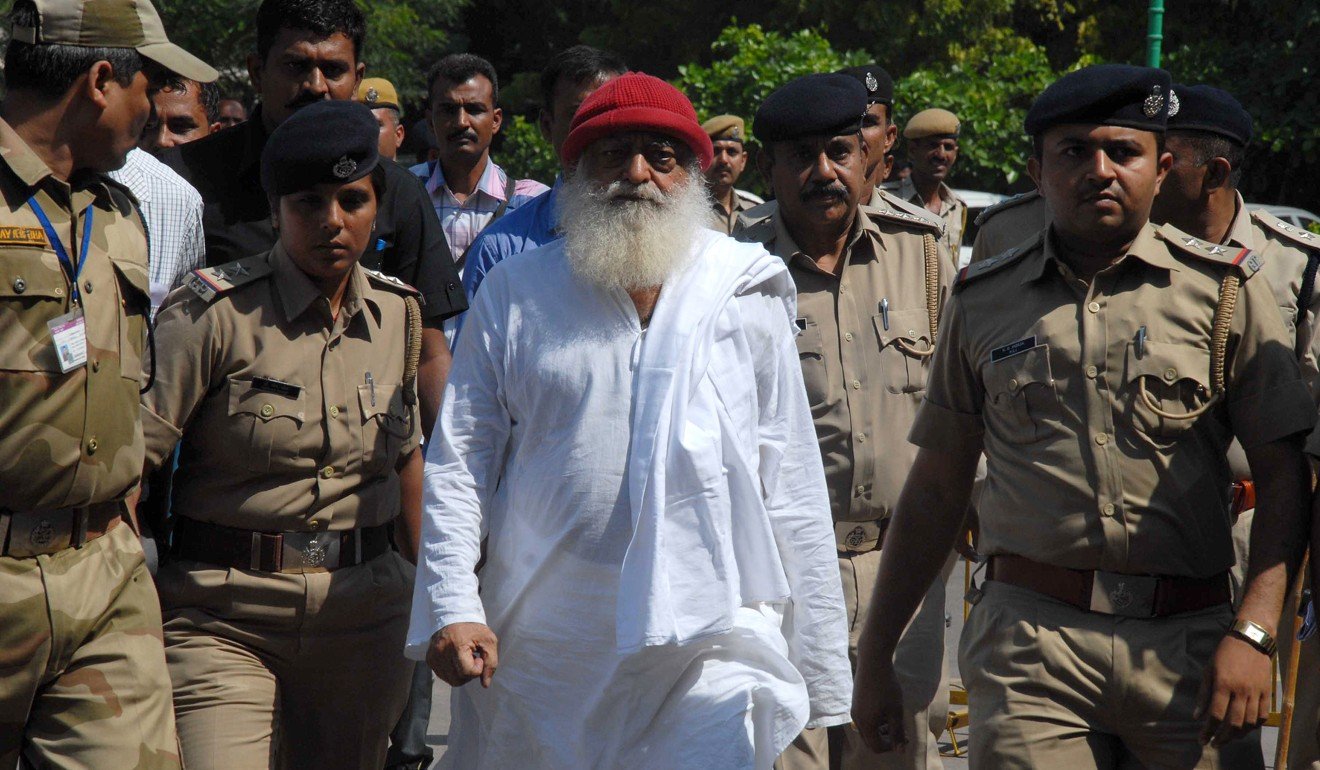
Less global in scope but no less extraordinary is the saga of Asaram Bapu, a millionaire godman with a dedicated (not to say, fanatical) following. Such was Asaram’s importance and wealth at his peak that he could film himself dancing with an Indian prime minister and grant audiences to top politicians. But the law caught up with him. He is now in jail on rape charges. His wealth may be intact, though. His followers routinely organise expensive social media blitzes during which they allege his arrest is part of a “campaign against Hindu saints”.
Most extraordinary of all is the saga of Baba Ramdev. He first came to prominence on a cable TV channel dedicated to “devotional content”. Like Dhirendra Brahmachari before him, he knew his yoga and within a few years became a national figure, rubbing shoulders with top politicians.
His first instincts were to go into politics himself. But when his attempts to run an anti-corruption campaign did not go as planned, Ramdev decided to go into business instead. He had already sold a successful line of organic and yoga-related products. But he was daring enough to enter the fast-moving consumer goods sector, taking on such a global giants as Unilever, Colgate and Nestle.
At first, when he talked big (“they will wet their pants,” he declared, in his usual not-very-holy rhetorical style) the multinational corporations laughed. But to their horror, Ramdev’s products became hugely successful, seriously threatening their market shares. His revenues seem to double every year and although Ramdev says he is much too holy to hold any assets in his own name, his partner/companion/friend Balkrishna (who owns everything, at least on paper) is worth US$3.8 billion, making him one of India’s richest businessmen.
So forget about Jim Jones and Charles Manson. India’s gurus are no mere cult leaders. They sway the electoral fortunes of political parties. They hold entire cities to ransom. And they can become billionaires in a few short years. None of it has anything to do with Hinduism, one of the world’s greatest religions, its traditions abused by these men. It’s just business. And, by God, it works!
http://www.scmp.com/week-asia/society/article/2109392/forget-charles-manson-why-indian-gurus-are-cult-above-west
September 2, 2017
MORE THAN 250 people were injured and 38 died when violence broke out in parts of North India a week ago after a court found a popular guru called Gurmeet Ram Rahim guilty of rape. The guru’s followers ran amok, the local administration failed to control the violence (which had been widely predicted) and three days later,when Ram Rahim was sentenced to 20 years in prison, the verdict was not delivered in any court.
Instead, the judge and his entourage flew to Rohtak jail to announce the sentence. It was considered too dangerous to have any more proceedings in a courtroom because the threat of violence from Ram Rahim’s supporters was so great.
Why should a convicted rapist who claims to be a guru command such fanatical loyalty from his followers that they are willing to run riot in his name? Well, partly, it is the age-old global phenomenon of cults and their leaders. The followers of Charles Manson, Jim Jones and many other Western cult leaders have done much worse. All over the United States, violent cults dedicated to hatred (which they often cloak in the language of peace) have mushroomed over the past two decades.
But there is something specifically Indian about Ram Rahim and the phenomenon he has engendered. For a start, there’s the man himself. Loud, hairy and bombastic, he favours a blingy wardrobe that would make even the most flamboyant rapper blush. Nor is he an ascetic of any sort. He has produced movies starring himself in which he beats up villains and jiggles his mighty hips to Bollywood-type music. He chose the names of his movies himself. His most famous picture was modestly titled Messenger of God.
For most of India, Ram Rahim is a bizarre joke. And yet nobody can deny his influence or the loyalty he evokes in his followers. It was said a single directive from Ram Rahim could make his followers vote en masse to defeat a hostile candidate. So politicians have always flocked to him, seeking his blessing.
Even as the rape case was in court, regional ministers were reluctant to act against Ram Rahim’s supporters. This was one reason the violence that followed the judgment was so devastating: politicians had been too frightened to take preventive action against the thousands of Ram Rahim’s followers who had camped near the courthouse. And now the guru is in jail, each political party is busy leaking photos of its rivals supplicating before Ram Rahim in happier days.
There are few other countries where cult leaders command the same kind of influence as India’s gurus. Some of this can be attributed to the global cult phenomenon. But it also has its roots in the Indian tradition of the guru-shishya relationship. Unlike many religions, Hinduism has no clergy, no Vatican-like centre and no pope figure. Instead, the religion requires its followers only to look inward to find peace.
But there is also a tradition that gurus, or men (and it is nearly always men) who have reached advanced stages of consciousness or intellectual evolution can take disciples to whom they impart wisdom. And these disciples are required to blindly and obediently follow whatever the guru says.
The modern Indian guru phenomenon takes the most unpleasant elements of the Western cultist mentality and the Hindu tradition of total supplication before the teacher and gives it a pseudo-religious sanction. Though Hinduism makes it clear that no man can be a prophet, let alone a god, many of these gurus pervert that tradition and pass themselves off as semi-divine figures.
Some perform conjuring tricks, claim these are miracles and encourage their followers to believe they have god-like supernatural powers. This has led to the popularity of a peculiarly Indian term – the godman – to describe a guru whose followers believe he has divine powers.
The idea of a guru regarded as a saint by his followers is not new. But, as the author Arun Shourie points out in his recent book Two Saints, gurus who were venerated in an earlier era were respected for their goodness and simplicity. Most were ascetics who had turned their backs on material possessions and dedicated themselves to charity or social service.
By the 1960s however, a new kind of guru emerged: the sort of godman who, far from abjuring material possessions, actually used them to impress his followers. The late Sathya Sai Baba, the most influential godman of the 20th century would conjure up Omega watches out of thin air. His followers regarded this as a miracle.
While Sai Baba was a controversial figure, his followers included top scientists, intellectuals and even presidents of India. And whatever one thought of his miracles, he did encourage his followers to donate generously to the hospitals, colleges and other charitable ventures he established.
But the world of godmen can be competitive. In 1966, when Sai Baba first came to prominence, he was denounced as a fake by Hatha Yogi, another guru/yogi. Hatha Yogi declared only he was the real deal. He could even walk on water, he boasted. A large tank was constructed by public subscription and television crews from all over the world arrived to watch the Yogi match Jesus’ water-walk. Sadly, he sunk to the bottom of the tank with his very first step. Later, Hatha Yogi said Sai Baba had cursed him.
Another of Sai Baba’s contemporaries, Muktananda, attracted celebrity followers from the West and the Indian film industry. But when he died, having chosen a brother and sister as his joint successors, a fierce row broke out at the ashram. The sister’s camp accused the brother of sleeping with American devotees. The brother said his sister’s followers had abducted and assaulted him. Eventually the sister won. She is the guru referred to in the memoir of American author Elizabeth Gilbert, Eat, Pray, Love.
The Muktanandas and Sai Babas eventually made way for another kind of guru: the political wheeler-dealer.
The trend was started by then-prime minister Indira Gandhi in the 1970s when she promoted Dhirendra Brahmchari, who was, apparently, her yoga teacher. The state-run TV network (at the time, the only one in India) broadcast the yogi’s lessons every week (from all accounts, he knew his yoga) and the Brahmchari (a term which also implies celibacy, which may have been a bit of a stretch in this case) became India’s most famous yogi. He was such an important figure in Gandhi’s court he was nicknamed the “Rasputin of Delhi” and became a fully fledged political fixer, making use of his proximity to the prime minister.
All gurus have one major advantage: because they are supposed to be holy men, people are reluctant to treat them with obvious disrespect. The pushier ones use this “holy” status to gain access to the mighty and the wealthy. For two decades, India’s most notorious godman/guru was a racketeer with no real mass following, who did not even pretend to understand Hindu philosophy.
Born Nemi Chand Jain and arrested on fraud charges, he quickly changed his name to Chandra Swami, began wearing saffron and gained access to some of the world’s richest people. For many years, he was close to the Muslim Sultan of Brunei, one of the world’s richest men, and the centre of a dispute between two billionaires, Tiny Rowland and Mohamed al-Fayed, for control of Harrods, the famous London store. Chandra Swami later went into business with Adnan Khashoggi, a Saudi arms dealer, and mingled with US congressmen.
When his global ambitions faded, he returned to India, becoming extremely close to two successive Indian prime ministers: Chandra Shekhar and Narasimha Rao. Through it all, he was regularly denounced and exposed in the press across three continents. Yet it made no difference to his hold on political leaders. Eventually though, his luck ran out and he was arrested by the Indian police.
Less global in scope but no less extraordinary is the saga of Asaram Bapu, a millionaire godman with a dedicated (not to say, fanatical) following. Such was Asaram’s importance and wealth at his peak that he could film himself dancing with an Indian prime minister and grant audiences to top politicians. But the law caught up with him. He is now in jail on rape charges. His wealth may be intact, though. His followers routinely organise expensive social media blitzes during which they allege his arrest is part of a “campaign against Hindu saints”.
Most extraordinary of all is the saga of Baba Ramdev. He first came to prominence on a cable TV channel dedicated to “devotional content”. Like Dhirendra Brahmachari before him, he knew his yoga and within a few years became a national figure, rubbing shoulders with top politicians.
His first instincts were to go into politics himself. But when his attempts to run an anti-corruption campaign did not go as planned, Ramdev decided to go into business instead. He had already sold a successful line of organic and yoga-related products. But he was daring enough to enter the fast-moving consumer goods sector, taking on such a global giants as Unilever, Colgate and Nestle.
At first, when he talked big (“they will wet their pants,” he declared, in his usual not-very-holy rhetorical style) the multinational corporations laughed. But to their horror, Ramdev’s products became hugely successful, seriously threatening their market shares. His revenues seem to double every year and although Ramdev says he is much too holy to hold any assets in his own name, his partner/companion/friend Balkrishna (who owns everything, at least on paper) is worth US$3.8 billion, making him one of India’s richest businessmen.
So forget about Jim Jones and Charles Manson. India’s gurus are no mere cult leaders. They sway the electoral fortunes of political parties. They hold entire cities to ransom. And they can become billionaires in a few short years. None of it has anything to do with Hinduism, one of the world’s greatest religions, its traditions abused by these men. It’s just business. And, by God, it works!
http://www.scmp.com/week-asia/society/article/2109392/forget-charles-manson-why-indian-gurus-are-cult-above-west