Showing posts with label Religion-discrimination. Show all posts

Feb 13, 2025

Chinese public security authorities intensify crackdown on cults, illegal ‘spiritual cultivation’ training

Global Times
February 13, 2025

China's public security authorities intensified efforts to dismantle cult organizations in 2024, focusing on risk prevention, law enforcement, and comprehensive governance. They have worked to curb the growth and spread of cult organizations, mitigating potential threats to national political security and maintaining social stability, the Ministry of Public Security (MPS) stated on its WeChat account on Thursday.

Public security authorities have intensified special operations against Falun Gong, "Almighty God," and other cult organizations, enhancing enforcement efforts to disrupt and prevent unlawful cult operations, according to the MPS.

To curb the spread of cult organizations, public security agencies nationwide have expanded the "spring rain project," focusing on rural and grassroots communities and offering psychological counseling and support. They also help individuals misled into cults reintegrate into society and address practical family difficulties. These initiatives have bolstered anti-cult efforts, creating a more secure and stable society, according to the MPS. 

While fighting against the cult organizations, public security authorities have cracked down on institutions conducting illegal training under the guise of "spiritual cultivation." Several organizations that fraudulently marketed "psychological healing" and "self-improvement" programs were found to be engaged in unlawful activities and were dealt with accordingly. These measures protected public well-being and prevented financial exploitation, the MPS stated.

Public security authorities across the country have also carried out anti-cult education in villages, universities, primary and secondary schools, residential communities, governmental institutions, and enterprises to enhance public vigilance against cult recruitment efforts.

In 2024, public security units nationwide organized more than 56,000 related events, reaching over 17 million people. Additionally, more than 18 million netizens participated in the online campaign "Say No to Cults" by signing a digital petition, said the MPS.

The MPS also noted that public security authorities will continue to closely monitor and crack down on cult activities, intensifying efforts to dismantle their networks and eliminate their influence and ensure the safety of people's lives and property. Authorities also urge the public to remain vigilant against cults and illegal training activities, recognize their true nature and severe harm, and actively resist them.

The MPS mandated rigorous enforcement against organizations conducting fraudulent training programs under the guise of "spiritual cultivation" as part of its recent deployment. A CCTV investigation in March 2024 revealed that since 2018, public security authorities nationwide had cracked 77 key cases involving illegal training activities disguised as "spiritual cultivation" and similar claims, leading to the criminal prosecution of 269 individuals and the confiscation of illicit earnings totaling over 217 million yuan ($29.75 million).

Furthermore, according to China Police Daily, local public security units adopted targeted strategies to build high-caliber anti-cult teams, improving their capability to combat cult activities. Beijing focused on developing specialized units to improve the foresight and targeting of anti-cult work, while Zhejiang Province in East China utilized advanced technology to enable timely detection and suppression of cult activities.

Global Times 
https://www.globaltimes.cn/page/202502/1328379.shtml

Mar 3, 2024

Russia jails Jehovah's Witness for 8 years after 'mole' secretly films worship meeting

Swissinfo.ch
March 1, 2024


(Reuters) – A court in southwestern Russia has sentenced a Jehovah’s Witness to eight years in prison after finding him guilty of organising “extremist activities”, according to a spokesman for the group.

Russia’s Supreme Court designated the Christian denomination as “extremist” in 2017, liquidating and banning its nearly 400 chapters across the country.

Russia counted roughly 175,000 active believers at the time of the ban, according to the group’s Russian website. Since then, raids, interrogations and jailings of adherents have occurred with some regularity.

The case against Aleksandr Chagan, 52, was built around a “mole” who secretly filmed worship meetings held by videoconference, said the spokesman, Jarrod Lopes.

Sentenced by a court in Tolyatti on Thursday, Chagan is the sixth Witness to receive eight years, the longest term imposed since the ban, Lopes said.

Religious life in Russia is dominated by the Russian Orthodox Church, which is championed by and loyal to President Vladimir Putin. Some Orthodox scholars view Jehovah’s Witnesses, known for door-to-door preaching and refusing military service, as a “totalitarian sect”.

At least 794 Witnesses have been criminally charged in Russia for their faith, and 127 are currently serving prison sentences, Lopes said.

Last month, four Witnesses in the same Russian region were handed seven-year jail terms in Samara, the same region as Chagan, while a female believer was sentenced in Tolyatti to two years’ forced labour.

The European Court of Human Rights, the court of the Council of Europe, ruled in June 2022 that the ban was illegal, three months after the Council expelled Russia over its full-scale invasion of Ukraine.


https://www.swissinfo.ch/eng/russia-jails-jehovah%27s-witness-for-8-years-after-%27mole%27-secretly-films-worship-meeting/73217251

Feb 19, 2024

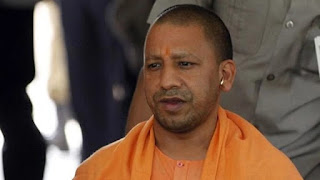
UP: Yogi govt approves establishment of Ramayan University in Ayodhya

Lucknow: In the temple town of Ayodhya, Uttar Pradesh, Ramayan University would be established. The Yogi Government has cleared the proposal of Maharishi Mahesh Yogi Institute in this regard.

FPJ Bureau
May 12, 2023,

The meeting of the UP cabinet chaired by Chief Minister Yogi Adityanath on Friday cleared several proposals related to industries and tourism departments. The entrepreneurs setting up industrial units in UP will now get a hundred per cent waiver in the stamp duty.

Amendments in Industrial Development & Employment Promotion policy

The state cabinet has approved proposed amendments in the Industrial Development & Employment Promotion policy. Under it those setting up mega industrial projects in UP would get several sops & rebates. The UP cabinet has cleared a proposal for setting up five universities in the private sector in the state. The weavers in the state will continue to pay their electricity bills at flat rates. The proposal to make the much hyped movie The Kerala Story tax free was also cleared by the UP Cabinet. After the cabinet meeting the UP CM watched this movie along with other ministers in a special screening organized at his office premises.  

The finance and parliamentary affairs minister of UP, Suresh Khanna while giving information about 27 proposals cleared by the cabinet on Friday, said that Mathura-Vrindavan Development Authority has been nominated as the construction agency for the tourism department for all kinds of development works at Mathura. Places of religious, historical and cultural importance in every assembly segment would be developed under Private Public Partnership (PPP) mode. Under it the state government would share the 50 percent cost ranging between ₹50 lakh to ₹5 crore while the remaining would be borne by the private agency.

The cabinet has approved proposals of setting up Maharishi Mahesh Yogi Ramayan University in Ayodhya, Maharishi Mahesh Yogi Agricultural University at Billhore Kanpur, Sharda University at Agra, GS University in Hapur and Future University in Bareilly. The UP cabinet also cleared the proposal of distributing oilseed and pulses seed kits to the farmers. 


https://www.freepressjournal.in/india/up-yogi-govt-approves-establishment-of-ramayan-university-in-ayodhya

Feb 1, 2024

US man faces hate crime over damage to Satanic Temple display in Iowa

Max Matza
January 31,  2024
BBC News

A man who has admitted to damaging a controversial Satanic Temple holiday display in the Iowa Capitol is now facing a serious hate crime charge.

Michael Cassidy, 35, an ex-Navy pilot who lost a race for the Mississippi legislature last year, was motivated by the victim's religion, prosecutors say.

On Tuesday, he was charged with third-degree criminal mischief in violation of individual rights - a hate crime.

Mr Cassidy has already raised $110,000 (£86,000) for his legal defence.

In a statement, the Polk County prosecutor's office said that Mr Cassidy "dismantled" the "Baphomet Altar" on 14 December and "destroyed the headpiece".

"In addition, evidence shows the defendant made statements to law enforcement and the public indicating he destroyed the property because of the victim's religion," prosecutors added.

Photos posted online show the display featured a depiction of a goat's head known as a Baphomet statue and a wreath adorned with a pentagram.

It had been allowed in Iowa's statehouse under rules that permit religious installations for two weeks during the holidays.

Its presence divided Republicans leaders in the state and it was criticised by Florida Governor Ron DeSantis in December during his presidential run.

Mr Cassidy had previously told conservative website The Sentinel that he destroyed the shrine in order to "awaken Christians to the anti-Christian acts promoted by our government".

"I saw this blasphemous statue and was outraged," Mr Cassidy said. "My conscience is held captive to the word of God, not to bureaucratic decree. And so I acted."

In a statement on Wednesday, the Satanic Temple thanked the Polk County prosecutors for "recognizing the Satanic Temples authentic religious standing, reinforcing our rightful place in a society that acknowledges diverse beliefs".

The group has previously said that the statue was damaged "beyond repair" and filed a claim for $3,000, according to the Sioux City Journal.

The newspaper reports that the group is also requesting an additional $3,300 (£2,365) in restitution for the removal of the statue.

Glinda Vyn Cooley, a Satanic Temple minister, said that members of the congregation wore bullet proof vests to retrieve the altar from the statehouse due to online threats.

Mr Cassidy had previously been charged with fourth-degree criminal mischief, punishable by a maximum sentence of a year in prison and a $2,560 fine.

The Satanic Temple, founded in 2013, is recognised as a religion by the US government, and has ministers and congregations in the US, Europe and Australia.

It concentrates its efforts on social action and describes itself as a "non-theistic religious organisation".

The mission statement on the group's website says it "has publicly confronted hate groups, fought for the abolition of corporal punishment in public schools, applied for equal representation when religious installations are placed on public property" and other activist work.

https://www.bbc.com/news/world-us-canada-68162566

Jan 30, 2024

Four Jehovah's Witnesses sentenced to seven years each in Russia

Reuters
January 30, 2024


Jan 30 (Reuters) - A Russian court has sentenced four Jehovah's Witnesses to seven years each in prison after finding them guilty of coordinating extremist activities, according to a spokesman for the religious group.

Russia's Supreme Court designated Jehovah's Witnesses as "extremist" in 2017, liquidating and banning the group's nearly 400 chapters across the country. The European Court of Human Rights ruled in 2022 that the ban was illegal.

Since then raids, interrogations and jailings of adherents have occurred with some regularity in Russia, which counted roughly 175,000 active believers at the time of the ban, according to the group's Russian website.

"Russia continues to shamelessly misemploy its anti-extremist legislation to ban, imprison, and at times beat and torture Jehovah's Witnesses," the spokesman, Jarrod Lopes, told Reuters by email.

Russian officials have previously denied, opens new tab allegations of mistreatment or torture of Jehovah's Witnesses.

Some 790 members of the group have been criminally charged or are under investigation for their faith, with 147 sentenced last year, Lopes said.

"Russia's legal system has become a cathedral of what it hates - extremism," he said.

Religious life in Russia is dominated by the Orthodox Church, which is championed by President Vladimir Putin. Some Orthodox scholars view Jehovah's Witnesses as a "totalitarian sect."


https://www.reuters.com/world/europe/four-jehovahs-witnesses-sentenced-seven-years-each-russia-2024-01-30/

Sep 14, 2023

Years in prison shed no light on why Russia is persecuting Jehovah's Witnesses

Darryl Coote
UPI
September 14, 2923

Sept. 14 (UPI) -- The worst mistake of Dennis Christensen's life was to place his trust in the Russian Constitution, for when he needed it most, he was jailed for five years because of his faith.

Christensen, a Danish citizen, is the first member of the Jehovah's Witnesses to have been arrested and imprisoned in the Kremlin's mysterious crackdown on the pacifist, apolitical religion.

Back in his native Denmark after spending five years in Russia's penal system alongside others convicted on terrorism and extremism charges, he still has no idea why he or more than 400 other Jehovah's Witnesses have been detained, charged, tried, convicted and jailed under sentences that have only grown in severity since his arrest in 2017.

Neither Russia's ministry of foreign affairs nor its embassy in Washington have responded to UPI's request for an explanation.

"Russia should be a country that follows their own laws," Christensen told UPI in a recent interview over Skype, referring to Russia's Constitution, enacted in late 1993, that declares it a secular nation that grants its residents religious freedom.

"And now, I see no laws."

2002 anti-extremism law

Jehovah's Witnesses are being persecuted under a 2002 anti-extremism law that has been used to target other religious groups in Russia, as well as dissidents, including Russian President Vladimir Putin critic and opposition leader Alexei Navalny.

But the law has not been weaponized against other groups to the same degree as the Jehovah's Witnesses, Alexander Verkhovsky, director of the Moscow-based think tank SOVA Center for Information and Analysis, told UPI.

The law, Verkhovsky said, has been used to ban specific Muslim movements for complex reasons, while the Jehovah's Witnesses is the only Christian denomination to be outlawed and for unspecified reasons.

It is also one thing to ban books or even an entire religion and entirely another to launch a mass campaign involving hundreds of law enforcement agents to investigate, follow and organize prosecutions against believers of an apolitical religion, he said.

"Usually, our government does that when it sees some potential threat to the state's security, like it happened with Alexei Navalny and protesters who supported" him, Verkhovsky said. While those protests were peaceful and not as large as many may think, one can see how the state would view it as a threat.

Why they view Jehovah's Witnesses as a threat "is not so easy to understand," he said.

Rachel Denber, deputy director of the Europe and Central Asia division of Human Rights Watch, told UPI that one can only speculate why.

"There are other confessions that the Russian authorities and the Russian Orthodox church view with deep suspicion whose community members have been subjected to harassment and the like," she said. "But it's only the Jehovah's Witnesses among Christian confessions that have been banned as extremist and their activities criminalized."

Possible reasons include that it's a U.S.-based church that is large, well funded and objects to military service.

"That probably taps into some of the deepest recessives of paranoia in the security services, paranoia that they are perhaps a little more than a front for other Western, or American, political goals," she said. "That's possibly one explanation, but it's sheer speculation."

Persecution

The Jehovah's Witnesses faith has been present in Russia since the late 1880s, nearly since its founding. During most of that time, its members have come under persecution, notably in 1951 when nearly 10,000 from six Soviet republics were rounded up and exiled to Siberia.

When Christensen moved from Denmark to Russia at age 27 in late 2000 at the request of his church to aid a local congregation, it was during a short-lived period of relative religious freedom in Russia that began in the 1990s. With the fall of the Soviet Union, minority religions grew.

Jarrod Lopes, a U.S.-based Jehovah's Witnesses spokesman, told UPI the church's membership surged in Russia during that period, from a few thousand people to tens of thousands. The church estimates that at its height there were 400 congregations totaling 175,000 members there.

That's a drop in a bucket compared to the more than 140 million people who live across the country of 11 time zones, Lopes said. "Some scholars will say the spike in the growth was shocking and that raised eyebrows."

Though a handful of Jehovah's Witnesses were arrested and some local religious organizations were liquidated during the early years of Putin's reign, the arguable end to this detente of religious freedom for the group came in 2009, when Russia started to ban its texts, including individual issues of The Watchtower magazine, labeling them as extremist.

Christensen first noticed the Kremlin's persecution campaign in 2014, when police and members of the Federal Security Service known as the FSB began attending meetings at his Kingdom Hall in Oryol, located about 230 miles south of Moscow in Western Russia.

"You could see they were filming, they were filming secretly all of us. It was easy to see because they went to an assembly, they were going two men together and they had these cigarette packets and everybody knows Jehovah's Witnesses are not smoking," he said.

"They were filming everybody. And we couldn't really understand why they were doing all this."

On April 20, 2017, the authorities were given permission to target the entire religion by Russia's Supreme Court, which criminalized all activity by the Jehovah's Witnesses as extremist -- a ruling that has been widely condemned by democratic nations, including the United States, and human rights organizations.

Christensen told UPI that following this decision, people in his congregation were nervous but most stayed calm and were waiting to see what would happen next.

"Maybe I was a little stupid, naive, blue-eyed, but I was still hoping on the justice of the Russian system," he said. "I was hoping that it would work."

Christensen arrested

On May 25, 2017, Christensen was sitting near a window in his church as he listened to a sermon when he heard running outside. He thought nothing of it until he was told by a friend that the authorities were asking for him.

Outside, Christensen was met by some 30 FSB officers, half in plainclothes with the other half armed, masked and dressed in the black uniforms of the special purpose OMON police unit.

As officers pushed past him to search the building, Christensen was handed a piece of paper that said he was to be detained for two days.

"I thought, 'Okay, many people in Jehovah's Witnesses had been in prison before me; now it's my turn.' I was ready to do it. And I was convinced that this was a mistake, that they were breaking the rules, that I had the right on my side," Christensen said.

Christensen was charged with organizing the activities of a banned religious group and realized after six months in pretrial detention that he was not leaving any time soon.

"What was the most sad feeling [was] that you are losing your faith to the judicial system. There's no justice. No justice. When you can see that the charges and all of the prosecutor and the investigator, no one was listening to me. It was like a show. That was actually the most sad things," he said.

In 2018, the investigations tied to the banning of the religion began, and police raided homes in the southwestern city of Saratov, arresting six people. This is when Christensen knew "something terrible [was] going on."

"I hoped that the persecution would stop, and that Russia would not continue to do the mistakes of the past," he said. "I didn't want my brothers and sisters to be in the same situation as I was."

The two years Christensen served in pretrial detention was "a challenge," he said. He spent 23 hours a day, some alone, in his cell and in an equally small yard for the remaining one. But it was the limited access to his wife, Irina, whom he married in 2002, that was the most difficult to bear.

"They are trying to break a person down emotionally," he said, but he worked to keep his mind "in good shape," careful about what thoughts he allowed himself, having seen muscled and tattooed prisoners bawling in despair.

"I was seeing this as a new assignment from God. I thought, also, it's not the very best assignment, but it's my assignment. I was convinced also that God would not let me down, take care of me and my family," he said. "The whole thing is about breaking you down ... You have to be very, very strong."

His lawyer had hoped for a sentence of probation, or a suspended sentence, which other Jehovah's Witnesses had received, but Christensen knew that following a lengthy trial during which he learned that his phone had been tapped and that he had been followed by police since 2016 that he would be going away for a long, long time.

Christensen sentenced

On Feb. 6, 2019, a Russian court sentenced Christensen to six years imprisonment.

The outcome should have been expected: The acquittal rate for all cases brought before the court that year was 0.36%, according to an U.N. Human Rights Committee.

Russia's justice system is "used to steamroll people," Denber said. "You don't stand a chance."

Verkhovsky, whose organization was forced to close and was liquidated by the courts in late April, said the sentencing of the Dane was "a very negative surprise."

"At that moment, I was really frightened that if a Danish citizen could be sentenced for six years, what does it mean for Russian citizens," he said.

Christensen was placed in a prison camp, where life was greatly improved compared to pretrial detention, as he was afforded more freedom in the barracks. He was allowed to speak with other prisoners, to work if he wished, visit the library and cafeteria and every day call his wife, who was able to visit and stay with him for three days every third month.

No justice

Though conditions there were better for Christensen, there was still no justice.

Not long after his arrival, he applied for probation as his pretrial detention was weighed as time and a half served. He said he was a quiet inmate who kept to himself and was without reprimands.

As his parole application was to be considered, the prison staff searched his room, which he shared with five others, mostly Muslim men convicted of charges such as terrorism, and found a knife in his closet. Christensen said it was planted. A fellow prisoner living in the room opposite his later told Christensen that while the Dane was eating in the cafeteria, he watched prison staff enter the room.

His chance at being let out early on parole was revoked.

In June 2020, Christensen asked for his sentence to be commuted, which the court granted later that month, reducing his remaining time to a fine of 400,000 rubles, or about $6,700.

The ruling was applauded by the U.S. Commission on International Religious Freedom.

Two days later, he was eating a late lunch in the barracks in a T-shirt among other inmates in T-shirts to ward off the early summer heat, when he -- and he alone, he said -- was issued a reprimand for being out of uniform and given 10 days solitary confinement, which would later be extended to 15.

He didn't think much of the punitive measure as he'd be home in days, but that first night as he was sitting in the cell, he received a letter from the prosecutor, saying the decision commuting Christensen's sentence was appealed on the grounds that it was illegal and there was to be a new trial.

Christensen then understood that he would not be going home before the end of his sentence, that he was purposely placed in solitary under an "evil plan" so he could be labeled a "very bad example" in order to tank any further possibilities of getting out early, he said.

"Then I knew, I knew that this was planned against me to make me a bad example and I knew that everything was lost and I was not going home on a parole," he said.

"That is why I can understand the whole thing was a fake."

Christensen believes that the decision to imprison him and keep him imprisoned was not that of the prosecutor or the judge, but someone higher up in government.

Verkhovsky said Russia's system of governance is centralized, meaning decisions are generally made at much higher levels of government than they would be in other countries. The crackdown on Jehovah's Witnesses wasn't at the direction of, for example, a single general prosecutor, he said.

"Such a big repressive campaign could not be possible without proper executive decision of the security council," he said.

The security council is a consultative body that deals with national security issues. Putin serves as chairman, former President Dmitry Medvedev as deputy chairman, Sergei Shoigu in his position as minister of defense and former FSB director Nikolai Patrushev as secretary.

"We have no protocols of such meetings, of course, so we cannot prove it. But nobody can doubt ... it could not be a decision of any single person," he said.

Final insult

The final insult of the justice system came on May 24, 2022 -- the day of Christensen's release.

The Danish Embassy and his counsel had arranged for Christensen to meet his wife and get some new clothes and food before the hours-long drive to the airport. More than a hundred people whom he expected to greet were waiting outside the prison with balloons and signs.

But the arrangements were broken, and despite his sentence being served, he was handcuffed and put into the back of a white van without meeting his wife, nor receiving the clothes he expected or given food or water.

Through the window of the vehicle, he glimpsed those who had gathered outside the facility and he heard them shout his name as he drove toward the airport in Moscow.

At the airport, he was able to greet his wife and friends and eat a bit of food, but the moment of freedom hit him when he had boarded the plane and it took off without a single member of Russian law enforcement near him.

Christensen, now 50 and back in Denmark with his wife, resumed work as a carpenter in October after taking time to recuperate from his experience, which included attending therapy to help with post-traumatic stress disorder symptoms and to re-acclimatize himself to a normal life.

"They didn't break me. They couldn't make me someone else. And it is also a little proof that my faith was strong enough and was alive enough to keep me going," he said.

"For me, it is a great honor to be the first Jehovah's Witnesses who was convicted and now I'm free. Now, I'm back."

Though Christensen has regained his freedom, Russia's bewildering campaign against Jehovah's Witnesses continues.

According to the SOVA Center, the campaign's height was in 2021 when Russia opened 142 new cases against Jehovah's Witnesses. Last year, because of the war against Ukraine, the number of new cases dropped to 77.

But Russia has again been ramping up its persecution of members, opening 45 new cases in the first six months of the year.

In total, 411 Jehovah's Witnesses in Russia have either been in prison or are currently serving sentences. More than 2,000 of their homes have been searched in 74 regions. Some 506 members, including Christensen, have been added to Russia's list of extremists and terrorists.

And counting.

https://www.upi.com/Top_News/World-News/2023/09/14/russia-jehovahs-witnesses-crackdown-prisoner/5951689299593/

May 18, 2023

3 Religions That Are Banned In Some Countries Around The World

Banned Beliefs: 3 Religions That Face Restrictions in Certain Countries


Andrei Tapalaga
History of Yesterday
May 17, 2023

Religious freedom is a fundamental human right, yet in some parts of the world, certain religions face severe restrictions and even outright bans. Today, we will explore three religions that have been banned or heavily persecuted in various countries: Falun Gong, Ahmadiyya, and Jehovah’s Witnesses. These religions have faced significant challenges in their practice, with restrictions imposed by governments based on political, social, or religious grounds.

Falun Gong: A Spiritual Movement Suppressed


Falun Gong, also known as Falun Dafa, is a spiritual practice that emerged in China in the early 1990s. Combining elements of meditation, qigong exercises, and moral teachings, Falun Gong attracted millions of followers within a short span of time. However, its rapid growth and popularity raised concerns among Chinese authorities, leading to a ban in 1999.

The Chinese government labeled Falun Gong as an “evil cult” and launched a massive crackdown on its practitioners. Thousands of adherents were detained, tortured, and subjected to forced labor and re-education programs. The authorities justified their actions by claiming that Falun Gong threatened social stability and national security.


Ahmadiyya: A Sect Targeted for Its Beliefs


Ahmadiyya is a sect within Islam that originated in India in the late 19th century. It emphasizes the belief that Mirza Ghulam Ahmad was a messiah and prophet, which has been considered heretical by mainstream Islamic sects. As a result, Ahmadi Muslims have faced persecution and legal restrictions in several countries, particularly Pakistan.

In Pakistan, Ahmadiyya Muslims have been declared non-Muslims by the state, which severely restricts their religious practices. They are prohibited from calling themselves Muslims, reciting the Islamic declaration of faith, or engaging in Muslim religious practices. Ahmadiyya mosques have been targeted, and violence against Ahmadiyya community members has occurred.


Jehovah’s Witnesses: A Faith on the Margins


Jehovah’s Witnesses is a Christian denomination known for its distinctive beliefs and practices, such as refusing military service, blood transfusions, and participation in political activities. Their non-conformity has led to bans and restrictions in various countries around the world.

Russia has been one of the countries where Jehovah’s Witnesses have faced significant challenges. In 2017, the Russian Supreme Court labeled the organization as extremist and banned its activities. Jehovah’s Witnesses’ properties were confiscated, and their members faced arrests and imprisonment for practicing their faith.


The Impact of Religious Bans: Human Rights and Freedom of Belief

The bans on these religions raise important questions about human rights and religious freedom. Restricting or banning a religious group’s activities not only infringes upon individual freedom of belief but also undermines broader principles of human rights. These restrictions stifle religious diversity and pluralism, hindering the free expression of one’s faith.

Despite facing bans and persecution, followers of Falun Gong, Ahmadiyya, and Jehovah’s Witnesses have engaged in advocacy efforts to seek change and challenge the restrictions imposed on their religious practices. They have utilized various avenues, such as legal challenges, international pressure, and raising awareness through media and human rights organizations.

The banning and persecution of religious groups like Falun Gong, Ahmadiyya, and Jehovah’s Witnesses highlight the challenges faced by believers seeking to exercise their religious freedom. These restrictions not only violate the principles of human rights but also hinder religious diversity and the expression of individual beliefs. As we strive for a world that embraces tolerance and respect, it is essential to recognize and address the barriers faced by these religious communities in their quest for freedom of belief.


https://historyofyesterday.com/3-religions-that-are-banned-in-some-countries-around-the-world/

Feb 27, 2023

How powerful ancient Chinese cults threatened the regimes of the day, and even hastened the end of dynasties

A tapestry of the Taiping Rebellion, a widespread civil war in southern China from 1850 to 1864, led by heterodox Christian convert Hong Xiuquan, who claimed to be Jesus Christ’s younger brother. Photo: Getty Images
Opinion: Reflections by Wee Kek Koon


Wee Kek Koon
South China Morning Post
February 27, 2022


  • Some cults in ancient China became so powerful they grew into political and military forces, and launched armed rebellions against the state
  • The most recent nation-shaker before the 20th century saw its founder, who claimed to be Jesus’ younger brother, lead 10,000 followers against the Qing dynasty


I recently watched a deeply unsettling docuseries, Stolen Youth: Inside the Cult at Sarah Lawrence (2023).

The series documented a group of students at New York’s Sarah Lawrence College, and the sisters of one of them, falling under the spell of a classmate’s father in the 2010s, and being psychologically and sexually abused by him for close to a decade.

Recorded video and audio footage of abuse showed Lawrence Ray manipulating his obviously intelligent victims – one of them was a medical doctor who had recently graduated from Harvard and Columbia – to the point that they lost all sense of reality, cut off all ties with their family and friends, and became totally and helplessly dependent on him.

A cult includes some or all of the following characteristics: authoritarian control, extremist beliefs, isolation from society, and the veneration of a person or persons.


Today, the definition of cults has broadened to include groups that are non-religious in nature, such as the one depicted in Stolen Youth, but in the past they typically referred to groups that professed some kind of non-mainstream religious beliefs.

There must have been countless religious cults in China given its long history and its territorial and population size, but almost the only ones that got any mention in historical records were those that became sufficiently powerful to threaten the regime of the day.

One of the earliest religious cults to grow into a political and military force was the Taiping Dao, or Way of the Great Peace.

Its leaders were Zhang Jue and his two brothers, who were venerated as sorcerers and healers by their followers, which numbered in the hundreds of thousands all over China.

Zhang Jue launched his armed rebellion against the Eastern Han dynasty in AD184. Known in history as the Yellow Turban Rebellion after the headgear of the rebel troops, the revolt was eventually put down after a few years, but the Eastern Han was so severely weakened that warlords tore it apart and the dynasty fell in 220.

In the Tang dynasty, a woman named Chen Shuozhen, who claimed to be immortal, led an armed rebellion against the local government in 653.

She even proclaimed herself the Wenjia Emperor, making her the first woman in Chinese history to bear the title huangdi, a full 37 years before Wu Zetian, the only officially recognised “female emperor” in China, took on the title in 690.

Chen’s rebellion lasted only a month before her troops were routed by government forces. She was most likely killed in battle but many of her followers believed that she escaped death and ascended to heaven like an immortal, or survived and lived incognito among them.

The most recent cult that shook the nation before the 20th century was the Bai Shangdi Hui, or God Worshipping Society, a syncretic form of Christianity founded by Hong Xiuquan, who claimed to be Jesus Christ’s younger brother.

In 1850, Hong led around 10,000 followers in an armed rebellion against the Qing dynasty and founded the Taiping Heavenly Kingdom, a theocracy with him as the supreme ruler.

The Taiping Rebellion grew to such an extent that the Heavenly Kingdom occupied almost all the territories south of the Yangtze River at various stages of the rebellion.

When the final remnants of the Taiping army were defeated in 1871, the Qing dynasty, having been pummelled by foreign aggression and domestic strife, was well on its way to its eventual demise.

As I was watching Stolen Youth, I kept asking myself if I could fall under the spell of charismatic cult leaders like Lawrence Ray, or for that matter, Zhang Jue, Chen Shuozhen and Hong Xiuquan. I hope I never have to find out.

Wee Kek Koon

Having lived his whole life in the modern cities of Singapore and Hong Kong, Wee Kek Koon has an inexplicable fascination with the past. He is constantly amazed by how much he can mine from China's history for his weekly column in Post Magazine, which he has written since 2005.


https://www.scmp.com/magazines/post-magazine/short-reads/article/3211448/how-powerful-ancient-chinese-cults-threatened-regimes-day-and-even-hastened-end-dynasties

Feb 3, 2023

CultNEWS101 Articles: 2/2/2023

Jehovah's Witnesses, Religious Persecution, Plymouth Brethren Christian Church, Waco, David Koresh, the Branch Dividians, Koreshan Universology
"Jehovah's Witnesses were among the very first groups persecuted by the Nazis, from 1933 until 1945. By the end of WWII, thousands had been imprisoned or sent to concentration camps. Hundreds of ernste Bibelforscher ("earnest Bible students," as they were called by many Germans at the time) died by guillotine, shooting, hanging, lethal injection, in gas chambers and medical experiments, and as a result of the harsh conditions they endured in detention.

Often Aryan and fluent German speakers, many Jehovah's Witnesses had an atypical experience in concentration camps, compared to other groups (accounts describe some working in the homes of SS officers). A 2017 article in the journal Genocide Studies theorizes that their race and language, combined with "group cohesion, mutual support, and religious faith," meant a higher-than-average survival rate for Jehovah's Witnesses compared to other groups. Like the other descendants of groups persecuted during the Holocaust, followers of the faith today continue to honor both the profound suffering and the steadfastness of their forebears who faced deprivation, torture, and death. But their fellow believers today draw particular inspiration from the way that Jehovah's Witnesses of the time were committed to communicating their faith to their fellow prisoners, and the horror they were living to the wider world.

This legacy continues, as Jehovah's Witness publications and media speak out about the persecution of their co-religionists in the oppressive regimes of the 21st century, as Jehovah's Witnesses around the world continue to experience state persecution for their beliefs."
"Lance Christie, 57, was acquitted yesterday (1/25/2023) at Leeds Magistrates' Court of one charge of harassment against eight members of the Plymouth Brethren Christian Church; including two of his sons and his nephew. It was heard that Christie delivered letters to their homes in December 2020 before sending emails to family members in 2021. He then sent another email to members that included links to YouTube videos criticising the "fundamentalist" group in April 2022.

The eight church members were cross examined on Monday and Tuesday, during which they said that the messages were "an attack on what's precious" to them and had left them "distressed".

The court heard that Christie had been a member of the church, which has a congregation in Horsforth, since birth but was excommunicated in 2017 due to acts of "heresy". In the documents shared with members he accused the church of being a "cult" and said that the church had "caused him to lose his family and business".

Closing remarks were read out by the prosecution and defence on Wednesday before the not guilty verdict was given."
"Journalist Jeff Guinn says he's found new evidence that Texas cult leader David Koresh was a fake who plagiarized the prophecies of a long-forgotten Fort Myers man.

• Guinn's new book, "Waco: David Koresh, the Branch Dividians, and a Legacy of Rage," timed to release near the 30th anniversary of the notorious 1993 siege in Waco, Texas, traces the "prophecies" of the ill-fated Branch Davidian leader back to the banks of the Estero River at the turn of the last century."

News, Education, Intervention, Recovery


CultEducationEvents.com

CultMediation.com   

Intervention101.com to help families and friends understand and effectively respond to the complexity of a loved one's cult involvement.

CultRecovery101.com assists group members and their families make the sometimes difficult transition from coercion to renewed individual choice.

CultNEWS101.com news, links, resources.

Facebook

Flipboard

Twitter

Instagram

Cults101.org resources about cults, cultic groups, abusive relationships, movements, religions, political organizations and related topics.


Selection of articles for CultNEWS101 does not mean that Patrick Ryan or Joseph Kelly agree with the content. We provide information from many points of view in order to promote dialogue.


Please forward articles that you think we should add to cultintervention@gmail.com.


Jan 26, 2023

The People With Purple Triangles

Jehovah’s Witnesses share the story of their unique experiences during the Holocaust—and the lessons that can be applied today as they face continued persecution in Russia and elsewhere

MAGGIE PHILLIPS
Tablet
JANUARY 25, 2023

Jehovah’s Witnesses were among the very first groups persecuted by the Nazis, from 1933 until 1945. By the end of WWII, thousands had been imprisoned or sent to concentration camps. Hundreds of ernste Bibelforscher (“earnest Bible students,” as they were called by many Germans at the time) died by guillotine, shooting, hanging, lethal injection, in gas chambers and medical experiments, and as a result of the harsh conditions they endured in detention.

Often Aryan and fluent German speakers, many Jehovah’s Witnesses had an atypical experience in concentration camps, compared to other groups (accounts describe some working in the homes of SS officers). A 2017 article in the journal Genocide Studies theorizes that their race and language, combined with “group cohesion, mutual support, and religious faith,” meant a higher-than-average survival rate for Jehovah’s Witnesses compared to other groups. Like the other descendants of groups persecuted during the Holocaust, followers of the faith today continue to honor both the profound suffering and the steadfastness of their forebears who faced deprivation, torture, and death. But their fellow believers today draw particular inspiration from the way that Jehovah’s Witnesses of the time were committed to communicating their faith to their fellow prisoners, and the horror they were living to the wider world.

This legacy continues, as Jehovah’s Witness publications and media speak out about the persecution of their co-religionists in the oppressive regimes of the 21st century, as Jehovah’s Witnesses around the world continue to experience state persecution for their beliefs.

Faith-sharing is at the core of who Jehovah’s Witnesses are; they are best known for their door-to-door evangelism. Even when the COVID-19 pandemic stymied their trademark in-person approach, they switched to handwritten letters, inviting recipients to learn more about Jehovah’s Witnesses’ perspective on suffering (they resumed door-to-door ministry just last year).

Originally calling themselves simply Bible Students, Jehovah’s Witnesses came out of the Adventist movement of the 1830s, which believed in the imminent return of Christ. When the movement broke up into factions in the 1840s, the Bible Students were led by a man named Charles Taze Russell. Russell departed from much of Christian orthodoxy, preaching that the doctrine of the Trinity was unscriptural, and that Christ’s second coming would be an invisible manifestation of his presence. Today, Witnesses continue to oppose Trinitarian beliefs, rejecting the idea that Jesus is one with God, while remaining distinct, manifesting through their relationship a third person, known as the Holy Spirit. Rather, they see Jesus as subordinate to God, his father. Jehovah’s Witnesses remain convinced of Christ’s invisible, spiritual second coming, which they hold began in 1914, based on a prophecy in the Book of Daniel, and which they believe is leading up to the final triumph of God over evil.

RELATED

Evangelizing by Mail

When the pandemic made unannounced home visits untenable, Jehovah’s Witnesses stopped knocking on doors and started writing letters instead


BY MAGGIE PHILLIPS

Publishing is in their DNA: Russell also established the Watch Tower Society, which was dedicated to the publication of tracts and other religious literature, still a feature of Jehovah’s Witnesses’ proselytizing today. In fact, the Bible Students’ leadership was imprisoned in Atlanta in 1918 for violating the Sedition Act, due in part to the publication of a book, The Finished Mystery, which criticized the U.S. government and the militarism that it asserted led to America’s involvement in WWI. According to a Jehovah’s Witness publication on the history of their denomination, when their leaders were released in 1919, the Bible Students approached their mission of sharing their beliefs with renewed vigor; 1927 saw believers formally encouraged to devote some of their time to “witnessing,” or sharing their faith with others. In 1931, inspired by a verse from Isaiah (“‘You are My witnesses,’ said the Lord, ‘And I am God.’”), they changed their name to Jehovah’s Witnesses. By 1933, when Hitler came to power as chancellor of Germany, their numbers in Germany had grown to an estimated 30,000 since their arrival in the country at the end of the previous century.

Jehovah’s Witnesses’ faith commits them to remain neutral toward secular things like politics, military service, and nationalism. In Nazi Germany, then, they resisted joining the military or the Nazi party. They abstained from participation in elections, from working in government factories that supplied the military, as well as from saluting the swastika, the Nazi flag, or Hitler.

“In the distribution of their literature and in door-to-door missionary work,” writes one 2001 reviewer of a book of essays on the Jehovah’s Witnesses in the Holocaust, “the Jehovah’s Witnesses […] offered a real and visible challenge.”

The Third Reich began putting Jehovah’s Witnesses in concentration camps after they realized their 1933 ban on the group’s activities had failed. Jehovah’s Witnesses, who were drawn primarily from the urban working classes, and whose earliest converts were within a generation of the existing contemporary communities, carried on their proselytizing and meetings in secret, even after members were temporarily jailed by authorities.

Once they were placed in camps, Jehovah’s Witnesses were made to wear purple triangles. Because they were some of the earliest detainees, according to the authors of the 2017 Genocide Studies article, Sabrina C.H. Chang and Peter Suedfeld, Jehovah’s Witnesses often served as mentors and advocates for those who arrived after them. In contrast to the Jews and the other ethnic, religious, and sexual minorities the Nazis put in concentration camps, Jehovah’s Witnesses were allowed to recant and leave if they so chose, by signing a statement repudiating their beliefs. While some certainly did, it is thought that, per the 2001 review, appearing in the journal Kirchliche Zeitgeschichte, “the majority of Witnesses simply refused to give to the state what they knew belonged only to God.”

Unlike other Christians who were persecuted during the Holocaust, usually interned and killed for speaking out against the regime, or for hiding Jews, Jehovah’s Witnesses were a different case. Not an ethnic or sexual minority, “[w]hile other opponents of the regime were persecuted for what they did, the Jehovah’s Witnesses suffered because of what they refused to do,” wrote Jon S. Conway of the University of British Columbia, in a 2004 review of the same essay collection (Persecution and Resistance of Jehovah’s Witnesses during the Nazi Regime 1933-1945, edited by Hans Hesse).

For this reason, Conway asks in his review whether Jehovah’s Witnesses, who were often treated more favorably by their captors due to their race, could properly be thought of as engaging in resistance. Similarly, Chang and Suedfeld observe that Jehovah’s Witnesses could perhaps afford to conduct themselves differently than other prisoners, since unlike the Jews, they were not “marked for annihilation,” and accordingly, “presumably felt less imperiled.”

Even so, Jehovah’s Witnesses did suffer torture, abuse, and death in the camps. Jehovah’s Witness women were often sent to Auschwitz’s female camp, the horrific conditions of which are documented in an educational module on the Auschwitz memorial website. Those who survived faced ongoing physical, mental, and emotional trauma after the war ended and camps were liberated. First-person testimonies from interned Jews include Charles de Gaulle’s niece, Genevieve, who attested to the inspiration other prisoners drew from Jehovah’s Witnesses, and their daily refusal to renounce their faith, even in the face of deteriorating conditions. Their faith and courage, she said in a recorded interview through a translator, made them stronger than all the SS officers together.

However, even if their religion prohibited them from political activity, the Jehovah’s Witnesses may be thought to have offered one crucial form of resistance: They continued to publish. By writing about the persecution their fellow believers were experiencing, they added to the chorus of voices working to inform the world about Nazi atrocities. And it seems every voice was needed. Despite a steady stream of news out of Germany since the 1930s about Hitler’s demonization of Jews and human rights conditions in the country, half of American respondents to a 1943 opinion poll believed the murder of 2 million Jews to be rumor, and while the next year as many as three-quarters were willing to acknowledge the existence of concentration camps, they still severely underestimated the death toll.

As early as 1936, according to a 2001 article in Jehovah’s Witness publication The Watchtower, “some 3,500 Witnesses distributed tens of thousands of copies of a printed resolution regarding the ill-treatment that they were suffering. Respecting this campaign, The Watchtower reported: ‘It was a great victory and a sharp stab at the enemy, to the indescribable joy of the faithful workers.’” By the war’s end, the article says, Jehovah’s Witness publications had named and reported on the conditions of 60 different camps and prisons.

Critics assert that the Holocaust narratives put out by the Jehovah’s Witness organization tend to ignore antisemitic statements made by different members and, indeed, leadership, at the time. These accounts, they say, also omit initial attempts by Jehovah’s Witnesses in Germany to reach a kind of detente with Hitler in the early years. There are examples of Jehovah’s Witness publications and public remarks trafficking in stereotypes about Jewish financial and political control of America, responsibility for Christ’s death, and supersessionist theology (a view that God’s covenant with the Jewish people has shifted to Christianity). This was the case even in a 1933 document, known as the Declaration of Facts, which was co-written by Jehovah’s Witness President Judge Rutherford. The declaration was a defense in the face of persecution by Hitler’s government, intended to clear up misunderstandings about their religious activities and literature, and to correct a Nazi claim that their work was supported by Jewish financing (the so-called “Anglo-American Empire” and Irish Catholics also come in for sharp criticism in the declaration).

The detention, torture, and execution of Jehovah’s Witnesses under Hitler were not widely talked about in the first few decades following the war.

But as noted by one reviewer of Hesse’s book, Richard Singelenberg, although German-language Jehovah’s Witness publications did not become critical of the Nazis until after Kristallnacht in 1938, English-language ones were condemnatory “from the moment that Hitler started to persecute the Jews.” Nevertheless, contemporary antisemitic tropes and stereotypes, and the Declaration of Facts, remain controversial parts of the Jehovah’s Witness legacy. Singelenberg, writing for a 2002-03 edition of Journal of Law and Religion, sounds a note of caution, however, stating a belief that “post-Holocaust social sensitivity concerning anti-Semitism” may cause present-day observers to engage in a backward projection of outright Nazi sympathies onto the Jehovah’s Witnesses of the 1930s and ’40s.

Estimates vary on just how many Jehovah’s Witnesses were held in captivity by Hitler’s government. Numbers published in the Jehovah’s Witness publication The Watchtower estimate around 1,500 members died in the Holocaust, and about 10,000 were either imprisoned or held in concentration camps, with about 2,000 estimated specifically to have been interned in the camps; Genocide Studies cites roughly similar numbers in its 2017 article. Moreover, the children of some Jehovah’s Witnesses were forcibly removed and placed with Nazi families or in reeducation camps.

Conway notes in his review that the detention, torture, and execution of Jehovah’s Witnesses under Hitler were not widely talked about in the first few decades following the war. Conway attributes the scarcity of information to a belated realization by Jehovah’s Witness leadership, around the turn of the 21st century, that there was value to sharing these stories. He writes that the denomination then began in earnest to confront this part of their past, holding meetings for survivors, and making an effort to document and record contemporary accounts.

As with all Holocaust survivors, opportunities to hear their firsthand recollections are increasingly scarce. While this is a problem from the standpoint of posterity and the historic record generally, more scholarly interest in this field could be of more immediate use, as well.

For example, the authors of the Genocide Studies article point out, “the fact that Jehovah’s Witnesses are still being persecuted in other parts of the world, such as Russia, Singapore, and China, may give researchers the opportunity to compare Witnesses who are currently being persecuted to those who have lived through their persecution.” The result, they say, could be “a fuller understanding of the impact of these experiences on the survivors, and of the latter’s subsequent readjustment,” which may be a benefit not only to today’s Jehovah’s Witnesses, but persecuted minorities around the world.

That reporting on the camps, by Jehovah’s Witnesses and others, failed to gain much moral traction in the United States may also be instructive for our time. In 2018, the U.S. Holocaust Memorial Museum mounted an exhibit, Americans and the Holocaust, which sought in part to dispel a common perception that Americans simply weren’t aware of the ongoing atrocities perpetrated by the Nazis against Europe’s Jews. “It’s not that the story was buried,” curator Daniel Greene said in a Time magazine interview about the exhibit. “Just like news is there today of Syria or of the danger to the Rohingya, it punctures through our consciousness at certain times.” But with the Depression dominating the news for most of the 1930s, he said, and the Roosevelt administration’s prioritization of defeating the Nazis militarily, rather than freeing their victims, it simply wasn’t the most salient topic for most people when they considered the U.S. war effort. To understand how this might be possible, add to Greene’s examples, which are still applicable in 2022 as they were in 2018, the relative lack of popular outcry over reports of the imprisonment and forced sterilization of Uyghur Muslims in China, the ongoing ethnic cleansing campaign in Ethiopia, or Russia’s forcible deportation of Ukrainians to Russia and Russian-controlled areas.

There is also the continued persecution of Jehovah’s Witnesses in Russia today, where the religion was banned in 2017 as an extremist organization, in violation of the country’s anti-extremism laws. The Jehovah’s Witnesses’ internal statistics as of late last year estimated that approximately 643 Jehovah’s Witnesses had been charged with “organizing the activities of an extremist organization” in the country, where, as in Germany in 1933, their literature and their refusal to serve in the military brought them under the government’s suspicion. According to the United States Commission on International Religious Freedom, persecution of Jehovah’s Witnesses is practiced throughout the former Soviet Union. Speaking on an October 2022 USCIRF podcast, Jehovah’s Witness spokespeople Jarrod Lopes and David Williams described abuse and poor living conditions for imprisoned members of their faith, increasingly facing “longer and harsher sentences,” and the trauma visited upon their families.

“Every day at the moment,” said Jehovah’s Witness international spokesman Paul Gillies, “I’m getting information fed through to me about various fellow believers who have been convicted. I think most days this month we’ve seen examples of that.” The day we spoke, Gillies said a regional court in Russia had upheld a Jehovah’s Witness’ six-year sentence to a penal colony for reading the Bible.

Gillies said he was at the Russian Supreme Court in Moscow in 2017 when they banned Jehovah’s Witnesses. “They were very adamant that all they were doing was banning the religious organization, but believers could believe what they like, and they could practice their faith. That’s not what’s happened in practice,” he said. “They removed our facilities, our branch office,” just outside St. Petersburg. “All our Kingdom Halls, places of worship, throughout Russia were closed. They felt that by doing that they would put a stop to our activities, but people continued to worship in the way that they do,” said Gillies. “And so then now the authorities have moved against them just for practicing their faith.”

Gillies sees parallels between what happened to Jehovah’s Witnesses in Germany in the 1930s and 1940s, and what is happening in Russia in 2023. Their members’ preaching activity, outreach to people interested in discussing religious questions, political neutrality, and conscientious objection to military service, are once again attracting government suspicion in Russia.


The Russian government has investigated and banned Jehovah’s Witness literature, including the Bible and a book of children’s Bible stories, he said, with one court deciding that Jehovah’s Witnesses were sowing religious discord by claiming they were the true religion (something, he notes, the Russian Orthodox Church, among others, also do).

Gillies believes that Jehovah’s Witnesses’ neutrality, coupled with their insistence that a divine kingdom is being established, make governments nervous. He also notes the irony of labeling conscientious objectors alongside violent terrorists as “extremists.”

“We say that Jesus at his time will intervene, but there’s nothing Jehovah’s Witnesses are going to do to bring that on,” Gillies said. “We don’t try and replace governments today. In fact, our relationship with governments is very clearly defined.” He cites Romans 13:1 as the basis for that practice: “Any government that’s in place, we’re subject to the laws of the land,” he said in summary. However, per Jesus’ command to his followers in chapter 22 of the Book of Matthew, Jehovah’s Witnesses hold that while they must render under Caesar what belongs to Caesar, they must also render to God those things properly belonging to God.

“We’re obedient to the laws of the land,” Gillies said. “But when the law asks for worship, then that’s a red line for us.”

This story is part of a series Tablet is publishing to promote religious literacy across different religious communities, supported by a grant from the Arthur Vining Davis Foundations.

Maggie Phillips is a freelance writer and former Tablet Journalism Fellow.


https://www.tabletmag.com/sections/community/articles/purple-triangles-jehovahs-witnesses

Dec 11, 2022

FECRIS under fire: 82 prominent Ukrainian scholars ask MACRON to stop funding it

Jan Leonid Bornstein
The European Times
November 26, 2022

On November 11, 82 of the most prominent religious scholars of Ukraine, including the President of the National Academy of Science of Ukraine, and many other big names, wrote a letter to the French President Emmanuel Macron about the funding of FECRIS. FECRIS is an umbrella organization that gathers “anticult” associations all over Europe, including in Russia. It’s far decried for its discriminatory activities against new religions, and has been convicted by several courts in Europe for those. And in fact, it’s entirely funded by the French government.

The point of the letter is to raise awareness of the strong support that FECRIS has provided to its Russian members, and to the Kremlin in their outrageous propaganda against Ukraine and the West. It’s true that by funding this organization which still has members in Russia calling to hate and war against the Ukrainian depicted as “Satanists” and “cult members”, is contradictory with the political and financial support of Ukraine by the current French government. By funding FECRIS, France funds its own enemy, the enemy of Ukraine and the enemy of Europe.

Here is the full letter with signatories:

Logo UAR - FECRIS under fire: 82 prominent Ukrainian scholars ask MACRON to stop funding it


M. Emmanuel Macron
Président de la République Française
Palais de l’Élysée
75008 Paris

Kiev, November 11, 2022

Copy to:
Volodymyr Oleksandrovych Zelenskyy, President of Ukraine

Vadym Omeltchenko, Ambassador Extraordinary and Plenipotentiary of Ukraine to France

Etienne de PONCINS, Ambassador of France in Ukraine

Re: Funding of FECRIS association by France

Dear Mr President,

We are a group of Ukrainian scholars and human rights defenders, most of us currently based in Ukraine. We want to start this letter by saying that we deeply appreciate the help that France is providing to our country, in the most difficult situation that we are facing during these terrible times for our people.

Nevertheless, we would like to draw your attention on the following facts. At the Human Dimension Conference organized by the OSCE in Warsaw, on September 28 and 29, France has been publicly asked by NGOs to stop funding FECRIS (European Federation of Research and Information Centers on Sects and Cults), a French umbrella organization that gathers “anti-cults” organizations throughout Europe and is mainly funded by France.

What was reproached as regards FECRIS, besides its discriminatory activities against any religious minority that they falsely label as “cults”, was the fact that for years it has supported its Russian branch, whilst that branch is a key and constant actor in the Kremlin’s propaganda against Ukraine, its government and its people.

The French Permanent Representation at OSCE issued a right of reply, and instead of answering on the merits of the criticism, only stated that “FECRIS is an association providing assistance to victims of sectarian aberrations. It is as such that it is supported by the French government, which intends to continue supporting its activities”. We deeply regret that the French representation did not take seriously the facts that were denounced during this conference.

Unfortunately, the support of FECRIS to Russian propaganda against Ukraine is very well documented. It started long time ago. Alexander Dvorkin, Vice President of FECRIS from 2009 to 2021 and currently a board member, has been barred from entering Ukraine since 2014, because he was a very rabid anti-Ukrainian propagandist, spreading on Russian State TV that Ukrainian authorities were a bunch of “cult-followers” controlled by cults and the West. He was one of the first calling the Maidan authorities “Neo-Pagans” and “Nazis”. Since, he made visits to the self-proclaimed “Luhansk People’s Republic” and continued its propaganda against Ukraine there, in addition to Russia.

Alexander Novopashin, an official representative of FECRIS in Russia, is almost every day in Russian medias accusing Ukrainians to be “satanists” to be fought by the Russian troops, and even depicts us as “cannibals”, praising the Russian government for the holy fight they are conducting in our territories. He even justified publicly the Russian invasion in Ukraine with these words: “Any disease must be cured, and, alas, if a person has gangrene, you have to take away its hand, and resort to surgical methods.”

FECRIS association “the Saratov branch of the Center for Religious Studies”, located in Saratov, just after the beginning of the war, published a call to denunciate to them any “provocateur” that would pretend that Russia triggered war, or were advocating for peace, so that they could liaise with Russian law enforcement agencies to take care of them.

These are only few examples amongst dozens which have been documented.

Now, FECRIS took off their website the names of their Russian associations and are pretending that in fact they would support Ukraine. They don’t and those are false pretenses. In fact, per the last documents that they filed to the French authorities, Alexander Dvorkin is still a member of their board of administration. They never distanced themselves from the actions of their Russian members. They never publicly sanctioned Alexander Dvorkin or other Russian members for the evil acts they committed recently and during these last years. To the opposite they supported them whatever they were doing. Now they say on their website that they also have Ukrainian branches as evidence that they would not support the Kremlin propaganda. What they forgot to say, is that they have two associations members of FECRIS in Ukraine, one of them being pro-Russian, and the other one being inactive for a decade while it is well-known for its discriminatory statements against minority religions, and it never publicly distanced itself from the Russian FECRIS.

Additionally, according to reports published by Chinese official sources, as late as July 15, 2022, FECRIS’ treasurer Didier Pachoud and his FECRIS affiliate organization GEMPPI hosted in a conference in Paris Roman Silantyev, one of the Russian anti-cultists who claim that Ukrainian leaders are inspired by “occult and pagan” ideologies, and infiltrate “Satanists” into Russia for purposes of sabotage and terrorism.

That is why we respectfully ask you to make sure that France stops funding such an association which is an enemy of the West and democracy and has worked hand in hand with the Russian authorities against Ukraine. We hope that you will take this letter seriously and will consider its merits. It might look unimportant, but it’s important to realize that Vladimir Putin has now adopted FECRIS theories accusing the West of “Satanism”, and that they are part of his state propaganda apparatus.

Thank you very much for your help on this important matter.

Respectfully,

Anatoly Kolodny

President of the Ukrainian Academy of Sciences, Doctor of Philosophy, Professor, Chief Scientific Officer, Department of Religious Studies, Institute of Philosophy, NASU (National Academy of Science of Ukraine)

Lyudmila Filipovych
Vice-president of the Ukrainian Academy of Sciences, Doctor of Philosophy, professor, head of the Department of Philosophy and History of Religion, Institute of Philosophy, NASU

Alexander Sagan
Vice-President of the Ukrainian Academy of Sciences, Doctor of Philosophy, Professor, Head of the Department of Religious Studies of the Institute of Philosophy of the National Academy of Sciences of Ukraine

Petro Yarotskyi
Doctor of Philosophy, professor, leading scientist. Department of Religious Studies, Institute of Philosophy, NASU

Alla Aristova
Doctor of Philosophy, professor, Department of Religious Studies, Institute of Philosophy, NASU

Vita Tytarenko
Doctor of Philosophy, professor, Department of Religious Studies, Institute of Philosophy, NASU

Pavlo Pavlenko
Doctor of Philosophy, professor, Department of Religious Studies, Institute of Philosophy, NASU

Oleg Buchma
Ph.D., Department of Religious Studies, Institute of Philosophy of the National Academy of Sciences of Ukraine

Dmytro Bazik
Ph.D., Department of Religious Studies, Institute of Philosophy of the National Academy of Sciences of Ukraine

Anna Kulagina
Ph.D., Department of Religious Studies, Institute of Philosophy of the National Academy of Sciences of Ukraine

Gorkusha Oksana
Ph.D., Department of Religious Studies, Institute of Philosophy of the National Academy of Sciences of Ukraine

Serhii Zdioruk
Ph.D. Doctor of Philosophy, head of department Institute of Strategic Studies under the President of Ukraine

Viktor Yelenskyi
Doctor of Philosophy, professor, head of the scientific department of the Institute of Ethnopolitics of NASU

Oleksandr Utkin
Doctor of History, Prof.

Petro Mazur
Ph.D. Doctor of Medicine, director of the Kremenets Medical School

Leonid Vyhovskyi
Doctor of Philosophy, head of department of philosophy, Khmelnytskyi University of Management and Law, head of the UAR of Khmelnytskyi (Ukrainian Academy of Religious Studies)

Vitaly Dokash
Doctor of Philosophy, professor, head of UAR Chernivtsi.

Eduard Martyniuk
Ph.D. Doctor of Philosophy, Assoc. professor, ONU (Odesa National University)

Tetiana Gavrylyuk
Doctor of Philosophy, Academy of Statistics

Vitaliy Matveev
Doctor of Philosophy, head of department, University of Bioresources

Ella Bystrytska
Doctor of Science, professor, head of the department, Ternopil Volodymyr Hnatiuk National Pedagogical University

Olena Nikitchenko
Ph.D. Doctor of Philosophy, Associate Professor, Odesa Academy

Volodymyr Lubsky
Doctor of Philosophy, prof.

Tatyana Gorbachenko
Doctor of Philosophy, prof.

Ihor Kozlovsky
Ph.D. Doctor of sciences, associate professor of science, Department of Religious Studies, Institute of Philosophy of the National Academy of Sciences of Ukraine

Lesya Skubko
Member of UARR

Iryna Fenno
Ph.D. Doctor of Philosophy, Assoc. prof. of religious studies of KNU (Kiev National University)

Iryna Klimuk
Ph.D. Doctor of Philosophical Sciences

Nadia Stokolos
Dr. Doctor of History, Prof.

Olga Gold
Ph.D. Doctor of Philosophy, Assoc., Odesa

Mykhailo Murashkin
Dr. Ph.D., prof. Dnipro, Academy of the Ministry of Internal Affairs, head of the UAR of the Dnipro Oblast

Evgeny Kononenko
Department of Religious Studies, Institute of Philosophy of the National Academy of Sciences of Ukraine

Oksana Vynnychenko
Ph.D. Doctor of Philosophy, USA

Serhiy Prysukhin
Ph.D. Doctor of Philosophy, prof. KPBA (Kyiv Orthodox Theological Academy)

Hanna Tregub
Ph.D. Doctor of Philosophy, journalist

Ageev Vyacheslav
Co-founder of the Workshop for the Academic Study of Religion (WASR)

Alla Kiridon
Doctor of science, professor, director of VUE (the Great Ukrainian Encyclopedia, State institution)

Taras Bednarchyk
Ph.D., associate professor, Vinnytsia Medical University

Ruslana Martych
Ph.D. Doctor of Philosophy, associate professor, KU Grinchenko (Borys Hrinchenko Kyiv University)

Oleksandr Horban
Ph.D., prof. KU Grinchenko (Borys Hrinchenko Kyiv University)

Maria Bardyn
Doctor of Philosophical Sciences, Department of Religion, Kyiv Region.

Volodymyr Verbytskyi
Doctor of Philosophy, KNU (Kiev National University)

Alyona Leshchenko
Doctor of Philosophy, prof. Kherson University

George Pankov
Doctor of Philosophy, professor, Kharkiv National University

Victoria Lyubashchenko
Prof. UKU (Ukrainian Catholic University)

Dmytro Gorevoy
Director of the Center for Religious Security NGO. Head of projects and programs of the Institute of Religion and Society of the Ukrainian Catholic University.

Yaroslav Yuvsechko
Doctor of Philosophy, Associate Professor, Khmelnytskyi University

Serhiy Geraskov
Ph.D. philos., Kyiv

Ivan Mozgovyi
Doctor of Philosophy, professor, Sumy

Yury Vilkhovy
Ph.D. History, Associated professor, Poltava Pedagogical University

Olga Dobrodum
Doctor of Philosophy, professor at the University of Bioresources

Said Ismagilov
Ph.D. Doctor of Philosophy, former mufti of the “UMMA” Council

Yury Kovalenko
Ph.D. Doctor of Philosophy, Rector of the Open Orthodox University

Roman Nazarenko
Ph.D., UKU (Ukrainian Catholic University)

Oleg Sokolovsky
Doctor of Philosophy, prof., Zhytomyr Ivan Franko State University

Oleg Yarosh
Ph.D., NASU, Kyiv

Maxim Doychik
Doctor of Philosophy, head department of philosophy of the Carpathian National University (Ivano-Frankivsk)

Yuriy Boreyko
Doctor of Philosophy, head department Eastern Europe University named after L. Ukrainki (Lutsk)

Olga Borisova
Doctor of History, Professor, Kharkiv Institute of Culture

Alexander Lakhno
Ph.D. history of sciences, vice-rector of the Poltava Pedagogical University

Larisa Vladychenko
Dr. Ph.D., prof., head Department Secretariat of the Cabinet of Ministers

Serhiy Shumylo
Doctor of History, director of the Athos Heritage Institute

Vadim Sliusar
Doctor in Politics. Prof. Zhytomyr

Vasyl Popovych
Dr. Doctor of Philosophy, professor, Zaporizhzhia

Mykola Kozlovets
Dr. Doctor of Philosophy, prof., Zhytomyr

Nadiya Volik
Doctor of History, associate professor, Ternopil Volodymyr Hnatiuk National Pedagogical University

Yulia Shabanova
Doctor of Philosophy, Prof. Head of the Department of Philosophy and Pedagogy of the National Mining University “Dniprov Polytechnic”

Pavlo Yamchuk
Doctor of Philosophy, Prof., Uman National University, University of Horticulture

Maxim Vasin
Bachelor of Laws, executive Director of the IRS (Institute of Religious Freedom)

Nadia Rusko
Ph.D. Doctor of Philosophy, Associate Professor of the Department of Social Sciences, Ivano-Frankivsk National Technical University of Oil and Gas

Andriy Tyshchenko
Doctor of Philosophy, Kharkiv

Volodymyr Popov
Doctor of Philosophy, Professor, Donetsk University, Vinnytsia

Lyudmila Babenko
Doctor of History, Prof. Poltava Pedagogical University

Oleksandra Kovalenko
Kyiv, Open Orthodox University

Natalya Pavlyk
Institute of Pedagogical Education of NASU

Ruslan Khalikov, Ph.D. in religious studies, member of UARR (Ukrainian Association of Religious Studies), WASR (Workshop for the Academic Study of Religions), publisher.

Vitalii Shchepanskyi, Ph.D., in religious studies, member of WASR.

Anton Leshchynskyi, MA in religious studies, member of WASR.

Ihor Kolesnyk, PhD, assistant professor, Ivan Franko National University of Lviv

Uliana Sevastianiv, Ph. D. in religious studies, member of WASR, lecturer of the Stepan Gzhytskyi National University of Veterinary Medicine and Biotechnology of Lviv

Oleg Kyselov, Ph.D. in religious studies, member of WASRr and UARR, Senior Researcher, Skovoroda Institute of Philosophy, NASU.

Olena Mishalova, Ph.D. in social philosophy and philosophy of history, member of WASR, associate professor, Kryvyi Rih State Pedagogical University.

Olha Mukha Ph.D., in philosophy, member of WASR, Head of Educational and Informational Department of Memorial Museum “Territory of Terror”

https://www.europeantimes.news/2022/11/fecris-under-fire-82-prominent-ukrainian-scholars-ask-macron-to-stop-funding-it/