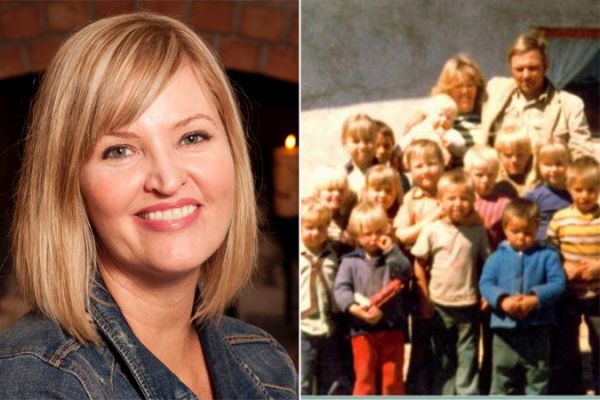
KRISTEN MASCIA
Salon
Salon
January 3, 2016
Growing up in Colonia LeBaron, Mexico, a fundamentalist Mormon colony six hours south of the New Mexico border, Ruth Wariner rarely felt safe.
She was 3 months old in 1972 when her father, Joel LeBaron, the head of the polygamist Church of the Firstborn of the Fulness of Times, was brutally murdered, assassinated in a plot concocted by his brother, Ervil, the leader of a separate sect.
They called Ervil LeBaron the Mormon Manson. In the 1970s and ’80s, he ordered the deaths of dozens more of his religious rivals.
For years, Ruth says, she lived in fear, terrified her uncle would send henchmen to kill her and the rest of her family.
“Ervil was the monster of my childhood, this ghostlike, dark figure,” she says. “I never met him, but he was a constant threat.”
Sadly, as Ruth details in her gripping new memoir, “The Sound of Gravel” (Jan. 5, Flatiron Books), he wasn’t the only monster in her life. The third of her mother’s 10 children, Ruth suffered hardship after hardship, from neglect to sexual abuse.
Somehow, says Ruth, 43, now a Spanish teacher based in Portland, Oregon, “I recovered.” But her journey of healing continues. Recently Anna LeBaron, one of Ervil’s 50-plus children, found Ruth on Twitter and reached out to her. The pair met in early December and now hope to gather their families for a reunion next summer on the Oregon coast.
It’s been a symbolic exchange. “Even though there’s no way to repair the damage that was done to her family, in my own way, I feel as if I’m doing my part to help right a wrong,” says Anna, 47, who lives in Dallas and is giving Ruth’s book a boost through her GoodReads community. “Knowing her is a gift.”
In an exclusive joint interview—their first together, ever—the cousins shared their story with Salon.
This is an edited distillation of interviews conducted by phone and via email.
You two started talking in November. Tell me about those early conversations.
Ruth: I’d never heard Anna’s name before she tweeted at me in November. I was like, Anna LeBaron…she must be related to me. Our first conversation was fascinating and overwhelming. We had so many similar stories.
Anna, were you nervous to meet Ruth? You had nothing to do with your father’s crimes, of course—you were a child when it all went down. But did you harbor guilt about what he did to Ruth’s dad?
Anna: At first I was just glad she didn’t block me on Twitter! [laughs] But no, once we started talking via email and on the phone, I was not at all afraid to meet her. I have had to overcome a tremendous amount of shame about my father’s atrocities in my life, but “guilt” isn’t an accurate word.
What was your first reaction when you met?
Ruth: I saw her and thought, Oh my god, she looks like family! She felt like family, like I’ve known her all my life.
Anna: We sound alike and have similar features—both of us look like LeBarons. We’re also close in age, so it was a little like seeing myself in the mirror. I gave her a big hug. We kept saying to each other, “Can you believe this?”
One of your shared experiences is that both of you grew up without your dads. Ruth: Your mom was your dad’s fifth wife. She was 17 when they married; he was 42. You were only 3 months old when he died, right?
Ruth: Right. In LeBaron we were taught that my father was the prophet—people literally worshipped him, so I did too. Some of my earliest memories involve my mom telling me how his brother, Ervil, had him killed, so I always had this mystical idea of him. He was this Christ-like figure who sacrificed his life for his church.
Anna, what are your memories of your dad, Ervil?
Anna: I was 9 months old when we left Colonia LeBaron, and just 4 years old when my father had Ruth’s dad killed. Throughout my early childhood, he was running from the law. I don’t remember much, except that he was very tall. When he was home, I’d rarely see him; he’d come and go in the night and hole up in the back bedroom, avoiding windows because he didn’t want to be seen. I don’t even recall speaking with him.
Ruth: Were you scared of him?
Anna: I wasn’t afraid of him because I didn’t know what was happening. We knew to revere him and to be quiet around him, but I was completely unaware that people were dead in his wake. Even when he went to jail, I didn’t know the reason. We were always told we were being persecuted for our beliefs.
Did you ever pine for your father, Ruth?
Ruth: I’ve been envious of other people who have strong relationships with their fathers, absolutely, but honestly, growing up, I didn’t know what I was missing. The only time I really missed having my father was when I was abused. That’s when I remember getting on my knees and asking God, “Why didn’t you give me a father to protect me?”
Your mom married your stepdad not long after your dad died and quickly expanded her brood. He was neglectful and abusive; you and your siblings lived in a shack in Mexico without electricity and often scant access to nutritious food, which upset your grandparents.
Ruth: Right. My grandparents were part of the church for years, and my mom’s sisters also ended up in polygamist marriages. My grandfather used to say, “I saw my daughters suffer too much.” The men were hardly ever around and were getting their wives pregnant constantly. My mom was having babies as a teenager with an old man, living on beans and eggs.
Malnutrition played a role in at least one of your sibling’s disabilities, right?
Ruth: Right. My younger sister Meri had hydrocephalus, a condition where fluid accumulates in the brain, typically in young children, that can cause brain damage, and my older sister Audrey was never officially diagnosed with autism, but the women who help take care of her now believe she has it. But, yes—my family thinks my brother Luke [who is mentally disabled] may have been born with malnutrition.
Your grandparents and aunts left the church. Why did your mom stay?
Ruth: I think my mom found a place where she felt like she belonged. She believed the same things they did and felt supported in those beliefs when her family rejected her. And I think marrying my father, the prophet, when she was so young made her felt special. The LeBaron brothers were powerful, charismatic men.
You write with such tenderness for her, but you also describe some pretty unconscionable behavior. She’d leave you for days to go on the road with your stepfather when you and your siblings were still small children. That’s tough to rationalize.
Ruth: Part of it was just the LeBaron culture: women left their children alone all the time. All the men worked in the States, and the women left their children with babysitters or the eldest daughters.
But I think, too, that my mom was severely depressed. It hurt her that she didn’t have a say in her own life. She did the best she could, she was a very loving person, but I don’t think she loved having all these children—three of them disabled on top of it. And she was brainwashed. When you get brainwashed, I think you sort of lose yourself, lose your common sense. Unfortunately the religion became more important to her than other things, and we all paid the price.
Anna, does Ruth’s upbringing sound familiar?
Anna: Reading Ruth’s book was kind of like reading my own story. The poverty, the lack of supervision. There were times, like Ruth experienced, when my mother would be gone for days, if not weeks, and we were left in the care of older siblings. Sometimes we’d have to look in dumpsters for food. Ruth mentions mush in her book, and mush was part of my childhood as well. Any type of grain that could be ground up and cooked, we ate.
As you detail in the book, Ruth, you were sexually abused by your stepfather for four years, starting when you were 8. Was it hard to write those passages?
Ruth: It was. There were a lot of tears. I rewrote the scenes several times, and sometimes, as I was writing, I would feel the self-doubt I felt as a little girl creep back in, like Did this really happen? I had to validate myself, tell myself Yeah, this was wrong, this happened and it was not okay. Even now, when I reread those scenes, it’s a little bit hard for me. My heart starts to race a bit. I feel like I left a lot of that pain on the page.
The hardest part was what do I tell, and what do I not tell. I actually had a conversation with my therapist about how much detail I should go into. I wanted the book to be palatable, but I also wanted it to be the truth. It was important to me to tell that side of the story, even though it’s hard to read.
You told your mom about your abuse on two separate occasions, but she refused to leave your stepdad. She died when you were a teen; after that, you went to live with your grandma in California. When you reflect on that time now, what do you make of your mom’s inaction? Do you resent her for that?
Ruth: I was definitely angry at her for not protecting me. After the second time I told her, when I’d found that my stepsisters were being abused too and still decided to stay—that broke my heart. I still feel that raw anger sometimes, still have dreams where I’m yelling at her. Letting go of that has been a process. I’ve had years of therapy.
How did what happened to you affect your relationships with men as you got older?
Ruth: I didn’t trust men, both because of the abuse and because I hadn’t been around them a lot. I could never flirt; I was never the kind of person who could put herself out there. I always had trouble dating, and especially in my early 20s, was always attracted to men who didn’t feel the same way about me. I would date these people that were kind of apathetic; they weren’t mean or abusive, but they weren’t emotionally available. As I grew into my early 30s, I began to recognize that I kept putting myself in the kinds of relationships my mother had been in, where the man kind of cared, but not really. Once I recognized that, I was able to move forward. And as I took better care of myself—got my education, got a job, started making money—the quality of the men in my life improved too. I got married at 36, and that was about when I was ready. I think I had to go through that process to find the right man.
With your abuse history, were the physical aspects of being in a romantic relationship difficult?
Ruth: Yes, when I was younger. Back then I would have sex with men way too quickly. I think I allowed myself to be taken advantage of. I didn’t set boundaries.
As your healing has evolved, has your relationship with sex changed?
Ruth: I’m much more comfortable in my body and in my sexuality now than I was when I was making those choices in my 20s. I definitely enjoy my body more than I ever did when I was an insecure kid, recovering from abuse.
Anna, does this echo for you? Were you uncomfortable around men?
Anna: “Echo” is a good word for it. We were raised knowing that we were going to become one of multiple wives, so we were taught be subimissive. It’s taken lots of therapy for me to come to know who I am, and to learn self-care. Learning self-care when you’re taught to sacrifice all—
Ruth: And not feeling ashamed or guilty about it!
Anna: Yes! Understanding that self-care is important—not selfish—was a huge part of my growth process.
What do you think a religion like the one you grew up in does to a woman?
Ruth: I think polygamy stunts a woman’s mind. My mom didn’t think about or do anything outside her religion. She always craved love, but Lane didn’t give her special attention, and I know she felt neglected. She was also tired all the time. Her body never recovered from having one baby before she would end up pregnant with another. She cried a lot, and suffered with migraines. Polygamy is emotionally and psychologically hard on women and children.
Anna?
Anna: I think it’s hard for a woman to share a man. Women born into polygamy are taught that avoiding jealousy is a sign of godliness, but nothing, in my opinion, could be further from the truth. A woman in that situation has no choice but to compartmentalize those emotions.
What is your relationship to religion like these days?
Ruth: In college I took classes to learn about other religions. For me it was freeing to realize that I had a choice to make about God. I was always a prayerful child, and I still believe in God and pray. But I struggle with organized religion, with the idea of a man telling you how to live your life. My dad and a lot of his brothers claimed to be the prophet. There’s a huge ego trip there! When you condition children to believe that boys are more important, that men should always be served first, that everybody needs to be quiet in the presence of the big, mighty man…I’m still pissed about that. I’ve spent a lot of my life teaching myself that I matter, that I have a voice, that when I walk into a room, especially a room of men, I am equal to everyone in it, not less-than. That’s been a big part of my healing.
Would you call yourself a feminist?
Ruth: I am definitely a feminist!
What would you tell young women of LeBaron today?
Ruth: I would advise them to get a good education, to travel and see other parts of the world, and to experience other ways of living before deciding to enter into a polygamist relationship.
And I’d tell them to start taking birth control.
Kristen Mascia is a writer and editor in Brooklyn.
http://www.salon.com/2016/01/03/polygamy_stunts_a_womans_mind_the_sound_of_gravel_author_ruth_wariner_on_her_fundamentalist_mormon_childhood_becoming_a_feminist_and_life_after_leaving_the_church/