Jan 10, 2022

Bath musician opens up about 'cult' experience in new memoir

The Inner Circle, Book One: My Seventeen Years in the Cult of the American Sikhs
Peter Macdonald Blachly tells his story, decades later, in 'The Inner Circle.'

BOB KEYES STAFF WRITER
Press Herald
January 9, 2022

34 years and a pandemic for Bath resident Peter Macdonald Blachly to finally carve out of the space to tell the story he has carried around inside all that time.

Living in a 19th-century home at Clapp Point on the banks of the Kennebec River helped, too.

Blachly, a musician, painter and writer – and sea captain, house builder and backyard auto mechanic – has hinted at the time he spent in what he described as a religious cult in conversations over the years, but only vaguely and in passing.

“That’s a story for another time,” he said in a 2017 interview about the rock opera, “One Way Trip to Mars,” that he co-wrote with his wife, Johannah Harkness. “Maybe someday.”

Someday finally arrived when Blachly, who uses the name Peter Alexander in his musical performances, wrote about his experiences in a 308-page memoir self-published last year.

Now 72 and with many of people who were part of his previous life no longer living, Blachly felt more freedom to write the memoir than he would have otherwise. The pandemic gave him the time to finish a writing project that began many years ago, and living in old house with an expansive view of the river gave him the space to think and a place to ponder.

His book, called “The Inner Circle, Book One: My Seventeen Years in the Cult of the American Sikhs,” which is available at Gulf of Maine Books in Brunswick, tells the story of his journey as a popular musician in a nationally touring rock band during the Vietnam War and Woodstock era to becoming a close confidant and musical liaison to Yogi Bhajan, a kundalini yoga guru and spiritual leader of the 3HO Foundation.

The organization’s name stands for Healthy, Happy and Holy and remains an active nonprofit dedicated “to living a life that uplifts and inspires,” according to its website. Although it claims to follow the tenets of Sikhism, a religion that originated in India in the 15th century with more than 25 million followers worldwide, it has been criticized for misrepresenting the religion and denounced by traditional practitioners. A spokesperson for 3HO declined to respond to a reporter’s questions for this story. A spokesperson for the Sikh Coalition, a New York-based Sikh-American advocacy group, declined to comment on 3HO.

The organization formed in 1969 and Blachly joined in 1970 at age 20, because he was interested in yoga and a healthier lifestyle. He became deeply involved out of a genuine desire for spiritual understanding and personal peace, he said, and a love of music. As a musician, he achieved respected status in the movement, traveling among Sikh communities in the United States and India while learning to play the sitar, mastering tabla (or Indian hand drum), speaking Punjabi and performing at holy shrines across India, including the Golden Temple in Amritsar.

After Yogi Bhajan died in 2004, many of his followers accused him of rape and sexual misconduct. In his book, Blachly, who has two daughters from an arranged marriage through his association the spiritual leader, accuses him of manipulation, control and financial malfeasance.

“I have held off telling this story for a lot of reasons, including my family,” he said in an interview at his Bath home. “I started writing this book more than 25 years ago. But a lot of people in it were still alive at the time, who are now dead. Some of the people who were core to the group have left the group. Some of my good friends are no longer there. And I needed to come to some perspective. It takes a long time to process this stuff, and to come out of a cult. You do not flip a switch and are out of a cult. You have to work to come to grips with, ‘How did you get involved in the cult in the first place?’ ”

His second wife, a therapist, encouraged him to write and share his story.

“When Peter would talk about it, I would be mesmerized by all the experiences and the times,” Harkness said. “A lot of people who missed the ’60s have romantic visions of it. He had a repository of stories and experience that I thought people would find as interesting as I did.”

FROM ROCK TO RELIGION

Blachly grew up in Washington, D.C., in a musical family, with a private education and a summer place in Harpswell, where he learned to sail and live a self-reliant life. He excelled at music and learned to play both the piano and guitar during the 1960s, when musicians and rock music took center stage in American culture. His band, Claude Jones, achieved star status in Washington and toured nationally for a few years in the late 1960s.

His rock ‘n’ roll dreams evolved into a spiritual quest that started with a simple desire to feel better through yoga, meditation and healthy eating. He describes the earliest days of his conversion, in 1970, when he walked into the yoga studio at 17th and Q streets in Washington while living in Dupont Circle.

“I had done virtually no exercise for several years, and even though I was only 20 my body was stiff and unhealthy,” he writes in “The Inner Circle.” “I was six feet two inches tall and weighed only 145 pounds, the result of two years living as an impoverished, cigarette-smoking, psychedelic rock musician.”

Not too much later, he was wearing a turban and explaining to his parents that he was married and living in an ashram, a place of spiritual retreat and yoga. And not long after that, he and his wife were raising a family in an unloving and unhealthy marriage, and Blachly began a whirlwind lifestyle that sometimes resembled the one he left behind, as he traveled side by side with a popular and influential spiritual leader as he built a global religious following.

Blachly’s account of his time in India and at the temples and markets of old Delhi and New Delhi reads like both a travelogue and a mystery, full of precise descriptions of unimaginable beauty, as well as intrigue and suspense as he goes deeper into his conversion. He recalls his first vision of the Golden Temple, a spiritual site that includes a large man-made lake that reflects the temple in the middle.

“Spontaneously, most of the Americans went to their knees and bowed their foreheads to the cold marble,” he writes. “I had never seen anything so beautiful, or sensed such a deep connection and profound reverence. The place, made by man, seemed to contain a tangible part of God.”

LOOKING FOR ANSWERS

Blachly, who has lived in Bath since 2008, has met some resistance since he self-published his book, including from his daughters, one of whom remains involved in the organization. They objected to his description of their mother, and Blachly changed some passages after its initial printing to reflect their concerns – something he could do as a self-published author. He declined to make his daughters available for interviews for this story, describing their relationship as “quite loving and we communicate quite well about most subjects. I would say it is wonderful as long as we don’t touch on this stuff.”

He said that his older daughter, who was born into and remains involved with 3HO, called him after she read the book and said, “This is not a cult. I am not in a cult.”

Despite his negative feelings toward the spiritual leader, Blachly credits his good health now to the lifestyle he learned at a young age. He learned to eat well and exercise, and mastered the discipline associated with attending to one’s spiritual needs. He also learned to live within a community and to work for the betterment of all.

“I credit it for saving my life,” he said. “I was not doing drugs or alcohol when my peers were, and I would have been had I stayed in the band. It was not all bad. The discipline of learning meditation has served me well.”

Leah Lamb-Allen, a pediatrician from Colorado, knew Blachly when he played in Claude Jones and met him in a yoga class in D.C. They joined 3HO at about the same time, and she stayed with the organization for 20 years.

“Claude Jones was a fabulously popular band,” she said, “so it was interesting to watch someone who was in this cool rock ‘n’ roll band renounce all that and do yoga. … It was a very interesting time. His parents, and my parents, were dismayed, to say the least.”

She remembers Blachly as a gifted musician, then and now.

“You put anything in his hands and he can play it. If it is a piano, a guitar, violin, the drums, sitar – he can play it,” she said.

She also remembers him as a true believer, as was she. “We were looking for a better way to live, a better way to be married, a better way to live in a community. I would say we were sorely let down, but in the beginning it was really quite a heady experience.”

In a phone interview, Lamb-Allen had no hesitation calling 3HO a cult. “None whatsoever,” she said. “My mother told me in 1971, ‘You’re in a cult.’ I said, ‘No I am not. I am a Sikh. It is the fourth-largest religion.’ She said, ‘Yeah, yeah, yeah, you are in a cult.’ My parents looked at hiring a deprogrammer.”

Stephen Josephs, another friend then and now, has shared a musical bond with Blachly for 50 years. A classically trained guitarist, Josephs began playing with Blachly in the early 1970s as Sikhs. At the time, Josephs ran an ashram in western Massachusetts, and Blachly made an instant impression when he came to visit.

“Somehow when we played together it was magic. I went into states of ecstasy playing with Peter. His lines when he improvised were incredibly melodic. He has a great ear for harmony, and his rhythm is fantastic. When he picked up the tablas, he was as good as I have ever heard,” Josephs said.

Like the others, Josephs joined the movement because he wanted something more from his life. And like Blachly, he achieved high status within the organization because of his ability to lead people with music.

“It was a lot of fun in those early days. We got up very early in the morning, 3 o’clock, took cold showers, meditated, did yoga, and went into the garden and weeded,” he said, laughing. “It was a lot of fun and very fulfilling.”

Josephs, who lives in California and works as an executive coach, also had an arranged marriage. His lasted. He and his wife will soon celebrate their 50th wedding anniversary. But there is no doubt he was involved in a cult, and he credits Blachly for writing about the experience clearly so others can understand the experience.

“I think everyone who is in that organization is in because was there was something incomplete or broken in their psyche and they needed to work it out,” he said.

Their “schedule of departure,” he said, was very individualistic. He left after 10 years.

He appreciated Blachly’s book because of its honesty and Blachly’s self-reflection. His friend is accountable for his own behaviors and flaws, Josephs said. “A lot of his writing is about discovering things that he needed to correct in himself. He lets you in on his struggles and his progress as it emerges. … You don’t have to be a cult victim to understand that kind of self-analysis and desire to make things better, and to have your life square with your values. He really let you in on that.”

Blachly calls “The Inner Circle” book one, meaning he intends to write a second volume. If he completes that task, book two will be about his recovery and how he has structured his life since leaving the religious organization. The process of looking back, he said, has been difficult, but healthy. He has plenty of blame to spread around, but accepted and reconciled his role in both joining and staying in the organization as long as he did.

“Getting enough distance to actually start looking objectively and critically at myself, that was a huge piece of this,” he said. “A lot of people who got into cults, when they leave it is all about blaming the cult leader or blaming the organization. I got to the point where I said, ‘Wait a minute, how did I end up in there and a bunch of people I ended up going to yoga classes with at the same time, down in D.C., they didn’t get involved. They didn’t get sucked in. What was it about me that made me vulnerable to the ideology and charismatic nature of this cult?’ “

https://www.pressherald.com/2022/01/09/bath-musician-opens-up-about-experience-in-the-cult-of-the-american-sikhs/

CultNEWS101 Articles: 1/10/2022 (Transcendental Meditation, Podcast, India, Gurus, Scientology)

Transcendental Meditation, Podcast, India, Gurus, Scientology

A Little Bit CULTY: Episode Eleven - Master of the Cultiverse: Patrick Ryan on Transcendental Meditation
"What do Pete Rose, Grandma Walton, skin boys, Dear Prudence, Brooks Brothers suits, David Lynch, Mary Tyler Moore, Merv Griffin, Mary Tyler Moore, Clint Eastwood, Burt Reynolds and Margaret Singer have in common? They're all mentioned in this episode, and you'll have to listen to find out why. There's just not enough room in these show notes to tell you. But don't worry, you'll be glad you listened, because Patrick Ryan can tell a culty oral history with the best of them. He joins Sarah and Nippy for the penultimate episode of Season 2, and it's a doozy that just might make you take a second look at your meditation practice. As Stefon on SNL would say, "This one has something for everyone: Yogic flying, off-brand incense, and fake CIA operatives." It's been a batshit year, kids, so enjoy 2021's last A Little Bit Culty episode drop.

More about today's guest: Patrick Ryan is a graduate of Maharishi International University. He has been a cult intervention specialist since 1984. He's the co-founder of TM-EX, the organization of ex-members of Transcendental Meditation, established ICSA's online resource (1995-2013), and has presented 50 programs about hypnosis, inner-experience, trance-induction techniques, communicating with cult members, conversion, cult intervention, exit counseling, intervention assessment, mediation, religious conflict resolution, thought reform consultation, eastern groups, transcendental meditation and workshops for educators, families, former members and mental health professionals at ICSA workshops/conferences. Mr. Ryan received the AFF Achievement Award (1997) from AFF, the Leo J. Ryan Foundation, and a Lifetime Achievement Award (2011) from ICSA. Along with fellow intervention specialist Joseph Kelly, Patrick publishes several cult news sites that are an indispensable resource for all things cult-related."

" ..At one point, Avicii, real name Tim Bergling, started using Maharishi Mahesh Yogi's meditation techniques.

Of this time, Avicii wrote, "It feels like I am in a new default mode of being which is very new and a little bit scary."

According to the book, a friend who had met Avicii prior to his suicide, had even alerted his father of his concerning meditation techniques. The friend had said that "he wasn't eating or speaking."

A day later, Avicii was dead, with his last entry reading, "The shedding of the soul is the last attachment, before it restarts."

Avicii took his own life with a glass bottle on April 20, 2018, in Muscat, Oman. "

Afternoon Voice: Scheming spirituality and scandals are on the rise
"The sacred land of Bharatvarsha has been sanctified by many spiritually attained people, since time immemorial. It is on the people whether they could recognize them or not. If anyone looks for Guru and spiritual solace outside them than looking for it within, has opted for a fake choice. These so-called Gurus, Babas, religious heads and these typical cults are a market of hypocrites to serve those who opted for false choices. Everyone in this trade has his own business module and selling point."

" ... These days' self-styled spiritual folks are well-written plots. They all have one known-unknown guru, then they have some storyboard to tell you about what made them adopt such practices, then they want celebrities, politicians and people who can pump in money as their tool to the business. A disciple who pays from his pocket to reach such entities to seek something is indirectly spending their hard-earned money in the forms of donation and goodwill, in turn, what they are receiving is an enthralled hoax."

" ... Most people are brainwashed by so-called practices of spirituality. They will never be friends with you because they don't sit with you on the floor, hug you in need, wipe your tears in pain or touch your feet considering you a good human who has visited him. It's you who makes choices and prefers to surrender. The one who needs brand value and money is nothing but a product and business.

Since they are all tax-free, they are already at least 30% better than the rest of us. On top of that, India is a country of diverse beliefs. Most people are scared, restless and can pay you to listen to comforting words and advice. Some of the time this helps (come to think of it, some of the things these spiritual gurus say make sense too, but what they say is not unique, is said by many like them), but it's the hypocrisy that makes you yield to them."
"'My parents cultivated this rebel, meaning they cultivated the individual spirit.'(They studied Scientology, and Lewis has, too, but she doesn't identify that way. "I'm a spiritualist," she said.)"


News, Education, Intervention, Recovery


CultEducationEvents.com

CultMediation.com   

Intervention101.com to help families and friends understand and effectively respond to the complexity of a loved one's cult involvement.

CultRecovery101.com assists group members and their families make the sometimes difficult transition from coercion to renewed individual choice.

CultNEWS101.com news, links, resources.

Facebook

Flipboard

Twitter

Instagram

Cults101.org resources about cults, cultic groups, abusive relationships, movements, religions, political organizations and related topics.


Selection of articles for CultNEWS101 does not mean that Patrick Ryan or Joseph Kelly agree with the content. We provide information from many points of view in order to promote dialogue.


Please forward articles that you think we should add to cultintervention@gmail.com.


Thanks,


Joe Kelly (joekelly411@gmail.com)

Patrick Ryan (pryan19147@gmail.com)


If you do not wish to be subscribed to this list, or you think you are being maliciously subscribed to the list, or have any other questions, send them to: pryan19147@gmail.com or send an email to: cultnews101+unsubscribe@googlegroups.com.

Holy Hell: A Memoir of Faith, Devotion, and Pure Madness


"Amma, universally known as "The Hugging Saint," went through a two-decade transformation from a simple fisherman's daughter to an international wonder worshiped by millions. Gail "Gayatri" Tredwell was there every step of the way—from early devotee to head female disciple, ever-present personal attendant, handmaiden, whipping post, and unwilling keeper of some devastating secrets. At age nineteen, when she was a happy-go-lucky, adventurous lass from Australia, Tredwell never imagined that she would soon be trading her free spirit and skimpy clothing for a life of submission in an ankle-length sari. Her eager decision to serve the young "saint" began with innocence and a pure desire to please her new guru. In time, the relationship transformed into virtual enslavement in which Tredwell was on call 24/7 and worked herself nearly to death in the hope of finding God. Because she became fluent in the Malayalam language and had continual intimate proximity to Amma for twenty years, Tredwell is uniquely capable of portraying this famous woman. She tells her tale with straightforward honesty, fairness, and a dash of Aussie snap and wit. Although the guru’s flaws are a necessary part of her story and awakening, she strives to be factual throughout, digging deep to eschew victim frameworks and take responsibility for her own role in accepting the abuse and perpetuating the lies. The book evokes the joys of early devotional life and vibrant images of rural India. Through Tredwell's eyes, we watch a modest and traditional ashram metastasize into a business-oriented, bustling, mega-international organization. We also see how such a dizzying rise created vast opportunity for abuse, deceit, and hypocrisy. Tredwell takes us vividly through her varying stages, starting with naïveté and innocent devotion, then on to dawning awareness and confusion, finally to emotional breakdown and her shocking "enlightenment"—her realization that the liberation she urgently required was is in fact liberation from her own guru. In a gradual yet determined struggle, she managed to untangle herself from the web of myth and indoctrination. Only then was she able to muster her battered but not quite broken spirit and plot her escape. Gail's flight to freedom—her victorious recovery from a life of abuse and disillusionment—displays extraordinary strength and inspiring courage."


https://www.amazon.com/Holy-Hell-Memoir-Devotion-Madness-ebook/dp/B00GB83S3G

The Next Wave of Extremist Cults Will Make QAnon Look Tame

And they’ve already taken root.


MARIA KONNIKOVAIDEAS
Wired
January 7, 2022

THE WORLD WAS supposed to breathe a collective sigh of relief in 2021—at least when it came to extremist, radicalized thinking. Donald Trump was out of office. QAnon, that cult-like movement operating under the belief that a secret pedophile cabal runs the world, was losing steam. Vaccines were going to bring an end to the pandemic. But far from seeing the demise of cultism and extremist movements, 2022 will usher in their increase—and QAnon will prove to have been the first baby step, rather than the culmination, of the rising appeal of extreme fringe organizations and sectarian politics.

The growth of increasingly radical fringe beliefs will be fueled by a rising distrust in authority and expertise. This skepticism isn’t new—we have been primed by “fake news” headlines for a number of years. Next year, though, a potent ingredient will be added to the mix: the exhausting, continuing uncertainty surrounding the Covid pandemic.

Historically, cults have flourished in times of flux, when behavioral norms shift and stability is elusive. If anything has characterized 2021, it has been the sense of constant displacement engendered by a novel disease. We have all experienced endlessly changing official narratives and communication strategies about Covid-19. We have also seen death tolls continue to rise and social institutions break under the strain. This will resume in 2022, despite our hopes that the pandemic would be relegated to the past. Even the least extremist-minded of individuals will struggle to maintain their equilibrium.

Added to that instability is the sense of isolation we have all experienced in 2021, and extremism feeds on this kind of exclusion and loneliness. In the early days of this year, we have already seen people denied social contact because of lockdowns, and some have turned instead to the most improbable of alliances, looking for groups that will validate and channel their anger and frustration.

This will continue to be the case. It’s difficult for the human mind to deal with uncertainty during the best of times. We crave certainty and hard numbers—not evolving knowledge and statistical caveats. And this is far from the best of times. “They are lying to us!” is the battle cry of conspiracy theorists. In 2022, this will grow in volume and lead to an explosion of extremist activity.

Already, we are seeing the nascent roots of what 2022 will look like—in the coalescing and increasingly radical voices of the anti-vaccine community, in the anti-mask protests we are seeing across the world, and in labeling governments like Australia’s “fascist” for subjecting their citizens to continued lockdowns. These are the seeds for an extremism that will be sticky, lasting, and difficult to uproot—tied, as it has become, to core personal identity.

Cult-like extremist movements appear to provide an antidote to the potent mixture of isolation, uncertainty, changing narratives, and fear we have experienced during the pandemic by offering a skewed form of safety, stability, and certainty, along with a cohort of people who are just like us, who believe us and believe in us. As the activist David Sullivan—a man who devoted his life to infiltrating cults in order to extricate loved ones from their grip—pointed out, no one ever joins a cult: They join a community of people who see them. In 2022, this appeal of cults will only grow, and those that arise next year will make QAnon seem like the good old days.

https://www.wired.com/story/extremist-cults-qanon/

Author Zack Bonnie - "Dead, Insane or in Jail" & "Overwritten"

Author Zack Bonnie - "Dead, Insane or in Jail" & "Overwritten"
The Cult Vault
January 8, 2022

#147 Author Zack Bonnie - "Dead, Insane or in Jail" & "Overwritten"

In today's episode, I have a special interview with author Zack Bonnie who has written 2 books about his time at CEDU and Rocky Mountain Academy. Zack's activism and whistleblowing work has opened doors into institutional reform around the world - highlighting the abuse that happens in these troubled teen programmes. Zack breaks his story up by inserting perspectives from other people in Zack's life during these experiences, with his writing also peppered in research and psuedo-explanations about cults and captive organizations.


Zack's website - https://www.deadinsaneorinjail.com/

Jan 8, 2022

How MLMs And Cults Use The Same Mind Control Techniques

A former Mary Kay consultant recounts how the multilevel marketing company kept her loyal, even though she wasn't making any money.


Casey Bond
Huffpost
January 8, 2021

MLMs employ many of the same tactics as cults to recruit and motivate members.

Caitlin Ruiz, a 30-year-old resident of Tucson, Arizona, first got involved in multilevel marketing companies in her early 20s. Also known as MLMs, businesses such as Mary Kay, Tupperware, Amway, Arbonne, LuLaRoe and a host of others employ consultants who sell products directly to the public as well as recruit new members.

Ruiz was attending school and working full-time, and like many 20-somethings, searching for a fulfilling career. A co-worker introduced her to Mary Kay, an MLM that sells makeup and beauty products, in 2012. The co-worker set up a lunch meeting with her "upline," the person who recruited her into the company, to pitch Ruiz on joining them. "She said all the right things," Ruiz said.

Ruiz was promised flexibility, the ability to stay home with her future children and the opportunity to build a business that would eventually allow her to quit working completely.

Ruiz also had a lot of student debt that she wanted to pay off, and her co-worker's upline assured her she could put an extra $400 or $500 a month toward her loans by working for Mary Kay. "They promise you the world and all the flexibility that you want. They make it seem like this big secret that nobody knows about," Ruiz said. "I fell for it."

MLMs hook people with the promise of becoming independent business owners with unlimited earning potential. But for many, getting caught up in an MLM turns out to be a nightmare. That's especially true for women, who make up the majority of consultants for these companies.

The business model of an MLM is designed so that the majority of participants see modest earnings to none at all (somewhere between 73% to 99% earn nothing). A select few at the top, however, enjoy major financial success �D not because they're genius salespeople, but because they've amassed huge "downlines" and collect enormous commissions and bonuses based on their sales.

So how do even seemingly intelligent people fall prey to MLMs despite the overwhelming evidence that they're thinly veiled pyramid schemes? Often, it has to do with the cult-like tactics used to recruit and motivate participants.
Understanding The BITE Model

The comparison between cults and MLMs is not a new one. Amway, one of the largest MLMs in the world, has been the subject of several books that detail the company's cult-like strategies, including "Amway: The Cult of Free Enterprise" written in 1999 by former distributor Stephen Butterfield.

Douglas M. Brooks, an attorney who specializes in representing victims of pyramid schemes, deceptive MLM programs and business opportunity scams, agreed that Amway is one of the prime examples of how MLMs mirror cults.

Brooks recently presented a working paper at the 2019 International Cultic Studies Association annual conference titled "Coercive Techniques in Business Opportunity Cults." In the paper, he notes that Butterfield's experiences with Amway, as well as those of others who have written about their time with this particular MLM, included "mass meetings with enthusiastic distributors giving standing ovations to high level Amway speakers, mysterious terminology, relentless focus on recruitment, positive thinking, the avoidance of any questioning of Amway or its high level distributors, and the tendency for Amway distributors to dedicate more and more of their time and energy to the organization, often at the expense of their relationships with friends and family, despite the lack of financial success."

All of these factors, he said, are consistent with the popular perception of what a cult is. To this day, former distributors continue making the comparison. And Amway is just one of many MLMs that function in this way.

"MLMs hook people with the promise of becoming independent business owners with unlimited earning potential. But for many, getting caught up in an MLM turns out to be a nightmare."

But what is the true definition of a cult? The term might conjure images of men and women dressed in long, hooded robes, chanting together and drinking toxic Kool-Aid in pursuit of enlightenment. And that is an extreme example of what a cult might look like. However, many cults aren't so easy to spot.

Steven Hassan escaped the Unification Church (also known as the "Moonies") in 1976 and has since become a mental health counselor and one of the leading experts on mind control and cults. According to Hassan, a cult is an organization that exercises undue influence over its members to make them dependent and obedient. Undue influence is defined as persuasion that takes over any free will or judgment; as a legal term, it refers to a person or group taking advantage of their position of power over others.

In cults and other organizations that employ mind control, undue influence is first imposed on victims by showering them with praise and affection and promising a fantasy world or elite status. Once a member is hooked, the organization employs a systematic method of control to disrupt that person's identity and ability to think independently and rationally.

That process of gaining undue influence follows what Hassan calls the BITE model:

Behavior Control: This type of control is all about dictating who a person is and what they do. Behavior control can include restricting what types of food a person eats, what they wear, when they sleep and who they are allowed to associate with. Financial exploitation, manipulation or dependence is also often a key component of behavior control. Individualism is discouraged and groupthink is encouraged.

Information Control: To exert undue influence, cults will often withhold or distort information to make it more acceptable (or simply flat-out lie). Information control involves using deception, discouraging access to non-cult sources of information, encouraging spying on each other and producing propaganda such as newsletters, YouTube videos, movies and other media.

Thought Control: Cults will also seek to control how members think so that the group's doctrine is accepted as the truth. Loaded language and clichés are used to stop critical thinking and reduce complex ideas to platitudes and buzzwords. Often, only positive thoughts are allowed; constructive criticism or questions are immediately shut down.

Emotional Control: Members of cults experience extreme emotional highs and lows; they're showered with praise one moment and then made to feel guilty, fearful and unworthy the next. They're told that any problems they experience are their own fault and never that of the leader or group. The cult instills irrational fears about leaving or questioning the leader's authority.

ADVERTISEMENT

These are just some of the examples of how cults and other mind-controlling organizations employ the BITE model of undue influence. They likely sound very familiar to current and former MLM participants.

Becoming involved in an MLM often results in a combination of guilt, shame and fear because this is a business where you are not only the victim; you're also the perpetrator.

Here are some of the biggest ways MLMs mirror cults in their tactics.
MLM Tactic #1: Love Bombing

One of the reasons MLMs are successful at recruiting new members is because the introduction is made through someone familiar. It doesn't come from a stranger off the street.

Typically, the first pitch you get is from a friend or family member who invites you to a meeting. However, the details of this meeting are purposely kept vague. All you know is that it's about a financial opportunity. "It's all very mysterious," Brooks said. The key is getting you to that first meeting.

Once there, the recruiter uses a technique known as "love bombing." Love bombing is a term reportedly invented by the Unification Church that has evolved today to mean a type of toxic, manipulative affection.

MLM members will shower prospective recruits with warm welcomes and excitement, saying how wonderful it is that they came, what an exciting opportunity it is and congratulate them for joining. It's almost as if the recruit is being seduced �D they feel special, important and like they've uncovered a precious secret no one else knows about.

The meeting starts when someone high up in the company inevitably gives their rags-to-riches story. They explain how bad things were before, how they were trapped by debt and a dead-end job. But by selling products for the company, they've changed their lives. Meeting attendees are encouraged to pursue the same happy ending.

Meetings are a big part of the MLM culture. "All of it is designed to get you to the point where you're willing to give it a shot and sign up as a distributor," Brooks said. "And course, if you're serious about this business, you've got to keep on coming to meetings to learn how to do this."

A large amount of pressure is placed on recruits to come to weekly meetings, as well as special events such as product parties and conferences. They pay out of pocket to attend these events.

Hoping to achieve the same level of success as the Mary Kay spokespeople she met at meetings, Ruiz bought about $1,500 worth of products within the first two months of joining. She attended meetings often, as much as once or twice per week. She spent so much time working on her business that it eventually began to affect her relationship with her now-husband.

"They always want you doing things for the business," she said. "You work nine to five, and then you get off at five and go to the Mary Kay meeting until nine at the earliest," she said. "I wouldn't see him."
Tactic #2: The Art Of Deception

The people who get up onstage to talk about the incredible income they earn and luxurious lifestyles they live don't actually make that money selling products, Brooks said. Rather, the income is generated by a huge downline, and it's only available to a tiny fraction of the group (those near the top of the pyramid).

"The truth is that you're not going to be that person on the stage," Brooks said. "That person has a very intimate relationship with the officers of the company. In addition to the commissions that they're getting paid based on their downline, they're getting money from selling recruitment tools and systems, and they may also be getting additional compensation from the company for appearing at meetings and speaking."

Eventually, the allure of the Mary Kay lifestyle wore off. Unimpressed with her results and tired of hounding her friends and family members to make sales, Ruiz let her Mary Kay business fall to the wayside. A couple of years later, however, she fell for another MLM pitch and dabbled in Younique. At the time, the makeup company was fairly new and she thought she could get in on the ground up. Now, instead of attending meetings in someone's home, she spent hours online, watching Facebook live presentations and learning how to hook new customers on Younique products through carefully crafted cold messages.

"They'd get really irritated if people weren't participating," she said. "It was all about empowerment and building the life you want, but if you didn't attend these groups ... they'd sound kind of pissy."

But Ruiz didn't believe in the products and found the experience to be underwhelming. "I put about $500 into it and got maybe five orders. Two of them were my mom," she said. So she left after a few months.

"They'd get really irritated if people weren't participating. It was all about empowerment and building the life you want, but if you didn't attend these groups ... they'd sound kind of pissy."

- CAITLIN RUIZ, 30

In 2015, Ruiz was invited to another Mary Kay party and went only in a show of support for her friend. After attending, however, she was hooked again thanks to a particularly charming speaker who convinced her she just didn't go about the business the right way before. This woman gave her special attention and listened as she lamented about everything from her skin problems to the stressors of her upcoming wedding.

"I decided that night because of her confidence, because of her willingness to work with me on my skin and because I felt like I had given up this product that I should have never gone away from," Ruiz said. "I thought, 'This time, I'm going to rock it. Especially under this lady.'"

From then on, Ruiz was in constant communication with her upline. They attended the weekly meetings together and regularly met for lunch to discuss the business. Ruiz received endless texts and phone calls from her upline. She described her as a mother-like figure who used everything from her fears about the cost of her upcoming wedding to her longing to spend more time visiting her parents in Michigan as fuel to keep at it. "Again, I put a lot of money into products," she said.
Tactic #3: Financial Exploitation

Despite all her effort, Ruiz didn't come close to making a profit. She said the largest sales she ever made were around $200, though most were along the lines of $25 to $50. Considering how much product consultants were expected to keep on hand, "you're not making back crap," she said.

If MLMs were legitimate businesses, there wouldn't need to be such a strong emphasis on recruitment. Retail sales would support the business model.

But Brooks explained that the nature of multilevel marketing forces these companies to be recruitment machines due to the rate of attrition. "The one thing you'll never see [an MLM] disclose unless they have a gun to their head is what their attrition rates are," he said. The longer they can keep consultants on board, the better the company will do financially �D especially those at the top of the pyramid. But ultimately, if all you're doing is buying and selling products, it's nearly impossible to make any money.

"In essence, you have an unlimited number of recruiters who are all selling the same stuff at the same prices," Brooks said. "If you look at what's really going on, there are some retail sales … but it's not an efficient way of selling. Making a few bucks here and there isn't going to do it."

Brooks added that when you look at the compensation plans of MLMs, there's usually a monthly purchase obligation, though these companies will often deny that's the case and attempt to dress that requirement up as something else.

"You have to really get into the weeds of the compensation plan with each company, but ultimately, you find that in order to really participate, you've got to buy $100 or $500 worth of stuff every month," he said. Often, you can't reap the benefits of the downline you've created unless you meet that inventory purchase qualification. In essence, the employees of MLMs also end up their biggest customers.

According to Brooks, a major problem with the MLM industry is the fact that these companies are not bound by the Federal Trade Commission's franchise rule, since the initial buy-in is usually less than $500. That means MLMs don't have to disclose important information such as business costs, success and attrition rates, and other financial details to help consultants make an informed decision before joining.

"Frankly, if you knew and you understood and you thought about it, you'd never join an MLM," he said. "I've noticed that even with the companies that do provide some disclosures "D and even though those disclosures are flawed" they still show that a tiny percentage of people make money … and yet, those companies don't seem to have any trouble recruiting people."

"The one thing you'll never see [an MLM] disclose unless they have a gun to their head is what their attrition rates are."

- DOUGLAS M. BROOKS, ATTORNEY

It was during one lunch meeting with her upline that Ruiz realized her business wasn't the glamorous opportunity she was made to believe. "She basically broke down for me how she makes her income," Ruiz said. It became clear that the way to make money was not by selling products, but by recruiting a downline that would do the selling for her.

After crunching the numbers, Ruiz knew the women telling their success stories at parties probably didn't earn as much as they said they did.

"The other thing that dawned on me was holy shit, this actually is a pyramid scheme," she said. "I realized at that point in time what it actually took to be successful at that kind of business and I didn't like it. So I stopped accepting her phone calls."
Tactic #4: Guilt, Shame, Fear

When it comes to MLMs, having a regular 9-to-5 job is considered a failure. Members are fearful of becoming stuck in the rat race or unable to reach all of their goals because they're limited by their paychecks. MLMs prey on this desire to "own" a business with flexible hours and limitless earning potential.

But when consultants reach out to their uplines and complain that reality isn't matching up to what was promised, the blame is always placed back on them. "The No. 1 thing that they tell you when you get to that place of discouragement is that 'You get out of it what you put into it,'" Ruiz explained. Never mind that the market might be saturated, the products inferior or the limited network of potential customers fed up with hearing about it. "If stuff isn't moving, it's your fault."

Brooks said becoming involved in an MLM often results in a combination of guilt, shame and fear because this is a business where you are not only the victim; you're also the perpetrator. "Not only were you sucked into it; you've sucked other people in," Brooks said. And for those who eventually recognize what the business is really about, the realization that they've roped loved ones into the same situation is demoralizing. "You know that it's just not going to work," Ruiz said. "You know that you're basically just turning this person into a means to your own end. It doesn't feel good."

In fact, according to Brooks, victims of pyramid schemes are the least likely of consumers who've been defrauded to actually report it. "As part of the cultic conditioning that takes place, [what] you're taught right from the beginning is that if you fail, it's your own fault," Brooks said. "The system is perfect. You just didn't follow it well enough, or you didn't stay with it long enough."

Are all MLMs cultist pyramid schemes? Maybe not. But the numbers overwhelmingly say there's no good reason to get involved with one and find out. "The odds are just that bad," Brooks said, adding that you'd be better off trying the lottery, where everybody at least has an even chance of winning. "With MLM, it's like buying a ticket for last week's lottery."


https://www.huffpost.com/entry/multilevel-marketing-companies-mlms-cults-similarities_l_5d49f8c2e4b09e72973df3d3

Jan 7, 2022

Meet the Author! Interview With Livia Bardin


Coping With Cult Involvement: A Handbook for Families & Friends
Interview with Livia Bardin by Pat Ryan

"A cult involvement is often a situation to manage, not a problem to solve."

From the Foreword:
This book, which was written to explain these forms, is built on the knowledge and experience gained from years of working with families in workshops and in private consultations. This is not a “fun” book. Nor is it a book that aims to validate feelings of anger, hurt, helplessness, and fear, although it does that to some extent. This book is a handbook, a tool designed to help you achieve a goal, namely, to help a loved one. As with all tools, the book requires effort to learn how to use it. It is not something that you merely read. It is something that you use, something that you wrestle with, that you come back to again and again.

If you are willing to give the requisite time and mental exertion that this book demands, I am confident that you will find it to be extremely helpful. It may not solve your problem, for, as Mrs. Bardin states in the Introduction, a cult involvement is often a situation to manage, not a problem to solve. The book will, however, make you confident that you are doing all that you realistically can to manage, if not solve, the problem that has caused you so much distress.

About the Author:
Livia Bardin, MSW, is a clinical social worker who has been engaged with cult victims and their families for more than fifteen years. She is particularly interested in the interface between high-demand groups and cults and mainstream society. Her research in this area has been published in the Cultic Studies Review and the Journal of Public Child Welfare. Now retired, Ms. Bardin has provided training on cult-related issues for mental health professionals in the Washington area and elsewhere, She is the author of Coping with Cult Involvement: A Handbook for Families and Friends of cult members. In 2014 Ms. Bardin received ICSA's Margaret T. Singer Award.

Colorado Wildfire Inquiry Focuses on Christian Sect

Boulder County officials investigate a property along Colorado 93 near Eldorado Springs Drive in Boulder, Colorado on Jan. 2, 2022.
Investigators are looking at the possibility that a fire that destroyed more than 900 homes started on property owned by a fundamentalist Christian sect known as Twelve Tribes.


Simoni Romero and Giulia Heyward
New York Times
January 3, 2022

Investigators looking into the cause of a colossal wildfire in Colorado that forced the evacuation of tens of thousands of people are focusing on a property owned by a Christian fundamentalist sect, after witnesses reported seeing a structure on fire there moments before the blaze spread with astonishing speed across drought-stricken suburbs.

Sheriff Joe Pelle of Boulder County said at a news briefing on Monday that the property owned by Twelve Tribes, which was founded in Tennessee in the 1970s, had become a target of the probe after investigators ruled out the possibility that downed power lines might have sparked the fire.

Still, Sheriff Pelle warned against jumping to conclusions regarding the fire’s origins, emphasizing that the investigation was in its early stages and that it could take weeks or even months to determine the exact cause. He said investigators from the Federal Bureau of Investigation, the Bureau of Alcohol, Tobacco, Firearms and Explosives, and the U.S. Forest Service were assisting his department’s probe.

“We’re going to take our time and be methodical because the stakes are huge,” Sheriff Pelle said.

The efforts to determine what caused the fire are adding to the challenges that authorities are facing in Colorado, after heavy snowfall over the weekend blanketed the suburban areas that had been torched by the Marshall fire. About 35,000 people were forced to evacuate the area last week, and many families remain in shelters after more than 900 homes were destroyed.

Authorities are still searching for two people missing in the blaze, which figured among the most destructive in Colorado history. A severe multiyear drought nurtured the brittle-dry conditions that allowed the fire to sweep through residential areas.

Discussion of the Twelve Tribes property emerged on social media on Thursday, around the time the Marshall fire began spreading, when video of a structure on fire there started circulating. By Sunday, officials confirmed that the fire began on private property at the Boulder County intersection of Marshall Road and Highway 93, which is owned by Twelve Tribes. Sheriff Pelle confirmed on Monday that investigators were examining the site in addition to adjacent areas.

Several witnesses who live nearby said they had alerted the authorities about the fire at the site before hurricane-force winds spread flames around Boulder County. Anne Michaels, a kindergarten teacher who lives in the area, said she was driving by the property on Thursday while talking to her mother on her mobile phone when she noticed something was wrong.

“I said, ‘Mom, I see smoke,’” said Ms. Michaels, 43, adding that the smoke was clearly coming from the Twelve Tribes property. She said she called 911 shortly afterward to alert the authorities.

Mike Zoltowski, another witness who reported seeing the fire on the property, while staying at a friend’s neighboring home, said he saw a fire crew on Thursday unsuccessfully try to put out what appeared to be a shed on fire before leaving the site.

“As soon as I turned around and came back, they were gone,” Mr. Zoltowski told a local television station. “And that’s when I realized something is seriously wrong here, because the shed was still burning.”

A spokeswoman for Twelve Tribes said on Monday that an investigation was taking place but declined to comment further.

Twelve Tribes originated from a youth Bible study group in the 1970s in Chattanooga, Tenn. Since then, it has grown into an international network of self-governing communities scattered across North and South America, Europe and Australia. The settlement in Boulder is one of two in Colorado.

The group touts itself as an assemblage of up to 3,000 people united by a common belief in God, or Yahshua, and strict adherence to the Old and New Testaments of the Bible, according to its website. Men are expected to wear long beards and tie their hair back, while women dress modestly. Its members often work at several businesses owned by the group across the country, which include a deli in Boulder.

Sheriff Pelle said earlier that a search warrant had been executed as part of the fire investigation, but did not say what location had been searched.

He said that the initial assumptions that downed power lines might have sparked the fire were ruled out after fire investigators and work crews from Xcel Energy, which provides power to the area, determined that the lines in question were used to transmit not electricity but telecommunications data.

In the meantime, the sheriff said investigators were trying to piece together what happened by speaking to as many people as possible. “What I’ve seen today coming in and out of this building meeting with these investigators are dozens of people,” Sheriff Pelle said at the briefing.

He said investigators were “essentially working by hand and with small tools to try to get through those locations” to try to ascertain the origin of the blaze.

“It is very, very difficult work given the debris, the heat,” he said, describing the investigation as “in full force and in full swing.”

Evacuees were waiting for answers. Forrest Smith, 67, who escaped from his home with the clothes on his back, a coffee mug and his smartphone, said he welcomed the investigation into the blaze. But Mr. Smith, who was staying at a Red Cross shelter after the fire gutted his home, expressed doubt that the investigation would result in holding anyone accountable.

“First of all, they’ve got to prove who did it,” said Mr. Smith, a retired truck driver. In any event, he said: “You can’t take it back. What’s done is done.”

Charlie Brennan contributed reporting.


https://www.nytimes.com/2022/01/03/us/twelve-tribes-12-colorado-fire.html

CultNEWS101 Articles: 1/6/2022 (QAnon, Patrick Ryan, Transcendental Meditation, Cult Intervention, The Base, White Supremacist Terror Groups, Australia)

QAnon, Patrick Ryan, Transcendental Meditation, Cult Intervention, The Base, White Supremacist Terror Groups, Australia

Anchorage Daily News: A QAnon con: The viral Wayfair sex trafficking lie hurt real kids
"In May, Samara had stuffed a box of Frosted Flakes into her sparkly backpack, slipped out the door and ran away. She had just needed a break from it all, you know?

It was terrifying for her parents, Samara understood that now. The search parties, the police alerts, the missing posters.

They found her after two days, and ever since, everything in Samara's life was about "rebuilding trust" and "taking responsibility." All she wanted was for her parents to see that she was fine, and they didn't need to be so worried.

On this afternoon in July, she felt perfectly safe.

She scrolled to the next Instagram post, and the next, and the next, until her phone rang. Her dad's name was on the screen.

"Something's going on," Kevin Duplessis told his daughter.

Within the last 20 minutes, more than a dozen people had called him, frantic about whether Samara was OK. Apparently, thousands of people on the Internet were talking about the same thing.

Samara's name and face were going viral, along with the names and faces of half a dozen other children.

One tweet circulating her picture showed a screenshot of an old local news article that said Samara Duplessis was missing. The article was never updated when Samara was found safe.

Beside it was a screenshot of a pillow for sale on Wayfair, the online furniture superstore. It was called the "Duplessis" pillow. Its price: $9,999.

The person behind the post was seemingly arguing that because the pillow was marked at a ridiculous price, and because its name matched the last name of a child who appeared to be missing, Wayfair was involved in something sinister.

There were thousands of tweets making similar accusations about cabinets Wayfair was selling. The claims were on Facebook, too. And on Reddit, YouTube, Instagram and TikTok. Within 72 hours, the company was trending, with an estimated 1.2 million tweets about Wayfair and trafficking.

In the days to come, every aspect of these claims would be found to be false.

Human trafficking investigators at the Department of Homeland Security, who had to pause active investigations to sort out what was happening with Wayfair, would find no evidence to support any of the allegations. Wayfair's staff, bombarded with threats, would realize how the pricing anomalies were happening. Anti-trafficking organizations, inundated with callers, would beg the public to stop sharing bogus stories that made their work harder.

But with limited immediate intervention from social media companies, the Wayfair conspiracy theory would become one of the fastest-spreading disinformation campaigns on the Internet, ensnaring concerned mothers, TikToking teenagers, racial justice advocates and people all along the political spectrum.

They didn't realize they were amplifying a QAnon propaganda artist trying to convince the masses that President Donald Trump was saving the country from a ring of satanic pedophiles.

And they didn't know how dangerous child sex trafficking myths were about to become. That actual victims would be blocked from getting help. That women fearing traffickers would be driven to violence. And that the real children whose pictures were used in this ploy would have their lives upended.

One of those children was trying to make sense of what her dad was saying."

The Body International: An Interview With Cult News 101 Founder Patrick Ryan
"Patrick Ryan then got a dose of reality when his family became concerned, not for him, but for his sister who just so happened to also be in a cult. I get the sense from Ryan that the cult his sister was in looked more like a nefarious organization from an outsider's perspective than TM, so he didn't feel threatened by the information he and his family were getting to help her. Still, all cults share common DNA and have similar characteristics when broken down. Ryan started to realize TM might involve coercive control and at a certain point realized his suspicions were well-founded. Now a dissatisfied customer, Ryan thought about the levitation course he'd spent over $1,400 dollars on. He could see that students were getting robbed by a billionaire and tried to recoup the money. The time he put in, of course, he'd never get back."

Foreign Policy: America Is Losing the Ball on White Supremacist Terror Groups
Other countries are taking the lead in cracking down on U.S.-based groups.

"In late November, Australia became the latest country to list the Base, a U.S.-based neo-Nazi group, as a terrorist organization. Australia's move is indicative of militant white supremacist groups' growing global reach. In turn, Canberra's move highlights the need for Washington, which has only designated a single such group as a terrorist organization, to wield that power more aggressively.

Designating white supremacist groups as terrorist entities, as Australia has done, will be a key step to fighting the threats they pose. Designations allow governments to curb the groups' operational capabilities by making it illegal to give them money or any other material support. Designations have been a primary means of combatting terrorism in the past two decades as Washington focuses on stopping the flow of terrorist financing.

Australian Home Affairs Minister Karen Andrews said the Base posed a "credible" threat to the country, and it was "known by security agencies to be planning and preparing terrorist attacks," fulfilling the criteria for the group's listing as a terrorist organization under the Australian Criminal Code Act. Earlier this year, media reports revealed the Base had plotted to expand into Australia and had targeted six Australian men—including a teenager—for recruitment, with the goal of starting a cell in the country. Mike Burgess, head of the Australian Security Intelligence Organization, cautioned that Australians as young as age 16 were being radicalized to support a race war, a dynamic that could potentially provide the Base with fertile territory for its expansion plans.

The Base was established in 2018 by Rinaldo Nazzaro, a U.S. citizen living in Russia. Although the group has not carried out any attacks, its explicit goals make the dangers associated with the group clear enough. The Base's ideology is accelerationist: The group aims to commit violent acts to foment a civil war, overthrow the current system, and ultimately establish a white ethno-state. Nazzaro, who goes by the pseudonym Norman Spear, has defended the use of terrorism to achieve the Base's goals. In a June 2018 post on Gab, the social network associated with a far-right user base, he wrote "it's only terrorism if we lose—If we win, we get statues of us put up in parks." The group's ideology is also overtly antisemitic; Nazzaro tweeted in 2018 that his goal was to "prepare for the armed struggle against 'Z0G,' [sic]" using the acronym for "Zionist Occupied Government," a term often employed by white supremacists that reflects the belief that Jews secretly control the U.S. government. Nazzaro went on to state his mission was to free 'our people from Z0G oppression.'"


News, Education, Intervention, Recovery


CultEducationEvents.com

CultMediation.com   

Intervention101.com to help families and friends understand and effectively respond to the complexity of a loved one's cult involvement.

CultRecovery101.com assists group members and their families make the sometimes difficult transition from coercion to renewed individual choice.

CultNEWS101.com news, links, resources.

Facebook

Flipboard

Twitter

Instagram

Cults101.org resources about cults, cultic groups, abusive relationships, movements, religions, political organizations and related topics.


Selection of articles for CultNEWS101 does not mean that Patrick Ryan or Joseph Kelly agree with the content. We provide information from many points of view in order to promote dialogue.


Please forward articles that you think we should add to cultintervention@gmail.com.


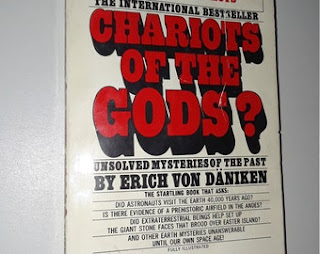
Erich von Däniken: meet the cult writer whose 'ancient alien' thesis inspired Eternals

Chariots of the Gods – subtitled, “Was God An Astronaut?”
The author of the 60s cult classic – and 43 other books – on his 'God is an astronaut' theory, inspiring Marvel and evidence for UFOs


Sam Leith
The Telegraph
January 6, 2022

“Hello,” says the brisk and slightly accented voice on the telephone. “I’m Erich von Däniken.”

I can feel a little shiver of excitement pass through my body – and then back in time, to 14-year-old me, entranced by a garish paperback with his name on the cover. “NGL”, as the young people say: when I was asked to interview von Däniken, my first feeling was astonishment that this titanic figure in late 20th-century popular publishing was still with us.

For those younger readers who won’t remember his work, von Däniken wrote the cult non-fiction book of all cult non-fiction books. His 1968 Chariots of the Gods – subtitled, “Was God An Astronaut?” – was a fixture on every 1970s bookshelf and its argument was propounded in any number of dope-clouded student common-rooms. That argument, as the subtitle indicates, was that aliens visited our planet in the distant past, and that all sorts of archaeological oddities from the Great Pyramid at Giza to the mysterious Nazca Lines in Peru are testament to their presence.

And this spry Swiss gentleman, to whom I speak a few months before his 87th birthday, in no way resiles from that conviction. He believes that aliens mated with ancient humans and tampered with our genomes, gave us various technological and scientific leg-ups, and then left Earth with the promise to return; which, he thinks, half a century of UFO sightings indicates is a promise they made good on. He says the folk memory of these aliens – with their fiery ships descending from the heavens – is encoded in the ancient texts of religions all over the world, from the book of Ezekiel to the Mahabharata and the Epic of Gilgamesh.

We’re talking because von Däniken’s work is credited with having inspired the new Marvel movie The Eternals – or, at least, the 1970s comic books by Marvel’s Jack “King” Kirby on which it was based. That story has as its premise that a team of superpowered aliens came to earth in 5,000BC, as part of an extraterrestrial mission to guide the development of intelligent life on the planet – which is essentially the von Däniken thesis. There’s no doubt that Kirby was influenced by Chariots of the Gods, but its author has never, in turn, heard of him. “The Eternals? It’s a book?” says von Däniken. “I didn’t know about that, but I’m happy to hear about it.”

The ideas that inspired Kirby, says von Däniken, germinated in him as the son of devout Catholic Swiss parents in a Jesuit boarding school. Crammed with Latin and Greek and immersed in the Bible, he became intrigued as to whether other religious texts shared the same myths.

“I learned [that] most of these communities in the past speak about beings descending from the sky, with smoke, fire, trembling, loud noise et cetera,” he says. “Now, being a believer in God, I said, the real God would be something spiritual, he [would] never use a vehicle in which you move from point A to point B.” And so, he said, he hit on the idea that these texts weren’t describing God, but alien visitors worshipped as gods by our uncomprehending forebears.

The idea possessed him. While working as the manager of a hotel in Davos (“I loved it! Today, I could still stand behind the reception desk, behind the bar. The hotel business was wonderful”), he scratched away at the manuscript of what was to become Chariots of the Gods. Within months of its publication, it had gone into orbit. By 1970 Der Spiegel identified Dänikitis as a new mania gripping the world. He has developed the thesis in 43 subsequent books, though he’s a bit vague as to what new evidence occasioned not one or two but dozens of subsequent books on the same theme.

Perhaps the oddest thing about von Däniken, though, is not that he thinks human evolution has been guided by benevolent extraterrestrial intervention or that the world’s religions are all essentially a cargo-cult for space aliens – it's that believing all that, he still claims to be a firm believer in God. I mean, here’s a man who, rightly or wrongly, has offered an anthropological account of religious belief – and yet he himself is no atheist: “I am still a firm believer in God, but I have no idea what God is.”

The ancient-aliens theory, too, is in some ways a matter of faith. He opens our conversation by declaring, forthrightly: “I confess: I have no material evidence. I have tried to prove this by indications, I have hundreds, some very good, some better indications, but I have no material proof.” He adds: “The indications came from old writings, holy and non-holy writings, where we can clearly say: somebody has instructed some humans about extraterrestrials. In some cases the humans ask the visitors: where do you come from? They always point to the sky. And they always promise that in the far future they will return.”

Von Däniken has persisted in his belief in the teeth, it should be said, of very considerable opposition. A whole library of anti-Däniken rebuttal literature exists – with archaeologist and ancient historians pointing out errors of fact and interpretation in his work. The astrophysicist Carl Sagan said: “The kindest thing I can say about von Däniken is that he ignores the science of archeology. Every time he sees something he can’t understand, he attributes it to extraterrestrial intelligence, and since he understands almost nothing, he sees evidence of extraterrestrial intelligence all over the planet.” (His detractors will also tend to point to von Däniken’s prosecutions for fraud in the 1960s. For what it’s worth, he says he was fitted up by a malicious prosecutor, and maintains: “I have absolutely no criminal record.”)

Von Däniken surprises me by volunteering that despite having sold more than 60 million books, run a theme park and presented countless TV programmes, he has “never become a rich man”. What? Even if, as he says, he was naïve about his early publishing contracts, it’d be hard to get royalties on 60 million copies of 44 books without ending up with a bit tucked away. “The money goes in and the money goes out,” he says. “And not for luxury. I never had a Ferrari, or a big house. I’m living in a wood house in the Swiss Alps, together with my wife. Our marriage is more than 60 years [long]. I have never become a rich man,” he repeats, though he concedes: “I have enough money to be an old man and have no financial problems.”

I wonder why, if the notion of these aliens was to guide human development, he thinks they went away for several thousand years. “Well, ethnologists today go to the upper Amazon River, and then they go back home,” he says. “And the distances between the stars are very, very large – you can’t go from one solar system to the other just within 10 years.”

“So these aliens wanted to go home to sort of have a cup of tea,” I say, “and it’s just taken them a very long time to come back.” “Yes,” he says. “I think it’s probably because of the distances. But these are just ideas. I have no proof.” Does he think that proof will ever emerge? He says the knock-down blow would be the discovery of a provably alien artefact – though as he approaches his 87th birthday, he admits that he doesn’t have a strong hope of it happening in his lifetime.

“Oh, yes. Someone – not Erich, someone – will find somewhere an object that is not terrestrial. Then we have the proof.” He believes they’re here – and even that we know where they are – but says they’re so far inaccessible. One of the errors in the first book was his identifying an iron pillar in a temple in Delhi as an “extraterrestrial alloy” because “the temple guides told me that the pillar didn’t rust”; as a cross note in the introduction to a later edition admits, “in the meantime, that piece of junk was rusting away”.

The iron pillar wasn’t his only horse in the race, though. “Go into the Bible,” he says. “There is an object called the Ark of the Covenant. What is the Ark of the Covenant? An extraterrestrial object. We know where the Ark of the Covenant is, today: in the Cathedral of the Holy Virgin Mary in the Ethiopian city of Aksum, but you cannot go there, because it is closed.”

Another candidate is likewise just beyond our reach: von Däniken says that the first Japanese Emperor received a gift from his “heavenly father” of a mirror that allowed him to see what was going on on all the Pacific Islands at once – “something like a satellite picture”. “In his sarcophagus is this gift, this mirror. But the sarcophagus is completely closed. If we could open this sarcophagus and see the mirror, it would probably be an extraterrestrial object.”

There’s another, still fonder, hope he nurses. “Or – that’s a dream – extraterrestrials that might be observing us today, some of the extraterrestrials show up in public. They go on British television and they say, yes, we are not from this planet, and they can prove it somehow – then the case is clear.”

“And then,” I suggest happily, “they will say: “Von Däniken was right!’”

He laughs. “It would be great, of course. But I’m not the sort of man – you know, I have not the character – to say: ‘Hey, now, you see – I was right, and you are all idiots.’”


Eternals is on Disney+ from Wednesday 12 January

https://www.telegraph.co.uk/books/non-fiction/erich-von-daniken-meet-cult-writer-whose-ancient-alien-thesis/

Confronting spiritual abuse in Islam

Hanan Sulaiman
Hanan Sulaiman
Ahram
January 6, 2022

Spiritual abuse is certainly a topic that needs further attention from leaders and followers of different Islamic schools of thought, topped by scholars.

Religious cults are not breaking news. What's new is ground initiatives, organisations, and activism on several levels that advocate against and confront Muslim spiritual leaders' misuse of their power, or their "spiritual abuse."

In cases reported or witnessed, and usually handled outside of the legal system, Sufi sheikhs would be found taking advantage of their followers, especially women, exploiting them financially and/or physically to the extent of sexual relationships. They would also gain various benefits from their service and networks through games of manipulation downplaying reality and threatening of displeasing Allah and His allies -- the sheikh being one of them --and so one's relationship with His Creator would be affected in case of disobedience. Islam has no immunity from any human.

Misguided, narcissist Sufi sheikhs would always ask to be given benefit of the doubt and tell followers not to follow the sins of others. These groups would eventually lead their followers to cut off ties with the outside world and with any voice of reason in the name of sincerity, companionship, and faith. Thus, they remain hostage to the notions their sheikhs feed them, which means these groups transform into a cult where followers would face bullying and threats if they try to break away.

Muslim community activism has been astounding in this field. For the past decade, Muslims have been raising awareness against communities of cults, engaging surviving victims, encouraging them to come forward to tell their stories anonymously and overcome feelings of fear and shame, offering support, and finally, holding those who violated the trust accountable for their wrong-doings doings. Examples of this activism are "In Sheikh's Clothing," "Hurma Project," "Face," and "Heart."

It is notable that Muslim activism against spiritual abuse originated in the West, despite the phenomenon's existence in Muslim-majority countries. Yet, no similar organised civil activism can be noticed on the ground in any Arab country, for instance. Culturally, Arab Muslims tend to deny wrong-doings related to the practice of faith. There could be some working groups or even individuals who do not wish to formally announce their activism, either because they prefer to work secretly and not state publicly that such abuse exists, out of fear that it will be used by Islamophobes, or they fear the repercussions if their names are known to be active in this sphere they will be branded as conspirators against Islam.

"In Sheikh's Clothing" emerged publicly seven years after its founder started his activism. More work is done behind closed doors than in public.

Silencing victims, protecting perpetrators, and blaming victims imply that the abuse someone suffered is their own fault, accusing women, for example, of causing fitna, or sedition. Then the victim feels betrayed by Islamic scholars and the Muslim community after they fail to provide adequate support and they could possibly renounce their faith.

"If we pretend that we have a utopia, we will only be in denial about what actually happens," Ingrid Mattson, founder of "Hurma Project" said in a conference, "The cover-up in such cases is worse than the crime itself."

Prevention is better than cure. Activists compile a list of precautions one should take in these communities to protect oneself against manipulation. They also put a code of conduct and ethical policies for Muslim leadership, train institutions on how to address spiritual abuse effectively and educate individuals on recognising spiritual abuse and coach them on cult exit and recovery. A code of conduct does not mean abuse would not occur, but that it is actionable and violators will be held accountable. It also protects religious figures from baseless allegations. Prophet Muhammad advised "Help your brother, whether he is an oppressor or an oppressed." His Companions told him "It is all right to help him if he is oppressed, but how should we help him if he is an oppressor?" The prophet replied "By preventing him from oppressing others."

Red flags that ring alarm bells against a sheikh who betrays his spiritual honesty include granting favours for a follower, such as giving her extra time, special invitations and exceptions, disclosing personal issues, discouraging her from seeking help elsewhere, and sharing a secret together. In addition, a red flag is when a woman's instinct tells her something is wrong.

Some activist groups, such as "Face," would even go the extra mile and expose abusers whose patterns of behaviour suggest "criminal thinking" and not just human weakness. They would start with investigating reported cases to prove the alleged violations. "When people say Islam supports victims dropping standards of evidence, they are assuming their approach is the maslaha (interest) without accounting for the fact that they may be the ones creating a greater harm that they are not aware of," one activist said.

If no practical steps were taken to stop the abuse in the concerned organisation, uncovering the issue to alert others to be careful of certain sheikhs would be the solution to socially hold them accountable. Firing them without exposing their misconduct might lead to new circles of abuse elsewhere. Exposing the abusers would entail publishing their names, photos, and documented violations while protecting the victims' identities.

Spiritual abuse is certainly a topic that needs further attention from leaders and followers of different Islamic schools of thought, topped by scholars. These initiatives need to be replicated in other countries and connected universally.

Unfortunately, there is none in Egypt despite the fact that abuses of spiritual power exist which drove me to write my first novel about the topic, The Shepherd.

*The writer is a journalist and novelist. Her debut novel The Shepherd was published in 2021 in Arabic.


https://english.ahram.org.eg/News/454742.aspx