Apr 25, 2024

Judge denies reduced sentence for former NXIVM leader Clare Bronfman

NXIVM leader Clare Bronfman
Alex Weidner
WRGB
April 25, 2024

New York, NY (WRGB) — A federal judge on Monday denied a motion from Clare Bronfman to have her sentence reduced. Bronfman is serving a six year, nine month sentence for her role in the NXIVM sex cult.

In 2019, Bronfman pleaded guilty to identity theft, and a conspiracy involving undocumented immigrants. The former NXIVM leader and Seagram's liquor heiress recruited individuals into groups associated with NXIVM, then fraudulently sought visas for them.

Bronfman sought to have her sentence reduced under Amendment 821 of the United States Sentencing Guidelines, arguing she "did not personally cause substantial financial hardship" as required by the guidelines. District Court Judge Nichoals Garaufis writes Bronfman cannot prove her qualifications under Amendment 821. Judge Garaufis adds that even if Bronfman were eligible for a reduced sentence, it would not be warranted.

NXIVM was founded in Albany in 1998 by Keith Raniere and Nancy Salzman, operating as a self-improvement multi-level marketing scheme. The company was a front for criminal activity, including sex trafficking and various forms of fraud.

Raniere is serving a 120-year sentence for racketeering and sex crimes. Salzman was released from federal prison in 2023, spending time at a halfway house until April 2024.

A home once owned by NXIVM, referred to in court documents as "The Library," recently hit the market. Neighbors previously told CBS 6 about late night parties at the home, 8 Hale Drive in Halfmoon. Listed on Zillow.com, photos show the home is almost entirely gutted. Asking price is $148,000.

Vermont Conversation: Surviving and escaping the Twelve Tribes cult

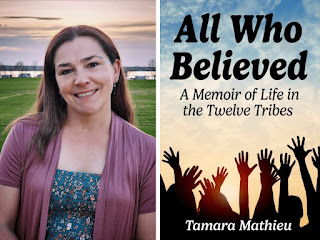
“Your personal freedom and your ability to make decisions for you and your family is really a priceless thing,” said Tamara Mathieu.

David Goodman
VT Digger
April 24, 2024

In August 2000, 23-year-old Tamara Mathieu and her husband left good jobs, gave up everything, and joined a cult. For 14 years, they were members of Twelve Tribes, which the Southern Poverty Law Center describes as “a Christian fundamentalist cult” that has been accused of child abuse, child labor, racism and misogyny.

The Twelve Tribes made national news in 1984 when their Island Pond community, which was then known as the Northeast Kingdom Community Church, was raided by Vermont State Police and 112 children were detained in response to allegations of child abuse. A judge later dismissed the cases, ruling that the raid was unconstitutional.

The Twelve Tribes “sees persecution as proof that they’re God’s people,” said Mathieu.

Mathieu, her husband and four children left the Twelve Tribes in 2014. She now works for Northwestern Counseling and Support Services in St. Albans as a facilitator of day programs for adults with developmental disabilities. She has just written a book, “All Who Believed: A Memoir of Life in the Twelve Tribes.”

The Twelve Tribes attracted “people who don’t want to fit into the 9-to-5 rat race of society, and they want this life of love and caring for each other and community,” explained Mathieu. “Suddenly, you’re surrounded by this group of people who are just enamored by you who are giving you all this praise and encouragement.”

Leaving the cult “was terrifying,” said Mathieu. “We had lived in this bubble and raised our children in this bubble. And then to come out, it’s like you are bombarded with stimuli that haven’t been a part of your life. I felt like a new parent. All I had done all those years was just spank my children for everything they ever did wrong. And I knew that we didn’t want to continue on that practice, but what do you do? Like, a timeout?”

Mathieu hopes that people who read her book see it as a cautionary tale. “Your personal freedom and your ability to make decisions for you and your family is really a priceless thing. I wouldn’t give that up for anything anymore.”

She also noted that cults are everywhere. “People might not really even realize what’s going on right next door.”

https://vtdigger.org/2024/04/24/vermont-conversation-surviving-and-escaping-the-twelve-tribes-cult/

Ex-Student’s Establishment Clause Claim Can Proceed As Class

Tre'Vaughn Howard
Bloomberg Law
April 22, 2024

Judge: Establishment clause claim satisfies Rule 23

But, Free Exercise claim fails for lack of typicality across class

A former Chicago public schools student, challenging implementation of a program with Hindu-influenced religious practices under the First Amendment, can proceed as a class action on her Establishment clause claim but not her Free Exercise claim, a federal judge said.

Kaya Hudgins sued Chicago’s Board of Education—among other named defendants—alleging that implementation of the “Quiet Time” program in eight CPS schools including where she attended for two years, violated the Establishment and Free Exercise Clauses of the US Constitution. The program consisted of two 15-minute meditation sessions where students participated in “Transcendental Meditation” or in another quiet activity, Judge Mattew F. Kennelly, of the US District Court for the Northern District of Illinois, wrote.

Hudgins alleged the program was presented as non-religious, but had “‘hidden religious’ elements” because students who participated in Transcendental Meditation were assigned a Sanskrit “‘mantra’” that honored specific Hindu deities. Hudgins also alleged that students who participated were required to complete a “‘Puja’” initiation ceremony that included chants to Hindu deities inviting them to channel their powers through those in attendance. Students that opted out of participating in the meditation were still in the same classroom as those who did, Hudgins asserted.

Hudgins sought to certify a class that included all students who participated in the Quiet Program during the academic years from 2015 to 2019, and a subclass for students who participated in Quiet Time, but weren’t trained in Transcendental Meditation. CPS argued Hudgins’s claims are “overbroad,” barred the
statute of limitations, and fail to meet several requirements for certification under Rule 23.

Kennelly granted Hudgins motion in part regarding her Establishment clause claim, but denied it as to her Free Exercise claim. Citing Seventh Circuit precedent—Kennelly said CPS’s overbroad defense construes Hudgins claims “too narrowly” because students that didn’t participate in Transcendental Meditation still could have suffered harm from the alleged coercion and endorsement in violation of the Establishment clause.

Regarding the Free Exercise claim, Kennelly said adjudicating the claim would require individualized inquiries for each students’ religious beliefs. So, common questions didn’t predominate for the entire class or any variation of the subclass and, therefore, Rule 23(b)(3) wasn’t satisfied. Kennelly also amended the class definition to include students who reached age 18 on or after January 13, 2021—in order to account for an Illinois law that allows people to sue within two years of turning 18.

Kennelly disregarded CPS’s argument and exercised discretion to revise the class definition because Illinois law grants a person that was a minor when the cause of action occurred within two years of their eighteenth birthday to file a claim. And although Kennelly said Hudgins satisfied the numerosity, commonality, and typicality requirements under Rule 23 for her Establishment clause claim, Hudgins’ Free Exercise claim lacked typicality.

Specifically, Hudgins’ Free Exercise claim is not typical of the subclass since the subclass wasn’t trained in Transcendental Meditation, and would lack a representative, Kennelly said.

“Hudgins and members of the subclass do not share ‘the same essential characteristics’ with respect to their Free Exercise claims. Separating these students into the subclass Hudgins proposes does not mitigate this fundamental discrepancy,” Kennelly wrote.

Kennelly also said the four attorneys representing and Hudgins were adequate representatives, despite CPS’s citation of Hudgins’ probation status, which borders on attempted “character assassination.” The four attorneys were appointed class counsel by Kennelly.

Mauck & Baker LLC and Leahu Law Group LLC represent Hudgins and the Establishment Clause class. Pretzel & Stouffer represents Defendant David Lynch Foundation. Greenberg Traurig LLP and in-house attorneys represent the Chicago Board of Education.

The case is Hudgins v. Bd. of Educ. of City of Chi., N.D. Ill., No. 1:23-cv-00218, 4/19/24.


https://news.bloomberglaw.com/us-law-week/ex-students-establishment-clause-claim-can-proceed-as-class

Apr 24, 2024

Jehovah’s Witnesses ease shunning rules after blow in Oslo court

Evert van Vlastuin 
CNE.news
April 24, 2024

Jehovah’s Witnesses worldwide have eased the discipline for youth members after “serious wrongdoing”. The new guideline came within two weeks after the decision of the Oslo District Court in Norway to strip the Jehovahs of their official status as a registered faith community.

The faith community seems to be trying to get a better position in the appeal case in Norway. The community came under attack for its rigid rules regarding discipline to “baptised minors”.

Among Jehovah’s Witnesses, it is usual that children choose for baptism between 12 and 16 years. Religiously, they are seen as responsible members than, who can be disciplined. There have been cases of “disfellowship” after “serious wrongdoing”, resulting in “shunning”, isolation and contact bans. For individuals and families, this can be rigid and feel like psychological violence.

For the Norwegian state, this practice is controversial because those “baptised minors” are legally still kids. The state feels responsible for protecting the minors. After complaints of psychological violence, the authorities decided in 2021 to rip the Jehovah’s Witnesses in Norway from the legal status, which they had since 1985. According to experts, this is the first time a faith community lost its legal position in Norway.

This registration in Norway gives access to huge amounts of state subsidies. The monetary support is about NOK 16 million (1.3 million euros) every year. Over three years, together with interest, the JW demanded NOK 50 million (4.3 million euros).

With the de-registration, the Jehovah’s Witnesses also lost the right to perform civil marriages. Traditionally, marriages were performed by the Lutheran state church. Nowadays, all recognised faith communities (including the Humanist Society) can perform civil marriage.

Jehovah's Witnesses evangelising. Photo Jehovah's Witnesses 
Norwegian Jehovah's Witnesses demand subsidy despite their loss of religious status
The JW community in Norway –which consists of 12,000 members in 700 local congregations– went to court about the decision. The public sessions in court took two weeks in January.

Dozens of people involved came to testify how significant the damage of exclusion had been for them. Others came to tell of the fear of being excluded from the community in which they had lived and, therefore, remained within the community anyway. Some people told of years of pressure that led to lifelong emotional impact.

The conclusion was clear: disfellowship and shunning exist. However, legally, the central question was whether this is part of the community’s freedom of belief or whether it restricts the freedom of those (minors) involved. And could it be a ground for de-registration? This is a new field since this is the first group that has been ripped off registration.

On March 4th, the judges confirmed the state’s position. On March 28th, the Jehovah’s announced the appeal.

“Simple greeting”
Before the appeal was made known, another announcement came from JW: “Adjustments to handling serious wrongdoing in the congregation”.

The new rules published in a video mid-March include a softening of the contact ban. Members may use their “Bible-trained conscience” to decide on a “simple greeting” to a person removed from the congregation. It is no longer expected “to ignore him completely”.

Members of Jehovah's Witnesses during a mass christening in a stadion. Photo EPA, Marcin Obara
Jehovah's Witnesses see "great increase” in baptisms
According to a confidential document that leaked to the critical platform Jehovahs-Witness.com, the discipline of baptised minors has been liberalised even further. From now on, only two elders meet with the person and his parents or guardians. Before, this was a committee. The elders “will exercise patience as they work with the parents to understand the minor’s attitude”. After this, they cooperate with the parents “to assist their child”.

Before, there was just one meeting, after which the committee decided within two hours whether to take steps to “disfellowship” or not.

Haste
The new measures have been introduced with unusual haste. Usually, there is more time and rest in the procedure. That is remarkable because the organisation defended the then-current practice of disfellowship as Biblical last December. A German lawyer who himself is part of the Jehovah’s Witnesses thinks it difficult not to see the connection with the Oslo court decision.

The Jehovah’s Witnesses claim to have been active in Norway since the 1890s. In the early 1980s, they applied for registration. In those days, this was controversial within the community, since by doing that the Jehovahs would accept to be placed on the same level with other churches. However, the advantage was clear: the group would receive the same money as the state church and other groups.

Also, the Jehovah’s Witnesses have an official registration in other countries, like Germany and Italy. However, the conditions and profits differ from country to country.

Disinformation
In Norway, the court case has been characterised as the most important judicial procedure about religious freedom in decades. Spokesman Jørgen Pederson of the Jehovah’s Witnesses does not speak to the press but distributes a written statement after the decision. The decision by the judges about the “State’s offensive allegation” is “deeply disappointing”, Pederson writes. The state could “not provide a single verified example of a victimised child”. For him, this judgement confirms that Jehovah’s Witnesses are “often victims of disinformation”.

The case will continue in the appeal stages. Experts find it likely that the case might end in Strasbourg at the European Court of Human Rights (ECtHR).

Norwegian court maintains Jehovah's Witnesses’ ban on sealing marriage
Reactions to the court’s decision were of two types. First, some welcomed the verdict. Freedom of religion can never be absolute, and the state must curtail long-term wrongdoings. They were not impressed by Pederson’s comment that there was “no single verified example” of abuse.

Several academics stated that the freedom of religion is not at stake here since the Witnesses can still hold fast to their interpretation of the Scriptures and teach this in their gatherings. The scope of disciplinary action is limited, but that is because the rights of others are at stake.

A second group of reactions is much more critical. They do not defend the practice of shunning but still think that this should be protected legally. The Baptist Standard, for instance, guessed that Norway might lose its reputation for human rights because of this intervention in the religious liberty.

Also, Willy Fautré, director of the Brussels-based organisation Human Rights Without Frontiers, is concerned. “We see that there are more and more attempts in Europe by state institutions to interfere and intrude into the teachings and practices of religious groups, which is forbidden by the European Convention.”

Dmitry Dolzhikov and his wife. Photo Jehovah's Witnesses
Russian Jehovah's Witness sentenced to forced labour
The editor of the Christian daily Dagen, Vebjørn Selbekk, wrote in January that this case does intervene in the free interpretation of Scripture, since the understanding of discipline is a theological issue.

He finds it cowardly to take on the Witnesses now. They have no friends or allies in the Norwegian society. And since they are not voting, there is no political risk in doing this either. “But precisely in such cases, when the great majority applauds and rejoices that a religious community loses its rights, there is a special reason to be vigilant”, Selbekk wrote. “That’s how they do it in countries we don’t usually like to be compared to.”

The professor in the Study of Religion at the University of Oslo, Dr. Dag Øistein Endsjø, is critical too, he says in an interview with CNE.news. “The state must guarantee equality. Suppose the state recognises one community and not the other. In that case, there is differential treatment that must be justified. This goes about tax money as well. As far as I can see, the state has not proven that such unequal treatment is justified, and thus, this may be a case of discrimination in relation to religious freedom.”

For Endsjø, it is “hard to deduce from the material” that the religious groups violate the rights of children. “If, however, this really was proven, the state would, according to its duty to always protect the best interest of the child, have to do much more to stop this practice than just withdrawing the registration and letting the rest go.”

Oslo District Court building. Photo Jehovah's Witnesses 
Norwegian Jehovah's Witnesses lose temporary right to marry couples
According to Endsjø, one must always have the human rights protection of the autonomy of the faith community in mind. General rules on various forms of equality do, for instance, not apply within the theological dealings of a church. “The state does not have the right to enforce its own vision upon a religious group. If that was the case, the Norwegian state could even have made the Roman Catholics accept female priests.”

https://cne.news/article/4220-jehovahs-witnesses-ease-shunning-rules-after-blow-in-oslo-court

Federal Judge Grants Class Action to Students Alleging Coercion in Religious Rituals in CPS Schools

April 24, 2024 

Former Chicago Public School Pupils Sue Chicago Board of Education Over “Quiet Time” Indoctrination

Contact: Tom Ciesielka, 312.422.1333, tc@tcpr.net

(April 24, 2024 – Chicago) A petition for class action status by a former Chicago Public School student (Kaya Hudgins) who alleged that her school coerced her to participate in Transcendental Meditation (TM) and Hindu practices has been granted by a federal judge in a lawsuit against the Board of Education of the City of Chicago and the David Lynch Foundation.  Attorneys at Mauck & Baker, representing Kaya Hudgins, received an order from The United States District Court for the Northern District of Illinois awarding class certification to Hudgins and her peers. The class action lawsuit alleges that while minor students were attending certain Chicago Public Schools (who chose to participate in the David Lynch Foundation “Quiet Time” program), they were required to participate in Transcendental Meditation that incorporated Hindu religious rituals, which Hudgins claims on behalf of the class is an egregious violation of their constitutional rights. 

The design, implementation, and conduct of a Chicago Public Schools program, dubbed Quiet Time, was handled by the David Lynch Foundation for World Peace, an organization teaching Transcendental Meditation.  As alleged in Hudgins’ First Amended Complaint, the Foundation worked together with Chicago Public Schools and the University of Chicago to implement the program at Chicago Public School high schools.

Hudgins, by her own Declaration, was made to take part in Quiet Time.

“A Chicago Public Schools teacher told me and my entire class to sign a consent form to participate in Quiet Time,” Hudgins wrote. “My entire class and I signed the consent because we felt pressure to sign. Our teacher told us that we would get in trouble and be sent to the dean if we did not consent. The teacher also told us that not signing the consent would affect our academics. We also received the same kind of pressure to participate in the Quiet Time program on a regular basis.”

Hudgins was 16 years old at the time.

“Additionally, I, like many of my classmates, signed a nondisclosure not to tell anyone, including our parents, about the program,” added Hudgins. “My classmates and I were particularly warned by a David Lynch Foundation representative not to tell our parents if our parents were ‘religious.’”

“Not only were these minor school children coerced by Chicago Public School teacher into signing a document they had no business signing,” shared John Mauck, a partner at Mauck and Baker, “They were duped into practicing Hindu rituals and Transcendental Meditation during class time and instructed to hide their mandated participation in them from their parents.” 

Hudgins recalled being escorted into an uncomfortably private one-on-one Hindu “Puja” worship ceremony in a darkened room, with chanting and a variety of religious paraphernalia. During instruction about meditation the adult woman who was alone with her whispered a “mantra” into her ear and told Hudgins not to disclose the mantra to anyone. However, Hudgins revealed that she and her classmates discussed their mantras with each other.

“Eventually I researched on the internet many of our mantras and they turned out to be the names of Hindu gods,” reported Hudgins.  “My classmates and I were very hurt to learn how the school and the instructor had us participating in a religious practice without our knowledge.” 

Hudgins explained how the meditation sessions, a required part of the Quiet Time curriculum, “felt like hypnosis or being in a trance.”  Despite the fact that these situations felt “abnormal,” according to Hudgins, she took part because she was informed that not participating would negatively affect her grades and her academic record. 

Additionally, Hudgins recounted how students were rewarded with pizza for promoting Transcendental Meditation, which her instructor referred to as “following orders,” and how one friend was offered $100 by program coordinators to participate in promote Quiet Time.

“I complained a few times to my teacher about not wanting to participate in the Quiet Time program,” shared Hudgins.   “Once, my teacher sent me to the dean’s office because I was questioning why we had to participate in the program. I felt angry and hurt because the school did not care whether or not I wanted to participate.”

Now 21 years old, Hudgins has talked about the damaging effect that Transcendental Meditation had on her. At the time, she was a practicing Muslim and what the school was pushing on her contradicted her religious Islamic beliefs and caused her to question her Islamic beliefs particularly whenever they said that there was a different higher power than the god she believed in.

“This was extremely offensive and very confusing,” Hudgins intimated. “It made me feel guilty and sinful because Muslims are not to worship men.”

“As a Muslim, I was supposed to pray five times a day,” said Hudgins.  “Although the school made me take time away from class to practice in Transcendental Meditation, it would not allow me to take time away from class for those five daily prayers.”

Hudgins and her Mauck & Baker attorneys petitioned the court on her own behalf and for other students similarly situated, asking them to hold the Board of Education of the City of Chicago and the David Lynch Foundation accountable for deprivations of these students’ Constitutional rights.

District Judge Matthew Kennelly granted class action status for all students who participated in the Quiet Time program in Chicago Public Schools during the academic calendar for Fall 2015 through Spring 2019 and reached age eighteen on or after January 13, 2021.

In a similar case, former Chicago Public Schools student Mariyah Green, also represented by Mauck & Baker, received $150,000 in damages and legal fees in an agreed Offer of Judgment entered by the Northern District of Illinois on October 23, 2023. The monies were an agreed judgement in Green’s favor for alleged Constitutional violations of her rights by the Board of Education of the City of Chicago and the David Lynch Foundation, over mandated participation in Hindu rituals while attending a Chicago Public School. Green’s Complaint was brought to the court in February, 2023 in an effort to hold educators and program developers responsible for requiring participation in a disingenuously promoted program that violated her Christian beliefs.

Read the Memorandum Opinion and Order issued April 19, 2024, by District Judge Matthew F. Kennelly of the United States District Court – Northern District of Illinois Eastern Division granting class certification in Kaya Hudgins v. Board of Education of the City of Chicago et al., under the Establishment Clause claim, for all students who participated in the Quiet Time program in Chicago Public Schools during Chicago Public School’s academic calendars for Fall 2015 through Spring 2019, and reached age eighteen on or after January 13, 2021,  here [https://www.scribd.com/document/725965003/Kaya-Hudgins-v-Board-of-Education-City-of-Chicago-et-al-Memorandum-Opinion-and-Order-04-19-2024]. 

Read the First Amended Complaint in Kaya Hudgins v. Board of Education of the City of Chicago et al. as filed on February 3, 2023, by Mauck and Baker attorneys on behalf of Kaya Hudgins in United States District Court – Northern District of Illinois – Eastern Division here [https://www.scribd.com/document/725967561/Kaya-Hudgins-v-Board-of-Education-City-of-Chicago-et-al-First-Amended-Complaint]. 

About Mauck & Baker, LLC
Mauck & Baker, established in Chicago in 2001, is nationally known for its practice in the area of religious liberty. It works with individuals, religious institutions, and businesses. For more information, please visit mauckbaker.com

The Mental Health of Jehovah's Witnesses

The Mental Health of Jehovah's Witnesses
Published online by Cambridge University Press:  29 January 2018
The British Journal of Psychiatry
Volume 126 Issue 6

John Spencer
Affiliation: Heathcote Hospital, Applecross 6153, Western Australia

Summary
The function of religion in human society is complex. The part played by religion in psychiatric disorders is even more obscure. Previous literature and theories are divided into two groups: one school believes that intense religiosity is a symptom-complex indicative of psychiatric disorder, while the opposing view is that religious belief in some way acts as a defence mechanism protecting the individual and his psyche.

The present study of 50 Jehovah's Witnesses admitted to the Mental Health Service facilities of Western Australia suggests that members of this section of the community are more likely to be admitted to a psychiatric hospital than the general population. Furthermore, followers of the sect are three times more likely to be diagnosed as suffering from schizophrenia and nearly four times more likely from paranoid schizophrenia than the rest of the population at risk.

These findings suggest that being a member of the Jehovah's Witnesses faith may be a risk factor predisposing to a schizophrenic illness. Further studies would be interesting in investigating whether pre-psychotic people are more likely to join the sect than normal people and what part (if any) membership has in bringing about such a breakdown.

References
Boison, A. (1952) Exploration of the Inner World. New York: Hauber.Google Scholar
Clark, E. T. (1929) The Psychology of Religious Awakening. New York: Macmillan.Google Scholar
Fenichel, O. (1946) The Psychoanalytical Theory of Neurosis. London: Routledge and Kegan Paul.Google Scholar
Freud, S. (1913) Totem and Taboo. London: Kegan Paul.Google Scholar
Fromm, E. (1960) Psychoanalysis and Religion. New York: Holt Rinehart & Winston Inc.Google Scholar
Graff, R. W. & Ladd, C. E. (1970) POI Correlates of a Religious Commitment Inventory. Southern Illinois University Press.Google Scholar
Jung, C. G. (1933) Modern Man in Search of a Soul. New York: Harcourt and Brace & Co.Google Scholar
Kraus, J. (1969) Some social factors and rates of psychiatric hospital admissions of immigrants in New South Wales. Medical Journal of Australia, ii, 17.Google Scholar
Lane, M. (1968) Journal of Social Psychology, 75, 261–8.Google Scholar
Lloyd, J. H. (1973) Religion and insanity. Australian and New Zealand Journal of Psychiatry, 7, 193.CrossRefGoogle ScholarPubMed
Northridge (1968) Psychiatry in Pastoral Practice. Google Scholar
Plymouth (1972) Moorhaven Hospital Diagnostic Index. Personal communication.Google Scholar
Roberts, F. J. (1965) British Journal of Social Psychology, 4, 185–7.Google Scholar
Sargant, W. (1957) Battle for the Mind. London: Heinemann (reprinted in Pan Books, 1970).Google Scholar
West Australian Government, Department of Statistics, Perth (1973).Google Scholar
Also of relevance:Google Scholar
Allport, G. W. & MacMillan, (1959) The Individual and his Religion. Google Scholar
Haekema, A. A. (1963) The Four Major Cults. Google Scholar

Sam Jahara (Part 1) The Children of Rajneesh and Centrepoint


Cult Chat Episode 31: Sam Jahara (Part 1) The Children of Rajneesh and Centrepoint

This is part 1 of an in-depth interview between 2 former cult children, now a doctor and psychotherapist. 

Apr 23, 2024

Abuse in Care inquiry: Jehovah's Witness appeal dismissed

RNZ
April 23, 2024

A legal bid by the Jehovah's Witness church challenging a ruling by the Royal Commission of Inquiry into Abuse in Care has been dismissed by the Court of Appeal.

In March, the church appealed a High Court ruling that dismissed its claim to be excluded from the investigation.

On appeal, it disputed the decison to broaden the scope of the inquiry from institutional care to trust based relationships saying that was done to target the faith.

The Jehovah's Witness church maintains it should be exempt because it did not run institutions that cared for children or vulnerable people.

Justice Cooke said the court did not accept those arguments and has dismissed the appeal.

Apr 22, 2024

Chad Daybell trial weekly roundup: Exhumation conflicts, financial motives, digital trails

CBS2 News Staff
April 21, 2024

Boise, ID (CBS2) — As we head into another week of the Chad Daybell murder trial here is a look back on what happened in court this past week.

Chad Daybell's attorney, John Prior, cross-examined Lt. Powell with the Fremont County Sheriff's Office. Lt. Powell filed the motion and presented arguments before a judge to have Tammy Daybell's body exhumed. Under direct testimony with prosecutors, Lt. Powell explained that he made the decision to have Tammy Daybell's body exhumed because of the number of deaths surrounding Chad and Lori, and the lack of any medical records that pointed to any health concerns.

During questioning Lt. Powell admitted that he never looked at the death certificate that said Tammy died of natural causes, likely a heart condition of some type. He also testified that he did not consider Tammy's recent bought of illness that was reported in a separate police report.

Chandler Detective Nathan Duncan testified about the day Lori's brother Alex Cox shot Charles Vallow in Arizona. Duncan also details extensive forensic evidence, like Charles emailing Tammy about Lori and Chad's affair at the time. Prosecutors want his testimony to show jurors the motive for Charles' murder.

Text message evidence indicates investigators believe Charles was killed for insurance money, but a week later, Lori texted Chad about a letter from the insurance company. Duncan says he finds no grief over Charles' death sifting through texts, emails, fake accounts, burner phones, and the like.

A Rexburg detective was called to the stand by the prosecution. Detective Chuck Kunsaitis established a financial timeline around the murders. He says there was a sudden change in spending on Tylee's account around the time they believed she was killed.

Kunsaitis explained Lori likely took control of Tylee's Venmo account after her murder and used that account to deposit her own money and launder it through Tylee's image.

Kunsaitis added police believe Tylee was killed within 10 days of receiving benefits in a personal account left to her by her late father.

Daybell is on trial for first-degree murder charges for the 2019 deaths of Lori's kids, seven-year-old JJ Vallow and 16-year-old Tylee Ryan, and his wife Tammy in late 2019. Detectives found the remains of the kids on his property in 2020.

Apr 21, 2024

Forced marriage comic made to 'get students talking'

Asha Patel & Shannon Samecki,
BBC News, Nottingham
April 12, 2024

"A comic book about forced marriages has been created for pupils as young as 13 to help prevent them from happening.

The "I choose" comic, based on research by the University of Nottingham, shares stories of real experiences.

Prof Dr Helen McCabe said the comic was aimed at helping students "navigate" conversations around relationships and control.

The comic has been made free for teachers to download and use in schools.

It addresses relationships, choice, marriage, coercive control, family influence, and explains how people from all backgrounds - including different ethnicities and sexual orientations - can be affected.

The book is based on the work of Dr McCabe, an associate professor of political theory at the University of Nottingham, and Dr Hannah Baumeister, a lecturer in law at Liverpool John Moores University."

" ... One of the stories depicts a relationship between two young men, one whose parents plan to travel abroad with him, where it is suggested he could be forced to marry a woman.

According to the University of Nottingham, about 300 people asked the UK government-run Forced Marriage Unit for advice in 2022.

But Dr McCabe said that the "exact" number of people forced into marriage in the UK was unknown due to it being a "hidden crime" and victims "feeling they can't come forward" to report it.

She hopes that it will contribute to wider efforts to "eliminate" forced marriages."