Mar 28, 2017

Hardline Hindu priest a handful for Modi in heartland Indian state

FILE PHOTO: India's ruling Bharatiya Janata Party (BJP) leader Yogi Adityanath takes the oath as the new Chief Minister of India's most populous state of Uttar Pradesh during a swearing-in ceremony in Lucknow, India, March 19, 2017.
Rupam Jain and Douglas Busvine | GORAKHPUR, INDIA/NEW DELHI
REUTERS
March 28, 2017

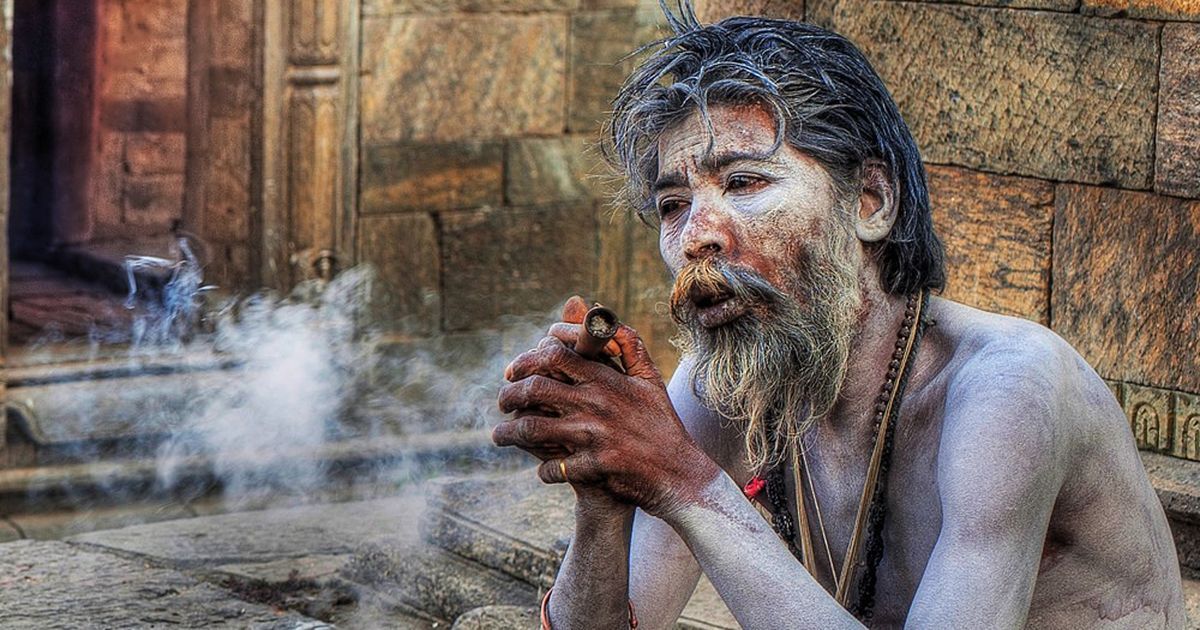
Since Indian Prime Minister Narendra Modi stunned the political establishment by promoting a hardline Hindu priest to one of the country's most powerful positions, Yogi Adityanath has sounded more statesman than rabble-rouser.

Gone is the fiery anti-Muslim rhetoric and promotion of Hindu supremacy for which the saffron-robed 44-year-old is known, and in its place is a message of social inclusion more akin to Modi's language since sweeping to power in 2014.

"My government will be for everyone, not specifically for any caste or community ... We will work for development of all sections and castes," Adityanath said shortly after being made chief minister of Uttar Pradesh, India's most populous state.

The words jar with what the shaven-headed leader of the Gorakhnath sect has been saying from public platforms throughout a political career spanning nearly 20 years.

In his northern power base - the down-at-heel town of Gorakhpur near the Nepalese border - Adityanath's more conciliatory comments have done little to dispel unease among members of the Muslim community, who make up nearly a fifth of Uttar Pradesh's 200 million or so people.

"We should just go about doing our job and pray the Hindu Yuva Vahini doesn't take over mosques to build new temples," said local driver Aijaz Sheikh, referring to the Hindu Youth Force set up by Adityanath in 2002 to carry out his agenda.

"If we react then we will pay the price. The loss will be ours and no Hindu will come to stand with us in Gorakhpur."

Adityanath's ascent has prompted widespread questions about India's secular status, and whether Modi, himself a product of a nationalist Hindu upbringing, intends to pursue more aggressive pro-Hindu policies as he pursues economic reforms.

Adityanath was a key campaigner for Modi's Bharatiya Janata Party (BJP) in Uttar Pradesh elections, and the thumping victory he helped deliver underlined how a divisive candidate could eclipse rivals who tried to reach out across communities.

"With Yogi Adityanath's appointment, vigilantism has been upgraded into state policy," said Gilles Verniers, assistant professor of political sciences at Ashoka University outside Delhi.

ABATTOIRS AND "ROMEO SQUADS"

In a gleaming white temple compound in Gorakhpur, people crowd Adityanath's offices to petition his band of fanatical followers in the Hindu Youth Force to settle their personal grievances.

Clerks hammer out their requests on old mechanical typewriters, handing them to members of the force to deal with.

Not all disputes concern religion, but Adityanath's devotees say their main mission is to fight against creeping encroachment by Uttar Pradesh's Muslim community.

"It was a very difficult period for Hindus and for Yogi ji," Mahesh Poddar, a textile merchant who was one of the first people to join the youth force, told Reuters in the temple compound.

"We felt like we were living in a country that doesn't belong to us."

Adityanath declined requests for an interview on past actions and his plans as chief minister.

Since his March 19 swearing-in, he has pushed policies that are an extension of Modi's nationwide agenda, notably demanding state ministers declare their incomes and assets as part of a crackdown on corruption.

At the same time, he has instructed officials to prepare to shut down all mechanized abattoirs, part of a campaign pledge that appealed to Hindus because they view cows as sacred and because slaughterhouses are run mainly by Muslims.

The slaughter of cows is, in fact, prohibited in Uttar Pradesh, although not always enforced, but a blanket ban would also hurt buffalo meat exports.

Meat traders in the state said on Monday they had launched a strike to protest against the closure of butcher's shops and slaughterhouses considered illegal.

"We are not selling drugs or indulging in criminal activities. We sell meat to feed our families but the government is targeting us because we are Muslims," Raza Quereshi, a member of the Meat Producers' Association, told Reuters.

Police have also deployed "anti-Romeo squads" to keep men and women apart in public to protect women from harassment.

But they are also seen by some as an extension of Adityanath's battle against what he calls "love jihad", or entrapment of Hindu women to convert them to Islam.

Religious tensions sporadically flare into violence in India, including in 1992 when more than 2,000 people were killed in clashes between Muslims and Hindus sparked by the demolition of a mosque on a contested site in Ayodhya, Uttar Pradesh.

PROVOCATION, CRIMINAL CHARGES

Adityanath, born in the northern state of Uttarakhand, left his family to join the Gorakhnath sect and was quickly chosen to succeed its chief priest. He was elected to parliament in 1998 in his mid-20s and has won re-election four times.

During his career, he has earned a reputation as a fringe firebrand.

News channels have aired footage of some of his public comments, including in 2007 when he said: "If they (Muslims) convert one Hindu girl, we will convert 100 Muslim girls ... if they kill one Hindu, we will also kill 100 Muslims."

Like many Indian politicians, Adityanath also faces a string of criminal cases, disclosed in the affidavit he filed as a candidate in the 2014 general election.

These include attempted murder, criminal intimidation, promoting religious enmity and defiling a place of worship.

No charges have been framed and Adityanath has said the cases against him were baseless and politically motivated.

In one seen by Reuters at a local police station, a local Muslim politician called Talat Aziz accused Adityanath of deliberately provoking a clash between Muslims and Hindus in 1999 that led to the death of a 26-year-old police constable.

She is still fighting the case, which is pending before a local court.

Close aide Balu Rai said Adityanath had provided ample evidence to prove he was not involved in the death.

Officials in Modi's office expressed confidence in Adityanath and said they expected him to change his image and policies for the good of the state.

And although he has clashed with the BJP before and his sect has maintained independence from the ruling party, some expect Adityanath to conform to Modi's wishes now he is chief minister.

"He is a rabble-rouser whom the party has been using to communalize the agenda, the elections and the discourse," said journalist and historian Akshaya Mukul. "But I don't see him slipping beyond the control of the high command."

(Editing by Mike Collett-White)

http://www.reuters.com/article/us-india-politics-adityanath-idUSKBN16Z0AO

Israel Police Arrest 22 ultra-Orthodox Jews for Sex Crimes Against Minors and Women

Ultra-Orthodox community in four cities had been investigating and 'trying' the suspects itself, without involving the police.

Nir Hasson and Yair Ettinger
Haaretz
March 27, 2017


  • It’s time for the ultra-Orthodox community to tackle sex abuse head-on
  • Web teaches ultra-Orthodox Israelis about sex crimes in their midst
  • The silence around sex among Haredim - and its unfortunate consequences


The police arrested 22 Haredim in Jerusalem and three other Israeli cities on Monday morning, on suspicion of sexually molesting minors and women over the last two years.

In some cases, ultra-Orthodox residents in the four cities – Jerusalem, Beit Shemesh, Betar Ilit and Bnei Brak – attacked the police, throwing stones and other items, and tried to block the arrests. In Jerusalem, the windows of two police cars were shattered by rocks.

The investigation by the police’s Jerusalem District began after they received information that ultra-Orthodox elements were concealing information on sex crimes in their community.

These Haredim allegedly received their rabbis’ blessing to seek and collect information on sexual predators in the community, without involving the police. They did so, even maintaining written records of attacks and the people involved. At the end of the process, the perpetrators were forced to agree to undergo therapy within the ultra-Orthodox world.

During their investigation, the police seized the notebooks in which the records were kept. Tens of alleged attackers were documented, some of whom had committed serial offenses, including against children, the police said.

Based on this information, the police arrested 22 suspects, ages 20 to 60. Each is alleged to have committed several attacks over the last two years.

Following the arrests, the police said that the ultra-Orthodox community had been handling the matter internally, collecting information and conducting some form of internal procedure, culminating in a sort of punishment.

The upshot, the statement said, was that the suspects could continue to live their lives without paying a penalty, and dozens of victims were left without help. The police added they will make sure that those arrested are brought to trial.

The records on the alleged sexual predators were kept by a single person – known in ultra-Orthodox circles as a “fixer.” This person operates under the imprimatur of a Jerusalem-based body known as the “purification commission” of the community, which operates in different Haredi communities (including the Hasidic and “Lithuanian” sects).

The fixer himself is not a suspect in the case and is not under arrest. He has been in contact with the police for years and testified in many sexual-offense cases, helping the police to achieve convictions. However, it has only become apparent now that he was maintaining a network that would field and investigate complaints about sexual offenses, using old-world methods accepted in the Haredi world.

Usually, offenders “tried” within Haredi circles are forced to undergo therapy, possibly with a psychologist, or might be “exiled” to another city.

The present affair arrives with the Haredi community in the midst of a changing attitude toward sex crimes. This is expressed chiefly by extensive collaboration with the police – even by the more extreme sects.

Another change is the intensive media coverage such cases receive on ultra-Orthodox news sites – though still not in the printed press – and in online forums.

Eli Schlesinger, a reporter for the Behadrey Haredim website, which is notable for its coverage of matters that were once silenced, noted that the purification commission is very helpful to the police and provided officers with information about alleged sexual offenses in Modi’in Ilit last year.

Cooperation with the police is based on the rabbis having faith in the process, Schlesinger said – a faith that might be damaged by the present investigation.

http://www.haaretz.com/israel-news/.premium-1.779763

Mar 27, 2017

Escape from madness: Walking away from a cult of killers

Ervil LeBaron as a missionary.
John Hollenhorst 
KSL
March 24, 2017

DALLAS — The daughter of a polygamy cult leader — whose orders led to about three dozen murders in the 1970s and 1980s — has emerged from the shadows decades later to tell her story.

Those killings — including at least three in Utah — were the secretive backdrop to Anna LeBaron's early life.

"We were raised in an atmosphere of fear, chaos and insecurity," she said recently while standing in the driveway of a Dallas home. She lived in the home — briefly, at age 7 — with many children and adult followers of her father, Ervil LeBaron.

"The authorities were after them, and so we moved constantly in an attempt to stay ahead of the law," she said of those days in the mid-1970s when Ervil LeBaron and his followers waged a violent campaign against rivals and turncoats.

Anna LeBaron is now telling her personal story in a new book, "The Polygamist's Daughter." It's a story of abuse, child slavery and fear. But it's also a hopeful tale of a teenager's escape from her father's murderous grip and Anna LeBaron's long struggle to heal her own psychological wounds.
House of fear

The children in Ervil LeBaron's Church of the First Born of the Lamb of God were rarely allowed outside, according to Anna LeBaron. The grown-ups lived in constant fear.

"Even though we didn't know why they were afraid, we could feel it," she said. "We could sense it, and it affected us."

Her family tree is complex, to say the least.

"My dad had 50 children, plus, depending on who you ask and who's counting," she said, seated in her own living room in the Dallas suburbs with dozens of family photos spread out on a coffee table. Her mother, Anna Mae Marston, was one of at least 13 wives joined in "spiritual" marriage to the cult leader. Ervil LeBaron was a father figure for Anna, even though he was absent nearly all the time.

"I can count on one hand the times that I was actually in the same room with him," she said, recalling her first 13 years of life in Mexico, Texas and Colorado.

While LeBaron was growing up in the 1970s and 1980s, her father ordered a series of killings that left a trail of bullet holes, bodies and blood across two countries and several states, from Mexico to Utah. Ervil LeBaron was convicted of murder in Utah and died of natural causes in the Utah State Prison in 1981.

But from his prison cell, he ordered killings that continued years after his death.

Retired investigator Dick Forbes tracked LeBaron's crimes for many years for the Salt Lake County Attorney's Office. He has long been considered the leading law enforcement expert on the cult. Years ago he calculated a seemingly definitive number: 28 homicides ordered by Ervil LeBaron, some committed before and some after his death.

"Twenty-eight murders," Forbes said in a recent interview, in which "I know who died, and who did it." But he said other law enforcement agencies recently showed him new information that indicates there were "two to 10 additional murders."

That would make the overall body count at least 30 and possibly as high as 38.

At least two suicides are also attributed to fallout from murders ordered by Ervil LeBaron.

"I was not aware that people had died until I was in my mid-teens," Anna LeBaron said, because the children were kept in the dark by older members of the cult.

She believes those older members lived in constant fear of their own leader.
'Hot lead, cold steel'

Ervil LeBaron did order a few murders outside the cult. In Utah in 1977, two of his wives assassinated rival cult leader Dr. Rulon Allred, gunning him down in front of his patients.

But mainly his killers went after members of LeBaron's own cult. If LeBaron suspected disloyalty, his followers and former followers got what the leader famously called "hot lead, cold steel, and a one-way ticket to hell."

Several of Anna LeBaron's closest relatives plotted murders for her father, including her brother Eddie Marston. Investigators believe Marston was involved in the Utah murder of Robert Simons, who was shot and buried near Wellington, Carbon County, in the mid-1970s.

Marston himself was killed in the 1980s when a second round of murders targeted former cult members.

"He was kind and caring, and I had good memories of him," Anna LeBaron said of her brother. She believes those who killed for her father were good people, victimized by her father's madness.

"Brainwashing," she said. "You think you're doing the right thing and you believe you're doing the right thing. And so you do the things that you're told to do."

In her growing up years, she said the younger kids learned basic scripture. They were even taught the commandments, all 10 of them.

"Thou shalt not kill. Hah!" she said, emphasizing the irony. "That's surprising. But the killing was justified, based on the doctrine of blood atonement. If you had turned your back on the truth, you were blood-atoned because, they were taught, there are some sins that the blood of Christ can't cover.

"I was able to escape before those things became entrenched in my mind."
'Walk away'

In 1982, Anna LeBaron and her immediate family were living in Houston with her mother who was still fervently loyal to Ervil LeBaron. Anna LeBaron was 13 and was just beginning to taste life in the real world outside the cult. She'd grown close to her older sister Lillian and Lillian's husband, Mark Chynoweth. They were quietly drifting away from the cult, losing faith in the teachings of Ervil LeBaron.

A major stress point triggered Anna's decision to escape.

It had started with a good thing; her father was sent to prison in Utah. "My father being put in prison is the best thing that could have happened to any of us," she said.

But when LeBaron died in prison, right-hand-man Dan Jordan moved to consolidate his own authority over the group. Jordan ordered Anna LeBaron's mother to bring her kids from Houston to his home and appliance store business in the Denver area.

Anna LeBaron had previously lived and worked under Jordan and considered him a mean and domineering slave driver. She consulted with her sister Lillian, who advised her to just "walk away."

Anna did just that; she walked away from her mother. Lillian hid Anna in a Houston motel for three nights until her mother left for Denver. At age 13, Anna had walked away from everything she knew.

"When I escaped, I went to go live with my sister," she said of her new life with Lillian and Mark Chynoweth. "They enrolled me in a Christian school. I didn't feel I was rejecting my family as much as I was reaching for something else."

"It definitely took courage, it was such a frightening time," she recalled. "I thought that somebody would follow me and forcibly take me back."

Those fears were not groundless. Even after Ervil LeBaron's 1981 death, he reached out from beyond the grave. His most shocking crime was yet to come, striking at the heart of Anna LeBaron's new life as terrible tragedy caught up with her new family.
Killer becomes victim

Mark Chynoweth had allegedly killed for Ervil LeBaron in the 1970s. Investigators believe he was the triggerman in the Utah killing of Robert Simons. But by 1982, he and wife Lillian were pulling away from the cult, trying to make new lives.

"He was a loving, caring, compassionate, gentle man," Anna LeBaron said.

Mark and Lillian Chynoweth became surrogate parents for Anna and enrolled her in a Christian school. For several years, as she grew into a woman, her life seemed to be getting on an even keel

But then, the murders started up again.

In 1987, the cult's apparent leader, Jordan, was mysteriously gunned down at a family deer-hunting camp in central Utah.

After Jordan's funeral, Mark Chynoweth explained to Anna LeBaron that he and several others were still in the crosshairs of their dead prophet. Ervil LeBaron had wanted them killed because they refused to follow orders he issued from his Utah prison cell several years before.

"When my father was in prison, he had ordered all his followers to come and bust him out of jail, guns a blazing," Anna said. "Obviously that was a suicide mission, so nobody would do it."

Following that refusal, LeBaron issued what amounted to a hit list, written as scripture in the Utah State Prison.

"The Book of the New Covenant," Anna LeBaron said. "And in there was a list of names of people that had turned their back on the truth and would not follow my dad."

When Jordan was murdered five years after LeBaron's death in prison, former cult members realized that some of LeBaron's fanatical sons and daughters were bent on carrying out their late father's hit list.

"It was a very frightening time," Anna LeBaron recalled.

Then, in 1988, the most horrible of the man's crimes was carried out by seven of his sons and daughters. Three teams of assassins struck simultaneously, killing four people in Dallas and Houston. Among the victims of the so-called "4 o'clock murders" were Anna's beloved brother Eddie Marston, as well as her surrogate father, Chynoweth. The killers also targeted Mark Chynoweth's brother Duane and Duane's 8 year-old daughter who happened to witness her father's death.

"This is where Mark was killed," Anna LeBaron said as she looked at a photo of the used appliance store that he ran in Houston. Anna worked there, too, but was home sick on the day of the 4 o'clock murders.

"I would have absolutely been killed had I been with Mark that day," she said.

The murders devastated Mark Chynoweth's widow. Months later, Lillian Chynoweth — Anna's surrogate mother — committed suicide.
Road to healing

In the years since the brutal events of the 1980s, Anna LeBaron somehow had to forgive not only her late father who ordered the murders, but also one of her brothers, Heber LeBaron. He pulled the trigger on Mark Chynoweth. Four of Anna's siblings, half-siblings and stepsiblings are in prison today serving life sentences without parole.

"I have grieved a lot," she said. "I'm not sure that this kind of trauma is ever fully grieved."

Anna LeBaron's escape from the cult started her on a long quest for healing and wholeness through decades of therapy and counseling. She also credits the help she received in recent years from the nondenominational Gateway Church in the Dallas suburbs. She said it finally allowed her to heal some of the deepest psychological wounds.

Pastor-counselor Bob Hamp helped her navigate a life that couldn't have started off much worse. He says it took courage to walk away from family and 13 years of indoctrination.

"Those things are so ingrained from the early, early stages, there's likely to be even a sense of loss of identity," Pastor Hamp said. "So for her to leave that group wasn't just against every message that she'd received, but that was also against a sense of self that had been deeply implanted in her."

To be fully healed, he said Anna had to come to grips with a father who was almost always absent but still projected all sorts of confusing messages. "Like distance, and uncaring, and even abusive and cruel, and yet somehow portraying those things as benevolent," Pastor Hamp said. "That experience of a father somehow had to be replaced by someone, or something."

"That left a hole, you know, in your heart," Anna LeBaron said about her relationship with her father. "It leaves you longing for something that you've never experienced."

Part of the healing was her commitment to a new Christian faith. She said she found a new father figure in God, and it finally healed the wounds.

"I feel like I have overcome that," she said. "I am now proud to be a LeBaron. I am proud of my family because of everything we have overcome."

Anna LeBaron's life is on track, she said. Her marital arrangements have had some ups and downs, but she's had a successful career in the business world, she has a nice home in the Dallas suburbs, and she has five lively kids of her own, mostly grown up.

"Oh, it's absolutely a happy ending," she concluded. "My story is one of redemption, restoration and dreams coming true."

She has even reconciled with her own mother from whom she ran away at age 13. She said Anna Mae Marston lives to this day at age 85 — still a believer — in a polygamist community in Utah. Anna LeBaron shared the manuscript of her book with her mother before it was published.

She'll be in Salt Lake City on March 29 for a book-signing event at the Barnes & Noble bookstore in Sugar House.

http://www.ksl.com/?sid=43614598&nid=148

Sects, Cults, Cannibals: Reza Aslan on His Controversial Fringe Religion Show

Reza Aslan's 'Believer' makes its central argument: that, ultimately, conflicting religions are not so different.
Religious scholar explores independent Scientologists, Hawaiian doomsday believers and Israel's Ultra-Orthodox community on 'Believer'

Eric Thurm
Rolling Stone
March 24, 2017

The reaction to the premiere of religious scholar Reza Aslan's new CNN series Believer was, to put it mildly, zealous. In one particularly intense scene, Aslan eats human brain matter as part of his attempt to understand the Aghori, a sect of Hindus who use such shock tactics as a way to disrespect the caste system. The sequence drew ire from Hindu groups, including representatives of India's ruling nationalist party and American Representative Tulsi Gabbard.

Aslan assiduously maintains, however, that this was merely a representation of what certain people believe – he had, after all, been asked to consume the material. "We let the people involved do the talking," he tells Rolling Stone.

Still, it's not surprising that Believer would provoke this kind of response; the series is practically designed to draw criticism. Each episode of the six-part series focuses on Aslan investigating a particular religion by adopting its traditions and rituals. The faith in question is depicted via one rather extreme, high-profile sect, and subsequently other milder, more humane adherents. By moving from the fundamentalists to the more recognizable, secular practitioners, Believer makes its central argument: that, ultimately, conflicting religions are not so different.

But this seemingly mild thesis has proven, ironically, to be the most controversial thing Aslan could have said. Though the host dismisses much of the controversy over the Aghori episode as the result of both "knee jerk critics" and the series' sensationalist ad campaign, even he was somewhat taken aback by the response. In particular, he's received a surprising number of death threats – a form of correspondence he has to keep cataloged in a file. Aslan says he used to be able to "shrug it off," but with a family and children, having a thick skin – and approaching this kind of work with a sense of fearlessness – has become harder.

It's true that in the episode itself, Aslan repeatedly says that the incident is a misrepresentation of Hinduism, and isn't in line with what he's trying to do in the series – but the segment still aired. The ads are cut to highlight the most insane, lurid part of the episode in an attempt to draw largely non-religious eyeballs, but does that really alleviate all responsibility? Doesn't all television come with a mandate to seek out the most gripping images possible, even, perhaps especially, when presenting sensitive topics? Certainly, grappling with that ethical territory should – though often is not – part of the territory of airing something on a network like CNN.

Part of the problem is that, while Aslan's focus is almost entirely on the nature of belief and how it connects people, it's difficult to extricate faith from its consequences. (Other roughly anthropological shows like, another of CNN's shows, Anthony Bourdain's Parts Unknown, tackle similar material without drawing the same criticism – almost certainly because religion is far more central to individual conceptions of identity.) Some of Believer's subjects are members of small communities, like a doomsday cult based out of Hawaii, run by a self-proclaimed prophet named Jezus with a "Z." But others, like Haitian vodou practitioners battling with Evangelical Christians, encompass far larger political conflicts.

The Aghori episode might not even be the most controversial hour of Believer. That depends on the reception to the episode that focuses on the haredi, the extreme wing of Israel's Ultra-Orthodox community. Aslan describes this as "the least hopeful" episode of Believer, which seems like an understatement.

During the episode, Aslan talks to Yakov Litzman, a member of the knesset (Israel's parliament) and the government's minister of health who is originally from Brooklyn, and who once compared LGBT Israelis to the "sinners" who danced around the golden calf. During an uncomfortable conversation with Aslan, Litzman flat-out refuses to even pretend he cares about secular Jews, let alone non-Jews. He can afford to, thanks to Israel's rapidly changing demographics and the haredi's place in the ruling coalition of the knesset.

One of the secular Israeli Jews Aslan interviews recall being shouted at, blockaded from her, and attacked with bags of urine. Aslan talks to her from her car, because they would both be attacked by Ultra-Orthodox children upon getting out. One of Believer's own producers refused to believe the full extent of the Ultra-Orthodox community's political power in Israel, and CNN's Jerusalem bureau chief was brought in to fact-check the episode.

One such child – the son of a couple who has invited Aslan into their home – excuses himself from the dinner table at 9 PM to return to studying, after a ten-hour day at yeshiva. Aslan admits that, as a father, the encounter made him uncomfortable – and it doesn't help that the boy's father, when asked point-blank about the possibility that his son might not grow up to sit around doing nothing but studying Torah, refuses to even consider it – but Aslan hears him out nonetheless.

What are we to do when confronted with this kind of community? Aslan's commitment to humanizing people is noble, to the point of discomfort. (In the episode, he describes the haredi's commitment to following the Torah as "beautiful.") But it also smacks of forced naivete. Asked whether he thinks there's a line beyond which the faithful are no longer deserving of his empathy – if their commitment to zealotry, oppression, and murder in the name of God ever make his quest to paint religions with the same brush dangerous – he sidesteps the question, trying to instead highlight what makes expressions of faith appealing even when they lead followers to monstrous actions.

It's an approach that works shockingly well in the series' Scientology episode, which was something of a pet project for Aslan, who sees Scientology not as a dangerous cult but as, simply, a religion. (Are the things Scientologists believe any more ridiculous than the things other religious people believe? Aslan compares Scientology to Mormonism's early reception as the "punchline to American Christianity.") Intriguingly, Aslan focuses on independent practitioners of Scientology, whose existence he compares to the Christian Reformation.

The fissures within Scientology appear to have happened surprisingly quickly – the Reformation happened after over a millennium of Christianity, while Scientology has been around for just over 60 years – but Aslan sees them as the natural result of modern communication: "The greatest threat to a church's control over its orthodoxy is the availability of information." In this respect, the schism reflects Aslan's approach to these religions: increase the availability of information so the uninformed can understand their doctrines.

In the show's second season, Aslan plans to investigate several newer religions. There's caodai, a monotheistic religion in Vietnam that dates back to the 1920s and that Aslan describes as a "distinctly Vietnamese spirituality that is syncretistic with all other elements of Vietnamese spiritually." There's the neo-druid movement in the United Kingdom, which Aslan describes as of a piece with the "nationalistic fervor" that produced Brexit. And there's the John Frum cargo cult, worshipping a soldier from the Second World War who may or may not have existed, and a sort of messianic figure foretold to bring wealth to an island.

The John Frum cult is the sort of religion that, with a different host, could be easy to exoticize. But understanding Aslan's approach, it's not hard to see how Believer will approach it. If we're supposed to come away thinking Scientology's beliefs aren't as strange as we may think, is it really that odd for believers to have their own Christ figure be an American G.I.? And like Scientology, the John Frum cult appears on the verge of splintering, consumed with its own sectarian conflict. "No matter how small a religion is," Aslan says, "there will always be people within it who find some reason to break away and make it even smaller," a process that, of necessity, ultimately means conflict.

http://www.rollingstone.com/culture/features/reza-aslan-on-sects-cults-cannibals-fringe-religion-show-w473446

How A 20-Year-Old Exorcism Sent Me In Search Of Korea's Cult Problem

Korean religious cults
In 1996, my uncle took part in a prayer ritual that left a woman dead. In the midst of new scandals, I began to wonder if his crime might be connected to the larger phenomenon of Korean religious cults.

Jennifer Hope Choi
BuzzFeed Emerging Writers Fellow
March 22, 2017

On Thursday, July 4, 1996, an LAPD patrol officer on the graveyard shift responded to a call from a Century City condominium; 46-year-old Choi Jin Hyun greeted him at the front door, speaking in — as the patrolman put it — excited, incomprehensible “Oriental.” A Korean-American officer arrived shortly afterward to translate. A prayer session had gone awry. In addition to Choi, two other middle-aged Korean men — both Christian missionaries — waited in the living room, while paramedics attempted to revive an unconscious woman in the bedroom. She exhibited signs of assault: a sunken chest, and purple contusions smattered from knee to hip.

The woman, Chung Kyung Jae, a 53-year-old mother of two teenagers, was pronounced dead a few hours later. The official cause: multiple blunt force trauma. Specifically, her heart had been crushed against her backbone; along with 16 fractured ribs, she’d suffered deep bruising on her pancreas and the muscles of her abdominal wall.

Later that same afternoon, 30 miles northeast of Los Angeles in our periwinkle-painted home, my mother was assembling her American-flag pound cake. She stood at the kitchen counter, dotting one corner of the Cool Whip–covered cake with blueberries, striping the rest with ripe, red fruit. I sat nearby, parked in front of the TV, as BREAKING NEWS suddenly preempted my cartoons. A photo of a familiar-looking man flashed onto the screen. He resembled my father, who’d left earlier that morning for the driving range, his bank holiday ritual. I peered closer, and realized I’d seen this lean and sallow-cheeked man last Thanksgiving: It was my uncle. An odd pair of words — “Local Exorcism” — trimmed the bottom of his mugshot.

“What’s an exorcism?” I asked. My mother dropped her berries. I watched her face blanch as the well-coiffed anchorman intoned our family name, Choi, over and over with incriminating flourish. She powered off the TV with trembling hands, then stepped outside, where meat charred on the backyard barbecue. I stared at her from the couch, still waiting for an answer.

My grandmother arrived shortly after; she wept quietly as she devoured a bowl of kimchi, three double cheeseburgers, and two slices of American-flag cake. No one spoke. Even in the years that followed, the only fact I could squeeze out of my family was this: Your uncle stepped on a woman, and she died.

I haven’t seen my uncle in over two decades. But out of curiosity, last winter, I decided to look up his case by googling what little I knew: “Choi Korean exorcism LA.” Soon, headline by headline, my uncle’s story began to take shape: “Exorcism on Trial”; “Korean Missionaries’ Murder Case Pits Religion, Culture and Law”; “Exorcism: A Case of Death by Deliverance Poses Vexing Questions.” The bizarre details — a Korean shamanistic healing ceremony, demon expulsion, a possibly cultish Korean Christian group — startled me and formed a disturbing portrait of a man I barely knew.

In the years that have passed since my uncle’s crime, I’ve noticed South Korean fringe religions surfacing time and again in the news. Even South Korea’s recently ousted president, Park Geun-hye, found herself in a “swirling scandal” involving a “shamanistic cult.” Her troubling ties to the cult’s leader and his “Rasputin-esque” daughter have led Park into political ruin, prompting the country’s first-ever impeachment. The more I uncovered, the more I began to think that my uncle’s scandal, along with Park’s, belonged to a larger phenomenon that has taken root in South Korea: a unique concentration of cults and fringe religious groups, whose influence has drifted overseas, to the US, and into my own family. What started as an idle curiosity about the events of that 4th of July in 1996 quickly gave way to a much bigger mystery: Why do so many cults exist in South Korea? And what has inspired so many Koreans to seek redemption through them?

South Korea’s leading cult expert is Tark Ji-il, a professor of religion at Busan Presbyterian University. When I reached out to him, he said that as a person of Korean descent, this would be a “very meaningful study” for me. It has been for him as well, though for a different, darker reason: Tark’s father, who studied Korean cults for almost 30 years, was murdered by a cult member in 1994.

According to Tark, it’s nearly impossible to determine exactly how many Korean cults exist today, but he estimates the number is likely over 100. A solid statistic is difficult to wrangle, because many cults in South Korea consider themselves Christian entities. According to the 2015 census, 27.6% of South Koreans identify as Christian and 15.5% as Buddhist, while 56.9% of the population align themselves with no religious affiliation, with unregistered groups, or with Sindo (an indigenous folk religion also known as Korean shamanism). A 2012 Pew Research Center study offers similar statistics. Where cults may fit into those numbers, if at all, is unknowable.

But their presence is palpable in South Korea; I came across so many rumors and whispers about celebrities and politicians that I began to think you could link almost anyone or anything, within six degrees of separation, to cultish activity. Even one of the country’s most devastating tragedies in decades, the sinking of the MV Sewol ferry in 2014, could be traced back to a cult. Over 300 passengers drowned, sparking (among other indictments) a nationwide manhunt for Yoo Byung-eun, the chairman of the shipping company that operated the vessel. Yoo had also founded the Evangelical Baptist Church of Korea, known alternatively as the Salvation Sect, deemed a cult by the General Assembly of Presbyterian Churches in South Korea.

I’d come across the phrase “new religious movement” — rather than “cult” — a number of times in my research, so I asked Tark for clarification. He said a variety of terms are used to describe groups that exist on the fringes of mainstream religion, whose intentions range from meditative and innocuous, like Falun Gong, to manipulative and destructive, like David Koresh’s Branch Davidians — more than 80 of whom died in an inferno during the 1993 compound siege in Waco, Texas. I’d also read that sociologists popularized the term “new religious movement” to veer away from the derogatory associations with the word “cult,” like the tactics of mind control and brainwashing.

Tark prefers using “cult” or the biblical term “heresy” when referring to any group in Korea that has diverged from mainline churches. Those groups, he told me, typically ascribe to four principles:

1. God, or the Second Coming of Christ, or the Holy Spirit, is Korean.

2. The new revelation or doctrine is written in Korean.

3. The chosen people who will be saved are mostly Korean.

4. The new kingdom will be established in Korea.

Most of these heresies originated during South Korea’s three main periods of political unrest and cultural oppression: Japanese imperialist rule (1910–1945), the Korean War (1950–1953), and postwar dictatorship during massive industrialization (1960–1986). Tark believes this is no coincidence. “Military dictatorship [in Korea] needed blind supporters because they didn’t have any democratic basis, and cults needed an umbrella under which they could hide from mainline churches or surrounding society’s criticism,” he said. New Korea-centric religions, which blend facets of Buddhism, Christianity, and shamanism, appealed to Koreans who were desperate for salvation in times of national despair.

The founder of a Korean website called antisybi.org has dedicated years to writing about and speaking out against Korean cults. A.S., as I’ll call him, prefers to remain anonymous due to the sensitive nature of his work, and because, he says, his family has received death threats. A.S. told me over the phone that he has been trained in “traditional Korean spirituality,” and has made it his mission to protect “good Korean tradition” from harmful cult influence. Through antisybi.org, A.S. provides “inside information” on Korean cultic organizations, specifically “how they operate, how much they charge, how they coerce people … how they lie, how they deceive.” Victims of cults, and people seeking to help them, often contact A.S. for his guidance, which he offers on a volunteer basis.

A.S. goes one step further than Tark, positing that Korea’s sizable cult presence is a product of a century-long “spiritual inferiority crisis.” Imported faiths dominated Korean history for over 1,500 years. “We never had our own Buddha, our own Confucius,” A.S. told me. “Then somebody comes out and says, I am the savior, I am the Messiah … to have our own deity, of course people would get excited.”

The most enterprising cult leaders in Korea, though, anoint themselves as messiahs by proffering shamanlike, divine clarity. Korean shamanism, which is also known as muism, is a prehistoric belief system native to Korea. Mudangs or baksus, Korean shamans, are mystics and healers, gifted intermediaries between the spirit world and the human plane. Their traditional gut rituals are still performed today, for events like business openings or groundbreaking ceremonies, to help clients establish peace and balance with surrounding energies. In a 1997 article I’d read recounting my uncle’s exorcism case, experts claimed that shamanism “continues to strongly influence Korean thinking … a shaman, like a priest, is believed to possess special powers.”

As an American child, I didn’t grow up visiting shaman fortune-tellers, nor did I attend gut rituals. But my maternal grandmother, a Buddhist turned Christian, often did in Korea. She also claims she can predict the future. My grandmother is not a cult leader or a shaman, but like my uncle, her mixture of beliefs shows the ways in which the layers of Korean spirituality are not distinct, but easily blurred.

Articles unearthed from the Los Angeles Times captured a peculiar courtroom moment at my uncle’s trial: He sat before a Malibu jury 10 months after the death of Chung Kyung Jae, growling “in a fiendish voice,” mimicking the victim’s supposedly bedeviled state. He’d taken a plea deal in exchange for his testimony, which implicated the two Christian missionaries also found at the scene of the crime: the lead exorcist, Rev. Choi Sung Soo (visiting from Bangladesh; no relation to my family), and the deceased’s husband, Chung Jae Whoa — both in their forties.

The Glendale Presbyterian church where my uncle served as deacon happened to host Rev. Choi during his trip to the States. My uncle testified that a demon haunting Chung’s body had caused her to become “spiritually arrogant,” and “at times she refused to obey” her husband; Rev. Choi told the Chungs he was experienced in conducting exorcism rituals. So the couple agreed to participate in ansukido, a combination of prayer and the laying on of hands, led by Rev. Choi.

It’s unclear why my uncle agreed to join, or if he’d ever before performed ansu prayer. But through this practice, the men spent nearly two days trying to expel the demons from Chung’s body, stopping only for a church service in between the hours-long prayer sessions. Accounts vary on the actual number of demons Chung was supposedly harboring, but my uncle claimed they successfully ousted several. Using their hands, feet, and even a spoon, they poked and pressed on Chung until the object of their pursuit, a military spirit named Gundae, appeared near surrender. According to my uncle’s testimony, Rev. Choi stood on top of Chung to force Gundae up through her mouth. When Gundae promised to relocate to a dog’s body next door, the men seized the demon’s weakness and ground their heels into Chung, as if extinguishing a smoldering cigarette. “There was not even one time that she complained or screamed out,” my uncle had told police, as if he couldn’t believe she had perished. “I guess that’s what it takes to get the demons out.”

The men did not appear to understand their own brutality until it was too late. “I was so close to it, getting rid of the thing,” Rev. Choi had said to an officer. “Maybe I shouldn’t have used the foot.”

One LA Times article, published on April 6, 1997, provided by far the most comprehensive account of Chung’s death and the courtroom hearings that followed; in it, Chung and Rev. Choi’s attorney, Christopher Lee, contends that “based upon their cultural background, this was not such an unreasonable behavior that they were engaged in.” The report also described the ritual as a combination of ancient Asian Korean shamanist principles with Christian prayer. But in another article, Reverend Chun Soon-Young, pastor of neighboring Valley First Presbyterian Church disagrees. “This is an extreme case involving a fringe group of the Korean Christian Community,” Chun said. “I would say that what happened was almost cultist.”

But sources vary on what exactly transpired and why, blurring any conclusive truth I’d been searching for. The Times’ April 6 account notes that all the defendants practiced Korean Pentecostal Christianity (a form of Charismatic Christianity), which emphasizes the possibility of modern-day miracles through the work of the Holy Spirit. Korean Charismatic Christians often perform an aggressive variation of ansu prayer known as anchal prayer. Deputy District Attorney Hank Goldberg argued during the trial that Rev. Choi was “an ambitious exorcist out to make a name,” and that Choi intended to perform a religious act so outrageous he’d be jailed and martyred by the Korean Pentecostal Church. However, in a profile of my uncle’s congregation, which is Presbyterian — not Pentecostal — one member calls the exorcism “so out of the ordinary, it is beyond my understanding.” In the same piece, the president of Southern California Korean Churches describes anchal prayer as a pleasant-sounding “kind of religious body massage,” unlike the April 6 story that says the technique can lead to “twisting or slapping” the possessed.

Two other exorcisms involving Korean assailants made US news in the late 1990s, bookending my uncle’s trial. Both were spearheaded by persuasive individuals, like Rev. Choi, who seemed eager to work miracles in the name of God. In March 1995, a Korean Christian fundamentalist sect called the Jesus-Amen Ministries, based in Emeryville, California, prayed over and killed a woman with schizophrenia, striking her nearly 100 times on the face and chest. Their self-proclaimed leader purportedly told the police that the deadly ritual was “a victory for Jesus Christ.” In August 1996, a Korean surgeon in Chicago punched and choked his wife, with the aid of an evangelical minister, to make her a “better Christian.” The Chicago Tribune reported that this series of crimes offered a “troubling glimpse into a booming brand of Korean evangelism that straddles denominational lines,” especially attractive to deeply religious, homesick immigrants obsessed with demonology. The opportunistic few who lead the way provide hope to those, like the Chungs, “hungry for miracles.”

In May 1997, my uncle pleaded guilty to involuntary manslaughter and was sentenced to three years’ probation. My family never discussed this; he simply materialized one Thanksgiving for dinner, and that was that. I was a teenager by then, and knew only that he’d killed a woman, so I avoided holding hands with him during our pre-meal prayer circle. As Grandma Choi blessed our feast, rather than close my eyes, I monitored him from across the circle. Brow furrowed, he shouted Hallelujah! every other beat with such frenzied conviction that I had to look away.

Meanwhile, beyond the realm of our home in Southern California, accounts of other religious, fanatical Koreans began to emerge. Tell-all memoirs, international investigations, and even a 60 Minutes feature exposed the inner workings of the Unification Church, a South Korean “new religion” originally founded by leader and “true father” Moon Sun Myung in 1954. Moon’s group had successfully evangelized in the US and as far abroad as Russia and Czechoslovakia, boasting a membership of up to 3 million followers worldwide. Their nickname, the “Moonies,” had become synonymous with bright-eyed and brainwashed worshippers, who agreed to arranged marriages and mass weddings, squandering their life savings, toiling 21 hours a day, seven days a week; who later, spell broken, required intensive “deprogramming” in a harrowing reacclimation to life beyond the fold.

Through true crime TV documentaries, I’d already learned about America’s most infamous cult leaders: 1960s counterculture commune proponents like Charles Manson and Jim Jones. But to me those men symbolized a bygone era; abstract figures who no longer threatened any imminent danger. Anyway, I wasn’t a hippie-bus-riding Mary Jo or a flaxen-haired, hitchhiking Linda Dee; you wouldn’t find my pale body lost in Topanga Canyon. Born to immigrant, blue-collar parents, I did not fear what appeared to be perils for the white bourgeoisie. Moon was different: round-faced like my dad, soft-eyed like my uncle. This man who claimed to be the Second Coming of Christ was Korean, just like us.

Moon’s zealotry and international appeal shocked Koreans like my mother, though. To her, Moon was a shameful outlier of the Korean community whose unseemly behavior she hoped might quickly pass into memory. He mostly has, punctuated by his death in 2012, but his church recently reappeared in an unexpected way. When the White House blocked several news outlets from an off-camera briefing with press secretary Sean Spicer last month, one of the hand-picked organizations permitted to attend, aside from Breitbart News, was the Washington Times — a conservative newspaper founded by Moon in 1982, and currently owned by a subsidiary of the Unification Church. Moon’s legacy, which has continued to thrive beyond the ’90s controversies of my youth, illustrates the lasting cultural impact of these spiritual leaders — and their enormous reach.

Steven Hassan, a former Unification Church member turned mental health counselor, devoted two and a half years to Moon’s organization in the mid-’70s. As someone who once led front groups and recruitment efforts in the US, he is well-versed in the methods of cult indoctrination. In his book Combating Cult Mind Control, he argues that cults don’t necessarily seek out “losers, loners, [and] outcasts,” but rather target “normal people with balanced lives” at times when they happen to be most susceptible to influence — due to loss, big life transitions, or other “situational vulnerabilities.” Which is to say that almost anyone can potentially fall victim to cult manipulation.

Hassan was raised an extra-honors student by a conservative Jewish family in Queens. He recounted how one day at Queens College, fresh from a recent breakup, three flirtatious Japanese women approached him at the school cafeteria. They introduced themselves as members of One World Crusade, a nonreligious club dedicated to overcoming cultural differences. But, as Hassan describes in his book, the One World meetings he began to attend eventually led to a “joint workshop” with the Unification Church, and it became clear that the group was in fact a front for Moon’s organization.

“I was made to believe WWIII was about to happen, and that Sun Myung Moon, the Messiah, was on the earth,” Hassan told me over the phone. “These were the last days, God was going to judge everybody, the Garden of Eden was going to be established, and I was either gonna follow my destiny and help God do this great thing or I was going to be cursed forever by all my ancestors in the spirit world.”

As a recruiter, Hassan indoctrinated people into this closed system of obedience, which is dependent on a leader and cause. Since leaving the church, he has become one of the foremost authorities on undue influence and has developed a method that identifies how destructive cults recruit and manipulate their followers — through what he calls the “BITE model”: behavior, information, thought, and emotional control. “If people want to believe that Sun Myung Moon — or Charles Manson, or their dog — is the Messiah, that is their right,” Hassan shares in his book. “However — and this is a crucial point — people need to be protected from processes that make them believe Manson or Moon is the Messiah.”

In a story fit for a K-drama, the recent downfall of South Korean president Park Geun-hye can be traced directly back to her entanglement with a Korean cult leader. Park hails from political lineage; her father, former president and dictator Park Chung-hee, gained power through a coup in 1961. His daughter stepped in as first lady when her mother was assassinated in 1974. Soon after, Choi Tae-Min, leader and founder of the shamanistic cult Church of Eternal Life, approached young Park Geun-hye, claiming that her dead mother had appeared to him in his dreams. When her father too was assassinated in 1979, Park mourned in a house enshrined with photos and relics of her murdered parents, while Choi (again, no relation) strengthened his mentorship ties to his newly orphaned protégé. The American Embassy in Seoul reported rumors, in a diplomatic cable made public via WikiLeaks in 2007, that Choi “had complete control over Park’s body and soul during her formative years and that his children accumulated enormous wealth as a result.”

Choi died in 1994, at which point his daughter, Choi Soon-sil, stepped into her father’s role as Park’s spiritual adviser and closest friend. By the time Park rose to political prominence with her presidential victory in 2012, Choi Soon-sil had ensconced herself as an indispensable confidante. Though she held no security clearance or official government title, Choi Soon-sil influenced Park’s decision making, from handbag choices to state affairs. In one of several public announcements prior to her impeachment, Park denied any involvement with a cult, rejecting popular public criticism that she’d allowed shamanistic rituals to take place on government property.

Though Park does not appear to have been an official member of the Church of Eternal Life, the Chois’ influence over her is in line with how cult leaders manipulate their followers. “Based on my observations,” A.S. of antisybi.org told me over the phone, “the way [Park] reacted on camera and politically, the way she responded back to media, it’s a pretty typical response to the confrontation of cult involvement.”

People grappling with their cult identity often undergo stages of denial and anger, A.S. explained. “I’ve been looking at photos, and [Park was] going through all those stages.” A.S., who emphasized that this was only his subjective opinion, told me he recognized Park’s “blank look,” characteristic of those who have been compromised by cults. He also told me that “when you join a cult organization, the first thing [they] artificially create is an environment of isolation and loneliness.” Park herself admitted her vulnerability in a televised apology. In it, she appeared wan and thin, near tears. “Living by myself, I didn’t have many people to help me,” she said. “It’s true that I had lowered the barriers between us … because [Choi Soon-sil] stood by me through the most difficult times.”

Now, with her official removal from office, South Korea enters what appears to be a fourth period of national crisis. Park Geun-hye’s scandal has plunged her country into political chaos. Stripped of executive immunity, she must address her role in a corruption scandal as South Korea scrambles to elect a new leader in less than 60 days. North Korea’s escalated nuclear gambits also remind us of the peninsula’s fragility; the North has renounced the Korean Armistice Agreement at least six times since 1994, with no peaceful resolution on the horizon. “In times of critical situations,” Tark warns us, “cults or new religious movements can rise easily.”

I grew up in an all-Korean Presbyterian church that Tark might classify as “mainline.” Our experiences never dipped into the extreme: no speaking in tongues or doomsday countdowns, let alone exorcisms. My mother sang in the Praise Team; my father was a tenor in the choir. The most deviant act we committed involved Hawaiian bread and Welch’s grape juice, our congregation’s version of Communion crackers and wine.

I loved Jesus. At my most fervent stage, I was a bespectacled, brace-faced late bloomer, who glommed on to the gospel like a barnacle to a humpback. I learned that God loved me too, for all my ungainliness, in an unconditional way my middle-school classmates could not. On Sundays, I volunteered to pass out program pamphlets before service, warbled hymns with my eyes closed, and zealously mimed body worship choreography to psalms in every holiday performance. My spiritual gusto even earned me a nickname from the pastor’s wife: Little Deacon.

But as effortlessly as I’d embraced church, so too did I abandon it. Adolescence ushered in contact lenses and a driver’s license, and suddenly the world seemed too small among those wooden pews. I bucked all my Sunday responsibilities with surprising ease. I think this tormented my mother — yet, outside of mandatory Christmas services, she permitted me the latitude of choice.

The word heresy, Tark told me, derives from the Greek hairesis, meaning “choice” or “thing chosen.”

But there is a vast difference between freely making a choice and having that choice made for you. Destructive spiritual leaders, on the fringes of religion or not, can offer people — like Steven Hassan, or even my uncle — the illusion of autonomy, when their convictions are actually of someone else’s choosing.

I don’t think my uncle was ever part of a cult. It seems much more plausible that he considered himself a “thing chosen” by God, destined to rescue those in spiritual peril. During the 1990s swell of Korean healing rituals, a Chicago Tribune writer concluded that the “quick-fix promises of anchal prayer” proved especially appealing to hardworking, first-generation Korean immigrants, like my uncle, “struggling for survival” in America. If I’ve found a common thread that connects South Korea’s proliferation of cults to my uncle’s story, it’s that people who are most vulnerable to spiritual manipulation are seeking a way to be seen, to reconcile with despair or displacement. Maybe too, that by performing miracles, or by accepting a doctrine that has “chosen you,” one can find themselves closer to God — transcending, if only for a little while, the otherwise unavoidable shortcomings of reality.

I’m not sure where my uncle is today or what he’s doing. The last time I saw him was at one of our Thanksgiving feasts, in the late 1990s. Of that day I remember his wife most, a soft-spoken Korean woman with tattooed eyebrows that made her appear to be constantly perturbed. She’d given birth to their son while my uncle awaited trial in jail. They named the boy Yoseph, after the Bible’s Joseph, known best as Jesus Christ’s earthly father. My sister hears through the family grapevine that our uncle is still an avid churchgoer. “I think he’s toned it down a bit,” she told me, “but I’m not sure.”

I can’t help but wonder if our uncle still inhabits the same blurry spiritual terrain that once compelled him to exorcise demons. Even if he doesn’t, others have continued in his stead. A month ago, a court in Frankfurt sentenced a 44-year-old South Korean woman to six years in prison for her role in a violent exorcism. The case echoed familiar, gruesome details: a two-hour prayer session conducted in a hotel room that ended with the death of a 41-year-old Korean mother. The victim’s 16-year-old son, her niece and nephew (aged 19 and 21, respectively), as well as another 15-year-old boy, all held down the “possessed” woman, and muffled her cries by stuffing her mouth with a balled-up cloth and clothes hanger. They beat her until she suffocated. By one account, the perpetrators practiced “a form of Christianity with influences from an ancient Asian shamanist religion.” But which exact form of Christianity no one can seem to determine.

I don’t imagine Frankfurt will be the last we hear of these cases. The appeal of redemption is evergreen. It must be a kind of relief, for those who give their lives over to a higher power, to trust that a better future awaits them — to surrender and simply believe.
https://www.buzzfeed.com/jenhchoi/the-strange-true-story-of-my-uncle-the-exorcist?utm_term=.yoqdLl7krN#.qkXGJlyd8j

Witnesses mobilise global response to threat of Russia ban

NewsDay
March 25, 2017

JEHOVAH’S Witnesses are mobilising a global response to Russia’s systematic attack on religious freedoms, which could have dire consequences for 175 000 congregants, the organisation has said.

This followed that country’s decision to criminalise religious literature, places of worship known as Kingdom Halls and criminalising the preaching work of Witnesses in over 2 300 congregations under the guise of fighting extremism.

Witnesses’ spokesperson John Hunguka yesterday said the global letter-writing campaign was a direct appeal to Kremlin and Supreme Court officials for relief. The letters should be sent no later than April 1.

Hunguka said the Witnesses’ global campaign was not without precedent. “Nearly 20 years ago, Witnesses wrote to defend their fellow worshippers in Russia in response to a smear campaign by some members of the government in power at the time. Additionally, Witnesses have initiated past letter-writing campaigns to motivate government officials to end persecution of Witnesses in other countries, including Jordan, Korea, and Malawi,” Hunguka said.

He said if the ban was confirmed on April 5 Russia could liquidate some 400 registered Kingdom Halls known in Russia as Local Religious Organisations.

“The Governing Body of Jehovah’s Witnesses is inviting the over eight million Witnesses worldwide, including Zimbabwe to participate. We respectfully request the Russian Federation to among other things – stop the repression of Jehovah’s Witnesses in its territory; to cease misapplying legislation on extremism to the peaceful worship of Jehovah’s Witnesses and to ensure that the Witnesses can peacefully enjoy freedom of religion and assembly without interference as guaranteed by the Constitution of that country,” Hunguka said.

He added: “we welcome the opportunity to engage in constructive dialogue with representative of the Russian government in Zimbabwe, Mr Sergey V Bakharev.”

Some of the publications outlawed by Russia include My Book of Bible Stories – which teaches basic truths to people willing to know more about the Truth and have denied the importation of the New World Translation of the Holy Scriptures, a Bible translation published by the Witnesses.

“On March 15, 2017, Russia’s Ministry of Justice represented by its first deputy minister SA Gerasimov filed a claim with the Supreme Court of the Russian Federation to label the Administrative Centre of Jehovah’s Witnesses in Russia as extremist and liquidate it. The claim also seeks to ban the activities of the Administrative Centre. If the Supreme Court upholds this claim, the Witnesses’ national headquarters near St Petersburg will be shut down,” the organisation also said in a statement.

“The branch property, as well as places of worship used by Witnesses throughout the country, could be seized by the State. Additionally, individual Jehovah’s Witnesses would become subject to criminal prosecution for merely carrying out their worship activities. The Supreme Court is expected to rule on the claim on April 5.”

“The Governing Body of Jehovah’s Witnesses wants to heighten attention to this critical situation,” stated David A. Semonian, a spokesman at the Witnesses’ world headquarters.

“Prosecuting non-violent, law-abiding citizens as if they were terrorists is clearly a misapplication of anti-extremist laws. Such prosecution is based on completely false grounds.”

“Reading the Bible, singing, and praying with fellow worshippers is clearly not criminal,” Semonian added. “We hope that our global letter-writing campaign will motivate Russian officials to stop this unjustifiable action against our fellow worshippers.”

https://www.newsday.co.zw/2017/03/25/witnesses-mobilise-global-response-threat-russia-ban/

No jail, no fine for FLDS member in food stamp fraud case

FLDS member Preston Barlow walks into federal court to plead guilty in the food stamp fraud case.
BEN WINSLOW
fox13now.com
MARCH 24, 2017

SALT LAKE CITY -- One of the last members of the Fundamentalist LDS Church facing food stamp fraud charges has struck a plea deal.

Preston Barlow pleaded guilty on Friday to a misdemeanor charge of aiding and abetting Supplemental Nutritional Assistance Program benefits fraud. He got no jail time, no probation and no fines, except a $25 assessment and he must attend a class on the proper use of food stamp benefits.

Barlow declined to comment on the plea deal to FOX 13 on Friday. When asked if he believed the government was persecuting him because of is faith, he paused before replying: "I think I better hold off on answering any questions right now."

Barlow the last defendant to strike a plea bargain or have charges dismissed -- with the notable exception of FLDS leader Lyle Jeffs, who remains a fugitive. His brother, imprisoned polygamist leader Warren Jeffs, was an unindicted co-conspirator, who is serving life in a Texas prison for child sex assault but remains in charge of the FLDS Church.

The case ended quietly, a stark contrast to last year's FBI raid on the polygamous border towns of Hildale, Utah, and Colorado City, Ariz. A federal grand jury indicted 11 FLDS members and leaders on food stamp fraud and money laundering charges. They were accused of ordering faithful members to hand over SNAP benefits to church leaders to do with as they wished. The U.S. Attorney's Office claimed in court filings the scheme exceeded $12 million in taxpayer dollars.

"There were some interesting issues in this case that are not common with a standard fraud case," said Barlow's defense attorney, Scott Williams.

The case was impacted by a federal judge's ruling allowing FLDS members at trial to claim a religious right to consecrate food stamp benefits to the church.

"For the legal rulings that came down in the case, for some of the evidentiary challenges, we're satisfied putting criminal convictions on these defendants, sending the most culpable defendants to jail for a significant period of time with felony convictions," assistant U.S. Attorney Rob Lund told reporters outside of court.

Ex-FLDS members have criticized the plea deals, saying the feds were allowing them to "walk." Prosecutors defended the convictions.

"There are people that hoped this prosecution would vindicate every wrong that had ever been committed at any time by either members or former members of the FLDS Church," Lund said. "That could not be the case and it was never the intention of the government that it would be the case."

Now that there are convictions, the Utah Department of Workforce Services could launch its own investigation and prosecution into SNAP benefit abuse. The agency, which administers the benefits for the feds, told FOX 13 on Friday it was waiting for additional information from the Office of Inspector General.

Any individuals found to have misused their food stamp benefits could lose their benefits or face other sanctions, an agency spokeswoman said.

http://fox13now.com/2017/03/24/one-of-the-last-flds-members-facing-food-stamp-fraud-charges-strikes-a-plea-deal/

Tempest in a teapot: A rebuttal to Reza Aslan's critics from someone who's lived with Aghoris

Aghoris
Aghoris
If the remaining episodes of Aslan’s mini-series ‘Believer’ are as provocative as the first one, they should not be missed.

Vikram Zutshi
Scroll.in
March 18, 2017.

Several years ago, wandering through Varanasi late at night, I came across a group of ash-smeared sadhus sitting around a bonfire near the banks of the River Ganga which runs through the ancient city. I had gone there after spending several months in a Buddhist monastery in Pokhara, Nepal.

One of the sadhus beckoned me to join them, patting the spot beside him. They were passing around a chillum, a clay pipe, packed with a potent mixture of charas (hand rubbed hashish) and tobacco. They sang a folk tune, accompanied by percussive tapping on a tabla. The smoking, singing and drumming under the stars made for a heady brew. I pulled out a bottle of whiskey from my backpack and offered it to my companions. Each took a swig and passed it on – it was out after one round of the circle. Soon I was singing and jumping animatedly around the fire along with a couple of clapping sadhus.

Over the next few weeks I attended a number of similar gatherings at locations around Varanasi. It was a radical and refreshing departure from the austere and sedate environs of the Buddhist monastery and most of the ashrams I had stayed at over the course of my extended pilgrimage.

One evening, a group of tourists from Delhi passing by, stopped and walked toward us. On seeing the intoxicated revelry, one of them, in a fit of moral outrage, ordered us to put our chillums away or he would call the police. The threat did not go down well with the holy men. Tolaram, a tall sadhu clad in black with red-rimmed eyes and a mop of wild dreadlocks, rose up and let loose a stream of invectives in Hindi which effectively meant this: Get lost or I’ll stuff a chillum up a very painful place. The other sadhus scooped handfuls of red-hot coal and flung them at the tourists. The bunch scurried away – never to be seen again. All of us laughed uproariously at the spectacle.

My friends were members of Aghor, a sect of renegades who proudly reject the trappings of social propriety, sectarian labels and the world of appearances. Their secretive lifestyle, which includes ritual consecration and consumption of human flesh, and even sexual rites amidst burning pyres, is designed to shock the perceptual framework so as to break the barriers between what is considered sacred and profane, the holy and unholy – all rigid dichotomies that dominate the bourgeois middle class.

In Tolaram’s view, most Hindus worshipped Shiva and Kali as a cultivated social requirement, but what the deities actually demand from their followers is not acceptable to the vast majority. Aghors are the only ones willing to please Kali, by “ripping the veil off reality and jumping straight into the abyss”, with no thought to self-preservation or the laws that govern polite society.

The Aghors I fell in with emphatically rejected Vedic notions of ritual purity, scriptural dogma and priestly mediation between the world of the mundane, the so-called impure and the divine. They seek to cultivate a state of consciousness, known as Aghor, in which one transmutes and ultimately transcends base sensations like fear, hatred, disgust or discrimination. On attaining this state one does not view the world in dualistic terms of good and evil, sacred and profane, pure and impure – instead relating to all of manifested reality as attributes of the Great Mother, MA.

Given all this, I was not surprised at the outrage from sections of the Hindu-American community (and their self-appointed representatives) following the debut of Believer, a CNN mini-series on the fringe and fascinating religious sects around the world. The show’s inaugural episode was filmed in Varanasi, and half of it is devoted to Iranian-American religious scholar Reza Aslan being immersed with a group of Aghors engaging in various shocking acts, including eating cooked human brains and ingesting faeces.

Since the first snatches of the episode came out, Aslan has been accused of everything from Hinduphobia and bigotry to being an agent of “Abrahamic crusaders” attempting to undermine Hinduism. His critics feel that by depicting the Aghors, Aslan has somehow emasculated Hinduism.

The Hindus most offended by the CNN segment are exemplars of the class who like to portray a homogenous, sanitised and sparkly version of their faith. They either forget or paper over the fact that the Aghors, Naths and other heterodox Tantric sects pay scant regard to the institutionalised hierarchies and lifestyles propagated by bourgeois Hindus, the ones most offended by unconventional approaches to the divine.

When I asked Tolaram about his opinion on Hindu canonical texts, he related the story of a priest from the hallowed Kashi Vishwanath temple who had once gifted him a copy of the Bhagwad Gita. Not knowing Sanskrit, and not being remotely interested, he used the dry pages to kindle his bonfire. When I remarked that he may have been incarcerated as a blasphemer for his actions in some Islamic states (and possibly in the prevailing climate in India), he turned his eyes skywards saying, “1-2-3-All-India-Free” and guffawed loudly, presumably at the rank idiocy of the world of men.

As Professor Debashish Banerji, a scholar of Religion at the California Institute of Integral Studies, observes, “With the expansion of the middle class in India and its mass mobilization, along with the upper classes by the right-wing ruling party, modern Hinduism has developed into an identity construct, a national orthodoxy of social and religious norms. This threatens to erase the unauthorized culture of spiritual seeking, with innumerable variant and hybrid methods, customs, practices and social attitudes, that forms the millennia old history of religion in India.”

Aslan is no stranger to controversy. His last book, the bestseller Zealot: The Life and Times of Jesus, miffed a whole bunch of conservative Christians who took to attacking him on Fox News.

The NRI Hindus I spoke to were especially offended by Aslan’s stated revulsion at the thought of taking a ritual dip in the Ganga. “This is one of the most polluted water bodies in the world,” he said. “There are millions of litres of untreated human waste. Yesterday I saw a guy take a shit directly into the water. It’s basically a giant toilet.” This may sound harsh and politically incorrect, but it is also the unvarnished and sad truth. Similar thoughts had crossed my mind during my maiden visit to Varanasi.

Admittedly, the inaugural episode of Believer is a mediocre example of documentary filmmaking and Aslan makes serious blunders, like calling Varanasi the “City of the Dead” (It is in fact the “City of Light”). Also, a television promo screaming “Cannibalism” was a cringe-worthy editorial decision by CNN.

Still, to this writer, reactions to the show were far more illuminating than the show itself. The rumpus revealed a lot about the diaspora and nationalist insecurities. Aslan’s observations on the caste system are fairly accurate and clearly too close to the bone for some people. There’s no denying that tasks like cremating the dead and manual scavenging are reserved for members of the Dalit community, those at the very lowest rung of the entrenched hierarchy, and have been so for millennia.

Indeed, caste is a social construct, but one which cannot be separated from religious or political beliefs of a billion-plus Hindus. In Aslan’s own words, “I define religion as an identity, not a set of beliefs and practices. That’s probably postulate number one for me. People tend to think that, ‘Oh religion is just something you believe in, right?’ Well, not for most people, actually. The vast majority of people who raise their hand and say, ‘I’m Jewish,’ ‘I’m Christian,’ or ‘I’m Muslim’ are making identity statements much more so than belief statements.” He added, “So, if religion is a matter of identity, then it encompasses every aspect of your life. It can’t be divorced from your politics or your social views or your economic views. It’s all wrapped up together as one.”

Reform and resistance against the rigidities of caste and gender are as old as Hinduism itself. Basava (1106–1167), a progenitor of the Lingayat or Virashaiva sect, was a prominent member of the Bhakti movement along with iconic social and spiritual reformers like Akka Mahadevi and Allama Prabhu. The Bhakti Movement called for a profound shift in the socio-cultural ethos of Karnataka with its vociferous opposition to the caste system, rejection of Brahminical supremacy, abhorrence to ritual sacrifice, and unmediated access to the divine through devotional worship to the One God Shiva. Social reform has continued into the 19th and 20th centuries with giants like Jyotirao Phule and Bhimrao Ambedkar leading the way.

Aslan seems to acknowledge this: “In almost every interview I did about the show I talked at length about the issue underlying the episode, including the fluidity of the caste system, the problems inherent amongst the untouchable class, and how devout Hindus of all stripes are working tirelessly to overcome both.”

Discussions on politically explosive issues, be it caste or nationalism, can turn violent quickly. In late February, a seminar on nationalism at Delhi University was set upon by a mob – members of the Akhil Bharatiya Vidyarthi Parishad, the student wing of the Hindu nationalist group Rashtriya Swayamsevak Sangh, to which Prime Minister Narendra Modi belongs. Scores of professors and students were trapped as the mob rained bricks and stones and as the police stood by as mute spectators.

The NRIs with their knickers in a twist about Aslan’s show somehow never speak out as vociferously against the egregious violations of free speech and human rights in their home country.

The allegation that Aslan’s Varanasi episode perpetuated negative stereotypes, potentially leading to hate crimes in the xenophobic climate in the US, has an ironic twist. The assailant who shot at two Indians recently, killing one, was under the impression that they were Muslims – he was emboldened by the Muslim travel ban enacted by Donald Trump, a ban endorsed by a number of Right-wing Hindus, including Shalabh Kumar and the Republican Hindu Coalition, who berated CNN for airing the show.

As Sigal Samuel writes in the Atlantic:

“Reza Aslan’s new show has come at the best possible time and the worst possible time. Some say the show makes various religions seem less foreign, a corrective that Americans desperately need under Donald Trump. Others say the show exoticizes religious minorities, a danger we can ill afford under, well, Donald Trump… Both views are right, to some degree. Oddly, the two contradictory effects spring from Aslan’s single stated goal: to show that all religions are, at their core, expressions of the same faith and the same existential questions. That makes Believer an interesting object lesson in the risks of trying to make religion relatable.”

In the second half of the segment, we see followers of Aghoreshwar Bhagwan Ramji tending to the vulnerable and disenfranchised, including lepers and orphans. In the Aghor tradition, a sadhaka who has gone through all the stages of Aghor and then returned to society for the benefit of others is called an Aghoreshwar – a concept similar to that of the Bodhisattva in Buddhism. Even though an Aghoreshwar remains above and beyond all social and material illusions, distinctions and categories, they can still bring social reforms into effect. They work for the benefit of all sentient beings, especially those on the margins like underprivileged women and Dalits.

The outrage over Aslan’s was basically a tempest in a teapot which shed light on the chasm between the anodyne Hinduism propagated by sections of the Indian diaspora and the infinitely more complex and gritty reality on the ground. It’s time for myopic NRIs and votaries of Hindutva to embrace the teeming cauldron of contradictions that is India and engage with it on a visceral level, or risk being frozen in permanent stasis. I for one look forward to seeing the mini-series in its entirety. If the remaining episodes are as provocative as the first one, they should not be missed.

https://scroll.in/magazine/831947/tempest-in-a-teapot-a-rebuttal-to-reza-aslans-critics-from-someone-whos-stayed-with-aghoris

Heaven's Gate suicide - how terrorist cults ensnare recruits: Richard M. Perloff (Opinion)

Guest Columnist
cleveland.com
March 26, 2017

Richard M. Perloff

CLEVELAND -- Before she ingested a poisonous cocktail to shed her corporeal body in hopes of gaining cosmic redemption, before she became transfixed by the demonic power of guru Marshall Applewhite, and before she and 38 other Heaven's Gate members gained notoriety as the first cult to announce mass suicide on an Internet website, Gail Maeder was a soft-hearted animal lover and all-American seeker of adventure.

Twenty years ago today, 39 members of the Heaven's Gate cult committed suicide en masse, shrouded by purple cloth, lying on cots and mattresses -- having long relinquished their autonomy to the demonic Applewhite, who chose the coercive verb "Do" as his cult appellation.

Cults are not new. The Rev. Jim Jones's infamous People's Temple and Jeffrey Lundgren's Reformed Latter Day Saint sect, which killed the Avery family on April 17, 1989 in Kirtland, Ohio, were both cults, with leaders harnessing power in destructive ways.

Revisiting Heaven's Gate in light of what we know about cults offers insights, as well as ideas about how today's exponentially more technologically savvy terrorist cults -- of which the Islamic State is most assuredly an exemplar -- harness the psychology of media persuasion to recruit hundreds of once-promising, sadly deluded individuals to their cause.

At Heaven's Gate, Applewhite, a bald, oddly charismatic man, appealed to his young followers' vulnerabilities, promising answers and blissful solutions if only they would yield to his ministrations. And yield they did, though for reasons we still do not totally understand.

Lonely and bereft of direction, followers like Maeder may have found harmony, social rewards, and a bizarre purposefulness they craved. Little by little, but inexorably, they traded individual freedom for the becalmed unity of groupthink.

Two decades after Heaven's Gate left doomsday messages on its Internet website, technology has been harnessed in more diabolical and destructive ways by 21st-century terrorist cults.

Like all classic cults, the Islamic State is isolated from civilized society, dominated by exploitative, violent leaders, and bent on giving only one malevolent view to those seeking psychological solace and political equanimity.

The Internet has become a cult recruiting tool. Online propaganda videos, cut with Hollywood-style panache, glorify the Islamic State, portraying the group as embarked on a grand adventure.

Just as posters of artistic and sports celebrities adorn the bedroom and Facebook walls of many teens in America, pictures of martyrs and uplifting messages may embroider the bedroom and Facebook walls of adolescent young men and women across the Middle East. Inspirational, though deceptive, messages hold out the promise that these adolescents, small in their own eyes, will gain respect from idealized cult leaders, whose reputations have been magnified by the propaganda videos that circulate on social media.

For adolescents like these, who grow up in bleak habitats, economically and spiritually impoverished, the promise of immortality earned by suicide bombing and attainment of a mystical vision that will outlive one's life inspire, propelling these young adults to join a cult that, they discover too late, is a sham, trafficking in hate, not hope.

What can be done? We cannot destroy terrorist cults any more than we can obliterate the deep psychic cauldron that metastasizes into evil. However, we can, harness knowledge.

Psychological research by Sarah Lyons-Padilla and Michele J. Gelfand, summarized in The New York Times, indicates that the more American Muslims feel culturally adrift and discriminated against, the more they experience a lack of existential meaning - and this drives them to extremist fundamentalist groups.

President Donald Trump thus runs a risk of pushing cult-contemplating Muslims bereft of hope into the terrorist camp when he executes a travel ban directed at countries that are almost entirely Muslim, and says he will prioritize Christians over other refugees.

Refusing to soften the blow, as George W. Bush did by saying that "the enemy of America is not our many Muslim friends," Trump either deliberately, or by reasonable inference, invites Muslims to feel discriminated against.

The United States, the master of technology and inventor of so much social media, can do better, beating terrorist cult leaders at their own game.

Cults enlist unknown, low-credible communicators to promote their cause in YouTube videos, but we have international celebrities emulated by so many young men and women across the world: LeBron James, Bono, and more.

Suppose each celebrity made a compelling one-minute YouTube video, speaking on behalf of American values, even disagreeing with the White House (if they choose), to showcase dissent, but condemning the terrorist path, extolling the importance of democracy, dissent, and education. It would go viral immediately.

Of course, these testimonials will not eviscerate the structural problems that face so many would-be cultists. But they may cause them to question, helping undercut the glamor of terrorist propaganda.

Wars are won by words, as well as weapons, and words conveying ideas are our stock in trade, what we do best, what we have not exploited in the twilight battle against terrorist cults. It is time we got started.

Richard M. Perloff, a professor of communications and psychology at Cleveland State University, wrote about the psychology of cults in his textbook, "The Dynamics of Persuasion" (6th edition, 2017).

http://www.cleveland.com/opinion/index.ssf/2017/03/heavens_gate_cult_suicide_anni.html

Mar 24, 2017

Can polygamy ever work? Inside Utah's fundamentalist Mormon community where multiple marriages are a way of life

Abel Morrison with his three wives, and their 12 children
Jane Mulkerrins 
The Telegraph
March 23, 2017

Every third night, Marina Morrison forces herself not to go to bed until after 1am. Otherwise, she risks having to hear her husband, Abel, making love to another woman in the apartment upstairs, in a bedroom directly above her own. ‘It’s a real struggle for me,’ 23-year-old Marina freely admits. ‘But I’m trying to overcome my insecurity and move forward.’

While Marina may find the situation challenging, it is also what she has signed up for; she is Abel’s third wife, and shares him with her ‘sister wives’, Suzie, 36, who lives upstairs, and Beth, 37, who has the apartment next door.

The Morrisons – four adults and 12 children –live together at Rockland Ranch, a community of 15 fundamentalist Mormon families, almost half of whom practise polygamy, in a remote corner of Utah. The Rock, as it is known, was founded in the 1970s by Bob Foster, a teacher who had three wives and fathered 38 children.

After he was released from jail for polygamy, he chose the Rock as a refuge for fellow fundamentalists to practise their faith. Today, it is home to more than 100 people, many of them his children and grandchildren.

The colourful, cave-like houses are built into holes, blasted by dynamite, in the wave-shaped sandstone rock, and can be extended should families grow, as they tend to here. Back in Bob Foster’s days, the community was primitive, with unreliable generator power, and no flushing toilets or running water.

Nowadays, however, it could be mistaken for a hipster eco-utopia. As we approach the Rock, rising up from the red earth at the end of an unmarked cinder road far from the main highway, from a distance we see a vast bank of solar panels. The community aims to be self-sufficient, generating its own power supply and growing much of its own food – there’s an enormous greenhouse, and a farm with chickens and cows.

Not all the produce is for immediate consumption. Fundamentalist Mormons believe that the Apocalypse is coming, and it is an article of faith to be prepared – all the families at the Rock have cellars filled with food to last three and a half years, and firearms, in case the community is attacked; on top of the Rock is a watchtower.

Mormon fundamentalists believe that plural marriage, or ‘living the Principle’, helps them come closer to God by becoming more selfless, overcoming the human struggles with jealousy and insecurity, and learning to put others before themselves.

The practice wasn’t always illegal: an original tenet of mainstream Mormonism, polygamy was only outlawed in 1890, as part of the terms under which Utah – where 60 per cent of America’s Mormon population still lives – was recognised as an official American state (it had previously only been a territory). Today, claiming multiple wives is punishable by five years in prison, and most polygamists in the US therefore keep their plural marriages secret.

‘If I simply kept mistresses, the law could not touch me,’ points out Enoch Foster, 38, one of Bob’s sons and the unofficial leader of Rockland Ranch. ‘But because I want my relationships to be legitimate, I want to look after my wives, I can be prosecuted for it.

‘I’m not demanding that everyone accept me,’ he continues. ‘But I do believe plural marriage between consenting adults should be our right; we should be treated equally under the law.’ To that end, the residents of the Rock have consented to become the subjects of a four-part documentary, currently airing on Channel 4.

Most Mormon fundamentalists also believe in creating a ‘family kingdom’ on earth, and Enoch is certainly doing his bit. He has two wives, Catrina, 37, and Lillian, 30, and a total of 18 children. Lillian is currently pregnant with his 19th, and in May, he will marry his third wife, 24-year-old Lydia.

At the Foster family home, one of the largest at the Rock, Catrina and her 11 children live upstairs, while Lillian and her seven live downstairs. When Lydia arrives, she will take the guest wing. Enoch, who currently splits his nights between his two wives and their two apartments, will rotate between the three wives in order.

Most of the rock-ceilinged houses have WiFi – the password at the Foster household is the admonition ‘useitforgood’ – but some families are stricter than others about the consumption of popular culture. Cary Knecht, 43, and his wife, Anna, 45, who is Enoch’s sister, are at the more conservative end of the spectrum, and their eight children, aged four to 22, have been raised with strict limits on their access to mainstream media.

‘I don’t like rowdiness – it makes my kids have a lot of attitude,’ says Anna. Madonna is banned, as are Michael Jackson, the Rolling Stones and Elton John. Disney films are also not shown in their home, as Cary believes they contain messages about witchcraft, magic and sorcery.

Inside Lillian’s apartment, where the walls are adorned with religious affirmations such as ‘Prayer is the answer’, and ‘Family – where life begins and love never ends’, 11-year-old Faith is feeding nine-month-old Adenijah.

Outside in the enormous front yard, a tribe of tiny blonde children play on a trampoline; though the wives each have separate apartments, childcare – and, in the Fosters’ case, also home-schooling – is communal. Lillian and I sit on the patio, where chickens and cats mingle. Catrina, fresh-faced, joins us, carrying her youngest, Noble, just two months old.

‘I never thought, growing up, that I would live a plural marriage,’ she says. She was not raised in a family that practised polygamy. She met Enoch when she was just 14, and he was 15. They married when she was 18, much against her parents’ wishes. ‘I fell in love with Enoch more and more. He was such a good dad, and an amazing provider; he had so much to offer, and I wanted somebody else to be able to experience that.’ It was she who suggested both Lillian and Lydia join the family.

With more than a decade of plural marriage under their belts, the Fosters appear to have a smoothly running routine. Catrina and Lillian share a postal delivery round – when one is nursing a new baby, the other works – and have a structured domestic schedule.

‘Enoch will have breakfast with the person he stayed with the previous night, and will have lunch and dinner with the person he is staying with that coming night,’ Lillian explains. Enoch doesn’t have his own bedroom. Where does he leave all his stuff, I ask? ‘Everywhere,’ Lillian deadpans.

‘That’s the toughest thing, the prospect of less time with him,’ she says of Lydia’s impending arrival. ‘Even as a wife, I sometimes feel as if I need to take a number and get in line.’ Catrina, breastfeeding Noble, seems serene about the coming changes. Do first wives, I ask, feel more secure? ‘Not always. I still struggle with the fear of being replaced,’ she admits. ‘But that is what plural marriage is about. It forces you to confront those emotional challenges that you are, by nature, prone to struggle with the very most.’

While it is an unapologetically patriarchal society – the community council at the Rock, which meets monthly, is made up entirely of men – sister-wives are not the oppressed, slave-like breeding machines in prairie skirts of popular imagination, but thoughtful women, who have made a choice to live this way. And though life here can seem chaotic to those of us used to small, nuclear families, it also seems joyful and loving.

Enoch – who manages all the housing construction at the Rock – arrives home for his lunch break, kisses both of his wives in turn, and joins us in the yard. Immediately, multiple small children clamber on to him. In contrast to his wives, he looks older and more care-worn than his 38 years.

‘I know that plural marriage gets viewed as something that is easy for the man and hard for the women,’ he says. ‘But as a man, you are faced with the question: can I emotionally, physically, practically take care of this increasing little family kingdom? It puts you face-to-face with a man’s deepest fears and insecurities: maybe I can’t do it.’

There is also the delicate matter of multiple sexual relationships, which present a level of pressure. ‘I differentiate between sex and love-making,’ says Enoch. ‘Sex is intercourse, and you can do it with anyone. Love-making is two souls bonding, cherishing each other, celebrating each other, respecting each other,’ he says. ‘I strive very hard not to have sex but to make love.’

His eldest daughter, 18-year-old Tianna, brings lunch to her parents. College isn’t on the cards for the Foster children. ‘Career isn’t our first focus. Happiness, joy, relationships are,’ says Enoch.

Indeed, Tianna and her sister Cherish, 16, are both already officially ‘courting’, the prelude to marriage in the fundamentalist Mormon community. It is an old-fashioned system, with boys asking a father for his permission to get to know his daughter. Sex before marriage is frowned upon.

There are an estimated 38,000 Mormon fundamentalists in Utah, Enoch tells me, but partly in order to ensure that the potential mating pool does not shrink too small, every summer there is a ‘rally’ at the Rock, a four-day social event attended by 300-500 fundamentalist Mormons from Arizona, Missouri, Mexico and Canada.

Even with plenty of options, the logistics of plural marriage would be enough to deter many. Abel Morrison, who splits his time between three apartments in one property, carries a man-bag at all times, containing a toothbrush, deodorant, his phone chargers and his running kit, among other essentials. ‘If I had to search every house for it every day, I would never actually run,’ he laughs.

He and his first wife, Suzie, met as teenagers. Both had grown up in polygamous families close to Salt Lake City. ‘I didn’t want to marry anyone who did not care to live plural marriage,’ says Suzie, a trainee nurse. Just 18 months into their marriage, Suzie suggested that her friend Beth – who had also grown up in a polygamous family – might join them, and then, five years ago, that Marina, then just 18, might be a suitable candidate to expand their family further.

‘The first year was hell,’ Marina says, with impressive candour. ‘I hear that the first year of any marriage is hard, but I was dealing with my husband having two other relationships, and loads of kids already. I wasn’t able to have that newly-wed time with him, and I was really young. I had all these emotions and I didn’t know how to process the stuff I was going through.

‘I would text Abel while he was on his regular date night with Beth or Suzie, and that would cause problems,’ she recalls. ‘I really regret that now, but I couldn’t grasp how he could love me equally when he was already loving two other women.’

Motherhood has helped. ‘I didn’t think I could love anyone as much as I loved my daughter,’ she recalls. Nicole is now two and a half. ‘Then, when I had my son [Ian, now nine months], I suddenly understood what Abe had been trying to get me to see: that love is not a limited amount, but that it can grow; my heart could expand.’

Can society beyond the Rock ever be similarly convinced? By Enoch’s reasoning, since the Marriage Equality Act has made same-sex marriage legal, why should monogamy remain the only family model? But, I conclude, as I head back down the road to normal, probably because most of us just aren’t ready for polygamy.

Three Wives, One Husband, Channel 4, Thursdays at 9pm

http://www.telegraph.co.uk/tv/2017/03/23/can-polygamy-ever-work-inside-utahs-fundamentalist-mormon-community/