Aug 28, 2017

5 things you should know about Baba Ramdev's upcoming reality show Om Shanti Om

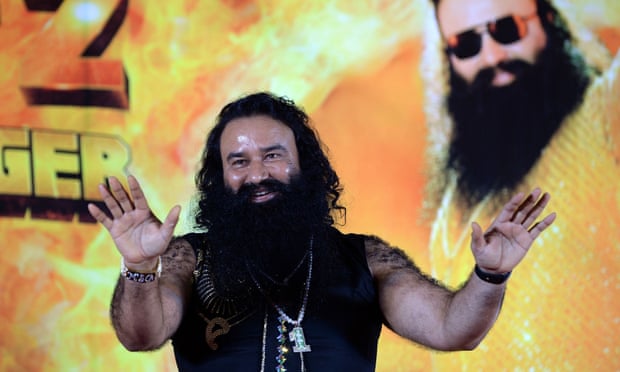
A poster of the show. Picture courtesy: YouTube
Yoga guru Baba Ramdev will be seen as a special judge on Om Shanti Om.
Anvita Singh
IndiaToday.in
August 24, 2017

Upcoming singing reality show Om Shanti Om will soon hit TV screens. The show has been creating a lot of buzz ahead of its national premiere, mainly because the show will see Yoga guru Baba Ramdev as a judge for the first time.

Here are a few things you should know about the reality show:

Om Shanti Om will see Yoga guru Baba Ramdev as Mahaguru for the first time

Yes, you read that right. Ramdev recently gave a statement claiming that the show will change the way devotional music is perceived. Ramdev has made appearances on reality shows before.

The show will be judged by Shekhar Ravjiani, Sonakshi Sinha, and Kanika Kapoor

While both Shekhar and Sonakshi have judged reality shows before, this will be the first time Baby Doll singer Kanika Kapoor will don the hat of a reality show judge.

Dangal actor Aparshakti Khurana will host the show

Om Shanti Om will be hosted by Aparshakti Khurana, who won everyone's heart with his charming performance in Aamir Khan's Dangal.

The show will be the first of its kind

A reality show centered around devotional music has not been tried before on Indian TV. The concept of the show has attracted a lot of attention. The show is being produced by Colosceum Media, that has produced shows like Roadies, Splitsvilla and MasterChef.

Ranveer Singh to perform on the show

Bollywood star Ranveer Singh will be seen lighting up the stage with his entertaining performance on the first episode of the show. Earlier there were reports that the actor would also host the first episode of Om Shanti Om, but that is not true.

Om Shanti Om will to premiere on August 28 on Star Bharat.

http://m.indiatoday.in/story/5-things-you-should-know-about-baba-ramdev-upcoming-reality-show-om-shanti-om-lifetv/1/1033001.html

One Woman’s Story of Assault by her ‘Guru’ of Religious Cult 

How India’s cult leaders seduce the vulnerable.
The News Minute
The Quint
August 27, 2017

She was inside the ‘guru’s’ room. The privilege of cleaning his room and touching his belongings had been bestowed upon her yet again, and she was delighted. Until, the guru who was in the room, suddenly hugged her. As he held her close, she panicked and ran out.

But, she was told that the guru was not sexually harassing her, it was his exalted soul reaching out to her soul that deserved to be elevated.

The guru’s first ‘blessings’ were the start of her long nightmare.
As a 25-year-old working in a multinational in 2007, Veena* had everything going for her. She had a flourishing career where the money was good, and a loving husband.

And yet, she felt there was something amiss.

On the surface, I had everything. I had all the reasons to be happy. But at some point, I realised that just looking after myself was not enough. I had grown up believing that life has a higher purpose. So, I thought, ‘can I do more with my degree? Can I use my knowledge to help people?’ - Veena

Little did she know then that this yearning would drag her down a dark path, one from which she is still struggling to recover.

Joining A Cult


During a trip home in a state in South India the same year, Veena first came across ‘guruji’ on a spiritual channel her parents were watching. He was a Hindu godman, touted as a brahmachari. She was instantly impressed.

He was talking about dealing with challenges in life. What struck me most was the way he spoke. It was very clear, sensible, and funny. - Veena

Since guruji’s ashram was nearby, she decided to pay a visit.

“It seemed like a nice place. Very peaceful and spiritual, bereft of any grandeur. He was travelling abroad then, and I couldn't personally meet him. I picked up some books on meditation from the ashram,” she says.

The books were in essence similar to most spiritual books — they revolved around expressing love, finding happiness and contentment. “It appealed to me because it was not close minded or too religious. Perhaps anyone who practices these may find peace,” she now thinks.

To top that, guruji’s disciples would make anyone around him think that the energy they felt was merely because of their leader’s presence. And yet, it was never in-your-face. “As I understood later, the technique used was a very subtle psychological influence.” And it worked, because a year later, the educated, independent woman quit her job to work full-time for guruji.

Though the common misconception is that only crazy, unstable, or weird people join cults, a paper published in the Cultic Studies Journal by Janja Lalich has shown that most cult members are of above-average intelligence, come from stable backgrounds, and do not have a history of psychological illness.

“Cult leaders and cult recruiters tend to capture the hearts, minds, and souls of the best and brightest in our society,” the research says.

“A Marketing Guy”


India has no dearth of self-styled godmen, and there have been a string of incidents involving gurus, and their alleged role in sexual assault, extortion and cheating.

Our family too had gurus but all of them were revered long after their death. So, it took some time to believe that a living person could also attain the same status. He made us believe he was one of those rare living gurus of our generation. He told us that if we prayed to him, all our wishes would come true. - Veena

She also calls him a great marketing guy. “He just sells himself so well. If you attend one of his programmes, you'll be dying to attend the next one as well.”

The ambience would only add to the aura.

Sucked Into a Vortex


‘Why do you want to quit your job? You are so young. You can do this on the side,’ Veena's concerned family told her when she informed them of her plans to embark on her spiritual journey.

“But I was so sure,” she says. “I felt so strongly about joining a spiritual group to spread happiness and peace through meditation and spirituality.” Soon, she became part of a select group of people who worked closely with the godman and looked after the running of his empire.

It was a big privilege to touch his belongings. One day, I was told that I could clean his room. From then on, I would clean his room every day. During one such occasion, he was there in the room. He hugged me. Not in a way a guru would, but just as a man would hug a woman he was interested in.

A terrified Veena ran out. But she was summoned again, and the guru ‘explained’ to her that mere mortals like her saw ‘human bodies’, while he only saw the soul.

He told me that every avatar of god would find another soul who needed to be elevated. Like Krishna found Radha and blessed her soul. I was his Radha, he said. Normally, after a session, he would hug a few chosen disciples. This included children, young, middle-aged and old people. We were constantly told that he was only touching our soul.

For months, what Veena went through was mental conditioning. She was told that the guru’s touch was only for a select lucky few who were very spiritual souls. The hug had soon progressed to sex and Veena was coerced to believe that it was a path to salvation. She was given the guru’s special blessing whenever he desired it.

“Though he would hug a few of us, he told me not to tell others about our relationship. I was the special one, the only one who was blessed to be his soul mate (have intercourse with him),” she says.

The state of affairs went on for several years. As a young educated woman, why did Veena not walk away from there? Can this be considered sexual assault or rape? Over the years, many have asked her this.

This is how a cult works; this is how power structures work. It was ingrained into us that the guru was supreme and worldly pleasures meant nothing to him. Every time the abuse happened, he would tell me that my soul had become a bit more elevated and I was almost at the next level.

The Bhagavatham and other revered Hindu scriptures were constantly quoted to her. “I was told that though I was a special soul, I was not discovered by a guru in my previous births.”

Wiping Out Evidence

The guru, however, was a clever man, who ensured that there was no trace of evidence. In many cases in India and throughout the world, it has been well documented how such gurus wipe out evidence.

Premananda Swamy convicted in 2005 would facilitate abortions. Aravindan Balakrishnan (a Maoist cult leader) established himself as someone who could control nature and it was proved in a court in UK that he would first isolate victims from families so that they never betrayed his secrets. He was convicted of six counts of indecent assaults and four counts of rape in 2015.


Premananda Swamy was convicted in 2005 for sexual assault.
Premananda Swamy was convicted in 2005 for sexual assault. 

Another guru in India (according to a victim’s statement to court) used to tell the victim that he would dispose of the condom as his semen was special and no mere mortal should get hold of it. He convinced the victim that his semen should be poured into the ocean.

In Veena’s case too, the guru was careful to keep his assault a secret, and to be discreet. As Veena narrates this, she adds as an afterthought. “All this sounds ridiculous to me now. But when I was in the situation, I was constantly made to believe and accept it as right without questioning.”

Janja Lalich says in her research that cults that exploit people, especially women, project the assault as a matter of honour. “The woman is told that a sexual encounter with the leader is an honour, a special gift, a way of achieving further growth. Sexual activities with the leader are interpreted and rationalised as spiritually beneficial.”

The Guru and Disciples


Every disciple shared a unique relationship with the guru and all of them were strictly prohibited from discussing it among each other. Veena says, “To some he was a mother figure, for some it was a master-sevak relationship. And it was up to him to decide which relationship was ‘right’ for which person.”

People from all walks of life would throng to see him. Some were just like her, wanting to make the world a better place, and a few quite like him, manipulating people for their gain.

The Exploitation


Going against the guru is the greatest of sins, they were told. They would repent, not just in their current life but also in their coming lives, if they did so. They would suffer, suffer horribly.

And the best way to prevent a revolt is never giving it a breeding ground in the first place. Cult members were always overworked with assignments and had strict deadlines to follow.

We hardly had time for anything else. We were extremely exhausted and sleep deprived as we slept for not more than four hours a day. No one had the mind to question anything.

If someone did question him, they would immediately be outcast. Threats and intimidation were also used to shut victims up when needed.

The Realisation


As the years passed, Veena also realised how the cult was fuelled solely by its greed. “Only the rich were allowed to personally meet him. If you weren't bringing him business, you were of no use to him,” she says.

There were murmurs of others who were given the guru’s blessings and were forced to become his sexual partners. When the truth finally hit her, and with the intensity that it did, it pushed her into depression.

I was in a state of shock. I kind of just wanted to forget that I had lived this life. But then I realised that many more innocent victims were getting sucked into the cult every day. I felt I must tell what happened to me, so that it can save others.

Seven years after she joined the group, she finally left it. She also filed a complaint with the police and the case in underway in court.

Why Not Quit?


Cults in Our Midst, a book by Margaret Thaler Singer, a clinical psychologist and an expert on brainwashing, and Janja Lalich, an author and researcher, explains how cult groups resort to thought-reform processes and persuasion to control people’s minds.

This book was an eye-opener for Veena as it helped her to understand why a rational person like her would join a cult. It is simple to ask why someone would not leave a cult immediately when they realise they are in a wrong place.

But as Singer and Lalich state, the answer is not that simple. Even though cults mostly don’t use physical restraint on their members, there are several psychological barriers stopping them from walking away. This includes their beliefs, peer pressure, fear or even confusion.

The last few years have been punishing for Veena. The fight has been emotionally, physically and financially draining. Looking back, she says, “Life has taught me many, many lessons and I am very grateful for that. But I still believe I have a bigger purpose in life.”

*Names and places have been changed to protect the identity of the victim.

https://www.thequint.com/india/2017/08/27/one-womans-story-of-assault-by-her-guru-of-religious-cult

Indian judge jails 'god man' for 20 years for rape of two women

Self-styled “god man” Gurmeet Ram Rahim Singh has been sentenced to 20 years in prison for the rape of two women.
Gurmeet Ram Rahim Singh, whose conviction last week sparked protests that left 38 dead, receives prison sentence.

Gurmeet Ram Rahim Singh in 2015

‘Guru of bling’ Gurmeet Ram Rahim Singh was found guilty of raping two women in a case dating back to 2002.


Amrit Dhillon in New Delhi and agencies
The Guardian
August 28, 2017

The sentence was announced on Monday amid tight security in the northern town of Rohtak where the “guru of bling” has been held since his conviction on Friday, which provoked protests among his followers that left at least 38 people dead and more than 200 injured.

Tens of thousands of police enforced a lockdown in large parts of the northern states of Haryana and Punjab where Singh, the 50-year-old leader of the Dera Sacha Sauda sect, has a mass following.

A lawyer for the victims earlier said Singh had been sentenced to 10 years in jail. In fact, he was given two consecutive 10-year sentences.

“He has been sentenced for 10 plus 10, which is a total of 20 years of imprisonment,” said Abhishek Dayal, spokesman for India’s Central Bureau of Investigation (CBI), after the sentencing hearing.

On hearing the sentence, Singh slumped down in his chair, sobbed, and asked the judge for forgiveness, according to reporters inside the court.

Singh was found guilty of raping two women 15 years ago at the headquarters of the sect, which has a vast following in Punjab and Haryana and claims to have 60 million followers worldwide. He denies the charges.

Some leaders of India’s ruling Bharatiya Janata party welcomed the sentence. “It’s a triumph for women’s rights and shows that no one is above the law,” said Subramanian Swamy, the former leader of the Janata party which merged into the BJP.

Anil Jain, who heads the BJP in Haryana, also welcomed it. “He deserves to be punished like anyone else because he committed the crime under the veil of being a ‘god man’, which is worse,” he said.

But lawyers for the women who brought the case said they had wanted a much harsher sentence and would appeal against it in a higher court, asking for a longer jail term.

Singh, one of the most powerful men in India, ran the 69-year-old sect from its ashram headquarters on a sprawling, 400-hectare (1,000-acre) Haryana property which includes a hotel, cinema, cricket stadium and schools.

The rape allegations surfaced in an anonymous letter sent in 2002 to the then prime minister, Atal Vajpayee. Scrutiny of the ashram grew when a journalist investigating the sect was shot dead the same year.

The CBI, India’s domestic security agency, alleges Singh was involved in murdering the journalist after suspecting he was responsible for helping to circulate the anonymous letter, according to the Hindustan Times. He faces a separate trial in that case and denies the charges.

Singh is one of only a few Indian gurus to openly back political parties. In 2014 he threw his support behind the Narendra Modi government, and announced last November that its controversial demonetisation policy was “in the national interest”.

In the decade that the rape trial has been running, Singh has continued courting both followers and controversy.

In 2014 he starred, encrusted in rhinestones, in the first of two hagiographic films about his life, in which he was credited for 30 roles including director, producer and choreographer.

Ticket sales were initially strong – more than 150,000 attended the first film’s premiere – but reportedly flagged after the CBI went public with accusations that Singh had been organising “mass castrations” of his followers since at least 2000. He denies this.

Before the sentencing, train and bus services to Rohtak were suspended to prevent the guru’s supporters from gathering in the town, and a curfew was also imposed.

Local police said several layers of security were in place around the prison and that government troops had permission to use firearms if any violence erupted. All cars entering the town were being searched.

https://www.theguardian.com/world/2017/aug/28/indian-court-sentences-god-man-to-10-years-in-prison-gurmeet-ram-rahim-singh

Sexual crimes committed in the name of God: A look back at 'Swami' Nithyananda's 'sex contract'

Swami' Nithyananda
Swami' Nithyananda
While Gurmeet Ram Rahim gave ‘maafi’ to devotees, Nityananda followers were made to sign a contract where they agreed to ‘sexual enlightenment’.

Monalisa Das

Priyanka Thirumurthy
The News Minute
August 28, 2017


Self-proclaimed godman Gurmeet Ram Rahim Singh has been sentenced to 20 years in prison for the rape of two saadhvis at the Dera Sacha Sauda ashram. But the crime this rapist has been convicted for, is merely the tip of an iceberg shrouded in a dark web of lies and deceit practiced by the 'Guru'.

More horrors in his premises allegedly took place with the consent of followers - castration of male devotees, being the most gruesome of them.

From 2000, over 400 followers were reportedly brought under the scalpel in Dera Sacha Sauda hospital for bringing them closer to God.

But it isn’t just Gurmeet Singh who extracted sexual favours under ‘divine’ pretexts, cloaking them in secrecy. The survivors of sexual assaults in 'Swami' Nithyananda's ashram have spoken out about non-disclosure agreements and sex contracts. The chargesheet of the rape case against Nithyananda reveals that sexual exploitation was masked in the guise of a 'Learning from the Master' programme.

The mental conditioning


The chargesheet filed by the police in the Ramanagara court in November 2010 on a case of rape allegedly committed by Nityananda, speaks of five non-disclosure agreements signed by various victims.

In 2009, a 'special' group of men and women gathered in a room at the Nithyananda Dhyanapeetam, which is led by the 'godman' in Bidadi.

They were not just the regular followers of 'swamiji'. In fact they were a chosen few, who would take care of him and help in the running of his foundation.

On that particular day, they were given two sets of "non-disclosure agreement" contracts to sign in the presence of their leader.

Signing these would make them eligible for the "Learning from the Master" programme. Such was their blind trust in the self-proclaimed godman that most of them signed the papers without even reading the clauses, says the chargesheet.

The 'Sex Contract'


The most appalling section of the 10 page contract included in the chargesheet reads -

"Volunteer understands that the Program may involve the learning and practice of ancient tantric secrets associated with male and female ecstasy, including the use of sexual energy for increased intimacy/spiritual connection, pleasure, harmony, and freedom. Volunteer understands that these activities could be physically and mentally challenging, and may involve nudity, access to visual images, graphic visual depictions, and descriptions of nudity and sexual activity, close physical proximity and intimacy, verbal and written descriptions and audio sounds of a sexually oriented, and erotic nature, etc."

The contract further functioned as a gag order, threatening devotees with consequences if they were to reveal to outsiders.

"By reading and signing this addendum, Volunteer irrevocably. acknowledges that he/she is voluntarily giving his unconditional acceptance of such activities and discharges the Leader and the Foundation, and anyone else not specifically mentioned here but directly or indirectly involved in the organization, management, or conduct of any such programs from any liability, direct or indirect, arising from such activities," read the document.

One such agreement copy signed by the devotee had the date September 3, 2005. The document accessed by TNM clearly carries the name and address of the devotee and of an ashram trustee as well. So, did these followers willingly agree to sexual exploitation under the garb of a 'learning' programme?

"No, we did not," says a survivor, who signed one such document, to TNM.

Speaking to TNM, the survivor says that at the time of signing the documents they were unaware of what it said.

"We were given two copies. One had to be signed along with the date on the that day and the other had to be backdated to the day when we had first met him. So he was pretty much covered legally from the day we met him to any point in the future. Because the contract states that the agreement does not end even if the relationship does. It is like a perpetual binding agreement," the former devotee says.

The survivor further alleges that they were not given time to read the clauses and were told that it was "regular, routine stuff to do with confidentiality".

A few who tried to read the document were accused of wavering devotion. They were asked, "Don't you trust swamiji?"

“We had extreme trust in him and looked at him as someone who was beyond being an ordinary human being. We never even doubted that there could be anything in these documents that could have these kinds of implications,” a survivor said.

Those who tried to question the 'Swami' or his decisions were allegedly dealt with force, threat or intimidation.

 
Swami' Nithyananda
Swami' Nithyananda

Raped for enlightenment?


A chargesheet filed by the Bidadi police in November 2010, narrates how Nityananda 'convinced' one such devotee into having sexual relations with him. The survivor, named Amala* in the chargesheet, was a housewife and pregnant when he first decided to satisfy his 'illicit sexual desire' by using her.

She was brought to his room under the pretext of cleaning it and was asked to massage Nityananda's legs. This was when he allegedly embraced and kissed her on the lips. When she withdrew shocked, he told her that the act was for her enlightenment.

Amala argued that a physical relationship with a saint was wrong but Nityananda allegedly claimed that 'feeling love was a path to enlightenment' and that 'he was God'. The only way to attain spiritual enlightenment was to 'listen and obey his words'.

'Thus he attacked her mind and took control of it and made her go into a state of total surrender' says the chargesheet. It further claims that Amala lost her ability to think clearly and was overcome by blind faith. Following this she was raped multiple times in various hotels and the Bidadi Ashram.

According to the chargesheet, between February and March 2009, the victim "was made to sign, along with others, non-disclosure agreement documents".

The conditioning continues?


Now, with media attention back on self-proclaimed godmen and the exploitation they met out to devotees, several have come out to question the case pending against Nithyanandha.

What is shocking is that despite testimonies of the 'godman' forcing women into sexual activities being made public, a large number of people continue to root for him. When social activist and environmentalist Piyash Manush took to social media to ask about what action has been taken, he was at the receiving end of severe abuse.

Most of the abuse (unsurprisingly) was directed at Piyush’s mother, wife and daughter.

The case now


The case against Nithyananda is currently pending for trial at the Ramanagara sessions court, the trial has not even started. The accused has filed a discharge petition, where they have claimed that there is no prima facie case. Nityananda's counsel has requested that he be discharged without the hardship of trial. The Court's order on the petition is still awaited.

The judge can either order a discharge in which case the self-proclaimed godman will be acquitted without trial or he can order a trial saying there is enough material.

The Supreme Court, meanwhile, has stayed the trial court proceedings based on yet another petition filed by him in 2014 to consider his self-generated medical reports of impotency. Next hearing in the Apex court is scheduled for September 2017.

Nithyananda had earlier sought to be discharged as he was 'impotent' and had test results from an examination conducted in a private hospital to prove the same. However, tests ordered by the Supreme Court proved that the excuse was yet another lie.

In yet another attempt to allegedly evade the law, Nityananda claimed that statement recorded by the CID from 32 witnesses at his ashram must be included in the chargesheet. These were reportedly generic statements glorifying 'swamiji'. While the trial court rejected them as defense documents, the High Court of Karnataka ruled in favour of the 'godman'.

Affidavits and counter affidavits have been filed to delay the case. Though the complaint of rape was registered in 2009, the victim has been pushed from pillar to post, with justice delayed for eight long years. The only hope is that, at least now, justice is not denied.

http://www.thenewsminute.com/article/sexual-crimes-committed-name-god-look-back-swami-nithyanandas-sex-contract-67511

Former 700 Club producer: "I knew where the line was. But that didn't stop us."

Christian Broadcasting Network’s Pat Robertson
Christian Broadcasting Network’s Pat Robertson 
Pat Robertson's former producer Terry Heaton talks The 700 Club, Trump, and turning the Bible “into a self-help manual.”
Tara Isabella Burton
VOX
August 26, 2017

In the 1980s, TV producer Terry Heaton was at the helm of one of the most influential media properties of the decade. As executive producer for the Christian Broadcasting Network (CBN)’s Pat Robertson — one of the world’s most famous televangelists — Heaton spent the 1980s and early ’90s transforming the network’s flagship show, The 700 Club, into a pioneer of conservative opinion journalism.

But decades after The 700 Club’s massive success paved the way for an alliance between the Christian right and GOP party politics, Heaton has more mixed feelings about his role in the “culture wars.” In his new book The Gospel of the Self: How Jesus Joined the GOP, Heaton reflects on his years working alongside Robertson, and how the advertising strategies he brought to CBN helped transform and politicize a generation of Christians. Heaton presents Robertson and his team as well-meaning idealists whose desire to use the power of the media to bring people to Jesus morphed into a need to hold on to power for its own sake.

Often, Heaton writes, the desire to put on a convincing “show” for their audience meant eliding the truth in favor of a more marketable approach: casting only conventionally attractive and “successful”-looking Christians in their segments, exclusively focusing on the positive aspects of Christianity, and hinting that faith could bring temporal as well as spiritual rewards. In other words, the Bible became a “self-help manual” advertised as something to be valued because of its impact on one’s own life, what Heaton now calls “the gospel of the self.”

I spoke with Heaton about Robertson and the future of the alliance between CBN and the GOP, and about how CBN helped bring together conservative Christianity and Republican Party politics. The interview has been lightly edited and condensed for clarity.

Tara Isabella Burton

You were instrumental in the development of Pat Robertson’s The 700 Club as a groundbreaking piece of conservative television. Now you’ve written a book that’s far less positive about you and your colleagues’ influence on the Christian political landscape.

Terry Heaton

Those of us back then really wanted to change the world, but I don’t think we ever really thought about what that would produce. When you’re a few [people] against incredible odds, it’s a neat experience. But when suddenly people take you up on what you’ve been offering, you’ve got to figure out what it is that you really want to say.

I wrote the book because I felt I needed to apologize for my role in what we have in front of us today, although I don’t necessarily feel guilty about it. I just want to get it on the record that I participated in something that has turned out to be pretty bad.

Tara Isabella Burton

You came to Christian Broadcasting Network from a more traditional news background. Can you talk more about that transition?

Terry Heaton

I had one of those flaming, magic-from-the-sky, born-again [religious] experiences, one year before I was contacted by CBN to work for them [in 1981]. I worked five years for them the first time. I was very much a television guy, and the knowledge that I had about magazine show production, graphics, that type of skill, was broadly accepted at CBN because they didn’t really have a lot of that kind of knowledge. So we were able to create a machine that could manufacture The 700 Club. And I was always excited about creating good TV. As a new believer, of course, I was fascinated by Pat Robertson — his knowledge of the Bible, the things he’d been teaching throughout his life.

[Plus], I’ve always believed in point-of-view journalism. I think eventually it’s going to be all we have. So to be pioneering in that era was intriguing to me. But as we got more and more political, I could see the handwriting on the wall, and so I left, went back into local television and the news business. A year later, I got a call from Pat to help him while he was running for president. And I made decisions based on the promises Pat made to me to if I returned to CBN and be his executive producer — autonomy, the power to create a program [of my own] — none of them were fulfilled.

[The problem] was [The 700 Club] itself, getting more and more political. People from Pat’s campaign wanted me [to get involved with the political side of his campaign] all the time. I knew where the line was. But that didn’t stop us from going right up to it and even crossing over. That caused great internal conflict for me, which resulted — in the long run — in my salvation.
Tara Isabella Burton

What kinds of things gave you pause?

Terry Heaton

I didn’t have an actual single aha moment, but there were several. We were always trying to create segments that were vehicles for Pat’s teaching. In surveys, that’s what our viewers wanted more than anything else. So [for example] we had this idea to do a series featuring a guy who always got things wrong so that Pat could then come on afterward and tell people what to do right. So we developed a new segment: The conceit was a character who always did things “wrong” so Pat could come out and teach him.

The pilot was a guy who was constantly losing money because he was trying to give his way out of debt. So he’d look at the Bible where it says “you receive a hundredfold for what you give,” and if he was a $1,000 in debt he’d give away $100 expecting to be able to pay off the debt. And at the end, he turns to the camera and says, “What am I doing wrong?” And we all thought it was brilliant. It was. But I showed it to Pat in the dressing room one day, and he got this sour look on his face and when it was finished. He said,

“YOU PUT THAT ON THE AIR AND YOU WILL COST THIS MINISTRY MILLIONS.”

Well, that didn’t go down very well with me.

I knew that Pat’s rationale for all of this is that you don’t want to do anything on TV that will interfere with anybody’s faith. But I think you can take that to an extreme — and that’s what we did. We always showed people getting healed, overcoming the odds. The strong impression that the viewer would get from the program was that if you just followed the formula, you would be blessed!

There was only one time we did a program about things not going right — it was a program about death. And it was one of the most powerful shows we did. Anyone who worked on it will tell you that. But Pat hated it because it wasn’t “prosperity!” and “everything’s going to work out just fine!”
Tara Isabella Burton

You say you wanted to change the world when you started working at CBN. What, from your perspective then, was wrong with it?

Terry Heaton

I think we felt — and I say this in all sincerity, because I don’t think it was insincere whatsoever — we felt that the world was going to hell and that we were afraid it would take us with it. And so we wanted to present a different view from, a news and information perspective, about what was taking place in the world, and build that around a biblical perspective: that God is alive and well and that he’s not happy with what is going on in the world.

But we used as evidence [for God’s presence] every self-centered trick in the book. When you get into black-and-white theology, you have to be able to explain things in a very simple way. For example, if you believe that God rewards good Christians by making them prosperous, and you’re not prosperous, you have to ask yourself why. And there’s really only two answers to that question. One is that you’re doing something wrong — a.k.a. sinning — and the other is that somebody out there is taking what rightfully belongs to you and you’ve got to do something about that. And that’s a pretty easy sell to human beings — we all want what we don’t have.

IF YOU EXPLOIT HUMAN NATURE, YOU CAN MOVE PEOPLE.

And that’s really what we did.

Tara Isabella Burton

How did you accomplish that?

Terry Heaton

We taught the Bible as a self-help manual. And it was very easy to move people [doing that], because who doesn’t want to have a sanctified self-help deal going on? [The conceit is that] you need a personal relationship with God through Jesus Christ so that he can make [your life] better. … I’ve learned since that, really, I think God wants us to be better human beings, and that’s a far cry from building up spiritual points that you can cash in for reward at the end of your life.

Tara Isabella Burton

What issues did you and your colleagues focus on?

Terry Heaton

It turns out that abortion, gays and lesbians, and birth control — they’re all about sex. Sex, more than everything else, scares people who want their children to be safe and to live in a sanctified world. I don’t want to overstate that, but it’s the truth.

There’s a strong sense among people that they wanted to do something about it. And guiding them becomes an easy task — what we gave them was Republican Party politics. We had an explanation for all their fears — the lack of personal responsibility, big government, people trying to take from you what really belongs to you, self-responsibility, self-responsibility, self-responsibility. All those things worked very well with the type of Christianity we were preaching.

Tara Isabella Burton

You say “they’re” all about sex. Did you, personally, not feel that sexual morality was the be-all and end-all of Christian morality?
Terry Heaton

I don’t know that I had that concern. I was a TV guy! We all had a mission — to restore the USA to a godly nation. The fact that all that revolves around sex — it was convenient. To me, people who tout that all the time — they’re looking at [the biblical story of] Sodom and Gomorrah [used by some Christians as biblical proof that God punishes people for homosexuality]. But the Bible says that God didn’t destroy Sodom because of their sexual sins. He destroyed them because they didn’t take care of the poor or the afflicted.

But that message doesn’t sell when you’re trying to whip people into a political frenzy.

Tara Isabella Burton

In your book, you seem deeply admiring of Robertson’s accomplishments and charisma even as you’re critical of his methods. How do you reconcile the varying elements of this man you’ve worked alongside for so many years?
Terry Heaton

Pat is a politician who happens to be a minister. He grew up as a Southern aristocrat in Virginia. His father was a US senator. It’s in his blood, but more than that, it’s in his environment. So the fact that he got to be a minister and was able to manipulate a substantial audience into becoming political is actually quite an accomplishment, whether you believe it’s a good accomplishment or a bad accomplishment.

[But] he was one of the first people to contact me when my wife passed away in 2006. It was the day it happened. I don’t know how he found out. But he called me and prayed with me. And you don’t get any higher in my book than by reaching out to someone who’s suffering and praying with them. [But] I just want all the people that we served and that CBN serves today to understand the degree to which they have been pushed into the Republican Party and the Republican Party has been pushed to the right.

People are living, breathing, and practicing lies. And I don’t think that doing something about it is going to come from anybody who’s lording it over these Christians.

Tara Isabella Burton

In today’s political climate, it seems like there’s an even stronger relationship than ever between CBN and the current administration. Pat Robertson’s been landing exclusive sit-down interviews with Trump, and CBN’s new shows like Faith Nation are further blurring the line between news and opinion. What do you make of that?

Terry Heaton

First of all, regarding Pat and his relationship with Donald Trump — I think that’s very, very scary. As smart as Pat Robertson is, and as good as he is at marketing, he is also highly susceptible to his own hype. In that way, Trump plays him like a piano. If you watch his most recent interview, some of the things that Trump says to Pat are really way out there in terms of manipulating Pat. He builds him up like a salesman would, and Pat is susceptible to that, I think. But he wouldn’t be susceptible if Trump didn’t speak the language that Pat wants.

There is such fear on the right about the Supreme Court. I remember one show that we were taping in which Pat prayed that God would kill the Supreme Court justices. We had to stop the tape and advise him that he couldn’t say that on TV. But that’s the way he felt. Trump really sings Pat’s tune when it comes to the Supreme Court, also on the issue of religious liberty. When Trump starts talking about how Christianity is going to be “great again,” people like Pat sit up at listen. And they’ll support him whenever necessary — even if it means blowing up North Korea!

We’re a divided people. That’s why I wonder if it’s a good thing that Donald Trump’s president — at least we’re getting it all out on the table. In my mind, that’s the only righteous reason to put a guy like Trump in the White House. We’ll go through some stuff — but I hope on the other side, it’ll be better than it is today.

Tara Isabella Burton

How do CBN’s new initiatives — like its web-based Facebook Live shows like Faith Nation — reflect a changing media landscape from the days when you worked there?

Terry Heaton

As an observer of the web and media for the past 20 years, I’ve noticed that the church hasn’t really been involved in the World Wide Web. Because in terms of media development, the church — the message of evangelicalism — has always been at the forefront [of technology]. In the early days of radio, the church was ever-present. In the early days of television, the church was very present. In the early days of satellite — two of the 10 transponders on the first satellite were owned by Christian organizations. So when the Web came along and nobody of the faith went near it, that fact caused me to have an epiphany, if you will. The reason they didn’t go to it is because the web is a three-way communication street. It’s not one-way. The network is top to bottom, but [the web] is bottom to bottom. It doesn’t need any hierarchical approval.

And with Faith Nation, CBN is trying to turn a three-way communication medium [back] into a one-way. And for me that’s an artificial use of the web. It’s an open door for problems down the road. [The anarchic nature of the web] is a perfect vessel for the holy spirit. But it’s not the perfect vessel for a hierarchical anything.

I SEE THE FUTURE OF THE CHURCH AS HORIZONTAL, NOT VERTICAL.

The pulpit is going to have to give way to [conversations between] human beings: how they’re living life as a Christian, as a believer, whatever, and not marching in lockstep with certain beliefs, with those who would choose to manipulate the mass market.

https://www.vox.com/identities/2017/8/26/16202436/700-club-terry-heaton-pat-robertson-trump

Iran sentences New Age-style Shiite Islam founder to death

Mohammad Ali Taheri
Mohammad Ali Taheri
AP
August 28, 2017

TEHRAN, Iran (AP) — An attorney for the founder of a mystical, New Age version of Shiite Islam says an Iranian court has sentenced his client to death.

Mahmoud Alizadeh Tabatabaei tells The Associated Press that the court sentenced Mohammad Ali Taheri to death on charges of founding a cult.

The lawyer says he will appeal within 20 days.

In 2014 the 61-year-old Taheri was sentenced to death on similar charges but an appeals court later rejected the verdict. He has been in jail since 2011, when a court sentenced him to five years in prison for blasphemy.

In recent weeks, authorities reportedly detained dozens of his followers.

Taheri also has done research on alternative medicine. Iran’s leaders see New Age beliefs as a threat to the principles of Islam.

https://apnews.com/c000f6a17f94474aae427a6bf6d97486/Iran-sentences-New-Age-style-Shiite-Islam-founder-to-death

Secrecy surrounds screening of anti-immunisation doco Vaxxed

Peta Rasdien
The West Australian
August 22, 2017
https://images.thewest.com.au/publication/B88575581Z/GDC16JS8U.2-1.jpg?imwidth=800


Anti-vaxxers are resorting to covert tactics to ensure a screening of controversial documentary Vaxxed goes ahead on Friday.

Ticket holders have been told it will be shown somewhere in the northern suburbs, with final location details only emailed or texted two hours before the event in order to get the jump on the “pro-censorship brigade”. They will also be required to produce photo ID.

The documentary has been produced by discredited British doctor Andrew Wakefield and attempts to draw a link between autism and the MMR vaccine. A theory that has no scientific credibility, according to Australian Medical Association WA president Omar Korshid.

He urged venue managers at local councils, schools and other public buildings to check their bookings for Friday.

“It is likely to be shown in a small venue somewhere and it is possible that the venue may not be aware of what it is being used for,” he said.

“If venues would be uncomfortable as host for this film which could have negative health implications for the community if it becomes popular then perhaps they should look at what has been shown in the various bookings on Friday to make sure they are not unwittingly part of it.”

The documentary was shown at a Melville City Council community centre in May.

The Federal Government has banned two of the film’s promoters from coming into Australia for three years.

“The Government has taken a dim view of this agenda at a national level,” Dr Korshid said.

“At a local level, what small bodies can do is make sure the film isn’t being shown at their venue if they don’t agree with it, if they do agree with it, then fine, show it and stand up and defend yourself in front of your members.”

Dr Korshid said concerns about the film and the false science it promoted were about it cementing the views of anti-vaccinators rather than recruiting new believers and causing a drop in vaccination rates.

“A little bit like in (the Perth Waldorf School) you can end up with a pocket of unvaccinated people that then become a potential source of a big outbreak of an unpleasant disease such as measles which can in rare cases have very serious consequences for the people who catch it.”

Three students from the Perth Waldorf School in Bibra Lake have now been confirmed as having measles.

Health authorities issued a public health alert earlier this month after one child returned with the disease after a holiday to Italy, which is in the grip of a measles epidemic. The two confirmed secondary cases were in unvaccinated students.

The remaining unvaccinated students at the school, excluded to minimise the risk of contracting the disease after the first case was revealed, were welcomed back to the school last week.

https://thewest.com.au/news/health/secrecy-surrounds-screening-of-anti-immunisation-doco-vaxxed-ng-b88575581z

Swami Prakashanand Saraswati

Swami Prakashanand Saraswati
Swami Prakashanand Saraswati or Swamiji (Hindi: स्वामी प्रकाशानंद सरस्वती) (born 1929) is a convicted felon and child molester, spiritual leader, social reformer and award-winning author from Ayodhya, India who founded Radha Madhav Dham in the United States.

He is a Rasik Saint in the tradition of Chaitanya Mahaprabhu. In 2011, a jury found Swami Prakashanand Saraswati guilty on 20 counts of indecency with a child. He is still a fugitive and appeared on the Fox TV show America's Most Wanted.

Swami Prakashanand Saraswati was born in a respectable brahmin family in 1929 in Ayodhya, India. His early life was fraught with intense religious feelings, and as a youth he became a reclusive mystic so that he might find God.[10] He completed his studies and at age of 21, renounced the world and took the order of sanyas. In 1952, he was offered to become the Jagadguru Shankaracharya of Jyotirmath but he declined, because, according to Swami Prakshanand Saraswati, he "was drawn towards the love of Radha Krishna".

He spent the next 20 years as a wandering ascetic in the Himalayas and in the forests of central India, ending in Braj. Following the strict discipline of sannyas, he first lived in the Himalayas (Joshimath, Badrinath, Rishikesh, Haridwar, etc.), forests of Amarkantak, near the Narbada River, Allahabad and Kashi for about four years. Later, he went to Vrindaban and then to Barsana where he spent over 18 years in the deep woodlands of Braj. In 1975, he emerged from his solitary life he began his mission of teaching the path of raganuga bhakti. He founded the International Society of Divine Love in India in 1975. The society was established in New Zealand in 1978. Later on he travelled to America and founded an ashram for his devotees and disciples. By 1981 Swami Prakashanand Saraswati, who had begun to be thought of as a distinguished sage and a saint, conceived of creating a global mission, establishing religious centres in India, England, Ireland, Singapore, New Zealand, and Australia.

https://en.wikipedia.org/wiki/Prakashanand_Saraswati

Ex-Members Describe Military-Style Christian Sect Now Accused of Child Abuse

Deborah "Lila" Green
CORKY SIEMASZKO
NBCNews.com
August 28, 2017

They are an “Army of God” waiting for Armageddon at their compound in a remote corner of New Mexico.

They wear uniforms, have ranks, and take their orders from a self-appointed “general” named Deborah “Lila” Green who claims to be an “Oracle of God.”

And for the hundred or so members of the Aggressive Christian Missions Training Corps (ACMTC), former followers say, Green’s word is law.

“Lila claims to be God’s prophet and people in the group don’t question her,” former member Maura Schmierer told NBC News. “To not believe Lila Green is equal to sin.”

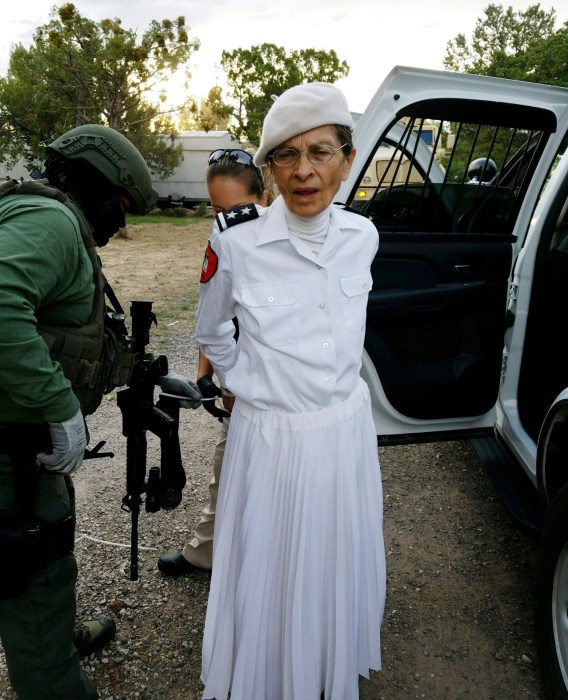
The secretive Christian sect found itself thrust into the national spotlight earlier this week when Green and three of her followers were arrested and charged with rape and abusing children, as well as failing to register the births of children on their compound in Fence Lake, New Mexico, a speck on the map some 100 miles west of Albuquerque.

Four others were arrested with their nine children when, according to police, they tried to flee their headquarters.

The ACMTC has been branded an active hate group by the Southern Poverty Law Center for its virulent anti-Semitism and gay bashing, which is discussed on its web site.

Arrest warrants obtained by NBC New allege that Green presided over a compound where the births were not reported to authorities and children, who held the rank of private, were trained to hide when the police came around.

Green also was loath to allow in doctors, not even when a flu virus "passed through the camp in 2013," according to the warrants.

One child — a girl allegedly smuggled in from Uganda — was treated especially badly, the warrants revealed. She became Green’s personal slave and was reportedly “treated like a dog” and whipped bloody for the most minor of infractions with the equivalent of a cat-o-nine tails, the warrants state.

That girl, who is named in the papers but is not being identified by NBC News, told investigators that she was sexually abused by Green and by her son-in-law Peter Green, also known under the name Mike Brandon, who raped her four times a week from the time she was seven, the warrants allege.

“Lila claims to be God’s prophet and people in the group don’t question her. To not believe Lila Green is equal to sin.”

Green is charged with child abuse, four counts of sexual penetration of a minor and negligent abuse resulting in death, according to a criminal complaint. Peter Green is charged with 100 counts of criminal sexual penetration of a child, the complaint adds.

Another follower, Stacey Miller, allegedly fled the compound after investigators began looking into the death of one of her children during the flu epidemic. She was arrested on a child abuse charge in Truth or Consequences, New Mexico. She told police the child died after he "began to leak puss from his forehead."

Miller admitted to investigators she did not report his death to the authorities.

Yet another key member of the sect, Joshua Green, is charged with failing to properly register a birth, according to the warrnats.

All were being held in the local lockup and it was not immediately clear if they had gotten lawyers. But on their website, the sect denied the charges.

“We don’t know who all the accusers are, but the accusations are just re-runs of old lies that have been investigated and shown to be malicious attacks against a legitimate ministry,” they said in a statement obtained by The Associated Press.

Schmierer joined the sect some 30-years-ago when it was called the “Free Love Ministries” and based in Sacramento, California. She first described her ordeal in a National Geographic special report.

In an interview with NBC News, Schmierer said she didn’t see any sexual abuse while she was part of the group for five years.

“But I witnessed a lot of child abuse,” she said. “We were taught we had to be hard on the children to raise them up to be Christian soldiers. When my son was 6 months old, we were in one of the services they hold all the time and he made a cute noise that distracted everybody. I was instructed to take him into another room and beat him. I couldn't do it.”

Schmeirer said Green's husband, "General Jim" Green, was the official co-leader of a sect that believed the world was hurtling towards a final battle between good an evil that only they would survive. But his wife called the shots, she said.

“They kept everybody in line by keeping us hungry and tired,” she said. “We would get awakened in the middle of the night for prayer sessions. They would limit our access to our families on the outside. They would even require us to change our names, which is why Lila’s son-in-law goes by Peter Green and not his real name.”

A former sect member named Johanna, who asked that her last name not be revealed, said she was a troubled teenager when she joined in 1984 and finally fled in 2003.

“General Jim has a bit of heart compared to her,” she said, referring to Green. “At first it was her and him running everything. But by the time I left, it was just her. I was pregnant with the child of another cult member and I knew I would be punished if I stayed. I had to leave my two other kids behind to get away.”

Asked why she didn't leave earlier, Johanna answered, "I believed Lila when she said I would go to hell."

Julianna Gudino was identified in the court papers as one of the people interviewed by investigators. She said she was in the sect for 20 years. The authorities first got wind of what was allegedly happening on the compound when the girl from Uganda was brought to a local hospital in either 2007 or 2008 with a broken leg, according to Gudino.

“She had rickets and her legs were really fragile,” said Gudino, who lived on the compound when the girl was there.

The child was removed from Green’s custody by the state Children Youth & Families Department and placed into foster care, she added.

What happened to the girl afterward was not immediately clear.

“Due to New Mexico state law, we are unable to release any information regarding any prior investigations that the agency is involved in,” CYFD spokesman Henry Varela said. “We do currently have an active investigation into this matter and will continue to work closely with law enforcement within our legal means.”

Rick Alan Ross, an expert on cults, said he is very familiar with this group and said it runs on the backs of the free labor done by the children. He said the grownups are sent out to sell baked goods, picture frames and other trinkets they manufacture and the money goes back to Green.

“In my opinion, they fit the profile of a classic destructive cult,” he said. “It’s run by Deborah Green. She is the charismatic personality. Her husband is subordinate. Whatever comes out of Deborah’s mouth is the word of God. Everybody’s wrong except Deborah.

https://www.nbcnews.com/news/us-news/ex-members-describe-military-style-christian-sect-now-accused-child-n796131

Fourth Perth Waldorf School student contracts measles

A fourth student from Perth Waldorf School has come down with measles.
Cathy O'Leary
PerthNow
August 25, 2017

A FOURTH case of measles has been confirmed in a student from the Perth Waldorf School in Bibra Lake.

The WA Health Department’s Virus Watch bulletin has confirmed the latest case, with three students contracting the disease from a high school student who developed measles after a holiday in Italy which is in the midst of a measles epidemic.
The department said all four students who developed measles were unvaccinated.

The school, which is believed to have a high rate of unvaccinated students, recently agreed to a Health Department offer to set up an immunisation clinic at the school.
http://www.perthnow.com.au/news/western-australia/fourth-perth-waldorf-school-student-contracts-measles/news-story/c5dcd5f2979ff00f3ce20f376132aa61

Indian guru jailed for 10 years for raping 2 followers

Dr. Saint Gurmeet Singh Ram Rahim Insan
Riots erupted when Dr. Saint Gurmeet Singh Ram Rahim Insan was convicted on charges dating back to 2002.

CBC.ca

The Associated Press

Aug 28, 2017

A judge on Monday sentenced a flamboyant and controversial Indian spiritual guru to 10 years in prison on charges of raping two female followers.

The sentence was pronounced amid intense security at a prison in the northern town of Rohtak where the guru, who calls himself Dr. Saint Gurmeet Singh Ram Rahim Insan, has been held since his conviction Friday.

The conviction sparked violent protests by the guru's followers that left at least 38 people dead and hundreds injured.

Ahead of the sentencing announcement, train and bus services to Rohtak were suspended to prevent the guru's supporters from gathering in the town, located in Haryana state. A curfew was also imposed in the town.

Local police said that several layers of security were in place around the prison and that government troops had permission to use firearms if violence erupted. All cars entering the town were being searched.

The guru has denied raping the two followers, in a case that stems from charges filed in 2002.

Few details were immediately available following the sentencing, but the guru's lawyers can appeal the verdict in a higher court. The rape charges were investigated by India's Central Bureau of Investigation, and a special CBI court convicted and sentenced the guru.
Security high

Security was high Monday across Haryana and the neighbouring state of Punjab, with schools and offices shut in many places.

A curfew was also in place in Sirsa town, where the sprawling main headquarters of the guru's Sacha Sauda sect are located. Since Saturday, police have been asking followers to leave the ashram compound, and around 20,000 people left.

Local police spokesman Surjeet Singh said Monday that some people were still inside the compound, but that it was impossible to know how many.

He said about 4,000 government troops, including army and paramilitary soldiers, were patrolling the tiny town and the area outside the ashram.

When the guru was found guilty on Friday, tens of thousands of his enraged followers set fire to government buildings, vandalized bus stations and government vehicles and attacked police and TV journalists in Panchkula, where the verdict was announced.

The sect claims to have about 50 million followers and campaigns for vegetarianism and against drug addiction. It also organizes blood-donation and tree-planting drives. Religious sects like the Dera Sacha Sauda have huge followings in India.

These sects and their leaders inspire intense devotion among their believers and also wield considerable political clout. Many maintain private militias for their protection.

http://www.cbc.ca/news/world/gurmeet-ram-rahim-singh-sentenced-10-years-1.4264757

Why religious cults such as Dera Sacha Sauda are so popular

Gurmeet Ram Rahim Singh
Religiosity is being displaced by veneration and devotion directed towards a particular figure or object. Ironically it is not the veneration of inanimate idols that is worrisome but increasingly the cults around living figures that tend to pose challenges to authority.


Mohan Guruswamy
Hindustan Times
August 28, 2017

Way back in 1843 Karl Marx in an introduction to a book that criticised GWF Hegel’s Elements of the Philosophy of the Right wrote: “Religion is the sigh of the oppressed creature, the heart of a heartless world, and the soul of soulless conditions. It is the opium of the people”. Marx thus saw in religion a utility to the State by creating illusions to mitigate the immediate suffering of people. It made them dull to oppression and induced a sense of fatalism. Hegel saw in the State the presence of God upon the earth. Both would now be turning in their graves, seeing how their postulations shaped up in India. Far from becoming the opiate, religion has now metastasised into a pernicious thought process that threatens to destroy the State.

That’s because of the proliferation of cults within religions. Religiosity is being displaced by veneration and devotion directed towards a particular figure or object. Ironically it is not the veneration of inanimate idols that is worrisome but increasingly the cults around living figures that tend to pose challenges to authority.

All the major religions have seen the emergence of outsized cult figures who themselves become objects of veneration superseding the divinities they represent. From being objects of veneration to claiming divinity is just a small leap. The late Satya Saibaba of Puttaparthi, a much venerated cult figure, was probably the most successful of the godmen in terms of market size and revenues.

They might be interceding for many gods but one commonality is that godmen have mesmerising control over their devotees. Finding togetherness in cults is a common human condition. The level of education and wealth of a society has little relationship with the incidence of credulousness.

Otherwise America would not have a David Koresh of the Branch Davidians who led 77 followers to a death after a confrontation with the FBI in Texas or Jim Jones of the Peoples Temple who persuaded 900 followers to drink poison-laced Kool Aid in Guyana. The perceived power of televangelists like Billy Graham, Jim Bakker and Jerry Falwell made politicians like Richard Nixon and Ronald Reagan assiduously court them and espouse policies favored by the religious right. In Japan, Shoji Asahara’s mesmeric message to his Aum Shinrikyo cult into attacking Tokyo metro in rush hour with Sarin gas. So why should India be an exception? Credulity is inbuilt into the human condition.

What should, however, cause us concern is the proliferation of deras in Punjab and Haryana. By some counts there are as many as 9,000 now. A dera, as its name suggests is more a militant encampment rather than a benign monastery. The most notorious cult figure in recent times was Jarnail Singh Bhindranwale whose temporal journey ended only by an army assault to free the Golden Temple. In 2014 the followers of a Hindu Godman, Rampal, dared the state to enter his dera in Hissar and pick him up for trial for murder, sedition and conspiracy. It took over five thousand Haryana policemen take him in.

Last year a cult centred on the return of Subhaschandra Bose that had taken control of the Jawahar Bagh in Mathura had to be stormed by the UP armed police and 29 followers of their leader Ram Vriksh Yadav had to be killed.

The Dera Sacha Sauda of Ram Rahim Singh is the cult in the news now.

August 25, 2017 is red-letter day for India’s judiciary, which asserted itself by ignoring political connections and the cupidity of the authorities. It is not surprising that the criticism of the entire political spectrum about the activities of this bizarre “guru of bling” is uniformly anodyne, very unlike the vitriol they routinely pour over each other.

After all politics is not about rationality or good sense or decency, but just about votes.

Mohan Guruswamy is an economics and policy analyst. The views expressed are personal.

http://m.hindustantimes.com/opinion/why-religious-cults-such-as-dera-sacha-sauda-are-so-popular/story-wiITTZTJhgOE5sBffl9PUK_amp.html

The Challenge of the Cults

MOHAN GURUSWAMY
National Hearld
August 28, 2017

One Godman demanded Roll Royce’s and the recently convicted Ram Rahim of Dera Sacha Sauda demanded sex, which he quaintly sold to his followers as his “maafi” or forgiveness

“Way back in 1843 Karl Marx in an introduction to a book that criticized Hegel’s “Elements of the Philosophy of the Right” wrote: “Religion is the sigh of the oppressed creature, the heart of a heartless world, and the soul of soulless conditions. It is the opium of the people”. Marx thus saw in religion a utility to the State by creating illusions to mitigate the immediate suffering of people. It made them dull to oppression and induced a sense of fatalism. Hegel of course saw in the State the presence of God upon the earth. Both would now be turning in their graves in London and Berlin seeing how their postulations shaped up in India. Far from becoming the opiate, religion has now metastasized into a pernicious thought process that threatens to destroy the State.

That’s because of the proliferation of cults within religions. Religiosity is being displaced by veneration and devotion directed towards a particular figure or object. Ironically it is not the veneration of inanimate idols that is worrisome but increasingly the cults around living figures that tend to pose challenges to authority. All the major religions have seen the emergence of outsized cult figures or Godmen who themselves become objects of veneration superseding the divinities they represent. From being objects of veneration to claiming divinity is just a small leap. The late Satya Saibaba of Puttaparthi, a much venerated cult figure who counted prime ministers, distinguished soldiers, learned scientists and corporate lords as his loyal devotees was probably the most successful of the Godmen in terms of market size and revenues. He stated status by cryptically saying: “I am God. I am Sai.” He promoted by selling sleight of hand tricks to the credulous as powers of materialization, with holy ash or wristwatches or rings or whatever was on hand.

They might be interceding for many gods but one commonality is that Godmen have mesmerizing control over their devotees. What differentiates them is just size of their followings and the bizarreness of their demands to prove fealty. One Godman demanded Roll Royce’s and the recently convicted Ram Rahim of Dera Sacha Sauda demanded sex, which he quaintly sold to his followers as his “maafi” or forgiveness.

Because Godmen have mesmerizing powers, politicians flock to them to seek their beneficence in votes. The Godmen then seek favors for themselves or for others to prove their divine powers. The Puttaparthi Saibaba used to intercede with his political cronies and devotees to place persons in high positions. Such people also know how to manipulate the faith of powerful figures to advantage. There is the well-known incident of Prime Minister Vajpayee waiting for a few hours at the home of a prominent businessman waiting for Saibaba to give him darshan. When the darshan was denied that day he returned to 7 Race Course Road distraught and only when Saibaba relented did the political potentate find peace of mind. What he had to sign on or the number of times he had to order is still a matter of much speculation?

Finding togetherness in cults is a common human condition. The level of education and wealth of a society has little relationship with the incidence of credulousness. Otherwise America would not have a David Koresh of the Branch Davidians who led seventy seven followers to a fiery death after a confrontation with the FBI in Texas or Jim Jones of the Peoples Temple who persuaded nine hundred followers to drink poison laced Kool Aid in Guyana. The perceived power of televangelists like Billy Graham, Jim Bakker and Jerry Falwell politicians made politicians like Richard Nixon and Ronald Reagan assiduously court them and espouse policies favored by the religious right. In Japan we saw Shoji Asahara’s mesmeric message to his Aum Shinrikyo cult into attacking Tokyo metro in rush hour with Sarin gas. So why should India be an exception? Credulity is inbuilt into the human condition.

What should however cause us concern is the proliferation of deras in Punjab and Haryana. By some counts there are as many as nine thousand now. A dera, as its name suggests is more a militant encampment rather than a benign monastery. The most notorious cult figure in recent times was Jarnail Singh Bhindranwale whose temporal journey ended only by an army assault to free the Golden Temple. In 2014 the followers of a Hindu Godman, Rampal, dared the state to enter his dera in Hissar and pick him up for trial for murder, sedition and conspiracy. It took over five thousand Haryana policemen take him in.

Last year a cult centered around the return of Subhaschandra Bose that had taken control of the Jawahar Bagh in Mathura had to be stormed by the UP armed police and twenty nine followers of their leader Ram Vriksh Yadav had to be killed. The Dera Sacha Sauda of Ram Rahim Singh is the cult in the news now. In this case the CBI Court in Panchkula forced events by convicting the bizarrely dressed Godman on a seventeen-year-old rape charge, despite the open patronage of the Prime Minister of India and the Chief Minister of India. August 25, 2017 is red-letter day for India’s judiciary, which asserted itself by ignoring political connections and the cupidity of the authorities. It is not surprising that the criticism of the entire political spectrum about the activities of this bizarre “guru of bling” is uniformly anodyne, very unlike the vitriol they routinely pour over each other. After all politics is not about rationality or good sense or decency, but just about votes.

https://www.nationalheraldindia.com/opinion/the-challenge-of-the-cults

Aug 27, 2017

I was a neo-Nazi. I know the cure for hate

TONY MCALEER
CONTRIBUTED TO THE GLOBE AND MAIL
AUGUST 21, 2017

Tony McAleer is a former white supremacist. Today he is the executive director of Life After Hate, an organization that is dedicated to helping people to leave far-right extremism

I watched the violence unfold in Charlottesville with a deep sense of shame about who I was decades ago. In the 1990s, similar street violence would exhilarate me – like the rallies I used to organize for the White Aryan Resistance, a white-supremacist group.

Today, with deep sadness, I remember the murder of Nirmal Singh Gill in 1998; the 65-year-old Sikh caretaker kicked to death by five skinheads in Surrey, B.C. Canada does have a history of white-supremacist-driven murder. This hate-fuelled ideology inevitably ends in murder. Charlottesville was a massive wake-up call for Americans who had swept this problem under the rug, and it should be the same for Canada.

So what draws young people into these groups? Research and my personal experience show that it is a sense of identity, belonging, acceptance and purpose. The lack of these factors in a young person's life creates vulnerabilities that extremist groups exploit.

The culprit undermining these critical pieces of our human experience is a deep subconscious belief that we are unlovable, powerless and invisible – we call this the feeling of "less than."

I can look back on my youth and see that the level to which I dehumanized others. As a skinhead recruiter in the 1990s, I was deeply entrenched in hate. I realize now this was actually a reflection of how disconnected and dehumanized I was inside. I was so numb that I couldn't recognize the humanity in others and certainly couldn't conceive of the pain or suffering I was causing. (To be very clear: I don't blame anything on my childhood.) Everything I did, I chose to do because I got a sense of power when I felt powerless, significance and attention when I felt invisible, brotherhood and acceptance when I felt unlovable.

I am often asked how had I lost my humanity. How does one become a skinhead? My reply is this: I didn't lose my humanity. I traded it for acceptance and approval until there was nothing left. I am not a victim here; I was a perpetrator who victimized others.

Life After Hate, the non-profit I co-founded with other former members of the white-supremacist movement, recently received a letter from a concerned parent. Her 18-year-old son with Asperger syndrome is up to his eyeballs in the white-nationalist scene. What frightened the parent was the community had embraced and accepted her son in a way he had never experienced in his entire life. Those are very deep psychological strings being pulled and that seduction is wrapped in racist ideology. This child could probably rationalize believing any ideology in exchange for that acceptance and belonging coming from such isolation.

To help this child and so many like him, we need to address the loneliness and isolation before the ideology. If shame and loneliness are the drivers here, how can shaming, isolation and violence be the answer? The antidote to shame is compassion.

Compassion was at the heart of my transformation. Compassion from my children who created the safe space for me to love and feel loved. To open up and allow my frozen heart to begin to thaw. Compassion from my mother who despised what I was all about in those years, but never gave up on me. Compassion from a mentor (ironically born Jewish) who also saw the humanity in me helping heal the wounds that had influenced my dark choices. They all saw my humanity when I was incapable of seeing it myself.

When we are compassionate, we hold a mirror up to that person and allow them to see their humanity reflected back. One of the hardest things in the world to do is to have compassion for someone who has no compassion, but those are the very people who need it most.

There is nothing more powerful than receiving compassion from someone who we feel we don't deserve it from, especially if that person belongs to a group we had once dehumanized.

As human beings, we can operate from one of two places, fear or love. As a society, we must choose to respond to this darkness with love.

In Vancouver, Saturday's counterprotest of an estimated 4,000 people peacefully occupied the space that was supposed to be used to sow fear and division. Instead, the event was largely one of celebration, inclusion and diversity. To respond with fear, judgment and violence only further entrenches and feeds the beast we seek to overcome. I know all too well that these groups thrive on conflict, violence and negative attention.

As Martin Luther King Jr. said, "Returning hate for hate multiplies hate, adding a deeper darkness to a night already devoid of stars. Darkness cannot drive out darkness; only light can do that. Hate cannot drive out hate; only love can do that."

https://beta.theglobeandmail.com/opinion/i-was-a-neo-nazi-i-know-the-cure-for-hate/article36037961/

Monkey on a Stick: Murder, Madness and the Hare Krishnas

Murder, Madness and the Hare Krishnas
by John Hubner, Lindsey Gruson

Two investigative journalists, John Hubner and Lindsey Gruson, masterfully document the staggering number of crimes tied to the Hare Krishnas and the work of the dedicated cop determined to see justice in this fascinating and terrifying true crime story.


https://www.goodreads.com/book/show/238288.Monkey_on_a_Stick

The Gift of Our Wounds: A Sikh and a Former White Supremacist Find Forgiveness After Hate

The Gift of Our Wounds: A Sikh and a Former White Supremacist Find Forgiveness After Hate
Arno Michaelis
Pardeep Kaleka

The powerful story of a friendship between two men―one Sikh and one skinhead―that resulted in an outpouring of love and a mission to fight against hate.
One Sikh. One former Skinhead. Together, an unusual friendship emerged out of a desire to make a difference.

When white supremacist Wade Michael Page murdered six people and wounded four in a Sikh Temple in Wisconsin in 2012, Pardeep Kaleka was devastated. The temple leader, now dead, was his father. His family, who had immigrated to the U.S. from India when Pardeep was young, had done everything right. Why was this happening to him? Meanwhile, Arno Michaelis, a former skinhead and founder of one of the largest racist skinhead organizations in the world, had spent years of his life committing terrible acts in the name of white power. When he heard about the attack, waves of guilt washing over him, he knew he had to take action and fight against the very crimes he used to commit.

After the Oak Creek tragedy, Arno and Pardeep worked together to start an organization called Serve 2 Unite, which works with students to create inclusive, compassionate and nonviolent climates in their schools and communities. Their story is one of triumph of love over hate, and of two men who breached a great divide to find compassion and forgiveness. With New York Times bestseller Robin Gaby Fisher telling Arno and Pardeep's story, The Gift of Our Wounds is a timely reminder of the strength of the human spirit, and the courage and compassion that reside within us all.

Arno Michaelis is author of My Life After Hate and works with Serve 2 Unite. He has appeared on major media outlets including the BBC, The New York Times, and The Washington Post, and most recently, The View.

Pardeep S. Kaleka is co-founder of Serve 2 Unite and has appeared on NBC, Fox, CNN, Democracy Now, NPR, and Voices on Antisemitism.

Robin Gaby Fisher is a New York Times bestselling author of seven non-fiction books and a two-time finalist for the Pulitzer Prize in Feature Writing.

Product details
Hardcover: 288 pages
Publisher: St. Martin's Press (April 10, 2018)
Language: English
ISBN-10: 1250107547
ISBN-13: 978-1250107541

Russia Bans Jehovah's Witnesses' Translation Of Bible

Russia Bans Jehovah's Witnesses' Translation Of Bible
Tom Balmforth
Radio Free Europe
August 18, 2017

"When the ruling came into full force after July 17, then of course everyone without exception stopped gathering in big groups because it is a criminal offense. No one is consciously trying to be accused of criminal activity," a church member said.

"When the ruling came into full force after July 17, then of course everyone without exception stopped gathering in big groups because it is a criminal offense. No one is consciously trying to be accused of criminal activity," a church member said.

MOSCOW -- A Russian court has banned the Jehovah's Witnesses' translation of the Bible following a drawn-out legal battle, another blow to followers of the pacifist Christian sect who have been branded "extremists" and driven to practicing their faith underground, as in Soviet times.

The Jehovah's Witnesses' parent organization in Russia and 395 regional branches were formally placed on the Justice Ministry's list of "extremist" groups on August 17, a procedural move following the Supreme Court's decision to ban the group's activities and seize its property earlier this year.
In a separate case on August 17, a court in the northwestern border town of Vyborg banned the New World Translation Of The Holy Scriptures, the group's version of the Bible. Several other publications by the Jehovah's Witnesses -- including a brochure, The Bible -- What Is Its Message? -- were also labeled extremist.

The case against the religious group's Bible dates to July 2015, when a shipment of the books from Finland was stopped at the border and impounded by customs officials on suspicion of extremism.

The ban on the Bible used by the Jehovah's Witnesses has not come into legal force, as the group intends to challenge the ruling in a regional court.

"Soon it will be illegal not only to gather [to worship], but also to read," said Yaroslav Sivulsky, a member of the European Association of Jehovah's Christian Witnesses, adding that the court proceedings felt like "theater."

"Whatever our lawyers said, it was as if the ruling was already known," he said.

The Jehovah's Witnesses international headquarters in New York decried the ruling. "Just how far will Russia's resistance to religious freedom go? We certainly hope that respect for sacred texts will prevail when we pursue this case on appeal," said spokesman David Semonian in comments circulated by the group's press service.

The statement said the court ruling contradicts legislation signed by President Vladimir Putin in 2015 stipulating that sacred texts such as the Bible and Koran cannot be labeled extremist.

'Not A Bible'
The statement said the court relied on the findings of an expert panel that determined the book is not a Bible.

The Moscow-based Sova Center, which monitors the misuse of extremism legislation, criticized the "invalidity, helplessness, and glaring absurdity" of the panel's findings.

"It's just a typical translation," Aleksandr Verkhovsky, Sova's director, told RFE/RL. "It differs a little, of course, in language. There is always a variation between translations. It is not fundamentally different [from other versions of the Bible]."

He added: "It's written in more modern language, and there is a certain difference [in the translation] which reflects their religious beliefs. Some things are written, for instance, with a small letter, not with a big letter. Or where different names for God are used, [the Jehovah's Witnesses] write Jehovah everywhere. That's the level [of variation that] we're talking about."

Conservative Victory
The Jehovah's Witnesses, known universally for their door-to-door proselytizing, are viewed with suspicion in Russia for their rejection of military service and voting. Their refusal to take blood transfusions has seen them accused of being a threat to themselves, their children, and public safety.

The Jehovah's Witnesses were persecuted in the Soviet Union, most severely under Josef Stalin. After the Soviet collapse, tight restrictions on religious groups like the Jehovah's Witnesses were suddenly relaxed, leading to a surge in popularity for the Orthodox Church and other religious and faith groups.

Russia's Jehovah's Witnesses are estimated to number 175,000 today.

The group was driven underground this year after the Supreme Court labeled them extremists, Sivulsky said. "When the ruling came into full force after July 17, then of course everyone without exception stopped gathering in big groups because it is a criminal offense. No one is consciously trying to be accused of criminal activity," he said.

The Supreme Court ruling stipulates that all property belonging to the Jehovah's Witnesses' organization should be seized by the state, although Sivulsky said this provision had not yet been implemented. "We haven't seen any action on this. [But] it's a question of time."

The banning of the group fits into a broader conservativism advocated by Moscow in a rejection of liberal Western values. It has also been seen as a victory for conservative factions of the Russian Orthodox Church, which view the Jehovah's Witnesses' rejection of elements of mainstream Christian doctrine as a threat.
However, Vsevolod Chaplin, the ultraconservative former church spokesman, disapproved of the banning of the group in comments to the NTV channel on August 17.

"Perhaps it would be better to keep them in the field of play to keep an eye on how they are developing so as to perhaps restrict it in its extreme activities," he said.

https://www.rferl.org/amp/russia-jehovahs-witnesses-bible-translation-banned/28684384.html