Hiram Erastus Butler and 12 followers (natch.) left Boston to create a utopia near Sacramento
Paul Sorene Flashbak January 28, 2024
Some forty miles northeast of Sacramento, north California, off I-80 near the village of Applegate, is the remains of one of the States’s religious cults: the Esoteric Fraternity. Founded in 1887, the Fraternity was a pioneer in modern astrology, readied its followers to run a worldwide religious dictatorship, and faded from history after a murder (unsolved) claimed one of its members.
In 1891, the Fraternity’s founder, metaphysical scholar, Civil War Veteran, former member of Madame Blavatsky’s Theosophical Society and author Hiram Erastus Butler (July 29, 1841 – November 3, 1916) along with 12 followers (natch. – he’d once spent 40 days and 40 nights of meditation, receiving visions of the “unseen order ruling the chaos and sublime harmony pervading the discords of the universe”) relocated from Boston to Applegate, California, and settled on a 500-acre homestead overlooking the American River.
They’d left under a cloud, having fallen out with Blavatsky and her supporters and stood accused of ruining many of the infatuated young woman who’d joined the group. The nadir came when Butler’s leading associate Eli Clinton Ohmart (aka Vidya Nyaika) was confronted by a number of women in the presence of the law. A reporter for the Boston Globe then interviewed Butler, and if it were true that he lived in immorality with a woman named Flora Manning? Butler claimed it was pat of a conspiracy to discredit him and his organisation by Blavatsky and the Catholics, and he’d doubtless prove his innocence, stating:
“If arrests are made, I will, of course, face the music. It will not hurt me, but only retard the work of the college. Every great movement, has its enemies, but the truth will prevail in the end. You see, I am under the direction of higher intelligences, and only do their bidding.”
He never gave them much chance for the enemy move things on. Less than two weeks later (February 11, 1889) Butler left Boston with, what the paper called, “his deluded female neophytes fled to parts unknown,” and “also Miss Flora Manning, whose poor father is heartbroken in his home in North Adams, longing hopelessly for his daughter’s return.”
The paper went on to say of Manning:
“To her door is laid the charge of active participation in the conspiracy that led to the ruin of no less than seven of Boston’s daughters whose credulity led them to place themselves in Butler’s power in the vague hope of becoming mediums.”
Sex or spirituality? Surely not? It was Butler who’d opined: “A perfectly celibate or chaste life enables a person to create thought forms and send them out by his will to persons near of far, so as to bring about desired results in controlling mental faculties or even physical conditions.”
In California, the cult built an 18-room house, established a farm and gave lectures. Butler would show his audiences the Seven-Pointed Star of Vital Planetary Vibrations, circumscribing the Six-Pointed Star of the Masculine and Feminine, and labeled with the word “Logos” in both Greek and Hebrew, along with astrological symbols and the good and old Snake Eating His Own Tail, representing eternity.
To reach more minds, they set up a printing press to publish The Esoteric |(‘A magazine of advanced and practical Esoteic thought’) and books, to deliver is mission of “the study and unfoldment of the inner and true sense of divine inspiration, the interpretation of the Scriptures — all scriptures.”
Butler adopted the name Adhy-Apaka and created an “inner circle” to the Esoteric Society called the Genii of Nations, Knowledge, and Religions (G.N.K.R.) with a scheme for a proposed Esoteric College. Ohmart announced this development in the November 1888 issue of The Esoteric with an article, “[The Call] To The Awakened,” in which he stated:
Those whose lives are a constant battle for the “truth” and whose efforts are wholly directed towards the good of the world irrespective of race and creed; those who have heard the “silence speak” and have recognized the Master’s call:—to those there will be entrusted a work more sacred and important than all they have done during their previous life, and to them there will come a Promise from One who always fulfills according to merit and eternal justice. Those who have been illuminated and who have dedicated themselves and all they “are, and hope to be,” to the guidance, those who have manifested by their lives and actions that they are under the recognition of intelligences superior to their own (not elementals or “spirits”), to those there will be given a special revelation of a character more sacred than all the secrets of the Past ; to them there will be revealed the “kingly mystery” and unto them will be given a secret more precious than the Philosopher’s Stone, more important than Aladdin’s Lamp.
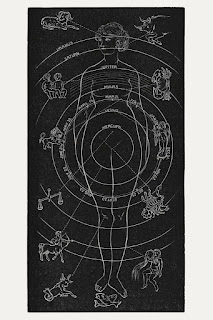
Other than the magazines, Butler’s most famous work was Solar Biology, illustrations from which you can see here. First published in 1887, Solar Biology simplified astrology by basing horoscopes on sun and moon signs, rather than on complex planetary movements. Today’s newspaper horoscopes are said to be modelled largely on Butler’s formulas.
The Amish, a Christian denomination known for their simple living and adherence to tradition, inhabit pockets of rural North America, their lives existing in a harmonious counterpoint to the frenetic pace of the modern world. Stepping into an Amish community is akin to stepping back in time, where horses clip-clop on gravel roads, children in plain bonnets skip between neatly painted farmhouses, and the air hums with the quiet rhythm of a simpler way of life.
Their roots trace back to 16th-century Switzerland, where Jacob Ammann led a reformation within the Anabaptist movement, emphasizing pacifism, adult baptism, and separation from the world. These core tenets continue to define the Amish today, guiding their decisions on everything from technology to clothing.
Technology, for instance, is carefully assessed for its potential to disrupt their values. Electricity is often shunned, replaced by lanterns and oil lamps that bathe homes in a warm, golden glow. Cars are a rarity, their place taken by horse-drawn buggies that trot serenely through verdant landscapes.
Plain dress serves as another visible marker of their faith. Women wear long, covered dresses and head coverings, while men sport neatly trimmed beards and suspenders over simple shirts and trousers. This uniformity reflects their commitment to humility and a focus on inner character over outward appearances.
Community forms the bedrock of Amish life. Families are large and close-knit, bound by shared faith and the daily rhythm of farm work. Barn raisings, quilting bees, and communal worship services foster a deep sense of belonging and mutual support. Yet, within this apparent uniformity, diversity exists. Different Amish groups, known as "church districts," interpret their Ordnung, or set of unwritten rules, with varying degrees of strictness. Some embrace limited use of technology for business purposes, while others adhere to a more austere lifestyle.
The Rumspringa, a period of youthful exploration between the ages of 16 and 21, offers a glimpse into this internal negotiation. During this time, teenagers are allowed to experiment with the world outside the community, sampling modern fashion, technology, and even dating. Ultimately, they must choose whether to be baptized and join the Amish church, or leave the community behind.
The lives of the Amish are not without challenges. Their commitment to non-resistance can make them vulnerable in a world increasingly defined by conflict. Maintaining their unique way of life in the face of societal pressures can be a constant struggle.
Yet, for many Amish, the simple life offers a profound sense of purpose and fulfillment. They find joy in the rhythm of the seasons, the fruits of their labor, and the deep bonds of community. In their quiet corner of the world, they offer a timeless testament to the enduring power of faith, tradition, and living in harmony with the natural world.
Wilson Criscione Oregon Public Broadcasting (InvestigateWest) January 28, 2024
State lawmakers hope a compromise in the proposed legislation will get Catholic lobbyists on board, a year after a similar bill died over the church’s backlash
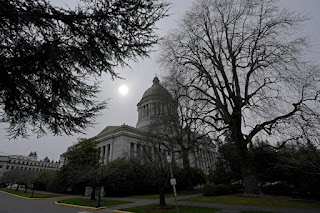
After failing a year ago, Washington state lawmakers are trying again this session to pass a bill that would make clergy mandatory reporters of child abuse or neglect.
Senate Bill 6298 would add clergy to the list of mandatory reporters in Washington. And the bill’s main sponsor, state Sen. Noel Frame, D-Seattle, hopes a compromise regarding whether clergy should still report information obtained during a confession will be enough to win over Catholic lobbyists, who proved to be the main obstacle to passing the law last year.
“I cannot handle the idea that a member of a faith community, a leader in a faith community, would stand on the sidelines when they believe a child is at imminent risk of abuse or harm,” Frame said in a legislative committee hearing discussing the bill Thursday. “I really hope this is the middle path.”
Washington is now one of five states where clergy are not mandated reporters of child abuse or neglect, according to a federal agency that tracks such laws.
Both the state House and Senate passed versions of a bill last year that would change that. The chambers, however, couldn’t agree on whether clergy should still be obligated to report allegations if they learn the information during a religious confession. The House, in a bipartisan vote, passed a version without any exemption for confessions, but the Democrat-led Senate couldn’t agree to go that far.
Nationwide, of the 45 states in which clergy are mandated reporters, only seven states have removed that loophole.
Frame, a survivor of childhood sexual abuse who introduced the bill last year after reading InvestigateWest’s reporting on sexual abuse cover-ups among Jehovah’s Witnesses, said she knew the 2023 bill was dead when the Washington State Catholic Conference wouldn’t agree to a last-minute compromise. In an interview this week, Frame said their opposition signaled to lawmakers who were religious — Catholic or not — that the bill would somehow violate one’s religious beliefs.
“They did not feel comfortable going against that signal, which is why I felt compelled to find agreement with the Catholic Conference,” Frame said. “Not because everybody here is Catholic, but because it was a proxy for other people with other faith traditions.”
SB 6298 would strike a similar compromise as the one Frame proposed late in the 2023 session. That compromise would have kept the exemption for confessions but create a “duty to warn” authorities — law enforcement or the Washington Department of Children, Youth and Families — if clergy reasonably believed a child is at imminent risk of abuse or neglect, even if that belief comes from information obtained “wholly or in part” from a confession.
This year’s bill leaves out the word “wholly,” meaning clergy would not be obligated to either report suspected child abuse or warn authorities that a child may be in danger unless some of the information that raised concerns was obtained outside a confessional setting.
“It’s a slight modification, but a meaningful one,” Frame said.
It may not be meaningful enough for the Roman Catholic Church. Jean Hill, executive director of the Washington State Catholic Conference, tells InvestigateWest, “We believe our clergy are mandatory reporters,” except regarding information obtained in a sacramental confession. The section of the bill requiring a duty to warn based on information even partially obtained through a confession, she said, “could require breaking the seal of confession,” adding that it “raises significant First Amendment concerns for us.”
In Thursday’s hearing, Hill said the Catholic Conference supports the motivation behind the bill, but reiterated that she was still concerned it could require priests to break the seal of confession if they are called to a courtroom to testify what led to their belief a child was in danger. Frame clarified that nothing in this bill changes a different part of state law that exempts clergy from having to testify in court.
Meanwhile, some lawmakers, sexual abuse survivors and activists wish the bill didn’t include a loophole for confessions at all.
Tim Law, co-founder of a nonprofit called Ending Clergy Abuse that aims to protect children from sexual abuse by the Roman Catholic Church, spoke out against the bill, arguing the compromise is a “capitulation to the churches.”
“Clergy need to be mandatory reporters, without exception,” Law said.
Former Jehovah’s Witnesses who left the religion over their concerns with sexual abuse cover-ups say that clergy may exploit a confession exception to hide allegations because the church has a broader definition of sacred communications.
InvestigateWest previously reported on several examples since the 1970s in which Jehovah’s Witness elders kept child sexual abuse allegations hidden from authorities even when the information had been presented to multiple church leaders. Today, that remains legal under Washington state law.
Frame, however, said that the definition of the confession exemption is narrow enough in this year’s bill to address those concerns. The bill only exempts abuse or neglect allegations shared with clergy if they’re spoken privately to an individual member of the clergy, intended to be a confidential “act of contrition or a matter of conscience,” and done in a setting in which clergy are “specifically and strictly under a level of confidentiality that is considered inviolate by religious doctrine of the member of the clergy.” If the same allegations are also shared outside a confessional setting, the exemption does not apply.
On Thursday, two former Jehovah’s Witnesses who have spoken out against sexual abuse cover-ups within the church said they supported the bill, even if confessions remained exempt from reporting requirements.
Frame said she remains personally opposed to any confession exemption. But she said she’d rather find a middle ground than not have clergy listed as mandatory reporters at all.
“I’m wildly uncomfortable with this,” Frame said. “But I am doing it because survivors are asking me to not let perfect be the enemy of good.”
InvestigateWest (invw.org) is an independent news nonprofit dedicated to investigative journalism in the Pacific Northwest. Reporter Wilson Criscione can be reached at wilson@invw.org.
Raised in a strict Jehovah’s Witness community, Kezia Whitton’s childhood was stolen when she was sexually abused by someone she should have been able to trust.
But despite its promises to the Child Abuse Royal Commission, the church did nothing to help bring him to justice.
WARNING: This story contains references to child sexual abuse.
Words, visuals and production by Briana Fiore
ABC Great Southern January 28, 2024
“All rise.”
Kezia Whitton remembers pulling a wrinkled tissue from her sleeve when she finally got her day in court.
The 34-year-old was breathing fast, her heart pumping and her whole body riddled with pins and needles.
She’d gone to the hairdresser the day before to get extensions, in the hope he wouldn’t recognise her.
She glanced at her supporters and then across at her abuser.
He was the man who sexually abused her from the age of five, despite being an adult at the time.
He was the man who confessed the abuse to the Jehovah’s Witnesses elders following the Royal Commission into Child Sexual Abuse and wasn’t reported to police.
He was the man that left her plagued by nauseating nightmares and paralysing anxiety.
He was her brother.
Joel Desmond Whitton.
And almost three decades on, she wasn’t sure if he’d even be brought to justice.
Fearful childhood
Kezia was one of eight children and grew up in a family of “kids raising kids”.
Her parents ran a busy caravan park in a regional West Australian town, just a stone’s throw from the ocean.
For the masses, it was paradise – seagulls drifting in the breeze, waves carrying sandcastles back to the sea and Sunday markets full of farmers.
But it was a paradise Kezia was cut off from, brought up to fear the outside world.
She was raised a strict Jehovah’s Witness, in a family and community governed by ironclad rules around its relationship with mainstream society.
The Christian sect, widely known for its door-to-door preaching, was awaiting Armageddon.
Kezia believed the end of the world was approaching and not everyone would be saved.
She’d fret at every thunderstorm or rainy day.
“I used to really freak-out and have really bad nightmares … there’s meant to be brimstone [sulphur] and fire,” she said.
“We would talk about it as a family, some of us could even die … it was very real to us and very real to me.”
Kezia said she was petrified of the outside world.
But there was a far greater threat inside her family home.
Hidden abuse
From the age of five, Kezia’s brother Joel began abusing her.
He was 18 at the time.
The abuse went on for half a decade and stole Kezia’s childhood.
Kezia said her brother was abusing her without her parents knowing.
“He’d come into the bathroom, he’d just sneak in,” she said.
“And then he’d just open the door and he’d sneak out.”
He was sly and secretive. And he knew what he was doing was wrong.
“He [also] had a computer desk that he’d hide me under.
“The only place he didn’t abuse me was in my own bedroom.
“I guess that’s because he had more control in his bedroom.”
Kezia said her brother always kept it hidden and nobody could ever know.
“He’d always end with a panic like ‘what have I just done?’.
“And then he always, always, always would say a prayer,” she said.
The abuse didn’t stop until Kezia was 10 and Joel was 23.
It wasn’t until a few years later when the family viewed a television story about child sexual abuse within the Jehovah’s Witnesses religion that the abuse came to light.
Kezia, a teenager at the time, said she told her mother what Joel had done.
Court transcripts show Joel, then aged 26, then made admissions to his family and church elders.
But their mother never reported Joel to the police, instead encouraging Kezia to tell church elders about the abuse she endured.
Kezia thought it was intimidating and personal, and feared recounting graphic details to the older, male leaders.
So, the matter was abandoned.
Looking back, Kezia said she was too young to comprehend what had happened and that the adults in her life should have reported it to police.
She said that was part of the reason she no longer speaks to some of her family members.
During her late teenage years, Kezia began dating.
This was seen as rebellious, and she became fed up with the strict rules and lack of freedom.
She felt as though the religion was suffocating her and she eventually decided to leave.
Kezia said after she left the faith group, she felt shunned by her former community and loved ones.
She even recalled feeling like a stranger at her father’s funeral.
She was later told by a family member that she ended up being disfellowshipped for having sex outside of marriage.
“I’m basically dead to my family … my mum has taken all my photos off the walls and out of albums and sent them back to me,” Kezia said.
“I believe it is a cult, anything that controls and has a way of separating people and family is a cult.”
Chasing justice
Just over a decade ticked by and Kezia watched on as the Jehovah’s Witnesses were one of the religious organisations hauled over coals during the Royal Commission into Institutional Responses to Child Sexual Abuse.
The faith’s handling of abuse was scrutinised and blamed for contributing to the pain endured by survivors.
The inquiry heard that since the 1950s, the Witnesses hid more than 1,000 cases of child sexual abuse.
The faith group did not report one case to police over that time.
The Royal Commission was announced in 2012 and the final report was delivered in 2017.
In the wake of the institutional failings exposed by the commission, Western Australia’s mandatory reporting requirements were expanded to include religious ministers in 2021.
It meant that they would have to report child sexual abuse to authorities.
Kezia confronted Joel about the abuse in 2018.
Her mental health had deteriorated because of the abuse and she wanted him to be brought to justice.
Joel then went and confessed again to his Jehovah’s Witness elders.
However, despite it being post Royal Commission, documents show how the religious group conducted its own internal investigation.
The religious leaders did not report the matter to police.
Later, District Court Judge Belinda Lonsdale, presiding over Joel Whitton’s case, questioned why the matter was never reported to police.
Joel’s lawyer Kylie Ferridge replied: “It’s my understanding that the elders of the Jehovah’s Witness church consulted with the legal department of their establishment in New South Wales, and it was determined that due to the passage of time, and the remorse and the engagement, that they were not obligated to report the matter.”
Judge Lonsdale said: “Times have changed.”
Lawyer Ferridge said: “They have. Noting that Kezia Whitton was and remain able to report the matter to the police, should she so wish. And that is what Mr Whitton expected at those times. But that did not happen until 2021. So certainly, he attended the church for that investigation with the expectation that the matter would go further, and it did not do so until 2021.”
Kezia said she was never contacted by the elders when they became aware of the abuse or encouraged by them to pursue the matter with police.
A document seen by the ABC shows a summary of how the elders dealt with the abuse.
It stated the “judicial committee determined there were grounds for mercy” as Joel “hates” what happened.
“Strong scriptural reproof was given and restrictions were put in place.”
Those restrictions included not commenting at meetings and not praying on behalf of the congregation.
Kezia thinks a church should refer criminal matters to police instead of conducting its own investigation.
WA’s mandatory reporting laws don’t require religious groups to report historical child sexual abuse that happened before 2022.
The Jehovah’s Witnesses did not answer a detailed list of questions about the handling of Kezia’s case.
In a statement provided to the ABC, a church spokesperson said: “Out of respect for the privacy of the individuals involved in this matter, it would not be appropriate for us to comment on the specifics of the case.”
The spokesperson said the abuse Kezia suffered was “familial abuse” and not “institutional abuse” and that they cannot be responsible for what occurs inside the home.
They said Jehovah’s Witnesses regard child abuse as a crime and abhorrent sin.
“We do not condone, conceal or shield those who are alleged to have committed it, and we provide comfort and support to survivors, acknowledging the deep and lasting scars that abuse leaves behind,” they said.
WA’s Minister for Child Protection Sabine Winton was asked whether she thought the reporting law should be reviewed but said mandatory reporting of child sexual abuse is intended to protect children, rather than to address historical abuse.
The office of WA Attorney General, John Quigley, would not weigh into the matter because he was on leave.
After feeling failed at every turn, Kezia reported the abuse to police herself and her brother was finally charged in 2022.
She said having a child of her own made her realise how vulnerable she would have been at the time.
If you know more about this topic, contact reporter Briana Fiore
Finally jailed
Back in the court room, Kezia let out a sigh of relief as her brother pleaded guilty to five counts of indecent dealings with a child and one count of sexual penetration of a child under 13.
His defence attempted to use his “extremely sheltered and religious environment that prevented sexual education” as to why he was “not aware of the illegality of his actions”.
But prosecutors maintained Joel was “well aware that sex acts were wrong”.
Joel was sentenced to a total of two years and six months in prison where 12 months must be served before he can be released back into the community.
He was 47 when he was sentenced late last year.
Kezia said she was hurt that she never got the type of relationship that most people have with their older brothers.
She often thinks back to a viral news event involving a pair of siblings and wishes that she had an older brother who protected her.
“I keep thinking of that little kid who got that bravery award because he stopped a dog from mauling his sister to death,” she said.
Her eyes began to water.
“You’ve probably seen the picture; he has got scars all over him. And they’ve done a cartoon picture of him holding up a shield, like Superman with his little sister.”
“He [Joel] should have been hurting for me, not hurting me.”
Finding light
The festive season has been and gone but Kezia’s Christmas tree remains.
The handmade ornaments she crafted with her young son continue to sparkle long after the ham and prawn sales hog full page paper ads.
After not being able to celebrate Christmas growing up, she admittingly overcompensates now but it’s because the season bring her so much joy.
“We made little decorations to go up, I got hell excited with the glitter gun,” she said.
The coloured bulbs on her tree flicker like the candles she makes to remember to find the light in life.
She started her own business and makes fun-scented candle creations out of Froot Loops and banana lollies.
“I love candle making. It’s helped me heal, I think because it’s bringing out my creative side and helping me sort of look at the world a bit more colourfully.
“I’ve never never been able to stick to a job without ending up leaving it, you know, through anxiety or getting fired, So this candle making thing has been awesome.
It’s given me heaps of confidence back again, because people just seem to love what I do.”
And she’s determined to help other survivors and help them find the light in their lives too.
“You’re a survivor every day, every day you survive, but I think it’s knowing that you’re a lot more than what hurt you instead of letting it consume you completely,” she said.
“It gets to a point where it gets a lot better … I can talk now … and every time you talk about it, like now, [you heal] and feel more free.”
Some mental health experts are advocating for religious trauma to be considered an official disorder in the Diagnostic and Statistical Manual of Mental Disorders.
Spencer Macnaughton NBC January 28, 2024
Kellen Swift-Godzisz, 35, said he doesn’t go on dates, struggles with erectile dysfunction and is hesitant to trust people. For more than 20 years, he’s experienced intense bouts of anxiety and depression that have had a “major hold on his life.”
“Imagine being told by everyone you trusted that you’re going to hell because you like men,” Swift-Godzisz, a marketing project manager living in Chicago, told NBC News.
At just 11 years old, Swift-Godzisz recalled, he would sit in his bedroom every night praying or writing letters that said, “Please God, remove my affliction of same-sex attraction,” and would then store each letter in an overflowing shoebox in his closet.
Swift-Godzisz, who grew up in an evangelical Baptist church in rural Michigan, believed Bible verses like Matthew 21:22 — “And whatever you ask in prayer, you will receive, if you have faith” — would help him “pray the gay away.”
As he entered his teens and realized his feelings of same-sex attraction were only intensifying, Swift-Godzisz finally accepted that God would not be answering his prayers. Things went downhill from there, he said.
Swift-Godzisz is among the 1 in 3 adults in the United States who have suffered from religious trauma at some point in their life, according to a 2023 study published in the Socio-Historical Examination of Religion and Ministry Journal. That same study suggests up to 1 in 5 U.S. adults currently suffer from major religious trauma symptoms.
Religious trauma occurs when an individual’s religious upbringing has lasting adverse effects on their physical, mental or emotional well-being, according to the Religious Trauma Institute. Symptoms can include guilt, shame, loss of trust and loss of meaning in life. While religious trauma hasn’t officially been classified as a mental disorder in the Diagnostic and Statistical Manual of Mental Disorders (DSM), there is debate among psychiatrists about whether that should change.
Experts say LGBTQ people — who represent more than 7% of the U.S. population, according to a 2023 Gallup poll — experience religious trauma at disproportionate rates and in unique ways. Very little research has been done in this field, but a 2022 study found that LGBTQ people who experience certain forms of religious trauma are at increased risk for suicidality, substance abuse, homelessness, anxiety and depression. And as political animus toward the LGBTQ community intensifies ahead of the 2024 presidential election, many queer people say their pain is resurfacing.
‘It’s basically a mind rape’ The concept of religious trauma has been around for centuries, and, according to experts, it can have serious consequences that can last a lifetime.
“In its worst manifestations, it’s basically a mind rape,” said Marlene Winell, a psychologist who coined the term “religious trauma syndrome” in 2011. “These doctrines that are taught to you over and over are so damaging and so hideous and so hard to weed out. In many cases, you have been violated, you have been abused or you have been shamed, and the impact is very deep and can be everlasting.”
Dr. Jack Drescher, a clinical professor of psychiatry at Columbia University who specializes in LGBTQ populations, agreed, noting that growing up gay or transgender in a nonaccepting religious environment could have serious mental health consequences.
Evan Jenkins for NBC News “When you hide or morph your behavior in an effort to conceal your queer identity, you wind up hiding other things about yourself,” he said. “There may be strengths or aspirations you have that you never access because you’re afraid they’re associated with your gender identity. This can affect your self-esteem, it can affect your confidence, and even your capacity to be realistic about what you can do and achieve.”
At 14, when Swift-Godzisz accepted that he could not “pray the gay away,” he confided in his youth pastor, who in turn told his parents and the entire church leadership.
“My mom was hysterical and ashamed and wanted us to pack up and move to a new town,” he said. “My parents very much viewed it as a sin and a choice that I made that we were going to fix.”
For the next three years, Swift-Godzisz said, he was grounded indefinitely. He said his parents controlled the friends he was allowed to hang out with and enrolled him in so-called conversion therapy, a discredited practice that aims to change a person’s sexual orientation. For this type of therapy, Swift-Godzisz said, his parents forced him to speak with various people from the fundamentalist Christian group Focus on the Family, which is widely known for its anti-LGBTQ advocacy.
“They weren’t trying to understand me,” he recalled of his sessions with the Focus on the Family leaders. “All of their advice was just, ‘Practice abstinence,’ or ‘Don’t do that; that’s against God’s wishes.”
While conversion therapy has been made fully or partially illegal for licensed mental health practitioners in 27 states and Washington, D.C., these laws don’t apply to religious leaders.
Swift-Godzisz’s mother, who declined to address her son’s allegations, told NBC News that while she and her son “differ on some things,” she would give her life for him in a moment. “I’m proud of my son, I love him and I’m glad the Lord gave him to me,” she said.
Focus on the Family did not reply to a request for comment.
“The church has been the villain in my life story,” Swift-Godzisz said, adding that he’s been traumatized by his family and religious leaders. “Anything I’d do that’s ‘gay’ was considered a sin.”
Evan Jenkins for NBC News Now, decades later, Swift-Godzisz said he struggles with severe ADHD and — though he’s never been officially diagnosed — what he described as post-traumatic stress disorder, or “PTSD-like feelings.” He also said growing up queer in an ultrareligious household has led to persistent issues in his romantic life, including erectile dysfunction.
“When you’ve spent decades of your life reinforcing not getting a boner around another guy, and now even though you are ready to do that sort of stuff, your brain still kind of goes like, ‘I don’t know, we’re not supposed to do that,’” he explained.
He also said he avoids romantic relationships altogether.
“Still, to this day, one of my biggest fears is that I’ll get married to a man, have children and get old with him, and on my deathbed I’ll denounce it all because I’m afraid that I might go to hell,” he said. “So I just don’t do it.”
Winell said many of her patients’ trauma response is so active from what they experienced as a child that their brain gets confused about what’s past and what’s present, which causes the fear response to fire up in situations where they are doing something related to their sexuality or gender identity.
“Sometimes there’s a real split between what you think in your head — your intellectual understanding of everything — and your gut-level emotional condition and response to situations,” she explained. “So someone like Swift-Godzisz might be comfortable with his identity but can still have this gut-level fight-or-flight response in the amygdala to all the trauma from the past, and if that happens constantly, that can really screw you up.”
She added that people experiencing this can also develop physical symptoms like digestive problems and headaches.
The effect of familial and community rejection Religious trauma for LGBTQ people may be particularly intense, because it “goes to the very essence of who the person is,” according to Winell.
“There’s so much condemnation in conservative kinds of churches about being LGBTQ, that the trauma is felt as a direct attack on them,” she said.
LGBTQ people experiencing religious trauma may also be met with instant rejection when they come out or when their queer identity is discovered, she said, noting that they could lose connection with family, friends, church leadership and other forms of community overnight.
“In a biological way, we all want to belong, and we are attached to our parents — we’re dependent on them and need their approval. So if you have their love growing up and then one day, boom, they reject you for something you can’t control, that can create long-lasting anxiety and trauma,” Winell said. “The icing on the cake is that you might simultaneously be losing friends, mentors or entire communities.”
Jamie Long, 40, is among those who quickly lost her support system due to a clash between her LGBTQ identity and her religion.
“Religion has obliterated my life,” she said.
Growing up in Greensboro, Alabama, where her father was the deacon and Sunday school teacher of her Pentecostal church, Long — who was assigned male at birth but now often uses she/her pronouns — remembers feeling different about her gender and sexuality as early as kindergarten. She spent her youth “in hiding,” doing everything to beg God to give her the power to change the feelings she had about her gender and her attraction to men.
“I would pray for hours nonstop,” said Long, who, decades later, is still trying to figure out her gender identity. “Nothing worked. It was terrifying.”
As time went on, it became harder for Long to hide her effeminate behavior. So she came out as a gay man and started hooking up with men on “the down-low,” which she said is omnipresent among men who have sex with men in the Black church.
“The pressure to subscribe to heterosexuality and masculinity is so intense, so there’s this culture in the Black religious community of guys keeping their hookups on ‘the low,’” she added.
As people close to Long started to find out she had come out as gay, the rejection ramped up. Her choir director — whom she described as a prominent figure she looked up to — pulled her aside after a Sunday service and said, “We can’t have a homosexual singing in the choir. I’m going to work with you to get that evil spirit out of you,” Long recalled. Her mom, who had been her “biggest supporter,” broke down in tears and said, “You will burn in hell,” and her brother berated her and called her anti-gay slurs for the duration of a 30-minute drive through Alabama, she recalled.
Long’s brother told NBC News that he “doesn’t remember” that car ride and — using male pronouns for his sibling — said that while he loves Long, he does not respect the path Long has chosen. “I don’t believe in gay; I believe it’s a spirit,” he said. Long’s choir director did not respond to a request for comment.
Now, years after losing most of her support systems because of her LGBTQ identity, Long has been diagnosed with generalized anxiety disorder and major depressive disorder.
“I blame 100% of my identity crisis, of who I am as a queer person, on my religious upbringing,” Long said. “I had to create a mask and suppress my feelings all because of how I was brought up in the church. I was conditioned to believe my life was wrong.”
When religion meets politics In addition to feeling isolated or rejected by family and community, many LGBTQ Americans say the current political climate is exacerbating their experience with religious trauma.
In 2023, a record-shattering 510 anti-LGBTQ bills were introduced in state legislatures, with more than 80 of them passed into law, according to the American Civil Liberties Union. Transgender people’s access to health care was a key talking point in the Republican presidential primary debates, and, before he was in Congress, recently elected House Speaker Mike Johnson called same-sex marriage a “dark harbinger of chaos” and suggested it could lead to people wedding their pets.
“For me, the religious aspect is almost inextricable from the political aspect,” said Amberlyn Boiter, a business analyst for a software development company, who lives in Spartanburg, South Carolina.
She remembers attending a 1,500-person megachurch just months before she came out as trans where the entire audience applauded after the pastor went on a 10-minute “transphobic rant.”
“I had to go up and play the bass in the church band after that, and I remember hating every second,” Boiter, 36, said.
Shortly after that, she came out to her family and they rejected her, stating that she was “betraying God and in turn she had betrayed them.”
“I think the biggest hurt is seeing our family members choose mythology over a relationship with their own flesh and blood,” she said.
Boiter cited the 20 anti-LGBTQ bills that were introduced in South Carolina’s state legislature in 2023. Some bills would strip trans people of gender-affirming health care, while others would criminalize them if they use public bathrooms that match their gender identity. Many of the bills were backed by Christian legal groups and think tanks like the Alliance Defending Freedom, the Heritage Foundation and the Family Research Council.
“Being able to tie the policy to religious sources, it makes me feel doomed,” Boiter said. “There have been some pretty dark days, some of which have gone into the territory of suicidal ideation, where I’m worrying about whether I am going to have to uproot my wife and my child and move them from a place that I was born and raised.”
Boiter said she has ancestral ties in Spartanburg that go back to the 1780s.
“I have more than once spiraled into a place of thinking, ‘I might not only need to move to a different state, I may need to consider moving to another country.’ When people like Mike Johnson — who I would call a religious fanatic — are elected to higher and higher positions and even federal office, what am I supposed to think? More than a couple of times, I’ve looked at Canada’s refugee policies. I legitimately and truthfully worry that a day may come where my family and I are refugees.”
Swift-Godzisz shares those sentiments.
“I’m keeping the lid on a pot that is ready to boil over,” he said, adding that Johnson’s anti-LGBTQ track record is “one of the scariest things that has happened in my perception of politics.”
Healing from religious trauma Mental health experts say in order to heal, those suffering from religious trauma should work toward building a new, affirming chapter in their lives.
Dr. Harold G. Koenig, a professor of psychiatry and behavioral sciences at Duke University Medical Center, said building that next chapter may involve cutting off those who hurt you.
“You say, ‘I love you, I forgive you,’ and you take the initiative to move forward. That will help heal you,” he said.
Koenig added that LGBTQ people who have experienced trauma but don’t want to leave religion entirely should consider joining an affirming church where leaders may be able to help with the healing process.
“Christian acceptance of [the LGBTQ] community is growing,” he said. In fact, majorities of every major religious group favor laws that protect LGBTQ people against discrimination, according to the Public Religion Research Institute’s 2022 American Values Survey.
To move forward, Drescher recommends rebuilding self-esteem by forming new relationships. “It’s important to find new communities, new friendships that are affirming and that can help you heal,” he explained.
For those who leave their religion — as Swift-Godzisz, Long and Boiter have all done — it’s “like the rug gets pulled out from under you,” according to Winell.
“Your life needs to be gradually reconstructed,” she said. “It’s a reconstruct of who you think you are and what you believe now. One of those new beliefs is that being LGBTQ is OK.”
In terms of treatment, Winell said she first helps her patients learn to take care of themselves.
“Instead of outsourcing all that care to God, I teach them how to be self-reflective and how to regulate their feelings from their own perspective, rather than from the Bible’s,” she said.
From there, she teaches skills that help with the trauma response, like writing down negative messages you grew up believing and changing them to something that can read as positive and hopeful.
“What used to be, ‘My life is a trial, and then I die and go to hell,’ can change to, ‘My life is an adventure and a journey,’” she said.
She also works with her patients on relaxation by teaching them breathing exercises and body scan meditations, among other techniques. In certain cases, she recommends combining these tools with medication.
A debate among mental health providers As more LGBTQ people share their experiences with religious trauma, there is debate among mental health experts about how it should be characterized in the Diagnostic and Statistical Manual of Mental Disorders, the American Psychiatric Association’s reference guide for coding, classifying and diagnosing mental disorders.
In the decades-old manual’s fifth and latest edition, the DSM-5-TR, religious trauma falls under the category “Religious or Spiritual Problem,” as a Z code, not an official mental disorder. Z codes are listed in the back of the DSM and are referred to as “other conditions that may be a focus of clinical attention.” Other examples include various forms of “Child Psychological Abuse,” “Unsheltered Homelessness” and “Victim of Terrorism or Torture.”
Koenig is now working with a group of public health experts and psychiatrists at Harvard University to expand “Religious or Spiritual Problem” as a Z code in the DSM to include “Moral Problems,” such as moral injury.
Moral injury, which is not currently listed in the DSM, may occur when an individual believes they have acted in a way that deeply conflicts with their morals and values, which produces guilt, shame or profound feelings of broken trust. It has been applied to war veterans and, more recently, to health care professionals who did not feel like they were able to provide appropriate care to those suffering during the Covid-19 pandemic.
“For centuries, people have been manipulating and weaponizing religion by condemning LGBTQ individuals,” Koenig said. “Moral injury — particularly for religious LGBTQ people — can create a whole life of shame and guilt. To live with it can result in mental health problems over time, like suicide, depression and anxiety, because that’s what moral injury does, and you can get stuck in it for years and decades.”
Koenig said it’s critical that the combination of “Religious or Spiritual Problem” and “Moral Problem” — which is currently under review by a DSM committee — finds a spot in the manual as a Z code. By adding moral injury, he explained, providers will be able to collect more specific data and prescribe more targeted treatments, such as whether it’s appropriate to recommend pastoral support for those suffering. They’ll also be able to more effectively document which part of the patient’s trauma came from their family’s or community’s religious beliefs and which part came from a separate worldview that being LGBTQ is immoral.
“For religious people who identify as LGBTQ, it’s not just Christianity at play,” he said. “It’s the whole moral fabric of the culture that’s been passed down through generations that has caused this condemnation.”
Getting a new disorder or code added to the DSM involves submitting an extensive proposal to the manual’s steering committee, which is then reviewed and forwarded along to the American Psychiatric Association’s board of trustees for approval.
“Having it as a Z code will validate and stimulate funding support, and then there’ll be more money for research, which will help us learn more about how we can treat folks experiencing moral injuries like religious trauma,” Koenig said.
A further step would be changing “Religious or Spiritual Problem” from a Z code to an official disorder in the DSM. While Koenig is unsure about his stance on this, as the process would be even more rigorous and could take years, Winell said she “definitely thinks it should be in there” as a disorder.
“Right now, most therapists don’t know much about it. They’ll do an intake with a new client and talk about family, schooling, substance abuse, but they won’t touch religion,” she said. “So if it was a real thing in the DSM, it would get covered and the millions of folks who are struggling with it across this country could get better help.”
Winell added that a disorder classification in the DSM would give religious trauma more credibility in the eyes of medical professionals and would give those experiencing this type of trauma the ability to name what they’re going through. She also predicted this would result in more research in the area and religious trauma becoming part of the curriculum in university psychology courses.
Drescher, who was part of the APA committee that in 2013 changed gender identity disorder to gender dysphoria in the DSM in an effort to remove stigma, disagrees with Winell on this matter.
“We don’t need diagnoses to understand what’s going on. … Medicalizing social issues is how homosexuality was originally labeled a mental disorder,” Drescher said, noting that homosexuality wasn’t officially removed from the DSM until 1973. “So the idea that now we’re going to turn anti-LGBTQ ideas into psychiatric diagnoses doesn’t sit well with me.”
This, he added, could enable a future generation to “just flip the switch” and pathologize homosexuality once again.
And while Drescher — who has been practicing psychiatry for over four decades — isn’t optimistic about changing the hearts and minds of today’s anti-LGBTQ church leaders who are “set in their ways,” he is still hopeful about the future.
“Younger religious people don’t think of LGBTQ people as their enemies. They know them as their friends, their neighbors and their fellow congregants,” he said.
“So as the new generation grows up, religious LGBTQ people will be met with greater acceptance rather than being stigmatized and having to hide who they are, and less hiding who you are means you can grow up feeling better about yourself and perhaps experience less anxiety, depression and other mental health struggles.”
If you or someone you know is in crisis, call or text 988 to reach the Suicide and Crisis Lifeline or chat live at 988lifeline.org. You can also visit SpeakingOfSuicide.com/resources for additional support.
Spencer Macnaughton Spencer Macnaughton is an Emmy-nominated and Gracie Award-winning producer and an adjunct professor at New York University, where he teaches journalism with a focus on LGBTQ issues.
Ohio board stands by disqualification of trans candidate, even though others are allowed to run A county board in Ohio has refused to reconsider the disqualification of Vanessa Joy, a transgender state House candidate who omitted her former name from circulating petitions. https://www.nbcnews.com/nbc-out/out-health-and-wellness/millions-lgbtq-americans-religious-trauma-psychiatrists-want-help-rcna135728
OneTaste founder Nicole Daedone is accused of running an ‘orgasmic meditation cult’ involving abuse and forced labour — and faces up to 20 years in prison if found guilty. Here’s what happened when she invited Megan Agnew into her California HQ
Megan Agnew THE SUNDAY TIMES MAGAZINE January 28 2024
One hundred and fifty miles north of San Francisco is a town called Philo, population 319. If you were driving through one Wednesday evening in December you might have spotted two British women, a photographer and a journalist, sitting in a car outside the minimart, trying to process what had just happened.
We had spent two days on the Land, a 160-acre “monastery” nearby, home to an organisation some have called an orgasm cult. They were two of the most unsettling, disorientating days of my life. Rachael, the photographer, and I were separated from the moment we arrived and escorted everywhere we went. People I met on the Land were glassy-eyed, blissed-out and grinning. Many talked about a “practice” that will save us, invented by their guru, Nicole Daedone — who, in June, was charged with running a conspiracy involving forced labour. She faces 20 years in a US prison if found guilty.
Daedone, 56, founded the sexual wellness company OneTaste in 2004 in San Francisco. She wrote instructions for “orgasmic meditation” (OM) — a woman lies back and has her clitoris stroked by a man wearing latex gloves for 15 minutes — trademarked the technique and sold courses for thousands of dollars. OM, she said, will one day be as mainstream as yoga.
The company quickly grew, making $9.4 million in 2016. Daedone received praise from Gwyneth Paltrow and Khloé Kardashian. By 2018, 35,000 people attended events in cities including London. Hundreds moved into “OM houses”, communes where they could OM twice in the morning and twice in the evening. Many gave up their jobs to sell courses.
According to federal prosecutors, however, it wasn’t a “wellness” company at all. Instead, they allege Daedone and her former head of sales, Rachel Cherwitz, 43, targeted vulnerable people by advertising that the company’s teachings could repair sexual trauma, “induced” members to take on debt to pay for OM courses, withheld wages and isolated them from the outside world while demanding “absolute commitment”. It alleges they used abusive employment practices, subjecting members to “economic, sexual, emotional and psychological abuse, surveillance, indoctrination and intimidation”. Members were “groomed” and pressed to have sex with other members and prospective investors, prosecutors allege.
OneTaste imploded in 2018 when Bloomberg published an investigation accusing the organisation of resembling a “prostitution ring”. “It was a religion,” one former employee told Bloomberg. “Orgasm was God and Nicole was like Jesus.”
OneTaste went quiet. It shut down all centres, courses and houses. A group of about 30 “senior practitioners”, including Daedone, retreated to the Land. Then came a BBC podcast, The Orgasm Cult; a Netflix documentary, Orgasm Inc; a Vice documentary and a Playboy investigation.
In June 2023 the FBI stormed the Land. Daedone and Cherwitz were arrested. The company has since spent about $15 million on legal fees: suing the BBC, suing Netflix, suing a former member, being sued by another former member for alleged sex trafficking and fighting the criminal trial.
There is no trial date yet. The company denies all allegations and on January 16 submitted a motion to dismiss the indictment, saying they “remain in the dark as to how the government alleges they might have violated the law”.
Now, for the first time, OneTaste has agreed to let a journalist through the gates of the Land and promised me an audience with Daedone, her first interview since the indictment. She wants to tell her side of the story — to demonstrate her innocence.
And so, one Tuesday morning in December, we drove through Philo, past the minimart and turned left.
Day one
Arrival
“Hey,” says a man wearing wooden beaded bracelets as he gets out of an SUV. Rachael and I had just driven down a long track and found ourselves at a dead end. “I’m Bob,” he says, grinning. “You’re in the wrong place, I’ll show you in.” Rachael looks at me and says: “How did he know where we were?”
We follow Bob through some electric gates and over a bridge, the same route taken by the fleet of FBI vehicles last summer. We pass a vegetable patch, chickens, turkeys and a meadow that sits beneath ancient oak trees, alongside the rumbling Navarro River. We are in the Anderson Valley: Californian wine country.
At the top of a hill is a collection of chalets where the remaining OM group live, swapping between dorms and shared houses, with just a few belongings between them. No one can tell me exactly how you qualify to live here. The 26 people who do are on what is called the “retreat programme” and work for the company as lawyers, publishers, videographers, marketers, OM teachers, gardeners or at the non-profit outreach programme feeding the homeless. Some live here part-time, for others it is their permanent home. They pay $1,700 a month in rent, which covers food, board and “practice”: yoga and spiritual guidance from Daedone, who lives in her own house, set apart — and four sessions of orgasmic meditation a day.
Most appear to be wealthy. One man used to work at Apple, another was an executive at the international gym franchise CrossFit. There are millionaire entrepreneurs, the daughter of the inventor of the Polly Pocket toy, former lawyers from “magic circle” firms and a Hollywood actress. Members of the public can also book to stay for days, weeks or months, from about £500 a night.
We arrive at a converted barn. The upstairs is for OM sessions, downstairs is where the company broadcasts hours and hours of its teaching. This morning in front of an audience of about 20 — residents on the Land — stands Vanessa Lengies, 38, an actress who appeared in the US comedy drama Glee. “Without further ado,” Lengies says, livestreaming onto YouTube, Instagram and Zoom. “I give you Nicole Daedone!” And there she is, walking onto the stage in a fitted orange cocktail dress, her hair tonged and shiny, lips glossed and pillowy. The audience is beaming. She is the reason they are all here — and the reason I am too.
This is her weekly “sutra session” in which she delivers a sermon inspired by The Eros Sutras, the scriptures she wrote that lay out the OM principles, a “blueprint” for how to live a life of intimacy, connection and eroticism. Soulmaker Press, the group’s in-house publisher, has produced ten books to date. They are all written by her.
Daedone is a practised speaker, leaving long, pregnant pauses that everyone waits for her to fill. “I broke open into that silence,” she says. “Suddenly it was, like, this is what it’s supposed to feel like. This is what I feel like in my own body on my own terms.” The room laughs and nods as she continues in this vein. It’s time for questions. Hands shoot up. One woman says the talk made her cry. I watch it again later on YouTube. I still don’t understand a word she said.
Lunch
We eat tacos and black beans at three long tables in a dining hall. There is a seating plan and bottles of San Pellegrino. Residents take it in turns to do chores — cooking, laying the table, doing the washing-up.
Daedone arrives. She seems reserved though confident, her stance solid, her shoulders square, coy, a little removed. People approach her and she looks them deep in the eyes, touching their hands gently and not looking anywhere else. She gives me a shy wave as she sits down and I’m told by her publicist I’ll interview her tomorrow.
Daedone was born in Los Gatos, California, into a bohemian political household and brought up largely by her single mother. She graduated from San Francisco State University with a degree in gender communications and semantics in 1994. San Francisco at the time was an orgy of dotcom cash. In a much-repeated story where details vary, she claims she met a man (in some tellings a Buddhist monk) at a party who persuaded her to try an “ancient sexuality practice” known as “deliberate orgasm”. “Something happened,” she said. “The big traffic jam in my head stopped.”
She took classes with Victor Baranco, an entrepreneur from Oakland, California, who practised public “clitoral stroking” and founded the northern Californian commune Lafayette Morehouse, labelled by journalists as a sex cult — though the group insists all “research” has been carried out between consenting adults. In 1998 she joined a splinter group in the Bay Area, the Welcomed Consensus, that also promoted “deliberate” orgasm. There she met Robert Kandell, a Silicon Valley financier.
Kandell and Daedone decided to give orgasms the start-up treatment, to take the practice mainstream — and so founded OneTaste. For the method to be trademarked and marketable, it needed to be formulaic: the woman asks a man if he wants to OM. He does not have to be her sexual or romantic partner. She lies down, unclothed from the waist down, her legs butterflied. The man is fully clothed, wearing latex gloves. His right index finger strokes the top left quadrant of her clitoris. Both people’s attention must be focused wholly on the “stroke”. It lasts exactly 15 minutes. The founders insisted, as they still do, that this wasn’t sex but an everyday spiritual “practice” such as yoga.
The first OneTaste members moved into a warehouse in San Francisco, sheets hanging between each bed. Daedone was at its centre. “Everybody treated me like a guru,” she said. “I’d wake up and people would come sit on my bed.”
Persephone (not her real name) joined the group in 2003, having recently quit her job and marriage. “I was mesmerised by Nicole when I first met her,” she tells me on the phone from the US. “But she’s a master manipulator. She can read a person and know exactly how to play them.”
She became addicted to the “continuous buzz” of orgasms and soon moved into a commune. “People were high all the time, not from drugs but from being stroked,” she says. “It was used as a way to control people,” she believes.
Members weren’t told to cut off ties with family, Persephone says, but “family members can’t relate to you. They’re, like, ‘What the hell are you talking about?’ The longer you were there, the harder it was to think yourself out,” she adds. “Nicole talks about all these grandiose things, about how they’re changing consciousness, so you think, ‘Maybe I’m really doing something important here.’ ”
Persephone says she eventually “woke up”, feeling she was being “used”. She left the community. “This is what Nicole does,” she says. “She makes you think you want to live there, that it’s your choice. But it’s not — it’s grooming.” Daedone said in response to the allegations of manipulation, “that is the antithesis of everything I believe in and worked for”.
In 2014 Daedone bought out Kandell and became sole shareholder of OneTaste. The company spread across 39 cities globally. Every morning employees had a “sync up” — an online meeting where each city would compare sales of OM courses. Targets were met only 36 per cent of the time.
Back at lunch on the Land I am placed opposite Rachel Caine, a 34-year-old with dark hair in tight natural curls. She worked at the law firm Clifford Chance in Sydney until 2016, when she attended an OM workshop. She signed up for the coaching programme and every month flew 14 hours to San Francisco. She quit her law job and moved into an OM house. Now she is one of the company’s lawyers. “Everything that’s changing the world is seen as being weird at first,” she tells me.
Next to me is Anjuli Ayer, 42, who went even further. She bought the company from Daedone in 2017, less than a year after attending her first OM, and is now the CEO. Ayer, who has a short pixie crop and wears military boots and a parka, says OM-ing rid her of the symptoms of an autoimmune disease. “So I started taking courses and did as many as I could,” she says. “Then Nicole just happened to be looking not to be the owner of the company any more, because she’s a visionary and she was never really meant to run a big business It was awesome,” continues Ayer, grinning. “Awesome!”
Daedone sold OneTaste for $12 million to Ayer, her brother, Austin Ayer, 39 — who seems only to serve people food — and Amanda Dunham, 34, who chops apples. All three are OM practitioners and all three invested “family money”. They also bought the Land for $4 million and two properties in New York.
Within months of the acquisition the allegations began. Former employees told Bloomberg they were encouraged to use sex to “hook” customers; that they were made to take out huge loans to pay for courses to ascend, spiritually. Other media investigations termed OneTaste a “destructive sex cult”. In a claim fully denied by the company, the BBC podcast alleged that the group arranged for men to have sex with one member in order to somehow “clear” her history of childhood sexual abuse. It is alleged they told her her tears were “just the orgasm coming out”.
“OneTaste was not a ‘destructive sex cult’ or any sort of ‘cult’ as the term is commonly understood,” the claimants submitted in their legal case against the BBC. “It was a collaborative organisation that promoted wellbeing and practices of self-care and empowerment for modern women with decision-maker power decentralised among the senior leaders.”
It continued that all residency in OM houses was voluntary, with “informed consent” and “safe words” at the centre of the instructions, with no one “exploited or manipulated” into having sex with anyone else. No one “sought to cut off” staff or practitioners from friends or family.
Among the chaos the OneTaste company was disbanded and reassembled as various companies and non-profits. The Institute of OM Foundation runs the online learning platform. Daedone is, on paper, divorced from it entirely. The word “OneTaste” is, almost everywhere, gone.
The Institute of OM has started hosting introductory sessions in hip event spaces in London, New York and Los Angeles. Alongside free content it is also selling memberships to the online platform — $149.99 a year or $695 for four sessions. In 2023 the Institute of OM’s revenue was $32,000. In 2022 it was $377. “We’re much more mission-based,” Ayer says. “None of us are here to make money.”
Afternoon
Ayer shows me into my cabin overlooking a river valley heavy with fog. She and Kevin Williams, 47, a former corporate lawyer in London and now the company’s general legal counsel, follow me inside — to my slight surprise. They sit down at my table.
They want to brief me before my meeting with Daedone tomorrow. What is her role, I ask, now she is not an owner, shareholder or CEO. “She’s the author of the sutras, she’s the inspiration for everything, she’s the source of all of the principles and the foundation of what we’re doing right now,” Ayer says. “She advises us as a visionary. We’re deeply inspired by every single book and every single thing she creates.”
“She’s a great finder,” Williams says, grinning. “She’ll be, like, check out Bob Thurman’s podcast [a Buddhist academic] and that was my favourite podcast of last year. I was, like, Bob Thurman is awesome!” Later I find Williams’s blog posts from when he first joined OneTaste in 2014. “I am getting a lot of ass,” he wrote. “People seem to enjoy being violated on a Friday night!”
What is this group, I ask. A religion, a cult, a company, a group of friends getting off? “We’re not a religion,” Ayer says. “We are a movement.” Williams picks up: “We are also plural. I’m one person but I have a job doing what I love for a company that I love and I live in a monastery where I get to practise, and I really do feel those separate but connected things. It’s a ‘choose your own adventure’ environment. And a lot of us choose a lot of depth in it.”
Ayer gives it another go: “This whole thing is a movement of a certain number of people core to it, who are furthering these principles.” So it’s a belief system, I say. “Yes, it’s a set of principles.” But it’s also something that’s scaled and monetised like a company, I say. “Uh-huh. Did we answer your question?”
Why is the word “cult” used so often, I ask. “I mean ” Ayer pauses. “To see it labelled something that people think is negative it’s just completely misunderstood. Then in another way I’m, like, OK, Apple is a cult. CrossFit is a cult. These other things get called cults because people love them and deeply benefit from them and then they get labelled something that’s seen as negative, when it’s really just people devoted to something that they believe in.” A spokesperson later told us, “OneTaste was not, is not, and never has been a cult.”
They slide across a pack of paper, seven pages of text, that they say I should read before I meet Daedone. “Nicole really took a lot of care writing this,” Ayer says, her voice quiet. “This is her vision.”
Evening
Ayer walks me back to the dining hall, where I see Rachael, the photographer, from afar. (After we leave the Land, Rachael tells me she kept getting picked up by people taking her to different locations to photograph — and was surprised to find them often driving her car.) Dinner is roast beef, chimichurri, potatoes and gem lettuce. Austin offers chocolate-chip cookies. “We’re pretty self-contained,” Ayer says. The week’s food arrives in huge deliveries, stored in a walk-in fridge-freezer.
The seating plan ensures Daedone is not near me. Opposite me is Joanna Van Vleck, 40. She grins with skin flushed — she has just OM-ed, her fourth orgasm of the day. A decade ago she sold her retail company for $350 million to the American department store Nordstrom and, hearing that orgasmic meditation was going to be huge, asked Daedone for a role as her head of marketing. “I didn’t OM for the first six months,” she says. “But the joke was on me, because it changed my life.”
Van Vleck then served as the company’s president for several years. It is alleged that during this time OneTaste used “predatory” tactics, telling people that they could reach a sort of spiritual enlightenment by purchasing more courses. Today she tells me that refunds were given whenever anyone asked.
“The most difficult part is feeling so misunderstood,” she says. “It’s, like, I’m trying to be an apple. And someone’s, like ” She pauses. “Oh, you’re an asparagus! And you’re, like, that’s not it at all.”
There are no children allowed here. From my conversations with people, their children are either grown up or they don’t have children at all. Many of these people seem to have dated or been engaged to each other. I ask about the members who have said they became estranged from their families. Ayer, sitting next to me, tells me that it is “part of the practice” to stay “connected and work through” any issues. “All of us have had different experiences,” she says. “My family has been incredibly supportive… Shall we take you back?”
We walk in the dark. Where’s my photographer Rachael’s cabin, I ask. “She’s near you,” is all they say.
I shut the door behind me — there is no lock and no blinds on the windows. One kitchen cupboard is empty except for a box of latex gloves. The mugs have been cleared, the fruit platter taken away.
Day two
Morning
My alarm goes off at 5.30am. Ayer comes to collect me, driving us 45 seconds to the converted barn. Upstairs in the loft there are seven yoga mats, laid out next to one another in two rows on the floor. It’s warm, a cave in the wooden eaves. I sit on a chair, observing only, worried I’m going to get the giggles. I’m tense, full of caution.
The OM session begins at 6.15am on the dot. Seven women are lying down on pillows — including the actress, Lengies, and the women I spoke to at dinner. The men sit alongside them, latex gloves on — Eli, who used to work at Apple; Bob, the manager of the Land, who showed us in; and Hesham, the company videographer. Daedone is absent. She doesn’t practise with the group any more, only privately with her one OM “partner” in New York.
Sitting at the front, the senior practitioner Aubrey Fuller instructs the men on how to amend their “strokes”, whether to go faster, slower, shorter, longer. Eli keeps looking me in the eye, which is unsettling. It’s quieter than I thought, more like being in a yoga class than at a sex party — toes scrunched up, heavy breathing, women asking for “adjustments” from their partner. It is a strikingly intimate act: men looking straight into a woman’s genitals, stroking them. So it unnerves me that everyone here insists that it’s not a sexual experience at all — that you can do it with anyone at any time. The alarm goes off after 15 minutes. I can’t tell if they reached climax or not.
I’m driven back to my chalet through the drizzle. Someone has left three umbrellas for me, leaning against the door.
Afternoon: the interview
After a lunch of spiced chicken and bean salad, Ayer walks me to the converted barn where there are two chairs and two side tables, a cheese platter on each. “It’s not bad, huh?” Daedone says as she walks in. The room is emptied of helpers; just her publicist, Ian, and lawyer, Julia, remain. She’s tall and wears a big knitted cardigan over a silk dress. She crosses her arms into her lap and looks up through her eyelashes, seeming to pull herself away out of shyness — it is a noticeable shift from when she was last in this room, preaching her sutras.
Daedone splits her time between here and Harlem, New York, she tells me, and her “friends” pay for her living costs since her assets were frozen by the government in June 2023. Marcus Ratnathicam, a member who lives part-time on the Land, secured her bail by putting up his $2 million property in California as collateral.
“I love it here,” she continues. “When we first stepped foot on [the Land], I had a vision. I always have these visions and they sound crazy, and then over a period of time they happen.”
Why was it so important to have the Land? “So, I have this idea.” There is a seven-second pause. “We’re going to have to figure it out, as a world, in a way that’s sustainable. If the whole idea is to get out of suffering and hit a state of flourishing, then you have to take a different approach.”
I must look lost. “When we talk, everything is going to be up here,” she puts one hand level with her eyes, “but then it has really deep roots.”
Throughout the two-hour interview, Daedone chases herself through thoughts, moving on without quite finishing the last one. She compares herself to the Buddha and Elon Musk. She describes her role in the group as “the older person who inspires” and her teachings as central to the community. “That’s why I was so determined to write the sutras,” she says. “I’d like to see this alive in 500 years and I’m gonna die at some point. It has to be written [down] for that to happen.”
The group, she says, is “about as far from religion as you can get”. “Religions have prescriptions. There’s a dogma and belief system.” But aren’t the sutras dogma? “Have you read them? Nobody has to read the sutras. But if you do read the sutras… read them, if you would, because the way they’re laid out is how to use the practice as a scientific method for personal inquiry.”
Daedone was an only child, a natural leader who says she didn’t want to be followed. At 27, she received a call from her father, from whom she was estranged, and found out he was dying of cancer in prison — he had been convicted of molesting girls. All of it, Daedone says, was news to her. “I thought, OK, I have this pain, how can I use it to bring benefit [to others]? I’ve been on that path since.”
Daedone trained in Zen Buddhism and nearly became a nun. She also worked for six months as a stripper and escort — “I wanted to know things I didn’t understand” — before combining the two fields of research to make OneTaste.
There is “nothing” similar to sex about OM-ing, she claims. “I said it yesterday, sex is the instrumentation and OM is the silence. It’s an attention-training practice.” Isn’t it dangerous, I suggest, to pretend that something that is physically the same as sex, isn’t sex? “How would that be dangerous?” Because people underestimate its potential to cause harm. “In most sexual activities I’m familiar with, it does not have a rigorous protocol. [OM-ing] is taking sexual energies and repurposing them for consciousness or attention. It’s hard to decouple, I know.”
Daedone stands by her innocence. She describes her predicament as being “cancelled”. She denies the allegations of forceful sales tactics, saying it is “batshit” that women were encouraged to look sexy in order to sell courses to rich men. Is she interested in money? “I dated rich men in my life, so if I wanted to be rich I would have just got married.”
She also distances herself from what allegedly happened in the OM houses. She claims the houses were set up by “licensed OM practitioners” and were not the company’s responsibility. “I know what I saw. But I don’t know what I didn’t see,” she says. “A group of meditators who decide that they want to live together? I don’t know that Buddhism is responsible for what happens in that house.” She continues: “I think people go nuts when a clitoris is involved.”
We need to talk about the c-word, I say. Cult. How does she feel about it being used? “Oh, I love it!” Then she laughs. “I’m joking! I mean,” she sighs dramatically, “I don’t know if you can feel who I am over here,” she softens her voice, “just a human. But if not I’ll explain. This is my life’s work. I’ll take my last breath during this. And then to have it reduce It was devastating. It was terrible. We could not have been more out in the open in the world, as a business.”
Daedone believes that one day everyone will realise the persecution of OneTaste was all some huge mistake. “I’m in the deep-seated belief that OM will be seen as a very powerful modality. And that will come clear. A lot will come clear.” It sounds as if she sees herself as the martyr. “Well, we hope that’s not the case — that I am sacrificed. We’ll see. I believe that the truth prevails.”
She pauses. “There wasn’t a lot of profile in this,” she says with a smile. “I thought this was a profile about my work? That was what I heard.” By which I think she means she wanted to talk about the content of the sutras, her belief systems, Daedone as a theologian rather than the charges that will put her in the dock of a federal court.
Departure
It’s getting dark. For the first time I’m allowed to walk by myself back to my chalet. I text Rachael and she comes to pick me up. As we’re reversing, a guy I don’t recognise turns up in a truck. “I’ll show you out!” he says. He leads us down the single track and through the gate, which shuts behind us, seeing us on to the main road.
We pull over at the minimart in Philo and walk in. The door clangs. Its customers are in old, beaten-up jeans, plaid coats and caps. I ask people in there if they know the people on the Land. “We don’t see them,” says one woman. “No contact with them. Nothing.”
The further away we drive, the more it feels like a different world, a place where I was given everything, where I had to give up all control, where people arrived and disappeared, giving me answers I never really understood about why they were there and what it all meant. It felt like a monastery run like a start-up, a religion with sales targets, a mix of money, ecstasy, intimacy, community and — according to the FBI’s case — coercion and crime.
But the gates are open and there are no locks on the doors, so why do people stay, I ask Persephone, the former member. “Because it’s a cult,” she says. “They’ve been brainwashed. It unmoors you from your own instinct. And so people get lost. Really, really lost.”
For Megan Agnew’s audio diary of her stay, listen to the Stories of Our Times podcast on Monday
Dana Sawyer Religion Compass Volume 18, Issue 1 December 29, 2023
"This article redacts certain sections of the author's recent book on Maharishi Mahesh Yogi and the Transcendental Meditation (TM) movement. Specifically, it offers an updated overview—based on earlier studies—of the TM movement's development and what led to its enormous success, while also providing analysis of the movement using metrics gleaned from the academic study of new religious movements. The author places primary attention on assessing whether or not TM and its attendant philosophy constitutes a religion, and, based primarily on metrics offered by Bainbridge and Stark, argues that it is not only a religion but a variety of Neo-Hinduism. Attention is also given to the TM movement's deep appeal for the youth culture of the 1960s."
It was organised by the Global Union of Scientists for Peace
Rahul Devulapalli The Week January 28, 2024
Peace dividend: Ukrainian Transcendental Meditation expert Vadym Bykovets at the Kanha Shanti Vanam ashram near Hyderabad.
IN EARLY 2005, security checkpoints at the Abu Ghraib prison complex in Iraq―notorious for torture and abuse of its inmates―were overrun by armed militants. The surprise attack met with strong resistance from US coalition forces guarding the site. Several American soldiers suffered injuries, and many militants lost their lives. Brian Rees, a doctor with the US military, remembers rushing out to treat civilian casualties. Whenever he got a chance, he said, he would retreat to a corner and meditate.
Rees has learned to find peace among chaos. He meditates twice a day―20 minutes each in the morning and in the evening. Transcendental Meditation (TM) has been a source of strength for him while serving in Iraq and in Afghanistan. It helped him beat long periods of boredom and to cope with the shocking sights of blood and gore. “I felt I could use TM to reset. It kept me resilient on the ground. It is important to maintain a healthy rhythm or things can go very wrong,” said the veteran about the benefits of meditation in a war zone.
Rees has introduced hundreds of US veterans to TM in the last 10 years, helping them return to normalcy after stressful missions. He still remembers a veteran telling him just two minutes after attending a session that TM was going to save his life. “The veterans have a lot of questions on why this is happening. But they have no answers,” said Rees. “TM will really help them see hope and remove negative aspects.”
Nearly 4,000 TM practitioners from outside India like Rees and 6,000 Indians took part in a residential meditation programme organised by the Global Union of Scientists for Peace (GUSP), a group that works to carry forward the legacy of the late Maharishi Mahesh Yogi. It was held for two weeks from December 29 at the Kanha Shanti Vanam ashram near Hyderabad. The programme was intended to trigger a world peace field based on a theory propagated by the Maharishi.
Tony Nader, chairman of GUSP, explained the idea behind getting 10,000 people at one place. “The research is based on findings of 50 years that when one per cent of the total population practises Transcendental Meditation in any city, there is a reduction in crime, conflict, hospital admission and road accidents. One per cent of the world population today would be 81 million and it is a big number to bring together for meditation. The Maharishi produced a new technique, which is based on Patanjali yoga sutras, where it was found that the square root of one per cent of the population is enough to achieve the desired effect. It means that instead of 81 million, its square root―9,000―could be used. The number 10,000 was selected to have the safety factor on top of the needed number.”
Nader, who leads TM-related organisations in more than 100 countries, hails from conflict-ridden Lebanon and credits meditation for helping him survive the horrors of the civil war in the 1970s. The 14-day programme saw participants practise basic TM, yoga sutras and flying sutras. Frederick Travis, director of the Centre for Brain, Consciousness and Cognition, Maharishi University of Management, Iowa, used a special device fitted with 19 sensors on a participant to study the impact of group meditation on the brain. He recorded a high coherence in the brain as a result of meditation practised by thousands in the vicinity.
Alex Kutai, a theatre actor-turned PR professional from Israel, said meditation was an antidote to war. Kutai, an active TM teacher, was drawn to the movement after the 1973 Yom Kippur war. “After every war, the interest in TM becomes high. Thousands learned TM after the Yom Kippur war. I thought it could support my well-being,” he said.
Kutai said many people were suffering from trauma, depression and pain because of the ongoing Israel-Gaza conflict. “When people along the Gaza Strip had to be evacuated, we taught them meditation so that they could cope with the loss. We are also teaching TM for free to those who are suffering from the loss of lives of close ones,” he said. Kutai lives in Hararit, a village near the Lebanon border which was created by a community of TM members in the 1980s. Though he has not taught TM to Palestinians, Kutai said he was willing to teach friendly Arabs who reside around his village.
Another participant in the programme was Vadym Bykovets, a Ukrainian who nurses war wounds even though he is not physically involved in the war with Russia. The 49-year-old lives in Lithuania and works in the private sector. He counts his friends and acquaintances among those who died or were seriously wounded. He encourages fellow Ukrainians to practise meditation. “I feel that they are emotionally wounded and stressed. Without meditation, they would feel terrible. They are even scared of loud sounds.” How does meditation help him? “War is a painful topic. Regardless of what information I get from back home, I meditate,” he said. “It cleans my mind and soul, and I do not feel involved in that situation.” The reason Bykovets came all the way to Hyderabad is to support the belief that meditation is the right medium to achieve global peace.
Robert Corfield, a man who abused a boy in Canada in a secretive Christian Church in the 1980s, has spoken publicly about what happened for the first time.
He was confronted by the BBC as part of a wider look into claims of child sexual abuse spanning decades within the Church, known as The Truth.
His name is one of more than 700 given by people to a hotline set up to report sexual abuse within the Church.
The sect says it addresses all abuse allegations.
The Church, which has no official name but is often referred to as The Truth or The Way, is believed to have up to 100,000 members worldwide, with the majority in North America.
The potential scale of the abuse has been captured through a hotline - set-up last year by two women who say they were also sexually abused by a Church leader when they were children. People have phoned in claiming they too were abused, with testimonies stretching back decades through to present day.
The highly secretive and insular nature of the Church has helped abuse to thrive, say former and current insiders who spoke to the BBC. It has many unwritten rules, including that followers must marry within the group and keep mixing with outsiders to a minimum.
The Church was founded in Ireland by a Scottish evangelist in 1897 and is built around ministers spreading New Testament teachings through word-of-mouth.
One of its hallmarks is that ministers give up their possessions and must be taken in by Church members as they travel around, spreading the gospel. This makes children living in the homes they visit vulnerable to abuse, the insiders said.
Warning: This article contains details some readers may find upsetting
Former Church member Michael Havet, 54, told the BBC he was abused by Robert Corfield in the 1980s, from the age of 12.
"People called me 'Bob's little companion' - I just felt dirty and still do," says Mr Havet, speaking from his home in Ottawa.
After abusing him, Mr Havet says Mr Corfield would force him to kneel beside him and pray.
"I had to work hard to get past that and find my prayer life again," he says.
When confronted about the child abuse allegations by the BBC, Mr Corfield admitted that they had taken place for about six years in the 1980s.
"I have to acknowledge that's true," he said.
Mr Corfield was a minister - known within the sect as a "worker" - in Saskatchewan, Canada, at the time of the abuse.
This is the first time he has publicly admitted to child abuse, though he has previously been confronted by church members and wrote two private letters to Mr Havet in 2004 and 2005 which asked for forgiveness and said he was seeing a therapist. In one letter, Mr Corfield said he was "making a list of victims".
"We don't want to miss anyone who has been a victim of my actions," he wrote.
However, when asked about this by the BBC, Mr Corfield said that there were no other victims "in the same sense that Michael was", and that he had given two or three other teenagers massages.
Abuser given 'fresh start'
Mr Havet is among a dozen people who have told the BBC that widespread abuse has been ignored or covered up in The Truth for decades - with some of the accused remaining in powerful positions for years.
The way his own case was dealt with by the Church is a prime example, believes Mr Havet.
He reported his abuse in 1993 to Dale Shultz, Saskatchewan's most senior church leader - known as an "overseer". Overseers are the most senior members of the church and there is one for each US state and Canadian province where there is an active following.
But Mr Shultz didn't go to the police - and, says Mr Havet, violently assaulted him a few weeks later because he thought he had told others of the abuse claims.
"He grabbed my shoulders yelling at me, slamming my head against a concrete pillar," says Mr Havet, "splitting it open and causing it to bleed."
Mr Havet says Mr Shultz then "encouraged" him to leave the church - while his childhood abuser, Robert Corfield, was just moved to be a minister across the border, in the US state of Montana.
Mr Corfield told the BBC that he believed it was Mr Shultz's decision to send him to Montana, where he remained in post for 25 years.
"It was suggested it would give me a fresh beginning and probably also put space between me and the victim," he said.
Mr Corfield was removed as minister last year after being confronted about Michael's abuse by another congregation member, according to internal Church emails seen by the BBC. One email also suggested "it is possible there may be additional victims".
The ex-minister told the BBC that he "voluntarily stepped down when the accusations of Michael were presented" against him, and that he had "not been informed of any allegations beyond that."
When contacted by the BBC, Dale Shultz said via email that "much of the information that you have received concerning me is distorted and inaccurate". However he declined to go into any further detail.
A global crisis
Mr Havet is one of more than 1,000 current and former members of the sect to have contacted a hotline set up by campaign group, Advocates for The Truth.
The group was founded last year by Americans Cynthia Liles, Lauren Rohs and Sheri Autrey.
They say they have been given the names of more than 700 alleged perpetrators in 21 countries, including the UK, Ireland, Australia and Russia. They plan to build cases against those on the list and take them to the police.
All the women used to belong to The Truth and Lauren Rohs and Sheri Autrey say they were abused by the same man.
That man was Ms Rohs' father, a senior minister called Steve Rohs.
Lauren Rohs traced Ms Autrey after reading her anonymous online account of childhood sexual abuse, in 2019.
In the post, Ms Autrey described how her abuser would sing Maneater by 80s pop duo Hall & Oates to her when she was in his bedroom at night.
Ms Rohs knew immediately that the man being described as the perpetrator was her own father, as it was the same song she remembers him singing to her as a child.
"I sat there stunned," says the 35 year-old. "It disoriented me beyond belief."
She says that her father subjected her to years of sexual, physical and emotional abuse from as early as she can remember.
Meanwhile, Ms Autrey says Steve Rohs stayed at her family home in Tulare County, California, for two months in 1982 - when she was turning 14 - and molested her daily.
He would sing Maneater because "a part of his manipulation was that I was this wild seductress", the 54-year-old says.
There is a 20-year age gap between the two women. By the time his daughter was born, Mr Rohs had given up his role as a worker and started a family in San Diego, California. They later moved to Washington state, Idaho and Colorado.
Lauren Rohs says her father gave various reasons for their constant moving, including that "God needs us in a new place".
The BBC put all the allegations to Mr Rohs in emails and social media messages, but he did not respond.
Abuse culture persists
Ms Rohs says during her time in the Church in the 1990s and 2000s, workers were like "demigods" and never questioned, and that callers to the abuse hotline confirm that this culture persists today.
Like Mr Havet, Ms Autrey says she spoke out about her abuser - and he was protected.
In 1986, she confided in her mother about being abused by Steve Rohs.
"I felt scared, dirty, ashamed, embarrassed, and guilty," says Ms Autrey, who was 17 at the time and believed she would be in "big trouble".
But her mother believed her right away and reported the man to the California state overseer, who has since died.
In a letter dated 11 May 1986, written by Mr Rohs and seen by the BBC, he admits to the overseer that he and the teenager "did kiss and touch each other intimately" and that he had "begged for forgiveness" ever since.
Mr Rohs was later brought to Ms Autrey's home by workers where he verbally apologised to her.
"I responded that he was not sorry for what he had done or he would have apologised long before," Ms Autrey recalls.
Despite admitting to child abuse, Mr Rohs remained a respected and influential member of the Church. His daughter says he was even promoted in 1994 to being a church elder - a person of seniority who holds meetings in their own home.
The BBC understands he now lives in Minnesota with Ms Rohs' mother - their daughter is estranged from them both. He works as an insurance agent and was an active member of The Truth until April last year, after his daughter and Ms Autrey brought their allegations to the state's overseer and he was removed from meetings.
The floodgates open
The catalyst for the hotline was the death of Oregon's overseer, Dean Bruer, in 2022.
He was one of The Truth's most respected leaders and had worked for the group for 46 years, across six US states.
An internal letter was written by his successor which stated Mr Bruer had a history of abuse including "rape and abuse of underage victims".
It is not clear what the motivation behind writing the letter was but it leaked and soon found its way onto Facebook and TikTok.
Then more people started coming forward to tell their own stories of abuse.
"I think we thought the hotline was solely for Dean Bruer victims but what the hotline did was just open the floodgates," Ms Rohs says.
The friends say they now want the kind of justice they didn't manage to get for themselves.
"When I found Sheri it was a really rather rare and massive healing," says Ms Rohs.
"It has been distressing as survivors to go back and hear the amount of filth and evil," Ms Autrey says.
"Ours was bad enough but to see other people in such terrible situations - it's beyond angering. It's been ugly but also very rewarding."
Ms Autrey stepped down from the Advocates in December.
Because The Truth has no official leader, the BBC instead put the allegations to more than 20 overseers in North America, via email.
The only one to respond was Rob Newman, the overseer for California.
"We actively address all abuse allegations involving participants in our fellowship," he wrote in an email, before Mr Corfield's confession.
"Our paramount concern is that victims receive the professional help that they need. We take all allegations of abuse seriously, strongly recommend mandated reporter training to all, and encourage everyone to report issues to the proper legal authorities."
Ms Autrey believes change will not happen before any culpable overseers are jailed.
"It's an extremely well-oiled machine for criminals," she says.
"It's a perfected system that has gone on for 12 decades."