May 4, 2017

Cult leader Tony Alamo, 82, dies; ex-members of ministry express feelings of freedom, relief

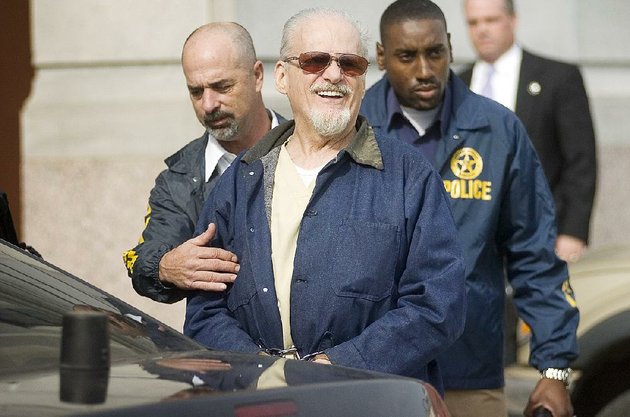
Tony Alamo
Tony Alamo
Bill Bowden
Arkansas Online
May 04, 2017

Evangelist and cult leader Tony Alamo died Tuesday in a prison hospital in North Carolina.

Alamo, whose real name was Bernie Lazar Hoffman, was sentenced to 175 years in prison in 2009 for transporting young girls across state lines to have sex. Some girls, as young as 8 years old, had been forced to become Alamo's "wives."

Alamo, 82, died at Federal Medical Center in Butner, N.C., according to an email from Justin Long, a spokesman for the Federal Bureau of Prisons. Long said his office couldn't reveal the cause of death.

At the time of Alamo's trial in 2009, witnesses testified that he suffered from diabetes and other age-related maladies.

Former Alamo followers claimed in federal court filings that they had been brainwashed, imprisoned, routinely beaten, starved as punishment for perceived wrongdoing, and forced to work long hours without pay -- often to make sequined denim jackets that were sold to Hollywood stars.

David Carter, a Texarkana lawyer who represented some of Alamo's former followers, said they are relieved after hearing of his death.

"The victims I've spoken with are feeling a new sense of freedom," Carter said. "A couple of them weren't even sure this day would come. They were raised to believe Tony Alamo was a prophet and that he spoke for God. In some cases, their own parents handed them over to Alamo rather than face eternal damnation for disobeying the 'prophet.'

"In the end, Alamo was nothing more than a narcissistic pedophile who wrapped his sadistic abuse in the cloak of religion."

Rebecca Gay, 42, who now lives in Georgia, spent the first 14 years of her life at the compound on Georgia Ridge, just north of Dyer. She posted a message Wednesday on Facebook about Alamo's death.

"Last night ... Tony Alamo the leader of the religious cult where I was born and raised, a man who was an annihilator of lives, the fracturer of families, and a thief of innocence took his last breath," wrote Gay. "It feels strange -- like someone cut the invisible tie that bound me for so long. I'm still processing. So many thoughts."

Dorothy Curry, 72, of Fort Smith, said she had mixed emotions.

"I don't rejoice, but I'm kind of glad," she said. "I don't want to celebrate somebody's death. I'm not jumping up and down. ... We were all hurt by that ministry -- spiritual abuse is what you call it. Some people have gotten over it and some haven't.

"Part of my testimony is that I was in a cult for 25 years. ... The cultish practice is the control, and we submitted to that."

Curry said her sister Ann, who's 82 and a former Alamo follower, was in a much more celebratory mood Wednesday.

"My sister was saying 'Thank you, Jesus! Thank you, Jesus!' She's thankful because [Alamo] doesn't have power over anyone anymore," Curry said. "What a relief for a lot of people, a lot of people who grew up in there and were dealing with the abuse."

Curry said she can't imagine anyone taking over as the leader of Tony Alamo Christian Ministries.

"I'm just rejoicing because his reign is over," she said. "You can't imaging anyone else taking over that ministry. His doctrine was ungodly. It wasn't the doctrine of Christ."

Tony Alamo was born Sept. 20, 1934, in Joplin, Mo. His father was a Jewish immigrant from Romania who, Alamo claimed, had been dance instructor for Rudolf Valentino, according to the Encyclopedia of Arkansas History and Culture.

When he was a teenager, Alamo moved to California and achieved some success as a "big band crooner" in Los Angeles.

Details of that part of Alamo's life are sketchy, according to the encyclopedia article.

Alamo claimed he recorded a hit record single in the early 1960s called "Little Yankee Girl" and was even asked to manage musical acts including the Beatles, the Doors, and the Rolling Stones. There is no evidence of those claims.

In 1966, after serving jail time on a weapons charge, Alamo married Edith Opal Horn of Alma. Horn, who was twice divorced, had moved to Hollywood to become an actress. Instead, she supported herself at least in part by scamming churches into believing she was a missionary in need of money, according to the encyclopedia article.

Some people said the couple changed their names to Tony and Susan Alamo after they married, though Tony Alamo claimed to have changed his name earlier.

While in a business meeting in Beverly Hills, Alamo claimed, Jesus came to him and told him to preach about Christ's second coming. He and Susan, who was also of Jewish descent, converted to Christianity and began a Hollywood street ministry, preaching particularly to drug addicts, alcoholics and prostitutes.

In the mid-1970s, they moved the ministry to western Arkansas, where Susan Alamo had grown up.

The group purchased land on Georgia Ridge and built a 13,064-square-foot mansion where the Alamos lived.

The Alamo group became well-known for running a variety of businesses in Alma, including the Alamo Restaurant, where several country music stars performed.

Tony Alamo thought of himself as a country-gospel singer. In former President Bill Clinton's 2005 autobiography, My Life, he described Tony Alamo as "Roy Orbison on speed."

Followers worked at the various businesses and gave the money to the ministry. In return, they were told their needs would be met, but that wasn't always the case, Curry said.

After Susan Alamo died of cancer in 1982, Tony Alamo kept her embalmed body in the mansion, telling his followers that she would rise from the dead. After about six months, he was finally persuaded to entomb her body in a mausoleum near their heart-shaped swimming pool.

In 1991, just before federal agents seized the property, the front of the mausoleum was smashed and Susan Alamo's body was spirited into the night as Tony Alamo and his followers abandoned the compound.

In 1998, the coffin and remains of Susan Alamo were dropped off one night outside a Van Buren funeral home after Christhiaon Coie, Susan Alamo's daughter, won a legal battle for the body.

In August 1998, Susan Alamo's remains were placed in a crypt in Memorial Park Cemetery in Tulsa, according to the Tulsa World.

In the 1990s, Tony Alamo did prison time for tax evasion. After being released in 1998, he set up the then-smaller Tony Alamo Ministries in Fouke in Miller County, with branches in Fort Smith and Los Angeles.

On Sept. 20, 2008, state and federal officials raided Alamo's Fouke compound as part of a two-year investigation into allegations of child abuse and child pornography.

Alamo was arrested in Flagstaff, Ariz., five days later on a warrant charging him with violating the Mann Act, a federal statute enacted to stop the trafficking of women or girls across state lines.

At his trial, several women testified that they had been sexually abused by Alamo, and some said they were forced to become his "wives."

Alamo was found guilty July 24, 2009, on 10 counts of taking underage girls across state lines for sex. Four months later, he was sentenced to 175 years in prison and fined $250,000.

In February 2014, a Miller County judge awarded $525 million in damages to seven former members of Tony Alamo Christian Ministries. It was the largest personal-injury judgment in Arkansas history.

"Susan died and Tony couldn't find himself," Curry said. "He didn't know how he was going to get along without her. She was the only one with any kind of anointing, any kind of spirituality."

Information for this article was contributed by Lynn LaRowe of the Texarkana Gazette.

Metro on 05/04/2017


http://www.arkansasonline.com/news/2017/may/04/cult-leader-alamo-82-dies-20170504/?f=news-arkansas

China detains second Canadian despite plans for extradition pact

Sun Qian
Sun Qian
STEVEN CHASE AND XIAO XU
The Globe and Mail
May 03, 2017

A Canadian citizen has been detained in Beijing for more than 2 1/2 months – held against her will, according to supporters, for being a follower of the Falun Gong spiritual movement that is banned in mainland China.

Sun Qian, 51, who was born in China and obtained Canadian citizenship in 2007, was arrested in February, say Conservative foreign-affairs critic Peter Kent and Xun Li, president of the Falun Dafa Association of Canada.

It’s the second high-profile case in the past few months of a Canadian citizen winding up in the custody of the Chinese government.

And it emerges during the middle of a national debate over whether the Trudeau government should have agreed to negotiate an extradition treaty with China, a pact that would commit Canada to transfer fugitive Chinese to a country known for biased courts and harsh interrogation methods and where the death penalty is routinely imposed, even for non-violent crimes.

Ms. Sun’s case came to light this week when Mr. Kent raised the matter with Canada’s new ambassador to China, John McCallum, when he appeared before the Commons foreign-affairs committee. Mr. McCallum acknowledged the detention, saying he had been briefed on it, but offered little else.

In the second recent case, Chinese-Canadian billionaire Xiao Jianhua mysteriously disappeared Jan. 27 from Hong Kong’s Four Seasons Hotel, reportedly spirited away to the Chinese mainland by a phalanx of plainclothes policemen. Chinese political analysts think Mr. Xiao was wanted by President Xi Jinping and supporters because they believe he possesses incriminating evidence against political enemies of Mr. Xi.

Asked for comment on the Sun case, a spokesman at the Chinese embassy in Ottawa could offer none. It also did not confirm the nature of Ms. Sun’s detention.

The Chinese embassy, however, urged Canadian media to distrust any information provided by practitioners of Falun Gong, including its information websites. “Falun Gong is an evil cult that is anti-humanity and anti-science in nature, having caused enormous harm to Chinese society. It was banned by Chinese government in 1999, according to law,” embassy spokesman Yang Yundong said.

Referring to a Falun Gong website, Minghui, which has written about the Sun case, Mr. Yang urged The Globe to “believe no tales from them,” calling it an “anti-China” tool “that consistently makes up stories and spreads rumours.”

Mr. Wang said he had “no information” about Mr. Xiao.

Falun Gong emerged in China in the early 1990s as an exercise discipline focusing on meditation. It was soon seen as a threat, prompting a crackdown by the Chinese government. In 1999, authorities harshly suppressed the popular movement when some 10,000 practitioners gathered to protest outside Beijing’s elite leadership compound. International human-rights groups have for years documented the mistreatment of Falun Gong adherents in China.

On the issue of Canadians detained in China, Mr. McCallum said he doesn’t think discussing the cases is a good idea. “That doesn’t always help the person in detention if we broadcast their own situation in public. I think in those cases, almost all the time it is better to proceed in a low-profile way in order to do the best we can to help those individuals,” he told the foreign-affairs committee this week.

Mr. Kent disagreed and urged the Trudeau government to speak out in defence. “By staying silent or being less enthusiastic about speaking out, they are designating those folks as second-class Canadians.”

The department of Global Affairs refused to discuss Ms. Sun’s case, saying it needs to protect her right to privacy.

“Consular services are being provided to the Canadian citizen who has been detained in Beijing, China. Consular officials are in contact with local authorities to gather additional information,” said Austin Jean, a spokesman for Global Affairs.

Falun Dafa’s Mr. Li, who called the Chinese embassy’s characterization of the movement “hate speech,” wrote a letter to Prime Minister Justin Trudeau Wednesday, asking him to press Beijing to release Ms. Sun. “For the past 18 years, Falun Gong continues to be the most severely and illegally persecuted group in China,” he wrote. “The Canadian government has an obligation to protect Canadian citizens in China and also protect the dignity of Canadian values from being eroded by this repressive regime,” he wrote of the Chinese government, which is controlled by the Chinese Communist Party with no substantial political opposition.

He said Ms. Sun is being held in the Beijing First Detention Centre. He said she is a vice-president at a Chinese biochemical firm based in Beijing called Beijing Leadman Biochemistry Co. and that a Canadian embassy official visited her recently.

Mr. Li also said he believes Ms. Sun entered China on a Canadian passport on her most recent trip to the country.

Unlike Canada, China does not recognize dual citizenship and refuses requests from foreign governments in cases where Chinese-born people have not formally relinquished their passport or used their Chinese documents to enter China.

Mr. McCallum, meanwhile, defended the extradition talks, which the Trudeau government agreed to last September, saying the Liberals are a “long, long, long way” from actual negotiations. He says right now they’re just talking. “We’ve agreed to talk about the issues that need to be addressed for China or any other country to meet our high standards. This includes things like the death penalty and the importance of high standards of evidence in court proceedings. We lose nothing by explaining our system and talking about the values we hold dear.”

http://www.theglobeandmail.com/news/politics/china-detains-second-canadian-despite-plans-for-extradition-pact/article34892935/

May 3, 2017

Documents detail FBI investigation of Scientology that never resulted in charges

An aerial look at the Church of Scientology's international headquarters near Hemet, Calif. In 2009 and 2010, FBI agents conducting a human trafficking investigation focused on the treatment of church workers at the facility, according to witnesses who talked to the agents and newly released FBI documents
Thomas C. Tobin
Tampa Bay Times
May 3, 2017

The FBI conducted a criminal investigation of the Church of Scientology in 2009 and 2010 that focused on allegations of human trafficking, according to documents released Wednesday.

The inquiry never resulted in charges against the church, but the documents — posted by the entertainment and gossip website Radaronline.com — say agents focused on the Sea Org, the low-paid, uniformed members who comprise Scientology's workforce.

According to one document, former Sea Org members told agents that the church "tricks" people into the organization with promises of a good living conditions, but later houses and holds them "at secure locations where they work 15 hour days in various positions for Scientology based companies … given no days off and are permitted only limited and monitored contact with anyone outside of the camps where they live and work."

The documents buttress a 2013 report by the Tampa Bay Times detailing a sustained and methodical FBI investigation of the church, with agents traveling to several states, questioning dozens of former Scientologists, obtaining surveillance video of the church's remote headquarters in the mountains east of Los Angeles, and even contemplating a raid of that facility.

The Times based its report on interviews with 15 people who talked to FBI agents. But the church dismissed the account, said it had no knowledge of such an investigation and questioned whether it ever occurred.

The documents released Wednesday are the first official affirmation that the investigation took place.

The church did not immediately respond to a request for comment.

Radaronline said it acquired 300 pages of documents from the FBI through a Freedom of Information request. The website posted only three of those pages Wednesday, but its managing editor, Melissa Cronin, alluded to other documents in her story.

The story said that in January 2010 FBI agents expected "the likely indictment of multiple subjects." Four months later, the story said, an assistant U.S. attorney filed a report indicating that a grand jury investigation was discussed.

In an interview Wednesday, Cronin provided a general description of the remaining pages, which Radaronline expects to publish in parts over the next three weeks. The documents revealed a wide-ranging investigation that began in October 2009, she said, after a series of Times reports detailing physical and mental abuse of staffers at the highest levels of Scientology who labored under extreme conditions and a controlling, high-security environment.

Cronin, citing the documents, said the agents traveled to multiple locales, including Hawaii, Portland, Ore., Texas and Clearwater, the church's spiritual headquarters. Multiple officials were involved in the investigation, she said, including agents in the FBI's Los Angeles and Washington, D.C. offices and officials from the Justice Department and U.S. Attorney's Office.

She said the documents made clear that the agents immersed themselves in Scientology's culture, learning its practices and its unique lingo. "It was a serious and well-researched investigation," she said. "They became experts on the case, they took it seriously."

The documents, she added, included discussion of a possible raid of the church's facility east of Los Angeles and how former Sea Org members had told the agents it appeared the church knew it might be coming. She said the documents contain discussion about church members being trained in destroying documents, creating "cover stories" and "playing dumb" to thwart any government agents who came calling.

This is a developing story. Stay with tampabay.com for updates.

Contact Thomas C. Tobin at tobin@tampabay.com. Follow @ThomasCTobin.

http://www.tampabay.com/news/scientology/documents-detail-fbi-investigation-of-scientology-that-never-resulted-in/2322624

5 Years in Prison for Kazakh Jehovah's Witness

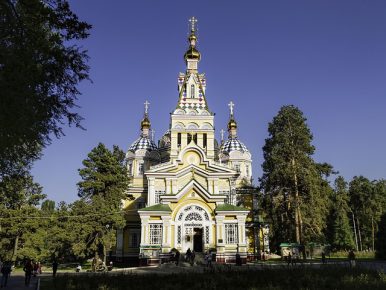
A Russian Orthodox cathedral in Almaty.
Teimur Akhmedov was charged under Article 174: inciting hatred.


By Catherine Putz
The Diplomat
May 04, 2017
   
A district court in Astana sentenced a 60-year-old Jehovah’s Witness to five years in jail on May 2. Teimur Akhmedov was convicted of violating Article 174 of the Kazakh criminal code, which concerns incitement of “ethnic, social, religious, family, and racial hatred.” According to RFE/RL, Akhmedov will appeal.

In January, Akhmedov and 43-year-old Asaf Guliyev were arrested in Astana by the National Security Committee (KNB). The state claimed that between May and October of the previous year, the two men held several meetings to discuss their faith. As Interfax described the case: “During such meetings, in the presence of their followers, the two men publicly spoke negatively about representatives of Islam, Catholicism, and Orthodoxy and said that one religion was superior to another.”

Among the attendees were KNB informants who secretly recorded the discussions.

The verdict was criticized by Forum 18, a Norwegian Christian nonprofit which focuses on religious freedom, and has been closely following the proceedings. Akhmedov’s lawyers claimed their defendant has cancer and should have been released from pretrial detention for treatment; they have also alleged that he was beaten in pretrial detention.

Forum 18 and Human Rights Without Frontiers (HRWF) say that the two Jehovah’s Witnesses were invited by several men claiming to be students to discuss their faith in a rented apartment. The implication is that the two men were set up, led into incriminating conversations in response to questions posed by the students, and recorded.

Guliyev was tried separately and confessed in February. He was given a sentence of five years’ restricted freedom. Akhmedov’s trial began in early April and he denied the charges, resulting in his jail sentence of five years, plus an additional three year ban on preaching.

Kazakhstan has been listed by the U.S. Commission on International Religious Freedom as a Tier 2 country since 2013. In 2016, given state anxiety over public unrest, restrictions on religious expression by non-traditional religious communities increased.

The most recent USCIRF’s review of religious freedom in Kazakhstan notes that a state program to counter religious extremism and terrorism currently under development advocates “for more state-supported alleged ‘anti-sect’ centers, which often criticize Protestants, Jehovah’s Witnesses, and Ahmadis and take part in their trials.”

There is a touch of hypocrisy in jailing a preacher for comments advocating the superiority of his own religion (which frankly seems a given — who would follow a faith believing it inferior to another?), while also supporting centers which criticize “non-traditional” religions. Kazakhstan’s 2011 law on religions holds all religions equal under the law but also “recognizes the historical role of Hanafi Islam and Orthodox Christianity.”

Though unrelated, the timing demands mention of the recent ruling by the Russian Supreme Court banning Jehovah’s Witnesses as an “extremist” group. A report from the Christian Science Monitor noted that some saw the ruling as “the hand of the powerful Russian Orthodox Church” but that others (and this is the bit with more relevance for the Kazakh context):

… suggest it’s part of a more general wave of “majoritarian” social conservatism that’s enforcing a gradual homogenization on the entire society. Civil rights experts worry the move could presage a wider crackdown on “non-traditional” religious faiths, generally viewed as alien to Russia, that took root around the country in the wake of the Soviet Union’s collapse a generation ago.

The same social and political factors that may be behind a wave of “majoritarian” social conservatism manifesting as pressure on “non-traditional” faiths in Russia also exist in Kazakhstan.

Disgraced preacher, child sex abuser Tony Alamo dies

KELLY P. KISSEL
THE ASSOCIATED PRESS
Times Colonist
May 3, 2017

LITTLE ROCK, Ark. — Tony Alamo, a one-time street preacher whose apocalyptic ministry grew into a multimillion-dollar network of businesses and property before he was convicted in Arkansas of sexually abusing girls he considered his wives, has died in prison. He was 82.

Once known for designing elaborately decorated jackets for celebrities including Michael Jackson and Elvis Presley, Alamo died on Tuesday at a federal prison hospital in Butner, North Carolina, according to the U.S. Bureau of Prisons.

The disgraced preacher was convicted in 2009 on charges that accused him of taking girls across state lines for sex, including a 9-year-old girl. The judge who sentenced him to the maximum 175 years in prison told him: "One day you will face a higher and a greater judge than me. May he have mercy on your soul."

Alamo started preaching along the California streets in the 1960s, advocating a mixture of virulent anti-Catholicism and apocalyptic rhetoric. He claimed God authorized polygamy, professed that gays were the tools of Satan, and believed girls were fit for marriage.

"Consent is puberty," Alamo told The Associated Press in September 2008, during the same weekend that state and federal agents raided the Tony Alamo Christian Ministries in the tiny southwest Arkansas town of Fouke in an investigation of child abuse and pornography.

Witnesses in the ensuing trial said Alamo made the decisions: who got married, what children were taught in school, who got clothes, who was allowed to eat. They said he began taking multiple wives in the early 1990s, including a 15-year-old girl in 1994, followed by increasingly younger girls.

Alamo was convicted after five women testified they were "married" to him in secret ceremonies at his compound when they were minors — including one when she was only 8 years old — and later taken to places outside Arkansas for sex.

Former followers said Alamo grew increasingly unhinged after his wife, Susan, died from cancer in 1982. Her body was kept in a room at the ministry, and his followers kept a vigil, praying for months for a resurrection.

Eventually her body was buried in a crypt on the ministry's 300-acre compound in northwest Arkansas. But in 1991, Alamo ordered his followers to pack up before federal marshals seized the property to satisfy a court judgment.

Authorities found Susan Alamo's concrete crypt smashed open and her coffin gone. Alamo returned his wife's remains seven years later after being threatened with jail.

Before it became widely reviled for its leader's actions and teachings, Tony Alamo Christian Ministries attracted hippies and youngsters alienated from their parents when it started in the streets of Los Angeles in the 1960s. Calling themselves "Jesus Freaks," Alamo's followers preached hellfire and a wrathful version of Pentecostalism, which is known for its spirited worship style and belief in modern-day revelation and miracles.

In the 1970s and '80s, members of his ministry made elaborately designed denim jackets that were sold to celebrities including Presley, Jackson and several country music stars. The iconic red leather jacket Jackson wore on the cover of his "Bad" album was a Tony Alamo original, and it was later sold at auction to settle federal tax claims against Alamo.

At its height, Alamo's ministry claimed thousands of members nationwide. It was perhaps most known for leaving fliers on car windshields that outlined everything from Alamo's feared "one-world government" and his belief in flying saucers to his hatred of the Vatican and homosexuals.

In a 2008 interview with the AP, Alamo claimed to be unique among Christian preachers because he was born a Jew and had a "supernatural experience" through which he became a born-again Christian.

From his compound in northwest Arkansas, Alamo presided over several businesses — including gas stations, a hog farm, a grocery store and a restaurant — that funded his ministry. Ultimately, the IRS claimed Alamo owed $7.9 million in taxes and federal agents raided his properties in 1991.

He was convicted of tax evasion and served four years in prison despite claiming he had no tax liability because he received no salary.

Alamo also was accused in 1991 of child abuse after an 11-year-old boy told police he was paddled 140 times by four men on orders from Alamo in 1988 at the church's compound in Saugus, California. Prosecutors eventually dropped the charges, saying too much time had passed. The same year he was charged with threatening to kidnap a federal judge in Arkansas but was acquitted by a jury.

It was after he left prison in the 1990s that he started the compound in Fouke with about 100 followers.

Tony Alamo was born Bernie Lazar Hoffman on Sept. 20, 1934, to a Jewish family in Joplin, Missouri. He arrived in Los Angeles in the 1960s, claiming he was a music promoter with clients including the Beatles. He and his wife legally changed their names to Tony and Susan Alamo after they married in Las Vegas in 1966.

http://www.timescolonist.com/disgraced-preacher-child-sex-abuser-tony-alamo-dies-1.18165317

Miami Mayor: Scientology Is "Legitimate Religion," Just Like Catholicism

TIM ELFRINK
Miami New Times
May 1, 2017.

Not many politicians are willing to get on a stage with Scientology leader David Miscavige and heap praise upon his organization. After all, Miscavige is at the center of a firestorm of abuse allegations, and his church has been accused of widespread human rights violations.

So why did Miami Mayor Tomás Regalado decide to show up with Miscavige this past Saturday to inaugurate Scientologists' new megacenter on South Dixie Highway? He says the answer is simple: Regalado tells New Times that he views Scientology the same as any other religion accused of wrongdoing.

"People criticize the Adventists because they're strict, the Jehovah's Witnesses because they're different, and the Catholics because priests abused children," Regalado says. "I'm a practicing Catholic, and I don't leave because of some abusive priests. They are a legitimate religion."

Regalado says he's aware of the allegations made against the church, many of which were spelled out in detail in Pulitzer Prize-winning author Lawrence Wright's recent book, Going Clear. Wright reports on credible tales of the church forcing dissident members to divorce, locking members away under grueling conditions, and using violence to obtain control. Wright reports about dissidents who say they witnessed Miscavige himself striking and beating staff members "as many as a hundred times." (The church has disputed nearly every point in Wright's book.)

But the mayor says he discounts those claims for two reasons: The church is allowed to operate as a religion by the Internal Revenue Service, and no criminal charges have been filed against Miscavige or other leaders. (Of course, as Wright reports in his book, Scientologists lost that tax-exempt status in 1967 and only won it back in 1993 after filing more than 2,000 lawsuits against the federal government, tying it up in decades of expensive litigation.)

"They are protected by the Constitution," Regalado says. "They are a religion. I've heard of allegations, but I've never seen people arrested."

Regalado praised Scientologists for renovating the $7 million building they purchased in 2012 at 2230 S. Dixie Hwy. and for offering to volunteer around Miami.

"They took an abandoned building, they fixed it, and they have a beautiful temple now," he says. "They came and offered their church members to do any volunteer work in the city in Miami of our choosing. They want us to tell them where to volunteer and what to do."

Asked whether the abuse claims within the church clash with his longstanding activism against similar abuses in Cuba and Venezuela, Regalado responded that the cases are different.

"The fact is that human rights issues in Cuba have been condemned by the UN," Regalado says. He suggests Scientology's problems haven't been as well established and adds that Scientologists "have a foundation that is helping dissidents in Cuba." (Regalado didn't specify which foundation; his spokesperson hasn't responded to a question asking for more details.)

So why are so few other politicians willing to stick up for Scientology these days? Before Regalado's appearance this past weekend, then-Sacramento Mayor Kevin Johnson's 2012 public event with Scientology's leaders might have been the last by a major city mayor.

Regalado has an answer for that fact too.

"I guess I'm different," he says.

http://www.miaminewtimes.com/news/miami-mayor-tomas-regalado-scientology-is-legitimate-religion-just-like-catholicism-9317435

Russian Orthodox Church supports ban on Jehovah's Witnesses in Russia

May 2, 2017

Moscow, May 2, Interfax - The Russian Orthodox Church sees Jehovah's Witnesses as a dangerous sect and has supported the ban imposed on it in Russia.

"This is a sect, totalitarian and harmful at that. I am well aware of this because I have had an opportunity to speak to former adepts of this sect more than once," Metropolitan Hilarion of Volokolamsk, head of the Synodal Department for External Church Relations, told a program shown on the Rossiya 24 (VGTRK) TV channel.

Jehovah's Witnesses members are dangerous because they approach people in the street and offer them their literature, introduce themselves as a Christian organization, while their activities are based "on manipulating consciousness, and they erode the psyche of people and the family," the metropolitan said.

In addition to that, adherents of Jehovah's Witnesses "warp the teachings of Christ and misinterpret the Gospel," he said.

"Their doctrine contains a lot of false teachings. They do not believe in Jesus Christ as the God and the Savior. They do not recognize the doctrine of the Trinity. Therefore, they cannot be called Christians," the metropolitan said.

On April 20, the Russian Supreme Court ruled in favor of the Russian Justice Ministry's lawsuit and designated Jehovah's Witnesses as an extremist organization.

Metropolitan Hilarion welcomed this court ruling and suggested that the "pernicious and harmful" influence of Jehovah's Witnesses would now start to decline. The Russian Orthodox Church did not take part in proceedings and was not asked for advice, he said.

http://www.interfax-religion.com/?act=news&div=13749

Soldiers of Odin splinter in Canada over 'racist agenda' of far-right group's leadership in Finland

A Soldiers of Odin member eyes a counter-protest on Parliament Hill on Tuesday, March 21, 2017
Stewart Bell
National post
May 1, 2017

TORONTO — The far-right group Soldiers of Odin has splintered in Canada after the two main factions turned against each other in a dispute over whether to remain aligned with their racist namesake in northern Europe.

The split began last week when the president of Soldiers of Odin Canada, Bill Daniels, denounced the “racist agenda” of Soldiers of Odin leaders in Finland and said his branch was no longer associated with them.

“Their ridiculous belief in racism has always been a huge issue for us in Canada as we do not support or share their views on race,” Daniels said on Facebook, calling the Finnish leaders “racist, unorganized, reckless” thugs.

The Finnish leaders of the anti-immigrant group responded by expelling Daniels and banning him from using the name Soldiers of Odin. The Quebec branch then said it was also splitting away from the Daniels wing.

“There is indeed a disconnect between SOO Quebec and SOO Canada,” said the Quebec chapter president, Katy Latulippe. “As the provincial president, and with a unanimous vote, we decided that Quebec would dissociate Canada.”

The Daniels faction “will no longer be allowed to wear the colors of the Soldiers of Odin,” she said. “It is important to know that more than 50% of the divisions in Canada do not agree with Bill Daniels and also wishes to continue their activities under the banner of the SOO.”

The Soldiers of Odin emerged in Finland in 2015 as an anti-immigration group closely aligned with the racist far right. It spread quickly to Europe and North America but since arriving in Canada a year ago it has struggled with its identity.

While the Canadian chapters have emphasized their community volunteerism, organizing events such as food drives, they have also clashed with anti-racism demonstrators, and posted blatantly anti-Muslim rhetoric on social media.

“It is an important group and it is growing tremendously,” said Yannick Veilleux-Lepage, a Canadian researcher at the Handa Centre for the Study of Terrorism and Political Violence at the University of St Andrews.

Working with Emil Archambault of Durham University, Veilleux-Lepage has identified 265 Canadians associated with the Soldiers of Odin. An analysis of their Facebook linkages showed a close connection between the Canadian members and their Finnish and Swedish counterparts, he said.

“What that tells us is that members of the Canadian group are quite interlinked with at least the membership of the Finnish group,” Veilleux-Lepage said in an interview.

That means that while the Canadian groups claim to be distinct from their racist Finnish namesake, they interact with them online and share the same anti-immigrant narratives, Veilleux-Lepage said.

The research results undermine the significance of the split between the Canadian and Finnish Soldiers of Odin over racism, he said. “The idea of Soldiers of Odin as a multicultural group, it’s not the reality we’re seeing.”

Soldiers of Odin Canada declined to comment on the study. A Facebook post by the group’s spokesman, Mike Montague, suggests the dispute is at least partly over money. He wrote that the Finland group wanted to collect an annual fee from each member.

“As for Quebec SOO they have decided to denounce us and continue working with Finland even though the rest of Canada SOO is running independent from Finland SOO,” the group told the National Post. “As far as we are concerned the Quebec SOO has gone rogue from SOO Canada’s national leadership.”

Although the Canadian offshoot insists it is not racist, its Facebook page calls Islam a “totalitarian ideology” and speaks of a war “with all of Islam.” The page also supports Sandra Solomon, the former spokeswoman for the Toronto-based anti-Muslim group Rise Canada.

The study, which has not yet been published, raised concerns about the growth of Soldiers of Odin, given its anti-Muslim, anti-immigration rhetoric and the apparent overlap of its membership with supporters of outlaw biker gangs like the Hells Angels.

Veilleux-Lepage said there had always been an ideological gulf between the Canadian and Quebec factions, with the latter being more anti-immigration. But he said ultimately the current split might not mean much. “We don’t think it’s that clear of a breakup.”

National Post
sbell@nationalpost.com
Twitter.com/StewartBellNP


http://news.nationalpost.com/news/canada/soldiers-of-odin-splinter-in-canada-over-racist-agenda-of-far-right-groups-leadership-in-finland

A polygamy trial in Canada tests the limits of conjugal freedom

Marriage and religious fundamentalism - The case illustrates the tension between religious freedom and human rights in democracies

P.F. and ERASMUS | VANCOUVER, BRITISH COLUMBIA
The Economist
May 2, 2017

Many of today’s hottest arguments about religious freedom involve idiosyncratic micro-communities which impose on themselves (and on their children) norms of life which the rest of society finds bizarre or worse.

That is one reason why a polygamy trial which recently opened in the Canadian province of British Columbia has attracted attention throughout the country and among law-and-religion pundits across the world.

The trial focuses on a fundamentalist religious community called “Bountiful”. The group is home to Canada’s best-known avowed polygamist, Winston Blackmore, as well as his former brother-in-law James Oler. Both have been charged with polygamy under legislation which has existed for more than a century but has proved virtually impossible to apply because of countervailing considerations about religious freedom. "Bountiful", which was founded in 1946, has its roots in offshoots from the American Mormon church whose mainstream leadership eschewed polygamy in 1890. The Mormons now take a very dim view of small holdout communities across North America who still engage in multiple marriage, and have fought legal battles against them.

The indictment in the current trial lists 24 women who have been ceremonially married to, or had conjugal relations with Mr Blackmore, while four women are listed as wives of Mr Oler. Mr Blackmore has never hidden the fact that he has multiple wives who have borne him at least 145 children.

During the trial so far, the two men have been sitting side by side in the small courthouse in the town of Cranbrook, never speaking to each other. Mr Blackmore was excommunicated in 2002 from a fundamentalist sect of American polygamists in whose ranks he had served as “bishop”. The leader of that sect, Warren Jeffs, is serving a life sentence in Texas after he was convicted in 2011 of raping two of his under-age brides.

The Bountiful community has been under investigation by the Royal Canadian Mounted Police for at least 25 years. Several moves to charge its leaders foundered after the provincial government received legal advice that Canada’s Charter of Rights of Freedoms, underpinning religious liberty, might take precedence. The province’s former attorney general, Wally Oppal, spent years looking for strategies to prosecute, arguing that polygamy was demeaning to women and damaging to minors. The Charter does allow for “reasonable limits” on religious freedom when they are “demonstrably justified in a free and democratic society,” as critics of polygamy have noted.

In 2011, the Supreme Court of British Columbia issued a landmark decision running to 335 pages: it opined that although anti-polygamy legislation does indeed impinge on religious freedom, it is necessary in view of the harm which multiple marriage causes to children, women and society. It was that ruling which paved the way for the current trial.

Blair Suffredine, Mr Blackmore’s lawyer, is defending his client on grounds that society recognises the legitimacy of other non-traditional unions, including common-law marriage. He has said: “Because of Blackmore’s religious belief, because he has more than one relationship, he’s being prosecuted. If he didn’t have a religious ceremony and just had all these children with different women, it would be fine. The sole distinction is [that] Blackmore went and had ceremonies for each one.”

Evidence presented at the trial has included dozens of “marriage certificates” for weddings that took place on the same day. If convicted, Mr Blackmore and Mr Oler could each face up to five years in prison. A verdict is not expected until the autumn.

The decision will be watched with interest in many democracies. There is no liberal democratic state where polygamy is legal, but the practice is recognised, either formally or de facto, in around 60 countries round the world, mostly Muslim. In practice, courts and authorities in democratic countries have often accorded some recognition to polygamous unions forged elsewhere when adjudicating, say, social-security benefits or child custody. That includes Canada, where immigration authorities insist, of course, that each newcomer must declare only one spouse but have been willing in principle to allow children from a father’s other marriages to enter the country.

Still, there is virtually no tolerance for multiple marriages within the boundaries of a single democratic state across the Western world. It remains axiomatic that a person who enters a marriage ceremony while still legally wedded to somebody else is a bigamist. That rule invalidates the second marriage and renders the bigamist liable to prosecution.

Yet even that simple-sounding principle is not easy to apply. What if the “ceremony “ is some new-fangled rite which has been dreamed up by a recently constituted community, with no real social or legal standing? Does that make the situation better or worse than simply living with multiple partners, which is not illegal? Such questions will remain hotly contested through this trial and beyond.

http://www.economist.com/blogs/erasmus/2017/05/marriage-and-religious-fundamentalism?utm_source=Pew+Research+Center&utm_campaign=630bc1c48e-EMAIL_CAMPAIGN_2017_05_03&utm_medium=email&utm_term=0_3e953b9b70-630bc1c48e-400018169

​David Wants to Fly - 2010 - David Sieveking

In search of enlightenment young David follows his idol David Lynch and uncovers the billion-dollar industry behind Transcendental Meditation.

Denmark bans six 'hate preachers' from entering the country

Teis Jensen
Reuters
May 2, 2017 

Denmark on Tuesday banned five Islamic clerics and an American evangelical Christian pastor from entering the country, calling them "hate preachers" who posed threats to public order.

The move came amidst a public backlash in Denmark against Islam in the wake of Islamist violence a decade ago over Danish newspaper cartoons satirising the Prophet Mohammad, a series of deadly militant attacks in Europe including one in Denmark, and a large influx of mainly Muslim migrants in 2015.

The blacklist, the first of its kind in Denmark, arose from legislation passed last year allowing bans on foreign religious figures the government deems to be a danger to public security.

"The government will not accept that hate preachers come to Denmark to preach hatred against Danish society and indoctrinate others to commit violence against women and children, spread ideas about an (Islamic) caliphate and in general undermine our fundamental values," Immigration Minister Inger Stojberg said.

The blacklist includes Islamic cleric Kamal El-Mekki from the United States; Jamaican-born Canadian Bilal Philips, who lives in Qatar; Mohamad al-Arifi and Salman al-Ouda from Saudi Arabia; and Mohammad Rateb al-Nabulsi from Syria.

The sixth person on the list is Terry Jones, a Florida evangelical Christian pastor who in 2010 raised an international outcry when he threatened to burn copies of the Koran.

Stojberg's statement on the ban did not say whether any of the named preachers had been in Denmark. But the law enacted last year said it applied to those for whom there was a "reasonable likelihood" they would enter the country.

It also said behaviour deemed to be hateful could arise from statements or actions whether in Denmark or abroad.

Denmark became a target of radical Islamists in 2005 after the publication of cartoons lampooning the Prophet Mohammad, which led to sometimes deadly protests in the Muslim world.

In 2015, a Danish-born Muslim gunman killed two people in an attack on a debating event and a Copenhagen synagogue before being shot dead by police.

Public sentiment towards Islam and Muslim migrants has soured in long liberal and tolerant Denmark. The European Union country has imposed strict limits on immigration, citing security and cultural concerns.

Anti-Muslim populist parties have gained strength throughout the Nordic region, and elsewhere in Europe, since record numbers of mainly Muslim migrants arrived in 2015. The anti-immigrant Danish Peoples Party is now the second largest in parliament.

(Editing by Mark Heinrich)

http://www.reuters.com/article/uk-denmark-security-religion-idUSKBN17Y1N9

Korean 'cult' recruiting in Dunedin

Otago Daily Times
May 3, 2017

VIDEO

A South Korean religious group known as Elohim, and described by some as a cult, is operating in Dunedin.

The Roslyn Presbyterian Church, in Highgate, has been the Dunedin headquarters of the World Mission Society of God church since 2012.

It believes Korean founder Ahn Sahng-Hong is an incarnation of Christ.

The South Today has been told the society, using the name Elohim, or the Elohim Training Institute, is approaching people on the University of Otago campus and outside shopping malls.

The group holds regular meetings at the Otago University Students' Association building and according to Critic writer Esme Hall, is recruiting students.

''About a month ago a friend of mine said she'd got baptised into a cult.

''We were all like: `What the heck'.

''She just didn't really know how to say no and ended up getting taken to their church and pretty much baptised in the name of their God.''

And student Izzy Condon said she had also been approached.

''It just felt very invasive, almost intimidating in the way where someone says, `you're wrong' or `the way you think is not right'.''

Canberra-born university lecturer and recognised cult expert Peter Daley, who now lives in South Korea, says universities need to do more to educate students on the presence of cults on campus.

"It can take time for these groups to become known and gain a reputation, and that's the benefit of these transitory front groups," he said.

"The medicine for these kinds of extremist organisations... is to realise you're probably going to encounter these people in-between classes, at shopping centres, in your day-to-day life."

Otago University Students' Association communications manager Katrina McLennan told the South Today in a statement this week: ``I don't believe OUSA has received a formal complaint but please rest assured that this
is being addressed internally.''

A member of the group declined to discuss its activities when approached by the South Today.

- rosel.labone@southtoday.co.nz

https://www.odt.co.nz/news/dunedin/korean-cult-recruiting-dunedin

Court ruling to weaken Jehovah's Witnesses influence in Russia, cleric says

May 03, 2017
Metropolitan Ilarion stressed his conviction that Jehovah’s Witnesses were a totalitarian sect heavily misinterpreting the Gospels and, on top of that, destroying families

MOSCOW, May 2. /TASS/. Russian Orthodox Church welcomes the ruling of the Supreme Court to prohibit the activities of Jehovah’s Witnesses in Russia, as it destroys the traditional family, Metropolitan Ilarion, the head of Moscow Patriarchate’s Department for External Church Relations told TASS.

As he spoke on ‘The Church and the World’ show aired by Rossiya24 news channel, he said the impact of Jehovah’s Witnesses will be weakened now but still it would be scarcely possible to eliminate it altogether.

"One should hardly have any doubts the adepts of the sect will remain here and will continue their activity," the Most Reverend Ilarion said. "But at any rate they will stop equating themselves with Christian denominations openly. To paraphrase it, this product won’t be represented anymore on the market of existing denominations of Christianity."

"This will save families and people’s lives and I think a (court) ruling of this kind is only welcome," he said.

Metropolitan Ilarion stressed his conviction that Jehovah’s Witnesses were a totalitarian sect heavily misinterpreting the Gospels and, on top of that, destroying families.

"The real danger is not in their distortions of faith," he said. "The danger is in their being a totalitarian sect that focuses its entire activity on manipulating with human consciousness. They destroy human psyche, they destroy families."

The religious doctrine of Jehovah’s Witnesses prohibits blood transfusions. Also members of one family cannot take seats at the same table with any relative if, for whatever reason, he or she had decided to leave the organization.

Metropolitan Ilarion said he thought the decision should be hailed he said the Church did not take part in any way in its formulation. "No one turned to us for consultations," he said.

"Generally speaking, the Church never calls for subjecting heretics or sect adepts or other dissenters to criminal persecution," he said. "When the state takes such decisions, it’s the decision of the judiciary on the basis of finding that the sect is involved in extremist activities."

"The case in hand in this situation is not encroachment on foundations of one or another religion in any way but rather encroachments on legislation," Metropolitan Ilarion said.

http://tass.com/society/944305

May 2, 2017

The biggest megachurch on Earth and South Korea's 'crisis of evangelism'

Matthew Bell
PRI’s The World
May 01, 2017

If the building didn’t have a giant cross out front, it could easily be mistaken for a sports arena.

But this is Yoido Full Gospel Church, a Pentecostal congregation belonging to the Korean Assemblies of God — a household name in South Korea. The institution is also known as the largest megachurch in the world, with a congregation approaching 800,000 people, according to church officials.

Protestant megachurches, defined as those with at least 2,000 people in attendance every week, don't just operate all across the United States. This is a global phenomenon.

Successful megachurches are operating in South America, Africa and Asia as well. And yet, no city has more of them than Seoul. The South Korean capital has 17 megachurches in all.

Still, Protestant evangelical leaders in South Korea are facing a new challenge. Their public image has taken a hit in recent years due to a series of scandals, and the era of boundless growth for their congregations appears to have come to an end.

Sunday services at Yoido Full Gospel Church start at 7 a.m. and run the whole day, until 7 p.m. They’re not in the same building at the same time, but officials say nearly 200,000 people attend worship services every week at the main church in Yeouido, an island in central Seoul that sits in the Han River.

Yeouido Island is also where the South Korean National Assembly building is located, along with several big media companies.

The scene inside the main sanctuary of the Full Gospel Church is impressive. There are seats for about 15,000 worshippers. Giant video screens carry simultaneous translations of parts of the service in Chinese, Japanese and English. Audio headsets are available with translations from the original Korean into numerous other languages. The choir has about 120 vocalists decked out in white robes and backed up by a full orchestra.

Talking with members of the congregation on the main steps outside of the church, several people echo a sense of awe. They say they can feel the presence of the Holy Spirit at Full Gospel Church, and that’s what keeps them coming back.

At certain times during the service, people in the pews close their eyes, raise up their hands and even speak in tongues, creating a real revival atmosphere.

“When I was in my 20s, I went to another church. But it was kind of superficial,” says Lee Chong-sook, a 55-year-old attending Sunday morning service with her husband, their two young-adult children, and Lee’s sister-in-law.

“When I first walked past this church and I heard the preaching, I started to cry. It touched my soul. I felt joy and I felt healed from pain and sorrow,” Lee says.

The message from the pulpit would sound familiar to a lot of Christian evangelicals in the US. It’s about a strict interpretation of the Bible, with a focus on the power of prayer and positive thinking.

Pastor Yong-gi Cho, now retired, founded the Full Gospel Church in Seoul in 1958. It all started with simple worship services for just a few people at a time, gathered under a tent.

“So many poor people had no place to go, no job, no income. Then, I came,” Cho tells me.

“I began to give hope to them [through the Bible]. Religion is useless if religion can’t give hope," Cho says. "People began to swarm to the tent church, the poor people, they needed to have hope.”

Cho’s congregation grew and grew through the 1960s, '70s and '80s, right along with the South Korean economy. He earned a reputation as a healer. Indeed, two people I spoke with at the church tell me they were healed from illnesses.

Cho also preached a Korean version of the prosperity gospel, which taught that leading a prayerful lifestyle will bring rewards not only in terms of health, but in wealth.

It might not be apparent at one of the packed Sunday morning services at Full Gospel Church, but the influence of Pastor Cho and other Korean evangelicals is not what it once was in South Korea. And Cho’s own track record is one reason why.

In 2014, Cho was convicted of embezzling $12 million in church funds. He was given a suspended sentence, but Cho’s son went to jail. Other Protestant leaders have been caught up in sensational scandals too, and as a result, people’s attitudes toward Christian evangelicals have soured.

“The general public in Korean society, they do not trust Christians anymore,” says Jung-Jun Kim, a senior pastor at a small evangelical church in Seoul.

About 30 percent of the population belongs to the Christian faith, with about one-quarter of those being Catholic and three-quarters Protestant. But Kim says there is a crisis in South Korean evangelism, with many people deciding to leave the more established Protestant churches to join smaller ones.

“Or, they just leave the church altogether. Because they say, ‘I can be a Christian without belonging to an institutionalized church,’” Kim says.

There is a new generation of Christian leaders, Kim adds, trying to come up with different ways to attract disaffected believers. He says they’re even opening up so-called café churches. These are places that double as coffee shops and a places of worship.

The leadership at Yoido Full Gospel Church says its congregation is still seeing robust growth. But Pastor Cho’s successor Young-hoon Lee says times have changed.

“Right now, we have a little slowdown and stagnation period,” he says.

Lee describes himself as a fourth-generation Korean Christian. His grandfather preached the Gospel in Pyongyang, North Korea, back before the Korean War. And Lee says he is not particularly worried about the future growth potential of the Christian faith.

“We are going to have another great awakening and revival in Korea, because I believe Jesus is coming soon,” he says.

During a recent sermon, Pastor Lee prays for North Korea, which can only survive if people there believe in Jesus. Then he mentions the prosperity of South Korea, pointing to the rising average income and saying that it’s because people in the South still believe.

https://www.pri.org/stories/2017-05-01/biggest-megachurch-earth-facing-crisis-evangelism?utm_source=Pew+Research+Center&utm_campaign=86406eb2ca-EMAIL_CAMPAIGN_2017_05_02&utm_medium=email&utm_term=0_3e953b9b70-86406eb2ca-400018169

JIM JONES: CHARISMATIC MICROMANAGER, GIFTED PREACHER, LUNATIC

Jim Jones and Peoples Temple
ON THE LIFE AND TIMES BEFORE THE JONESTOWN MASSACRE

Lisa Levy
LITERARY HUB
May 2, 2017

When we talk about Jim Jones we don’t talk about the many years he spent traveling the US and preaching. We talk about the night when he and an unspecified number of his followers committed mass suicide in their settlement in the Guyanese jungle known as Jonestown. Jim Jones’s story has a stubborn teleology: we know the spectacular, horrible ending. But what about how he, and his followers, arrived there? Is there any comprehending the events that led to such a fatal choice?

Jeff Guinn’s new book, The Road to Jonestown: Jim Jones and Peoples Temple, emphasizes in its title that it is going to be about the journey (oh, would that that word had not been co-opted by reality show contestants and New Age seekers). In Guinn’s hands Jones’s whole story is presented and it’s fascinating: from his small town Indiana origins; to his days honing his skills at a small church in Indianapolis; to his turn as a big tent revival preacher, which gave him a taste for massive crowds; to transplanting his congregation to rural California with incursions to San Francisco, Los Angeles, and Seattle, to recruit more believers in those cities; and finally, to the settlement in Guyana, which Jones and his followers referred to as the “PL,” or promised land.

Guinn works by accretion, and the research scaffolding this book is tremendous. It’s easy to imagine every waitress who ever poured Jones a cup of coffee was interviewed for this book, though in reality he spoke to every surviving member of the Peoples Temple and others affiliated with Jones and the group as well as using documents from the group. Unlike Charles Manson, the subject of Guinn’s previous (also excellent) book, Jones was not caught up in the mythos of 1960s. He wanted to be Billy Graham, not the Beatles. The temptation to compare Jones and Manson is tantalizing, but their means and missions couldn’t be more different. Crazy as he is, Manson is small time compared to Jones, though Manson was also, one could argue, much more hands on in manipulating his followers. Jones was bigger—a significantly larger following, closer to reaching his collective dream of a promised land, and a more dramatic, larger scale ending. Jones’s relation to his times is complicated: as a preacher, he seems a throwback to something more wholesome, though it is 1960s vices that bring his crumbling empire down; specifically, drugs that make him paranoid, though the government and the media were really after him too.

Most of Guinn’s book is about Jones as a preacher and a leader. Again, contra the 1960s, Jones did not want hippies as followers: the tuned out and turned on do not fill the collection plates on Sunday or the coffers during the week. Jones sought hardworking members of society with steady paychecks or pensions. He loved older people, as Social Security or disability checks were always reliable. He encouraged them to bring their adult children and extended families with them.

The message he preached might seem surprising: it was straight-up utopian socialism. Unlike most flavors of Christianity, where you get your reward in heaven, Jones advocated for “a church where you get something now.” That’s why there’s no apostrophe in Peoples—part of the church ethos was that there were no possessions, and members should live communally. Jones preached about feeding the hungry, clothing the naked, and helping your brother man, regardless of differences including race (this is also a significant difference between Jones and Manson, as Manson advocated for a race war). At the pulpit, he could be anything to anyone, an extremely gifted and versatile preacher, though he did tend to go on:

His sermons deliberately rambled. Like a great composer crafting a multi-movement symphony, Jones varied his rhythm and tone. He ran the gamut from fire-and-brimstone preacher to acerbic social commentator. At one point Jones might throw down a Bible, even stomp on it, and yet a little later cite scripture to reinforce some socialist point. He’d refer to himself as God, the reincarnation of Christ, or Lenin in a single turn at the pulpit. No one listening, even the ones most devoted to him, could take it all in. But at some point each follower heard something that reaffirmed his or her personal reason for belonging to Peoples Temple, and for believing in Jim Jones.
Along with the rambling sermons, Jones would send his followers out among the crowds to spy on potential new members and then follow up later with personal visits or notes. He also staged fake faith healings, which went over big, especially in the revival tents. It was tactics like these that built up his midwestern congregation. Eventually he picked up stakes and moved them all to rural California, in the Redwood Valley near Ukiah. There they started the communal living he had preached, all of the races together, and their numbers expanded. New members were born and acquired by the roadshows to different cities, with Jones’s followers again mingling in the crowds and then following up with potential new members. Jones preached at the compound (yes, there was a compound) least once on Sundays and two nights a week. All sermons were mandatory for Temple members, even the smallest children.

Throughout the history of the Temple, Jones had problems trusting people. His micromanagement led, in part, to his downfall, as he started taking large doses of amphetamines to help keep him going (it also helped him keep those long, rambling sermons long and rambling). Jones already had his California mini-empire before he dug in deep to drugs and started having sex with his followers: there had been discreet affairs, but again, the drugs made him lose his discretion. He’d see a pretty new member around and ask for her to be brought to his office; the affairs, which used to be sequential, and all with women, became multiple and bisexual as well.

The original plan was for part of the congregation to settle Jonestown first and for the others to join them when the land was cleared and more housing was built. But restlessness inside the ranks and pressure from the outside world moved up the timetable. Relatives of Peoples Temple members were demanding to see their family members, and a Bay Area paper had run a damning article about Jones and the Temple. This moved up the schedule so Jones had everyone who was able flee to Jonestown. Once they were there spirits quickly dropped. Temperatures were unrelentingly hot. The work of clearing the land was extremely difficult. There was so little to eat that Temple members made do with two meals per day of mostly rice with a little bit of beans. And the pressures from the US were not stopping: Jones heard a congressman was planning to come inspect Jonestown and was bringing some relatives of Temple members with him. He could not let that happen, could not let the world see what had become of his dream, of the Peoples dream.

The congressman and his delegation, including family members, did come. The White Night, as the Jones and his followers called it, transpired, and two of Jones’s bodyguards shot and injured members of the delegation before they could leave, though there were survivors. Coincidentally some of the older boys, including two of Jones’s sons, were in Guyana’s capital for an exhibition basketball game when it happened, so they are the only surviving members of Jones’s family. They are both interviewed extensively in the book. One of them, Jim Jones Jr., concludes about his father’s dream, “What I’d say about Peoples Temple is, we failed, but damn, we tried.”

http://lithub.com/jim-jones-charismatic-micromanager-gifted-preacher-lunatic/

May 1, 2017

Jehovah's Witnesses as 'extremists': Court sharpens edges of Russia's religious space

A Supreme Court ruling puts the Jehovah's Witnesses at risk of property seizure and prison over the sect's proselytization and 'radical' beliefs. Even members of the powerful Russian Orthodox Church say the decision goes too far.

Fred Weir
Christian Science Monitor

MAY 1, 2017 MOSCOW—It's a quiet Tuesday evening at Moscow's largest Kingdom Hall, a gathering point for Jehovah's Witnesses, and it's a hive of activity. In one room a few dozen people are engaged in Bible-reading; in another they are singing hymns.

There is no outward sign of awareness that Russia's Supreme Court has just banned the Jehovah's Witnesses as an "extremist" group on a par with terrorist organizations like ISIS and Al Qaeda – nor that carrying out these very activities may soon be grounds for criminal charges and prison.

It's a legal decision that looks portentous on many levels. It is the first major post-Soviet instance in which Russia has moved to outlaw an entire religion, deploying "extremism" laws against a group that poses no threat whatsoever of violence, racism, or hate speech.

Some see the hand of the powerful Russian Orthodox Church behind the decision. Others suggest it's part of a more general wave of "majoritarian" social conservatism that's enforcing a gradual homogenization on the entire society. Civil rights experts worry the move could presage a wider crackdown on "non-traditional" religious faiths, generally viewed as alien to Russia, that took root around the country in the wake of the Soviet Union's collapse a generation ago.

But even among Russian Orthodox themselves, there is concern that the absolute ban of an entire sect goes too far. The faith has existed in Russia for more than a century, and is practically the only such group to have survived the long Soviet winter by developing underground networks that successfully defied the secret police of Stalin and Brezhnev eras.

"Banning [the Jehovah's Witnesses] from the legal space, excluding it from social life completely is an idea that didn't work even in Stalin's times," says Father Vsevolod Chaplin, a former spokesman for the Orthodox Church. "We should be wiser in this case."
The 'Yarovaya Law'

The Supreme Court ban, which is one short appeal away from being handed to police to enforce, will mandate seizure of all the group's property and open its 175,000 Russian members to criminal charges if they persist in publicly expressing their beliefs and carrying out their active missionary work.

The court verdict has been several years in the making, highlighting the way Russian authorities in the age of Vladimir Putin move slowly and methodically through the courts, rather than employing Soviet-style repression, to obtain the results they want.

In the more than two decades since Russia passed a law limiting the legal rights of faiths that are not one of the country's four "traditional" religions – Orthodoxy, Judaism, Islam and Buddhism – the Jehovah's Witnesses have faced dozens of local bans, seen their literature prohibited as "extremist," and several of their activists jailed.

But the new ruling comes under a new law signed by Mr. Putin last July. Known as the "Yarovaya Law" after its main author Irina Yarovaya of the pro-Kremlin United Russia party, the law authorized sweeping new powers for security services to crack down on all kinds of extremist activity.

One little-noticed section of the law mandates much tougher restrictions on the activities of small religious denominations, particularly their ability to proselytize. The Jehovah's Witnesses, who see missionary work as a basic command from God, were on a collision course with the Russian state even before the latest court decision.

"I am instructed to go out and tell people what I have read in the Bible, and I will do that regardless of what decisions the government takes," says Yury Terteryan, a sports journalist and Jehovah's Witness. "How can you stop people from sharing good news?"

Some analysts see this verdict as part of a full-blown comeback for Soviet-style forced conformity. "The totalitarian features of the present regime are becoming more evident," says Yevgeny Ikhlov, an expert with the public Movement for Human Rights in Moscow. "It is a feature of such regimes that they try to impose a single ideology. The Jehovah's Witnesses have been persecuted by totalitarian regimes from Hitler's to Stalin's, and it looks like they'll have to go underground again."

Others suggest that, as with laws limiting public LGBT expression, the crackdown is not likely to affect most Russians and, indeed, few are likely to even notice it. The vast majority of Russians self-identify as Orthodox Christians, even if only a small percentage actively practice the faith.

Ultimately, it's not clear exactly why the Russian state has targeted the Jehovah's Witnesses for punishment which, if fully carried out, could increase Russia's burgeoning prison population by 175,000.

"The supreme court case dealt mainly with technical issues, like their promulgation of 'extremist' literature and violation of previously-mandated restrictions," says Maria Kravchenko, an expert with the Sova Center in Moscow, which tracks extremist movements in Russia. Ms. Kravchenko's specialty is "abuse of the extremism laws," and she says her work load has been piling up lately.

"Perhaps it's because of their pacifism, that they reject military service, and encourage believers to leave their families. There are a lot of institutions in Russia that have reasons to be angered by them. I think the interests of the Orthodox Church is only one aspect of this, it's part of something much larger," she says.
Thrown to the lions?

Most "non-traditional" faiths have experienced difficulties trying to establish themselves in post-Soviet Russia. Even the powerful Roman Catholic Church, which has about 800,000 members in Russia, has found itself under pressure, often from zealous local Orthodox communities. But recent rapprochement between the Vatican and the Orthodox Church has probably eliminated any threat that Catholics might be targeted under the Yarovaya law.

The Church of Scientology – which is controversial everywhere – was shut down by the Supreme Court last year, for "non-compliance" with laws regulating religious organizations. The Orthodox Church hailed that decision, publicly denouncing Scientology as an "affront to human freedom."

Many other groups have experienced chronic problems, including Hindus, whose holy book the Bhagavad Gita was nearly banned as "extremist" by a local court five years ago. Baptists and other smaller evangelical Christian groups, who often do not register with authorities, report constant harassment from police and local Orthodox communities.

Most of those who, like the Jehovah's Witnesses, make proselytizing a core activity, worry that they will be targeted more systematically, and treated as criminals, under the new Yarovaya law.

For the Jehovah's Witnesses themselves, persecution is all too familiar. Indeed, they fondly liken themselves to early Christians being hunted down by the Romans. Which is not to say that they welcome it.

"I don't wish to be thrown to the lions," says Yevgeny Kandaurov, an elder of the congregation in Moscow. "That's not what I choose. But I will stick to my faith whatever happens."
'We should be more careful about this'

Even among Orthodox officials it's not easy to find supporters of the draconian verdict against the Jehovah's Witnesses.

"I agree that aggressive missionary activity should be prohibited [as per the Yarovaya law] for all religious groups," says Father Chaplin, the former Orthodox Church spokesman. "The state has the right to say that their ideology is anti-patriotic and doesn't reflect the feelings of most Russians... In the bodies of power, and for common people as well, there are questions about whether this organization serves the country's interests, or those of international forces looking to weaken Russia."

Article 29 of Russia's Constitution prohibits any declaration of the superiority of religion. That's been cited against the Jehovah's Witnesses for proclaiming that theirs is the only true faith.

"I think we should be more careful about this," says Chaplin. "Every religion thinks it's the only true one. I am Orthodox, and I certainly believe that about my faith. If the state forbids us from saying that, it will put itself at odds with the majority of its citizens."

Andrei Kuraev, a professor at the Orthodox Church's Spiritual Academy in Moscow, warns that all freedom of conscience is under attack.

"Sure, the Jehovah's Witnesses are far from blameless. They are a totalitarian sect who control their adherents and spread bad information about other faiths," he says. "But sometimes our Orthodox preachers do the very same things. I have personally taken part in debates with the Jehovah's Witnesses, and I believe that's how things should be handled. We should have equal conditions. The state should stay out of it and not under any circumstances try to play the role of arbiter."

http://www.csmonitor.com/World/Europe/2017/0501/Jehovah-s-Witnesses-as-extremists-Court-sharpens-edges-of-Russia-s-religious-space

HOW TO IDENTIFY A CULT: SIX TIPS FROM AN EXPERT

The groups are secretive, exploitive and closed to outsiders – and they’re still with us


CBS News
April 29, 2017

Up to 10,000 cults still exist today in the United States, according to psychologist Steve Eichel, a recognized international cult expert and president of the International Cultic Studies Association. He outlined several ways to identify cults.

"Most cults are extremely small and very deliberately try to to stay under the radar," Eichel told "48 Hours" correspondent Peter Van Sant. "Unless they commit a crime, unless they do something that draws attention to them--negative attention and criticism to them--we generally don't know about them."

Van Sant interviewed Eichel for his "48 Hours" report on the Australian cult The Family. The cult was led by self-appointed mystic Anne Hamilton-Byrne who, with the help of LSD, convinced followers she was female reincarnation of Jesus Christ.

Hamilton-Byrne had up to 500 followers and collected 28 children during the cult's height. Some children were the offspring of cult members, some were newborns whose unwed mothers believed they were going to a good home. A few were out and out stolen, according to former detective Lex de Man, who has studied The Family for years.

Many of the children had their hair bleached blonde because Hamilton-Byrne wanted them to resemble brothers and sisters. It was not until the children were rescued by police that they learned Anne and her husband Bill Hamilton-Byrne were not their biological parents.

Although The Family was headquartered near Melbourne, Australia, it had a presence in Kent, England, and the Catskills region of New York State. In fact, the Hamilton-Byrnes were arrested at their Catskill house and extradited to Australia to stand trial.

A discussion of The Family naturally raises the question of whether cults still exist in the United States. Many Americans, especially baby boomers, tend to think cults are a remnant of the 1960s and '70s but that's not true, as Van Sant learned.

"As an American, when I think of cults in the United States I think of the Branch Davidians. The Waco situation. I think of Charles Manson," Van Sant said. "I think of just a handful of groups, 'cause those are the ones I've really heard of. You're telling me there's much more than that?"

"Certainly. And of course you haven't heard of them, and neither have I, for that matter. I don't keep track of all the cults," Eichel replied. "Cultic groups tend to try very hard to remain secretive. They don't want a lot of notoriety or negative attention."

So what constitutes a cult? Eichel listed several factors:

  • "Beware of any kind of pressure. That's probably the single most important advice I can give anyone. Any kind of pressure to make a quick decision about becoming involved in any intensive kind of activity or organization."
  • "Be wary of any leader who proclaims him or herself as having special powers or special insight. And, of course, divinity."
  • "The group is closed, so in other words, although there may be outside followers, there's usually an inner circle that follows the leader without question, and that maintains a tremendous amount of secrecy."
  • "The group uses deceptive means, typically, to recruit new members, and then once recruited will subject its members to an organized program of thought reform, or what most people refer to as brainwashing."
  • "Typically cults also exploit their members….mostly financially. Within the group, they'll exploit members financially, psychologically, emotionally and, all too often, sexually."
  • "A very important aspect of cult is the idea that if you leave the cult, horrible things will happen to you. This is important, and it's important to realize. That people outside of a cult are potential members, so they're not looked upon as negatively as people inside the cult who then leave the cult."

Mumbai ‘sex and drugs’ cult leader Sunil Kulkarni cheated people in Nagpur and Pune

The alleged racket came to light when the parents of two Malad sisters filed a petition in the Bombay high court, alleging that Kulkarni entrapped their daughters(HT)
He had duped several students by promising them admissions to MBBS colleges in the same cities, the police said

Manish K Pathak
Hindustan Times
May 1, 2017 

Even before he was arrested by the Mumbai police for running an alleged sex and drugs racket, Shifu Sunkriti cult leader Sunil Kulkarni was facing several cases of cheating and extortion in Delhi, Nagpur and Pune. He had duped several students by promising them admissions to MBBS colleges in the same cities, the police said.

According to an officer, the Sitabardi police in Nagpur registered a cheating case against Kulkarni, on a complaint filed by NGO Andhashradha Nirmulan Samiti. An Ayurvedic doctor in Nagpur also filed an extortion complaint against him. The police are collecting more information in theses cases. Earlier, the police had said Kulkarni spent 19 days in Tihar jail for repeatedly raping a 17-year-old girl from Delhi.

The police found two visiting cards in the name of Anurag Khungar and Sonia Chawla alias Chug from Kulkarni's rented house at Bandra. The cards showed their designations as business development executive and business development manager of 'MAAD, the Finishing Academy'. During questioning, Khungar and Chawla admitted to knowing Kulkarni, but denied that they were attached to any of his organisations, the officer said. They suspected that Kulkarni may have misused their names, added the officer.

The alleged racket came to light when the parents of two Malad sisters filed a petition in the Bombay high court, alleging that Kulkarni entrapped their daughters. According to the police, Kulkarni targeted women and men aged between 18 and 25 years on Facebook. He allegedly used to drug them and then asked them to perform sexual activities.

The police are also probing if Kulkarni had any accomplices. According to Kulkarni, he completed his BA from a college in Nagpur and got a Phd in clinical psychology from Nagpur University. The police are awaiting replies from these institutes to verify his claims.

Kulkarni also claimed he was secretary general of the national human rights council in Delhi. The police have contacted the council and are awaiting a reply form them, said the officer.

http://www.hindustantimes.com/mumbai-news/mumbai-sex-and-drugs-cult-leader-sunil-kulkarni-cheated-people-in-nagpur-and-pune/story-nMlcM1Zg3OMJKPFNs1GYbP.html

Pity Uncle Sam, who struggles with an unanswerable question: What is a 'religion'?

DOD religions that made the revised list.
Richard Ostling
GETRELIGION
April 29, 2017

Pity poor Uncle Sam.

The need to provide chaplains and otherwise serve military personnel requires the government to define the indefinable – What is a “religion”? –- and to deal with the increasing variety of American faiths. An April 21 Kimberly Winston report for Religion News Service revealed that a Department of Defense memo to manpower directors (.pdf here), issued back on March 27, doubles recognized religious preferences, to 221.

Religion-beat writers might well pursue Winston’s scoop with local angles or see how it’s playing among military-watchers and leaders in conventional religions.

Atheists and humanists campaigned for the military’s broadened list so that chaplains will help soldiers of those persuasions to get resources and contact like-minded groups and individuals, and so that followers of new and small faiths or non-faith can be granted leave for their festival observances, travel to group events, and such.

Among the religions that made the revised list (which, alas, is not alphabetized by DOD!): Asatru, Deism, Druid, Eckankar, Gard Wi, Magick, Sacred Well, Spiral Tree, Troth and generic “Heathen,” “New Age” and “Shaman.” But not Scientology, which long fought the IRS for recognition as a religion to gain tax exemption.

Soldiers can now be listed as “no preference, “no religion,” “none provided” or “unknown,” but no longer will be given the choice of designation as “Protestant, no denominational preference” or “Protestant, other churches.” How come?

DOD or its Armed Forces Chaplains Board flubbed the effort a bit. It would have been helpful to peruse last October’s 9th edition of the standard “Melton’s Encyclopedia of American Religions” (Gale, $500), or e-mail a draft list to J. Gordon Melton at Baylor University and pay him to spend a couple hours reviewing it. For instance, the new directive misses a few notable denominations and lists groups that haven’t existed since the 1980s due to mergers, e.g. three Lutheran denominations , the Lutheran Council, United Presbyterian Church and Reformed Presbyterian Church Evangelical Synod.

On the other hand, DOD is up to the minute listing the young Korean Evangelical Church of America and the Anglican Church in North America. And it carefully specifies the separate Presbyterian denominations but also offers a generic “Presbyterian.” There are duplications, e.g. both “Christian Reformed Church” and its fuller monicker “Christian Reformed Church in North America.”

Some existing denominations have renamed themselves so it’s out of date to list the American Baptist Convention, Conservative Baptist Association and Reorganized Church of Jesus Christ of Latter Day Saints. Utah LDS folks will be displeased to be called “Church of Jesus Christ-Latter Day Saint” (which contains several errors according to church and the Associated Press Stylebook). Soldiers can now specify their particular branch of Judaism, one of which should be “Reform,” not “Reformed.” On the Jewish left, the small Reconstructionist movement has been omitted.

Come 2019, the Military Association of Atheists and Freethinkers plans to use fresh DOD data to update its listing of religious preferences in the military, which will provide an intriguing index of American religiosity. The current report shows atheists and agnostics combined are only 1.16 percent of those in uniform.

However, 22.36 percent have no preference and 6 percent are “unknown.” The MAAF’s categorization, based onraw DOD data, has odd quirks, listing “Evangelistic” rather than “Evangelical” Christians, putting Mormons under that banner, and listing “MethEpisc,” which presumably lumps together African Methodists, United Methodists, Episcopalians and Anglicans.

On a related and ongoing story theme, the Lutheran Church-Missouri Synod is concerned over “infringements on religious freedom in the military.” For example, a constellation of conservative groups is hoping the U.S. Supreme Court will review the case of Sterling v. United States, involving the court-martial and bad-conduct discharge of a devout Marine who posted Isaiah 54:17 at her desk. Look it up.


https://www.getreligion.org/getreligion/2017/4/26/pity-uncle-sam-who-struggles-with-an-unanswerable-question-what-is-a-religion

Column: Clearwater Marine Aquarium responds to Church of Scientology's attack

David Yates and John Draheim, special to the Times
Tampa Bay Times
April 28, 2017

The Church of Scientology went out of its way last week to disparage the good reputation and hard work of our popular Clearwater Marine Aquarium. Perhaps not coincidentally, this comes after the aquarium refused to break its written commitment and decided to sell a piece of property we owned in downtown Clearwater to the city instead of the church.

The Scientologists' attack on us was mean-spirited, vindictive and misleading to anyone not aware of the facts. We want to set the record straight by sharing the documented facts and truth about the aquarium and its track record of protecting and growing our mission as a venerable marine rescue and education center.

The decision to sell the downtown parcel to the city of Clearwater came after two years of discussions with the city. The parcel we sold is planned for use as part of a $55 million waterfront revitalization of downtown Clearwater, which includes redeveloping the land for a possible hotel as well as new downtown residences.

For us, the sale of the property comes in the middle of our own $54 million campaign to renovate the aquarium's facilities on Island Estates. Both of the ambitious projects are directed squarely at making the highest and best use of public space — something that will benefit all the residents of our area, in addition to our tourists. Scientology's stated intention for the land, which borders their Oak Cove religious retreat, was to build a swimming pool and playground and other amenities exclusively for church parishioners.

Days after we completed the sale of the downtown property to the city on April 21, Scientology sent a long, scathing letter to Pinellas County commissioners with copies to the Clearwater City Council as well as others, questioning the impact the Clearwater Marine Aquarium has on regional economic development and calling into question our nonprofit status.

All of this came on the first business day after we closed on our sale of the property to the city and the day before the Pinellas County Commission met to consider the aquarium's portion of bed tax dollars paid by county visitors — primarily tourists, not residents — whose presence in downtown Clearwater is an economic boon to the area. Indeed, a previous study conducted by the University of South Florida St. Petersburg College of Business found nearly 73 percent of aquarium patrons said it was one of the main reasons for their visit to Pinellas County.

Clearwater Marine Aquarium is a successful nonprofit marine rescue center that cares for hundreds of animals each year, attracts hundreds of thousands of tourists annually and reaches millions each year through its various media platforms that showcase Clearwater. We are pleased to do our part to drive tourism and contribute to our area's economy.

As a nonprofit, we are good stewards of all of our funds — public and private. The aquarium is funded substantially by ticket sales and has received no financial grants from the city of Clearwater since 2010. It also receives no grant funds from Pinellas County for its general operations. County funding is solely for our sea turtle nesting work and production support for our Web series performed pursuant to contracts with the county.

Further, the salaries of our staff and leadership are all benchmarked — and are in line with — similar organizations of our size and scope. In fact, Charity Navigator, the nation's largest independent evaluator of charities, ranks the Clearwater Marine Aquarium among the top 4 percent of all nonprofits nationally and has so for the past six years.

Despite the Scientologists' disparagement, our financial records have been professionally audited and certified and are open to the public. Our tax filings are accurate and timely. We pay every tax we owe, and we retain skilled tax and audit experts to make sure this is done year after year. These are the facts.

The Clearwater Marine Aquarium did not seek to slight or pick a fight with the Church of Scientology when we sold our downtown land to the city instead of the church. Instead, we believe we did the right thing for the aquarium and for the residents of Clearwater and Pinellas County through that sale. The aquarium does not wish to quarrel with its neighbors, but the church, along with all of our neighbors, has the right to the documented facts and the truth.

David Yates is the CEO of the Clearwater Marine Aquarium. John Draheim is the aquarium board's chair.

http://www.tampabay.com/opinion/columns/column-clearwater-marine-aquarium-responds-to-church-of-scientologys-attack/2322005