Jun 27, 2022

Meetup for Second and Multigenerational Adult Former Cult Members

Meetup for Second and Multigenerational Adult Former Cult Members (SGAs/MGAs) on July 5th at 2pm Eastern Time. 

Meetup Information:Th is upcoming meetup is for Second and Multigenerational Adult Former Cult Members (SGAs/MGAs).

The meetup will begin with a fun “Ask us Anything” (AMA) session with Author Lisa Kohn and Cult Intervention Specialist Ashlen Hilliard. 

To learn more about Lisa: https://www.lisakohnwrites.com/

To learn more about Ashlen: https://www.peopleleavecults.com/

We look forward to answering any questions you have!

A chance for general discussion will also be available. We would love to connect and hear about your conference experience, and what other topics you are seeking to hear more about at future meetups.

Date and Zoom Link:

Our first meetup will be on July 5th at 2pm Eastern Time. 

Join Zoom Meeting: https://zoom.us/j/93430115007?pwd=Sm9zOHlBbU1CNUMzZ0ZPYWRyQ2JXUT09

Meeting ID: 934 3011 5007; Passcode: 1jzGrS

Jun 26, 2022

International Cultic Studies Association 2022 Awards


International Cultic Studies Association 2022 Awards

Debby Schriver ICSA 2022
Margaret L. Singer Award: "for advancing the understanding of coercive persuasion, undue influence, and psychological manipulation."

​Joseph Kelly ICSA 2022
Lifetime Achievement Award: "honors individuals who have, to an exceptional degree, embodied in their work ICSA’s values of openness, courtesy, and dialogue, and who have made academic and/or other exceptional contributions to the field of cultic studies."

INFO-Cult:

Dianne Casoni Award: Dianne Casoni was an important collaborator of Info-Cult for more than 25 years, in addition to sitting on its board of directors for more than a decade. She was a prominent figure in research in the field of religion and cultic phenomena. Throughout her career, she worked closely with people who have lived in such groups, to better understand their experiences. As an experienced psychologist and psychoanalyst, she taught for over twenty years in the School of Criminology at the Université de Montréal.

In order to honour the memory of Dianne and to highlight her important contributions to research, this award aims to promote and reward written work which addresses one or more aspects of cultic phenomena or which deals with the various areas of intervention in cultic environments.

Award Ceremony:
https://www.youtube.com/watch?v=JYkdrouOFyA

New Webinar Series!!!

We're kicking off an exciting new Webinar Series!!!

Join Rachel on Zoom, Sunday, July 17th at 3:00 PM PST to hear about her new 3-part series. 

Rachel Bernstein, Educator, Therapist, Cult Specialist and Host of the IndoctriNation Podcast, will be announcing two 3-part live webinars.   

Each session in the series will be one-hour long:  

*45 minute presentation
*15 minutes for Q&A.  

The 1st 3-part webinar series will provide techniques for support, recovery, and healing for people who were in cults, or manipulative relationships.  

The 2nd 3-part webinar series will be for the families and friends of those who have loved ones affected by cults and manipulative relationships who want to know what to do and how to help, and who need support for themselves, as well.  

Meeting ID: 367 806 3940 

Jun 19, 2022

Profile: Jon Atack

Jon Atack
Jon Atack is best known as a leading expert on Scientology, but in the 30 years since the publication of Let’s Sell These People a Piece of Blue Sky, he has studied many other destructive cult groups and other forms of authoritarianism, including terrorist radicalization, racial supremacy, multi-level marketing, conspiracy theories, human trafficking, pedophile grooming, and domestic abuse.

Jon is a court-appointed expert witness who has consulted on more than 150 cases around the world. He has been a source for more than 200 media pieces, including many books and documentaries. Jon has written more than 500 papers and articles. He recently published a chapter co-authored with Steven Hassan, Ph.D. in the Oxford University Press book, Lone Actor Terrorism.

Jon has lectured extensively, including hosting the Getting Clear of Scientology seminar in Toronto with Professor James Beverley, and giving a talk at the highly prestigious Eton College this year. Jon’s latest book is Opening Our Minds: avoiding abusive relationships and authoritarian groups, which is available in print, as an e-book, and as an audiobook. As emeritus professor of law, ICSA Board member Alan Scheflin says in the introduction, “If you want to make your body stronger, go to a gym. If you want to make your mind stronger, pay close attention to what this book tells you. Not only will you learn how to spot and avoid threats to your mental integrity, you will also have the pleasure of reading a very fine book.”

Jon has posted more than 300 videos on his YouTube channel jon atack, family and friends,including interviews with some of the leading experts on cults, authoritarianism, and coercive control. Jon is currently working on a preventative curriculum for schools covering all the topics raised in the book. By teaching the next generation how to recognize human predators and their techniques, and how to spot fake news and propaganda far fewer of them will be lured into authoritarian groups or other abusive relationships.

Jon is currently working on a preventative curriculum for schools covering all the topics raised in the book. By teaching the next generation how to recognize human predators and their techniques, and how to spot fake news and propaganda far fewer of them will be lured into authoritarian groups or other abusive relationships.

Jon has made a special video for the ICSA conference, which you may view here: https://youtu.be/U8TvHvHZUfc


And feel free to dip into the complete Jon Atack video library on YouTube. Here are some sample videos:

Our ‘Essentials’ playlist -

https://youtube.com/playlist?list=PLOprfY0DnRsZthjWcYatg3g_6NJiNHqw9

Yuval Laor’s “Belief and Fervor” presentation, which describes the evolutionary adaptations that make us more susceptible to groupthink:

Jon’s favorite interviews:

When mindfulness harms w/ Joe Kelly and Pat Ryan - https://youtu.be/up30Qh0M32o

False friendships in cults w/ Hoyt Richards- https://youtu.be/Ku3vLyI_zYk

Surviving NXIVM w/ Sarah Edmondson - https://youtu.be/U7pdXoVUMqI

The enemy within w/ Sam Atack - https://youtu.be/66NzDyx4pVc

Advice for would-be interventionists w/ Pat Ryan and Joe Kelly - https://youtu.be/_aMUdR7v3NU

Helping people escape authoritarian cults w/ Joe Kelly - https://youtu.be/-RJt_-VsXmo

Cults, New Religious Movements, and diplomacy w/ Pat Ryan - https://youtu.be/ALrmv_MGeKo

How Scientology harassment works w/ Mike Rinder - https://youtu.be/M6KxZ6lnvIU

Hypnosis and altered states w/ Pat Ryan - https://youtu.be/0m8wAhg85fQ

Membership, c-word cults n culture w/ Pat Ryan and Joe Kelly -

Part 1 :https://youtu.be/eUu9mTNFjeg

Part 2: https://youtu.be/NbsdY2ivHpk

And, finally, an offering by Spike, discussing dangerous misconceptions people have about authoritarian groups and relationships: https://youtu.be/1eRSvAUSxm8


Some praise for Jon from Professor Steven Kent:

“I appreciate the staggering amount of research material that Mr. Atack had to assimilate and present.

He demonstrated impeccable judgment concerning his sources, and similarly he showed artistic skill in his ability to present complex … material in graceful and clear prose. Had his book been offered by a doctoral candidate … it would far exceed necessary standards … an unrivalled piece of superb scholarship. Quickly his book has become one of the classic studies of sectarianism and deviant belief systems. All future scholarship on Scientology will build upon his contribution.”

—Professor Stephen Kent, Sociology and History of Religion, University of Alberta


And one may download our free, printable ‘how to spot a predator’ poster here: https://drive.google.com/file/d/1-Xlw2b5YJqq1j766GhFGLhTyUn_z46CG/

how to spot a predator’ poster

More from Jon Atack

opening our minds chapter one and introduction with Alan Scheflin


before we begin

Human predators roam among us. Although there aren’t many of them, they have a tremendous influence. To them, the rest of us are prey. Predators manipulate their prey using well-tried tricks. Once you know these tricks, it is much easier to avoid them or to stop them in their tracks.

Every bad relationship, every destructive group, every dangerous government has a human predator at its heart. 

Predators rely upon persuasion. In honest persuasion, we have access to all of the facts – and different opinions about those facts – and enough time and privacy to consider these facts and opinions.

But then there is the type of persuasion used by predators, which is simply manipulation. To manipulate means to manage or influence skillfully, especially in an unfair manner. Facts are hidden or distorted, and we are rushed into decisions that take away our own authority and harm our interests.

Predators cause upset, conflict, corruption and devastation. By seeing through their methods, we can take power away from human predators and have a much greater chance to overcome the problems they cause in our personal and group relationships.

Here is a quick description of the human predator:


Human predators:

  • are mean.

  • are utterly selfish.

  • pretend friendship and love but feel absolutely nothing for others.

  • are charming and good at flattery, but don’t mean a single word of it.

  • brag and boast and make up outrageous lies. When challenged, they blame others.

  • don’t feel anxiety or fear - or are deeply anxious and cowardly.

  • are impulsive and easily bored. They demand thrills and take dangerous risks. They enjoy pushing others into taking dangerous risks, too.

  • are bullies with explosive tempers.

  • are cunning and manipulative.

  • enjoy humiliating people.

  • weaken people with insults and putdowns.

  • hate it if anyone else has power or is praised. For the predator, life is a competition and they want to WIN.

  • lie easily and think nothing of breaking a promise.

  • are without conscience: they do not feel remorse or guilt.

  • often boast about the harm they’ve done other people.

  • are parasites and lazy, living off others, giving as little as possible in return.

  • are control freaks, stopping others from taking control of anything if they can.

  • force petty rules on others – rules that are impossible to follow.

  • boast about tricking other people and breaking the law.


This book will show you how to deal with predators and how to make society safe from their tricks and traps.


introduction

The most precious and personal part of every person is his or her own mind. No one else ever sees it, or knows exactly what it is thinking or feeling. It is our most sacred possession because it houses our innermost identity. It defines for us precisely who we are, and who we are not. We can hide the truth from others, but not from ourselves. Or so we think.

But our mind, like our body, needs nourishment. Other people feed our mind with thoughts, suggestions, comments and ideas. We choose which ones to accept and which ones to reject. And we feel confident that we are good at doing so. But are we?

To be good at protecting our minds we must be familiar with the tactics and strategies that may be used by others to outmaneuver our natural protections and defenses. You can see a punch coming, but not a carefully crafted lie or manipulation strategy, unless you are trained to look.

The greatest threat to the autonomy of our mind is from people who seek to influence it for their own best interests, but present themselves as our friends and helpers. Every one of us has great confidence in our ability to protect ourselves from other people acting in ways that would harm our own best interests. We have faith that we have a strong mind, have good “crap detectors” and are not easily influenced.  I call this “The Myth of the Unmalleable Mind.” As kids are fond of saying, “Sticks and stones can break my bones, but words can never hurt me.” But they can. 

For the last 60 years I have studied how people can be fooled, seduced, altered and injured by con artists with exquisite expertise in mental manipulation. I have journeyed through Soviet, Chinese, Korean and American government programs to mentally enslave citizens and enemies, and private cultic groups around the world that have millions of devout followers. I have studied the tactics of advertisers and marketing specialists, the techniques of police interrogators, the dark literature of the antisocial uses of hypnosis, and the exquisite artistry of rhetoric and persuasion.

During this journey I encountered Jon Atack and found a fellow traveler, and a friend. My journey has been as a research scholar; Jon's journey began by being a victim. After he freed himself from the clutches of a cultic group, he chose to make saving others his life's work. There are very few "warriors of the mind." Jon is one of the best. 

In this book, Jon has written a handbook for mental integrity. A botanist studies what insects and pests can harm plants and flowers. Jon has provided us with a handbook for protecting the mind from often invisible forces seeking surreptitiously to undermine freedom of thought. 

One of the fastest growing areas of law is the expansion of protection for victims of mental assault. British and American law for over 500 years has recognized that it is a violation to act towards another person with undue influence. The cases, however, usually involved older people conned out of their life savings by dishonest caretakers. These cases involve financial harm. Within the last twenty years, however, courts and legislatures have recognized that undue influence can also include mental harm. New laws now widen the protections available for people injured by mind manipulators. The need for such laws demonstrates how serious the problem has become.

Lord Thomas Robert Dewar once observed that “minds are like parachutes; they only function when open.” This book is a manual for keeping your mind open. If you want to make your body stronger, go to a gym. If you want to make your mind stronger, pay close attention to what this book tells you. Not only will you learn how to spot and avoid threats to your mental integrity, you will also have the pleasure of reading a very fine book.


~Alan Scheflin, professor emeritus of law


Alan Scheflin holds a BA in philosophy (with high honors), a JD in law (with honors), an LLM in law, and an MA in counseling psychology. He is the co-author of The Mind Manipulators (1978) and Trance on Trial (1989) and many others. He has also published over 70 articles, and is the recipient of 18 awards from various professional organizations including the American Psychiatric Association, the American Psychological Association, and the American Society of Clinical Hypnosis. He has been a consultant in, or appeared as an expert witness in, dozens of legal cases.


1
the web of influence

“When you believe in things that you don’t understand, then you suffer.” ~ Stevie Wonder, Superstition.
 

It doesn’t matter how smart you are. Anyone can be taken in by a human predator. Even an expert on influence.

you are not a gentleman

I was barely awake when the phone rang. The urgent voice at the other end of the line claimed that Microsoft had found a serious problem with my computer. The caller insisted that I log in, immediately: otherwise, the malware would destroy my machine and everything on it. He sounded deeply concerned.

I tapped in the letters as he dictated them. A list of over a thousand errors and warnings scrolled down the screen. Yes, I had noticed that the computer had been slowing down. Yes, so many error messages were indeed worrying. “You see,” he said, “your computer is about to die.” I was having a little difficulty making out his accent; I was concentrating on understanding, rather than on the significance of the call itself.

But I was beginning to wake up. “Did you say you’re with Microsoft?” I asked.

“No, we’re partners. We’re Microsoft certified. Look on your screen.”

Sure enough, there was a window with “Microsoft Gold Certified” right there, on the screen. Again, he insisted that my computer would die, today, if I did not let him install software to quarantine the many infections. A new window flashed on the screen. For £149 (about $200), he would save my computer, and the protection would last for a year, but for another hundred pounds, if I bought the software immediately – today – he would extend the protection to five years.

“How do I know that you’re Microsoft certified?” I asked, stifling a yawn.

“Look at your screen,” he responded.

“Yes, but you can put whatever you want on the screen. Who can I contact at Microsoft, in the UK?”

The address for Microsoft in London flashed on the screen. “But the London office won’t know who we are,” he said.

“How did you get my number?” I asked.

“If you don’t do this right now, your computer will die. What difference does it make to me? I’m paid my salary whether you take my advice or not. I don’t work for a commission. You’ll lose everything on your computer. It’s no skin off my nose.”

“How did you get my number?” I asked again.

“You are not a gentleman!” he said. “I’m trying to help you.” He sounded genuinely frustrated.

“Hang on a minute,” I said. “I won’t let you call me names just because I want to be sure your offer is genuine.”

“It’s no skin off my nose,” he repeated.

“I want to talk to your supervisor,” I said. 

The supervisor came on the line and apologized for the slur. He then repeated the assertion that my computer would die, and I would lose everything on it, if I didn’t act immediately. “Listen. We’ll do the work for free. If you’re happy, you can pay us. If not, you can simply walk away without paying a penny.”

I put the phone down as my computer went through various changes before my eyes. I called my brother Jim. “Switch your machine off, immediately,” he urged. “It’s a scam. Several of my friends have been caught by it. They leave ransom-ware on the machine, so every few months, you have to buy new add-ons to repair it.”

I had already pulled the plug. The phone rang again. It was the supervisor. “You’ve dropped your Internet connection. You are not a gentleman!”

“I am a gentleman and you are a scam artist. A criminal.” He wanted to argue the point. I hung up. 

Luckily, my son Ben is a computer expert and later that day he cleaned the machine thoroughly. “Watch out for any pop-ups,” he recommended.

I have spent a lifetime studying tricks and scams. I can recite the litany of names used by experts to describe these manipulative methods. And yet, I almost fell for this rather obvious confidence trick. There are even web pages warning about this particular company.

I didn’t buy the fake fix, and no ransomware was left in my computer. I’ve never sent money to a Nigerian offering to share his inheritance with me if I just give him a few dollars so he can collect. I have never sent a “registration fee” to collect my winnings from the Dutch lottery. When a gorgeous Malaysian girl claimed to lust after my aging body, I did realize it was a scam (though only after exchanging emails for a couple of hours). 

It is not just the Internet that is rife with scams. Trickery is an aspect of human nature, and it reaches back long before the advent of the worldwide web. Indeed, some students of animal behavior say that lying is the first stage in the evolution of intelligence. Californian jays have been observed pretending to bury food, and then quickly concealing their actual stash, while their rivals scrabble about in the false hiding place.

Pride does indeed come before a fall. If there is one lesson that we should all learn, and relearn, as often as necessary, it is that no one is invulnerable to persuasion. Not even those of us who make it our life’s work. Indeed, it is confidence in our invulnerability that makes us so vulnerable. Despite decades of immersion in the world of tricksters, I, too, can still be charmed, cajoled, and led like a lamb to the slaughter.

Years ago, I finished my interview with a teenager who had escaped from a notorious authoritarian group only weeks before. He grinned and said, “The great thing is, Jon, that we’ll never be conned again.”

I shook my head, “No, the great thing is that I realize I’m gullible. And that’s my only defense. Whenever I’m brimming over with enthusiasm and ready to reach for my wallet, I try to stop myself and analyze the evidence. Sometimes that saves me money and embarrassment.”

A few years ago, when Amazon contacted me to say I’d won a thousand pounds in their Wishlist lottery, I didn’t believe it. And the disbelief did me no harm; it actually made it sweeter when the credit appeared in my account.


the fraudster’s sales kit 

The phone fraudster – and his colleagues in a boiler room somewhere in Kolkata or Delhi – went through a tried-and-tested script that exploited normal feelings and responses. First, he created fear: your machine will die. Emotional pressure always reduces the capacity to reason. Language can be crafted to direct us away from thinking: psychologists have found that certain words and phrases can by-pass our reasoning processes altogether – “buy now”, “new and improved”, “for a limited time only” and “every penny counts”, for instance.

Next, he created a sense of urgency: he wanted me to act immediately, so that I would have no time to think. This is the “buy now” mechanism, which slips past reasoning. When we are buying anything – from computer software or a second-hand car, to a business training program, to a new religion – it is important to take our time. This mechanism is recognized legally in some countries, where there is a “cooling off” period in which you can cancel a contract to fit double-glazing or anything else you have been pressured into buying. If you must “buy now,” don’t buy at all.

A good scam artist creates rapport. Here the phone scammer failed. He was too urgent, and he was rude. Often as not, when challenged, tricksters protest too much. How could I doubt his word? This is actually a way of generating rapport in reverse. He was suggesting that we had made a connection and that I had violated it by distrusting him. Whenever I hear the phrase: “You can trust me,” a voice in my mind whispers: “You can trust me; I’m a con artist.”


a fraudster’s sales kit

  • inertia – keep them going in the right direction

  • emotional pressure – turn on the heat!

  • urgency – don’t give them time to think

  • rapport – act like a friend and they’ll trust you

  • consistency – if you can get ‘em once…

  • flocking – “everybody’s doing it!”

  • scarcity – “supplies are limited!”

  • reciprocity – “let me give you something in return”


Rapport is an essential aspect of sales and recruitment. We are far more likely to buy from someone who has become a friend. Instant friendship is almost always a trap. Real friendship takes more than one meeting, just as love at first sight is often simply a matter of psychological projection. We find what we are searching for in the other person, whether it is there or not, because expectation conditions experience.

From rapport comes authority. We believe our friends, but we also believe people who agree with us, and share our view of the world. Flattery usually works very well at creating rapport, and when someone has shown us that they have the discernment to appreciate our superior qualities, we are open to their opinions about other matters, too.

Once we have sent the first few dollars to the Nigerian heir, the Dutch lottery official or the gorgeous young Malaysian woman, the next tranche of cash comes more easily. Against the protests of her family, one seventy-year-old squandered her every last cent – some $300,000 – on a telephone scammer. She lost her home and ended her days on welfare, after alienating her whole family. The power of persuasion is far greater than we like to admit.

Once we have committed to a course of action, we tend to continue. It is the inertia of “throwing good money after bad,” which is also known as the sunk cost fallacy. Once we’ve decided on a course of action, we tend to keep following it down the slippery slope. Psychologist Robert Cialdini calls this consistency or commitment. Scammers attack the most generous part of our nature. They are like vultures looking out for the kindest people. Somehow by continuing to fund the Nigerian’s lifestyle, we believe that everything will work out. History is littered with such scams.


fraudsters in history 

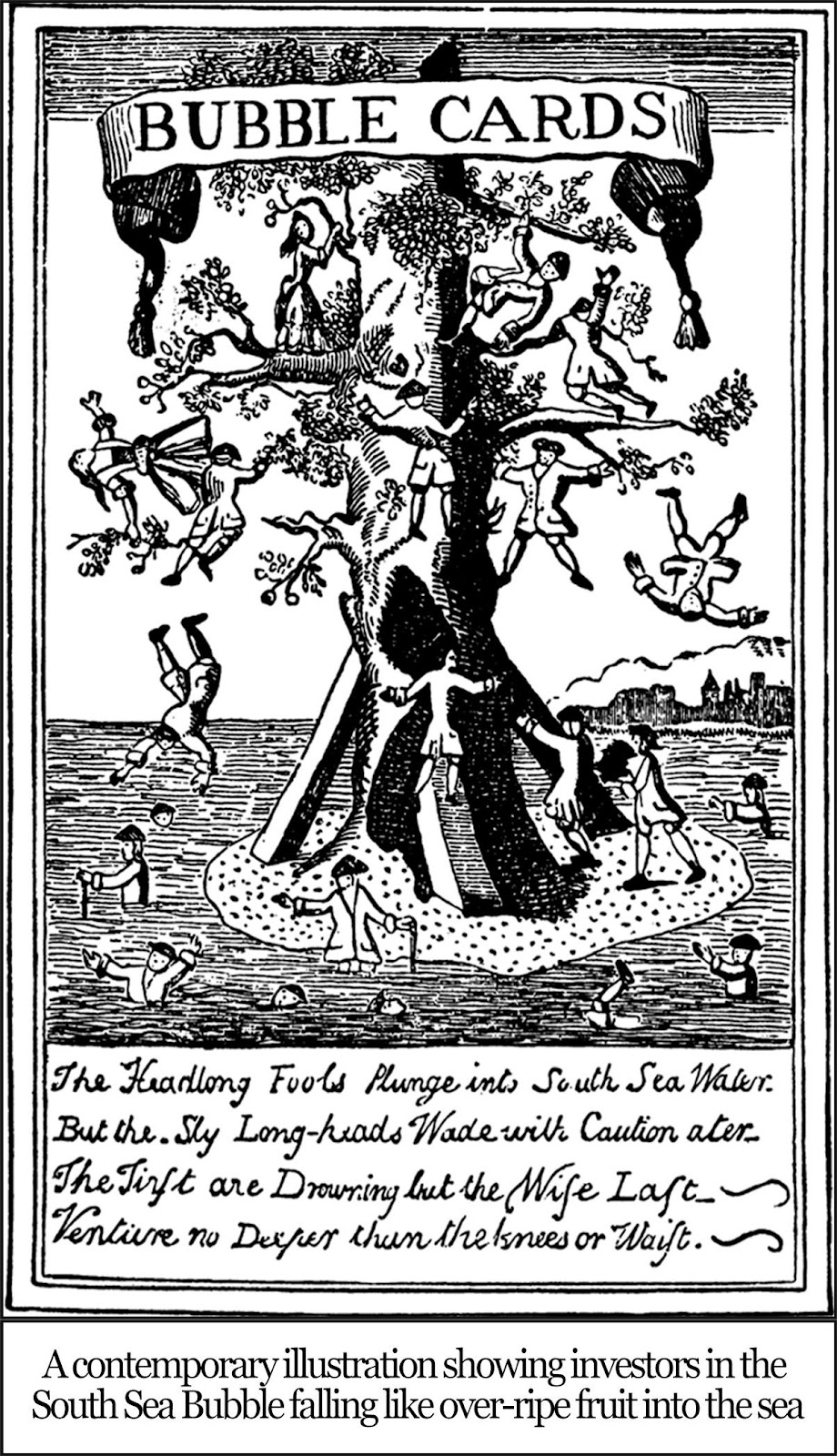
In the early eighteenth century, the Mississippi Company, owned by the French Royal Bank, offered investors the chance to make enormous rewards by buying shares in the new Louisiana Territories in America. The currency of France came to depend on the illusory trade of this company. Many French people lost everything they owned to the fraudulent Mississippi Company, and the French currency collapsed. At the same time, British investors were gulled into buying shares in the South Sea Bubble. The Panama Canal scam bankrupted investors in the Victorian era. Clever, wealthy and accomplished people lost everything. 

Dishonest dealings also featured in the Wall Street Crash that precipitated the Great Depression in the 1930s. Share prices were inflated in an ever-increasing spiral. With the Crash, the banks, which had poured investors’ money into this illusion, were forced to foreclose on mortgages; property prices collapsed. Later on, the same trickery happened on a grand scale with the banking crash of 2008. Bankers really believed that they could package up “sub-prime” debts and so give them value. So, property mortgages were offered to people who had no chance of making the payments. A picture containing text, book
Description automatically generated

Two economists were awarded Nobel prizes for “proving” that the economy would never collapse again. Trillions of dollars leached out of the economy because of this fanciful belief. Once the mind is convinced, it continues in the same direction – inertia, the commitment of consistency, bedevils human belief.

This highlights another innate problem of such scams: if other people flock to invest, we will be tempted to follow suit. This pattern of jumping on the bandwagon is sometimes called social proof or flocking.

Any examination of history shows that people can be brought to believe almost anything. At the extreme, this flocking behavior led Germans and Austrians to vote away the right to vote and put all power in the hands of a skinny, average-height, dark-haired Austrian, who proclaimed the era of the muscled, tall, blond, Aryan superman. Fifty million people died in the aftermath of this group delusion. Hitler refused to end the war, costing another million lives, because he believed that his followers deserved to die, because they had failed him. There is no safety in numbers when it comes to belief, and joining the crowd quite often leads to catastrophe.


scarcity and reciprocity

Throughout history, scarcity is another often-used aspect of confidence trickery. This can be the insistence that we “buy now” (or the computer will die) or the precious rarity of a “limited edition” of 10,000 coins, postage stamps or porcelain mice.

We also tend to feel obliged to give something in return. Charities will send a free ballpoint pen, a couple of cardboard table coasters, or some nametags along with a request for donations. This is the reciprocity principle. The supervisor who almost managed to scam me said he would fix my computer for free, and I should only pay if I was satisfied. The truth is that many people will pay up, after this seemingly friendly gesture, which is simply another way of building rapport. Then your computer will crash, and you’ll be forced to buy the “add-ons”.

Now we turn to the methods used by scammers, recruiters, radicalizers and pick-up artists to slide past our defenses and sell us anything from a time-share to a belief system.

recommended reading:

Robert Cialdini, Influence: The Psychology of Persuasion

Pratkanis and Shadel, Weapons of Frau

Jun 14, 2022

International Cultic Studies Association (ICSA) EVENT: The Occult in Cults: Toward a Better Understanding

The Occult in Cults: Toward a Better Understanding
International Cultic Studies Association (ICSA) EVENT: The Occult in Cults: Toward a Better Understanding
June 26, 2022, 3:00 PM - 3:50 PM, Track 3

Hidden knowledge, ancient wisdom revealed, mystical power, and secrecy all attend what we call the occulture that undergirds most religious movements, new and old. The speaker will reference the work of James C. N. Webb (1946-1980), a remarkable, young Scottish historian and biographer. whose concentrated on the history and effects of the occult in religion, politics, and personal growth. Human curiosity about things hidden from our senses and awareness has led our species to create plausibility narratives as disparate as astrology and astronomy to help us make sense of the world and ourselves. Harmful cults often bait recruits with the potential to realize and learn how to use occult powers.

Joseph Szimhart began research into cultic influence in 1980 after ending his two-year devotion to a large New Age sect. As a cult interventionist since the early 1980s, he has assisted in over five-hundred interventions in America and abroad. He was chairman of an interdenominational, cult information organization in New Mexico for seven years. Since 1998, he has worked as a mental health professional at a psychiatric emergency hospital. He maintains a cult informational website, lectures, consults for the media, and has published articles, book reviews, and papers related to the cult problem. His novel, Mushroom Satori: The Cult Diary, was released in 2013. His memoir of how he became a cult interventionist, Santa Fe, Bill Tate, and me, appeared in 2020. He received a Lifetime Achievement Award from International Cultic Studies Assoc. in 2016. He graduated from the University of Dayton and the Pennsylvania Academy of Fine Arts. He maintains an art career in his private studio.

Millions of Canadians believe in white replacement theory: poll

There is a plot to replace native-born Canadians with immigrants, more than one-third of respondents have told Abacus Data

Deborah Stokes
Montreal Gazette
June 13, 2022

New nationwide polling by Abacus Data finds millions of Canadians believe in conspiracy theories, and think there is a plot to replace native-born Canadians with immigrants.

The data found 44 per cent of Canadians believe “big events like wars, recessions and the outcomes of elections, are controlled by small groups of people working in secret against us.” The survey sample represents the equivalent of 13 million Canadians, Abacus said.

Nearly as many, or 41 per cent, agree “much of our lives are being controlled by plots hatched in secret places.”

More than one-third of Canadians believe in the so-called white replacement theory. Thirty-seven per cent of respondents, representing 11 million Canadians, agreed with the statement: “There is a group of people in this country who are trying to replace native-born Canadians with immigrants who agree with their political views.”

Abacus surveyed 1,500 randomly selected, nationally representative Canadian adults from May 20 to 24, as part of a series called “Trust & Facts: What Canadians Believe.” Respondents were also asked about specific conspiracy theories.

One in five Canadians, or 20 per cent of those surveyed, believe it is definitely or probably true that the World Economic Forum (WEF) is “a group of global elites with a secretive strategy to impose their ideas on the world.”

A further 13 per cent believe it is definitely or probably true that Microsoft founder Bill Gates is using microchips to track people and affect human behaviour.

The survey also looked at demographic and political leanings.

It found that of the 44 per cent of the population who believe in conspiracy theories, the views depended on party affiliations. Seventy-two per cent of supporters of the People’s Party of Canada believed in conspiracy theories compared with 28 per cent of PPC supporters who did not. Among Conservative Party of Canada supporters, belief was split 50 per cent for and 50 per cent against conspiracy theories. Among Liberal supporters, 31 per cent believed in conspiracy theories versus 69 per cent against. And 30 per cent of NDP voters believed the theories versus 70 per cent who did not.

Of those who believe in the white replacement theory, 49 per cent identified as having views on the “right”; 41 per cent said their views were “centre”; and 21 per cent had “left” views.

Among those who believed the WEF conspiracy theory was definitely or probably true, 32 per cent have views on the “right”; 20 per cent have centrist views; and 15 per cent have “left” views.

The survey also found a strong correlation among those who believe in conspiracy theories and a distrust of the media and government.

Among those who believed in the WEF conspiracy theory, 42 per cent said they don’t trust media; 36 per cent said they don’t trust government; and 51 per cent said they did not have COVID shots.

The margin of error for a comparable probability-based random sample of the same size is +/- 2.53%, 19 times out of 20.

The data were weighted according to census data to ensure that the sample matched Canada’s population according to age, gender, educational attainment and region.

https://montrealgazette.com/news/canada/millions-of-canadians-believe-in-white-replacement-theory-poll

If your company seems like a cult, it might be

Two psychiatrists warn about the risks of abusive behavior behind practices meant to strengthen employee loyalty


DANIEL MEDIAVILLA
EL PAÍS in English
JUNE 13, 2022

“Well, you know that my wife and I don’t have children. And we don’t need them. You are our children.” The phrase by Blanco, the charismatic boss played by Javier Bardem in The Good Boss during a speech to his employees, may sound familiar. It’s a common idea in small and medium-sized companies: the business is a family where everyone belongs; everyone has a responsibility to one another, because the wellbeing of the father and the children are intertwined. In larger companies, participating in a well-known organization with global impact can reinforce employees’ sense of identity. While supervisors may be drawn to such strategies to increase workplace motivation, some psychiatrists warn that techniques meant to strengthen the bonds between workers and their companies can trigger pathological behaviors.

In 1953, the psychiatrist Robert Lifton established a series of criteria for institutions that exercise cult-like control over individuals in order to ensure they fit perfectly into the group. “One of them is control of the environment. The group controls who the person can and cannot relate to, trying to alienate them from family and friends. This is something that happens, to a certain extent, in the Big Four [the large auditing and consulting multinationals known for their long working hours]. Because of the number of hours you have to put in, the worker’s main relationship becomes the one they have with work,” explains Íñigo Rubio, president of the Ibero-American Association for the Investigation of Psychological Abuse (AIIAP).

Rubio mentions another common trait between such overly demanding companies and cults: the demand for purity. “You are always asked to give more, and you experience a continuous feeling of guilt for not doing enough,” he says. “As you climb the hierarchy of the organization, you have more power, but you become more and more trapped, all within a discourse that promises salvation and a great job in exchange for years of complete dedication,” he explains. Workers’ exploitation by companies was once much easier to discern. Now, a discourse that sells one’s belonging to the company as a form of personal development, labor relationships are murkier. In an interview published by this newspaper, the South Korean philosopher Byung-Chul Han referred to the manipulation that can encourage abusive behavior by some companies: “We live with the anguish of not always doing everything we can. Now one exploits oneself by imagining that one is self-actualizing.”

You’re working for a salary, not joining the military


Churches, like other large organizations that want to promote their members’ closeness, are well aware of the value of rituals in promoting group cohesion. Some companies resort to the same practices. In the 1930s, in the US, IBM workers received a book with songs praising the company and its leader, Thomas Watson. Some songs can still be heard on their own website. IBM has since abandoned that tradition, but Walmart employees still do what is known as the Walmart cheer, a chant that emphasizes that the customer always comes first.

Miguel Perlado, a psychologist and expert in cults, works with people who are involved in abusive group dynamics in non-cult contexts. “I have worked with cults, but also in the context of theater or music, where there may be dynamics of abuse of power, unequal relationships that serve to control the individual or that favor abuse of women,” he explains. He has also consulted for companies seeking to improve their labor practices. “There are business contexts in which practices that we otherwise consider abusive are idealized, because they monopolize the lives of workers and leave them no space for their personal lives. Within the organization, they are a sign of involvement and dedication,” he says.

The psychologist warns that the lines between motivational practices and abuse can be blurry. “Mercadona and Lidl, in the first stages of recruitment, carry out a motivational activity to promote loyalty and identification with the company,” he says. “You have to pay attention and respect sensitive areas, because these motivational activities are aimed at people’s identity. They are asked to reframe their identities to include the company,” he says. “Our task is to provide people with discernment criteria to see if they are overcommitting themselves or if the company demands too much,” Perlado adds. “We all have a need to belong, and in our cultural environment that can be provided by the company, but you go to a company to work for a salary, not to join the military.’

But not everyone experiences the same business culture in the same way. Amazon’s 14 leadership principles focus on the customer and demand a high level of collective success, sometimes at the expense of workers, drawing intense criticism of the company. As a result of that criticism, shortly before leaving the company, Jeff Bezos added two more principles, one of which focused on being the best employer on Earth. One former employee of the company, who does not want to give their name, believes that “corporate principles are not a way to reprogram people, but to organize them when you have so many people from so many different countries and cultures working together.” “Everyone learns to talk about their work through those principles, and it makes it quite reasonable to talk to an Indian, a Japanese or a Russian. You speak from the culture of Amazon and not from your personal culture, and that makes it possible to work in a transnational company,” he says.

“The fact that a group may have cult-like characteristics or coercive behavior does not imply that all members of the group are unhappy or that they suffer or exercise the same level of abuse,” says Rubio. “As Eric Fromm explains in The Fear of Freedom, during the 20th century freedoms and rights have been gained, but that freedom can sometimes be distressing, because it makes you more responsible for your life and your decisions. There are people who may want to give up their freedom in exchange for greater security or to feel part of something bigger. Many abusive behaviors are sold in a positive light, as a way to get workers to know each other better and to be more attached to the company and the leader. “Just like in a romantic relationship, a relationship of abuse or excessive control can be approached from another point of view, as something beautiful, as two inseparable people. Abusive behavior in business, or even in a cult, does not start with malicious intent. People, at first, believe in their mission. Cult leaders often believe the story they are telling and have good intentions,” Rubio says. Being aware that the risk exists, and identifying it when it becomes a reality, can prevent falling into behavior more typical of a cult than of a job.

https://english.elpais.com/society/2022-06-13/if-your-company-seems-like-a-cult-it-might-be.html