Showing posts with label  Charles Manson. Show all posts

Feb 20, 2024

Mythologizing Manson: The Original Cult Leader

CBC
February 19, 2024

Play Episode 47:45

In 1969, Charles Manson unleashed his cult of murderous hippies onto the LA Hills. Decades later, it’s a saga that continues to inspire books, movies and memes. But how well do we really know the story that led to seven infamous murders? 

In Helter Skelter: An American Myth, documentarians Leslie Chilcott and Eli Frankel, deliver the most comprehensive account of the Manson family cult to date. They reveal what really motivated Charles Manson and bring this larger-than-life story back to reality.

https://www.cbc.ca/listen/cbc-podcasts/1399-crime-story/episode/16043382-mythologizing-manson-the-original-cult-leader

Jul 12, 2023

Charles Manson: Who was the infamous cult leader and what did he do?

Notorious criminal whose name became synonymous with violence and madness

Samuel Osborne, Joe Sommerlad
Independent
July 12, 2023

“Family” of young acolytes in Los Angeles during the momentous summer of 1969, died aged 83 on 19 November 2017 after suffering a cardiac arrest arising from colon cancer but the legacy of his crimes continues to play out.

Earlier this year, Linda Kasabian, the gang’s getaway driver who became a key prosecution witness at Manson’s trial in 1970-71, passed away in Tacoma, Washington, aged 73, going to her grave claiming to a feel a unique sense of guilt about her notorious past.

On Tuesday, another Manson Family member, Leslie Van Houten, who had spent 53 years behind bars for her part in the murders of Leno and Rosemary LaBianca was released from prison after California governor Gavin Newsom dropped his opposition to a state appeals court ruling that recommended her parole, against the wishes of surviving members of her victim’s families.

Those developments followed a revival in interest in the Manson Family murders in the wake of Charles Manson’s death at Kern County Hospital in Bakersfield, California, in part thanks to the true crime podcast boom and the popularity of the films Charlie Says (2018) in which Matt Smith played the cult leader and Quentin Tarantino’s revisionist take on the killings Once Upon a Time in Hollywood (2019), in which he appears only briefly, played by Damon Herriman.

At the time of his death, Manson had been serving a life sentence at the nearby Corcoran State Prison for ordering the murders of nine people, most famously the actress Sharon Tate, partner of the Polish film director Roman Polanski, who was pregnant at the time.

RECOMMENDED

· The Manson Family: Who were the key players and victims in cult leader Charles Manson’s serial killings?


· Charles Manson follower Leslie Van Houten released on parole

· Linda Kasabian: Manson family member dies at 73

Who was he?

Born Charles Milles Maddox on 12 November 1934, in Cincinnati, Ohio, to a 16-year-old mother, Manson spent much of his adolescence shuttled between relatives and juvenile detention halls.

By age 13, he had been convicted of armed robbery.

By the advent of the Sexual Revolution of the 1960s, the charismatic, guru-like Manson, a frustrated aspiring pop star who had befriended Beach Boy Dennis Wilson, had surrounded himself with a collection of runaways and other lost souls, whom he duly sent out to butcher LA’s rich and famous in what prosecutors said was a bid to trigger a race war — an idea he said he got from a twisted interpretation of the Beatles song “Helter Skelter” from The White Album.

The slayings that took place across the “two nights of mayhem” in August 1969 horrified the world and, together with the deadly violence that erupted later during a Rolling Stones concert at California’s Altamont Speedway, exposed the dangerous, drugged-out underside of the counterculture movement and seemed to mark the sad demise of the era of “peace and love” once and for all.

Despite the overwhelming evidence against him, Manson maintained during his tumultuous trial that he was innocent and that society itself was guilty.

“These children that come at you with knives, they are your children. You taught them; I didn’t teach them. I just tried to help them stand up,” he said in one courtroom monologue.

How did he gain his notoriety?

The Manson Family, as his followers were known, slaughtered five of its victims on 9 August 1969 after invading Tate's home during a dinner party.

The victims where the actress herself, who was eight months pregnant at the time, coffee company heiress Abigail Folger, celebrity hairdresser Jay Sebring, Polish movie director Voityck Frykowski and Steven Parent, a friend of the estate’s caretaker.

Polanski, at the time known as the celebrated director of Knife in the Water (1962), Repulsion (1965) and Rosemary’s Baby (1968), was out of the country at the time.

The next night, a wealthy grocer and his wife, Leno and Rosemary LaBianca, were stabbed to death in their home across town.

The killers scrawled phrases such as “Pigs” and “Healter Skelter” [sic] in blood at the crime scenes.

Three months later, a Manson follower was jailed on an unrelated charge and told a cellmate about the bloodbath, leading to the cult leader’s arrest.

Manson was also later convicted of the slayings of musician Gary Hinman and stuntman Donald “Shorty” Shea.

Why did he carve an ‘X’ into his forehead?

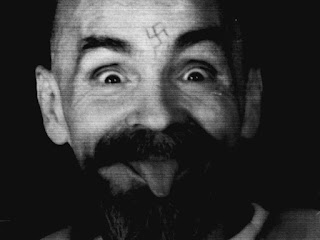
Denied his request to represent himself during his 9 ½ month trial, Manson showed up in court with an “X” carved into his forehead and would later amend it to form a Nazi swastika.

Co-defendants Susan Atkins, Van Houten and Patricia Krenwinkel subsequently cut “X’s” into their own foreheads, shaved their scalps, sang Manson-written songs and giggled throughout their chilling testimony.

His trial was almost scuttled when then-US president Richard Nixon said Manson was “guilty, directly or indirectly”.

Arguing that he had been unfairly pre-judged, Manson grabbed a newspaper and held up the frontpage headline for jurors to read: “Manson Guilty, Nixon Declares.”

Attorneys demanded a mistrial but were turned down.

At one point, Manson tried to leap over the defence table at the judge, snarling: “In the name of Christian justice, someone should cut your head off.” The judge began carrying a gun thereafter.

How long was he in prison?

After the trial, which lasted nearly a year, Manson and three of his followers – Atkins, Krenwinkel and Van Houten – were found guilty of murder and sentenced to death.

Another defendant, Charles “Tex” Watson, was convicted later. All were spared execution and given life sentences after the California Supreme Court struck down the death penalty in 1972.

Over the decades, Manson and his followers appeared sporadically at parole hearings, where their bids for freedom were repeatedly rejected. The women suggested they had been rehabilitated but Manson himself stopped attending after 1997, saying prison had become his home.

What are some of his most chilling quotes?

One of Manson’s most hair-raising remarks comes from an interview in which he was asked to describe himself in one sentence.

Leaping forward in his chair, the cult leader giggled, arched his eyebrows and pulled faces like a goblin before responding: “Nobody.”

After taking a pause for dramatic effect, he continued: “I’m nobody. I’m a tramp, a bum, a hobo. I’m a boxcar and jug o’ wine. And a straight razor, if you get too close to me.”

After serving a 10-year sentence for cheque forgery in the early 60s, he was said to have pleaded with authorities not to release him, because he considered prison home.

“My father is the jailhouse. My father is your system,” he would later say in a monologue on the witness stand.

“I am only what you made me. I am only a reflection of you.”

Was he any relation to Marilyn Manson?

Brian Hugh Warner, the musician better known for his controversial stage personality under the name Marilyn Manson, formed his moniker by juxtaposing two American pop culture icons: Charles Manson and Marilyn Monroe.

Beyond adopting the name as a shock tactic, there is no further connection between the two.

Similarly, Leicester indie band Kasabian took its name from the Manson Family member of that name.

Additional reporting by agencies


https://www.independent.co.uk/news/world/americas/crime/charles-manson-serial-killer-cult-leader-family-crimes-victims-dead-death-sharon-tate-prisoner-california-a8064721.html


Charles Manson follower Leslie Van Houten released from prison

CHRISTOPHER WEBER Associated Press
Court TV
July 11, 2023

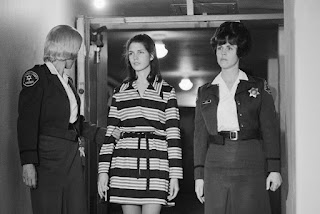
LOS ANGELES (AP) — Charles Manson follower Leslie Van Houten, a former homecoming princess who at 19 helped carry out the shocking killings of a wealthy Los Angeles couple at the direction of the violent and manipulative cult leader, walked out of a California prison Tuesday after serving more than 50 years of a life sentence.

Van Houten, now 73, “was released to parole supervision,” the California Department of Corrections and Rehabilitation said in a statement.

Court TV Trial Archives: Manson Family Parole Hearings

She left the California Institution for Women in Corona, east of Los Angeles, in the early morning hours and was driven to transitional housing, her attorney Nancy Tetreault said.

“She’s still trying to get used to the idea that this real,” Tetreault told The Associated Press.

Days earlier Gov. Gavin Newsom announced he would not fight a state appeals court ruling that Van Houten should be granted parole. He said it was unlikely the state Supreme Court would consider an appeal.

The 1969 slayings and subsequent trials captivated the nation during an era of strife marked by the Vietnam War, the Civil Rights Movement and the assassinations of Martin Luther King, Jr. and Robert F. Kennedy.

At a parole hearing in 2016, Van Houten said the murders were the start of what Manson believed was a coming race war he called “Helter Skelter,” after the Beatles song. He had his followers prepare to fight and learn to can food so they could go underground and live in a hole in the desert, she added.

Van Houten was sentenced to death in 1971 for helping Manson’s group carry out the killings of Leno LaBianca, a grocer in Los Angeles, and his wife, Rosemary. Her sentence was later commuted to life in prison when the California Supreme Court overturned the state’s death penalty law in 1972. Voters and state lawmakers eventually reinstated the death penalty, but it did not apply retroactively.

The LaBiancas were killed in their home, and their blood was smeared on the walls afterward. Van Houten later described holding Rosemary LaBianca down with a pillowcase over her head as others stabbed her. Then, ordered by Manson follower Charles “Tex” Watson to “do something,” Van Houten said, she picked up a knife and stabbed the woman more than a dozen times.

The slayings happened the day after Manson followers killed actress Sharon Tate and four others. Van Houten did not participate in the Tate killings.

She is the first Manson follower who took part in the killings to walk free.

Van Houten is expected to spend about a year at a halfway house, adjusting to a world changed immeasurably by technology in the past half-century.

“She has to learn to use to use the internet. She has to learn to buy things without cash,” Tetreault said. “It’s a very different world than when she went in.”

Van Houten, who will likely be on parole for about three years, hopes to get a job as soon as possible, Tetreault said. She earned a bachelor’s and a master’s degree in counseling while in prison and worked as a tutor for other incarcerated people.

Van Houten was found suitable for parole after a July 2020 hearing, but her release was blocked by Newsom, who maintained she was still a threat to society.

She filed an appeal with a trial court, which rejected it, and then turned to the appellate courts. The Second District Court of Appeal in May reversed Newsom’s rejection of her parole in a 2-1 ruling, writing that there was “no evidence to support the Governor’s conclusions” about Van Houten’s fitness for release.

The judges took issue with Newsom’s claim that Van Houten did not adequately explain how she fell under Manson’s influence. At her parole hearings, she discussed at length how her parents’ divorce, her drug and alcohol abuse and a forced illegal abortion led her down a path that left her vulnerable.

They also disputed Newsom’s suggestion that her past violent acts were a cause for future concern were she to be released.

“Van Houten has shown extraordinary rehabilitative efforts, insight, remorse, realistic parole plans, support from family and friends, favorable institutional reports, and, at the time of the Governor’s decision, had received four successive grants of parole,” the judges said. They also noted her “many years” of therapy and substance abuse counseling.

The dissenting judge who sided with Newsom said there was some evidence Van Houten lacked insight into the heinous killings.

Newsom was disappointed by the appeals court decision, his office said.

“More than 50 years after the Manson cult committed these brutal killings, the victims’ families still feel the impact,” the governor’s office said in a July 7 statement.

In all, Van Houten had been recommended for parole five times since 2016. All of those recommendations were denied by either Newsom or former Gov. Jerry Brown.

Cory LaBianca, Leno LaBianca’s daughter, said last week that her family was heartbroken by the possibility that Van Houten could be released.

Anthony DiMaria, whose uncle Jay Sebring was killed along with Tate, said Tuesday her release was devastating to all the victims’ families, who “collectively suffer the pain and loss” caused by the Manson cult.

Van Houten, a former high school cheerleader and homecoming princess, saw her life spiral out of control at 14 following her parents’ divorce. She turned to drugs and became pregnant but said her mother forced her to abort the fetus and bury it in the family’s backyard.

Van Houten became the youngest of Manson’s followers when they met at an old movie ranch on the outskirts of Los Angeles where he had established his so-called family of followers.

Manson died in prison in 2017 of natural causes at age 83 after nearly half a century behind bars. Watson and fellow Manson follower Patricia Krenwinkel have each been denied parole multiple times. Krenwinkel was recommended for parole last year, but that was rejected by Newsom. Another follower, Susan Atkins, died in prison in 2009.


https://www.courttv.com/news/leslie-van-houten-charles-manson-cult-follower-released-from-prison/

Feb 10, 2021

How Charles Manson's Family Has Dealt With the Cult Leader's Murderous Legacy

Charles Manson, main defendant in the Sharon Tate and LaBianca murder trial, pictured on arrival in court in Los Angeles, California on August 14, 1970. Photo: Rolls Press/Popperfoto via Getty Images/Getty Images)

CRYSTAL PONTI
A&E
January 25, 2021

Charles Manson, the notorious leader of the “Manson Family” cult, wielded a manipulative combination of charisma and power. On August 9, 1969, a group of his most passionate followers, under orders from Manson, brutally slaughtered pregnant actress Sharon Tate and four visitors (Jay Sebring, Abigail Folger, Wojciech Frykowski and Steven Parent) at her home in Beverly Hills, California. The cult members, acting on Manson’s instructions, claimed four other victims (Gary Allen Hinman, Leno and Rosemary LaBianca and Donald Shea), a killing spree that included ritual mutilations and stabbings. A jury convicted Manson and several of his followers of first-degree murder on January 25, 1971.

While Manson’s cult was often described as his “family,” the master manipulator also had biological kin who grappled with his murderous aftermath. A&E Real Crime spoke with two Manson experts about Manson’s actions and how they affected his “families”: Ivor Davis, author of Manson Exposed: A Reporter’s 50-Year Journey into Madness and Murder and Deborah Herman, who co-wrote the book Member of the Family: My Story of Charles Manson, Life Inside His Cult, and the Darkness That Ended the Sixties with Dianne Lake, the youngest Manson cult member.


After Manson was convicted of murder, and details of his twisted legacy emerged, how did the cult leader’s biological family deal with the aftermath?

Deborah Herman:  Dianne and I met his biological grandson Jason Freeman when he was searching for answers. He was being told by many of Manson’s later acolytes that his grandfather wasn’t such a bad guy. They told him that his grandfather was framed and never killed anybody.


It was sad because Manson was truly the puppet master. When push came to shove, he was only out for himself. He was able to be a chameleon for whatever he thought people needed and, in turn, they really believed he loved them. So, even though he was able to mimic feelings of love and dedication, whether those were real is very questionable. I believe Manson had acolytes and people he manipulated, but no true family.


Ivor Davis: After Manson died, an unseemly squabble over his body, possessions and documents unfolded in California courts. All the supposed offspring of Manson, and a few other odds and sods, claimed his possessions. Finally, a court ruled that Jason Freeman, his grandson, [should have the rights to Manson’s remains]. Freeman donated them to a museum in Las Vegas, but the estate remains in limbo.


Manson’s mother, Kathleen Maddox, passed away a couple years after the conviction. Did she know what was going on?

Herman: I don’t think so. Other Manson family members told me that Kathleen was a horrible mother. That was the perception among the family members. They were very sympathetic to what Manson lacked as a child. He made some of them very aware that he wasn’t loved. It’s common knowledge and supported by research that his mother basically abandoned him for a man. People look at that as the primary wound that may have caused him to become the person he became.


Davis: His mother, Kathleen, managed to stay out of sight. She didn’t attend the trial. The only interview she conducted was with the Los Angeles Times on January 26, 1971, a day after her son’s conviction. In the interview, she mentioned that Manson was not neglected, which may have been a mother’s defense mechanism. She didn’t want to be pictured as a negligent mother, but she ended up doing petty crimes which led to more serious crimes. So, she was in jail while Manson was growing up.


It is believed Manson had at least three sons, but no daughters. What can you tell us about Manson’s biological children, including Jay White (born Charles Manson, Jr.), whom he fathered in 1956 with his first wife Rosalie Jean Willis, Charles Luther Manson, whom he likely fathered in the early 1960s with his second wife Leona Rae ‘Candy’ Stevens, and Michael Brunner, whom he fathered in 1968 with his follower Mary Brunner? And, what about his alleged grandson Jason Freeman?

Herman: From what I know, Charles Manson, Jr. (Jay White), the father of Jason Freeman, committed suicide [in 1993]. Jason was raised by his own mother and is a wonderful man. He’s honest, emotional and very caring but, unfortunately, he’s got this legacy. All he wanted in his search for answers was some dignity for himself and his grandfather.


What’s ironic in all this is that Manson wanted as many children as possible. He wanted to populate the earth with these wonderful and special people. It’s strange that he didn’t impregnate more women. Dianne doesn’t know why she never got pregnant, except that he was also keeping [his followers] starved. Manson would tell them, ‘You don’t need to eat. It’s all an illusion.’ It was hard for them to keep the coffers full, so they mostly survived on candy. As a result, they were undernourished. So, it’s possible that’s why more of the Manson girls did not become pregnant.


Davis: There were several Manson siblings. Charles Manson, Jr. changed his name, but eventually took his own life. He was unable to cope with his heritage. Follower Mary Brunner gave birth to Manson’s son Michael. He ended up being adopted by his grandparents and kept the name Brunner.


[Editor’s Note: Neither expert provided details on Manson’s alleged second son Charles Luther Manson. Little is known about Charles Luther, including his whereabouts. Some reports claim that he changed his name.]


Did any of Charles Manson’s biological family members have anything to do with him? Did Manson keep in contact with or attempt to reach any of them through letters or any other means?

Herman: Whether or not he had contact with his biological family members, at the very least, they were not part of anything that happened. The ‘Manson Family’ [cult] was so insulated and off the radar, they were in their own little world. They only had each other, and Manson had himself. It’s sort of like with domestic violence when you have a situation where a spouse is an abuser. The first thing they do is systematically isolate their victim from everything else they know. That’s really what Manson was doing with his followers. They were completely separated from anyone else.

Davis: Jason never met his grandfather, but he had phone conversations with Manson. In fact, he recorded many of their conversations and used them in various ways. Michael also said he had talked to his father, but never met him in person. The bizarre thing about the “family” was the fact that when Manson was in jail, he was moved around from prison to prison. It started off in San Quentin. The only people who stuck with him were several of his girls—Squeaky Fromme and one or two others—who actually lived in apartments close to the jail so they could visit him.

How have Manson’s followers coped with his legacy and the aftermath of this horrific chapter?

Herman: For Dianne Lake, the process of writing the book was extremely healing. She’s one of my heroes because she allowed me to take her into the depths of her trauma. When I first met her, and we were first starting our interviewing, she was detached and didn’t understand the implications of the things that had happened. By the end, when we had no more questions to discuss, it was as if this cloud had lifted and she was able to look at it in a way where she could see that she was a victim.

Many of the “family” members were holding onto guilt even though they were not there for the actual crimes. It was a form of survivor’s guilt. Dianne didn’t even tell anyone who she was for 47 years. She only told her husband and didn’t tell others or her children until she was outed. Even so, for Dianne, and many of these women who have worked through their trauma, there’s still an element of programming throughout their lives. For any cult survivor, there’s always going to be that little shred of doubt. Deprogramming is a lifelong process, so they’re always going to question their ability to sense reality. Some members have chosen to stay underground. They don’t want to talk about it, and, as a result, will likely never heal.

https://www.aetv.com/real-crime/charles-mansons-family


Sep 10, 2019

CultNEWS101 Articles: 9/10/2019

NXIVMCharles Manson, Multi-Level Marketing Schemes, Transcendental Meditation (TM) Quiet Time Program 
"The state Health Department has revoked the medical license of a physician who conducted human brain-activity experiments and other unsanctioned research on people associated with the NXIVM corporation.

Brandon B. Porter, who has been involved with NXIVM for many years, was served with 25 misconduct charges by the state Health Department's Office of Professional Medical Conduct in April 2018, a month after NXIVM leader Keith Raniere was arrested and charged with multiple federal crimes, including sex trafficking. The board that reviewed his case sustained 24 of the charges.

In June, at the end of a two-month trial, a federal jury in Brooklyn convicted Raniere, 58, of all the charges he faced, including racketeering acts of identity theft, obstruction of justice, wire and visa fraud, forced labor, human trafficking, money laundering, child exploitation and possession of child pornography.

Porter, 45, who attended medical school at the University of Iowa, has been living in a Waterford residence owned by NXIVM associates and working in a private sector job. His license to practice medicine was suspended when he was served with the misconduct charges last year."

"Fifty years after the world first heard Charles Manson's name, the infamous cult leader is seemingly everywhere, again. Season 2 of Mindhunter has just been released, and what would a show about profiling serial killers be without making mention of the Manson Family figurehead. Ever since the horrific Manson Murders involving seven victims – carried out at the behest of Manson – in Southern California during the summer of 1969, Hollywood has attempted to capture Manson's madness for both the big and small screen.

The first season of Mindhunter was praised for its chilling casting of Ed Kemper (Cameron Britton) as it delved into some of the first investigations into serial killers. In fact, FBI agent Holden Ford only ended up meeting Kemper because he was denied an interview with Manson who was at the top of Ford's list of murderers he wanted to interview. Most of season 2 is focused around the Atlanta Child Murders that took place from 1979-1981, which means Manson would have been anywhere between six to 10 years into a life sentence in prison at the time.
With the anniversary of the Tate-LaBianca murders, a surge of portrayals of Manson have been released in the past couple years culminating in a series of projects put out just this summer including Charlie Says, Once Upon A Time In... Hollywood, and now Mindhunter."

"Selling products from home - a cult? Is it possible that Multi-Level Marketing schemes selling products such as make-up, vitamins, cleaning products, etc, could actually be alarmingly similar in structure to a religious cult?

ALEXANDRA STEIN, Ph.D, is a writer and educator specializing in the social psychology of cults and other dangerous social relationships.

MARK from TalkBeliefs chats with Alexandra on MLMs, how they work and why the way they are organized are frighteningly similar to the coercive structure of cults."

"A recent article in the New York Post mentions that the Transcendental Meditation (TM) Quiet Time Program will soon be taught in New York schools.

A highly critical article on TM's Quiet Time program in the Chicago Public Schools (CPS) recently appeared in the Chicago Tribune.

The story reports on a presentation to the CPS by a former staff member at Bogan High School in Chicago, who interviewed 60 students enrolled in Bogan's Quiet Time program. A 14-year-old student also addressed the Board about her experiences in the program. There are also allegations of coercion, inducements and 'bribe rewards' offered to students who wanted to quit the program.

As is made clear in the presentations, TM is a Hindu-based religious practice. Along with individual 'mantras,' which are the names of Hindu deities, Quiet Time requires each student to participate in a Hindu ceremony known as a 'puja.' which TM describes (incorrectly) as a secular ceremony.

The David Lynch Foundation wants a million public school children in its Quiet Time program, despite two court rulings that TM programs in public schools violates the Establishment Clause of the First Amendment. (Malnak v. Yogi, 592 F.2d 1977). When TM lost the case, it appealed the decision to a higher court and lost again. The puja was one of the main reasons the Court cited in its ruling:

Although defendants have submitted well over 1500 pages of briefs, affidavits, and deposition testimony in opposing plaintiff's motion for summary judgment, defendants have failed to raise the slightest doubt as to the facts or as to the religious nature of the teachings of the Science of Creative Intelligence [TM's Hindu underpinnings] and the puja. The teaching of the SCI/TM course in New Jersey public high schools violates the establishment clause of the first amendment, and its teaching must be enjoined.

The website: (TMDeception.com) has a section on TM in public schools. Of particular note is a letter by a parent whose child was a student in a Quiet Time school. She describes how her concerns about her son's exposure to Hinduism were met with a threatening letter from a TM attorney. There is a second letter from a parent in a California high school who was instrumental in turning down a $175,000 Quiet Time grant from the Lynch Foundation. There are also video clips that demonstrate that the upper echelons of TM share many aspects of cultic organizations."

News, Education, Intervention, Recovery


CultMediation.com   

Intervention101.com to help families and friends understand and effectively respond to the complexity of a loved one's cult involvement.

CultRecovery101.com assists group members and their families make the sometimes difficult transition from coercion to renewed individual choice.

CultNEWS101.com news, links, resources.

Facebook

Flipboard

Twitter

Instagram

Cults101.org resources about cults, cultic groups, abusive relationships, movements, religions, political organizations and related topics.


Selection of articles for CultNEWS101 does not mean that Patrick Ryan or Joseph Kelly agree with the content. We provide information from many points of view in order to promote dialogue.