Showing posts with label Film. Show all posts

Oct 23, 2023

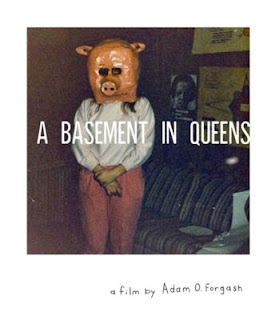
2023 Big Apple Film Festival: “A Basement in Queens”

2023 Big Apple Film Festival: “A Basement in Queens”, 77 minutes | United States | 2023


Cinema Village
22 E 12th St, New York, NY 10003
November 5, 2023, 7:30 - 9:00 PM EST

“A Cautionary Tale for the Parents of Troubled Teens”

This film is a personal journey that pulls back the curtain on the secretive and often abusive world of the troubled teen industry (TTI), that preyed on teens and their unwitting parents, often leading to lifelong psychological damage, PTSD and hosts of other issues that changed their lives forever.

In the 1980s, Ronald Reagan’s “War on Drugs” was in full swing, and therapeutic communities (TCs) were an essential tool in that arsenal. Trouble teens across the country found themselves swept up on the frontlines of that war. Out of desperation, many parents turned to these troubled teen centers, many of which used hardcore rehabilitative practices and bizarre behavior modification.

Adam’s story starts in 1982 at 14 years old in Queens, NY, at the now defunct Aurora Concept Inc, an adult drug rehabilitation center and therapeutic community. Aurora built its therapeutic practices on post WWII military behavior modification experiments and the infamous Synanon - rehab center and cult. Out of those experiments evolved the drug rehab therapies that even today inform addiction counseling programs worldwide.

Adam has worked for 14 years to bring this story to light. He interviews survivors, parents, historians, and experts from the last five decades to expose the inner workings of a troubled teen industry that endures today.

Website

Cinema Village
22 E 12th St, New York, NY 10003
November 5, 2023, 7:30 - 9:00 PM EST

https://bigapplefilmfestival2023.eventive.org/films/652d8ccb46f42500ba292465

Sep 8, 2021

Venice: ‘System Crasher’ Producer Backs Climate Crisis Comedy ‘Our House Is Burning’

Berlin-based Weydemann Bros. is teaming with writer Alexander Dydyna ('Young Goethe in Love') and director David Sieveking ('David Wants to Fly') for the film about a family whose carbon footprint is challenged by their activist daughter.

SCOTT ROXBOROUGH
Hollywood Reporter
SEPTEMBER 2, 2021

Weydemann Bros., the Berlin- based production house behind 2019 sleeper hit System Crasher and this year’s Locarno winner No One’s With the Calves, has teamed up with writer Alexander Dydyna (Young Goethe in Love) and director David Sieveking (David Wants to Fly) for its next project, a climate crisis comedy called Unser Zuhause Brennt (Our House Is Burning).

The plot imagines a comfortable suburban family whose lifestyle, and carbon footprint, are challenged by their daughter Zora, a Greta Thunberg-like climate activist. But her efforts to get everyone on board the mission to save the planet stirs up old conflicts and ends up triggering an anti-climate protection movement.

Dydyna’s writing credits include the 2018 hit What About Adolf?, a German adaptation of the 2012 French comedy What’s in a Name?, and the 2019 musical comedy I’ve Never Been to New York. Sieveking is best known for his documentaries, including Forget Me Not (2012), a portrait of his mother’s struggle with Alzheimer’s, and David Wants to Fly (2010), in which, inspired by tran- scendental meditation proselytizer David Lynch, he tracks down TM guru the Maharishi Mahesh Yogi.

Weydemann has several projects set to begin shooting next year, including the literary adaptation Milchzähne, based on the novel by Helene Bukowski; the 30-somethings love story Falling Into Places; and the toxic family drama Frisch.

This story first appeared in The Hollywood Reporter’s Sept. 2 daily issue at the Venice International Film Festival.

Jul 20, 2021

Rebirth


Netflix
July 11, 2021

WHAT SEPARATES A CULT from other groups of passionate, like-minded people coming together in service of shared beliefs? Religions, political groups, multi-level marketing businesses, and self-help movements all fit the bill. The most common answers to this question are probably “a charismatic leader,” “no free will,” or “the inability to leave whenever you want.”

This 2016 film proves how dangerous a cult can be — all while making a point to avoid these traditional cult calling cards.

Rebirth is a 2016 Netflix original psychological drama written and directed by Karl Mueller. It stars criminally overlooked actor Fran Kranz as Kyle, a loving husband and father who uses his English degree to write social media posts for a bank. One day, an old friend tells him about a unique self-help weekend retreat known only as “Rebirth.”

Begrudgingly, Kyle agrees to attend, launching him headfirst into an experience unlike any other. At first, he’s in a hotel room and must follow clues, escape-room style, to find his way onto a bus that will take him to the actual retreat. Once he gets there, the vibe is like a rave for dads: just a bunch of men in their thirties, thrashing and cheering and chanting.

Get up. Go to work. Come home, dinner, bed, do it all again. That's life, every day, every year, until you die „ unless you've got what it takes to be reborn. Rebirth gives a new lease on life, but only if you're willing to pay the price.


Mar 24, 2020

Ex-cult member breaks down 11 cults in movies and TV

Ju Shardlow and David Ibekwe
Insider
March 24, 2020

Ian Haworth is head of the Cult Information Centre in the UK. Ian escaped from a Toronto cult in 1978.

The Cult Information Centre is a charity providing advice for victims of cults, their families and the media.

He assesses scenes in movies and TV shows inspired by true stories, such as "Waco" based on the Branch Davidians, the Manson Family in "Once Upon A Time In Hollywood," and "The Sacrament," about the events of the Jonestown Massacre.

Ian also myth busted some misconceptions about life inside a cult, looking at the movies "Ticket To Heaven," "Martha Marcy May Marlene" and "The Master."

He discusses the influence of pagan and Christian practices in modern cults, such as in "The Wicker Man" and "Midsommar."

Following is a transcript of the video.

Haworth: My name is Ian Haworth. I'm an ex-cult member. I escaped from a cult in 1978, and today I'm going to be looking at some clips from films all about cults.

PSI Mind Development Institute Ltd. I actually really wanted to quit smoking because I'm an asthmatic, my doctor had said I should quit, and I found there was a course in Toronto, so I went to the course in September of 1978, and it was Thursday night, Friday night, all day Saturday, all day Sunday, in a little motel, and we went home each evening after each session. And by the end of the course, I'd given them all the money I had, dedicated my life to it, and resigned from my job. I left the group in October of '78. So, after just two and a half weeks of involvement, I went through 11 months of withdrawal. The symptoms of withdrawal are today equated quite often with post-traumatic stress disorder.

The Sacrament (2013)

It's depicting Jim Jones before he orders people to die in Jonestown, Guyana, in November of 1978. And I saw these bodies on the front page of Time magazine and elsewhere, and I thought, you know, I could have been one of those people. I think, for someone viewing it without knowing what's gone on prior, it will be difficult for them to understand. "Why would you listen to someone saying these things? They're idiotic!" Yeah, because you're using logic. But the people listening to that, in Jonestown, Guyana, were no longer able to use logic.

They had been programmed to understand that he had a special pipeline to God, if he wasn't already God himself. And so when he said drink the liquid that was laced with poison, they did it. Interestingly enough, some people did try and run away, and were shot to death. And if you've got a large population of people, such as they had about 1,000 people, you give an instruction that they are to die, in any population of cult members, some people are gonna be just a little bit closer to reality than others. We had such a good example of this, where some people thought, "Oh, hang on a minute, what's going on?"

And they headed for the jungle, and a lot of them were shot dead. But some made it into the jungle and eventually back to Georgetown, only a handful. What I don't like in this little clip is that you see very few people, because there were approximately 1,000 people there when all of this happened. He was wearing dark glasses because, the critics would say, his eyes were bloodshot, and he was covering that up. But what he told everyone else was the light of God in his eyes would knock people over unless he wore dark glasses.

Rating: 8/10

Midsommar (2019)

This is a good clip, in my opinion. It's a form of love bombing, not to recruit someone but to try and keep someone in the group at a point where their critical faculties have come back to the fore. So you bomb that person with love. You surround them with a lot of hugs and kisses. It's as phony as a three-dollar bill. It's conditional love, conditional on towing the party line. Everybody in a cult watches everyone else. And if anyone is weakening, or slipping, or whatever the terminology might be, then they'll pounce on that person psychologically and work on them.

A lot of cults used to be visually identifiable because of their clothing, but after the 1970s, most groups were much more difficult to visually identify. Very useful clip.

Rating: 8/10

Martha Marcy Mae Marlene (2011)

This is such a useful clip, as far as I'm concerned. When someone becomes a victim of mind control, there's pressure put on the human mind and a change occurs. You go through a change of personality. If this is the real you, it's pushed out of action, and a new you is created. This is such a concern for most cults that they'll have a person shadowing you so that if you were to make a phone call home, if the group knows about that ahead of time, they'll make sure that there's somebody with you, making sure that you say certain things that might even be scripted. So that's great.

Rating: 9/10

Holy Smoke (1999)

Overall, I was very, very concerned about and critical of the film because it depicted a deprograming that was so far from reality, it was just nonsense, but that clip is a good one. The issue of deprograming has always been very controversial, and what we're talking about when we talk about deprograming is a family hiring the services of somebody who would be involved in, shall we say, a form of counseling, where the person needs to be detained. And that's it. You've got to really detain the person. And so it's always very controversial, because families would grab the loved one, and the loved one would be taken away to what they would normally describe as a safe house, and the deprogrammer would start to talk to this person, and the person wouldn't be allowed to leave, and the average deprograming might take two, three, four days, something like that.

In those cases where deprogramings did occur, and they only accounted for a very small minority of cases, that was, indeed, exactly the sort of thing that would happen.

Rating: 9/10

Split Image (1982)

I think this is a great clip. I know when I was in a cult myself and I had to go out and meet people, I was given two instructions. One was, go for people you're attracted to. And two, stay away from space cadets. The lady that was talking to me to try and get me to go that meeting, she was very, very complimentary. You know, you can tend to read a little bit more into that than is actually there. They'll say anything to get you to go to that first meeting. Very, very good, that particular clip. There's a look that some people have called the thousand-mile stare, originally. We don't use it very often in the field now, but back in the 1970s, that's what it was called. It was usually associated with someone that had been put into a deep trance state and was sort of looking straight through anybody in front of them. Because they had been put into that state of mind by a cult recruiter standing about this far and locking eyes on them.

Rating: 9/10

The Master (2012)

If it's trying to show that they can dig out all kinds of things from your past that can be used against you, then that's good as well. Normally when one thinks of a cult environment, one thinks of a group of people, and the whole group is usually working on the individual. But in the group that that's portraying, there are certainly one-on-one sessions that aren't terribly dissimilar to what was shown there.

This is, presumably, trying to show the early days of what led to a situation where people are holding a couple of tin cans that are attached to wires and run to a meter that is supposed to measure one's stress level. We talk about techniques of psychological coercion being used against the individual, and the average, normal, healthy person is broken down and completely controlled in a matter of three or four days. That's all it takes.

Rating: 5/10

The Wicker Man (2006)

If we look at this clip in terms of is it possible for a cult to harm someone who comes in to investigate, no question about it. Cults will do terrible things to their own members as well, in terms of beatings. Would it be done in front of the others? Possibly. Needn't be, it could be done quietly elsewhere, so the rest of the members aren't aware. I remember, I gave evidence in a court case once in Canada and afterwards the judge said: "Should I be concerned about this particular cult that's on trial here? Is it possible that the cult leader will order something to happen to me?" And I said, "Well, Your Honor, if you say, 'Is it possible?' the answer is yes."

If the cult leaders control the minds of the members and then fill their heads with something of a pagan-related nature, then that would make sense. The key issue, rather than it being pagan or something else, is the mind control first. That's what comes first in every situation. And then you can get the members to do anything for you.

Rating: 6/10

Waco (2018)

In a typical cult, the leader will be charismatic, and so that's a good depiction of a charismatic leader there. What I also like is that he's singling out individual people in the group and talking about their academic or professional backgrounds, and that is so typical as well. You find in cults, they've recruited students, doctors, lawyers, businesspeople, you name it. Cults recruit people, and a lot of them are professional people.

What we saw in that clip was David Koresh, he was being depicted by the actor there, talking to the members of the group, and they were based in Waco, Texas, and they'd managed to amass quite a lot of weaponry over the years, and they weren't keen on visitors. At one point in time, in the 1990s, the authorities laid siege, basically, to the place. Shots were fired from both sides. A lot of officers, with the authorities, were shot and killed; others were injured. A part of the building was seen to be on fire. And I remember doing a commentary at the time, as it was happening, for one of the television stations. And only one guy jumped out of a window.

And the rest stayed inside and... and died. And that is so typical of what you would do in a cult, because if the leader says, "Stay in and we'll die and then go to heaven," or whatever he's saying, then that's what you do. Yeah, as far as the setting goes, that seemed to be accurate. They had a building very much like what we saw in the clip there. He doesn't look terribly different from the man in real life, David Koresh, so, yeah, useful clip.

Rating: 7/10

Ticket to Heaven (1981)

I love this clip. One group calls it heavenly deception. Another group calls it transcendental trickery. And the whole film is based on a true story. So, what do they sell at the doors? It can be anything. Cacti, flowers, it can be little painted something or others. One group is known for selling paintings, just absolutely anything, and that can change from week to week as the leader would want it.

Rating: 10/10

The Wicker Man (1973)

Yeah. Some cults do have schools. The standard of education they get is another matter altogether. Normally in a cult, children are a problem. Children are often treated very, very harshly to keep them quiet. And if you keep them away from their parents, then the parents aren't gonna be distracted at all if you're programming them or doing whatever you're doing with the parents.

It helps to break down the bonds as well, because the last thing a cult leader wants is for a cult member having a loving relationship with someone else and for that loving relationship to start to interfere with the control that he or she, the cult leader, has.

Rating: 7/10

Once Upon a Time in Hollywood (2019)

Charles Manson ran a group called the family, the Manson family. When they see a tragedy in terms of people being murdered, as was the case with the Manson family, and they can relate to that as a problem, and rightly, I think some people think, "Oh, well, that's just an extreme example of what we're talking about in the world of cults." For me, it's not. Going around murdering people usually gets the police involved, and quite rightly. So, most cult leaders don't get you to do that sort of thing. They get you to go and lie to people about fundraising activities, and so you bring in a lot of money, and you bring in a lot of people.

Rating: 7/10

https://www.insider.com/ex-cult-member-breaks-down-11-cults-in-movies-and-tv-2020

Sep 22, 2019

CultNEWS101 Articles: 9/21-22/2019


Bikram Yoga, Sexual Abuse, Toronto Film Festival, Ambash, Polygamy, Israel, Herbalife, Nuskin, Tupperware, Avon, Multi-Level Marketing,  Uyghurs, China, Religious Freedom 

NY Post: Toronto film festival 2019: 'Bikram: Yogi, Guru, Predator' movie review
"Looks like Bikram yoga may not be hot for much longer.
Bikram Choudhury, the famous founder of the sweat-soaked practice, has come under fire in the U.S. for sex abuse allegations over the past few years, though his branded technique is still being taught in studios around the country. He's also still personally teaching massive classes abroad – but his days as a guru may be numbered if victims continue coming forward.

In just the few days since the scorching Netflix documentary "Bikram: Yogi, Guru, Predator" premiered at the Toronto Film Festival, six additional women have reached out to Aussie director Eva Orner to say they, too, were abused, she told a screening audience at the festival on Thursday afternoon. "Women have to speak up, and men have to support them," said Orner, whose documentary chronicles the rise of Choudhury as a celebrity yoga guru in America, dating back to the Nixon presidency. In one of the Indian yogi's many dubious claims, he actually says the president was one of his first American clients – and gifted him his green card as thanks.

Choudhury went on to become one of the key people to popularize the practice of yoga in the U.S., claiming that his special series of 26 poses and two breathing techniques would cure just about every ailment under the sun. He did it while cranking the heat in his classrooms up to punishing extremes (though, Orner shows in class footage, he would sit on a throne in the middle of his gigantic Beverly Hills classroom with a personal air conditioner blowing on his head).

Unlike many soft-spoken, New Agey yoga practitioners, Choudhury had an outsize personality and an impish and sometimes downright bullying style that appealed to hardcore exercise enthusiasts, who didn't mind being called "chickens–t" and "bitch" and having their fat mocked while trying to contort themselves into his poses. On the contrary, one adherent after another gushes in the documentary about the magical, life-changing properties of c – and of Bikram himself. "He could look in your eyes and you just feel he could see into your soul," says one teacher who remains close to him."


" ... 'We wanted to run for the Knesset in the previous election, but we couldn't, due to procedural obstacles,' say A., one of the wives of Daniel Ambash, the leader of a cult who was convicted of sadistic abuse of his family members in 2013 and sentenced to 26 years in prison for holding them in slavery conditions. "When we heard that another round of national elections would take place, we decided that we just had to run. We owe it to our fellow citizens. Because of what we've gone through, we want to help all the women and men who've ever been wronged or had their rights trampled upon."

Despite the fact that Ambash has been convicted, and is currently in prison serving time, four out of his six wives still support him. At the beginning of the summer, these women officially registered their new political party known as Kama (Advancing Individual Rights). "We don't care what people think about us," claims A. 'We have an obligation to our thousands of supporters to fix our crippled society. We've been greatly mistreated by the Israel police, by the prosecutor's office and by the courts. We've seen firsthand the corruption in these organizations, how they mistreat simple citizens who have no power when they come up against these powerful institutions. They have no chance of winning. We are religious women, true believers who are asking that God helps us to bring about a change and help the Israeli people achieve the civil liberties they deserve.'"

"Stock market drops and flat or declining revenues for the multi-level marketing, MLM, sector, e.g., Herbalife, Nuskin, Tupperware, Avon, indicate a downward shift in fortune. The cause is being debated.

Wall Street may choose to overlook MLM ethics, tactics and its negative social and financial consequences, but cannot ignore the decline in the MLM "brand" on Main Street.

In particular a popular new series on Showtime depicting MLM as a "scammy pyramid scheme" indicates the "brand" of MLM is being discredited, ridiculed and widely viewed as socially harmful.

The MLM industry is publicly reacting to the Showtime series, urging MLM companies not to "overreact" for fear of 'creating a perception that the show has hit a nerve or hit too close to home – that it's revealing a 'hidden truth'".

"You have just published "The Black Book of Religious Persecution in China" with readings from the Bitter Winter news service. What prompted you to take an interest in this?

Massimo Introvigne: I realized that some of the articles in Bitter Winter could be put together and rearranged as a coherent narrative about religious persecution in China. The book was basically already written, although it needed editing and coordination between the different chapters in order to become readable. It is in Italian but we are ready to consider proposals for other languages,

It appears that old-fashioned Communism is alive and well in China – the kind that despised religion as "the opium of the people". Is the persecution motivated by Marxist doctrines or just cultural xenophobia?

Persecution is mostly motivated by power and control. The CCP believes that civil society, including -- particularly -- religion, was left unchecked in Eastern Europe and caused the collapse of Communism there. It does not want to repeat the same mistake. For some CCP leaders, power means keeping their luxurious lifestyle. But others are true believers, persuaded that by saving the power of CCP, the last genuine fortress of Marxism, they are saving the world.

Is President Xi Jinping personally responsible for this hatred of religion and the persecution? Will things change if he departs?

Xi Jinping did bring some personal ideas. He promotes the thesis of the superiority of Chinese culture -- by which he means Han culture, to be imposed on non-Mandarin speaking minorities such as Tibetans and Uyghurs, whose languages he would like to eradicate."


News, Education, Intervention, Recovery

Intervention101.com to help families and friends understand and effectively respond to the complexity of a loved one's cult involvement.
CultRecovery101.com assists group members and their families make the sometimes difficult transition from coercion to renewed individual choice.
CultNEWS101.com news, links, resources.
Cults101.org resources about cults, cultic groups, abusive relationships, movements, religions, political organizations and related topics.

Mar 15, 2019

'J.R. "Bob" Dobbs and The Church of the SubGenius': Film Review | SXSW 2019

Church of the SubGenius
John DeFore
Hollywood Reporter
March 14, 2019

Sandy K. Boone tells the surprising tale of a Texas-born fake religion whose imaginary leader is named Bob.


I first learned of the Church of the SubGenius in a small counterculture bookstore near the Austin coffeeshops and street corners where Richard Linklater had just filmed Slacker. It was in a building housing a video arcade, a bagel shop, and a storefront where impressionable college kids were being targeted by the "free personality tests" of a cult called Scientology. There could hardly have been a better place to thumb through the mysterious mumbo-jumbo of a satirical group that wore cultishness on its sleeve, whose sole real purpose was to mock the nonsense its founders saw all around them. Introducing the real people behind the Church and its fictitious figurehead, Sandy K. Boone's J.R. "Bob" Dobbs and The Church of the SubGenius is not only a colorful piece of weird-Texas history but a surprising commentary on the current state of the world. That second facet may not be fun to confront, but the nose-thumbing attitude of our heroes will help viewers get through it.

The men who took the names Ivan Stang and Philo Drummond grew up in North Texas during a time when the area was even more whitebread than it is today. One was from a religious family, one wasn't, but both latched onto the same escapes from normalcy as teenagers — comic books, Captain Beefheart records, pranks. When they met, they bonded immediately, spending time perpetrating hoax calls on CB Radio — "we were trolls before they had that term" — and collecting bits of ephemeral propaganda like the fundamentalist pamphlets of Jack Chick.

The apocalyptic tone of that stuff begged to be lampooned, and in 1979, the youngsters spent sixty bucks to print copies of a parody: The "Sub Genius Pamphlet #1" declared on its cover, "The World Ends Tomorrow and YOU MAY DIE" before launching into frenzied, scattered texts about a strange new religion whose god was a piece of clip art. The jokey contents proclaimed "a spazz-church of macho irony!!!," but also made assertions so bold — about the intelligence of those reading the pamphlet and the soul-sucking agenda of the Normals surrounding them — that it had a certain affirmational value for any self-identified weirdo who discovered it. Miraculously, weirdos did discover it.

Now comes the inevitable reminder: This was before the internet, when there was real cause for amazement when bizarro ideas spread beyond the confines of one city. Boone recounts how Stang and Drummond's Xeroxed oddity was passed around by new fans; the men started getting mail from around the country, envelopes stuffed with dollar bills and requests for new publications. Soon, the founders of the church realized they needed to stage a proper, Baptist-style revival.

Interviewing the middle-aged men and women who got involved early on and never gave up the act, the film charts the growth of this, what — spontaneously generated, collective act of performance art? There were half-serious public events and plentiful interviews with bemused TV reporters; a date was set for the prophesied end of the world; factions grew up, with angry rival leaders trying to promote a more violent version of the faith. (Mostly in good fun, of course — unlike the "Christian" sects in the real world that have tried to make that faith all about hellfire.)

Artists like Linklater, Nick Offerman, Penn Jillette and Devo's Mark Mothersbaugh drop in to help describe the group's appeal, and, in the film's final third, to explain how a group that embraces weirdos can also have trouble with those who are actually mentally ill. The church whose core motto was "f--k 'em if they can't take a joke" wound up confronting both people and law-enforcement agencies with no sense of humor, and a couple of bad scenes resulted.

More upsetting, though, were broader real-world developments. Seeing what happened with Jim Jones, David Koresh and the like, Stang started trying to make sure nobody took his claptrap seriously. Temporarily breaking character in his interview, he says, "it's important to me not to leave behind another Scientology, or Mormonism." That concern has only grown as the world elects leaders who actually believe nonsense as bizarre as anything Stang's publications ever contained, and who reject the truths our culture is founded on. It's a hard time for anyone trying to hatch satires that are weirder than our reality. But people continue to seek answers, however tongue-in-cheek, from the SubGeniuses.

Venue: South By Southwest Film Festival (Visions)
Director: Sandy K. Boone
Screenwriters: Sandy K. Boone, Jason Wehling
Producers: Michelle Randolf Faires, Alyssa Spiller Sajovich, Jason Wehling, Suzanne Weinert
Executive producers: Sandy K. Boone, Louis Black
Directors of photography: David Layton, Kyle Cockayne, Fady Hadid
Editor: Lauren Sanders
Composer: Curtis Heath

84 minutes


https://www.hollywoodreporter.com/review/jr-bob-dobbs-church-subgenius-1194822

Dec 24, 2016

FILM: Kony abductees speak out

Bamuturaki Musinguzi
The East African
December 24 2016

IN SUMMARY

In the film, the four friends escape captive service in the guerrilla army and are currently trying to reconstruct their lives, leading quiet lives in Kampala after being granted amnesty by the government.

The Kony war of northern Uganda and its effects on society has been captured in a documentary film Wrong Elements.

The 135-minute film acted in Acholi and English is directed by the Franco-American novelist Jonathan Littell and produced by Veilleur de Nuit.

Littell is best known for his Holocaust novel, The Kindly Ones that won him the prestigious Prix Goncourt in 2006. He believes that it is important to discuss the past even if it is painful and then move forward. Wrong Elements shows the healing power of film.

The documentary features three young people; Geoffrey, Nighty and Mike, and their mutual friend Evelyn Lapisa. They were among 60,000 children abducted by the notorious Lord’s Resistance Army from schools and homes and coerced into violence as child soldiers or sex slaves. Most of them were hardly 13 years old.

In the film, the four friends escape captive service in the guerrilla army and are currently trying to reconstruct their lives, leading quiet lives in Kampala after being granted amnesty by the government.

As ex-child soldiers, Geoffrey and Mike are now earning a living as boda boda (motorcycle taxi) riders. Nighty, who was abducted at age 13 and married off to the LRA top leader Joseph Kony, says she had one child with Kony and lives with the child in Gulu.

She recalls the challenges of getting married an early age and life in the “big man’s” compound. Kony is reported to have sired over 100 children with different women.

Nighty, an impoverished mother has also given birth to her second child with an army man who is not providing for the family.

Geoffrey and Mike recall their capture, the time they spent in the bush fighting in Kony’s army, which involved often returning to the scenes of battles, committing atrocious human rights violations and looting sometimes with gruesome shocking details.

The film was recently screened at Century Cinemax, Acacia Mall in Kampala and in one shocking scene, is Geoffrey is talking with a mother whose two children were hacked to death by LRA soldiers in her compound. “I thought they were cutting wood,” the grieving mother recalls.

Geoffrey, who was among the attackers, seeks her forgiveness. And her willingness to forgive him is moving.

The theme of the documentary is that the perpetrators of the murders are remorseful while the victims are ready to forgive in a reconciliation gesture so that society can move forward.

The three also return to the site of their now-destroyed base camp in South Sudan and recall how they narrowly survived a UPDF helicopter gunship onslaught in “Operation Iron Fist” in 2002. They reminiscence of the life, looting, games played and jokes shared in the camp.

“It was a stupid life,” Geoffrey admits, quickly adding: “but it was also interesting.” The title Wrong Elements comes from a 1987 quote by the late Acholi spirit medium and rebel leader Alice Lakwena who said: “War is supposed to get rid of all the wrong elements in society.”

Although the ex-rebels are remorseful and determined to put the horrors of war behind them, their reintegration into society is complicated by the pain of the thousands who suffered devastating loses at the hands of the LRA. They are still viewed as “wrong elements. ”

The movie probes LRA’s methods that prey on young innocent minds, psychological, moral and spiritual aspects of the returning abductees and the mystical powers of Kony.

The Ugandan army and its international partners continue to hunt for Kony in the jungles of the Central African Republic as he is also wanted for war crimes at The Hague.

“I would like it (the film) shown in Gulu in my presence for people to know what we experienced in the bush,” Mike said after the screening in Kampala. “If it is shown in Gulu the people will understand and many families will forgive us after watching it. I myself haven’t overcome this experience and I have a wound that hasn’t fully healed.”

Geoffrey disagrees, arguing: “This film will bring back bad memories to the victims and those who lost loved ones. I don’t want it shown in Gulu because there are people who are still looking for us.”

“We have had a lot of bad experiences. Even when I returned, many people wanted me dead. I am a lucky person. I am now a grown up and I believe we cannot solve our problems by killing. We need to develop our country,” Geoffrey adds.

“With this film, people will try to recall and forgive us. When we returned there was a lot of stigma and finger pointing. For us women we can’t get married because people say we are possessed by evil spirits.

http://www.theeastafrican.co.ke/magazine/FILM-Kony-abductees-speak-out-/434746-3496422-juaot4z/index.html

Apr 27, 2016

‘Holy Hell’ Trailer: Jared Leto-Produced Documentary Goes Deep Inside a Cult

Angie Han
slashfilm.com
April 26, 2016

 
Buddhafield
Stories about cults aren’t difficult to come by, but it’s not every day you get a cinematic account from someone who’s actually lived the experience. Film school graduate Will Allen joined The Buddhafield in 1985, and spent the next two decades serving as the propagandist and trusted confidant to the group’s charismatic leader Michel — until everything fell apart in the 2000s amid shocking revelations.

Holy Hell is Allen’s account of time in the cult, combining footage from his years inside with present-day interviews with former cult members. Jared Leto has an executive producer credit on this film, so you know what that means: expect the weird and twisted. Watch the Holy Hell trailer below.


From the outside, it seems easy to spot a dangerous cult. From the inside, though, things don’t look so crystal clear, and that’s where Holy Hell‘s perspective seems useful. Allen has the opportunity to show what draws people to these groups, without condoning the groups themselves. As it turns out, people join for the same reasons they do lots of other things in life: because they’re searching for love and happiness and a sense of purpose. And The Buddhafield did fulfill all those needs at first. By the time Michel’s dark side became more apparent, his followers were in too deep to walk away easily or, perhaps, even to notice the warning signs.

Holy Hell opens in theaters May 27. Here’s the official synopsis:

In 1985, Will Allen became a member of The Buddhafield, a Los Angeles area spiritual group. A recent film school graduate, Allen began to chronicle the group’s activities that centered on their leader, a mysterious individual they called The Teacher, or Michel. Over time, the group’s dark side began to surface, until finally, a shocking allegation against The Teacher tore the group apart – all in front of Allen’s camera. This incredible archive of video footage became the basis for HOLY HELL.

Now, for the first time since he left the group, Allen turns the camera on himself and asks fellow ex-cult members to come to terms with their past and the unbelievable deceit they experienced.

http://www.slashfilm.com/holy-hell-trailer/

Apr 24, 2016

The man behind the award-winning Gloriavale documentary

PAULETTE CROWLEY
Stuff.com
April 23, 2016

 
Documentary-maker Ivars Berzins on location at the South Island Christian community Gloriavale at Lake Haupiri.
Documentary-maker Ivars Berzins on location at the South Island
 Christian community Gloriavale at Lake Haupiri.

It took a draw down on their mortgage to get documentary series Gloriavale off the ground, but the risk has more than paid off with international recognition for makers Ivars Berzins and wife Amanda Evans and this week's prestigious award at the New York Festival.

Turn on free-to-air telly to look for in-depth current affairs or a decent documentary today and it's a struggle to find anything compelling amongst the profusion of light "news" and reality TV.

So, a gem such as the documentary series about Gloriavale, the South Island Christian community at Lake Haupiri, restored some faith in the possibility that there is more to reality television broadcasting than The Bachelor, The Block, and The Voice.

The three-part documentary series won a prestigious award at the New York Festival this week in the renowned World's Best TV & Films competitions (community portrait category). It competed against titan docos funded by multi-million dollar budgets from around the world.

Understandably, the makers of the series, Ivars Berzins and his wife Amanda Evans, are thrilled with the industry recognition, which could well encourage more international sales and boost their good reputation in the business.

It's also a boon for other doco makers in New Zealand, who are increasingly struggling to get their products funded and shown through the traditional broadcast model.

Even in the good old days of "documentaries of the week" and long-format current affairs, making a living from producing documentaries was tough. However, Wellington-based Berzins, director of photography at Pacific Screen (Evans is the producer) has managed to succeed doing just that for three decades.

His career as a documentary-maker and as the former chief cameraman for TVNZ in Wellington has taken him to far-flung locations such as Antarctica, Norway, Germany, France, East Timor and Libya.

Television shows he's worked on range from Tagata Pasifika and Asia Downunder to current affairs assignments. His career highlights include working on his own docos: crossing the Sahara Desert in 40C heat to film Lost in Libya (about the Long Range Desert Group) and the Qantas Award-winning travel game show The $20 Challenge in London.

In 1996, Berzins and Evans formed their own company, Pacific Screen. It was inevitable that Berzins would branch out to tell his own stories.

"I've always had a commitment to documentary and 'actuality style' filming. I like telling stories that are not well-known and I've never really deviated from that. Other people in the industry have moved into making commercials and drama but I decided that's not really my bag."

Coming from a migrant background – his parents fled communist Latvia to search for freedom in New Zealand – has shaped Berzins' storytelling philosophy. "My parents always regarded the ability to have a free voice as a really important thing. Part of me believes that a big section of our society is under-represented and they need a voice."

The community at Gloriavale has certainly been given a voice, though they were reticent at first.

"We have always been intrigued by the Gloriavale story. It raises a lot of questions about where we are as a society, as well as where they are as a community. Their way of life is uniquely their own and they are not trying to impose that on other people. But I think sharing their story with the TV audience helps us all think about our own values and what's important in life.

It may not be everyone's cup of tea, but you can't deny some aspects of it are quite impressive and food for thought. The stories spark endless discussions with our kids and friends, and I think TV should be challenging. Not everything on the screen should come in bite-sized chunks."

The first two Gloriavale documentaries – A World Apart and Life and Death – rated their socks off. (The third is in production and expected to air in a couple of months). The response to the shows via social media was passionate and sometimes ferocious as people debated the way of the life in the extremely conservative, self-sufficient community, which some view as a cult or sect.

What is surprising is the amount of young people, who supposedly shun documentaries to plonk themselves in front of Teen Mom or Keeping up with the Kardashians, who have become avid watchers of the Gloriavale series. They have strong, independent opinions about the stories, which have become hot topics of discussion in school classrooms and on social media.

Berzins reckons young people are hungry for observational stories. "I really like watching people who are different to myself who aren't celebrities," tweeted one teen, which made Berzins' day.

Young people are, in fact, starting to look past narcissistic, selfie-dominated social media forums, he says, as is evident from the teens and young adults queuing up at film festivals. "A good yarn can re-evaluate where you are; make you ask what's going on in the world."

CHALLENGE OF THE INTERNET

However, documentaries are an endangered species in New Zealand, admits Berzins.

"The thirst for knowledge is still there. Unfortunately, I think we're poorly served in this country for issues-based television: flick through the schedule and you're more likely to find talent or cooking shows. That's all entertaining, but there's just not much meat on the bone anymore."

Just why broadcasters pander to a younger audience when; a) they've got no money and hardly watch telly anyway; and b) the Gen X and Baby Boomer viewers are cashed-up and still want to watch TV but lament the decline of quality content, is a mystery.

"I think they [broadcasters] are trying to sell to a younger generation who are drifting away from free-to air telly, whereas the older generation who grew up with and are quite loyal to it are increasingly ignored. I don't understand the business case for that."

But all credit to TVNZ for backing the Gloriavale series, and perhaps more in the future, says Berzins. "It rates incredibly well across all ages and yet it's got a backbone of old-style storytelling. It's kind of an anomaly."

How the reinvention of free-to-air broadcasting evolves remains to be seen, as is how anyone besides Google, Facebook and streaming services make any money from the web.

"It's the big question of the time: how to keep the creative industries going at a time where everyone expects something for nothing from the internet."

Financing documentaries in NZ (and other arts projects) is largely reliant on publicly funded grants. It's not easy. For example, despite Gloriavale receiving almost $460,000 in grants from NZ on Air, the dollars needed still fell short.

"We have, on occasion, drawn on our mortgage to get a programme started, ie, self-funding a pilot or teaser to show the broadcaster the look and feel of what we are aiming for, says Berzins. "We did this for Gloriavale."

He may feel like he's "the last man standing" in documentary storytelling but Berzins has no plans to hang up his camera while there are still yarns to be told.

"I feel lucky to be doing what I'm doing. I get excited turning up and not knowing about a person or their life. I'm on the same journey as the viewer. My eyes become the audience's eyes, and I get a great thrill from that.

"The future is always a bit scary. Free-to-air broadcasting is evolving – who knows what format we'll be watching in five years' time? But just because there aren't as many independent documentaries being commissioned, it doesn't mean I won't continue doing what I love doing. It might take some reinvention and novel ways to reach the audience but I will always love the viewfinder: it's hard to give it up."

http://i.stuff.co.nz/entertainment/film/79180855/The-man-behind-the-award-winning-Gloriavale-documentary

Apr 19, 2016

This man made a new movie exposing Scientology's inner workings and received physical threats

Jason Guerrasio
Business Insider
April 19, 2016

 
Louis Theroux
Since the release of Alex Gibney's Emmy-winning documentary "Going Clear: Scientology and the Prison of Belief," fascination over the Church of Scientology has been at an all-time high.

Now the church is being examined through the unique style of BBC filmmaker Louis Theroux. Known as the Michael Moore of Britain, Theroux often stars in his docuseries projects featuringoff-beat cultural subjects like "America's Most Medicated Kids" and "Twilight of the Porn Stars." "My Scientology Movie," Theroux's first feature film (directed by John Dower), is less of a broad historic look at Scientology, like Gibney's film, and more a spotlight on the alleged incidents church members have experienced under the thumb of current Scientology leader David Miscavige.

"I had tried to do something on Scientology in 2002, but I reengaged with the subject after our producer Simon Chinn read the Lawrence Wright New Yorker piece [in 2011]," Theroux told Business Insider hours before the film's international premiere on Sunday at the Tribeca Film Festival.

The film follows Theroux as he travels to Los Angeles to investigate what goes on at the church's headquarters. With the church unwilling to cooperate, Theroux enlists ex-Scientology executive Marty Rathbun (who also stars in "Going Clear") to give insight into what goes on there.

This then leads to Theroux asking Rathburn to help him in casting reenactments of incidents that allegedly happened to church members, many of which involve the church's leader, David Miscavige, bullying and physically abusing Scientologists.

As with "Going Clear," making "My Scientology Movie" involved lawyers dissecting every piece of footage in the final cut to make sure BBC Films and others with stakes in the film weren't making themselves legally vulnerable.

Due to differences in liable rules in the UK versus the States, Theroux believes "My Scientology Movie" was scrutinized more by legal than "Going Clear."

"When you don't have access to a subject and all you have is ex-members and critics, there is this gravitational pull toward telling a certain version of events," Theroux said. "Scientology would say this, and they have a point, that it's like doing a portrait of a marriage in which you're only hearing from the ex-wife and not the ex-husband. So as a journalist it's this nagging feeling that I'm not getting the full picture."

In the movie, many title cards giving information about alleged incidents also include counter-statements from the church. But Theroux believes Scientology's side comes through in its actions during filming.

In a few instances, Theroux finds camera crews, allegedly Scientologists, filming him making the movie. (Scientology informed Theroux that it's making a film on him.) Rathburn also films alleged Scientology members harassing him.

"When they show up saying they are making their own film on me, or filming Marty, as a viewer you no longer have that thought, 'I wonder how Scientology would characterize this?' It strengthens the film," Theroux said.

But Theroux admits he may have gone too far in a key moment in the film. Following an encounter Rathburn has with alleged church members, Theroux and Rathburn discuss the incident, with Theroux reminding Rathburn that when he was in Scientology these were the kind of tactics he instructed people to use on ex-members. This sets Rathburn off, and he curses out Theroux.

"I think I was probably over the line," Theroux said. "Every screening I've been in when that moment plays, it's tense and people think, 'I don't know what I feel about this.'"

But director John Dower believes it needed to be addressed.

"Louis needs to ask that question because Marty had consistently batted it away so many times before," he said. "It so happens that's the only time he could get an answer out of him."

"My Scientology Movie" offers the impression that even if you decide to leave the church, members will never leave you alone — especially if you go public with what goes on inside it.

Since filming wrapped, those involved with the movie have thought the church was behind bizarre moments in their lives.

Dower knows his Instagram account was hacked by the church because, according to Dower, Scientology officials admitted to doing it in one of their cease-and-desist letters to the BBC regarding the film.

Then there are the threats toward Theroux.

The morning of this interview, Theroux was locked out of his email account due to, as he called it, "suspicious activity." He believes it might be Scientology-related. And a few months ago, the police came to his house telling him they'd been tipped that someone wanted to do bodily harm to him due to his Scientology movie.

"I asked the police where the threat came from and they said Scientology called them saying they had heard it," Theroux said. "I was like hold on, that doesn't sound right. They were the ones who made the call? Now I'm on a special list where if I call the police they are on the fast track to where I am. But my take is it sounded like Scientologists were just trying to wind me up by getting the police to come to my house."

Numerous attempts to contact Scientology to comment for this story were not successful.

Here's a clip from the movie:

http://www.businessinsider.com/louis-theroux-my-scientology-movie-interview-2016-4

Apr 8, 2016

Cultsploitation and True Believers

Being duped and blinded to the truth is no laughing matter. So why are we so obsessed with cults?
Alissa Wilkinson
ChristianityToday.com
April 6, 2016

 
John Travolta, David Schwimmer, and Cuba Gooding, Jr. in 'The People Vs. O.J. Simpson'
Mild spoilers for the first episode of The Path and the first season of The Unbreakable Kimmy Schmidt follow, along with extremely vague plot points for all seasons of The Americans, The People Vs. O.J. Simpson, and The Leftovers.

Near the end of the pilot episode of Hulu’s The Path, Cal (Hugh Dancy) stands on a platform in front of a room full of people, followers of the Meyerist movement, his back to a brightly-lit screen. “This morning, I’m going to tell you the story of Plato’s cave,” he says to the eager crowd.

Using overheads—for all the world like a sermon you might listen to any Sunday morning in America—he does just that. A group of people have been living in a cave all their lives, he says, watching shadows projected onto the wall by things that have been passing in front of a fire behind them. For the prisoners, the shadows of reality are reality. They’re all they know.

But one day, in Cal’s telling, one guy goes outside and discovers that the shadows are actually just muddled visions of real things that are walking over a bridge. “There is a real, true world out there that his fellow prisoners, his friends—they don’t know,” he says. The man comes back ranting and raving, telling his fellow prisoners that what you think is real is not in fact real.

As Cal tells this story with warmth and charisma, the Meyerists look up at him expectantly, smiling. They are grateful for their enlightened way of living, away from the prisoners of ignorance outside their movement.

But there’s one face in the group—Eddie (Aaron Paul)—for whom the story has a totally different meaning. As the first episode has shown us, Eddie is having doubts about whether Meyerism is real at all. It might be his cave. He might be the prisoner. And then Cal asks the key questions.

“What would the prisoners do?” he asks the crowd. “Would they, if they could, stone this man? Kill him, rather than have their reality destroyed?” As they nod along, he draws out the application questions: “What would you do? Would you choose to remain in your shackles? Would you choose to hold on to your pain and your suffering? Or would you dare to break free?”

They cheer. He smiles. Then he delivers the sucker punch: “Would you dare to let me unchain you and lead you up, up out of the cave?” He benevolently looks at the group. Eddie looks back, eyebrow cocked.

That one scene acts like cipher, helping to explain a growing trend in American pop culture: an exploding fixation on stories about cults. For those who’ve escaped them, cults are neither gripping entertainment nor a laughing matter. But that hasn’t stopped everyone else. To name just a few from just the last year: The Unbreakable Kimmy Schmidt, Midnight Special, The Leftovers, The Americans, True Detective, The Path,Holy Hell, Going Clear, My Scientology Movie, Prophet’s Prey, the end of Mad Men—you can even argue that The People Vs. OJ Simpson is a cult story. (More on that in a moment.)

Cults look bizarre by nature to the outsider, and that can’t-look-away weirdness is part of the attraction. It’s telling that Scientology is the cult de jour—two documentaries have opened at major festivals about the strange religion (Going Clear and My Scientology Movie), and a few years ago, P.T. Anderson’s movie The Master starred a Philip Seymour Hoffman character with a suspicious resemblance to L Ron Hubbard. Scientology is expensive and arcane, abusive, secretive, and created by a science fiction novelist. Celebrities like Tom Cruise and John Travolta raise its profile, and audiences don’t feel bad about picking on them.

All Scientology films also home in on the same question: how could people get suckered in? How do ordinary, interesting folks wind up spending their fortunes and decades of their lives in something that sounds bizarre to the outsider?

The post-Rapture (kinda) drama The Leftovers is full of cults, all of which have sprung up after 3% of the world’s population disappeared, apparently at random. Some characters spend their time battling cults from within, while others stay outside and others just join up, finding rest for their weary souls in someone else telling them what to believe. The Path takes a similar tack, portraying those who join the Meyerists as broken and weary individuals in search of healing and enlightenment.

The Unbreakable Kimmy Schmidt opened its first season with an introduction to our heroine, kidnapped as a teenager and imprisoned in an underground bunker by the leader of a bizarre doomsday cult for fifteen years. She is freed, and she moves to New York City. Capers ensue. The first season’s theme is that everyone has their own “bunker” to overcome—but by the finale, Kimmy must confront her former captor, in one of TV’s most fabulous cameos.

In the first season, an episode skewered SoulCycle as a substitute cult, and that theme is revisited early in season 2 (which premieres April 15). No spoilers, but one episode centers around a character who can’t shake the cult—and doesn’t want to. She “needs” a cult to belong to. Her identity comes from the group, not any individual.

Or consider The Americans, which has—from its start—been about faith and religion. It begins by probing its Cold War-era characters' faith in two competing, totalizing systems of belief: the ideology of the Soviets, and the competing blind patriotism of the FBI. As the show has gone on, it’s grown to encompass Christian faith, and, recently, the pop psychology cult of EST. The show handles all of these with a gravity that befits the characters’ own attitudes towards them; as Ruth Graham noted in Slate, “It’s easy to sneer at the opium of the people. But it’s far more interesting to ask why the masses are lighting up.”

In Jeff Nichols’s sci-fi thriller Midnight Special, the characters escape a cult early on. When we meet them in the first scene, they’re fleeing for safety. But it’s wreaked havoc on their lives, causing them to doubt the world around them.

Even Broad City, a raunchy little comedy about following the beat of your own zany drum, recently repainted SoulCycle (again!) and health-food coops as strange mini-cults.

In their own way, each of these revisits the same question: Why do people join? Why would even native-born citizens trust their government enough to submit to terrible abuse and ethical horror in its service? Why would a smart man seasoned and proficient in deception join a pop psychology cult? What kind of trauma must a person have sustained to join the Guilty Remnant? Why is a “movement” based on “the light” and “the ladder” attractive to natural disaster victims or drug addicts? Why do gorgeous people with the world by the tail follow a weird, enigmatic, abusive leader? Or punish themselves (and their friends) with their devotion to CrossFit or grocery collectives?

And why do we care?


You could argue (maybe rightly) that beneath this obsession is a human longing for organized systems of belief, especially since Americans are less affiliated with institutional religion than ever before. And maybe so.

But you get a better sense of the real motivator by observing the eyes of Robert Kardashian, the attorney played by David Schwimmer, on the terrific and just-concluded show The People vs. O.J. Simpson. If there was a cult of O.J.—even setting aside cultic devotion to celebrities, which the show portrays well—then its high priest is Kardashian (who also was a devout Christian, something highlighted with purpose and respect).

Kardashian starts by defending Simpson with every fiber of his being, with blind love, even against evidence. But the camera shows us, repeatedly, the moment when doubt begins to flicker in his mind. It doesn’t take much. And when it breaks across him with too much strength to be ignored, the result is devastating.

That same doubt is embedded in the scene at the beginning of The Path. Cal intends his listeners to see him as the way away from the darkness and into the light. Down in the audience, Eddie is starting to wonder if Meyerism itself isn’t the cave. It’s a loaded sermon, and the rest of the season spends itself on trying to sort out its implications.

What if you believed in something with all your heart, enough to change your life for it—and then found out you were wrong? What if you thought you’d found the light, only to discover it was actually another cave?

We have so many choices about what or who to believe in, today. From political candidates to religious systems to exercise regimens, we can have it all, and we can surround ourselves with friends and news sources and Twitter accounts and Instagram feeds that reinforce our beliefs while crowding out the others. Because of this, we cling all the more tightly to those whose lead we choose to follow—the cult of Bernie or Hillary or Donald or Ted, of Driscoll or Piper or Meyers or Keller—and sneer, demonize, or patronize those who believe in someone or something else. (Christians are no less guilty of this than anyone else—just look at how non-Christians are portrayed in the God’s Not Dead franchise.)

But in our pop-culture cult fixation—our cult of cults, if you will—we see the resulting anxiety made manifest, right before our eyes. Again and again, we play out our fears about our own beliefs, our own choices. “Cultsploitation” is our way of trying to figure out what we’d do if we found out we were wrong, or how we can avoid getting sucked in, too.

And yet, to believe and belong is a universal human desire; the trick and the virtue is in how we do it. So here’s something interesting: of the shows and films I’ve named (I won’t say which, so as not to ruin the surprise), several turn this proposition on its head. The cult’s system of belief turns out to be the correct one, the one that turns out to accurately describe the world, against all odds.

Which perhaps reveals something else we’re wondering: what if we were to spend our lives laughing at one group of weird “others,” with their strange beliefs and practices—only to discover they were right all along?

Alissa Wilkinson is Christianity Today’s chief film critic and an assistant professor of English and humanities at The King’s College in New York City. She is co-author, with Robert Joustra, of How to Survive the Apocalypse: Zombies, Cylons, Faith, and Politics at the End of the World (Eerdmans, May 2016). She tweets @alissamarie.

http://www.christianitytoday.com/ct/2016/april-web-only/cultsploitation-and-true-believers.html

Apr 7, 2016

The Bizarre True Story of the Pop Psychology Cult That Seduces Philip in This Season of The Americans

Ruth Graham
Slate
April 6, 2016

 
The Americans
If you are interested in religion, The Americans is one of the meatiest shows on television. There’s Pastor Tim, the nuke-protesting minister who serves as a father figure to teenage Paige, who was baptized in Season 3. There’s the Soviet-style atheism of the two leads, undercover spies Philip and Elizabeth Jennings. And then there’s Erhard Seminars Training, or EST, the cult-like pop-psychology phenomenon that has attracted FBI agent Stan and his ex-wife Sandra, and is playing an increasingly significant role in Philip’s life this season.

EST was founded in 1971 by a handsome former encyclopedia salesman named Werner Erhard, who had changed his name from John Paul Rosenberg a decade earlier. He launched EST, in San Francisco and it quickly spread across the county. EST was not officially a religion, but a training program meant “to transform your ability to experience living so that the situations you have been trying to change or have been putting up with clear up just in the process of life itself,” as Erhard put it. At its peak, thousands of people a month were paying hundreds of dollars to partake in weekend training seminars in order to “get it”— EST-speak for a vague kind of self-actualization.

EST meetings took place in swank hotel ballrooms, and attracted professionals and celebrities like Valerie Harper and Yoko Ono. Talking, smoking, eating, and note-taking were forbidden during seminars; breaks were rare. Even when trainees went home in between sessions, they could not drink or take prescription drugs. Session leaders alternately berated attendees as “assholes,” and led them into trances. Trainees were strongly encouraged to recruit others.

For a while, it worked. Here’s how afascinating profile of the program in Psychology Today described the epiphanic moment of a seminar in 1975:

The light dawned slowly, with Ted chirping, “See? See?,” and then one and another acknowledged eagerly that, yes, they got it, and gradually a swell of exultant revelation swept the place. It was amazing to behold. They were perfect exactly the way they were.

EST was part of the Human Potential Movement of the 1970s, which emphasized human agency and personal growth as a response to generational ennui. Not coincidentally, Erhard had drifted through Scientology and a program called “Mind Dynamics” before launching EST. In the mid-1980s, he renamed EST “The Forum” and by the early 1990s he had left the country, fleeing tax problems. Later, the Forum morphed into the Landmark Forum, which continues to sell a program of empowerment-via-seminar.

On The Americans, EST seminars are depicted as both intense and a little dippy. Stan’s girlfriend, whom he met at EST, encourages him to use its techniques to handle a problem with his boss. “Be clear and direct about what you're feeling,” she urges him. “If his problems or lack of clarity are causing him to stand in your way, then your truth and clarity will blow right through him.” The FBI doesn’t work like that, he tells her wryly.

Philip can’t really partake of the full EST experience, because it involves a kind of public confession. As a man who has killed easily dozens of people, many of them innocent, his “truth and clarity” are in a different category than those of housewives with naughty fantasies. But it’s clear that the program is cracking something open in him. It helps him confront the memory of his first murders at age 10, and it’s clearly one of the forces making him increasingly uncomfortable with his double (triple, quadruple...) life. He can’t turn to religion, because to do so would be to betray the political values he has devoted his life to. But EST is performing similar work on him in its imperfect way.

There’s a lesson in this for other storytellers handling religion, spirituality, and related movements, no matter how silly or short-lived. The Americans could have mocked EST. But instead, the show is picking at why Erhard’s snake oil might have appealed to so many thousands of hungry people, including one who just happens to be a brutal killer. It’s easy to sneer at the opium of the people. But it’s far more interesting to ask why the masses are lighting up.

http://www.slate.com/blogs/browbeat/2016/04/06/the_true_story_of_est_the_pop_psychology_cult_that_seduces_philip_in_this.html