Aug 8, 2017

Why are Scientologists officially at London Ribfest offering a type of polygraph?

Travis Desmeules, a Scientologist for nearly 20 years, was using e-meters to give tests to festival-goers and sell 'Dianetics'
Charlie Pinkerton
National Post
August 7, 2017

LONDON, Ont. — The weekend presence of Scientologists at London Ribfest added a new chapter to the city’s tangled history with the controversial organization.

“We don’t discriminate because we don’t agree with you,” Ruby Hillier, a Ribfest organizer, said of giving the U.S.-based Church of Scientology a booth in Victoria Park.

“As long as you’re not doing anything illegal, it’s fine, we don’t exclude you.”

Scientology representatives were offering e-meter tests, a kind of polygraph used in the church — and a focus of criticism, even ridicule, worldwide — whose beliefs and practices were founded in the 1950s by sci-fi writer L. Ron Hubbard.

Perhaps lost on Hillier, and maybe even the Scientologists themselves, is that the weekend festival was held mere blocks from where Scientology’s most famous dissident, London-raised Oscar winner Paul Haggis, was first attracted to its teachings in 1975.

Haggis was walking to a downtown record store when a young man stopped him at the corner of Dundas and Waterloo streets, he told U.S. journalist Lawrence Wright, who highlighted the filmmaker’s dissent in his book and documentary Going Clear.

“You have a mind. This is the owner’s manual,” Haggis recalled the man telling him as he handed over a book.

Haggis opened the cover and saw it stamped with the words Church of Scientology.

“Take me there,” Haggis said.

Haggis followed Scientology for about 30 years. Now, along with TV actress Leah Remini, he’s one of its most famous opponents — openly criticizing the teachings they once followed.

A much more positive perspective was offered at the Scientology tent in Victoria Park this weekend.

Travis Desmeules was one of three at the group’s official tent. A Scientologist for nearly 20 years, he and other followers were using e-meters to give stress tests to festival-goers and sell a Hubbard book about Dianetics, a substudy of Scientology.

The stress tests are done through typical Scientology practice. The e-meter is used to send a small electric pulse through the subject, which registers a reading in the machine when it leaves the body. Followers of Dianetics and Scientology believe certain readings indicate stress.

“Within the book (of Dianetics) is also a therapy to alleviate those things, so we try to show them that,” Desmeules said.

Haggis won Oscars in back-to-back years, 2004 and 2005, as a screenwriter and producer for Million Dollar Baby and a screenwriter, producer and director of Crash. His 2009 comments to Wright were blunt.

“I was in a cult for 34 years,” Haggis said. “Everyone else could see it. I don’t know why I couldn’t.”

Several governments, including those of Germany and France, have condemned the organization.

To that, Scientology’s website reads, “No. It is a religion in the fullest sense of the word.”

Scientology is recognized as a religion in the United States, giving it tax-exempt status. It is not formally recognized as a religion by the Canadian government.

cpinkerton@postmedia.com
Twitter.com/CharlieatLFP

http://nationalpost.com/news/canada/why-are-scientologists-officially-at-london-ribfest-offering-polygraphs/wcm/4ceafec9-1be0-4f8c-bc07-6aad41dd0274
Former Hasidic Jews win right to take Quebec government to court

MONTREAL GAZETTE
August 7, 2017

A lawsuit against the Quebec government by two former Hasidic Jews can go ahead. The couple, Yohanon Lowen and Clara Wasserstein, say they were abandoned by the government in illegal schools in Boisbriand.

Their claim is that it is against the law to tolerate schools that do not provide children with a basic education, said the couples’ lawyer Clara Poissant-Lespérance. Lowen and Wasserstein do not have elementary or secondary school diplomas.

The government had tried to get the case thrown out, but a judge ruled in May that the lawsuit can proceed.

Poissant-Lespérance said that the springtime ruling is “a first victory.”

In the ruling, the judge said that what they’re asking is a valid question that has to be decided by the court, she explained. If the allegations are taken for granted, then thousands of children might not receive proper educations, she continued.

If their lawsuit is successful, Poissant-Lespérance said the government will have to take action to ensure that these schools are up to provincial standards.

She said they will spend the fall preparing for trial, which should take place in either fall 2017 or spring 2018.

http://montrealgazette.com/news/local-news/former-hasidic-jews-win-right-to-take-quebec-government-to-court

Aug 7, 2017

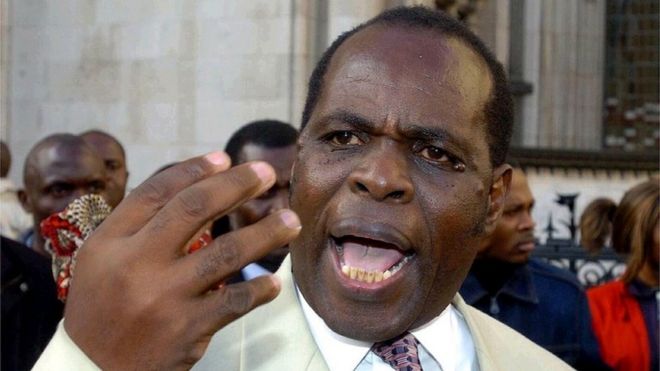
Gilbert Deya: 'Miracle babies' pastor extradited to Kenya

Pastor Gilbert Deya is alleged to have told infertile women they could have "miracle babies"
Pastor Gilbert Deya is alleged to have told infertile women they
 could have "miracle babies"
BBC NEWS
August 4, 2017

The UK has extradited a self-styled Kenyan pastor, who claimed he created miraculous pregnancies, to Kenya to face child-trafficking charges.

Gilbert Deya's extradition came after he failed in his decade-long legal battle to remain in the UK.

He denied charges of stealing five children between 1999 and 2004 when he appeared in court in Nairobi.

Concerns were first raised about the conduct of Mr Deya, who ran a church in London, in a BBC investigation in 2004.

Infertile or post-menopausal women who attended the Gilbert Deya Ministries church in Peckham, south-east London, were told they could have "miracle" babies.

But the babies were always "delivered" in backstreet clinics in Nairobi, Kenya's capital.

Mr Deya later moved to Scotland, and was arrested in Edinburgh in 2006 under an international arrest warrant issued by Kenya.

His Gilbert Deya Ministries is being investigated by the UK Charity Commission for alleged mismanagement.

"Our statutory inquiry into Gilbert Deya Ministries is ongoing. We are currently considering the implication of Gilbert Deya's extradition on our investigation," the commission said in a statement.


Gilbert Deya: 'The Archbishop of Peckham'

  • A former stonemason who moved to London from Kenya in the mid-90s
  • Set up the Gilbert Deya Ministries as a registered charity, with African and Asian branches
  • Known for his blend of charismatic, performance-style preaching
  • Had income of £652,800 ($858,000) for the financial year ending December 2015
  • Spent £609,300
  • Described by UK Labour MP David Lammy as a "modern-day snake-oil salesman"
  • Says he was consecrated as an Archbishop by a US evangelist in 1992


When the BBC asked Mr Deya during its 2014 investigation how he explained the births of children with DNA different to that of their alleged parents, the 65-year-old Mr Deya said: "The miracle babies which are happening in our ministry are beyond human imagination.

"It is not something I can say I can explain because they are of God and things of God cannot be explained by a human being."

Kenya's police spokesman Charles Owino told the BBC that Mr Deya had arrived in Nairobi aboard a Kenya Airways flight following his extradition.

Mr Deya had opposed his extradition, saying he feared being tortured and sentenced to death.

In 2007, his wife, Mary, was sentenced to two years in prison in Kenya after being convicted of stealing a baby.

In 2011, she was sentenced to three years in jail after being convicted of stealing another child.

Desperate women, some past the menopause and others who were infertile, were convinced that being prayed for by Mr Deya and travelling to Kenya would result in a child.

Once there, they were convinced by Mrs Deya and others that they were experiencing labour and taken to illegal clinics where they believed they had given birth.

But they were actually given babies which had been taken from local women.


http://www.bbc.com/news/world-africa-40824267

When exorcists need help, they call him

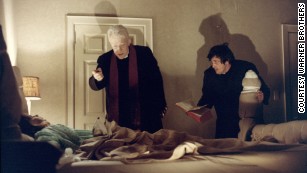
The 1973 film "The Exorcist" shaped how many see demonic possession.
By John Blake
CNN
August 4, 2017

(CNN) A small group of nuns and priests met the woman in the chapel of a house one June evening. Though it was warm outside, a palpable chill settled over the room.

As the priests began to pray, the woman slipped into a trance -- and then snapped to life. She spoke in multiple voices: One was deep, guttural and masculine; another was high-pitched; a third spouted only Latin. When someone secretly sprinkled ordinary water on her, she didn't react. But when holy water was used, she screamed in pain.

"Leave her alone, you f***ing priests," the guttural voice shouted. "Stop, you whores. ... You'll be sorry."

You've probably seen this before: a soul corrupted by Satan, a priest waving a crucifix at a snarling woman. Movies and books have mimicked exorcisms so often, they've become clichés.

But this was an actual exorcism -- and included a character not normally seen in the traditional drive-out-the-devil script.

Dr. Richard Gallagher is an Ivy League-educated, board-certified psychiatrist who teaches at Columbia University and New York Medical College. He was part of the team that tried to help the woman.

Fighting Satan's minions wasn't part of Gallagher's career plan while he was studying medicine at Yale. He knew about biblical accounts of demonic possession but thought they were an ancient culture's attempt to grapple with mental disorders like epilepsy. He proudly calls himself a "man of science."

Yet today, Gallagher has become something else: the go-to guy for a sprawling network of exorcists in the United States. He says demonic possession is real. He's seen the evidence: victims suddenly speaking perfect Latin; sacred objects flying off shelves; people displaying "hidden knowledge" or secrets about people that they could not have possibly have known.

"There was one woman who was like 90 pounds soaking wet. She threw a Lutheran deacon who was about 200 pounds across the room," he says. "That's not psychiatry. That's beyond psychiatry."

Gallagher calls himself a "consultant" on demonic possessions. For the past 25 years, he has helped clergy distinguish between mental illness and what he calls "the real thing." He estimates that he's seen more cases of possession than any other physician in the world.

"Whenever I need help, I call on him," says the Rev. Gary Thomas, one of the most famous exorcists in the United States. The movie "The Rite" was based on Thomas' work.

"He's so respected in the field," Thomas says. "He's not like most therapists, who are either atheists or agnostics."

Gallagher is a big man -- 6-foot-5 -- who once played semipro basketball in Europe. He has a gruff, no-nonsense demeanor. When he talks about possession, it sounds as if he's describing the growth of algae; his tone is dry, clinical, matter-of-fact.

Possession, he says, is rare -- but real.

"I spend more time convincing people that they're not possessed than they are," he wrote in an essay for The Washington Post.

Some critics, though, say Gallagher has become possessed by his own delusions. They say all he's witnessed are cheap parlor tricks by people who might need therapy but certainly not exorcism. And, they argue, there's no empirical evidence that proves possession is real.

Still, one of the biggest mysteries about Gallagher's work isn't what he's seen. It's how he's evolved.

How does a "man of science" get pulled into the world of demonic possession?

His short answer: He met a queen of Satan.
A 'creepy' encounter with evil

She was a middle-age woman who wore flowing dark clothes and black eye shadow. She could be charming and engaging. She was also part of a satanic cult.

She called herself the queen of the cult, but Gallagher would refer to her as "Julia," the pseudonym he gave her.

The woman had approached her local priest, convinced she was being attacked by a demon. The priest referred her to an exorcist, who reached out to Gallagher for a mental health evaluation.

Why, though, would a devil worshipper want to be free of the devil?

"She was conflicted," Gallagher says. "There was a part of her that wanted to be relieved of the possession."

She ended up relieving Gallagher of his doubts. It was one of the first cases he took, and it changed him. Gallagher helped assemble an exorcism team that met Julia in the chapel of a house.

Objects would fly off shelves around her. She somehow knew personal details about Gallagher's life: how his mother had died of ovarian cancer; the fact that two cats in his house went berserk fighting each other the night before one of her sessions.

Julia found a way to reach him even when she wasn't with him, he says.

He was talking on the phone with Julia's priest one night, he says, when both men heard one of the demonic voices that came from Julia during her trances -- even though she was nowhere near a phone and thousands of miles away.

He says he was never afraid.

"It's creepy," he says. "But I believe I'm on the winning side."
How a scientist believes in demons

He also insists that he's on the side of science.

He says he's a stickler for the scientific method, that it teaches people to follow the facts wherever they may lead.

Growing up in a large Irish Catholic family in Long Island, he didn't think much about stories of possession. But when he kept seeing cases like Julia's as a professional, he says, his views had to evolve.

"I don't believe in this stuff because I'm Catholic," he says. "I try to follow the evidence."

Being Catholic, though, may help.

Gallagher grew up in a home where faith was taken seriously. His younger brother, Mark, says Gallagher was an academic prodigy with a photographic memory who wanted to use his faith to help people.

"We had a sensational childhood," Mark Gallagher says. "My mother and father were great about always helping neighbors or relatives out." Their mother was a homemaker, and their father was a lawyer who'd fought in World War II. "My father used to walk us proudly into church. He taught us to give back."

Gallagher's two ways of giving back -- helping the mentally ill as well as the possessed -- may seem at odds. But not necessarily for those in the Catholic Church.

Contemporary Catholicism doesn't see faith and science as contradictory. Its leaders insist that possession, miracles and angels exist. But global warming is real, so is evolution, and miracles must be documented with scientific rigor.

One of Gallagher's favorite sources of inspiration is Pope John Paul II's encyclical "Fides et Ratio" ("On Faith and Reason"). The Pope writes that "there can never be a true divergence between faith and reason, since the same God who reveals the mysteries and bestows the gift of faith has also placed in the human spirit the light of reason."

The church's emphasis on faith and reason can even been seen in the birth of its exorcism ritual.

The Rite of Exorcism was first published in 1614 by Pope Paul V to quell a trend of laypeople and priests hastily performing exorcisms on people they presumed were possessed, such as victims of the bubonic plague, says the Rev. Mike Driscoll, author of "Demons, Deliverance, Discernment: Separating Fact from Fiction about the Spirit World."

"A line (in the rite) said that the exorcist should be careful to distinguish between demon possession and melancholy, which was a catchall for mental illness," Driscoll says. "The church knew back then that there were mental problems. It said the exorcist should not have anything to do with medicine. Leave that to the doctors."

Doctors, perhaps, like Gallagher.

Gallagher says the concept of possession by spirit isn't limited to Catholicism. Muslim, Jewish and other Christian traditions regard possession by spirits -- holy or benign -- as possible.

"This is not quite as esoteric as some people make it out to be," Gallagher says. "I know quite a few psychiatrists and mental health professionals who believe in this stuff."

Dr. Mark Albanese is among them. A friend of Gallagher's, Albanese studied medicine at Cornell and has been practicing psychiatry for decades. In a letter to the New Oxford Review, a Catholic magazine, he defended Gallagher's belief in possession.

He also says there is a growing belief among health professionals that a patient's spiritual dimension should be accounted for in treatment, whether their provider agrees with those beliefs or not. Some psychiatrists have even talked of adding a "trance and possession disorder" diagnosis to the DSM, the premier diagnostic manual of disorders used by mental health professionals in the US.

There's still so much about the human mind that psychiatrists don't know, Albanese says. Doctors used to be widely skeptical of people who claimed to suffer from multiple personalities, but now it's a legitimate disorder (dissociative identity disorder). Many are still dumbfounded by the power of placebos, a harmless pill or medical procedure that produces healing in some cases.

"There's a certain openness to experiences that are happening that are beyond what we can explain by MRI scans, neurobiology or even psychological theories," Albanese says.

Dr. Jeffrey Lieberman, a psychiatrist who specializes in schizophrenia, arrived at a similar conclusion after he had an unnerving experience with a patient.

Lieberman was asked to examine the videotape of an exorcism that he subsequently dismissed as unconvincing.

Then he met a woman who, he said, "freaked me out."

Lieberman, director of the New York State Psychiatric Institute, says he and a family therapist were asked to examine a young woman who some thought was possessed. He and his colleague tried to treat the woman for several months but gave up because they had no success.

Something happened during the treatment, though, that he still can't explain. After sessions with the woman, he says, he'd go home in the evenings, and the lights in his house would go off by themselves, photographs and artwork would fall or slide off shelves, and he'd experience a piercing headache.

When he mentioned to this to his colleague one day, her response stunned him: She'd been having the exact same experiences.

"I had to sort of admit that I didn't really know what was going on," Lieberman says. "Because of the bizarre things that occurred, I wouldn't say that (demonic possession) is impossible or categorically rule it out ... although I have very limited empirical evidence to verify its existence."
The tragic case of the real 'Emily Rose'

If you want to know why so many scientists and doctors like Lieberman are cautious about legitimizing demonic possession, consider one name: Anneliese Michel.

Michel was a victim in one of the most notorious cases of contemporary exorcism. If you have the stomach for it, go online and listen to audiotapes and watch videos of her exorcisms. The images and sounds will burn themselves into your brain. It sounds like somebody dropped a microphone into hell.

Michel was a German Catholic woman who died of starvation in 1976 after 67 exorcisms over a period of nine months. She was diagnosed with epilepsy but believed she was possessed. So did her devout Roman Catholic parents. She reportedly displayed some of the classic signs of possession: abnormal strength, aversion to sacred objects, speaking different languages.

But authorities later determined that it was Michel's parents and two priests who were responsible for her death. German authorities put them on trial for murder, and they were found guilty of negligent homicide. The 2005 film "The Exorcism of Emily Rose" was based on Michel's ordeal and the subsequent trial.

One of the leading skeptics of exorcism -- and one of Gallagher's chief critics -- is Steven Novella, a neurologist and professor at Yale School of Medicine.

He wrote a lengthy blog post dissecting Gallagher's experience with Julia, the satanic priestess. It could be read as a takedown of exorcisms everywhere.

He says Julia probably performed a "cold reading" on Gallagher. It's an old trick of fortune tellers and mediums in which they use vague, probing statements to make canny guesses about someone. (Fortune teller: "I see a recent tragedy in your family." Client: "You mean my sister who got hurt in a car accident? How did you know?")

Or take the case of a person speaking an unfamiliar language like Latin during a possession.

"A patient might memorize Latin phrases to throw out during one of their possessions," Novella wrote. "Were they having a conversation in Latin? Did they understand Latin spoken to them? Or did they just speak Latin?"

Novella says it's noteworthy that no one has filmed any paranormal event such as levitation or sacred objects flying across the room during an exorcism. He's seen exorcism tapes posted online and in documentaries and says they're not scary.

"They're boring," he says. "Nothing exciting happens. The most you get is some really bad play-acting by the person who is being exorcised."

In an interview, Novella went further and criticized any therapist who believes his patient's delusions.

"The worst thing you can do to a patient who is delusional is to confirm their delusions," says Novella, who founded the New England Skeptical Society.

"The primary goal of therapy is to reorient them to reality. Telling a patient who is struggling that maybe they're possessed by a demon is the worst thing you can do. It's only distracting them from addressing what the real problem is."

Driscoll, the Catholic priest who wrote a book about possession, is not a skeptic like Novella. Still, he says, it's not unusual for people on drugs or during psychotic episodes to display abnormal strength.

"I have seen it take four grown guys to hold one small woman down," says Driscoll, a chaplain at St. Elizabeth Medical Center in Ottawa, Illinois. "When a person has no fear and is not in their right mind and they don't care about hurting themselves or hurting others, you can see heartbreaking things."

That doesn't mean he thinks possession isn't real. He says the New Testament is full of accounts of Jesus confronting demons.

"Do I still believe it happens? Yes, I do," he says. "It happened then. I don't know why it would be totally eradicated now."

Gallagher agrees and has answers for skeptics like Novella.

He says demons won't submit to lab studies or allow themselves to be easily recorded by video equipment. They want to sow doubt, not confirm their existence, he says. Nor will the church compromise the privacy of a person suffering from possession just to provide film to skeptics.

Gallagher says he sees his work with the possessed as an extension of his responsibilities as a doctor.

In a passage from a book he is working on about demonic possession in America, he says that it is the duty of a physician to help people in great distress "without concern whether they have debatable or controversial conditions."

Gallagher isn't the first psychiatrist to feel such duty. Dr. M. Scott Peck, the late author of "The Road Less Traveled," conducted two exorcisms himself -- something Gallagher considers unwise and dangerous for any psychiatrist.

"I didn't go volunteering for this," he says. "I went into this because different people over the last few decades realized that I was open to this sort of thing. The referrals are almost invariably from priests. It's not like someone is walking into my office and I say, 'You must be possessed.' "
What happened to Satan's queen

He may not have asked to join the "hidden" world of exorcism, but he is an integral part of that community today. He's been featured in stories and documentaries about exorcism and is on the governing board of the Rome-based International Association of Exorcists.

"It's deepened my faith," he says of the exorcisms he's witnessed. "It didn't radically change it, but it validated my faith."

He says he's received thanks from many people he's helped over the years. Some wept, grateful to him for not dismissing them as delusional. As for letting a journalist talk to any of these people, Gallagher says he zealously guards their privacy.

Julia, though, gave him permission to tell her story. But it didn't have a happy ending.

He and a team of exorcists continued to see her, but eventually, she called a halt to the sessions. She was too ambivalent. She relished some of the abilities she displayed during her trances. She was "playing both sides."

"Exorcism is not some kind of magical incantation," Gallagher says. "Normally, a person has to make their own sincere spiritual efforts, too."

About a year after she dropped out, Gallagher says, he heard Julia's voice on the phone again. This time, she had called to tell him she was dying of cancer.

Gallagher says he offered to try to help her with a team of priests while she was still physically able, but her response was terse:

"Well, I'll give it some thought."

He says he never heard from her again.

Inevitably, there will be others. His phone will ring. A priest will tell him a story. A team of clergy and nuns will be summoned. And the man of science will enter the hidden world of exorcism again.

Join the conversation

The critics, the souls that aren't saved, the creepy encounters -- they don't seem to deter him.

"Truly informed exorcists don't tend to get discouraged," he says, "because they know it is our Lord who delivers the person, not themselves."

Is Gallagher doing God's work, or does he need deliverance from his own delusions?

Perhaps only God -- and Satan -- knows for sure.


http://www.cnn.com/2017/08/04/health/exorcism-doctor/index.html

Why Are There No New Major Religions?

Major Religions
The story of one imprisoned prophet illustrates the difficulties of getting a “baby religion” off the ground.

JON EMONT
The Atlantic
August 6, 2017

Cipinang prison stands like a huge fortress in East Jakarta, its massive walls and guard towers separating the city’s bustling traffic from the criminals held within its gates. I visited in March, sitting at a noisy mess hall filled with hardened, tattooed Indonesian prisoners who greeted their wives and children with hugs and pats on the head. The prison is known for housing many of the country’s most notorious drug criminals and convicted terrorists. But across from me sat a trio of prisoners in bright orange fatigues charged with a different crime entirely: daring to start a new religious movement.

The leader of the group, Ahmad Mushaddeq, a broad-shouldered man with bright gray eyes and a winning smile, is a former national badminton coach turned preacher. In the late 1990s, he said, it was revealed to him that he was the son of God. His followers proclaimed him to be the prophet to succeed Muhammad, sparking a new religious movement based on his teachings, which was eventually called Millah Abraham. The new faith was adopted mainly by disenchanted Muslims. It spread quickly across Indonesia and Malaysia to more than 50,000 followers, according to the group. Mushaddeq’s followers also established a parallel back-to-the-land social movement, called Gafatar, which promoted organic farming and agricultural self-sufficiency, considered by Millah Abraham to be two of the real-life applications of their vaguely New-Age faith.

As strange as Millah Abraham’s beliefs may seem, scholars of religion say the group is simply in the early stages of a process nearly as old as humanity: starting a new religion.

“Often cults are seen as aberrations, or a psychological phenomenon. Psychologists would see cult leaders as having delusions of grandeur. But I see them as something different—as baby religions,” said Susan Palmer, a sociologist and scholar of new religions at Concordia University in Montreal. “I think people are unaware how many of them there are, how constant they are.”

Al Makin, an Indonesian scholar of new religions, estimates that Indonesia alone has seen over 600 new religious movements in its modern history. In this regard the archipelago is hardly unique: New religions spring up regularly in the United States, Canada, Russia—everywhere government authorities are flexible enough to allow them.

And like many other new religious movements, Millah Abraham is dreaming big, with hopes to supersede Christianity and Islam as the dominant Abrahamic faith. Millah Abraham’s followers believe that every Abrahamic faith, from Judaism onward, is fated to lose its way, becoming corrupt and power-hungry, until eventually it is succeeded by a new prophet who will restore the original Abrahamic relationship to God. Followers of Millah Abraham believe that the near-constant wars in the Middle East are just one indication that Islam has fallen and it is Mushaddeq’s turn to continue the eternal cycle and establish the next iteration of Abrahamic faith. In the same way that Judaism was succeeded by Christianity, and Christianity by Islam, Islam is to be succeeded by Millah Abraham.

Though its prophet is in prison, it’s still possible Millah Abraham will succeed in becoming a globally influential faith. There have, after all, been unexpected successes before. “If we had been observers of the religious scene in the year 50 AD, I wonder if we would have bet on that small religious group in the corner of the Roman empire,” said Jean-François Mayer, a Swiss scholar of new religious movements, referring to ancient Christianity. Still, he acknowledges that the odds appear to be very much against Millah Abraham, even without persecution from the Indonesian government.

Not since the angel Gabriel visited Muhammad in a cave around 610 AD, informing him that he is God’s prophet, has there been a new globally influential religion with hundreds of millions of followers. Though the world’s religions are very dynamic, and major faiths continue to shift and evolve in ritual and doctrine, the world today is dominated by the same four faiths that dominated the globe a millennium ago: Hinduism, Buddhism, Christianity, and Islam. According to a 2012 Pew study, 92 percent of religiously affiliated people around the globe belong to one of these four faiths.

While some relatively recent faiths have succeeded in recruiting millions of followers—such as the Church of Jesus Christ of Latter-Day Saints (Mormonism), Scientology, and Baha’i—their numbers of adherents are dwarfed in scale by these earlier four. The Baha’i, for example, are a relatively numerous recent faith with an estimated 7 million adherents. That sounds impressive, but it still means that just 0.1 percent of humanity has joined Baha’ism—and the faith has been around for 150 years (since 1863).

Faiths, of course, don’t have to be numerous to deliver spiritual sustenance to their followers, or even to be influential, as Judaism (a religion of 14 million) shows. Still, the small scale of new faiths over the past 1,500 years since Islam raises a question: Why, if creating new faiths is an inextinguishable feature of the human condition, have new religions had such limited recent success?

* * *

Dwi Adiyanto, an Indonesian marketing professional in his mid-30s living in central Java, told me that when he first encountered Millah Abraham’s teachings in a local study group, it gave him a sense of purpose and clarity about his life’s mission that Islam had never provided. The group’s religious teachings, which posited a continuous pattern of faiths rising and falling as they strayed from Abrahamic teachings, resonated with Dwi, as did the sense of social purpose he gained from joining a farming community. “It offered a source of faith that could really be trusted,” he told me, “a path that was clearly correct.” Dwi sold all his belongings in late 2015, and moved to rural Borneo, along with around 7,000 members of Millah Abraham.

Though Indonesia’s constitution promises citizens religious freedom, starting a new religion here is illegal, and a crackdown quickly followed. Indonesia has just six legal religions—Islam, Protestantism, Catholicism, Hinduism, Buddhism, and Confucianism—and sects that split off from Muslim orthodoxy are punished with blasphemy charges. After Gafatar branches throughout the Indonesian archipelago began running into trouble with local authorities, the organization’s authorities encouraged adherents like Dwi to sell all their possessions and use the money to buy land in remote Indonesian Borneo, where they hoped state authority would be lax enough to allow them to farm in peace. The goal was to establish a Zion, similar in concept to the one Mormons founded one and a half centuries ago in Utah—a faraway community where followers could live according to their faith without being challenged by outsiders. The young faith was rapidly evolving, and as followers moved out to Borneo it took on an increasingly ecological bent, with Millah Abraham leaders arguing that cities were corrupting and alienating, and the best way to worship the Lord was to till land in harmony with nature.

But the utopian effort would not last long. Just a week after the national government formally banned Gafatar in January 2016, local mobs stormed the group’s compound in West Borneo and burned their farms to the ground. “There were around a thousand men who brought clubs and daggers. They burned our homes in front of our eyes,” Dwi recounted to me. “There was no respect for human rights, although police were right there.” Indonesian police officers then forcibly returned around 7,000 Gafatar members to their home provinces—on waiting planes and boats. After being returned home, Gafatar members were given classes on Indonesian nationalist doctrine by soldiers; evaluated by psychologists, and encouraged to return to their old faith, which was generally Islam.

“They have their own system, they have their own country—in my opinion it is dangerous for Indonesia,” Koentjoro Soeparno, a professor of social psychology who evaluated Gafatar members after they were returned home from Borneo, told me in an interview. He said that de-radicalization was necessary. “Gafatar has a lot of similarities with what happened in the United States with Jim Jones,” he added, referring to the American cult leader who persuaded hundreds of followers to follow him to the remote jungles of Guyana to participate in a giant agricultural project, before conducting a mass suicide that killed around 900.

But followers I spoke with said there had been no coercion, and Gafatar members had moved to West Borneo to live communally and worship freely, not to challenge the Indonesian state or conduct mass suicide. They “never had that desire, to create a new country,” Yudhistra Arif Rahman, a lawyer who represented Mushaddeq, told me. In total, more than 25 members of Gafatar were convicted of blasphemy around the archipelago, with around a dozen spending time in prison. Human Rights Watch called the Indonesian government’s treatment of Gafatar one of the worst examples of religious persecution since Indonesia began transitioning to democracy in 1998.

Members of the faith insist they will soldier on; their persecution, after all, is in keeping with prophesy. “We were prepared for this mentally,” Farah Meifira, a Millah Abraham adherent, told me. But it’s far from clear whether the faith will be able to carry on effectively, given the Indonesian state’s apparent determination to stamp it out.

State persecution, aided by religious authorities, is in fact a major reason why new faiths fail in parts of the world where government polices religious doctrine. “New religions have always existed; they are an organic phenomenon like weeds in a garden. In some societies they are considered weeds and will be uprooted; in other societies they will be allowed to grow and take root and become plants,” said Palmer, the scholar of new religion. To the Indonesian government, Millah Abraham is a weed.

* * *

Even new faiths originating in countries with tolerant and non-repressive governments have a difficult time gaining significant traction. Palmer wrote a book on Raëlism, a religious movement founded in France in the mid 1970s by Claude Vorilhon, a former French race car driver whose faith held that humans were “scientifically” created by aliens millennia ago. The religion states that the aliens have decided to leave human beings to their own devices, but that once “embassies” are built to welcome back the aliens, the aliens will help advance human technology and even contribute to human immortality. Raëlism has gone international, with active membership in North America, Europe, and Japan, but it’s only a minor faith, with followers numbered in the thousands rather than the millions.

Scientology, another faith that believes aliens had a deep influence on the human condition (they deposited their humanity-haunting souls here after a hydrogen-bomb powered volcanic explosion 75 million years ago) has claimed to have around 10 million members worldwide. But Scientology has struggled recently, as former high-level members of the faith described the immense sums of money required to advance within the Church hierarchy, as well as threatening actions the Church takes against dissenters. The faith’s founder, science fiction writer L. Ron Hubbard, aggressively recruited Hollywood celebrities to promote the faith in a successful bid to generate publicity. But despite all the glitz and glam, many celebrities once linked to Scientology have disavowed it. All signs point to a declining membership, and today the faith is independently estimated to have as few as 50,000 members worldwide.

Not all new faiths fall flat on their faces, however. Santa Muerte—Our Lady of Holy Death—is the rare example of a new religious movement that appears to be steadily gaining followers in the Americas. The Lady, represented as a female skeleton, is believed to have power over life and death. She’s become popular among people living in parts of Latin America and North America ravaged by drug violence, who can pray to her for things that it would be inappropriate to request of Jesus—such as revenge, or that a drug shipment arrives safely. Andrew Chestnut, an author who has written a book about the vibrant new faith, suggests that as many as 10 million people may worship Santa Muerte, though as with most new religious movements numbers are difficult to verify, and other scholars I spoke with said that figure may be inflated. “It’s a very informal religious movement, it’s not institutionalized,” said Stefano Bigliardi, an assistant professor at Akhawayn University in Morocco, who spent years researching Santa Muerte in Mexico. Still, the faith has only been above-ground since 2001, suggesting a rapid gain in influence.

Santa Muerte raises another question that comes up in relation to many other new religious movements: How far off from an established religion does a new movement have to veer before it’s considered its own separate religion? Many worshippers of Santa Muerte still attend Mass and consider themselves Catholic, merely praying to Santa Muerte as they might to another saint. Some priests and nuns grudgingly accept their parishioners’ decisions to make offerings to Santa Muerte, but others harshly condemn it. It’s quite clear that the Catholic Church is alarmed by the rise of Santa Muerte, with the Vatican’s representatives condemning worship of her as “blasphemous.” So is Santa Muerte distinct enough from mainstream Catholicism that it should be considered a new religious movement?

For scholars of new religions, there is no easy way to answer this question. Mayer grappled with it in a paper in 2000, when he asked how best to classify Mormons, who say they received new, distinct revelations in the Book of Mormon, but worship Jesus and identify as Christian: “Is it an autonomous new religion, or rather a new tradition within the wider Christian fold? Did it really depart from traditional Christianity as much as Christianity departed from Judaism?” Ultimately, Mayer concluded that there is no foolproof way to determine whether a new movement should be classified as distinct from the old faith tradition, though certain moves, like developing new sets of scripture or radically changing ritual practices, indicate that a new religious movement is making a radical break from the past.

Regardless of how scholars classify it, efforts to stamp out Santa Muerte—the Mexican government has been bulldozing roadside shrines, perhaps out of concern over the faith’s association with narco culture—haven’t been enough to keep it from acquiring a following among marginalized communities in the Americas. Still, even with Santa Muerte’s relative success, 10 million followers is a pittance relative to any of the big four faiths.

I asked Palmer if a reason why new faiths typically struggle to gain adherents is that we tend to laugh when we hear claims about fantastic and miraculous events that occur in the present day—such as when Vorilhon, the founder of Raëlism, claimed he learned about humanity’s origins after being abducted by aliens. “This is true,” she said. “We’re capable of accepting Muhammad’s claims of hearing God and Jesus’s claims of being the son of God, because it happened 1,000 or 2,000 years ago. The mist of time lends its authenticity. If someone today says these things, we’ll say he used to be a vacuum salesman or something.”

But the religion scholars I spoke with said that perhaps the biggest reason that new faiths like Scientology, Raëlism or Millah Abraham have failed to take off is the lack of state sponsorship. A major turning point for classical Christianity was when Constantine the Great decided to halt the persecution of Christians in the Empire, instead embracing elements of the faith. Over the next few centuries Christianity became the dominant religion in the Empire. Christianity wasn’t the only major religion to be boosted this way: Islam also spread by the sword, with armies sweeping forth to conquer and convert North Africa and Spain in the centuries after Muhammad’s death. Throughout their history both Buddhism and Hinduism have been powerfully lifted by state patronage.

Today, though, it is difficult to imagine that any new faith movement will get the boost of having a powerful state patronize the religion and fund its spread. In large part that’s because global norms have changed and—with the exception of a country like Saudi Arabia—few powerful states see it as their role to sponsor any faith, let alone a new faith. It’s also because there’s much less conquest today, meaning it would be unlikely that even a powerful country that adopted a new faith would be able to spread it by force. But, in an alternate reality, we can see how useful it would be for Millah Abraham if Indonesia’s government were to turn around and support Millah Abraham to the exclusion of other faiths, and proceed to conquer neighboring nations. Then there would be the possibility of its widespread adoption, at least in the region.

But even though state conquest does not offer the possibility to spread faiths quickly anymore, prophets today have more ways than ever to spread their teachings abroad. In a Singapore airport, I met with three Malaysian members of Millah Abraham who joined the faith after watching a Youtube video of Mushaddeq preaching. But this era of accessibility also comes with a downside for a new faith: There are so many religions on offer in most countries that it’s hard for any new religion to gain a critical mass.

“It’s a paradox of the current world that at the same time there is unprecedented opportunity for religious groups to spread but it also offers unprecedented competition in the religious field,” said Mayer, the Swiss historian of religion. “Even if you start with a very evangelistic intention, the likelihood is you might find a tiny percentage of the people interested in your offer.”

Mayer’s analysis uses the metaphor of the market, treating new religions as products that have to distinguish themselves from their competition in order to gain adherents. Early Christianity, for example, distinguished itself from many pagan beliefs with its intense focus on the afterlife, and the possibility of eternal salvation and heaven. “This was something that was really powerful for people, making people even willing to sacrifice their lives and believe it was worth doing,” Mayer said.

Looked at this way, any new religion, to be successful, would have to present millions of believers with an offer they couldn’t refuse. What would that look like?

“It must offer meaning, meaning to your life and your death that gives real answers that sound convincing,” said Mayer, adding that it would also have to offer a sense of community, and would benefit from being reasonably compatible with a scientific understanding of the world, given that we live in an era when many people treat scientific claims with respect. But he said that no new religion he is aware of currently qualifies.

Instead most of the dynamism is happening within existing faith traditions, as religious entrepreneurs within established traditions adapt their faiths to the needs of 21st-century parishioners, leading to trends like the major growth of Pentecostalism among former Catholics in Latin America and the rise of puritan strains of Islam around the Muslim world.

Mayer said that a few years ago he was asked to contribute an academic article assessing the possibility that a new, major religion would rise in the next 30 years. One plausible scenario he came up with was that a Chinese preacher might meld elements of Christianity with a “universalist message of inner harmony” and gain millions of followers.

The point is to never say never. “If something really meaningful is to be offered,” he said, “it cannot be completely ruled out” that it will become a new, globally influential religion.

Just don’t tell that to the Indonesian government.

https://www.theatlantic.com/international/archive/2017/08/new-religions/533745/

Aug 6, 2017

Inside the anti-vaccination cult

Aneeka Simonis and Sophie Smith
Herald Sun
August 4, 2017

WITHIN 24 hours of their baby boy’s death, Catherine and Greg Hughes were confronted with the ugliness that drives the misinformed anti-vax warriors.

The grieving parents were bombarded with vicious attacks claiming they were “baby-killers” and that their infant son Riley had died because they did not treat him with vitamins and essential oils.

But the inconvenient truth which the Australian Vaccination-sceptics Network and other anti-establishment radicals do not want to acknowledge is that Riley died of whooping cough, for which he was not vaccinated.

“We were told that we were baby-killers simply because we were raising awareness about pregnancy vaccination — a proven method of protecting infants from this disease which we weren’t told about at the time we were pregnant with Riley,” Ms Hughes told the Herald Sun.

“We were accused of being employees of pharmaceutical companies, we were told that our child didn’t ever exist, and we were even accused of killing Riley ourselves.”

More than two years on, his parents are still being trolled by anti-vaxxers who Ms Hughes claims will stop at nothing to silence those who oppose their dangerous quest to endanger lives.

“They don’t want to acknowledge the fact that these diseases can be fatal, and kill innocent children,” Ms Hughes said.

“They were also very concerned with the media attention our son’s death received, and I believe the co-ordinated attacks and harassment were a very deliberate attempt at silencing us.

The attacking and harassment of bereaved parent’s is part of the AVN’s modus operandi (but) we refuse to be silenced.”

Fellow victim and mother Alison Gaylard said she had withstood years of abuse which was sparked from a social media post in which she sought to reason with anti-vaxxers after her two daughters fell ill with whooping cough.

Sisters Alice and Florence Gaylard, then aged 6 and 2, were vaccinated but became infected due to low vaccination rates in the community, according to Ms Gaylard.

“They were sick for weeks. They were having 20-minute coughing spasms and vomiting,” she said.

“I wanted to show people who were possibly being swayed not to vaccinate their kids how sick my girls got, and how much worse it could be if they weren’t vaccinated.

“Within a few hour of posting to social media, there was a blog post written about me.

“I panicked. I tried to delete the post but it was already out there.

“I was then sent letters in the mail and emails suggesting I should attend Weight Watchers meetings and that I was not a good example for my kids.

“They made memes about me. I got anonymous phone calls from people telling me how misinformed I am. I still cannot believe the lengths they go to to spread lies.”

The campaign to break down Ms Gayland then took a disturbing turn.

They began targeting her children, she said.

Her daughter Alice was stalked in a supermarket and approached by a woman.

“She asked if Alice was my daughter and then laughed in her face,” Ms Gayland said. “They are twisted. They will go through any avenue they can find to shut people up.”

The AVN — described by medical experts as a “brainwashed” cult and condemned by federal bureaucrats — have been staging secret meetings across Melbourne and Australia in which a banned film promoting the anti-vax message has been screened to crowds including parents with young kids.

They have been accompanied with children’s literature including a book titled Melanie’s Marvellous Measles, in which kids are said to be “lucky” to contract the deadly illness and are encouraged to resist vaccinations and mix with those infected.

Anti-vax ringleaders have conned venues into the dangerous screenings, failing to disclose themselves and providing false information about the film.

Miami State High School in Queensland was among those duped into showing the film, Vaxxed: From Cover-Up to Catastrophe.

The group had covertly booked the screening through an “independent local business owner”, and claimed the film would “promote their healthy lifestyle business of organic foods and coffee”.

Similar tactics have been used in Melbourne where two screenings were held this week.

Each have been attended by American anti-vax leaders who have flown in to spread their dangerous message.

On both occasions, parents cradling infant children were among the attendees.

Stop the AVN campaigner, Tracey McDermott, used a fake name to get into one of the screenings after previously being denied entry due to her views.

She said she was alarmed to see so many young children in the crowd.

“There were about six babies and a couple of toddlers. That was the most concerning part ... the fact that they were in an environment surrounded by non-vaccinated people,” she said.

Boroondara Council had unknowingly hired out the Hawthorn Arts Centre to the anti-vaxxer group “under a private name” on Thursday, while a CBD cinema hosted a screening of the film the night before.

Red-faced Boroondara Council took to social media to clarify its support for vaccinations after the showing.

“We are strongly opposed to the suggestion that children should not be vaccinated and commit considerate resources to both education and delivery of vaccinations,” it wrote on Facebook.

The US film is based on the premises that the triple Measles, Mumps and Rubella vaccine can cause “regressive autism” in healthy babies if administered between one to two years of age as recommended in America.

It also claims America’s Centres for Disease Control and Prevention (CDC) as well as investigators and pharmaceutical giants have covered-up statistical evidence of the purported causal link between the vaccine and autism, which was raised by a CDC whistleblower.

The Herald Sun attended one of the Melbourne screenings, in which pro-vaccine experts were spat on and parents colluded on ways to sidestep Victorian schools’ immunisation record requirements.

“Why are we such a big concern to them (pro-vaxxers)?” one woman asked.

Parents also discussed homoeopathic alternatives to vaccines, and how to handle the critical views of majority pro-vaccination peers.

Dr John Cunningham, who was awarded an Order of Australia for his work in vaccination promotion, likened the anti-vaxxing group to a cult which he said fed on people’s fears.

He sought to provide fact-based information about vaccines to Hawthorn film-goers on Thursday, but was instead yelled and spat at.

“They don’t listen to reason, science or facts,” he said. “They only listen to things that confirm their paranoid, conspiracy-driven mindsets.

“It’s like they are on a witch hunt ... attributing every disease to vaccinations.

“They are removing people from evidence-based care which means they are destroying lives. They are endangering health.

“I feel disdain for the cult leaders and I feel pity for the people who have been drawn into the cult.

“I advise anyone with friends or relatives who are anti-vaxxers to tread gently because they have been brainwashed.”

The Herald Sun has been informed about other scare tactics used by anti-vaxxers in their mission to drive down Australian vaccine rates.

They include leaving business cards which read “Investigate Before You Vaccinate” in nappy boxes in supermarkets, and stickers with the same message stuck on baby books.

Anti-vaxxers have also been known to remove or deface pro-vaccine posters in hospitals and on community boards across the country.

But their reach is strongest on social media, where they use guerilla tactics to skew scientific evidence and sway vulnerable people.

Ms McDermott said: “(Anti-vaxxers’) main ammunition is manipulating the emotions of parents which is quite easy to do because parents love their children and will do anything for them.

“They guilt parents of children with illnesses. They don’t blame genetics or rotten luck, (anti-vaxxers) plant an idea in their heads that they have done this to their child because they vaccinated them.

“They will claim this for any form of disability or illness from asthma to down syndrome and autism.

“The other way they operate is by controlling the message,” she said, referring to her being denied entry to an AVN meeting.

“Anyone who disagrees with them is banned and not allowed to engage so they can control the exposure to real facts and medical information.

“They plant the idea that medical professionals and the government are trying to make people ill and keep them compliant to make money out of them and control them.”

The Herald Sun approached the AVN over accusations the group attempts to guilt parents into not vaccinating their children through bullying tactics.

In a statement, the group denied such claims including those made by Ms Gaylard.

“This allegation has no basis in fact. The AVN has never made such a statement,” the statement said.

“The AVN supports informed consent for parents, not the cult-like bullying and financial coercion inflicted upon parents by the government and pharmaceutical industry.”

A public health warning has been issued against the AVN group, which has been investigated by interstate government bodies.

@Aneeka Simonis

http://www.heraldsun.com.au/news/inside-the-antivaccination-cult/news-story/10ba867d15778a30d88b3ae4ed262a05

Shunned Member Says Cultlike Group Defamed Her

VICTORIA PRIESKOP
Courthouse News Service

July 27, 2017

ALBUQUERQUE (CN) — In an unusual lawsuit, a woman claims that after she left a cultlike group its bosses defamed her to other members and on the internet as “a porn star” whose “soul has been part of several sex cults, including the Manson cult.”

Carol Hubbard sued the J Message Group Corp. and its leaders Kenneth Charles Alexander and his wife Deborah S. Alexander, on Monday in Federal Court.

The J Message Group is an invitation-only organization. Its “Rules of Engagement,” however, were available online Thursday morning. They begin: “The J Message was originally formed as the result of one individual that began receiving direct and specific channeled information from a master guide. This information was and is intended to be shared with a group of people that apparently have soul contracts to receive and act on it or have otherwise been guided to study this information. This information originally took the form of written conversational style letters between the man, referred to as ‘the Scribe’ and his guide who was referred to as Jeshua and sometimes J. These letters came to be known as the J Messages. Beginning in 2013, a new set of communications were channeled, referred to as the communications by the beings we refer to as the Companions.”

The Rules add that “Going forward the focus of this group is on Psychoanthropology,” and that its “Academy will teach a minimum of 52 students to presents their souls’ Psychoanthropology.”

They state that “The Scribe and his wife, Deborah, have dedicated a large part of their life to bring the Messages/communications through to the intended audience.”

Hubbard, in her request for an injunction and damages, sees it another way.

She says the Alexanders and their group “control, isolate, shame, emotionally harm, and take advantage of its members” by “manufactur(ing) a series of malicious defamatory content about dissenting/questioning members that is presented at large conferences and thereafter transcribed, edited, compiled, and published on the Internet.”

Hubbard says she joined the Companions of Wisdom program in 2008 in Santa Fe, seeking spiritual direction and self-improvement. She says she is “a government contractor with high levels of security clearance” and that when she asked for leave to attend a Companions conference overseas, Deborah Alexander instructed her to “lie to her employer about the purpose of her overseas travel, and that if she did not lie to her employer that there would severe consequences.”

When she refused, fearing that lying might cost her her security clearance, she says Alexander urged Hubbard’s then-fiancé, also a member of the group, to break off his relationship with her because she was a “destructive influence.” He refused, she says, and Hubbard was ejected from the group and shunned.

But that wasn’t the end of it, Hubbard says. She says the defendants immediately “maliciously created, compiled, and published false and defamatory statements about plaintiff, solely to cause plaintiff harm.”

According to the lawsuit, these statements included: “She [Carol Hubbard] has a split who is a porn star and is seen doing sex acts with her husband. That is all she does. … the Hubbard Soul has been part of several sex cults, including the Manson cult.” (Brackets and ellipses in complaint.)

In other messages, Hubbard says, the defendants called her a sexual predator, and “a financial predator because she was poor,” and attributed her alleged sexual predation to her “3rd ray Psychoanthropology.”

Hubbard requests an injunction publication of false statements against her, and damages and punitive damages for defamation, false light, invasion of privacy, intentional infliction of emotional distress and civil conspiracy.

She is represented by Brian Lewis with Kelly & Warner, of Albuquerque.

https://www.courthousenews.com/shunned-member-says-cultlike-group-defamed/

Aug 4, 2017

Officials want R. Kelly's Atlanta show cancelled amid 'cult' allegations

The Fulton County Board of Commissioners on Wednesday directed the county attorney to ask organizer Live Nation to call off the Aug. 25 R. Kelly show at the Wolf Creek Amphitheater in suburban Atlanta
Elahe Izadi
National Post
Washington Post
August 4, 2017

R. Kelly has been under intense scrutiny since an explosive BuzzFeed investigative report about his treatment of women, and now officials in Georgia’s most populous county want Live Nation to cancel his upcoming Atlanta performance there.

The Fulton County Board of Commissioners on Wednesday directed the county attorney to ask the massive concert organizer to call off the Aug. 25 R. Kelly show at the Wolf Creek Amphitheater in suburban Atlanta.

“We are writing you to express our grave concern” that Live Nation scheduled the R. Kelly concert, the letter from the county attorney reads. “Based on allegations reported in various news media regarding the artist, the citizens of Fulton County have expressed their collective concerns that Live Nation would allow this artist to perform at a venue that is supported in part by taxpayers.”

A spokeswoman for Live Nation said “the show is proceeding.” (While the county owns the venue, Live Nation has taken over the amphitheatre’s promotions and operations this year.)

The BuzzFeed story, written last month by veteran music journalist Jim DeRogatis, cites named sources and documents to paint a portrait of the singer using his fame to lure young women and hold them under psychological control, with one set of parents telling police their daughter is “being held against her will” in what they dubbed a “cult.” Three former members of the singer’s inner circle, DeRogatis writes, “provided details supporting the parents’ worst fears.” All the women in his inner circle, DeRogatis writes, are of the legal age of consent.

According to the story, the young women’s movements and social media access are restricted while in his homes, including one in the Fulton County municipality of Johns Creek.

R. Kelly has denied the allegations. His lawyer, Linda Mensch, provided a statement to media last month, stating the singer “unequivocally denies such allegations and will work diligently and forcibly to pursue his accusers and clear his name.” When asked for an updated statement this week, she referred to R. Kelly’s publicist, who has not returned The Post’s inquiry.

In a video published by TMZ, one of the young women denied the allegations, saying “I’m not being brainwashed or anything like that.” Her parents held a press conference, saying they believe she is being “coached” to make such statements.

Petitions to cancel R. Kelly concerts and remove him from radio airplay have come and gone over the years. The Fulton County Board of Commissioners’s six members unanimously decided to send the letter, Chairman John Eaves told The Post.

“When the concert of R. Kelly was announced, it coincided with the recent allegations of R. Kelly in our county, and a growing number of constituents began contacting me directly, the chair, sharing their consternation about him performing on Aug. 25,” Eaves said.

The emails to Eaves and his fellow commissioners began about a week and half ago. The letter, at the least, is “a serving of notice of sorts to Live Nation now, and letting the public know their local government is concerned, without overstepping some sort of legal grounds,” given the county’s contract with Live Nation, Eaves added.

“It’s just folks who are contacting me because they are concerned, and who are really connected to the issue of sex and human trafficking, dehumanizing of women, exploitation of women,” Eaves said. “As I hear from my constituents, they also see this narrative. It’s not just like this is a one-shot thing, but there’s a history of this type of conduct and it now has culminated in not only the most recent public allegations here in our own backyard, but doggone it, the man is also performing in our county.”

DeRogatis has been covering R. Kelly for two decades. He co-bylined the first major investigative story into R. Kelly in 2000 at the Chicago Sun-Times, writing the singer “used his position of fame and influence as a pop superstar to meet girls as young as 15 and have sex with them, according to court records and interviews.”

R. Kelly would eventually face more than a dozen counts of making child pornography after a video tape was anonymously sent to DeRogatis at the Sun-Times. The recording showed R. Kelly having sex, allegedly with an underage girl. Five years later, R. Kelly was found not guilty in a jury trial.

In 1994, a 27-year-old R. Kelly married Aaliyah, who was 15 at the time. The falsified marriage certificate, which listed her age as 18, was published by Vibe months after the ceremony. Months later, they annulled the marriage.

Throughout all the allegations and controversies, R. Kelly has denied wrongdoing, maintained his formidable fan base and has experienced major commercial success. In recent years, some of his performances have been canceled, but he’s managed to avoid being ostracized by the mainstream. He performed on The Tonight Show with Jimmy Fallon in December, and starred in a 2017 Alexander Wang fashion campaign.

Oronike Odeleye, a managing director of an Atlanta arts organization, has been leading some of the calls to remove R. Kelly from Atlanta-area radio stations and cancel his upcoming concert.

“The courts haven’t been able to do anything,” Odeleye told the Atlanta Journal Constitution. “It really kind of came to me. If we are going to shut this man down, we’re going to have to take things into our own hands.”

Since the BuzzFeed story, R. Kelly has canceled four concerts, including ones in Dallas and Baton Rouge (and, according to TMZ, amid sagging ticket sales). A Los Angeles concert was also canceled, with a source telling TMZ it had to do with a scheduling conflict.

Last week, R. Kelly posted a video on Twitter, saying, “Despite all of the crap y’all hearing, I will be coming to the East Coast to do my show, and believe me, y’all, it’s a bunch of crap.”

According to a Page Six report, his booking agency, Monterey International, was preparing to drop him. An agent at the firm said “no comment” when asked if he represented the singer. His artist page is no longer available on the agency’s website, and he’s not listed in a roster of talent that’s dated July 27. Monterey referred questions to his lawyer (who, again, referred to his publicist).

http://nationalpost.com/news/world/officials-want-r-kellys-atlanta-show-cancelled-amid-cult-allegations/wcm/cb945642-9040-40dd-9d96-123f8811b0c5

Aug 3, 2017

Court extends detention for members of St. Petersburg Church of Scientology

Tass
August 3, 2017

The members of the St. Petersburg Church of Scientology are accused of illegally organizing scientology courses and programs on a paid basis without any proper licensing or authorization documents

ST. PETERSBURG, August 3. /TASS/. St. Petersburg’s Neva District Court has extended arrest terms for defendants under the St. Petersburg Church of Scientology case until October 20, the city court’s press service reported on Thursday.

"The court has ruled to extend measures of restraint in the form of detention for Ivan Matsitsky, Anastasiya Terenteva and Sakhib Aliev until October 20. The court has also extended house arrest for Konstantsiya Yesaulkova for the same term," the report says.

The members of the St. Petersburg Church of Scientology are accused of illegally organizing scientology courses and programs on a paid basis without any proper licensing or authorization documents, the proceeds from which are estimated at over 276 million rubles (around $4.6 mln). They were arrested on June 6. That same day, officials from the FSB’s St. Petersburg and Leningrad Region Directorate searched the organization’s office based on violations of legislation from the Russian Criminal Code "Illegal business operations," "Incitement of hatred and enmity" and "Establishment of extremist organization." Books and materials found in the office and recognized as extremist under the Russian law were confiscated and hauled away. According to the investigators, the St. Petersburg Church of Scientology is an extremist society.

Dianetics and Scientology is a religious and philosophical movement developed in the United States in the early 1950s by American science-fiction writer Lafayette Ron Hubbard. In Russia, some scientology files were included in the federal government’s list of extremism-related materials. Their storage and dissemination throughout the country’s territory is prohibited.

http://tass.com/society/958986/amp

Aug 2, 2017

Statue of controversial spiritual leader pops up at busy Ottawa street corner

Sri Chinmoy
Follower of Sri Chinmoy paying $300 a month to rent parking space for statue

Kimberley Molina
CBC News
August 1, 2017

An Ottawa woman has rented a parking space on a busy street corner in Old Ottawa South to erect a statue to a controversial Indian spiritual leader.

The bronze statue shows Sri Chinmoy meditating and was placed on Sunday at the corner of Bank Street and Belmont Avenue in Old Ottawa South by Pratyaya Hamilton, a follower of Chinmoy's teachings since 1973 and a meditation leader at the Sri Chinmoy Centre.

The statue, gifted to her by a Canadian man who purchased it from a New Zealand artist, has been sitting in Hamilton's home for the last six years. Last fall she put in an application to the federal government to place it on federal land.
Still waiting for city's approval

However, two weeks ago, that request was denied, so Hamilton then put a request with the City of Ottawa to move it into a city park, but didn't want to wait around for their answer expected in the fall.

That led her to the corner of Bank Street and Belmont Avenue and the Majestic Drycleaners and Laundry at the corner.

"All of a sudden, my heart was pulled to this building," she said.

In the early 1970s, a group of Chinmoy's students owned a vegetarian restaurant, a health food store, a bookstore, a craft shop and a printing press on the second floor.

They closed down only five years later, but Hamilton hopes to add a plaque with information about the businesses alongside the statue.
Hamilton paying for spot where statue stands

Chinmoy used to visit Ottawa frequently for different events, including meditations, concerts and university lectures while he was living in the United States and Hamilton said she met him on multiple occasions.

He died in 2007 at the age of 76.

Right now, Hamilton is paying $300 a month to rent a parking space from the business and hopes to either keep the statue at that corner where she's set to install benches on Tuesday or move it to a park with the City of Ottawa's approval.

"We wanted to make it a little peace park where people could sit and reflect on the importance of peace in the world. So we wanted it to be a place of reflection. But now that we have it here, I love it here."
'A dreamer of world peace'

Hamilton described Chinmoy as a meditation teacher and "a dreamer of world peace" and said Chinmoy held meditations at the United Nations in New York for several years after moving there in the 1960s.

"[He] is a great spiritual master. His whole life was dedicated to peace. He was always doing everything to inspire peoples, inspire humanity," she said.

Chinmoy may have been a religious figure to some, but allegations he ran a cult persist 10 years after his death.

One of his former followers, musician Carlos Santana, had a public falling out with Chinmoy.

In an interview with Rolling Stone in 2000, Santana compared living under the leader's rules to living at an American military college.

"There was always this competition in how much we could do to prove our devotion — who could sleep the least and still function, because you were working so hard, how many miles could you run," he told the magazine.
'A lot of people called it a cult'

That experience does not surprise Stephen Kent, a professor at the University of Alberta who specializes in alternative and controversial religions.

He's been following the controversy surrounding Chinmoy since the 1980s and has spoken to people who used to be followers.

"A lot of people called it a cult. One of the indications that it had cult characteristics is the way it responded to critics. Cults can not assimilate or handle criticism from outsiders, especially if the outsider is a former member. These people are considered evil, they're trying to destroy God's work. Consequently, former members who speak out, from this group and others, can be afraid. They can be afraid of retaliation," he said.

And he's not surprised a statue of the guru has been erected in Ottawa to immortalize their leader.

"It's a highly dramatic and longstanding ode to a leader whose members think he was a spiritual inspiration to them, indeed an inspiration to the world. It's just that, for people who are able to look at the group objectively, his contributions to world peace become highly problematic, in part because of how he ran his own group," he said.
One complaint so far

Hamilton disputes the idea Chinmoy's group is a cult and said she's never heard that those allegations.

"Any great man has critics. What is a cult? It's not a cult. It's a meditation centre. He was well respected the world over. I just would disagree with that vehemently," said Hamilton.

After learning about the statue from CBC Ottawa, the City of Ottawa sent a bylaw officer to the site.

By Tuesday afternoon, there had been one complaint.

"It was investigated and no violations were found," Jerrod Riley, a bylaw review specialist wrote in a statement.

http://www.cbc.ca/news/canada/ottawa/sri-chinmoy-controversial-figure-statue-ottawa-old-ottawa-south-1.4229703

Uneasy Welcome as Ultra-Orthodox Jews Extend Beyond New York

Ultra-Orthodox
JOSEPH BERGER
New York Times
August 2, 2017

JERSEY CITY — To the gentrifying stew of bankers, artists and college graduates who are transforming this once blue-collar city across the Hudson River from Manhattan, add an unexpected flavor.

In a heavily African-American neighborhood, 62 families from a number of Hasidic sects based in Brooklyn and rarely seen here have bought a scattering of faded but roomy wood-frame rowhouses whose prices are less than half what homes of similar size would cost in New York — roughly $300,000 compared with $800,000.

These families are pioneers in a demographic and religious shift that is reshaping communities throughout the region. Skyrocketing real estate prices in Brooklyn and Queens are forcing out young ultra-Orthodox families, which are establishing outposts in unexpected places, like Toms River and Jackson Township in New Jersey, the Willowbrook neighborhood on Staten Island and in Bloomingburg, N.Y., in the foothills of the Catskills.

The influx, however, has provoked tensions with long-established residents, as the ultra-Orthodox seek to establish a larger footprint for their surging population. Residents complain that investors or real estate agents representing the ultra-Orthodox community have been ringing doorbells persistently, offering to buy properties at “Brooklyn prices.” Jersey City, Toms River and Jackson have all passed no-knock ordinances barring such inquiries under the threat of fines or have banned solicitations altogether.

The mayor of Jersey City, Steven Fulop, said his town took pride in its diversity but had been concerned about “very aggressive solicitation.”

“They literally go door to door and can be very pushy trying to purchase someone’s house,” Mr. Fulop, a grandson of Holocaust survivors and a graduate of yeshivas, said in an interview. “It’s not the best way to endear yourself to the community, and there’s been a lot of pushback.”

New York City and the surrounding suburbs are home to the largest concentration of Jews in the country and because of their high birthrate — five or six children are common — Hasidic and other ultra-Orthodox Jews represent the fastest-growing subset. They are now estimated to number about 330,000 in New York City alone — one-third of the city’s overall Jewish population.

They have become a more muscular political and social force and have turned the generally liberal profile of the area’s Jews more observant and conservative. Lakewood Township, near the Jersey Shore, voted for Donald J. Trump last year by the largest margin — 50 percentage points over Hillary Clinton — of any New Jersey community, according to an analysis by NJ Advance Media.

Squeezed out of their traditional neighborhoods, ultra-Orthodox Jews have taken steps that have raised concerns as they settle into new communities.

Michele Massey, a former Jersey City councilwoman who is the executive director of an organization that oversees a commercial corridor along Martin Luther King Jr. Drive, said Hasidim had opened a synagogue on the avenue despite a recent zoning change forbidding new houses of worship.

“It’s not because they’re Jewish,” Ms. Massey said of her opposition. “It could have been any other religion or group. It was simply the zoning law. I’m a person of color. Obviously I don’t care who lives where.”

The Hasidim contend that they have been primarily buying boarded-up or vacant homes and that solicitations have come from outside investors, not from the families that have moved in. They support the city’s no-knock law and point out that the Hasidic families that have moved into the Greenville neighborhood are a minuscule fraction of the area’s 47,000 people, half of whom are black.

“We’re not looking to push out anybody,” said Mordecha Feuerstein, a volunteer for a Hasidic organization that helps people find new homes in affordable places like Jersey City.

What Hasidim have opened in a boarded-up dry cleaner on Martin Luther King Jr. Drive, he said, is not a synagogue but a small community center that, like many Jewish institutional buildings, is also used for prayer and study. Next to it is a narrow grocery stocked with kosher foods and Yiddish newspapers. Some Hasidim point out that within a few blocks along the avenue are a Catholic church, a mosque and a storefront church called the Sanctified Church of Jesus Christ. Those were grandfathered in under zoning rules and officials are weighing whether the community center violates the rules.

Underlying the objections of many municipalities is an often unspoken worry that ultra-Orthodox Jews will transform the character of their communities. The ultra-Orthodox may not explicitly raise the specter of anti-Semitism, but they do see a bias against their unconventional lifestyle, modest dress and customs. Orthodox Jews, in general, live in tight-knit communities because of their need to cluster around an infrastructure that includes a synagogue within walking distance, kosher butchers, yeshivas for boys and girls, and ritual baths.

One community that is rapidly changing is Bloomingburg, on the edge of Sullivan County. A developer, Shalom Lamm, started building a complex of 396 townhouses that he marketed to Hasidim. Opponents claimed the development would quadruple the village’s population of 420 and significantly alter its tranquil, rustic ambience. Thirty homes are occupied and another 70 or so are in various stages of building. Vacant homes nearby have been bought for Hasidic tenants, while a boys’ yeshiva, a ritual bath and a kosher store have opened.

What the village will look like is in limbo, however, because Mr. Lamm pleaded guilty to a federal charge of conspiracy to corrupt the electoral process by signing up ineligible voters to elect a village government friendly to his project. He will face sentencing in September.

Lakewood is also feeling the impact of a fast-growing minority group. Decades ago the area was rural, filled with hardscrabble egg-raising farms owned by Jewish Holocaust refugees, a few grand hotels and an estate that had once been owned by John D. Rockefeller.

But a yeshiva for post-high-school students, Beth Medrash Govoha, which opened in 1943, began drawing scores of ultra-Orthodox Jews. It became the largest yeshiva in the United States, with 6,500 students, and a community swelled around it.

Lakewood’s population is soaring, increasing to nearly 101,000 residents in 2016 — two-thirds of whom are Jewish — from 45,000 in 1990. The township is soon expected to become New Jersey’s fourth largest municipality, bigger than Trenton and Camden, and eclipsed only by Newark, Jersey City and Paterson.

With adequate homes hard to come by in Lakewood, Orthodox and Hasidic families have been buying properties in nearby Toms River and Jackson. Complaints of aggressive solicitation have followed.

“They were ringing doorbells, telling people, ‘We want to buy your house,’” Toms River’s mayor, Thomas F. Kelaher, said. “‘You won’t have to pay a commission, and if you don’t sell to us you won’t get the Brooklyn price, you’ll get the Lakewood price.’”

Feelings were so intense that 1,400 people showed up at one hearing on a proposed solicitation ban that eventually passed.

“People felt threatened,” Mr. Kelaher said. “This has nothing to do with anti-Semitism. This is strictly based on the type of behavior. We welcome people to move in legitimately.”

In March, Jackson adopted an ordinance banning school dormitories, which seemed aimed at yeshivas that draw students from afar. Agudath Israel of America, an umbrella group for ultra-Orthodox and Hasidic organizations, filed a federal suit in May arguing that the ordinance violated federal land-use laws intended to protect religious groups against burdensome local restrictions.

Jersey City, a manufacturing hub well into the 20th century, never had a significant ultra-Orthodox presence. But a few years ago, leaders of Brooklyn’s Hasidic communities, realizing that rising real estate prices were making continued expansion in the borough untenable, began scouting locations outside New York, and Jersey City emerged as an ideal place. It can be reached from Brooklyn by public transportation, and driving is relatively easy outside the rush hours.

An ad hoc organization known as Ya’azoru (Hebrew for “We will help you”), made up of 60 volunteers from Brooklyn and Jersey City, helped settle the newcomers, even busing men to make a minyan of 10 so prayers could take place.

The other day, a Hasidic woman, Gitti B., was standing on her stoop watching several of her five children play with the children of a neighbor, Chaya H. Gitti said she was able to buy a house with four bedrooms, three bathrooms, a large dining room and a playroom for the same cost in mortgage, taxes and insurance as her $1,600-a-month, two-bedroom apartment in Brooklyn.

She and Chaya both said they had to lean on their Hasidic neighbors because they no longer lived among parents, siblings and cousins. When she had her last baby, Gitti said, her Hasidic neighbors pitched in, taking care of her children and preparing meals. Their non-Jewish neighbors have also been helpful.

“They told us when we have to put out our garbage, and they introduced us to their pets so we shouldn’t be afraid of them,” said Gitti, who, like Chaya, did not want her last name used to protect her privacy. “They’re nice people.”

Eddie Sumpter, 34, a black neighbor around the corner who was able to buy a bigger house by selling his previous home to a Hasidic family, said he welcomed the newcomers.

“We live among Chinese. We live among Spanish,’’ said Mr. Sumpter, who is a cook. “It don’t matter. People is people. If you’re good people, you’re good people.”

https://www.nytimes.com/2017/08/02/nyregion/ultra-orthodox-jews-hasidim-new-jersey.html

How the FDA Made a Felon Out of This Amish Farmer

FDA Made a Felon Out of This Amish Farmer
He is behind bars after selling skin-care products made from natural ingredients without government approval.

JORDAN REIMSCHISEL
Daily Beast
August 1, 2017

In Bath County, Kentucky, a rural area near Lexington, a judge sentenced a 57-year-old Amish farmer and father of 12 to six years in prison for producing a herbal skin cream without the government’s permission.

Samuel Girod formulated homemade skin-care products on his family farm, and sold them for two decades throughout the upper Midwest, largely on word-of-mouth promotion. He claimed that his products could help with poison ivy rashes, psoriasis, headaches, and more. Despite the fact that the products were made from benign, natural ingredients like chickweed, rosemary, olive oil, and peppermint, products intended to treat diseases are considered drugs and must be approved by the Food and Drug Administration and produced in an approved facility.

Amish beliefs teach “cleavage between the church and the larger society,” and a complete separation of the “kingdom of God” from the “kingdom of the world.” The community prefers as such to keep their disputes out of secular courts, turning instead to bishops, the highest ranking members of their church, to solve conflicts. Girod, declining outside counsel, argued at his trial that the FDA’s authority and the federal prosecutor’s charges “do not apply to me” because he is “not a creation of state/government.”

Girod’s fight dates back to 2013, when a federal judge from Missouri ordered him to stop selling his three most popular salves. He continued to sell his products, and later that year two FDA inspectors went to his property to inspect his facility. Again citing his Amish beliefs, he tried to keep the officials out, and the agency then opened a federal criminal investigation.

Girod was eventually charged on 13 counts related to FDA guidelines and procedures, including selling misbranded products, failing to register with the FDA, conspiracy to impede an officer of the United States, and obstruction of proceedings before the FDA.

Notably, not one of Girod’s customers alleged his homemade remedies caused them any harm, though several testified that they would not have purchased them had they known of the FDA’s injunction.

After a two-and-a-half day trial, a jury declared Girod guilty on all counts and Judge Danny Reeves sentenced the farmer to six years in prison followed by three years of supervised release. He’ll also have to pay at least $14,000 in restitution and another $1,300 in assessment fees.

There are precedents for exempting the Amish from laws and regulation. Dr. Donald Kraybill, senior fellow emeritus at Elizabethtown College and an expert on the group, told me that they and Mennonites are exempt from Social Security taxes, and that “other waivers related to septic systems and building codes have also been made on the basis of freedom of religion.” Kraybill added, though, that he was skeptical Girod could win an appeal arguing that the FDA’s rules violated his religious freedom.

Even there, there’s some precedent. In 1972, the Supreme Court ruled that the state could not force the children of Amish parents to attend public schools after the 8th grade, determining that the parents’ religious right to educate their children in Amish schools outweighed the government’s interest in educating children.

In handing down a harsh sentence to the farmer, Judge Reeves told Girod that he “exhibited continuous and blatant disregard for the law.”

Carlton Shier, the acting U.S. Attorney for the Eastern District of Kentucky, said after the verdict that Girod had “brazenly placed the public at risk, openly hampered law enforcement, and intentionally impeded the judicial process.”

Others were skeptical, especially since no one was harmed by his products. T.J. Roberts, a student from Transylvania University, held a sign outside the sentencing: “I don’t need the FDA to protect me from an Amish farmer.”

The sheriff of Bath County, John Snedegar, wrote the court to ask why the FDA is “attacking and victimizing such peaceful and law-abiding Americans.”

Girod’s neighbor, Sally Oh of Morehead, created a petition calling on a pardon for the farmer on Change.org. It now has over 30,000 signatures.

Jordan Reimschisel is a research assistant focusing on medical technology and regulation. He is a Young Voices advocate.

http://www.thedailybeast.com/how-the-fda-made-a-felon-out-of-this-amish-farmer