Apr 20, 2023
Is GCWP a borderless Hindu country? Is RAAM currency accepted in US and Europe?
Apr 15, 2023
Psychic scam victim initially paid $300 to fix personal life, wound up losing $47K, records show
Kenya cult deaths: Four die after suspected starvation plot
BBC News, Nairobi
April 14, 2023
Kenyan police are investigating the deaths of four people suspected to have starved to death on the orders of the leader of a controversial cult.
Pastor Makenzie Nthenge is alleged to have told his followers in the coastal area of Kilifi to starve themselves in the hope of getting to heaven quickly.
Following a tip-off, police found 15 seriously ill people on Thursday, but only 11 made it to hospital alive.
Police are also looking into reports of a mass grave in a nearby forest.
Last month Mr Nthenge was charged in connection with the deaths of two children whose parents had joined his Good News International Church.
He pleaded not guilty and was released on bail. The current whereabouts of the pastor are not clear.
The identities of those who died on Thursday have not yet been established.
Some of the survivors, including a teenager, are currently in a critical condition having become so emaciated.
A security source told Kenya's Nation Media group that those rescued from their homes were extremely unwell: "We found them in a very bad state, others fainted on the way to hospital."
Police said they began their search for followers of the Good News International Church after receiving intelligence that "ignorant citizens" were "starving to death in pretext to meet Jesus after being brainwashed by a suspect".
They were also warned about "a mass shallow grave of victims of that brainwashing totalling to 31 bodies in an unidentified place at Shakahola Forest", the police statement said.
Kenya is a religious country and this is not the first time people have been lured into joining dangerous, unregulated churches or cults.
https://www.bbc.com/news/world-africa-65274520
Apr 13, 2023
Cult Trip w/ Anke Richter
Daily Wisdom Words Podcast
Episode 91: Cult Trip w/ Anke Richter
April 1, 2023
Cult Trip: Inside the world of coercion & control
'Wild stuff. Anke Richter is one of my favourite writers, blurring the line between participant and reporter' - David Farrier, journalist behind Dark Tourist and Tickled
'Thorough and compassionate ... Cult Trip is a brittle, sensitive book' Steve Braunias
'What a book and what a writer! Cult Trip is an incredibly immersive, intense and necessary reading experience put together with doggedness and skill. The stories are heart-rending, told with bravery and care.' Noelle McCarthy, author of Grand
'Phenomenal. I cannot recommend this book enough.' Tova O'Brien, Today FM
'Cult Trip is incredibly painful and powerful - an eye opener, a tour de force and a call for justice' Janja Lalich, author of Take Back Your Life: Recovering from Cults and Abusive Relationships
“Cult Trip: Inside the world of coercion & control” – which became a bestseller in New Zealand – will be released internationally as a paperback this week. Rachel Bernstein, Janja Lalich and others have given me supportive blurbs (see press release), and I’m on a number of cult podcasts over the next weeks.
Available on Amazon
Apr 12, 2023
LaRouche Planet
Apr 11, 2023
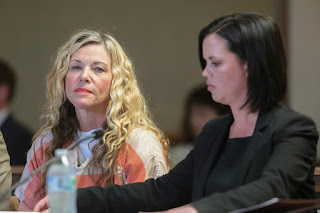
Mother linked to 'doomsday' group faces trial in her children's killings. Here's what to know.
It started with a pair of grandparents worried about their grandson. But the investigation into the 2019 disappearance of J.J. Vallow expanded to encompass three states, fringe “doomsday” religious beliefs and several suspicious deaths.
The 7-year-old boy’s mother, Lori Vallow, is now on trial on charges of killing him and his 17-year-old sister, Tylee Ryan. She also stands accused of other crimes alongside her husband, Chad Daybell — all driven by their alleged belief in an extremist, end-times ideology.
Here’s what to know about the case against Vallow, whose Idaho murder trial begins Monday with opening statements.
WHAT TO KNOW
- Who is Lori Vallow?
- How did the case against Vallow begin?
- What is known about Vallow’s religious beliefs?
- What should we expect from Vallow’s trial?
- What other details of people linked to Vallow and Daybell have authorities investigated?
- What other charges do Vallow and Daybell face?
Who is Lori Vallow?
Before the disappearance of her children catapulted her into the national spotlight, Vallow was a onetime beauty pageant contestant who weathered failed marriages and was seen by friends and neighbors as a devoted mother.
Born Lori Cox, she grew up in a Mormon family in Southern California, Inside Edition reported. She was a cheerleader with a wide circle of friends who told the news outlet that they lost track of her after high school.
In 2004, while married to third husband Joseph Ryan, she competed for the title of “Mrs. Texas.” Footage obtained by ABC News’s “20/20” showed the smiling blonde striding across a stage in a blue bikini and a sparkling evening gown. When the judges asked what made her tick, she said, “Being a good mom is very important to me and a good wife and a good worker. And being all those things is not easy!”
Then she quipped, “So I’m basically a ticking time bomb.”
Those who knew Vallow described her as a cheerful and put-together mother to J.J. and Tylee and wife to fourth husband Charles Vallow. A neighbor in Hawaii, where the couple lived and ran a juice stand for a time, told People magazine that she “seemed like a supermom.”
But behind the scenes, Vallow had by 2018 become enamored with another man: Chad Daybell, an author of self-published apocalyptic novels who was alleged to belong to a fringe religious group. In February 2019, Charles filed for divorce from Lori, saying in court documents that she had taken on alarming beliefs. By his telling, she viewed herself as a reincarnated deity on a divine mission to prepare people for the second coming of Jesus.
By July, Charles Vallow was dead — shot and killed by Lori Vallow’s brother at the home where she was staying in Chandler, Ariz. The killing was considered self-defense at the time. Within a few weeks, Vallow had moved to Rexburg, Idaho, with her brother and children.
How did the case against Vallow begin?
After more than a month of being unable to speak with J.J. in the fall of 2019, his grandparents became concerned. They asked police to conduct a wellness check, noting that J.J. had special needs.
When officers arrived at Vallow’s townhouse in Rexburg two days before Thanksgiving, J.J. was nowhere to be found. Vallow and Daybell told them the boy was staying with a family friend in Arizona.
Authorities soon determined that the parents’ story was not true, but when they returned to Vallow’s home with a search warrant the next day, she and Daybell were gone. Investigators discovered Tylee was also missing and neither child had been seen since September.
Vallow and Daybell took off for Hawaii, where they got married and dodged questions from police and journalists about the children’s whereabouts.
The investigation continued for months, spanning several states and growing to include the deaths of other people close to the couple, before investigators found the children’s remains in June 2020 on Daybell’s property in Idaho. A grand jury would later indict Daybell and Vallow on charges including first-degree murder and conspiracy to commit murder.
Prosecutors also filed murder charges against the couple in the October 2019 death of Daybell’s first wife, Tammy. She was initially believed to have died of natural causes, but her death came under new scrutiny amid the ever-expanding probe into Vallow and Daybell.
What is known about Vallow’s religious beliefs?
Police and court records from several states offer a glimpse into Vallow and Daybell’s allegedly extremist beliefs.
In January 2019, Charles Vallow called police in Gilbert, Ariz., to express concern that his wife was falling prey to a darkening ideology. Body-camera footage obtained by Arizona-based TV station 12 News showed him telling officers that the couple had been Latter-day Saints but that Lori Vallow had come to see herself as a spiritual being who could “murder you now with my powers.” He petitioned to have her mental health evaluated, and she was cleared.
Records, published by Salt Lake City-based TV station KUTV, from the Gilbert police investigation into Charles Vallow’s eventual death state that “Lori Vallow believed she was an exalted Goddess.” She thought she and Daybell had been “directed to lead 144,000 people in preparing for the end of the world.” The two claimed to possess the ability to teleport, harm others, launch natural disasters and pray away demonic spirits occupying other people.
Using their purported powers, Vallow and Daybell determined whether a person had a “light” or “dark” scale, based on whether demonic spirits were attached to them, according to the records. A person who shared their belief system had a light scale, while someone who opposed it had a dark scale. Vallow and Daybell ascribed dark scales to Charles Vallow, J.J. and Tylee, whom they considered “zombies” possessed by others.
The pair had reportedly drawn a handful of followers who bought into their beliefs.
What should we expect from Vallow’s trial?
Jury selection began April 3 for what is expected to be a weeks-long trial in Boise over the killings of J.J., Tylee and Tammy Daybell. The witness list, which documents who is expected to testify, is sealed and not visible to the public.
Cameras will not be allowed in the courtroom under an order from Judge Steven Boyce, who ruled in September that visual coverage of the proceedings could impede the “fair administration of justice.” He noted that he had already moved the case from Fremont County, where the children’s remains were found, to Ada County because of the unlikelihood of finding enough Fremont jurors who were not intimately familiar with the case.
Prosecutors sought to impose the death penalty on Vallow in case of a conviction. But last month, Boyce sided with arguments by Vallow’s team that the death penalty should be off the table because of her mental state, minor prosecutorial violations and other reasons.
What other details of people linked to Vallow and Daybell have authorities investigated?
Three other people connected to Vallow and Daybell have died suddenly in recent years.
In 2019, Vallow’s brother, Alex Cox, fatally shot her estranged then-husband, Charles Vallow. Cox had intervened in a physical fight between the couple, according to a police report obtained by the Phoenix-based TV station Fox 10. When Charles Vallow hit Cox with a baseball bat, Cox fired a gun at him, Lori Vallow told police.
Months later, Cox died of natural causes, according to a medical examiner’s report obtained by the East Idaho News. He was never charged in Charles Vallow’s death.
The deaths of Charles Vallow, Tylee and J.J. also prompted authorities to take a closer look at the 2018 death of Lori Vallow’s third husband, Joseph Ryan, whom they initially said died of a heart attack. The renewed investigation led them to affirm that Ryan, Tylee’s father, had died of natural causes.
What other charges do Vallow and Daybell face?
Like Vallow, Daybell is charged with murder in the killings of Tylee and J.J., and with conspiracy to commit murder in Tammy Daybell’s death. He also faces a murder count related to her and two insurance fraud charges for allegedly collecting her life-insurance proceeds after her death. Prosecutors say he signed an application to max out her policy weeks before she was killed.
Vallow and Chad Daybell conspired in all three killings with Cox, and possibly others, the indictment says. Daybell, whose case was initially linked to Vallow’s, is expected to be tried later.
In addition to the murder charges, officials charged Vallow with grand theft for collecting Social Security money meant to be used to care for Tylee and J.J., after they were dead.
Vallow and Daybell have pleaded not guilty to all charges in Idaho. Vallow has maintained that she is innocent and has alibis for the days when her children and Tammy Daybell were killed.
Charles Vallow’s death has also ensnared Lori Vallow in legal trouble: An Arizona grand jury in 2021 indicted her on a charge of conspiracy to commit murder after police said they found evidence that she and Cox had planned Charles Vallow’s death.
A spokeswoman for the Maricopa County attorney told the Arizona Republic that Lori Vallow cannot be extradited to Phoenix to face that accusation until her case in Idaho is resolved.
By Brittany Shammas
Brittany Shammas is a general assignment reporter for The Washington Post. Before joining The Post in 2019, she spent eight years writing for newspapers in Florida, including the Miami New Times and the South Florida Sun Sentinel. Twitter
By Marisa Iati
Marisa Iati is a reporter on the general assignment desk at The Washington Post. She previously worked at the Star-Ledger and NJ.com in New Jersey, where she covered municipal mayhem, community issues, education and crime. Twitter
https://www.washingtonpost.com/crime-law/2023/04/10/lori-vallow-trial-idaho-killings-faq/
Can I Sue Jehovah's Witnesses for Trespassing, Harassment, or Abuse?
FindLaw
April 10, 2023
Whether it's a Jehovah's Witness, a member of another religious organization, or someone else loitering at your doorstep, there are some situations where you can sue to keep them away from you.
Keep in mind that your lawsuit won't get anywhere if you're just suing for something petty. Someone knocking door-to-door isn't necessarily trespassing. If a person is just trying to talking to you (and even if they call you names), that's not automatically harassment.
On the other hand, if someone won't leave you alone or comes onto your property or person without your consent, they might be violating your legal rights. This is especially true if you ask them to stop or leave but they continue to repeat the bad behavior.
If you considering suing for trespass, you may want to speak to a personal injury attorney. If the harassment or abuse includes sexual assault or physical violence, you should consider speaking with a sexual harassment attorney. They will have experience dealing with people who won't stop bothering you.
Suing a Religious Organization
If the person bothering you is a member of a religious organization, you may be able to sue both that person individually as well as the organization that they represent or belong to. For example, the legal entity that Jehovah's Witnesses are associated with is the Watch Tower Bible and Tract Society, which is a non-profit corporation with church elders (officers) all over the country, including in big states like California and New York.
When an alleged abuser is a member of the Jehovah's Witness Church or is otherwise associated with the Jehovah's Witnesses Congregation, then you may be able to make a legal argument that when they do something bad, they are acting on behalf of their religious group.
Under the law of agency, someone who acts as an agent of an organization can create legal responsibility (liability) for that entity. When the organization sends that agent on a mission (e.g. a missionary) to do something—such as knocking on people's doors to promote a specific religion—then that person's actions can affect both the person individually as well as the entire organization that is behind them.
In other words, if you reasonably believe that someone who trespasses on your property or who harasses and abuses you is acting under the instruction, control, or authority of the Jehovah's Witness group of institutions, you can sue them individually and join the Watch Tower Bible and Tract Society as a co-defendant in your lawsuit.
Trespass Claims
When someone is knocking on your door to sell you something or tell you about the good news of the lord's love, they might already be on your property. But does that mean they're trespassing?
To trespass simply means to be on someone's land or property without their permission. While the law between states can be different, the elements of trespass typically involve:
- land or property that you own,
- which is intentionally or carelessly violated (entered) by someone,
- who doesn't have permission to be there,
- resulting in harm to you.
If a Jehovah's Witness walks up to your door, they aren't necessarily trespassing yet. This can change if they've already walked past your fence or they're standing on your porch, and you've asked them to leave. If they refuse, you may be able to sue for trespass and other claims discussed further in this article.
The above discusses trespass in the civil (private lawsuit) context. If you report trespass to the police, law enforcement officials can also bring criminal charges against a trespasser. As the victim, you may have a say in pressing charges and serving as a witness for the prosecution; however, it's ultimately up to your local prosecutor to decide whether or not to file a criminal complaint against the perpetrator.
Findlaw has general resources on trespass law, including trespass basics, that are highly recommended for further understanding of the legal concepts discussed here.
Intentional Infliction of Emotional Distress
As the law continues to evolve, states are recognizing claims that involve more than just physical harm. When someone causes mental and emotional damage to you through their abusive actions, you may be able to pursue them for negligent (NIED) or intentional infliction of emotional distress (IIED) depending on the rules of your state.
Infliction of emotional distress claims generally involve the following elements:
- outrageous or extreme behavior by someone,
- who is being either purposefully or carelessly abusive to you,
- and their actions cause severe emotional distress to you, including the possibility of physical harm.
For example, if a Jehovah's Witness elder keeps putting you down and calling you a liar for reporting a rape, they could be liable to you for NIED or IIED depending on how carelessly or purposefully they acted (or failed to act).
For a more general overview of harassment laws like IIED, check out our article on Suing for Harassment.
Restraining Orders
A restraining order or order for protection is a court order requiring that a person stay away from a victim. When you sue someone to get a restraining order, you're asking the court to force that person to maintain a safe distance from you at all times. A violation of the order can mean that the person can be arrested, fined, and/or imprisoned.
If someone is trespassing, harassing, or abusing you, document their behavior as best as you can. This means keeping text messages and records of annoying phone calls or e-mails, or documenting instances of stalking and persistent pestering. One or two isolated bad acts might not amount to anything on their own, but if you can show that a perpetrator has a pattern of engaging in behavior that threatens your safety, a court will be more likely to grant a restraining order.
While the requirements and consequences of a restraining order can vary from state to state, they'll generally involve the court's order that someone must stay away (up to a certain distance) from your:
- home and other permanent or temporary areas of residence
- car and other property
- place(s) of employment
The court might also order the perpetrator to:
- refrain from contacting you in person or otherwise (via your e-mail, social media, phone number, etc.)
- give up any firearms that they own
- avoid going to certain places or addresses where you might be present, such as the local school or library
While getting a restraining order might be a good start as far as keeping yourself safe, you may need to sue for additional claims to recover damages that you may have suffered from abuse and harassment.
Sexual Abuse Lawsuits
If you're holding back because of the “two-witness rule," please don't. Jehovah's Witnesses have an internal policy that requires “two witnesses" to prove that someone is guilty of sexual assault. The law, on the other hand, doesn't work that way. Even if you have just one witness or no witnesses at all, the courts have an interest in hearing your sexual abuse allegations.
Whether you were a Jehovah's Witness child when the crime occurred, or whether you've been subject to sexual abuse under the hands of any other religious organization later in life, you should strongly consider bringing a civil claim against the persons and institutions responsible for what happened to you.
Findlaw's sexual assault resources are a great starting point for understanding your rights. While sex abuse claims vary from state to state, any inappropriate sexual contact — even if it doesn't amount to rape — can be actionable in court. Some examples from our sexual assault overview page include:
- Fondling, kissing, or making unwanted bodily contact;
- Forcing another person to perform or receive oral sex;
- Forcing a tongue, mouth, finger, penis, or an object onto another person's anus or genitals; and
- Forced masturbation.
This is not an exhaustive list, and a victim's experiences can largely vary depending on many different (subjective and objective) factors. While this is a difficult topic for most victims, there's a good feeling about knowing that you're making your voice heard so that future generations won't have to be victimized by abusers.
The time to bring a sexual abuse lawsuit is limited by state law. Some states have extended or eliminated the statute of limitations (time limit) for plaintiffs to file sexual assault lawsuits. This is especially helpful to adults who were victims of child molestation in prior years, but lacked the independence or weren't old enough to know that they could assert their legal rights against criminal pedophiles.
The above discusses Jehovah's Witness sexual abuse claims in the civil (private lawsuit) context. If you report sex offenders to the police, law enforcement officials can also pursue criminal charges. If you are a victim of sexual abuse, you may have a say in pressing charges and serving as a witness for the prosecution; however, it's ultimately up to your local prosecutor to decide whether or not to file a criminal complaint against the perpetrator.
Class Action Lawsuits Against Religious Institutions
In recent years, religious groups have been criticized for allegations of child sex abuse. It has become commonplace to hear about child sexual abuse cover-ups, whether by the Catholic Church or by Jehovah's Witness Elders.
For this reason, Jehovah's Witness lawsuits can take the shape of class actions. This means that victims of sexual abuse (or other kinds of harassment) can come together in a group to combine their claims against the same defendant — the religious institution — that may be responsible for the abuse that they faced.
Depending on whether a class action lawsuit is being filed in state court or federal court, there are different requirements before it can be certified by the judge. A leader or “class representative" — typically someone who has suffered at the hands of a defendant and is intending to sue personally anyway — decides to sue the defendant on behalf of all other injured parties.
Unless you're in federal court, local laws can vary but in general, the leader of the class has to show:
- There are numerous plaintiffs who can be identified, and allowing them to join a single class action is a more efficient way of doing litigation.
- The plaintiffs' claims involve common factual or legal issues.
- The leader of the class has claims that are similar to or the same as those common legal issues and will be an appropriate representative of all the potential plaintiffs.
For example, if you grew up as a Jehovah's Witness in a community of children who were all abused by the same authority figure(s), you could be a class representative in a class action for all of the kids who suffered from the same kind of abuse that you had to endure. Those other children can then join the class action lawsuit or pursue their individual claims separately if they wish.
Remedies
If you win a lawsuit for trespass, harassment, or abuse, the court may award you a number of different remedies to try and make you whole for the damages that you suffered. Examples of relief include:
- Restraining orders: as already discussed above. Keep in mind there doesn't actually have to be physical “violence" committed against you for a court to grant you a restraining order. Harassment and abuse can take shape in different forms, and the facts of each case can be persuasive in their own unique ways.
- Injunctive relief: This is an order from the court forcing someone to stop doing something. It can be an order for an abuser to cease their harassment, or it can be a more general order against the entire religious organization that it must stop allowing abusive behavior to take place (such as by turning a blind eye to crimes like sexual assault).
- Compensatory damages, including money for pain and suffering, personal injuries, medical expenses, lost income, and other harms.
- Punitive damages to punish a defendant that acted with egregious disregard for your well-being.
Speak With a Harassment Lawyer
If you are being bothered by someone who is trespassing on your property, consider speaking with a personal injury lawyer. If you or a family member have been the victim of sexual abuse or someone has trespassed onto your property and won't stop harassing you, contact a sexual harassment attorney who can help you take legal action against the perpetrator.
You should obtain legal advice even if you don't believe your situation amounts to a sexual abuse case. More often than not, a sexual harassment attorney will have experience dealing with people who won't stop bothering you, even if there is no violence or sexual element to their annoying behavior. From a legal standpoint, it might be enough that only trespass and non-violent harassment occurred before you can bring a lawsuit.
Sovereign Citizens Turn on Each Other Over $200K Fake License Plates
A well-known member of the far-right movement who is known for his outlandish legal theories has been given the boot as two prominent branches turn on each other.
Daily Beast
Members of the far-right sovereign citizen movement are best known for their clashes with law enforcement. In traffic stops and courtrooms across the country, sovereign citizens have tried—and failed—to implement their bizarre homemade legal theories when faced with the enforcement of legitimate laws.
But now two prominent branches of the movement have turned on one another, feuding over a lucrative scheme to sell fake license plates for a nonexistent “Republic of Texas.”
The feud pits the citizens of a fictitious entity called the “Republic of Texas” against David Straight, a so-called sovereign-citizen “guru” whose seminars on his legal theories have raked in big money across the country. Complicating the spat further, Straight’s wife was arrested Monday on a raft of charges.
In the past, Straight and the so-called “Texians” have been natural allies. They both subscribe to the eclectic ideas of the sovereign citizen movement which broadly encompasses groups of people who believe they exist in parallel legal universes and can, through elaborate legal filings and careful courtroom rhetoric, evade actual laws.
But the relationship between the Texas sovereign citizens and one of the movement’s most prominent members broke down this month, after the Texas group accused Straight of getting rich by selling fake license plates that sovereign citizens believe would help them avoid police. In total, the group claims Straight may have made nearly $200,000 off the bogus plates.
Straight and the Republic of Texas’ leadership didn’t respond to requests for comment.
For the Republic of Texas, beliefs in their own legal impunity have turned violent. In 1997, one branch of the group kidnapped two people and held them as hostages, demanding the release of a “Republic of Texas” member who had been arrested for pushing fake legal documents. After a weeklong standoff with law enforcement, one of the group’s members was killed after shooting at a police helicopter. The group landed on law enforcements’ radar again in 2015, after its members sent faux-legal documents to a judge, prompting an FBI raid on a meeting.
Straight, meanwhile, has become one of the leading figures of the sovereign citizen movement, often pushing his theories at multiple seminars a month where tickets can cost more than $150. At his well-attended events, Straight rambles for hours about his oddball legal ideas, drawing complex diagrams on a white board and claiming that the American Bar Association is responsible for most of the problems in the United States.
Straight has risen to become a “sovereign citizen guru,” according to the Anti-Defamation League, insisting that his followers can break free of the regular legal system and become free-roaming “American State Nationals” if they just buy the right forms from him.
Since at least March, Straight has been promoting another potentially lucrative plan, offering tiny, nine-foot plots in the “Republic of Texas” for $387. In the twisted logic of sovereign citizens, that would mean anyone in the country could buy a plot and renounce their American citizenship to become “Texians.”
But an add-on deal sold by Straight as part of the land deal went even further, selling a “Right to Travel” package for $512 that offered a fictitious “Republic of Texas” license plate. On his website, Straight claims any driver with the license plates couldn’t be legally pulled over for a traffic stop. Sweetening the deal, Straight claimed a holder of the plates could even sue any police officer who pulled them over for substantial damages, with Straight’s wife as their lawyer.
The license-plate deal angered the sovereign citizens in the Republic of Texas, who appear to be concerned about running. In a pop-up on their website, the group claimed they’ve been deluged with unhappy customers complaining about Straight.
On their website, the Republic of Texas claimed Straight sold the land-and-plate packages for $897 to more than 200 people, making roughly $179,400. But after running afoul of law enforcement in the past, the “Texians” say they want no part of this license-plate operation, warning that anyone with the plates does “so at their own risk.”
“The Republic of Texas will not be held responsible for the potential unlawful ramifications from the sale of these packages,” the website notes.
Amid the fight with the “Republic of Texas,” Straight’s wife, Bonnie Thomas, was arrested Monday outside of Fort Worth. She faces four charges, according to a county jail website: carrying a weapon in a prohibited place, illegal burning, resisting arrest, and assault a police officer or judge. No further details were immediately available, and it’s not clear whether her arrest is related to the fake license plates.
As of this writing, Straight hasn’t acknowledged that he’s been disowned by the fictitious “Republic of Texas” where he’s claiming to sell land. His website still offers the license plates, plus another unusual benefit: access to a future RV park open only to sovereign citizens.
https://www.thedailybeast.com/top-sovereign-citizen-david-straight-kicked-out-over-fake-license-plates
Apr 10, 2023
Cubans seek solutions and solace in SanterÃa amid crises
April 9, 2023
HAVANA (AP) — From a two-room concrete home on the fringes of Cuba’s capital, the rumble of wooden drums spills out onto the streets.
Neighbors gather at the door and kids climb a fence to peer inside. They watch as dozens of Cubans wearing white and African beads make offerings at a bright blue altar consuming half a room, asking for luck, protection and good health.
While nearly 70% of Latin America’s 670 million people consider themselves Catholic, in Cuba, SanterÃa is the name of the game.
A fusion of African religions and Catholicism, SanterÃa was one of the few religious practices to quietly endure through decades of prohibitions and stigma by the communist government.
Now, as that stigma gradually fades and the country enters a moment of compounding economic, political and migratory crises, the religion is growing in popularity and expanding to new demographics.
“Every day the religion grows a little more,” Mandy Arrazcaeta, 30, said among the throngs of people in his home dancing and making offerings at the altar to a plastic doll depicting the Yoruba deity Yemayá. “Right now, SanterÃa in the country is a sort of bastion.”
SanterÃa was born as a form of quiet resistance among the island’s black communities. The religion dates back centuries to when Spanish colonists brought in hundreds of thousands of African slaves.
While the Spanish tried to force Catholicism on the slaves, the Africans brought their own religions, mostly from West Africa, which they would camouflage by attaching their deities — orishas — to Catholic saints.
Cuba’s patron saint, Our Lady of Charity, for example, blended with the golden deity, Oshun.
“It would mix and mix ... through this Catholic virgin, they would speak to their African saints,” explained Roberto Zurbano, a Cuban cultural critic. “That’s how the religion was able to survive.”
While there are hundreds of orishas in SanterÃa, practitioners known as santeros usually worship only a handful, connecting with them through rituals and offerings.
On one Friday night, Arrazcaeta, family and friends splay out offerings of coconut and red Cuban pesos emblazoned with the face of Che Guevara, sacrificing two chickens over bowls filled with rocks and seashells. In exchange, they ask for good health, strength during hardship, and even luck in love.
“It’s something that’s very Cuban, something spontaneous that we do. Because we know the struggles we face in this country,” Arrazcaeta said.
Millions worldwide are estimated to practice SanterÃa, though definitive numbers – especially in Cuba – are hard to pin down due to the religion’s informal nature. The U.S. Commission on International Religious Freedom estimates 70% in Cuba practice some version of Santeria or similar African-based religions.
What is clear in the altars dotting homes across the island and the many Cubans in Havana cloaked in white – worn by santeros their first year after converting to represent rebirth – is that SanterÃa has captured the Cuban consciousness.
Following the Cuban revolution in the 1950’s, Fidel Castro dismantled religious structures and expelled the priests who criticized his government. Religion, famously described by communist philosopher Karl Marx as “the opium of the people,” was strictly prohibited.
Catholicism, highly dependent on meeting in churches and on hierarchy, withered.
Meanwhile, SanterÃa practitioners pulled from the same tools they used to survive in earlier centuries.
“People did believe, but you couldn’t say anything because it was politically prohibited by Marxism. All that did was strengthen Afro-religious faiths in very closed circles,” Zurbano said. “They would keep it a secret, keep their religiosity to themselves.”
Zurbano’s family would quietly perform rituals inside their home and divide ceremonies that once would last a week into smaller two-day chunks to avoid alerting authorities. Some adherents secretly wore religious garb under street clothes.
Katrin Hansing, an anthropologist in Cuba for City University New York, said SanterÃa endured because of its flexibility, and because of its perceived utility in assuring good health in exchange for offerings.
In the 1990s when Cuba’s main ally, the Soviet Union, collapsed and the island spiraled into economic crisis, many Cubans found solace in SanterÃa.
The Cuban government has accepted it, but the officially authorized ceremonies remain practically deserted, as islanders prefer celebrations in more informal settings such as Arrazcaeta’s home.
“It’s incredibly resilient as a religious system,” Hansing said. “It’s so decentralized and it allows the individual believer or practitioner to make it what they need it to be.”
SanterÃa is once again seeing a surge, and expanding past historically impoverished black communities.
Arrazcaeta, a white Cuban and member of the LGBTQ+ community, found refuge in the religion when he was 12. Once an Evangelical Christian, he said he felt rejected by members of that religion for being gay.
“I never fit in that religion,” Arrazcaeta said. “I liked that Santeria doesn’t obligate anyone to fit into a model.”
As a teenager, he began putting glasses of water around the house, as offerings to orishas. His mother, Maritza de la Rosa Perdomo, would throw the water out, saying there was no place for religion in her home.
That changed three years ago, when Arrazcaeta joined a wave of Cubans in embarking on a journey to the U.S., traversing the perilous jungles of the Darien Gap.
When Arrazcaeta went missing for seven days in the jungle, the first thing Perdomo did was put out an offering.
“I began to beg for my son, I said I needed to hear from him, to know that he was alive. I was begging with my whole heart,” Perdomo said.
When she received a call from him shortly after, she decided to join the religion alongside her children.
“A religion that used to be, you know, dominantly practiced by descendants of Africans or people of African descent has now become a multiracial religion in Cuba,” Hansing said. “SanterÃa has grown enormously.”
But for each practitioner, SanterÃa means something different.
For Arrazcaeta, who nowadays travels between Cuba and work in Florida as an Uber driver, SanterÃa is a spiritual experience. For Perdomo, it’s a way of seeking good health. For both, it’s a way to stay connected with the other an ocean away.
“Today, the entire country is dressed in white,” Perdomo said.
https://apnews.com/article/cuba-santeria-religion-e7bf183a2c2bdbe2e3ed4ff85a142b31
What’s Behind the Fight Between Pope Francis and the Latin Mass Movement?
The discord has become a stand-in for conflicts over the decline in Catholics' participation in Mass, over the progressive orientation of Francis's pontificate, and over Vatican II itself.
Paul Elie
The New Yorker
On January 15, 2022, the Catholic archbishop of San Francisco, Salvatore Cordileone, celebrated Mass at St. Patrick's Old Cathedral, at Mott and Prince Streets, in Manhattan. The cathedral, erected in 1815, is the predecessor to the present cathedral on Fifth Avenue, and it puts in mind the Catholicism of the nineteenth and early twentieth centuries, when Irish, German, Italian, and Polish immigrants settled in great numbers in New York City. The Mass itself also called Catholic history to mind: it was the "Mass for the Americas," a work for choir and orchestra commissioned by Archbishop Cordileone and incorporating texts in English, Spanish, Latin, and Nahuatl—the Indigenous language spoken by Juan Diego, whose visions of the Virgin Mary in Guadalupe, in 1531, figure into the foundation story of Catholicism in Mexico.
Cordileone, clean-shaven, wearing a white cassock edged with lace, offered the Eucharistic prayers in Latin while facing away from the congregation, as priests did prior to the Second Vatican Council, which concluded in 1965. In doing so, he took a stand in an unlikely pair of controversies. By facing the altar, he affirmed the prerogatives of a movement of Catholics devoted to the Latin Mass—a movement that has met resistance at the Vatican under Pope Francis. Cordileone, who was unvaccinated and did not wear a mask, was also defying a covid-19 city ordinance compelling venues hosting public gatherings to require masks or proof of vaccination.
Since then, the controversies have hardened into direct conflict. The Traditional Latin Mass, long a source of sustenance for Catholics leery of the reforms of Vatican II, is now a focal point for Catholics who disdain Pope Francis. The death, in December, of Benedict XVI, the Pope emeritus, left Catholic traditionalists without a champion in Rome. Benedict's views on the Mass were complex, but his preference for Baroque vestments (red slippers, a gold-threaded cope) had made him a figurehead for old-school Catholicism; his long efforts to close a breach between the Vatican and the Society of St. Pius X—a cadre of Latin-reciting priests whose leaders were excommunicated in 1988—had emboldened the T.L.M. movement, and a directive he issued in 2007 had quickened the movement's spread. Then, in early February, the publication of a leaked report from an F.B.I. branch office declaring that Latin Mass enclaves in Virginia harbored antisemites and members of the "far-right white nationalist movement" led traditionalists to claim that a religion-averse deep state was targeting them, and the Bureau's retraction of the report soon afterward (it did "not meet the exacting standards of the F.B.I.," the Bureau said in a statement) only sharpened their sense of themselves as a persecuted minority.
Above all, a pair of terse "instructions" issued by Francis have stirred opposition. In July, 2021, the Pope required priests who wish to celebrate the old Mass to seek permission from their bishops, compelled the bishops to get clearance from the Vatican (which Benedict's directive did not do), and forbade bishops to authorize the founding of Latin Mass groups in individual dioceses, which would serve to build up the movement as an alternative form of weekly worship. In February, he reiterated that position. The instructions were meant to tamp down the T.L.M. movement lest it deepen, as Francis put it, "the peril of division" in the Church. But, by requiring a bishop's permission, they gave fresh authority to the bishops who cherish T.L.M.—such as Cordileone and Michael F. Burbidge, in Arlington, Virginia—and prompted Latin Mass enthusiasts to decry a Vatican crackdown on true believers. They also undermined the image of Francis as a "pastoral" Pope who urges Catholics to go "to the margins" and uses a personal touch to bridge the gaps between doctrine and practice, and they drew the expressly forward-looking Pope deeper into a sustained conflict about the status of the Catholic past.
On the surface, it's hard to see what all the fuss is about. Latin Mass adherents are a tiny minority of practicing Catholics, and most Church traditionalists—bishops, priests, and laypeople alike—are content to take part in Masses offered in the language they speak in everyday life. (In the Archdiocese of New York, Mass is offered in more than a dozen languages.) But the T.L.M. conflict has become a stand-in for other conflicts: over the decline in Catholics' participation in Mass and the quality of the liturgy; over the outward-facing, progressive orientation of Francis's pontificate; and over Vatican II itself, which traditionalists see not as a thoroughgoing reform but as something between a modest course correction and a betrayal of the Church's patrimony.
For many centuries, especially after the Council of Trent concluded in 1563, the Latin Mass, celebrated according to strict rubrics under the supervision of Rome, was the main thing that all Catholics had in common, and a sign of their difference in the eyes of the wider world. During the suppression of Roman Catholicism under Queen Elizabeth I, Jesuits in England celebrated Latin Mass in secret—and some who were caught were hanged, drawn, and quartered. Charles Dickens, in "Pictures from Italy," describes arriving in Modena on a Sunday in 1844 and stepping "into a dim cathedral, where High Mass was performing, feeble tapers were burning, people were kneeling in all directions before all manner of shrines, and officiating priests were crooning the usual chant, in the usual low, dull, drawling, melancholy tone." In Graham Greene's "The Heart of the Matter," Henry Scobie, at Mass with his wife while carrying on an affair with a younger woman, wonders whether he is damned: "Hoc est enim Corpus: the bell rang, and Father Rank raised God in his fingers—this God as light now as a wafer whose coming lay on Scobie's heart as heavily as lead." In "The Godfather," the grisly murders of various dons are intercut with scenes from a baptism during a Latin Mass. The lyrics that Bono sang in U2's breakthrough video "Gloria"—"Gloria, in te domine / Gloria, exultate"—echo the Latin Mass, and countless other baby-boom Catholics have characterized regular immersion in the old Latin rite as the formative experience of their childhood. "Dominus vobiscum. Et cum spiritu tuo," Anna Quindlen wrote in the Times, in 1986. "These are my bona fides: a word, a phrase, a sentence in a language no one speaks anymore."
By then, the Latin Mass was twenty years out of use. The vast renewal of Catholic life and practice brought about through the Second Vatican Council began with the reform of the liturgy, building on several decades of efforts inspired by historical research or trends in the arts. Moving the altar away from the far wall; turning the priest to face the people; shifting the proceedings from Latin to the vernacular (a Latinate word for the everyday language of a people or region); enjoining people to recite the prayers themselves, rather than just listen to the priest murmur Latin words they barely understood—all these reforms were meant to elicit a "full and active participation" in the liturgy. The new approach began to be instituted in 1965. Plenty of people complained. A 1969 papal document—with the Latin title "Novus Ordo"—reaffirmed the changes. A sense of grievance became a sense of loss, which Garry Wills described in his book "Bare Ruined Choirs" (1972): "Even the Mass, the central and most stable shared act of the church, had become unrecognizable to many—a thing of guitars instead of the organ, of English instead of Latin, of youth-culture fads instead of ancient rites." The essayist Richard Rodriguez, a decade later, observed: "No longer is the congregation moved to a contemplation of the timeless. Rather, it is the idiomatic one hears. One's focus is upon this place. This time. The moment. Now."
Yet the new center held. The folk-Mass trend subsided. Tasteful, historically evocative vernacular Masses emerged, some flecked with Latin here and there. Pope John Paul II, who was deeply traditional in matters of doctrine and morality, led open-air Masses that were profoundly nontraditional: huge crowds, people waving banners and snapping photos, the Pope sporting regional garb (a headdress in Mexico, a staff and shield in Kenya) and reading from scripts in local languages. Two generations of Catholics came of age with no memory of the old ways. The ads in the Saturday Times announcing "Traditional Latin Masses" at a chapel on Long Island seemed like postings of a secret society.
In a way, they were, but the T.L.M. movement grew and came in from the cold, stimulated by forces akin to those which had led to the doing away of it in the first place. Some Catholics found the no-longer-new vernacular Mass rote and dispiriting. The thirty-five-year run of John Paul and Benedict tilted the clergy rightward, and many of the most ardent Catholics in those years were the most traditional ones, who sought out the Latin Mass for the qualities celebrated in literature, music, and art, as well as in the vast corpus of Catholic thought prior to 1965.
It was no surprise that many such people would be conservative politically or that they would see the government as hostile to religion—a tendency heightened during the pandemic, when New York and other states imposed stricter restrictions on gatherings at churches than in supermarkets or restaurants. Nor was it a surprise that the archbishop most prominent in the effort for liturgical restoration, Cordileone, was the one who tangled most visibly with a progressive Catholic politician, telling Nancy Pelosi, whose congressional district includes San Francisco, that he would withhold Communion from her at any Mass where he was presiding because of her support for legal abortion. Six months after celebrating the Mass of the Americas, in Manhattan, Cordileone led a simplified "parish version" at the Meritage Resort and Spa, in California's Napa Valley, during the summer conference of the Napa Institute—a deep-pocketed traditionalist advocacy group that has sponsored and funded a range of T.L.M. initiatives alongside its own efforts to build Catholic support for an unregulated free-market economy and to reshape the Supreme Court along traditionalist Catholic lines.
And the T.L.M. movement's association with antisemitism is not completely a figment of an F.B.I. field officer's imagination: shortly after Pope Benedict welcomed the schismatic Society of St. Pius X back into the Catholic fold in January, 2009, an interview from a few days earlier surfaced, in which its leader, Bishop Richard Williamson, denied the reality of the Holocaust. "I believe there were no gas chambers," he said. (The Vatican suspended him from priestly duties, and he was later ousted from the Society.) The broader movement is clearly distinct from the S.S.P.X., but Pope Francis is not wrong to see the movement, even at its most benign, as a challenge to Catholic unity in general and to his pontificate in particular. And yet it's also true that a range of dynamic movements within Catholicism—for gay rights, for women's ordination, for more open church governance—could be seen by some as threats to the unity of the Church. That's not a sound reason to suppress them, and, more than those movements, the T.L.M. has a definite precedent in past Catholic practices.
What, then, should Francis do about it? His three-day stay in the hospital prior to Holy Week (he had bronchitis, a spokesman said) served to focus public attention on the limitations imposed by his age—he is eighty-six—and his precarious health. La Croix's Vatican correspondent, Robert Mickens, mused that "perhaps it is time for him to start expending his energy more strategically." In the past year, Francis has deepened ties with Muslim leaders, the Archbishop of Canterbury, and the government of China, among other entities. Now he could seek rapprochement with the T.L.M. movement, reaching out to traditionalists in the Church he leads.
There's no need for Francis to make a journey or appoint a commission; he could do it right from his desk. In his role as the bishop of Rome, he could authorize a Latin Mass celebrated by a bishop who shares his outlook—say, Cardinal Arthur Roche, who leads the dicastery that oversees liturgical matters—thus decoupling the T.L.M. movement from the opposition to his pontificate. He could make sure the T.L.M. gets some attention at the synod in Rome this October, which is meant to be a space for dialogue among Church leaders. Or he could do the kind of things he has done to affirm the value of other movements—invite a Latin-loving bishop for a photo op at his desk, or make a vague but appreciative remark in an interview. At the moment, the T.L.M. movement is still on the margins of the Church; to keep it there, paradoxically, Francis has to go to the margins and engage with it personally. ♦