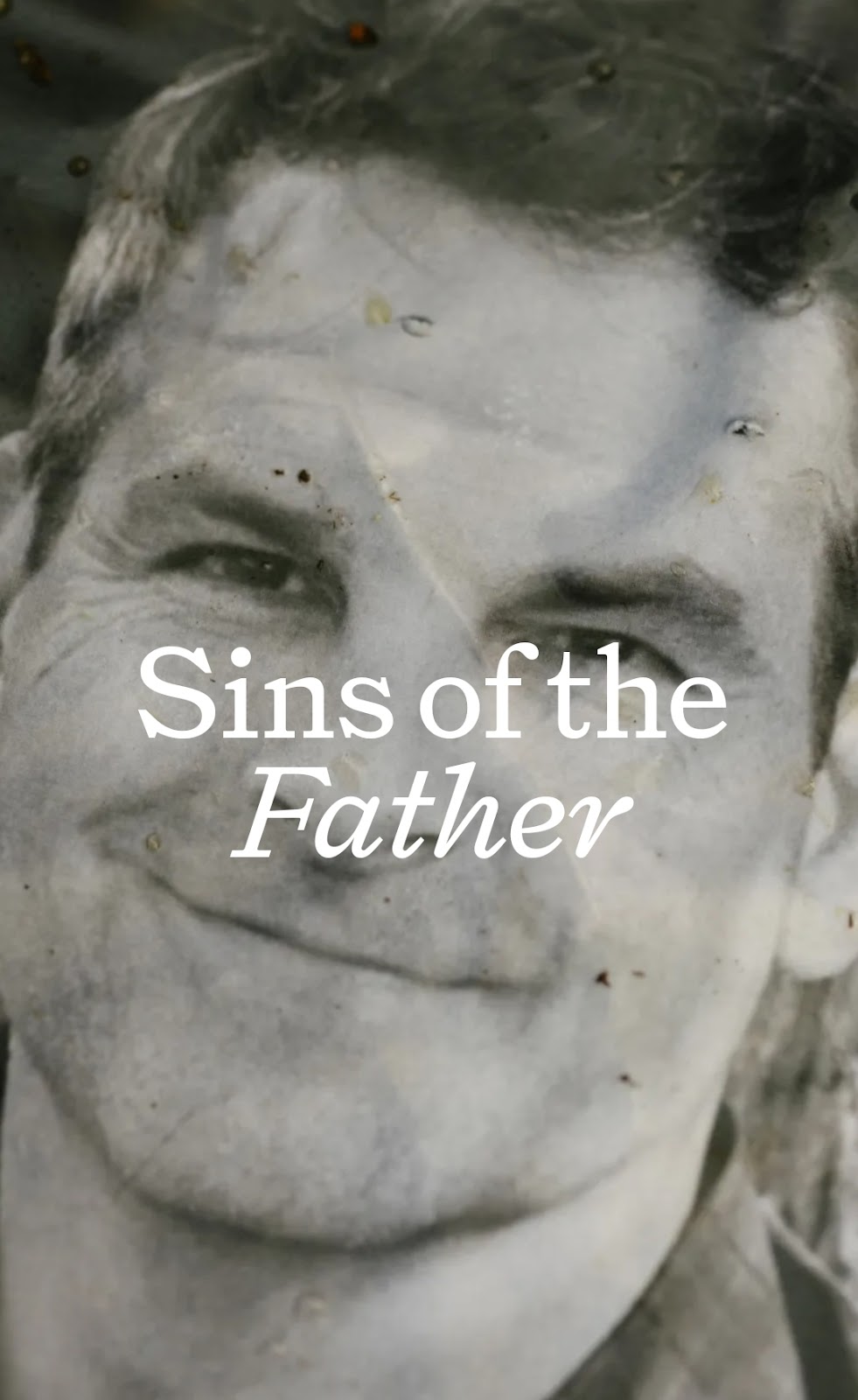
By Eric Pape
The Atavist Magazine, No. 137
A small, good-natured boy named Pierce O'Loughlin was growing up between the homes of his divorced parents in San Francisco. Nine-year-old Pierce was accustomed to custody handoffs taking place at Convent and Stuart Hall, the Catholic school he attended. On changeover days, one parent dropped him off in the morning at the hilltop campus overlooking the bay, and the other picked him up in the afternoon. The parents avoided seeing each other. Their split had been ugly.
On the afternoon of January 13, 2021, Lesley Hu, Pierce's mother, arrived at Convent and Stuart Hall for a scheduled pickup. Hu planned to take Pierce to a Coinstar machine to exchange a small bucket of coins for a gift card he could use to buy toys. Then they would go to dinner at a restaurant called House of Prime Rib, because Pierce loved to eat meat.
But Hu's son wasn't waiting for her at the school. Staff told her that he had been absent that day. They didn't know why.
Another mom might have assumed that her child had a cold or that his dad had let him skip school and taken him somewhere fun for the day, but not Hu. She wondered if Pierce had been kidnapped—not by a stranger but by his own father.
Over the course of their marriage, Hu had watched as her now ex-husband, Stephen O'Loughlin, became obsessed with pseudoscience, self-help gurus, and conspiracy theories, spending long nights watching videos online, then sharing the details of fantastical plots with Hu, their friends, and people he barely knew. The COVID-19 pandemic had only made things worse. O'Loughlin huddled for hours at his computer streaming YouTube clips and poring over right-wing websites—what he called "doing research."
One of O'Loughlin's fixations was vaccines. He believed that Pierce had been damaged by the routine inoculations he received as a baby. O'Loughlin was adamant that the boy be given no more shots—not for COVID-19, when a vaccine was eventually authorized for kids, nor for any other disease.
In 2020, Hu had filed for the sole legal right to make decisions about her son's medical care, which would empower her to vaccinate Pierce regardless of what her ex wanted. She felt good about her chances in court. On January 11, as a condition for a continuance he had requested in the medical custody case, O'Loughlin suddenly agreed to let Pierce receive two vaccinations. In retrospect, according to Hu's attorney, Lorie Nachlis, "it all seemed too easy."
When Hu discovered that Pierce wasn't at school, she wondered if O'Loughlin had agreed to the vaccinations only because he was plotting to steal Pierce away before their son could receive them. To Hu it wasn't improbable—her ex seemed that far gone.
Hu and her boyfriend, Jim Baaden, had recently decided to move in together; Hu was planning to tell Pierce the news that evening at dinner. Now Baaden picked Hu up at Pierce's school, and together the couple sped to O'Loughlin's home in San Francisco's posh Marina District, trying not to dwell on worst-case scenarios.
When they arrived outside O'Loughlin's Mediterranean-style apartment building, they noticed that the blinds in the living room, which was on the ground floor of the unit, were drawn but disheveled. For a moment, Baaden recoiled. O'Loughlin was a gun owner. What if he'd barricaded himself and Pierce in the apartment? Baaden imagined O'Loughlin aiming the barrel between the blinds, ready to shoot.
Baaden and Hu approached the building's intercom and buzzed O'Loughlin's apartment. No one answered. Hu began banging on the door to the building and screaming. She considered breaking in, but Baaden told her to call 911 instead.
Hu could not fathom how someone like O'Loughlin—a man of means and privilege—had come to believe outrageous lies. She knew that various misinformation networks and snake-oil salesmen had facilitated her ex's paranoia and exploited his psychological fragility. But Hu had always stayed focused on what she considered her most important task: raising and protecting Pierce.
There would be time in the future to consider, almost endlessly, what happened to O'Loughlin. For now, in a panic, all Hu could do was wonder: Where had he taken their son?
A dozen years earlier, Stephen O'Loughlin was a very different man. At least he seemed to be when Hu first met him at an Italian wine bar. O'Loughlin, then in his mid-thirties, with a strong jaw and a slightly crooked smile, started chatting her up. He said that he was in finance and that he worked out. Hu, 28, wasn't interested in his advances. She considered herself an independent woman. She worked in midlevel management and had served as the executive director of the Hong Kong Association of Northern California, a business group. The child of immigrants, she had aspirations to achieve more, to make her parents proud. Besides, she had gotten out of a long relationship recently, and she wasn't at the bar looking for a date—she was there to cheer up a friend going through a tough time.
But O'Loughlin was persistent, and after several glasses of champagne, Hu decided that he was funny. He asked her charming if oddly specific questions: What was her favorite kind of wine? What sort of bottled water did she drink? As Hu prepared to leave, O'Loughlin asked for her number. She hesitated but gave it to him.
He texted to ask her out. She had a busy work schedule at her family's company, which leased shipping containers, but O'Loughlin insisted that they find time to meet as soon as possible. When they did, he picked Hu up in a brand-new car stocked with her favorite water. A bottle of sparkling rosé she liked was waiting at the restaurant where they'd be dining. "He remembered everything I said the night we met," Hu explained.
They began going out with friends for fun, alcohol-infused nights at clubs around San Francisco. O'Loughlin often brought Hu flowers. He was generous, picking up the tab on club nights and when dining out with Hu and her parents. "He was like that for months," Hu recalled. "He said that he'd talked to his Asian friend and that he should be generous with my family." Reaching for his wallet at the end of a meal, O'Loughlin would insist, "No, I've got this." (Hu later learned that he'd been using his professional expense account.)
Early in their relationship, O'Loughlin, who grew up in Ridgefield, Connecticut, painted an incomplete picture of his parents and sister. His mother, he told Hu, was "the greatest person in the world." He was more reserved when talking about his father. He said that he adored his two nieces, and when he and Hu visited the girls on the East Coast, O'Loughlin took them to Toys "R" Us and bought them whatever they wanted. "They were elated, so surprised," Hu said. She told O'Loughlin she wanted kids of her own. He said he did, too.
Still, when O'Loughlin proposed after about a year of dating, Hu wasn't sold on the idea. She didn't like the way O'Loughlin, an arch conservative, got blustery when talking about politics. Hu, a Democrat, didn't feel like he listened when she spoke about serious issues. O'Loughlin projected such certainty about their future as a couple, however, that Hu found herself saying yes to marriage.
Almost immediately after the engagement, O'Loughlin changed. The flowers, gifts, and other gestures of affection disappeared. He stopped paying for meals with Hu's parents. Hu realized that O'Loughlin's generosity had been transactional. He was a salesman by trade, peddling financial services for the firm Eaton Vance, and he brought the strategy of his job to his personal life: Once he landed a deal, he stopped spending time and energy on it.
Hu's parents were concerned. Her dad took O'Loughlin out for a drink and suggested the couple at least wait a while to get married. "Steve came back really angry," Hu said. After that, O'Loughlin attended gatherings of Hu's family only begrudgingly. He wore what Hu called his "shit face," looking bored or angry. He urged Hu to quit her job at her family's company.
The situation became so bad that Hu gave her engagement ring back. "I can't do this," she told O'Loughlin. "It's really hard." As both of them wept, O'Loughlin promised to do better. Hu wanted to believe him. In return, she agreed to leave her job. "It was the only way it would work," she said. O'Loughlin couched distancing Hu from her family and their business as an opportunity: He suggested that she could find employment in fashion retail, a field he knew she was interested in.
Figuring out a new career path, however, took a back seat to wedding planning. Hu threw herself into designing a celebration in Italy, until O'Loughlin nixed the idea. Instead, they reserved space at a resort in Santa Barbara. They were married in front of 150 guests on October 10, 2010.
For their honeymoon they traveled to the Maldives, the tropical archipelago in the Indian Ocean. Hu described it as "paradise." The newlyweds stayed in an elegant cabin suspended over pale blue water alive with stingrays and other aquatic life. They were supposed to be spontaneous, to relish nature, to jump in the water whenever they felt like it. But O'Loughlin was hardly in the moment; he took part in a single activity with his wife each day, then went back to their room to immerse himself in self-help books. He complained to Hu and was rude to hotel staff, especially waiters. When he learned that most of the employees, like nearly all residents of the Maldives, were Muslim, he seemed disturbed.
Hu noticed something else: O'Loughlin wouldn't walk beside her. He was always a few steps ahead. "Anywhere we went," Hu said, "I was secondary."
It was all enough to make her contemplate a quick divorce right after the honeymoon. But when they were back in California, Hu was hit with waves of nausea. A test confirmed that she was pregnant. She decided it was no time to break up the marriage.
Despite what he'd said while courting her, O'Loughlin didn't seem excited by the prospect of having a child. According to Hu, he acted as if she wasn't pregnant. He didn't ask how she was feeling and didn't want to put his hand on her belly when the baby kicked. He took Hu on a babymoon to Australia, only to reveal that the trip coincided with an installment of Unleash the Power Within, an event organized by self-help guru Tony Robbins. Among other things, O'Loughlin was drawn to Robbins's idea that nutrition was an essential building block of self-improvement. He started eating dressing-free salads and supplement-filled health shakes that he insisted Hu prepare for him.
O'Loughlin also became convinced that Eaton Vance was swindling him. He talked Hu in circles about how he should have been earning far more money through commissions than he was, and he became argumentative with his bosses. Late in Hu's third trimester, O'Loughlin sat down with colleagues for what he thought was a regular meeting. Instead, they took his work computers and informed him that he was fired. As Hu's due date approached, O'Loughlin became preoccupied with the idea of suing the company.
Hu went into labor on July 27, 2011, nine months and 17 days after her marriage to O'Loughlin. It was a difficult birth. Hu, a petite woman, had to deliver an 8.3-pound baby. She was in such tremendous pain that doctors pumped her full of medication. "I couldn't push the baby out, so they used a vacuum [extractor]," Hu said. Once Pierce arrived, there were more complications—his oxygen levels were dangerously low.
Rather than express concern for the baby or his wife, O'Loughlin seemed put off by everything that was happening. He had expected a cinematic birth. "He kept saying, 'That wasn't normal,' " Hu recalled. "He was so obsessed with the birth not being right."
Nothing, it seemed, was ever right for O'Loughlin.
O'Loughlin wouldn't walk beside her. He was always a few steps ahead. "Anywhere we went," Hu said, "I was secondary."
O'Loughlin didn't sue Eaton Vance, perhaps because Hu and her family convinced him that he would lose. After Pierce's birth he got another job, but he didn't like his boss, a woman of color, and quit after a few months. O'Loughlin had sold his bachelor pad in San Francisco for a tidy profit, and he and Hu moved to a new home in Carmel-by-the Sea, a wealthy, picturesque beach community about 120 miles south of San Francisco.
As O'Loughlin coasted along without a job, he all but ignored Pierce. Hu had to handle every feeding and diaper change. "All Stephen would do was sing to the baby," she said. O'Loughlin preferred to spend time engaging with the world of gurus and life coaches.
His friend Todd Criter saw this growing fascination firsthand. Criter, a longtime financial adviser at Merrill Lynch, met O'Loughlin in 2009. "We'd go to the best restaurants in the city, thanks to his expense accounts," Criter said. O'Loughlin was charismatic and ambitious, with a head for numbers. Criter liked the guy but "never felt like Steve had a big heart." If anything, O'Loughlin seemed "cold and calculating."
Criter had gotten into Tony Robbins back in the early 1990s, after seeing the impresario on late-night TV. Robbins was just becoming a household name; in a few years, he would claim President Bill Clinton as a client and be well on his way to building a business empire. (Multiple fans and former employees have since accused Robbins of sexual harassment; he has denied any wrongdoing.) Criter liked the way Robbins talked about business mastery and developing discipline, and decided to buy the guru's cassettes and books.
Two decades later Criter had outgrown Robbins, but after being fired from Eaton Vance, O'Loughlin doubled down. That meant spending money. The underlying concept of Robbins's organization is that a person can buy access to empowerment, and paying more means getting more. Robbins's offerings are tiered: You can buy a ticket to an event or pay a premium for the best seating. For about $85,000, an acolyte can get "platinum" access, which includes face time with Robbins and his wife, Sage.
O'Loughlin couldn't comfortably afford to go platinum, but Hu estimated that he still spent tens of thousands of dollars on all things Robbins. He became a facilitator in Robbins's organization and attended weekend training events with the man himself. He also went with Criter to a 2012 gathering in Palm Springs called Date with Destiny, which promised to help attendees "discover your purpose in life." Robbins's marathon sessions lasted deep into the night. Criter remembered the room where they took place being strangely chilly. Participants were pushed out of their comfort zones, encouraged to talk about pain and trauma. The experience could be exhausting and disorienting. "It's like he's going to break you," Criter said. "The only thing missing was waterboarding."
Other sessions were led by a man named Donny Epstein, a chiropractor who Robbins has claimed can "take the energy fields in your body and around your body, take the intelligence that creates your body, and align it with what may be seen as your true, ultimate blueprint." Epstein's work centers on what he describes as the 12 stages of consciousness, beginning with suffering and ending with community. Epstein is known for putting volunteers in what appear to be unconscious or semiconscious states, and then triggering involuntary movements in their bodies.
Criter attended one of Epstein's sessions in Palm Springs and found it unnerving. "As soon as we walked out, I said, 'What the hell just happened?' " Criter recalled. By contrast, O'Loughlin seemed stimulated. "I feel like they're trying to reorganize my brain," he told his friend.
O'Loughlin decided to learn everything he could about Epstein, watching online videos and reading articles and blog posts about him. It wasn't just that O'Loughlin wanted to understand what had happened in Palm Springs, how Epstein had seemingly gained control of participants' minds and bodies—he wanted to figure out how to replicate it.
O'Loughlin's attention span proved short; in a matter of days he had moved on from Donny Epstein. But the digital paths he continued down were slippery. Through online searches, O'Loughlin discovered Conspiracy Theory with Jesse Ventura, a TV show hosted by the professional wrestler turned Minnesota governor who claimed that 9/11 was an inside job. Ventura's show promised to explore government secrets, ask questions no one else was asking, and let audiences make up their own minds about what was true. It led O'Loughlin to other content—videos, blogs, forums—about what powerful people supposedly weren't telling him.
For the first time Hu could remember, her husband began making bizarre claims. Busy caring for 17-month-old Pierce, she tried to tune O'Loughlin out when he ranted about how Barack Obama was born in a cave and had been a CIA asset before he was elected to the U.S. Senate. She fell asleep as he talked about the New World Order and awoke to discover that he'd been up all night scouring the internet and now wanted to talk about the sprawling influence of the Illuminati. She cringed when O'Loughlin began parroting Alex Jones's lies about the Sandy Hook massacre being a hoax.
Hu bore the brunt of O'Loughlin's outlandish musings and intensifying paranoia, but others felt it, too. O'Loughlin warned at least one family friend, "The government is coming to get us." A mutual acquaintance asked Todd Criter, "What happened to Steve?"
One day O'Loughlin and Hu were in their kitchen, which had a beautiful view of Carmel Valley, when he spotted men in orange suits outside. He insisted they'd been sent by the government as part of a nefarious plot. "He was freaking out," Hu recalled. As gently as she could, she told him the men were just picking up garbage.
O'Loughlin didn't believe her. He insisted on preparing to flee government persecution, stocking their car with guns and enough food and water to last four months. "I couldn't stop him," Hu said. "It's scary to go up against someone who thinks the world is coming to get them."
Whenever the couple argued, Hu slept on the floor next to Pierce's crib. Sometimes O'Loughlin came in and yanked the blankets away from her. "He was unraveling," Hu said. "I thought, How long does this have to last?"
She considered leaving, but she worried about Pierce. Despite showing no interest in parenting, O'Loughlin told Hu that if she ever tried to take their son away, he would call law enforcement. Going to court meant uncertainty. It wouldn't be easy for Hu to muster the preponderance of evidence necessary to persuade a judge that her husband was unfit to care for Pierce. O'Loughlin could still flip from spouting delusional theories to playing the part of Capable White-Collar Guy. What if Hu escaped the marriage only to lose custody of her child? It's a question many women in toxic relationships face, a fact that offered Hu no comfort. If anything, it made her situation seem bleaker.
At some point, O'Loughlin told Hu he was going to write a book. He claimed to have "figured it out," referring, as far as Hu could tell, to some greater truth about the world that he'd arrived at during the countless hours he spent online. "I'm going to write it all," O'Loughlin said excitedly.
When Hu told her family what was going on, they staged an intervention, encouraging her to get out of the marriage. Searching for an escape hatch, Hu became fatalistic. Maybe if he would just hit me, she thought, it would make leaving easier.
Then one day she had an idea: If O'Loughlin was so convinced U.S. authorities were after him that he was ready to leave home on a moment's notice, why not actually go somewhere for a while? O'Loughlin, Hu, and Pierce could spend time together as a family in a quiet place far away. Maybe that would shake O'Loughlin out of his deranged state, re-center him. "In retrospect it sounds stupid," Hu said. "But in the moment, I didn't know what to do."
Hu contacted some cousins who lived in Germany, and they invited her to come for a long visit. To her relief, O'Loughlin agreed to go. They arrived in the town of Buxtehude in January 2013. Sometimes referred to as the fairy tale capital of the world, Buxtehude is the setting for many German folk stories. It's lined with canals, brick thoroughfares, and old red-roof buildings. Hu, O'Loughlin, and Pierce stayed in a house on her extended family's property. Hu had briefed her relatives on her husband's issues before arriving, and she found solidarity with a couple of divorced female cousins. "They had dealt with some of their own ex-husbands," Hu said.
O'Loughlin didn't stop spending his nights online, and he slept most of the day. Still, Hu said, "Stephen seemed calmer." She focused on catching up with her cousins and caring for Pierce, who required the thorough attention most toddlers do. The situation wasn't perfect, but it was better than life had been in Carmel.
Then O'Loughlin found a new obsession. Out of the blue he insisted that the family go to Egypt. International news programs were covering a wave of crackdowns in Tahrir Square, two years after the start of the Arab Spring. O'Loughlin believed that the mainstream media were liars. He wanted to prove it by going to Egypt and seeing for himself that there was no violence.
Hu didn't want to take Pierce somewhere dangerous. She thought about going back to California, but O'Loughlin kept Pierce's passport in his possession. Hu could only take their son over international borders if O'Loughlin allowed it.
Perhaps from desperation, Hu reasoned that if O'Loughlin witnessed the unrest in Egypt, it might at least chip away at his belief in conspiracy theories. "I was hoping he would calm the fuck down and maybe realize that he didn't know everything that was going on," Hu said. "I was thinking, This is Pierce's dad, this is the guy I married. I needed to do what was necessary to make it work."
As it happened, Hu's brother had just been to Egypt on business. He told her that if they were guided by the right people, the family would be fine. Her brother put Hu in touch with a tour manager who found them a five-star hotel in Giza; because of the protests and crackdowns, tourism had plummeted, so the family got a discounted stay. They booked a flight to Cairo.
The family visited the pyramids, where desert winds lashed the stones, and the statue of Sekhmet, the ancient Egyptian goddess of both war and healing. "I hate to say it," Hu said, "but it was a cool time." When they approached Tahrir Square one day, a demonstration was happening, but it didn't seem to register with O'Loughlin. "He didn't really care," Hu said. "He was already onto different things."
O'Loughlin's new interests surprised his wife, because they seemed of a crunchier variety. O'Loughlin started talking about reincarnation and the origins of the earth. He told Hu he was having a "spiritual awakening." His experience was informed by a group of American tourists, most of them middle-aged women, who were also visiting Giza. New Age types who wore flowing, patterned clothes, the women said they visited Egypt every year with the goal of healing the earth. They prayed in front of the Sphinx and talked about energy frequencies. When they told O'Loughlin about an amazing psychic they'd met with recently in a video call, O'Loughlin wasted no time looking him up.
David Groode promoted himself as a numerologist and "personal intuitive life coach." From his hotel room in Egypt, O'Loughlin scheduled a call with Groode at his home in Palm Springs, California. According to Hu, the "reading" Groode did of O'Loughlin "blew his mind." The two men began to speak frequently, for hours at a time. Groode said that O'Loughlin had boundless energy and asked questions that were "way out there," even for Groode. O'Loughlin seemed to feel as if he were trapped in some kind of game or matrix. "He was questioning how everything was designed, what's real and what's not," Groode said. "Sometimes I'd be drained after talking with him, because it was another reality."
Through Groode, O'Loughlin connected with a guy who said he could clear "Akashic records"—basically, the totality of someone's experiences and emotions—in order to awaken "ancient wisdoms." Hu said that O'Loughlin "loaned" this person between $15,000 and $20,000, then let him work it off at an hourly rate by clearing O'Loughlin's supposedly clogged psyche during phone and video calls.
One day, O'Loughlin insisted that Hu let Groode do a psychic reading of her. Since they were still in Egypt, it happened over Skype. Hu found the whole thing mundane. "He said, 'You have a loving family, but you get in fights with your mom,' " Hu recalled. At the end of the conversation, Groode had her write down various concepts and resources she could use to improve her mental state. "I took the paper and threw it in the trash," she said.
Groode also concluded that Hu was what he called "a daughter of Amma." That pronouncement prompted O'Loughlin to fly his family from Egypt to Kerala, India. There, nestled between the jungle and the shores of the Indian Ocean, was the ashram of Sri Mata Amritanandamayi Devi, also known as Amma. A Hindu spiritual leader, Amma encouraged simple gestures to uplift humanity. Groode, who had attended some of the guru's events on her visits to California and hugged her several times, thought that learning from Amma was crucial to the next phase of O'Loughlin and Hu's evolution as individuals and as a couple. "I felt it would put them all on a better path and give them some added protection," Groode said.
It didn't feel that way when the family arrived in Kerala. Hu said that on their first night at the ashram, they were kept in a room in a building that locked from the outside. Daylight didn't bring much comfort. The ashram was packed with foreign devotees of Amma who seemed to define one another according to how much time they spent worshiping their leader. "There were a lot of holier-than-thou Westerners who were stinky and messy and rude," Hu said.
Hu slept with Pierce on top of her, hoping to protect him from bugs. She worried he would catch a stomach ailment. When she and O'Loughlin were asked to write down what they hoped to accomplish during their time at the ashram, Hu said that she wanted Pierce to be blessed.
O'Loughlin wished for something else. In his youth, he'd undergone elective surgery to alleviate a profuse perspiration problem. He told Hu that the procedure hadn't worked. In India, he took to wearing an undershirt to prevent sweat stains, but in the tropical heat, the extra layer of clothing had the opposite effect. At the ashram, O'Loughlin wrote that he wished for Amma to stop his perspiration.
Hu wanted so badly to believe that their round-the-world trip might bring out a better version of her husband, a version she'd glimpsed when they first started dating. When she learned about his wish, she responded with a question: "Are you fucking kidding me?"
O'Loughlin seemed to feel as if he were trapped in some kind of game or matrix. "He was questioning how everything was designed, what's real and what's not," Groode said.
The family returned to California in April 2013. While Hu minded Pierce—bathing him, feeding him, playing with him, putting him down for naps—O'Loughlin took long walks around Carmel speaking into a voice recorder. He said it was for the book he was writing.
Neither O'Loughlin nor Hu had a job. Hu didn't know how she'd manage to leave her husband if it came to that. "If I'd been working, maybe I wouldn't have felt so weak," Hu said. "I was away from people who knew me professionally and believed in me. I was with stay-at-home moms who didn't do that sort of thing. I couldn't find the power to say, 'Enough!' "
Acting on David Groode's advice, O'Loughlin engaged with various spiritual and self-help groups, both online and in person. He weighed which of them seemed worth the sizable sums of money they inevitably demanded of their followers, while berating Hu when she bought household items at Target. O'Loughlin soon developed an affinity for a group called Access Consciousness, based in Houston. If Tony Robbins's sales pitch was about boosting achievement, Access Consciousness's was about repair and expansion of the mind.
Access, as insiders call it, was founded by a former real estate businessman named Gary M. Douglas. Facing lawsuits from collection agencies and in debt to the IRS, Douglas declared bankruptcy in 1993. Within two years he had reinvented himself, launching a self-help organization modeled in part on Scientology, whose founder, L. Ron Hubbard, had also received bankruptcy protection before launching his controversial, lucrative church.
Douglas drew additional inspiration from New Age practitioners whose social circles he'd run in while living in Santa Barbara in the late 1980s. At parties, some of these people had "channeled" messages from spiritual entities: the dead relative of a guest, for instance, or the victim of an unsolved murder. Around the time Douglas founded Access, he began claiming that he had channeling powers—and when he channeled, he went big. Douglas said that the assassinated Russian mystic Grigory Rasputin spoke through him; when this happened, Douglas adopted an accent and his voice boomed. Briefly, he claimed that he could channel aliens, too. (Douglas declined to answer questions sent to him by email for this story.)
By the time O'Loughlin discovered Access in 2013, there was no longer much talk of channeling. Instead, the organization promised to transform the lives of its followers by helping them break down internal barriers and reach a freer version of reality. Access talked about finding new ways of seeing, thinking, and feeling, about overcoming traumas and insecurities, about eliminating personal enemies. It offered teachings in the form of manuals, some of which, published in 2012 and obtained the same year by the Houston Press, included the following wisdom:
How do you handle a demon bitch or bastard from hell? You call them up and say quietly to them three times, "If you do this again, I will kill you." Make sure nobody else can hear you. You have to mean it. Maybe not this lifetime, but you will kill them.
["Family" stands for] fucked-up and mainly interested in limiting you.… The reason they love you is that you agree with them.… Remember, the only reason to have a family is if they have money you might inherit. Otherwise, divorce them.
In many cases where children were sexually abused, the child allowed themselves to be molested because it was a way of stopping the person from doing it to anybody else. And they knew it—even if they were only six or seven years old. That was a great gift and a bizarre point of view to realize that they know it's what they have to do.
That last assertion may have had particular resonance for O'Loughlin, who claimed he was a victim of childhood sexual abuse. He told Hu that when he was 11 or 12, a Catholic priest named Father Stubbs touched him with his penis. He said he fought the priest off and then told his parents about the incident, but they remained part of the church's flock. (O'Loughlin's parents did not reply to requests for comment. Several men have accused a Father Charles Stubbs, who served in Connecticut, of molesting them when they were young. Stubbs was removed from the priesthood in 2004.)
Hu knew the exact moment when Access succeeded in hooking her husband. He was attending one of the group's events and called Hu to tell her that Douglas himself had asked to get together for a drink and a chat. When O'Loughlin arrived at the hotel room where they were meeting, Douglas said, "The consciousness of this room was just raised." It was a high compliment that made O'Loughlin feel special. "Boom, he was a member," Hu said. "After that he was gung-ho Access. They gave him the bait, and it went right down."
At first Hu didn't mind Access—what little she knew about it, anyway. Its principles were kooky, but O'Loughlin had become fixated on worse. If Access could help him on his quest to figure out what was missing in his life, Hu might finally be able to breathe. Soon, though, her opinion of Access changed.
Access "facilitators" are followers who essentially start a sub-branch of the group and stage local events. O'Loughlin became a facilitator, and he invited Todd Criter, his old friend from Merrill Lynch, to one gathering at his house. Criter, who was generally open-minded, was gobsmacked by the event. O'Loughlin had always been health obsessed, yet the refreshments table was filled with soda, powdered donuts, and other junk food. O'Loughlin explained Access's philosophy that people could, through sheer force of will, transform their reality, including the nutritional value of what they ate. "We believe that your body can convert anything into what it needs. If you need protein or iron or green vegetables, you can get that from sugar," O'Loughlin told Criter.
In the living room, Criter found people touching each other with tuning forks. "I go into these things gung-ho, but I was like, What the heck?" Criter said. When Hu came home from an outing with Pierce, Criter asked her what was going on. She rolled her eyes.
Much like Scientology, Access offers a plethora of techniques that it claims people can use to achieve enlightenment. One of them mixes acupressure with chakra methodology. Access leaders say there are 32 "bars" or points on the human head that when lightly touched help to "mute" a person's limitations. The organization also tells followers to repeat "clearing statements" to move bad energy out of the body. The most common statements sound like babble to the uninitiated. For instance, "right and wrong, good and bad, POD and POC, all nine, shorts, boys, POVADs and beyonds." Much of this is Access shorthand: POD stands for "point of destruction," POC for "point of creation," and POVADs for "points of view you are avoiding and defending." The "nine" are "layers of crap."
According to the website of Douglas's right-hand man, Dain Heer, people can use clearing statements "to change almost anything that is keeping you stuck, limited or tied up in knots!" A clearing statement can wipe away, as if by "magic," what Heer describes as "all that stuff, all that yuck, stuck and what the fuck that you've been dealing with."
Access insists that the power to heal exists within the self, and O'Loughlin was willing to pay the group to help him marshal the tools he supposedly already possessed to elevate his existence. Access's revenue streams include tiered memberships, book sales, and admission to live and recorded events. According to a legal filing, Hu estimated that her husband spent between $3,000 and $5,000 a pop on Access gatherings in far-flung places, including Venice, Italy. He told her that these retreats were helping him unpack his mental baggage, even as he continued to verbalize fears that the government was out to get him.
According to former insiders, Access bears many hallmarks of a cult. Leaders flatter recruits and convince them of things they might not otherwise believe. A past member who spoke on condition of anonymity said that the group drives wedges between its followers and their friends and family because "you have better control of someone if they aren't linked to anyone else." (A p.r. representative for Access did not reply to a request for comment.)
Hu went to a few Access events with O'Loughlin, including one held in the ballroom of a hotel, where people lay on massage tables with blankets and pillows to have their bars "activated." Douglas and Heer sat on a stage. "They said, 'Welcome, you humanoids. You're here. You've found us,' " Hu recalled. She was convinced that O'Loughlin had become part of a dangerous club. "It was disabling his head," she said.
Hu noticed that the deeper he got into Access, the worse O'Loughlin treated women. Several female acquaintances told her that in social situations he either said inappropriate things to them or acted as if they weren't there. "A neighbor was so disgusted with him that she invited me to her birthday party but said he couldn't come," Hu told me. "That kind of thing happened over and over."
In early 2015, O'Loughlin told Hu to meet him at a Super Bowl party at a friend's mansion in Pebble Beach, just north of Carmel. As the Seattle Seahawks faced off against the New England Patriots, Hu waited for her husband to arrive. She had no interest in football, but O'Loughlin did, so it was strange that he was late. Hu called him repeatedly, but he didn't answer. Finally, she gave up waiting and headed home, where she found O'Loughlin sitting in front of his computer, "researching."
"Why didn't you call?" she asked. "Is it this Access Consciousness bullshit?"
O'Loughlin's reply was laced with a peculiar combination of flattery and misogyny. He told Hu that she'd been influenced by the other women at the party. "You're so psychic," he said, "you're picking up the anger of the women toward men."
Ican't do this anymore.
That was the essence of the letter Hu wrote to O'Loughlin on March 23, 2015, while he was away at an Access event. She didn't know how to say to his face that their marriage had exhausted her, so she put it down on paper. His response when he returned home and read the letter surprised her: He suggested they go to couple's therapy. He even told her that she could pick the therapist.
Hu reluctantly agreed to the idea, but sensing that he'd likely sabotage sessions with anyone she selected, she told O'Loughlin he could choose the therapist they saw. He picked Gary Douglas. Hu agreed. "I needed to be able to look Pierce in the eyes and say I tried everything to make this work," she said. According to Hu, before they traveled to Houston to see Douglas, O'Loughlin told her that he'd prepaid more than $22,000 for ten hours with the Access founder.
The counseling took place at Douglas's large home, which was filled with antiques and had a pool in the backyard. Hu was surprised when Douglas didn't automatically take O'Loughlin's side—instead, he encouraged O'Loughlin to do a better job of listening to his wife. Later Hu would wonder if Douglas had an ulterior motive. "Maybe Gary was trying to draw me in [to Access]," Hu said.
In the weeks after their counseling sessions, a series of small cruelties pushed Hu over the edge. For Mother's Day, she asked for a new cell phone. Instead, O'Loughlin reset her existing phone and "gifted" it to her. Soon after, when Hu decided to take a birthday trip to Las Vegas with friends, O'Loughlin insisted on planning it. He promised to make it a great experience, then abruptly told her he was canceling the trip.
In July 2015, Hu announced that she wanted a divorce. She told O'Loughlin that she would be vacating the house the following day and he could keep most of their material possessions. In what she later described as "the hardest thing I had done in my life at that point," Hu also said that Pierce could stay with O'Loughlin for the time being. She feared that leaving with their toddler would cause O'Loughlin to erupt, making her life a greater hell than it already was and possibly threatening her chances of being awarded custody down the road. Once she'd separated from O'Loughlin, Hu would figure out how to retrieve Pierce as soon as possible.
The next morning, O'Loughlin woke up and drove 120 miles to Berkeley for an appointment, ensuring that he wouldn't be back by the time Hu had said she'd be leaving. "He didn't believe me," Hu said. She waited until O'Loughlin returned, then said goodbye to Pierce. O'Loughlin seemed bewildered that he would have to care for the boy alone.
"What does he eat?" O'Loughlin asked.
"He's four years old," Hu replied. "You can ask him what he eats."
Hu drove to her parents' home two hours away. "It was like leaving your kid in the wilderness and going to look for help," Hu said.
Soon after Hu left, O'Loughlin texted her to say that he would be dropping Pierce off at her parents' place. When he arrived, he plunked himself down in the garage and said that he would change. Hu had no interest in returning to the marriage. Still, hoping to avoid an argument, she signaled that it might be possible to make amends.
Todd Criter, who by then was "100 percent team Lesley," soon got involved to "play a diplomatic role." Criter talked to O'Loughlin, who insisted he wanted Hu back. "I had probably ten or fifteen conversations with him," Criter recalled. "I said, 'You have to prove you won't treat her like an asshole anymore, and you're not doing that.' " Initially O'Loughlin would agree, then by the end of the call he'd be talking about what he needed to "make" Hu do.
When it sank in that Hu wasn't coming back, O'Loughlin became consumed with anger. He channeled it in familiar ways, seeking to control aspects of Hu's life. That included Pierce, and in particular the boy's health care.
Hu drove to her parents' home two hours away. "It was like leaving your kid in the wilderness and going to look for help," she said.
In 1998, Andrew Wakefield, a British doctor, and a dozen coauthors published a study in The Lancet seeking to explain a surge of autism diagnoses in children. The study suggested that the MMR vaccine, which protects against the measles, mumps, and rubella, was the cause. Twelve years later, The Lancet, with the support of ten of the study's authors, retracted the findings. The statement announcing the retraction noted that "several elements" of the study were "incorrect." It cited ethical problems with Wakefield's work, including the fact that some funding for the study had come from lawyers representing parents who were suing vaccine manufacturers. Subsequent investigations found that Wakefield had falsified medical records, and in 2010, he was banned from practicing medicine in the United Kingdom.
There is no evidence that vaccines cause autism, but thanks to Wakefield's study, influential anti-vax advocates, and the advent of social media, the notion that they do spread like wildfire. Some parents of children with autism believed they'd finally found the explanation for their families' suffering. Others, fearing the purported health consequences, forwent vaccines for their young kids. Meanwhile, conspiracy theorists agitated about the mass poisoning of Americans, and some conservative politicians framed vaccination as a matter of parental choice and personal freedom. The result was a sort of zombie vaccine skepticism—even after the Lancet retraction, it just wouldn't die.
O'Loughlin seemed to catch the anti-vax bug the moment Pierce was born. When medical staff inquired about giving Pierce the hepatitis B vaccine, which the CDC recommends all babies get within 24 hours of birth, Hu was still heavily medicated. O'Loughlin seized the moment. "We're not signing this!" he declared, referring to the document a parent had to sign to consent to the vaccine. Later, when Hu was able to deal with the paperwork required for various early childhood inoculations, O'Loughlin expressed astonishment that their son was receiving so many shots.
When Pierce was one, he began to vomit after eating. Hu pinpointed the cause: She had stopped breastfeeding and was giving her son cow's milk. When she switched Pierce to goat's milk, the problem went away—it was an allergy or intolerance, nothing more. O'Loughlin refused to believe this. He consulted the internet for what might make young children throw up and decided vaccines were a legitimate cause. He didn't want Pierce to receive any more shots ever.
When it came time to enroll Pierce in preschool, a local mom told O'Loughlin and Hu about a physician who helped parents avoid school vaccine mandates. The doctor's name was Douglas Hulstedt, and he sometimes encouraged parents to refuse childhood vaccinations if there was a family history of autism, Crohn's disease, lupus, or Type 1 diabetes. He once speculated in an Atlantic article about anti-vaxxers that studies showing no link between the MMR vaccine and autism might have "fraud in the reportage." (Hulstedt did not reply to requests for comment.)
O'Loughlin insisted on taking Pierce to see Hulstedt. Hu was stunned by how messy and low-tech his office was. "I thought, This isn't a cutting-edge guy at the top of his game," Hu said. Hulstedt examined Pierce and agreed to write a medical waiver, which would make it possible for the boy to attend preschool without getting any further vaccinations. The stated justification was Graves' disease, an autoimmune condition affecting the thyroid gland. Hu knew that her son didn't have Graves, but she agreed to use the waiver to enroll Pierce at Potrero Canyon Preschool in the hope of sidestepping conflict with her husband.
By the time Hu and O'Loughlin filed for divorce in 2016, Pierce was a year out from kindergarten. His pediatrician said that he needed to get on the vaccine schedule recommended for all kids, but O'Loughlin wouldn't hear it. In divorce proceedings, Hu didn't try to obtain full custody of Pierce; she was afraid of O'Loughlin, and she knew that California's family courts preferred to keep both parents in a child's life whenever possible. When the divorce was finalized, Hu and O'Loughlin were awarded joint custody of Pierce.
Hu and O'Loughlin, both of whom relocated to San Francisco, communicated sparingly and established a handoff routine that ensured they didn't have to see each other. Still, at the beginning of each school year, Hu would try to change her ex's mind about vaccines. He wouldn't budge and warned Hu that if she vaccinated Pierce without his consent, he would fight her in court. Hu and O'Loughlin kept using Hulstedt's waiver, even though, since their visit to his office, the Medical Board of California had placed Hulstedt on probation and required that he take refresher courses in record keeping and professional ethics. Pierce turned six, seven, then eight without getting any shots beyond those he'd received when he was very little.
The waiver wouldn't work forever, though—that's what Pierce's pediatrician, Nicole Glynn, told Hu and O'Loughlin in an email sent on December 23, 2019. "I am not trying to scare you but want to warn you," Glynn wrote. A new law was set to take effect on January 1, under which California would tighten restrictions on vaccine waivers. In the future, it wouldn't be enough for a doctor to recommend an exemption for a child—public health officials would have the final say. Also, the state would review existing waivers signed by doctors who issued five or more of them in a single year.
Glynn noted that Pierce was behind on shots for tetanus, diphtheria, and whooping cough (known collectively as Tdap), as well as polio, hepatitis B, chicken pox, and MMR. "Likely you will have to get him up to date on vaccines prior to next school year," Glynn wrote, "so if you want to do it slowly I would suggest planning ahead."
Hu said that when she read the email she was "relieved that someone was looking out for Pierce." She decided not to reply—O'Loughlin could put in writing whatever objections he had, then she'd decide what to do. She couldn't have guessed that their dispute was on a collision course with history.
California's first known COVID-19 case was recorded in Orange County on January 25, 2020. San Francisco declared a local emergency due to "conditions of extreme peril" exactly one month later. Schools closed on March 16. Full lockdown followed. Case numbers rose, as did the death toll.
Pierce spent most of his time with Hu. O'Loughlin had gotten a job with an investment fund called LoCorr and said he was too busy to supervise Pierce while the boy attended online school. When O'Loughlin did have Pierce at his apartment, Hu hoped that her ex would take COVID seriously. Instead, O'Loughlin told his son he didn't have to wear a mask in public. "Pierce would say, 'Mommy, I don't know what to do. The city said I had to,' " Hu recalled.
When Hu heard on the news that a COVID vaccine was in the works, she was determined for her son to receive it. "Pierce WILL be getting a Covid-19 vaccination when it becomes available. You better believe it," she wrote in a message to O'Loughlin. In response her ex turned aggressive. One day he came to Hu's home demanding to see Pierce, who was quarantining so that he could visit his newborn twin cousins. Hu said O'Loughlin "went ballistic" when she explained the situation. He screamed at her, threatening to call the sheriff, until she let Pierce come downstairs. Both Hu and her son were crying. "I had been dealing with a real asshole for a really long time," Hu said, "but then he turned into a whole other level of asshole."
It's unclear to what extent O'Loughlin was still involved with Access Consciousness at this point; he told Hu that he blamed the group in part for the demise of their marriage and indicated that he may have disengaged from it. But if he was still an Access insider, he may have been exposed to anti-vax messages, particularly once COVID hit. According to a former Access member who spoke on condition of anonymity, the group's leadership suggested that "everyone who got the vaccines would die within two years" and "this will be good because the vaccine will kill all the stupid people."
Hu wanted to sue for full custody of Pierce, but her lawyer told her that she was unlikely to win. It would be hard to prove in court that O'Loughlin posed a greater risk to his son by being in his life than not. Hu decided to seek sole medical custody instead. Once upon a time, O'Loughlin might have easily defeated her request by convincing a judge that joint custody required both parents to agree on consequential medical decisions, but state legislation signed in 2015 emphasized that a child's health took precedence over parental rights. That law, combined with the new policies governing vaccine exemptions, meant that Hu had a strong case. It didn't hurt that at the exact moment she decided to fight for the right to vaccinate her son, the greatest hope for quelling a global pandemic was the development of a potentially life-saving shot.
Hu filed for sole legal custody over medical decisions about Pierce, as well as control of his U.S. passport, on July 8, 2020. In paperwork presented to the court, Hu said that her ex's "stance on vaccinations has taken on a cult-like tone." O'Loughlin was now obsessed with proving that vaccines had damaged Pierce as a baby. When Pierce had a stuffy nose or other common ailment, O'Loughlin would shoot video of the boy breathing; he claimed that the footage showed that Pierce was unnaturally fragile. O'Loughlin also suggested that Pierce's below-average height and slight weight were evidence that vaccines had stunted him.
O'Loughlin claimed that he wasn't opposed to vaccines in principle—he pointed out that he'd gotten a flu shot before Pierce was born. Rather, he was certain that Pierce shouldn't get vaccines because he was uniquely vulnerable to their ill effects. "The question here is not about vaccines in general," O'Loughlin said in a court filing, "but rather the reactions our son in particular has to vaccines."
In response, Hu said that "Pierce has never been diagnosed as a 'vaccine-injured child' and that none of the boy's treating physicians ever stated that 'Pierce has had dangerous, negative reactions to vaccinations.' " When O'Loughlin tried to take Pierce back to Hulstedt to obtain that diagnosis, Hu argued that, given his controversial history, Hulstedt shouldn't be considered a reliable authority. "Pierce is a very healthy child, noted by his healthy appetite and also by every annual medical check-up record from birth to now," she said in a court filing. As for his relatively small stature, it wasn't abnormal, especially considering that he was half Asian.
In November, Hu and O'Loughlin agreed to take Pierce to a Stanford allergist, Kari Nadeau, to test his reaction to vaccines. After gently pricking several needles on Pierce's back, Nadeau saw no adverse response and said that Pierce could be vaccinated. O'Loughlin was furious. After raising his voice and telling Nadeau she was wrong, he stormed out of her office.
Hu noticed that the turmoil was taking a toll on Pierce. Whereas he had at one time been comfortable with COVID tests, it now required time and reassurance, "as well as the implementation of breathing exercises," to persuade him to have his nose swabbed. O'Loughlin had told Pierce that vaccines were dangerous, and the boy wanted to believe his dad. "Pierce actually asked me, 'Mommy, how do you know that the doctors won't give me too much of the vaccination and make me sick?' " Hu said in a court filing.
O'Loughlin required the nine-year-old to activate GPS tracking on his smartwatch whenever he was with his mother. Sometimes Pierce came to Hu's house dirty, as if he hadn't had a bath while staying with O'Loughlin. Hu became upset when she heard that some of Pierce's friends didn't want to play with him because they thought his dad was "weird." The situation was untenable. Something had to give.
Hu wanted to sue for full custody of Pierce, but it would be hard to prove in court that O'Loughlin posed a greater risk to his son by being in his life than not.
Early January 2021 was a fraught time in America. President Donald Trump, who vacillated between taking credit for COVID vaccines, which were just being made available to certain populations, and casting doubt on their efficacy, had spent the previous nine weeks trying to convince the nation that the election had been stolen. Fear was in the air, and subtle and not-so-subtle efforts were afoot to stir up passions and anger. On January 6, violence erupted at the U.S. Capitol.
Thousands of miles away, the battle for medical custody of Pierce advanced toward its conclusion. A Zoom hearing was set for January 12, and Judge Victor Hwang was expected to make a ruling. O'Loughlin's argument boiled down to this: By vaccinating Pierce, Hu would place the boy at risk of catastrophic injury. Lorie Nachlis, who was now representing Hu, felt confident that her client had a strong case rebuffing O'Loughlin's claims based on well-established science and Pierce's medical history.
The day before the hearing, O'Loughlin called his ex, something he almost never did. He told her that he'd found another doctor whose opinion he wanted to present to the court. That would require a continuance in the case so the doctor could be deposed. Hu told him to talk to her attorney, but she conveyed to Nachlis that she didn't want a continuance—she wanted the whole thing to end.
After reading about O'Loughlin's proposed witness, Nachlis weighed the options with her client. The witness was a Michigan doctor and prominent anti-vax figure named James R. Neuenschwander. He had said that vaccines were a cause of autism and suggested that COVID shots might be linked to more than 12,000 deaths. He had also rubbed shoulders with acolytes of QAnon, including at a 2020 event held at the Trump National Doral hotel in Miami.
Nachlis proposed a plan of action: She would inform O'Loughlin's attorney that Hu agreed to the continuance so long as Pierce could start receiving vaccinations in the meantime. If O'Loughlin balked at this stipulation, the judge would decide at the next day's hearing whether to rule on medical custody—hopefully in Hu's favor—or to grant O'Loughlin's request for a continuance. If there was a continuance and Neuenschwander was deposed, Nachlis would argue that O'Loughlin's choice of a doctor with fringe views who had never seen or treated Pierce to testify about the boy's health cast serious doubt on his judgment as a parent. Ultimately, the situation could work to Hu's advantage if she decided to sue for full custody of Pierce one day.
Hu approved the plan, and O'Loughlin quickly consented to let Pierce begin receiving his overdue shots. Her ex's compliance came as a surprise to Hu. Why fight so hard to prevent Pierce from getting vaccinated, only to relent in an instant? Then again, O'Loughlin was proving to be anything but rational. Maybe he was willing to take a loss in the moment because he really believed Neuenschwander would help him defeat Hu in the long run.
The January 12 hearing took place on Zoom and lasted only a few minutes. Judge Hwang asked each parent whether they agreed to the continuance; Hu and O'Loughlin said yes. The next hearing was scheduled for March, and Hwang ordered that in the interim Pierce would receive the Tdap and MMR vaccines one month apart. Hu asked Hwang to tell O'Loughlin to assure their son that getting vaccinated was safe. Hwang obliged.
After the hearing, Hu emailed Pierce's doctor to share the good news. Hu was scheduled to pick up Pierce at school the following afternoon, and she hoped that in the coming days he'd receive the first vaccine. She also called Pierce to ask him about his day and tell him she loved him. "I miss you so much," the boy said.
January 13 was a sunny, cold day, typical for winter in San Francisco. Hu went to work in the morning—she'd rejoined her family's company—then spent 30 minutes hitting balls at the Presidio Golf Course with her boyfriend. Hu and Jim Baaden hadn't been dating long, only since the previous summer, but already things were serious. They knew Pierce would be excited about them moving in together; they'd told him he could get a big dog once they all lived in the same place.
Baaden dropped Hu near Pierce's school that afternoon, planning to circle back in a few minutes to pick them both up. As Hu approached the campus, she could see the Golden Gate Bridge in the distance. She scanned the kids gathered outside the school for Pierce. "He would wear this puffer navy blue jacket and Air Jordans," Hu said. "He was always pulling his socks up to his ankles." But she didn't see her son.
When Hu learned that Pierce hadn't come to school that day, time seemed to collapse. She called O'Loughlin, but he didn't answer. Baaden picked her up, and they went to O'Loughlin's apartment. They called 911 and then went to a police station, where Hu described O'Loughlin's anger over their divorce and obsession with Pierce's health. She suggested that her ex might have tricked her in the court hearing the day prior, that he'd never intended to let her vaccinate Pierce, that he'd kidnapped their son.
But where would they have gone? Hu contacted O'Loughlin's family on the East Coast, but they weren't much help. She reached out to his assistant at LoCorr, who said that O'Loughlin had missed a Zoom meeting and wasn't responding to emails or calls. At that point, Hu started to cry.
By then the police had dispatched two officers to O'Loughlin's apartment. They knocked but got no answer. They were hesitant to break down the door. Back at the station, the police asked Hu to think: Was there anyone who might have a key to O'Loughlin's apartment?
Of course, Hu realized—Joe Stern, O'Loughlin's friend who'd rented him the apartment. She contacted Stern, who agreed to provide the key to the unit. When he arrived, there were five officers waiting. They knocked on the door again, announced themselves as police, slipped the key into the lock, and entered.
The apartment was messy and silent. The officers treaded carefully. There wasn't a hostage situation, as Baaden had feared. Nor had O'Loughlin kidnapped his son.
The police found O'Loughlin first, in the kitchen. He was hanging by a noose. Pierce was in his room lying on his bed. He'd been shot with one of two guns officers would recover at the scene—one on the kitchen table, the other at O'Loughlin's feet.
Father and son were declared dead at 6:13 p.m. A neighbor interviewed by police recalled hearing two gunshots around 5 a.m. But Pierce had been shot only once. A police report would note that there was a wound on O'Loughlin's neck. It appeared that he'd shot himself while suspended two feet above the kitchen floor, perhaps because the noose alone failed to kill him.
There wasn't a hostage situation, as Jim Baaden had feared. Nor had O'Loughlin kidnapped his son.
Stern was the one who informed Hu about what had happened. "He told me the news. That's all I remember," she said. "I think my soul went out to Pierce."
She told the police that she needed to know if her son had been shot in the face. She wanted to be able to remember his eyes, the soft slope of his nose, and his round cheeks, unaffected by unspeakable violence. "I don't know where the Destroyer shot him, but they said it wasn't in the face," Hu told me when I first interviewed her, six months after her son was murdered. "I want to think it was in the heart, so that he didn't suffer."
The Destroyer was how Hu sometimes referred to O'Loughlin. More often she called him the Nobody. Rarely did she use his name.
O'Loughlin didn't leave a note in his apartment. Perhaps there's one out there on the internet, amid the mire of obsession and delusion he dwelled in for so many years. If so, neither Hu nor the police has found it yet. That leaves Hu, her family, her friends, and the people who supported her medical custody case grasping to understand what happened. What was going through O'Loughlin's mind when he decided to kill his son and himself? Did he really believe he was sparing Pierce from a lifetime of damage caused by vaccines? Was he in the grip of psychosis for some other reason?
Todd Criter learned about the tragedy in the midst of a move to Wisconsin. In retrospect, Criter couldn't remember a time when O'Loughlin was generous or kind. "I would give him a hard time about it. I would say, 'Stephen, you are so heartless,' " Criter said. "I don't know if he had the capacity for empathy."
Still, Criter never thought that O'Loughlin would hurt his son. Only when O'Loughlin was dead could Criter see that all along he'd been showing what he was capable of. "I remember The Sixth Sense, thinking what a stupid movie it was—until the end. When it becomes clear that Bruce Willis is dead, it all makes sense," Criter said. "There were signs, and you just chose not to see him. So yeah, with Stephen it clicked."
David Groode said that he spoke to O'Loughlin a few times while the medical custody battle was ramping up, and he found O'Loughlin to be overwhelmed by it all. "I think he felt that Hu was trying to take everything important to him away and it really flattened him," Groode said. "It took a lot of his inspiration and motivation to be excited about life away." The last time the two men spoke, O'Loughlin was "pretty bitter." Still, when Groode learned about the murder-suicide, he couldn't "fathom how somebody could be so into being on a spiritual path and transformation, and wanting to reach these new levels of consciousness, and then turn around and do that."
After the crime, Nachlis sunk into a profound depression. "I didn't want to get out of bed," she said. She had taken on a medical custody case but came to see it as something much bigger. "It was about mental illness and domestic violence," she said. "I believe this was a relationship in which he, Steve, exhibited all of those coercive, controlling behaviors." For a long time, Hu "was trying to accommodate him to prevent the conflict, to protect Pierce," Nachlis said. When she stopped trying to appease her ex, and insisted that their son be vaccinated, O'Loughlin felt as if he was "losing control."
Perhaps he believed that killing Pierce and himself was the only way of regaining control over Hu. Certainly, it was the cruelest.
Hu and Baaden have since left San Francisco, where too many memories lurk. They moved to the desert and got a St. Bernard, the biggest dog they could find, in honor of Pierce. Hu lights a special candle on July 27, her son's birthday, and asks friends to do the same.
There are days when she still can't believe that what happened is real. Sometimes she finds herself pinpointing the parties she believes were complicit in her loss: the conspiracy theorists who nourished O'Loughlin's resentments and preoccupations, the self-help groups that deluded him, the anti-vaxxers who fed him lies. "I want to seek justice from the people who had a hand in this," she said, "to get them to stop."
After the murder-suicide, officials brought a complaint against Douglas Hulstedt to the California medical board, alleging that he had engaged in "repeated negligent acts in providing vaccine exemptions." In February 2023, the board revoked Hulstedt's license to practice medicine.
Hu also believes that the legal system should bear some responsibility for ensuring that other mothers don't suffer a tragedy like hers. At least 910 children have been murdered by a parent during contentious divorce or custody proceedings in the United States since 2008, according to the nonprofit Center for Judicial Excellence. In California, Hu is advocating for family law attorneys to require that clients declare any guns in their possession and make the weapons inaccessible for the duration of legal proceedings. She calls the effort Pierce's Pledge and maintains a website with a list of gun storage resources. After she appeared with Nachlis at a family law event in Costa Mesa this February, people came up to her crying. Several attorneys agreed to the pledge.
In her darkest moments, Hu finds her mind running in circles of self-blame, searching for what she could have done differently, what might have saved Pierce. Hu wishes she could trade places with her son. "I would in a heartbeat," she said. She knows she'll have to cope with feelings like this forever—that there can be losses in life so sharp, so shocking, that they leave a person forever broken.
Hu sometimes thinks about the book O'Loughlin was writing. During the divorce, he was adamant that he retain the rights to it—he was sure it would be a big success, and that Hu would miss out. By then Hu knew the truth. Before they separated, she'd helped transcribe some of O'Loughlin's audio notes. They were incoherent, full of self-help lingo and fragments of conspiracy theories. For stretches O'Loughlin would repeat the same phrase: "Things are not what you believe in."
Hu compared what she heard to the moment in The Shining when the embattled wife caring for her son in a remote, empty hotel flips through the manuscript her husband has been writing, comprising the same line typed over and over, and realizes that he's losing his mind. "To me, The Shining had a happy ending," Hu said through tears, "because the child survived."
Reporting for this story was supported by the McGraw Center for Business Journalism at the Craig Newmark Graduate School of Journalism at the City University of New York, and by the Los Angeles Press Club's Charles M. Rappleye Investigative Journalism Award.
https://magazine.atavist.com/sins-of-the-father-san-francisco-vaccines-murder-suicide/




.jpg "\"Pursuing Justice in the Time of COVID: KwaSizabantu as a Case Study\" - Bornman, Erika; Daniel Schricker")