Showing posts with label Robert J. Lifton. Show all posts

Sep 13, 2025

CultNEWS101 Articles: 9/12/2025

Obituary, Robert Jay Lifton, Queen of Canada, Legal, Astrology

NY Times: Robert Jay Lifton, Psychiatrist Drawn to Humanity's Horrors, Dies at 99
"Robert Jay Lifton, a psychiatrist who peered into some of the darkest corners of contemporary history, including Hiroshima, the Holocaust and the Vietnam War, in search of lessons about individual and collective consciousness, died on Thursday at his home in Truro, Mass. He was 99.

His death was confirmed by his daughter, Natasha Lifton.

Dr. Lifton was fascinated by "the reaction of human beings to extreme situations," as the psychiatrist Anthony Storr wrote in The Washington Post in 1979. That interest began with his study of brainwashing by the Chinese Communists in the 1950s and continued through his analysis of the American fight against terrorism after Sept. 11, 2001. He wrote, helped write or edited some two dozen books and hundreds of articles about the meanings of what The Times Literary Supplement of London called "the seemingly incomprehensible."

Lifton's often somber quest was inspired and guided by mentors and friends like the psychologist Erik Erikson, the anthropologist Margaret Mead and the sociologist David Riesman.

It led him from troubled Vietnam veterans to the trial of Patricia Hearst, at which he was an expert witness on thought control — testifying, as he wrote in The New York Times in 1976, on "the crucial question of her voluntary or involuntary participation" in an armed bank robbery by a politically radical group that had abducted her. He examined the Japanese cult that released deadly sarin gas in the Tokyo subway in 1995 and the torture of Iraqi prisoners by American troops at Abu Ghraib during the Iraq war.

Perhaps his most vivid work concerned the role of medical doctors in the Nazi genocide. Reviewing Dr. Lifton's book "The Nazi Doctors: Medical Killing and the Psychology of Genocide" (1986), Bruno Bettelheim, the psychoanalyst and Holocaust survivor, worried that the empathy Dr. Lifton displayed in illuminating the psyches of the killers might seem tantamount to forgiveness."

CBC: 'Queen of Canada' rearrested, charged with violating conditions of release
16 people were arrested in a raid yesterday, 13 imitation handguns seized.

"Romana Didulo, the so-called "Queen of Canada," was rearrested on Thursday a day after she and 15 of her followers were taken into custody and promptly released following a police raid on her cult's compound in rural Saskatchewan.

All 16 had been released without charges earlier on Thursday, the RCMP said in a statement, though five were released under certain conditions.

Didulo, 50, was rearrested for violating her conditions, as was 61-year-old Ricky Manz, the man who owns the former elementary school in Richmound, Sask., where Didulo and her followers have been living for two years, the Mounties said.

The Conversation: Astrology's appeal in uncertain times
"TikTok astrology accounts have exploded. Astrology apps have multiplied. Dating profiles feature sun signs. And forecasters predict the astrology market will grow from $12.8 billion in 2021 to $22.8 billion by 2031.

What's fueling the resurgence of a decidedly bunk belief system?

Sociologists Shiri Noy, Christopher P. Scheitle and Katie E. Corcoran decided to dig deeper into the trend. In a study, they found that LGBTQ people, women and Gen Zers are most likely to seek guidance in the stars.

The timing of the astrology boom makes sense. Trust in institutions like the media and universities has withered. Participation in organized religion has dropped. People feel overwhelmed with information and uncertain about the future."


News, Education, Intervention, Recovery


CultMediation.com   

Intervention101.com to help families and friends understand and effectively respond to the complexity of a loved one's cult involvement.

CultRecovery101.com assists group members and their families make the sometimes difficult transition from coercion to renewed individual choice.

Sep 5, 2025

Robert Jay Lifton, Psychiatrist Drawn to Humanity’s Horrors, Dies at 99

His work led him into some of history’s darkest corners, including the role of doctors in the Nazi era and the torture of Iraqi prisoners at Abu Ghraib.

Douglas Martin
NY Times
September 4, 2025

Robert Jay Lifton, a psychiatrist who peered into some of the darkest corners of contemporary history, including Hiroshima, the Holocaust and the Vietnam War, in search of lessons about individual and collective consciousness, died on Thursday at his home in Truro, Mass. He was 99.

His death was by confirmed by his daughter, Natasha Lifton.

Dr. Lifton was fascinated by “the reaction of human beings to extreme situations,” as the psychiatrist Anthony Storr wrote in The Washington Post in 1979. That interest began with his study of brainwashing by the Chinese Communists in the 1950s and continued through his analysis of the American fight against terrorism after Sept. 11, 2001. He wrote, helped write or edited some two dozen books and hundreds of articles about the meanings of what The Times Literary Supplement of London called “the seemingly incomprehensible.”

Dr. Lifton’s often somber quest was inspired and guided by mentors and friends like the psychologist Erik Erikson, the anthropologist Margaret Mead and the sociologist David Riesman.

It led him from troubled Vietnam veterans to the trial of Patricia Hearst, at which he was an expert witness on thought control — testifying, as he wrote in The New York Times in 1976, on “the crucial question of her voluntary or involuntary participation” in an armed bank robbery by a politically radical group that had abducted her. He examined the Japanese cult that released deadly sarin gas in the Tokyo subway in 1995 and the torture of Iraqi prisoners by American troops at Abu Ghraib during the Iraq war.

Perhaps his most vivid work concerned the role of medical doctors in the Nazi genocide. Reviewing Dr. Lifton’s book “The Nazi Doctors: Medical Killing and the Psychology of Genocide” (1986), Bruno Bettelheim, the psychoanalyst and Holocaust survivor, worried that the empathy Dr. Lifton displayed in illuminating the psyches of the killers might seem tantamount to forgiveness.

“I believe there are acts so vile that our task is to reject and prevent them,” Dr. Bettelheim wrote in The Times Book Review, “not to try to understand them empathetically as Dr. Lifton did.”

Dr. Lifton countered in a letter to The Book Review that his purpose in writing the book was to reveal the broader potential for human evil. “We better serve the future by confronting this potential than by viewing it as unexaminable,” he wrote.

Other critics questioned the usefulness of the approach he called psychohistory, the study of historical influences on the individual — not least because of the fuzziness of the term. Some, including both supporters and critics, suggested that psychohistory amounted to mass psychoanalysis.

Perhaps his sharpest critics were those who found his scholarship inextricably entwined with his passionate leftist and antiwar views. Reviewers used phrases like “transparently polemical” to describe his work.

Dr. Lifton responded that he could not be the sort of godlike figure that he believed people expected a psychiatrist to be. “I believe one’s advocacy should be out front,” he said in an interview with Psychology Today in 1988.

How The Times decides who gets an obituary. There is no formula, scoring system or checklist in determining the news value of a life. We investigate, research and ask around before settling on our subjects. If you know of someone who might be a candidate for a Times obituary, please suggest it here.

Learn more about our process.

“What we choose to study as scholars is a reflection of our advocacies, our passions, spoken or otherwise,” he wrote in his 2011 memoir, “Witness to an Extreme Century.”

Early on, Dr. Lifton focused on nuclear war as the ultimate catastrophe, suggesting that the new possibility of humankind’s sudden, perhaps total annihilation fundamentally changed the way people thought about death. His book “Death in Life: Survivors of Hiroshima” (1968) won the National Book Award for its penetrating study of 90,000 people who survived the explosion of the first atomic bomb dropped on a population.

That the bomb could be used again at any time amounted to an “ill-begotten imagery of extinction” pervading man’s consciousness, he wrote in “The Broken Connection: On Death and the Continuity of Life” (1979).

Dr. Lifton suggested that a new kind of person was emerging, with new tools for adaptation, a product of the breakdown of traditional institutions and the threat of human extinction. He christened this new being Protean Man, named for Proteus, the Greek god who constantly changed forms.

The title is rendered in a stylized font suggestive of Japanese lettering. It is superimposed over an image of Japanese calligraphy. 
“Death in Life” won the National Book Award for its penetrating study of 90,000 people who survived the bombing of Hiroshima.Credit...Random House
Advertisement

Dr. Lifton hated heavy-handed prose, and among his delights were the cartoons of long-necked birds he doodled to express his sense of the absurd. In 1969, he published a book of them, titled simply “Birds.”

In one cartoon, a bird says: “All of a sudden I had this wonderful feeling: ‘I am me!’”

“You were wrong,” says the other.

Robert Jay Lifton was born in the Crown Heights section of Brooklyn on May 16, 1926, to Harold and Ciel (Roth) Lifton. His grandparents on both sides were born in shtetls in what today is Belarus, and soon after they emigrated to the United States, his parents were born. Dr. Lifton said in a 1999 interview that he had been greatly influenced by the liberal views of his father, a businessman who sold household appliances.

At 16, Robert won a scholarship to Cornell University to study biology in its premedical program. He continued his studies at New York Medical College, received his M.D. in 1948 and interned at the Jewish Hospital of Brooklyn.

During that time he was drawn into a social circle revolving around the lyricist Yip Harburg (“Brother, Can You Spare a Dime?,” “Over the Rainbow”), a friend of his father’s. He was soon mingling in Harburg’s Central Park West apartment with the iconoclastic journalist I.F. Stone, the actor and singer Paul Robeson and Henry A. Wallace, the former vice president and progressive presidential candidate.

From 1949 to 1951, he studied psychiatry at Downstate Medical Center in Brooklyn. (He said he chose to specialize in psychiatry in part because he was afraid of blood.) He also met Betty Jean Kirschner, a Barnard graduate who was working in the nascent television industry. They married in 1952. By then, Dr. Lifton had enlisted in the Air Force, which sent him to Japan, where he and his new wife learned Japanese. She went on to write and lecture widely on adoption reform before her death at 84 in 2010.

Dr. Lifton spent six months in Korea, where he studied the effects of what the Chinese called thought reform — and what others characterized as brainwashing — on American prisoners of war. He was discharged from the military in 1953, and he and his wife embarked on a trip around the world.

They got only as far as Hong Kong, where he began to hear stories about more intense versions of brainwashing. Through interviews, he ascertained that this technique involved a combination of external force and evangelical exhortation. His research led to his first major publication, “Thought Reform and the Psychology of Totalism: A Study of ‘Brainwashing’” (1961).

Dr. Lifton was on the faculty of the Washington School of Psychiatry from 1954 to 1955 and worked as a research associate at Harvard from 1956 to 1961. He also taught at Yale.

At Harvard, Erik Erikson became his friend and mentor, and Dr. Lifton became immersed in Erikson’s theories of human identity, as well as his pioneering work in bringing psychological insights to historical figures like Martin Luther and Gandhi. Dr. Lifton veered from Erikson, however, in applying psychology not just to influential individuals but also to people in general. And he began to think about death’s place in psychological theory, something that he felt psychologists from Freud to Erikson had neglected.

With another Harvard professor, Dr. Riesman, Dr. Lifton grew active in protesting against nuclear weapons. He said these concerns impelled him to go to Hiroshima to see firsthand the bomb’s destruction.

There, he found people suffering a range of psychological traumas. They were most damaged by their realization that they had been used as guinea pigs to test a terrible new weapon, he wrote. Describing their response, he developed his concept of psychological “numbing.”

Dr. Lifton published his study on Hiroshima in 1968, the same year he published “Revolutionary Immortality: Mao Tse-Tung and the Chinese Cultural Revolution.” That book offered a psychohistorical look at the upheaval in China, and suggested that Mao and other leaders had been motivated by an unconscious sense of personal immortality.

He published books of essays, lectures and cartoons before turning his attention to Vietnam veterans. Drawing from intense rap sessions with 35 veterans, he examined their bitter, contradictory emotions. Some critics contended that Dr. Lifton’s personal opposition to the Vietnam War obscured his scientific objectivity.

After arriving at theories about death, symbolic immortality and the horror of nuclear war in several books, Dr. Lifton came to focus on the Holocaust. He explored how doctors could turn against their training and do things like select which prisoners in a Nazi concentration camp would die. His explanation was that the doctors had developed “double” personalities. (His quest to understand them was explored in a 2009 documentary film, “Robert Jay Lifton: Nazi Doctors.”)

He later identified the same phenomenon in the murderous Japanese cult Aum Shinrikyo, whose release of sarin gas in a Tokyo subway in 1995 killed 13 people and injured thousands. He wrote that Ikuo Hayashi, a surgeon and a member of the cult that carried out the attack, had formed “two selves that are morally and functionally antithetical although part of the same psyche.”

After Sept. 11, 2001, Dr. Lifton wrote extensively about terrorism, counterterrorism and the war in Iraq, including in his book “Superpower Syndrome: America’s Apocalyptic Confrontation With the World” (2003). His vision was exceedingly dark.

“The war on terrorism is apocalyptic, then, exactly because it is militarized and yet amorphous, without limits of time or place, and has no clear end,” he wrote in The Nation in 2003. “It therefore enters the realm of the infinite.”

In one of his last books, “The Climate Swerve: Reflections on Mind, Hope, and Survival” (2017), he examined what he called “the powerful shift in our awareness of climate truths.”

“The swerve forces us to look upon ourselves as members of a single species in deep trouble,” he wrote in The Times.

In addition to his daughter, Dr. Lifton is survived by his partner, Nancy Rosenblum; his son, Kenneth Lifton; and four grandchildren.

His last academic position was as visiting professor at Harvard Medical School. Before that, he taught for many years at John Jay College of Criminal Justice at the City University of New York.

In an interview with Newsweek in 1970, Dr. Lifton said that people who studied death were complicated, but were “not without humorous dimensions.” His cartoon birds told the jokes.

“Now that you have completed your thirty-year investigation of human mortality, could you tell us some conclusions?” one bird says.

“When you’re dead,” the other replies, “you’re dead.”

Ash Wu contributed reporting.

Jun 27, 2025

Thy Will Be Done


WCCO: Moore Report, Thy Will Be Done January 3, 1980

Produced in 1979 and aired January 3, 1980, Dave Moore hosts a documentary on the rise and controversies of religious cults in Minnesota and across the United States.

Digitized by TCMediaNow a 501c3 dedicated to preserving Twin Cities film and video.

https://youtu.be/kA1Y34QBpek?si=Q6oASpPqv5ln64CB

Jul 5, 2021

What Makes a Cult a Cult?

The line between delusion and what the rest of us believe may be blurrier than we think.

Zoƫ Heller
New Yorker
July 5, 2021
July 12 & 19, 2021 Issue

Listen to this Story

Male cult leaders sometimes claim droit du seigneur over female followers or use physical violence to sexually exploit them. But, on the whole, they find it more efficient to dress up the exploitation as some sort of gift or therapy: an opportunity to serve God, an exorcism of "hangups," a fast track to spiritual enlightenment. One stratagem favored by Keith Raniere, the leader of the New York-based self-help cult NXIVM, was to tell the female disciples in his inner circle that they had been high-ranking Nazis in their former lives, and that having yogic sex with him was a way to shift the residual bad energy lurking in their systems.

Don't Call It a Cult
According to Sarah Berman, whose book "Don't Call It a Cult" (Steerforth) focusses on the experiences of NXIVM's women members, Raniere was especially alert to the manipulative uses of shame and guilt. When he eventually retired his Nazi story—surmising, perhaps, that there were limits to how many reincarnated S.S. officers one group could plausibly contain—he replaced it with another narrative designed to stimulate self-loathing. He told the women that the privileges of their gender had weakened them, turned them into prideful "princesses," and that, in order to be freed from the prison of their mewling femininity, they needed to submit to a program of discipline and suffering. This became the sales spiel for the NXIVM subgroup DOS (Dominus Obsequious Sororium, dog Latin for "Master of the Obedient Sisterhood"), a pyramid scheme of sexual slavery in which members underwrote their vow of obedience to Raniere by having his initials branded on their groins and handing over collateral in the form of compromising personal information and nude photos. At the time of Raniere's arrest, in 2018, on charges of sex trafficking, racketeering, and other crimes, DOS was estimated to have more than a hundred members and it had been acquiring equipment for a B.D.S.M. dungeon. Among the orders: a steel puppy cage, for those members "most committed to growth."

Given that NXIVM has already been the subject of two TV documentary series, a podcast, four memoirs, and a Lifetime movie, it would be unfair to expect Berman's book to present much in the way of new insights about the cult. Berman provides some interesting details about Raniere's background in multilevel-marketing scams and interviews one of Raniere's old schoolmates, who remembers him, unsurprisingly, as an insecure bully. However, to the central question of how "normal" women wound up participating in Raniere's sadistic fantasies, she offers essentially the same answer as everyone else. They were lured in by Raniere's purportedly life-changing self-actualization "tech" (a salad of borrowings from est, Scientology, and Ayn Rand) and then whacked with a raft of brainwashing techniques. They were gaslit, demoralized, sleep-deprived, put on starvation diets, isolated from their friends and families, and subjected to a scientifically dubious form of psychotherapy known as neurolinguistic programming. Raniere was, as the U.S. Attorney whose office prosecuted the case put it, "a modern-day Svengali" and his followers were mesmerized pawns.

Until very recently, Berman argues, we would not have recognized the victimhood of women who consented to their own abuse: "It has taken the #MeToo movement, and with it a paradigm shift in our understanding of sexual abuse, to even begin to realize that this kind of 'complicity' does not disqualify women . . . from seeking justice." This rather overstates the case, perhaps. Certainly, the F.B.I. had been sluggish in responding to complaints about NXIVM, and prosecutors were keener to pursue the cult in the wake of the Harvey Weinstein scandal, but, with or without #MeToo, the legal argument against a man who used the threat of blackmail to keep women as his branded sex slaves would have been clear. In fact, Berman and others, in framing the NXIVM story as a #MeToo morality tale about coerced consent, are prone to exaggerate Raniere's mind-controlling powers. The fact that Raniere collected kompromat from DOS members strongly suggests that his psychological coercion techniques were not, by themselves, sufficient to keep women acquiescent. A great many people were, after all, able to resist his spiral-eyed ministrations: they met him, saw a sinister little twerp with a center part who insisted on being addressed as "Vanguard," and, sooner or later, walked away.

It is also striking that the degree of agency attributed to NXIVM members seems to differ depending on how reprehensible their behavior in the cult was. While brainwashing is seen to have nullified the consent of Raniere's DOS "slaves," it is generally not felt to have diminished the moral or legal responsibility of women who committed crimes at his behest. Lauren Salzman and the former television actor Allison Mack, two of the five NXIVM women who have pleaded guilty to crimes committed while in the cult, were both DOS members, and arguably more deeply in Raniere's thrall than most. Yet the media have consistently portrayed them as wicked "lieutenants" who cast themselves beyond the pale of sympathy by "choosing" to deceive and harm other women.

The term "brainwashing" was originally used to describe the thought-reform techniques developed by the Maoist government in China. Its usage in connection with cults began in the early seventies. Stories of young people being transformed into "Manchurian Candidate"-style zombies stoked the paranoia of the era and, for a time, encouraged the practice of kidnapping and "deprogramming" cult members. Yet, despite the lasting hold of brainwashing on the public imagination, the scientific community has always regarded the term with some skepticism. Civil-rights organizations and scholars of religion have strenuously objected to using an unproven—and unprovable—hypothesis to discredit the self-determination of competent adults. Attempts by former cult members to use the "brainwashing defense" to avoid conviction for crimes have repeatedly failed. Methods of coercive persuasion undoubtedly exist, but the notion of a foolproof method for destroying free will and reducing people to robots is now rejected by almost all cult experts. Even the historian and psychiatrist Robert Lifton, whose book "Thought Reform and the Psychology of Totalism" (1961) provided one of the earliest and most influential accounts of coercive persuasion, has been careful to point out that brainwashing is neither "all-powerful" nor "irresistible." In a recent volume of essays, "Losing Reality" (2019), he writes that cultic conversion generally involves an element of "voluntary self-surrender."

If we accept that cult members have some degree of volition, the job of distinguishing cults from other belief-based organizations becomes a good deal more difficult. We may recoil from Keith Raniere's brand of malevolent claptrap, but, if he hadn't physically abused followers and committed crimes, would we be able to explain why NXIVM is inherently more coercive or exploitative than any of the "high demand" religions we tolerate? For this reason, many scholars choose to avoid the term "cult" altogether. Raniere may have set himself up as an unerring source of wisdom and sought to shut his minions off from outside influence, but apparently so did Jesus of Nazareth. The Gospel of Luke records him saying, "If any man come to me, and hate not his father, and mother, and wife, and children, and brethren, and sisters, yea, and his own life also, he cannot be my disciple." Religion, as the old joke has it, is just "a cult plus time."

Acknowledging that joining a cult requires an element of voluntary self-surrender also obliges us to consider whether the very relinquishment of control isn't a significant part of the appeal. In HBO's NXIVM documentary, "The Vow," a seemingly sadder and wiser former member says, "Nobody joins a cult. Nobody. They join a good thing, and then they realize they were fucked." The force of this statement is somewhat undermined when you discover that the man speaking is a veteran not only of NXIVM but also of Ramtha's School of Enlightenment, a group in the Pacific Northwest led by a woman who claims to channel the wisdom of a "Lemurian warrior" from thirty-five thousand years ago. To join one cult may be considered a misfortune; to join two looks like a predilection for the cult experience.

"Not passive victims, they themselves actively sought to be controlled," Haruki Murakami wrote of the members of Aum Shinrikyo, the cult whose sarin-gas attack on the Tokyo subway, in 1995, killed thirteen people. In his book "Underground" (1997), Murakami describes most Aum members as having "deposited all their precious personal holdings of selfhood" in the "spiritual bank" of the cult's leader, Shoko Asahara. Submitting to a higher authority—to someone else's account of reality—was, he claims, their aim. Robert Lifton suggests that people with certain kinds of personal history are more likely to experience such a longing: those with "an early sense of confusion and dislocation," or, at the opposite extreme, "an early experience of unusually intense family milieu control." But he stresses that the capacity for totalist submission lurks in all of us and is probably rooted in childhood, the prolonged period of dependence during which we have no choice but to attribute to our parents "an exaggerated omnipotence." (This might help to explain why so many cult leaders choose to style themselves as the fathers or mothers of their cult "families.")

Some scholars theorize that levels of religiosity and cultic affiliation tend to rise in proportion to the perceived uncertainty of an environment. The less control we feel we have over our circumstances, the more likely we are to entrust our fates to a higher power. (A classic example of this relationship was provided by the anthropologist Bronisław Malinowski, who found that fishermen in the Trobriand Islands, off the coast of New Guinea, engaged in more magic rituals the farther out to sea they went.) This propensity has been offered as an explanation for why cults proliferated during the social and political tumult of the nineteen-sixties, and why levels of religiosity have remained higher in America than in other industrialized countries. Americans, it is argued, experience significantly more economic precarity than people in nations with stronger social safety nets and consequently are more inclined to seek alternative sources of comfort.

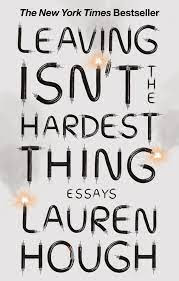
Leaving Isn't the Hardest Thing
The problem with any psychiatric or sociological explanation of belief is that it tends to have a slightly patronizing ring. People understandably grow irritated when told that their most deeply held convictions are their "opium." (Witness the outrage that Barack Obama faced when he spoke of jobless Americans in the Rust Belt clinging "to guns or religion.") Lauren Hough, in her collection of autobiographical essays, "Leaving Isn't the Hardest Thing," gives a persuasive account of the social and economic forces that may help to make cults alluring, while resisting the notion that cult recruits are merely defeated "surrenderers."

Hough spent the first fifteen years of her life in the Children of God, a Christian cult in which pedophilia was understood to have divine sanction and women members were enjoined to become, as one former member recalled, "God's whores." Despite Hough's enduring contempt for those who abused her, her experiences as a minimum-wage worker in mainstream America have convinced her that what the Children of God preached about the inequity of the American system was actually correct. The miseries and indignities that this country visits on its precariat class are enough, she claims, to make anyone want to join a cult. Yet people who choose to do so are not necessarily hapless creatures, buffeted into delusion by social currents they do not comprehend; they are often idealists seeking to create a better world. Of her own parents' decision to join the Children of God, she writes, "All they saw was the misery wrought by greed—the poverty and war, the loneliness and the fucking cruelty of it all. So they joined a commune, a community where people shared what little they had, where people spoke of love and peace, a world without money, a cause. A family. Picked the wrong goddamn commune. But who didn't."

When Prophecy Fails
People's attachment to an initial, idealistic vision of a cult often keeps them in it, long after experience would appear to have exposed the fantasy. The psychologist Leon Festinger proposed the theory of "cognitive dissonance" to describe the unpleasant feeling that arises when an established belief is confronted by clearly contradictory evidence. In the classic study "When Prophecy Fails" (1956), Festinger and his co-authors relate what happened to a small cult in the Midwest when the prophecies of its leader, Dorothy Martin, did not come to pass. Martin claimed to have been informed by various disembodied beings that a cataclysmic flood would consume America on December 21, 1954, and that prior to this apocalypse, on August 1, 1954, she and her followers would be rescued by a fleet of flying saucers. When the aliens did not appear, some members of the group became disillusioned and immediately departed, but others dealt with their discomfiture by doubling down on their conviction. They not only stuck with Martin but began, for the first time, to actively proselytize about the imminent arrival of the saucers.

Better to Have Gone
This counterintuitive response to dashed hopes animates Akash Kapur's "Better to Have Gone" (Scribner), an account of Auroville, an "intentional community" founded in southern India in 1968. Auroville was the inspiration of Blanche Alfassa, a Frenchwoman known to her spiritual followers as the Mother. She claimed to have learned from her guru, Sri Aurobindo, a system of "integral yoga," capable of effecting "cellular transformation" and ultimately granting immortality to its practitioners. She intended Auroville (its name alludes both to Sri Aurobindo and to aurore, the French word for dawn) to be the home of integral yoga and the cradle of a future race of immortal, "supramental" men and women.

The Mother does not appear to have had the totalitarian impulses of a true cult leader, but her teachings inspired a cultlike zealotry in her followers. When, five years after Auroville's founding, she failed to achieve the long-promised cellular transformation and died, at the age of ninety-five, the fledgling community went slightly berserk. "She never prepared us for the possibility that she would leave her body," one of the original community members tells Kapur. "I was totally blown away. Actually, I'm still in shock." To preserve the Mother's vision, a militant group of believers, known as the Collective, shut down schools, burned books in the town library, shaved their heads, and tried to drive off those members of the community whom they considered insufficiently devout.

Kapur and his wife both grew up in Auroville, and he interweaves his history of the community with the story of his wife's mother, Diane Maes, and her boyfriend, John Walker, a pair of Aurovillean pioneers who became casualties of what he calls "the search for perfection." In the seventies, Diane suffered a catastrophic fall while helping to build Auroville's architectural centerpiece, the Mother's Temple. In deference to the Mother's teachings, she rejected long-term treatment and focussed on achieving cellular transformation; she never walked again. When John contracted a severe parasitic illness, he refused medical treatment, too, and eventually died. Shortly afterward, Diane committed suicide, hoping to join him and the Mother in eternal life.

Kapur is, by his own account, a person who both mistrusts faith and envies it, who lives closer to "the side of reason" but suspects that his skepticism may represent a failure of the imagination. Although he acknowledges that Diane and John's commitment to their spiritual beliefs killed them, he is not quite prepared to call their faith misplaced. There was, he believes, something "noble, even exalted," about the steadfastness of their conviction. And, while he is appalled by the fanaticism that gripped Auroville, he is grateful for the sacrifices of the pioneers.

Auroville ultimately survived its cultural revolution. The militant frenzy of the Collective subsided, and the community was placed under the administration of the Indian government. Kapur and his wife, after nearly twenty years away, returned there to live. Fifty years after its founding, Auroville may not be the "ideal city" of immortals that the Mother envisaged, but it is still, Kapur believes, a testament to the devotion of its pioneers. "I'm proud that despite our inevitable compromises and appeasements, we've nonetheless managed to create a society—or at least the embers of a society—that is somewhat egalitarian, and that endeavors to move beyond the materialism that engulfs the rest of the planet."

Kapur gives too sketchy a portrait of present-day Auroville for us to confidently judge how much of a triumph the town—population thirty-three hundred—really represents, or whether integral yoga was integral to its success. (Norway has figured out how to be "somewhat egalitarian" without the benefit of a guru's numinous wisdom.) Whether or not one shares Kapur's admiration for the spiritual certainties of his forefathers and mothers, it seems possible that Auroville prospered in spite of, rather than because of, these certainties—that what in the end saved the community from cultic madness and eventual implosion was precisely not faith, not the Mother's totalist vision, but pluralism, tolerance, and the dull "compromises and appeasements" of civic life.

Far from Auroville, it's tempting to take pluralism and tolerance for granted, but both have fared poorly in Internet-age America. The silos of political groupthink created by social media have turned out to be ideal settings for the germination and dissemination of extremist ideas and alternative realities. To date, the most significant and frightening cultic phenomenon to arise from social media is QAnon. According to some observers, the QAnon movement does not qualify as a proper cult, because it lacks a single charismatic leader. Donald Trump is a hero of the movement, but not its controller. "Q," the online presence whose gnomic briefings—"Q drops"—form the basis of the QAnon mythology, is arguably a leader of sorts, but the army of "gurus" and "promoters" who decode, interpret, and embroider Q's utterances have shown themselves perfectly capable of generating doctrine and inciting violence in the absence of Q's directives. (Q has not posted anything since December, but the prophecies and conspiracies have continued to proliferate.) It's possible that our traditional definitions of what constitutes a cult organization will have to adapt to the Internet age and a new model of crowdsourced cult.

Liberals have good reason to worry about the political reach of QAnon. A survey published in May by the Public Religion Research Institute found that fifteen per cent of Americans subscribe to the central QAnon belief that the government is run by a cabal of Satan-worshipping pedophiles and that twenty per cent believe that "there is a storm coming soon that will sweep away the elites in power and restore the rightful leaders." Yet anxiety about the movement tends to be undercut by laughter at the presumed imbecility of its members. Some of the attorneys representing QAnon followers who took part in the invasion of the Capitol have even made this their chief line of defense; Albert Watkins, who represents Jacob Chansley, the bare-chested "Q Shaman," recently told a reporter that his client and other defendants were "people with brain damage, they're fucking retarded."

The Storm Is Upon Us
Mike Rothschild, in his book about the QAnon phenomenon, "The Storm Is Upon Us" (Melville House), argues that contempt and mockery for QAnon beliefs have led people to radically underestimate the movement, and, even now, keep us from engaging seriously with its threat. The QAnon stereotype of a "white American conservative driven to joylessness by their sense of persecution by liberal elites" ought not to blind us to the fact that many of Q's followers, like the members of any cult movement, are people seeking meaning and purpose. "For all of the crimes and violent ideation we've seen, many believers truly want to play a role in making the world a better place," Rothschild writes.

It's not just the political foulness of QAnon that makes us disinclined to empathize with its followers. We harbor a general sense of superiority to those who are taken in by cults. Books and documentaries routinely warn that any of us could be ensnared, that it's merely a matter of being in the wrong place at the wrong time, that the average cult convert is no stupider than anyone else. (Some cults, including Aum Shinrikyo, have attracted disproportionate numbers of highly educated, accomplished recruits.) Yet our sense that joining a cult requires some unusual degree of credulousness or gullibility persists. Few of us believe in our heart of hearts that Amy Carlson, the recently deceased leader of the Colorado-based Love Has Won cult, who claimed to have birthed the whole of creation and to have been, in a previous life, a daughter of Donald Trump, could put us under her spell.

The Delusions of Crowds
Perhaps one way to attack our intellectual hubris on this matter is to remind ourselves that we all hold some beliefs for which there is no compelling evidence. The convictions that Jesus was the son of God and that "everything happens for a reason" are older and more widespread than the belief in Amy Carlson's privileged access to the fifth dimension, but neither is, ultimately, more rational. In recent decades, scholars have grown increasingly adamant that none of our beliefs, rational or otherwise, have much to do with logical reasoning. "People do not deploy the powerful human intellect to dispassionately analyze the world," William J. Bernstein writes, in "The Delusions of Crowds" (Atlantic Monthly). Instead, they "rationalize how the facts conform to their emotionally derived preconceptions."

Bernstein's book, a survey of financial and religious manias, is inspired by Charles Mackay's 1841 work, "Memoirs of Extraordinary Popular Delusions and the Madness of Crowds." Mackay saw crowd dynamics as central to phenomena as disparate as the South Sea Bubble, the Crusades, witch hunts, and alchemy. Bernstein uses the lessons of evolutionary psychology and neuroscience to elucidate some of Mackay's observations, and argues that our propensity to go nuts en masse is determined in part by a hardwired weakness for stories. "Humans understand the world through narratives," he writes. "However much we flatter ourselves about our individual rationality, a good story, no matter how analytically deficient, lingers in the mind, resonates emotionally, and persuades more than the most dispositive facts or data."

It's important to note that Bernstein is referring not just to the stories told by cults but also to ones that lure people into all manner of cons, including financial ones. Not all delusions are mystical. Bernstein's phrase "a good story" is possibly misleading, since a lot of stories peddled by hucksters and cult leaders are, by any conventional literary standard, rather bad. What makes them work is not their plot but their promise: Here is an answer to the problem of how to live. Or: Here is a way to become rich beyond the dreams of avarice. In both cases, the promptings of common sense—Is it a bit odd that aliens have chosen just me and my friends to save from the destruction of America? Is it likely that Bernie Madoff has a foolproof system that can earn all his investors ten per cent a year?—are effectively obscured by the loveliness of the fantasy prospect. And, once you have entered into the delusion, you are among people who have all made the same commitment, who are all similarly intent on maintaining the lie.

The process by which people are eventually freed from their cult delusions rarely seems to be accelerated by the interventions of well-meaning outsiders. Those who embed themselves in a group idea learn very quickly to dismiss the skepticism of others as the foolish cant of the uninitiated. If we accept the premise that our beliefs are rooted in emotional attachments rather than in cool assessments of evidence, there is little reason to imagine that rational debate will break the spell.

The good news is that rational objections to flaws in cult doctrine or to hypocrisies on the part of a cult leader do have a powerful impact if and when they occur to the cult members themselves. The analytical mind may be quietened by cult-think, but it is rarely deadened altogether. Especially if cult life is proving unpleasant, the capacity for critical thought can reassert itself. Rothschild interviews several QAnon followers who became disillusioned after noticing "a dangling thread" that, once pulled, unravelled the whole tapestry of QAnon lore. It may seem unlikely that someone who has bought into the idea of Hillary Clinton drinking the blood of children can be bouleversƩ by, say, a trifling error in dates, but the human mind is a mysterious thing. Sometimes it is a fact remembered from grade school that unlocks the door to sanity. One of the former Scientologists interviewed in Alex Gibney's documentary "Going Clear" reports that, after a few years in the organization, she experienced her first inklings of doubt when she read L. Ron Hubbard's account of an intergalactic overlord exploding A-bombs in Vesuvius and Etna seventy-five million years ago. The detail that aroused her suspicions wasn't especially outlandish. "Whoa!" she remembers thinking. "I studied geography in school! Those volcanoes didn't exist seventy-five million years ago!"

https://www.newyorker.com/magazine/2021/07/12/what-makes-a-cult-a-cult

May 15, 2020

Thought Reform Criteria in Multilevel Marketing | Hey Hun You Woke Up

The Recovering Hunbot
May 14, 2020


Today Spike and I discuss John Lifton's thought reform criteria and how it relates to multilevel marketing.

MLM like any other high control group uses thought reform tactics that erode your critical thinking. Examining the criteria Lifton outlines helps to examine the destructive nature of multilevel marketing.

Nov 24, 2019

CultNEWS101 Articles: 11/21/2019


Tajul Khalwatiyah Syekh Yusuf School, Robert Jay Lifton,  Jehovah's Witness, Church of Almighty God
"Police in Gowa, South Sulawesi recently arrested an elderly man named Puang Lalang on suspicion of blasphemy over his leadership of a sect that was considered too deviant for Indonesia.

According to the police, Puang Lalang founded the Tajul Khalwatiyah Syekh Yusuf school — an Islamic offshoot —  in 1999 and declared himself a prophet.

In mainstream Islamic beliefs, the Prophet Muhammad is believed to be the last messenger of God.

"The suspect spread misguided beliefs by having followers take a pledge, indoctrinating them and promising them safety in life and the afterlife," Gowa Police Shinto Silitonga told reporters this week.

Police suspect that the sect was a vehicle for self-enrichment for Puang Lalang. According to the police, Puang Lalang charged followers IDR10,000-50,000 (US$0.71-3.57) for the aptly-named "heaven card" to signify membership. He also mandated members to pay religious alms, which amounted to IDR5,000 for every kilogram of the followers' body weight."

The author, most recently, of 'Losing Reality: On Cults, Cultism, and the Mindset of Political and Religious Zealotry' selects books on the aftermath of cataclysm.

"In 2013, after Debbie McDaniel left her Jehovah's Witness congregation in McAlester, Oklahoma, she went to police and told them members had been sitting outside her apartment, monitoring her every move. The Witnesses, she said, were trying to make the case that she was unfit to parent her son, on account of being in a relationship with a woman. But it was something else she told a detective that most alarmed the cops, she said: "You would think an organization that would allow me to be molested for years could now just let me go in peace."

Within weeks, cops had arrested Ronald Lawrence, whom McDaniel, 50, accused of molesting her when she was underage, as Reveal News reported. At least two other people came forward with similar allegations. According to the Tulsa-World, Lawrence told prosecutors he had been "disfellowshipped" (basically excommunicated) from the church over sexual abuse allegations, that he had admitted misconduct in the past in order to be reinstated, and that law enforcement had never previously been informed. He has also denied abusing any Jehovah's Witness children, including McDaniel. When brought before a judge in 2014, 19 charges of sexual abuse against him were deemed to have passed the statute of limitations, and he walked free.

Eventually, Witnesses stopped waiting outside McDaniel's home."
" ... Chinese media reported a case involving the unusual deaths of Qian Xude and three of his family members from Xinzhuang village, under the jurisdiction of Nanjing city in the eastern province of Jiangsu. The bodies of Qian Xude and two others were found hidden in a freezer in a rental room in Shenzhen city in the southern province of Guangdong, while Qian Xude's daughter, Qian Limei, committed suicide by jumping off a building in Shangqiu city in the central province of Henan. However, the police never filed a case after investigating the deaths, attributing some to natural causes and others to suicide.

On October 17, The Beijing News, owned by the Beijing municipal Party Committee, and Southern Weekly, a well-known newspaper owned by the Guangdong provincial Party Committee, simultaneously published an article, repackaging and sensationalizing this sensational case, placing the blame on The Church of Almighty God (CAG). Afterward, this fake news story was widely reported by the official media, in an attempt to create a new public opinion campaign against the CAG."


News, Education, Intervention, Recovery

Intervention101.com to help families and friends understand and effectively respond to the complexity of a loved one's cult involvement.
CultRecovery101.com assists group members and their families make the sometimes difficult transition from coercion to renewed individual choice.
CultNEWS101.com news, links, resources.
Cults101.org resources about cults, cultic groups, abusive relationships, movements, religions, political organizations and related topics.

Feb 9, 2018

Dr. Robert J. Lifton on Destructive Cults


March 2, 2000 - One of the leading experts in mind control, Dr. Lifton addressed the issue of doomsday cults such as Aum Shinrikyo.

Nov 6, 2015

Interview: Robert Jay Lifton on Cults and Vietnam

Robert Jay Lifton
Robert Jay Lifton
November 6, 2015

In April 2014, Daniel Pick interviewed Robert Jay Lifton for a wide-ranging discussion about his life and research. The following two clips provide the final portions of that extended conversation.

In this segment, Prof. Lifton explains how during the 1960s he found his study of ‘thought reform’ in Communist China could be extended to understand the inner workings of religious cults. He discusses the complexities of the Patricia Hearst trial, and how decades later he came to study the Japanese doomsday cult, Aum Shinrikyo, after their sarin gas attack in the Tokyo subway in 1995.

At the end of their interview, Daniel asks Prof. Lifton about his work with Vietnam veterans, the subject of his 1973 book, Home from the War: Vietnam Veterans—Neither Victims nor Executioners. Lifton describes this book as his ‘most angry.’ In recalling his conversations with veterans, Lifton relates the story of a soldier who, when caught in the My Lai massacre, put down his gun.

  • In the first installment of this interview series, Prof. Lifton discusses his research on brainwashing and totalism. 
  • The second covers his intellectual influences, including his complex, sometimes critical, engagement with psychoanalysis. 
  • In the third, he describes his experiences as a psychiatrist in the US Air Force during the Korean War.

This interview was filmed by Doug Higginbotham, and edited by Ian Magor.

WATCH VIDEO

http://www.bbk.ac.uk/hiddenpersuaders/blog/interview-robert-jay-lifton-on-cults-and-vietnam/

Mar 7, 2014

Eight Criteria for Thought Reform

Dr. Robert J. Lifton
  1. Milieu Control.  This involves the control of information and communication both within the environment and, ultimately, within the individual, resulting in a significant degree of isolation from society at large.
  2. Mystical Manipulation.  There is manipulation of experiences that appear spontaneous but in fact were planned and orchestrated by the group or its leaders in order to demonstrate divine authority or spiritual advancement or some special gift or talent that will then allow the leader to reinterpret events, scripture, and experiences as he or she wishes. 
  3. Demand for Purity.  The world is viewed as black and white and the members are constantly exhorted to conform to the ideology of the group and strive for perfection.  The induction of guilt and/or shame is a powerful control device used here. 
  4. Confession.  Sins, as defined by the group, are to be confessed either to a personal monitor or publicly to the group.  There is no confidentiality; members' "sins," "attitudes," and "faults" are discussed and exploited by the leaders. 
  5. Sacred Science.  The group's doctrine or ideology is considered to be the ultimate Truth, beyond all questioning or dispute.  Truth is not to be found outside the group.  The leader, as the spokesperson for God or for all humanity, is likewise above criticism. 
  6. Loading the Language.  The group interprets or uses words and phrases in new ways so that often the outside world does not understand.  This jargon consists of thought-terminating clichĆ©s, which serve to alter members' thought processes to conform to the group's way of thinking. 
  7. Doctrine over person.  Member's personal experiences are subordinated to the sacred science and any contrary experiences must be denied or reinterpreted to fit the ideology of the group. 
  8. Dispensing of existence.  The group has the prerogative to decide who has the right to exist and who does not.  This is usually not literal but means that those in the outside world are not saved, unenlightened, unconscious and they must be converted to the group's ideology.  If they do not join the group or are critical of the group, then they must be rejected by the  members.  Thus, the outside world loses all credibility.  In conjunction, should any member leave the group, he or she must be rejected also.  (Lifton, 1989)

Dec 24, 2012

Cult Formation

Robert J. Lifton, M.D.
John Jay College

Abstract
Cults represent one aspect of a worldwide epidemic of ideological totalism, or fundamentalism. They tend to be associated with a charismatic leader, thought reform, and exploitation of members. Among the methods of thought reform commonly used by cults are milieu control, mystical manipulation, the demand for purity, a cult of confession, sacred science, loading the language, doctrine over person, and dispensing of existence. The current historical context of dislocation from organizing symbolic structures, decaying belief systems concerning religion, authority, marriage, family, and death, and a "protean style" of continuous psychological experimentation with the self is conducive to the growth of cults. The use of coercion, as in certain forms of "deprogramming," to deal with the restrictions of individual liberty associated with cults is inconsistent with the civil rights tradition. Yet legal intervention may be indicated when specific laws are broken.

Two main concerns should inform our moral and psychological perspective on cults: the dangers of ideological totalism, or what I would also call fundamentalism; and the need to protect civil liberties. There is now a worldwide epidemic of totalism and fundamentalism in forms that are political, religious, or both.  Fundamentalism is a particular danger in this age of nuclear weapons, because it often includes a theology of Armageddon -- a final battle between good and evil.  I have studied Chinese thought reform in the 1950s as well as related practices in McCarthyite American politics and in certain training and educational programs.  I have also examined these issues in work with Vietnam veterans, who often movingly rejected war-related totalism; and more recently in a study of the psychology of Nazi doctors.

Certain psychological themes which recur in these various historical contexts also arise in the study of cults.  Cults can be identified by three characteristics: 

  1. a charismatic leader who increasingly becomes an object of worship as the general principles that may have originally sustained the group lose their power;
  2. a process I call coercive persuasion or thought reform;
  3. economic, sexual, and other exploitation of group members by

Milieu Control

The first method characteristically used by ideological totalism is milieu control: the control of all communication within a given environment. In such an environment individual autonomy becomes a threat to the group. There is an attempt to manage an individual's inner communication. Milieu control is maintained and expressed by intense group process, continuous psychological pressure, and isolation by geographical distance, unavailability of transportation, or even physical restraint. Often the group creates an increasingly intense sequence of events, such as seminars, lectures and encounters, which makes leaving extremely difficult, both physically and psychologically. Intense milieu control can contribute to a dramatic change of identity which I call "doubling": the formation of a second self which lives side by side with the former one, often for a considerable time. When the milieu control is lifted, elements of the earlier self may be reasserted.

Creating a Pawn

A second characteristic of totalistic environments is mystical manipulation or planned spontaneity. This is a systematic process through which the leadership can create in cult members what I call the psychology of the pawn. The process is managed so that it appears to arise spontaneously; to its objects it rarely feels like manipulation. Religious techniques such as fasting, chanting, and limited sleep are used. Manipulation may take on a special intense quality in a cult for which a particular "chosen" human being is the only source of salvation. The person of the leader may attract members to the cult, but can also be a source of disillusionment. If members of the Unification Church, for example, come to believe that Sun Myung Moon, its founder, is associated with the Korean Central Intelligence Agency, they may lose their faith.

Mystical manipulation may also legitimate deception of outsiders, as in the "heavenly deception" of the Unification Church and analogous practices in other cult environments. Anyone who has not seen the light and therefore lives in the realm of evil can be justifiably deceived for a higher purpose. For instance, collectors of funds may be advised to deny their affiliation with a cult that has a dubious public reputation.

Purity and Confession

Two other features of totalism are a demand for purity and a cult of confession. The demand for purity is a call for radical separation of good and evil within the environment and within oneself. Purification is a continuing process, often institutionalized in the cult of confession, which enforces conformity through guilt and shame evoked by mutual criticism and self-criticism in small groups.

Confessions contain varying mixtures of revelation and concealment. As Albert Camus observed, "Authors of confessions write especially to avoid confession, to tell nothing of what they know." Young cult members confessing the sins of their pre-cultic lives may leave out ideas and feelings that they are not aware of or reluctant to discuss, including a continuing identification with their prior existence. Repetitious confession, especially in required meetings, often expresses arrogance in the name of humility. As Camus wrote: "I practice the profession of penitence, to be able to end up as a judge," and, "The more I accuse myself, the more I have a right to judge you."

Three further aspects of ideological totalism are "sacred science," "loading of the language," and the principle of "doctrine over person." Sacred science is important because a claim of being scientific is often needed to gain plausibility and influence in the modern age. The Unification Church is one example of a contemporary tendency to combine dogmatic religious principles with a claim to special scientific knowledge of human behavior and psychology. The term "loading the language" refers to literalism and a tendency to deify words or images. A simplified, cliche-ridden language can exert enormous psychological force, reducing every issue in a complicated life to a single set of slogans that are said to embody the truth as a totality. The principle of "doctrine over person" is invoked when cult members sense a conflict between what they are experiencing and what dogma says they should experience. The internalized message of the totalistic environment is that one must negate that personal experience on behalf of the truth of the dogma. Contradictions become associated with guilt; doubt indicates one's own deficiency or evil.

Perhaps the most significant characteristic of totalistic movements is what I call "dispensing of existence." Those who have not seen the light and embraced the truth are wedded to evil, tainted, and therefore in some sense, usually metaphorical, lack the right to exist. That is one reason why a cult member threatened with being cast into outer darkness may experience a fear of extinction or collapse. Under particularly malignant conditions, the dispensing of existence is taken literally; in the Soviet Union, Nazi Germany, and elsewhere, people were put to death for alleged doctrinal shortcomings. In the People's Temple mass suicide-murder in Guyana, a cult leader presided over the literal dispensing of existence by means of a suicidal mystique he himself had made a central theme in the group's ideology. The totalistic impulse to draw a sharp line between those who have the right to live and those who do not is especially dangerous in the nuclear age.

Historical Context

Totalism should always be considered within a specific historical context. A significant feature of contemporary life is the historical (or psychohistorical) dislocation resulting from a loss of the symbolic structures that organize ritual transitions in the life cycle, and a decay of belief systems concerning religion, authority, marriage, family, and death. One function of cults is to provide a group initiation rite for the transition to early adult life, and the formation of an adult identity outside the family. Cult members have good reasons for seeing attempts by the larger culture to make such provisions as hypocritical or confused.

In providing substitute symbols for young people, cults are both radical and reactionary. They are radical because they suggest rude questions about middle-class family life and American political and religious values in general. They are reactionary because they revive pre-modern structures of authority and sometimes establish fascist patterns of internal organization. Furthermore, in their assault on autonomy and self-definition, some cults reject a liberating historical process that has evolved with great struggle and pain in the West since the Renaissance. (Cults must be considered individually in making such judgments.) Historical dislocation is one source of what I call the "protean style." This involves a continuous psychological experimentation with the self, a capacity for endorsing contradictory ideas at the same time, and a tendency to change one's ideas, companions, and way of life with relative ease. Cults embody a contrary "restricted style," a flight from experimentation and the confusion of a protean world. These contraries are related; groups and individuals can embrace a protean and a restricted style in turn. For instance, the so-called hippie ethos of the 1960s and 1970s has been replaced by the present so-called Yuppie preoccupation with safe jobs and comfortable incomes. For some people, experimentation with a cult is part of the protean search.

The imagery of extinction derived from the contemporary threat of nuclear war influences patterns of totalism and fundamentalism throughout the world. Nuclear war threatens human continuity itself and impairs the symbols of immortality. Cults seize upon this threat to provide immortalizing principles of their own. The cult environment supplies a continuous opportunity for the experience of transcendence -- a mode of symbolic immortality generally suppressed in advanced industrial society.

Role of Psychology

Cults raise serious psychological concerns, and there is a place for psychologists and psychiatrists in understanding and treating cult members. But our powers as mental health professionals are limited, so we should exercise restraint. When helping a young person confused about a cult situation, it is important to maintain a personal therapeutic contract so that one is not working for the cult or for the parents. Totalism begets totalism. What is called deprogramming includes a continuum from intense dialogue on the one hand to physical coercion and kidnaping, with thought-reform-like techniques, on the other. My own position, which I have repeatedly conveyed to parents and others who consult me, is to oppose coercion at either end of the cult process. Cults are primarily a social and cultural rather than a psychiatric or legal problem. But psychological professionals can make important contributions to the public education crucial for dealing with the problem. With greater knowledge about them, people are less susceptible to deception, and for that reason some cults have been finding it more difficult to recruit members.

Yet painful moral dilemmas remain. When laws are violated through fraud or specific harm to recruits, legal intervention is clearly indicated. But what about situations in which behavior is virtually automatized, language reduced to rote and cliche, yet the cult member expresses a certain satisfaction or even happiness? We must continue to seek ways to encourage a social commitment to individual autonomy and avoid coercion and violence.

Acknowledgement

Except for the abstract, which was written by this journal's editor, this article first appeared in the February 1991 issue of The Harvard Mental Health Letter. It is reprinted with permission from The Harvard Mental
Health Letter, 74 Fenwood Road, Boston, MA 02115.

Graphic: The Genocidal Mentality: Nazi Holocaust and Nuclear Threat
Buy
Robert J. Lifton, M.D. is Distinguished Professor of Psychology and Psychiatry at John Jay College and the Graduate Center of the City University of New York. His most recent book, written with Erik Markuson, is The Genocidal Mentality: Nazi Holocaust and Nuclear Threat (New York: Basic Books, 1990).

Cultic Studies Journal, Vol. 8, No. 1, 1991