Showing posts with label Radha Soami Satsang Beas. Show all posts

Feb 18, 2019

Indian tycoon Malvinder Singh accuses brother, spiritual guru of fraud


The Straits Times 

FEBRUARY 18, 2019

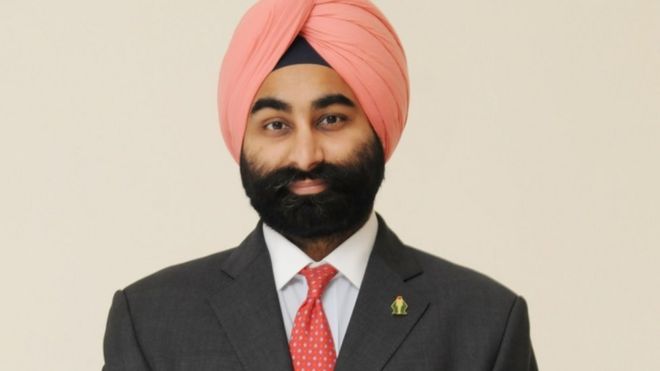
MUMBAI (BLOOMBERG) - Former Indian billionaire Malvinder Singh has filed a criminal complaint accusing his younger brother of siphoning funds from their family's holding company and fraudulently diverting them to a renowned spiritual guru, the latest twist in the unravelling of a US$2 billion (S$2.71 billion) empire.


Mr Shivinder Singh allegedly directed the holding company to acquire debt-ridden firms which collectively lent 10 billion rupees (S$190 million) to the family and associates of their guru, Mr Gurinder Singh Dhillon, according to a complaint filed to the Economic Offences Wing of the New Delhi police seen by Bloomberg.


In return, Mr Shivinder Singh was promised that he would succeed the guru as head of one of India's most powerful spiritual sects, according to the document.

The public fight between the former billionaire brothers follows the collapse of one of India's most storied business families that once controlled the nation's top drugmaker and second-largest hospital chain.


The siblings have lost much of their corporate empire to debt, and are still being chased by creditors. Meanwhile, India's stock market regulator and fraud office have open investigations into wrongdoing at companies the brothers used to run.


The filing of a criminal complaint to Indian police by a private individual may not necessarily result in an investigation or charges being filed.

The brothers have declined to comment on the allegations in the criminal complaint. They have previously denied any wrongdoing at their companies.


Mr Dhillon's lawyer and the secretary of his spiritual sect did not immediately respond to text messages seeking comment on behalf of the guru and his family members referenced in the allegations. A representative for the New Delhi police couldn't immediately comment on the complaint.


The criminal complaint alleges that the 43-year-old Shivinder Singh "initiated" as well as "permitted this siphoning and malfeasance of funds entrusted to him with the ulterior motive of gaining ultimate control of the seat of the spiritual head of the Radha Soami Satsang Beas", promised to him by Mr Dhillon.


The spiritual sect, founded almost 130 years ago and based on a commune in north India, boasts four million followers worldwide.

Mr Malvinder Singh, 46, claims the acquisitions of six debt-ridden companies by his brother were misrepresented as beneficial to the family's holding company when, in fact, they had no value. Efforts to write off the guru's debts to these companies are further eroding the value of the holding company, RHC Holding, according to the complaint.

GOD IN HUMAN FORM

A Bloomberg investigation last year showed that a key reason for the build up in debt that cost the Singhs their empire were loans to the Dhillon family and property firms controlled by the them.


Mr Dhillon has previously declined to comment on the matter, and a representative for the spiritual group has said that since 2011, the guru has stepped back from helping the Singhs with guidance over their businesses due to ill health.


Mr Dhillon, who succeeded the Singhs' maternal grandfather as guru of the powerful sect, became something of a father figure to the brothers after their own died in the late 1990s.


Some followers of the sect, maintained on a sprawling commune along the river Beas in Punjab state, call Mr Dhillon a god in human form. As many as half a million followers at a time sometimes congregate at the commune to hear his teachings on how meditation, vegetarianism and high moral values can help one escape the cycle of death and rebirth.

DEATH THREAT

In his criminal complaint, Mr Malvinder Singh claims Mr Dhillon had threatened him to sign a settlement absolving the guru of any wrongdoing and abstaining from any legal or criminal action against the spiritual leader.


He alleges that Mr Dhillon, through his lawyer, told the tycoon he "would be eliminated by persons from the Radha Soami Satsang Beas", if he did not proceed as demanded, according to the complaint. The elder Singh claims he has recordings of these threats and is "fearful for his life".


Besides Mr Shivinder Singh and Mr Dhillon, the complaint also names as references Mr Dhillon's wife, his two sons, and four alleged associates in the allegations.

SIPHONING MONEY

The Singh brothers are themselves under investigation for siphoning money from their public companies, including Fortis Healthcare, which is now controlled by IHH Healthcare. 

Much of the Singhs' shareholding has been seized by lenders.
In October, the stock market regulator released preliminary results of its investigation, finding that the brothers had defrauded Fortis of four billion rupees and ordered them to return it. The regulator has said the investigation is ongoing and hasn't indicated when final results will be made public.


A spokesman for the Singh brothers previously declined to comment on the finding and order by the stock market regulator.


Three of the shell companies the regulator identified as recipients of loans from Fortis that were ultimately routed to the Singhs have also been named by Mr Malvinder Singh as lenders to the Dhillon family and his associates.


The complaint comes after the brothers' mother brokered a truce and convinced Mr Shivinder Singh in September to withdraw a lawsuit against his elder sibling that alleged "oppression and mismanagement".

https://www.straitstimes.com/asia/south-asia/indian-tycoon-accuses-brother-spiritual-guru-of-fraud

Aug 17, 2018

The Billionaires and The Guru: How a Family Burned Through $2 Billion

Malvinder Mohan Singh, left, and his brother Shivinder Mohan Singh at their residence in Gurgaon on Dec. 31, 2003.
The Singh brothers were heirs to a health-care empire.
Ari Altstedter
Bloomberg
August 16, 2018,

Along the river Beas in North India sits a sprawling spiritual commune that’s somewhere between a traditional ashram and a Florida gated community. There’s a grand meeting hall with tiered spires and pearl domes, but also tract housing and an American-style supermarket. It’s home to 8,000 devotees of the 
Master: Gurinder Singh Dhillon.

His group, the Radha Soami Satsang Beas, says it has more than 4 million followers worldwide. Many call him a God in human form. But in the secular world of money, Dhillon, 64, is a key character in one of the most dramatic collapses in the annals of Indian business: The unraveling of the financial and health-care empire owned by the Singh brothers, Malvinder and Shivinder.

Over the years, the brothers’ main holding company loaned about 25 billion rupees ($360 million) to the Dhillon family and property businesses largely controlled by them, according to documents and people familiar with the matter. Some of those outlays were financed with money borrowed from the Singhs’ listed companies, and when combined with other Singh investments gone bad threw their empire into a debt spiral, a Bloomberg News analysis of public records and interviews with 10 people familiar with the finances of both camps showed.

Heirs to a generations-old business house once worth billions, the brothers have in the last six months seen a dramatic fall in their fortunes. They’ve had their public shareholdings seized by lenders. They’re under a criminal probe by financial authorities over 23 billion rupees missing from their listed companies. They owe $500 million over fraud allegations related to the 2008 sale of drugmaker Ranbaxy Laboratories. They’ve also lost the family mansion. Both deny any wrongdoing.

Dhillon is a cousin of the Singhs’ mother, and he became a surrogate father to them after the death of their own in the late 1990s. Since then, the finances of the spiritual leader and the brothers have grown intertwined, with money flowing from the Singhs to the Dhillon family via loans through shell companies and an array of arcane financial instruments, according to the documents and people familiar with the matter, who asked not to be named because of the ongoing legal probes. Dhillon hasn’t been accused of any wrongdoing.

All members of the spiritual commune, including the guru, are expected to support themselves financially, and the sect’s representatives said the Master’s business dealings are a personal matter separate from his role at the spiritual group.

The Singhs’ downfall comes as Prime Minister Narendra Modi pushes to increase transparency and attract more foreign investment to the world’s fastest growing major economy. But the brothers’ story is a cautionary tale to anyone doing business in India, offering a window into the opaque corporate structures common in the family dynasties that dominate Indian commerce.

“This opacity makes for risk,” said Arun Kumar, an economist with the New Delhi-based Institute of Social Sciences. “Legitimate business people may not want to come to India.”

The Singhs are famous for expanding their two public firms – hospital operator Fortis Healthcare Ltd. and financial firm Religare Enterprises Ltd.—at breakneck speed after reaping $2 billion from the Ranbaxy sale. Less known is the massive debt they took on to do so, all while they were financing a real-estate portfolio largely owned by their guru’s family.

Malvinder, 45, and Shivinder, 43, haven’t been charged with any crimes. The brothers acknowledge having financial ties to Dhillon, and in written comments said they are in dialogue with the Dhillon family and its companies to address the money owed to them.

But they also said it would be “untrue” to suggest that the guru was a cause of their group’s financial troubles. “Malvinder and Shivinder are unequivocal about this: Mr. Dhillon is their spiritual Master,” the brothers wrote. “He has only ever acted out of love and has only ever had their best interests at heart.”

They’re less generous to another follower of the spiritual group, Sunil Godhwani, whom they say was appointed to lead Religare at Dhillon’s recommendation. They say Godhwani was also in charge of their holding company, RHC Holding Pvt., and often took decisions without informing them. They say he was the architect of the financial structures, including the loans to the Dhillon family and companies, that led to their financial troubles.

Bloomberg News has been unable to independently verify the Singhs’ claims that Godhwani ran their holding company in the period between 2010 and 2016, when most of the major borrowing, loans, investments and routing of funds occurred. RHC says he was president there between 2016 and 2017. Godhwani declined to comment, and he left his role as chairman of Religare in 2016.

For his part, Dhillon also declined to be interviewed. A statement from J.C. Sethi, secretary of Radha Soami Satsang Beas, said Dhillon played a role helping the Singhs assert control of their father’s businesses following his death, and in guiding them after. But since 2011, ill health, including a battle with cancer, caused the guru to step back to focus on his spiritual duties, he said. “The Master can advise but he cannot make a choice for you,” he added.

Representatives for the spiritual group said the Master has no role in its administration or finances.

What the Singhs Did With Their Fortune


Note: Only major cash deployments are shown. * Estimates based on sources familiar with the family's finances.

Earlier this year, Bloomberg News reported that the Singhs had taken 5 billion rupees from Fortis without board approval and that a New York investor had filed a lawsuit accusing the brothers of siphoning 18 billion rupees from Religare.

The Singhs say they didn’t do anything illegal. They say Godhwani was in charge of both Religare and RHC at the period in question. The movement of funds at Fortis were part of normal operations at the time, and only later became related-party transactions, according to the brothers.

India’s stock market and fraud regulators launched investigations into financial irregularities at both companies, although they are yet to report their findings. Both agencies didn’t respond to requests for comment.

The Singhs’ rise as businessmen in their own right began in 2008, when they sold Ranbaxy, then India’s largest drugmaker, to Japanese pharmaceutical company Daiichi Sankyo Co. The sale occurred just as the U.S. Food and Drug Administration started raising questions about the Indian firm’s manufacturing practices and the safety of its drugs, although Ranbaxy denied the allegations at the time.

The brothers went on to use their cash reserves aggressively to build up Fortis and Religare—which would each top $1 billion in market value as India’s demand for health and financial services surged. They took their father’s place in Delhi high society among other old business families, becoming patrons of Indian artists and socializing at exclusive clubs.

Then in 2013, Ranbaxy pleaded guilty to criminal felony charges in the U.S. and faced $500 million in fines. In an arbitration tribunal in Singapore, its new owner, Daiichi Sankyo, accused the Singhs of concealing the extent of its regulatory problems during the sale. The Singhs say they didn’t conceal any information.

By that time, Dhillon was playing a big role in the Singhs’ finances. He was their “central father figure” after their own died in 1999, they wrote in their statement. Sect members held key positions in the Singh empire: One became chairman of Ranbaxy’s board, helping ensure Malvinder’s swift rise to the top. Another devotee, Godhwani, led Religare.

The Dhillon family would eventually become Religare’s second-largest shareholder, after the Singhs, with money lent to them by the brothers, according to people familiar with the matter. Godhwani consulted with Dhillon regularly on Religare, as would the Singhs on Fortis, the people said.

In 2015, the younger brother, Shivinder, briefly took a hiatus from the business to work at the spiritual group full time.

A photograph on the sect’s website shows Dhillon with a white beard, white turban and flowing white tunic. But several people who know him say he’s fond of self-deprecating jokes, and in private is more charismatic everyman than ethereal mystic.

As many as 500,000 devotees sometimes visit the ashram at once to listen to his teachings of how meditation, vegetarianism and high moral values can help one escape the cycle of death and rebirth.

He emphasizes community service. On a recent Tuesday at the commune, a battalion of women volunteers sat at giant wood-fired griddles, making chapatis, the Indian flatbread. Some days they roll out more than 80,000 an hour to feed hungry pilgrims.

Still, Dhillon hails from a family of major landowners in Punjab, and was himself a businessman in Spain prior to his ascension at the spiritual group. So he took an active interest in the Singhs’ holdings, the people said.

“I think he’s a businessman in his mind first, and a guru second,” said Brian Hines, an American who was a member of the sect’s U.S. community for 35 years and has visited Beas. He now blogs critically about it, having since left.

By 2010, another business opportunity emerged. Towns outside India’s capital, New Delhi, were experiencing a property boom that was turning farmers into millionaires. The Singhs’ resources were marshaled to help the Dhillon family build a real-estate empire.

Two companies, Prius Real Estate Private Ltd. and Lowe Infra and Wellness Private Ltd., were set up by people close to the guru, and although partly hidden by layers of shell companies, the Dhillon family had ownership interests in both, people familiar with the matter said and filings show.

Over the next two years, these firms together received about 20 billion rupees in zero-interest loans from the Singhs’ private holding company or its subsidiaries, according to the people and the documents. Funds were then disbursed to other companies controlled by the Dhillons. The Singhs owned a 51 percent stake in Lowe.

These loans proved costly to the Singhs, coming on top of other major financial commitments that were underway. From 2011 onwards, the brothers’ holding company went on to sink at least 12 billion rupees to cover losses at their investment banking venture Religare Capital Markets Ltd. Other loans went to Ligare Voyages Ltd., a money-losing charter airline.

The Singhs’ holding company also loaned at least 7 billion rupees to cover losses at a firm that had been spun out of Religare to manage the financial firm’s administrative costs. The loss-making firm’s biggest expense was rent, much of which was paid to buildings owned by the guru’s family, according to documents and people familiar with the matter.

In some cases, Religare had no use for all the space it was leasing from the guru’s buildings and large parts sat empty, the people said and internal documents show.

RHC, the holding company, also made personal loans of 5 billion rupees to Dhillon family members, via a network of shell companies, people familiar with the matter said.

The Singhs funded all these outlays to the guru’s businesses and to their own ventures with borrowing. And a substantial portion came from Fortis and Religare, often through the same network of shell companies used to lend to the guru’s family, people familiar with the matter said.

Taken together, the zero-interest loans to Dhillon firms and Singh investments gone bad created a crushing debt load that required even more borrowing to service. Their total borrowings hit about $1.6 billion by March 2016, filings show.

As things deteriorated, funds at the two primary public companies controlled by the Singhs, Fortis and Religare, were continuously routed back and forth via shell companies to deal with cash shortages elsewhere in the Singh family empire, according to multiple people familiar with the matter.


How the Money Moved


Sources: Ministry of Corporate Affairs, RHC Holding, Bloomberg reporting

Note: Monetary values are investments and loans since 2009.

Then came the final blow. In 2016, the Singapore tribunal sided with Daiichi Sankyo in its long-running suit against the brothers, awarding the Japanese firm about $500 million in damages and interest. The Singhs are appealing the ruling. But with the added liability, outside lenders to the brothers were reluctant to keep the taps open, even as the brothers offered up their family home and company shares as collateral.

By 2016, they couldn’t pay back the latest in the series of loans that had been going in and out of Fortis for four years, which amounted to about 5 billion rupees. When India’s central bank discovered 18 billion rupees taken from Religare had gone to subsidiaries of the Singhs’ main holding company, it demanded it be paid back, but it still hasn’t been.

Finally, banks seized assets backing their loans, including the majority of their shares in Fortis and Religare. They had to sell the home they grew up in to pay back another lender. The Singhs have said they are working to resolve issues with stakeholders.

Minority shareholders took over at Religare. A bitter takeover battle kicked off for Fortis and Malaysia’s IHH Healthcare Bhd in July agreed to take control of the hospital operator.

The New Delhi property boom Dhillon’s family companies invested in has since gone bust. And those real-estate companies have their own debt beyond what was lent by the Singhs, according to people familiar and documents.

Between personal loans and complicated company structures, it’s hard to tell exactly how much Dhillon still owes his nephews and what assets they still hold. For the Singhs’ other lenders, Daiichi Sankyo, or law enforcement seeking penalties, recovering this money from the Singh empire may depend on the terms of arcane debt securities, which aren’t public and can be changed with the consent of both parties.

Complicating matters is that ancient ties of clan and religion are hard to shake in India. Asked what the Singh brothers would do for their Master, one person who knows the family answered in one word: “Anything.”

— With assistance by Alyssa McDonald, and Brent O'Brien


https://www.bloomberg.com/news/features/2018-08-16/billionaires-and-the-guru-how-an-indian-family-lost-2-billion

Mar 24, 2016

Ahead Of Punjab Polls, Rahul Gandhi Meets Radha Soami Sect Chief At Beas


Press Trust of India
March 20, 2016
The meeting between Rahul Gandhi and Radha Soami sect chief assumes significance in view of the assembly poll in Punjab where Congress is eyeing to wrest power from the SAD-BJP combine after 10 years.
Amritsar: Congress vice president Rahul Gandhi today met Radha Soami sect chief Gurinder Singh Dhillon at his residence at Beas, a move which has evoked interest as the party prepares to take on Punjab's ruling SAD-BJP combine in the 2017 assembly poll.
Mr Gandhi spent nearly two hours with Mr Dhillon. During his visit to Beas, no party leader accompanied Mr Gandhi. Security personnel accompanying the Congress leader were also asked to stay out of the dera premises, party sources said.
This Hoodie is so Popular You Have to Wait Months to Get ItBusiness Insider | American Giant
Mr Gandhi had come to Amritsar yesterday to see a documentary on drug addicts, 'Faded Glory'. He reached Beas, nearly 45 km from Amritsar, last evening and spent the night there.
The Congress vice president met Mr Dhillon in the morning and thereafter he attended a one-hour 'satsang' (religious discourse). Later, he went to the residence of Mr Dhillon and held discussion on various issues over breakfast.
The meeting assumes significance in view of the assembly poll in Punjab where Congress is eyeing to wrest power from the SAD-BJP combine after 10 years.
In the afternoon, Mr Gandhi returned to Amritsar by road from where he took a flight to Delhi.
In the past, Mr Gandhi's mother and Congress President Sonia Gandhi had visited the dera.
Senior BJP leader LK Advani had also visited Beas in 2014 and attended the morning discourse of Sect head Gurinder Singh Dhillon.
Dera Radha Soami, also known as Dera Baba Jaimal Singh, has huge following across the country and abroad.
http://m.ndtv.com/india-news/ahead-of-punjab-polls-rahul-gandhi-meets-radha-soami-sect-chief-at-beas-1288906

Sep 23, 2015

India Fortis' Shivinder Singh joins spiritual sect

September 23, 2015
BBC

Mr Singh said he decided to join the religious sect to "give back to society"
A top Indian businessman has left the healthcare company he co-founded to join a spiritual sect.

Shivinder M Singh, the executive vice-chairman of Fortis Healthcare Limited, has joined the Radha Soami Satsang Beas (RSSB) sect.
The RSSB describes itself as "a philosophical organisation based on the spiritual teachings of all religions".
\
Fortis is one of India's largest healthcare providers with interests in India, Dubai, Mauritius and Sri Lanka.

"Having spent almost two decades setting up and running Fortis, our mission of saving and enriching lives is an integral part of my being. Over time this has inspired me to do more direct service and give back to society a little of what I have received in abundance," Mr Singh was quoted as saying in a press release issued by Fortis.

"A short while ago, I requested for sewa (service) at Radha Soami Beas, headquartered near Amritsar and I am fortunate to have been accepted."
Mr Singh would continue to be associated with the company though in a non-executive role, the release added.

Mr Singh's elder brother Malvinder Singh, who will now take over running of the company, said that his sibling's decision had his "full support".
Together, the Singh family owns 71% of the company with their stake valued at $848m (£555m).

The RSSB has a large following in northern India, says the Economic Times newspaper.

According to the organisation's official website, it "aims to build on the primary spiritual practice of meditation".

Members are vegetarian, abstain from alcohol and recreational drugs, and are expected to lead a life of "high moral values".

Prominent followers include Bollywood actor Shahid Kapoor.