Dailymotion
The Western Australian health department is checking records dating back to the 90s to determine if it referred any women to a private rehab facility at the centre of mistreatment and abuse allegations. Dozens of women have complained about the Esther foundation, alleging they were denied psychological or psychiatric care from qualified medical specialists, and instead received 'treatment' to exorcise their demons.

Showing posts with label Abuse-institutional. Show all posts
Showing posts with label Abuse-institutional. Show all posts
Apr 28, 2022
Perth Christian rehab facility apologises after allegations of psychological abuse, inappropriate treatment
Joanna Trilling and Alicia Bridges
ABC NewsMarch 10, 2022
The Esther Foundation, a Christian-based residential rehabilitation centre in Perth, says it will cooperate with any criminal investigation after a growing number of women have spoken out about allegations of psychological abuse and inappropriate treatment at the facility.
Key points:
• Esther House has issued an apology to former residents for any "hurt" or "abuse" they might have experienced while living at the Perth rehabilitation centre
• Former residents have come forward with claims of psychological abuse and inappropriate treatment
• The centre has parted ways with the former managing director and founder
Former residents of the centre this week told the ABC that the program treated their mental health and addictions by attempting to "exorcise demons". One woman said she was not allowed to speak for two months.
The women say they did not receive any psychological or psychiatric care from a qualified medical specialist during their time at the residential centre for young women from crisis backgrounds, which claims to provide counselling for issues including addictions, sexual abuse and mental health.
Confronted with the women's allegations this week, the Esther Foundation issued an "unreserved apology".
"We stand in support of any former resident who has suffered hurt, abuse or anguish," the Esther Foundation said in a written response.
Continue Reading:
Esther Foundation, now subject to claims of sexual and psychological abuse, supported by multiple WA governments

ABC Radio Perth
April 7, 2022
Official statements, news releases and the recollections of a former premier show how multiple West Australian governments funded, supported and celebrated a Christian rehab facility that is now the focus of a parliamentary investigation into allegations of psychological and sexual abuse and inappropriate treatment.
Communities Minister Simone McGurk, who tabled the motion for the investigation, told parliament those allegations include criminal complaints of sexual abuse, as well as residents being denied food, being banned from contacting friends and family, illegal restraints, and Aboriginal residents being told their language and culture was akin to being possessed by the devil.
"Under the current framework the state has very limited oversight of this facility," Ms McGurk said.
"We are asking the inquiry to look at the current regulatory and legislative frameworks in place to understand if there are ways we can improve existing provisions, or if there are gaps that might need to be addressed."
The investigation is due to be completed by December 1 this year.
Several women have recently come forward with allegations about Esther Foundation's residential centres, saying they received treatment from unqualified workers that involved "exorcising demons", and individuals not being allowed to speak for months.
In March the Esther Foundation issued an apology, saying it had undergone a complete overhaul and change of management since the time of the allegations between 2003 and 2019.
The WA departments of health and communities recently confirmed they had referred multiple young women to the Esther Foundation's residential program, but Ms McGurk said that would not occur again.
But as recently as 2018, the McGowan government was singing the praises of the Esther Foundation and its residential program for women at the old St Emilie's convent in Kalamunda.
The WA departments of health and communities recently confirmed they had referred multiple young women to the Esther Foundation's residential program, but Ms McGurk said that would not occur again.
But as recently as 2018, the McGowan government was singing the praises of the Esther Foundation and its residential program for women at the old St Emilie's convent in Kalamunda.
Key points:
In June of 2018, then-housing minister Peter Tinley described the foundation as a "wonderful" project that was "life-changing" for women.
"Crisis accommodation projects such as [The Esther Foundation's] St Emilie's Lodging Facility are an integral part of the McGowan government's soon to be released Affordable Housing Action Plan, which lays a path to support our most vulnerable Western Australians," he said.
The Department of Communities' support for the foundation dates back to 2010.
Starting in the late 2000s, former WA premier Colin Barnett personally championed the Esther Foundation and signed off on his government's $3.9 million purchase of the St Emilie's land.
He now says he was not aware of any concerns about harm or abuse of residents at the time.
"If there was another side, I was unaware of that," Mr Barnett said in an interview with the ABC.
"And I'm disappointed to hear about that."
Mr Barnett said he personally donated to the foundation and encouraged friends and businesspeople to do the same.
He was premier in 2010 when the WA Housing Authority, under the umbrella of the Department of Communities, purchased the former St. Emilie's convent for the purpose of housing an expanded Esther Foundation residential facility.
Mr Barnett said he did not advocate for the purchase of St Emilie's, located in Kalamunda, as a politician.
"I was a little bit hands-off that, because I was conscious that I privately supported them," he said.
"I didn't push for the large amounts of money but I was certainly supportive of the St Emilie's project … I was the minister that signed off when they came with that recommendation to me."
Perth Christian rehab facility apologises after allegations of psychological abuse, inappropriate treatment
The request was initially knocked back by Lotterywest, but in 2012 Lotterywest agreed to provide a $3.5m grant to not-for-profit housing organisation Community Housing Limited (CHL) after it partnered with the Esther Foundation on the project.
CHL now subleases the property to the Esther Foundation.
The Department of Communities also provided $200,000 to furnish the new facility.
Mr Barnett said he supported the project because he had been impressed by its leadership at the time and impressed by the personal stories of the young women he met at Esther Foundation facilities.
"These young women came out and they told their stories openly," he said.
"They'd said that they were getting better and most of them were … staying off drugs."
In 2018 the WA Housing Authority paid $790,000 for a property in Maida Vale that it leases to the Esther Foundation.
The foundation has said it will cooperate with any investigation, criminal or otherwise.
The foundation's acting chief executive Aaron Hines said "an independent and suitably qualified person" would be appointed to work with former residents who wanted to share their story.
"[The allegations] relate to a time period before I and our executive team joined the foundation," Mr Hines said.
"We are endeavouring to obtain more details."
- Numerous women have come forward with allegations of psychological abuse and inappropriate treatment through the Esther Foundation rehabilitation program
- A parliamentary committee will investigate the claims, which Communities Minister Simone McGurk says include sexual abuse allegations
- Multiple WA governments supported the facility, including the purchase of the $3.9m property and former convent where the residential program is now located
- Yesterday state parliament voted in favour of the investigation into allegations against the Esther Foundation, which says it provides counselling for issues including addictions, sexual abuse and mental health.
'Unaware' of 'another side'
In June of 2018, then-housing minister Peter Tinley described the foundation as a "wonderful" project that was "life-changing" for women.
"Crisis accommodation projects such as [The Esther Foundation's] St Emilie's Lodging Facility are an integral part of the McGowan government's soon to be released Affordable Housing Action Plan, which lays a path to support our most vulnerable Western Australians," he said.
The Department of Communities' support for the foundation dates back to 2010.
Starting in the late 2000s, former WA premier Colin Barnett personally championed the Esther Foundation and signed off on his government's $3.9 million purchase of the St Emilie's land.
He now says he was not aware of any concerns about harm or abuse of residents at the time.
"If there was another side, I was unaware of that," Mr Barnett said in an interview with the ABC.
"And I'm disappointed to hear about that."
Mr Barnett said he personally donated to the foundation and encouraged friends and businesspeople to do the same.
He was premier in 2010 when the WA Housing Authority, under the umbrella of the Department of Communities, purchased the former St. Emilie's convent for the purpose of housing an expanded Esther Foundation residential facility.
Mr Barnett said he did not advocate for the purchase of St Emilie's, located in Kalamunda, as a politician.
"I was a little bit hands-off that, because I was conscious that I privately supported them," he said.
"I didn't push for the large amounts of money but I was certainly supportive of the St Emilie's project … I was the minister that signed off when they came with that recommendation to me."
Government purchases
The Esther Foundation made a further request for funding to build a new residential facility, structured around the old convent buildings.Perth Christian rehab facility apologises after allegations of psychological abuse, inappropriate treatment
The request was initially knocked back by Lotterywest, but in 2012 Lotterywest agreed to provide a $3.5m grant to not-for-profit housing organisation Community Housing Limited (CHL) after it partnered with the Esther Foundation on the project.
CHL now subleases the property to the Esther Foundation.
The Department of Communities also provided $200,000 to furnish the new facility.
Mr Barnett said he supported the project because he had been impressed by its leadership at the time and impressed by the personal stories of the young women he met at Esther Foundation facilities.
"These young women came out and they told their stories openly," he said.
"They'd said that they were getting better and most of them were … staying off drugs."
In 2018 the WA Housing Authority paid $790,000 for a property in Maida Vale that it leases to the Esther Foundation.
Foundation to cooperate
WA Police urged anyone with a criminal complaint to contact police.The foundation has said it will cooperate with any investigation, criminal or otherwise.
The foundation's acting chief executive Aaron Hines said "an independent and suitably qualified person" would be appointed to work with former residents who wanted to share their story.
"[The allegations] relate to a time period before I and our executive team joined the foundation," Mr Hines said.
"We are endeavouring to obtain more details."
If you or anyone you know needs help:
- Lifeline on 13 11 14
- Kids Helpline on 1800 551 800
- Beyond Blue on 1300 224 636
- Suicide Call Back Service on 1300 659 467
- Headspace on 1800 650 890
- ReachOut at au.reachout.com
- MensLine Australia on 1300 789 978
- Care Leavers Australasia Network (CLAN) on 1800 008 774
- Head to Health at headtohealth.gov.au
Esther Foundation enters voluntary administration amidst claims of mistreatment and abuse
ABC News: Esther Foundation enters voluntary administration amidst claims of mistreatment and abuse
A Perth-based Christian rehab facility is now under investigation, over allegations of mistreatment and abuse by former residents. The move has sparked questions about whether the federal and state governments did their homework before allocating millions of dollars in grants. Esther Foundation has also announced that it will be going into voluntary administration. This report from Jo Trilling and Rhiannon Shine.
‘I witnessed truly appalling things’: a letter from a former resident of Esther House

‘I witnessed truly appalling things’: a letter from a former resident of Esther House
Melissa Camm attended Esther House when she was 14 years old. This is her letter detailing the alleged harm she survived while in their care.
Crikey
Marxh 7, 2022
This is part 14 in a series. For the rest of the series, go here.
Melissa Camm wrote to Crikey this week with her recollections of life at the Esther Foundation’s rehab facility. “My anxiety popped up after reading the articles in relation to Esther House and it took me a bit to work through,” she said.
Here’s what she wrote:
I first became a participant of Esther House when I was just 14 years old, after a family breakdown. Immediately I was told I was unable to contact any of my family, my friends or anyone in my support network. I had to immediately surrender my wallet and mobile phone. If I needed anything I’d have to wait for a “worker” on a designated shopping trip, who would stand with my wallet in a zip-lock bag and pay for me. Even if I needed something as simple as tampons.
Claire Crawford went to hell and back at Esther House. Why isn’t it shut down?
Over the next two and half years, I would be completely stripped of anything that would have given me outer prospective and individuality from the program. I would be denied an education, despite the ages of 14 to 17 being some of the most important schooling years for a young person. Without that foundation it has really limited my career paths as a now almost 30-year-old adult. It’s something that still brings me a lot of shame, that my highest level of education is Year 9.
Immediately upon entering the program, the idea of a Christian God is thrust upon you, whether you’re a willing and open participant or not. If any answer you give during any type of “group therapy” is not centred around God, it’s not an appropriate answer. If you don’t accept the idea of a Christian God then you are labelled as rebellious, spiteful, angry and dangerous.
You’re forced to participate in three to four church meetings a week. Some going for all hours of the night. If you’re unwilling to stand, suddenly a group of people will be yelling and trying to perform an exorcism for the demons forcing you to rebel. If you resisted this you would be forcibly held on the floor, having your stomach pushed on by Patricia [Lavater, Esther Foundation founder] as many “spoke in tongues” over you. The only way to make it stop was to comply and scream as if your “demons were being released”.
We were denied medications that had been prescribed to us prior to Esther, claiming we had been “healed” by God. These medications were often for mental health, and yet there was no psychiatrist to oversee these stops in medication. In fact all the workers were either self-appointed “prophets” or ex-members of the program.
There were no trained counsellors, psychologists or psychiatrists to ensure these really vulnerable people were getting adequate care. In fact you only had one option to see a doctor. He was a doctor that visited the main house once a fortnight and would be there for a couple hours in the afternoon. If you didn’t get a spot to see him? Too bad. No options to seek your own private medical advice.
I witnessed truly appalling things at Esther, all at the hand of Patricia who you dare not go up against or differ from opinion. If you disagreed with her opinion of you and your trauma she’d shame you into seeing it her way. I was a particularly anxious and introverted teenager. She told me I just thought I was better then everyone else (couldn’t be further from the truth). She sat me in a small lounge room in from of 30-40 other women who could say anything bad they’ve ever thought about me and I had to accept it as truth. She called it “the hot seat”.
Everything about Esther was about complete control. Control over our minds, our faith, our money, our health, our sexuality, and for some girls even there ethnic roots. All of this while claiming to be saving our lives, and if we left (which I couldn’t because I was a minor), we’d be attacked by the Devil.
The hardest part of all? You truly didn’t understand what was happening because you were so cut off from the world. No access to radio, news, TV, friends, and phones, and only very limited access to your family. So it’s not until you’ve left, and sometimes years after, do you realise what you’ve been through.
Sadly some girls lost their lives in that time and they will never get the redemption they deserve.
Yours sincerely,
Melissa
If you have any information about this story you would like to pass on please contact David Hardaker via dhardaker@protonmail.com.
Survivors of abuse can find support by calling Bravehearts at 1800 272 831. The Kids Helpline is 1800 55 1800. In an emergency, call 000.
For anyone seeking help, Lifeline is on 13 11 14 and Beyond Blue is on 1300 22 4636.
Mar 7, 2020
Christian College ruling 'validating': Student

Brockville Recorder and Times
March 5, 2020
A former Grenville Christian College student, who successfully sued the school, says she couldn’t be more pleased by the judge’s decision.
“It was very validating,” Lisa Cavanaugh said of Justice Janet Leiper’s ruling that found all of the former students to be “credible and reliable” witnesses.
“Our lawyers did a fantastic job in telling our story,” Cavanaugh said.
Cavanaugh was one of five former students who waged a 12-year legal battle against the now defunct Christian school and the estates of its two former headmasters.
Leiper’s decision last month that upheld the former students’ class-action suit complaining of physical abuse, demeaning discipline and humiliation was overwhelming, Cavanaugh said.
The legal journey, which started in late 2007, was long and gruelling but ultimately worth it, she said.
“It was important to get the truth out there because there were students who were deeply affected by their time at GCC,” Cavanaugh said. “It was important for people to understand that Grenville was not necessarily as they portrayed themselves.”
In her judgment, Leiper said the school created an “abusive, authoritarian and rigid culture” that exploited and controlled the young students.
“I have concluded that the evidence of maltreatment and the varieties of abuse perpetrated on students’ bodies and minds in the name of COJ (Community of Jesus) values of submission and obedience was class-wide and decades-wide,” Leiper said.
During 22 days of hearings this fall and early winter, Leiper, of the Ontario Superior Court of Justice, heard the former students’ harrowing testimony of corporal punishment with a wooden paddle, school-wide public humiliation sessions to shame students for such infractions as “being too haughty” or “smiling too much” and degrading work assignments.
As disciplinary measures, students were forced to clean floors with toothbrushes, pick up leaves on their hands and knees under the supervision of a younger student, clean out a dumpster of garbage and a dead animal carcass and cut the grass using small scissors, the court was told.
Cavanaugh was living with her mother in Maitland when she attended GCC from 1984-89, first as a day student in Grades 6, 7 and 8, then as a boarding student for Grades 9 and 10.
Now married and an IT professional in Ottawa, Cavanaugh didn’t want to discuss her time at the Christian college because GCC lawyers have indicated that they might appeal Leiper’s decision. But she said her time there was obviously traumatic or she wouldn’t have spent the last 12 years pursuing justice.
In court, Cavanaugh testified about the all-school assemblies at which students were criticized in front of their peers. She told of staff dorm raids in which girls’ underwear drawers were searched for underwear that wasn’t “regulation”; of a bedtime lecture by Charles Farnsworth in which the headmaster scolded the girls for being “bitches in heat” and suggested that they would be responsible for attacks by boys if they didn’t dress appropriately.
In her judgment, Leiper included Cavanaugh’s testimony of the school’s atmosphere.
“You could walk through the hallways at any given time and be corrected for not smiling enough, bringing down the spirit of the school. You could be chastised for the way you walked, if your kilt swayed too much that would not be a good idea. Something even as simple as crossing your legs, if you were sitting in a chair. On the edge of your chair and you crossed your legs, you could be chastised for that because the boys would be able to see the slip from the bottom of the chair.”
Leiper ruled that the college and the estates of two deceased former headmasters will have to pay yet-to-be-determined punitive damages. She ordered the two parties to go before a case management judge to discuss a settlement. If they are unable to agree she will consider written submissions on costs after Mar. 21.
Cavanaugh said money is obviously a factor in the class-action suit, but it never was the students’ true goal.
“Our goal was to have people acknowledged and to be allowed to heal,” she said. “And to have people admit to their role. But, unfortunately, they refused.”
Grenville Christian College, just east of Brockville, opened in 1969 as Berean Christian School to offer elementary and secondary education to boys and girls.
The complaints of the former students start in 1973 when the school adopted new programing from an American Christian community called the Community of Jesus, or COJ.
The school closed in 2007.
wlowrie@postmedia.com
https://www.recorder.ca/news/local-news/christian-college-ruling-was-validating-for-students
Feb 18, 2020
Straight, inc - The Truth About Straight from a Survivor
Overdubby
February 18, 2013
"Some truth about Straight, Inc. - 2221 Austell Road, Marietta, GA, from a survivor of the notorious cult-like mind control program."
February 18, 2013
"Some truth about Straight, Inc. - 2221 Austell Road, Marietta, GA, from a survivor of the notorious cult-like mind control program."
Troubled Teen Industry Survivors Expose Institutional Child Abuse & Red Flags
Surviving Straight Inc.
November 8, 2017
"Liz, Jodi, Cyndy and Lynn bring to light questionable practices and child abuse at some institutions designed to “help” troubled teens. Is there any scientific backing that tough love programs work in changing teens’ behaviors?
Lynn shares her experience sending her teen son that lacked confidence to a wilderness camp designed for troubled kids. Six days in, she received a call no mother should get.
There are more than 17,000 residential treatment centers across the country. How do you find a reputable center? Liz shares what to look for when selecting a program for a troubled teen that might need help outside the home."
November 8, 2017
"Liz, Jodi, Cyndy and Lynn bring to light questionable practices and child abuse at some institutions designed to “help” troubled teens. Is there any scientific backing that tough love programs work in changing teens’ behaviors?
Lynn shares her experience sending her teen son that lacked confidence to a wilderness camp designed for troubled kids. Six days in, she received a call no mother should get.
There are more than 17,000 residential treatment centers across the country. How do you find a reputable center? Liz shares what to look for when selecting a program for a troubled teen that might need help outside the home."
Jan 21, 2020
Surviving Straight Inc.
Surviving Straight Inc.
"Straight, Inc. (1976-1993) publicly claimed to rehabilitate teenage drug users by using tough love and Alcoholics Anonymous principles. Straight, Inc. provided NO professional counseling: Straight, Inc.'s "treatment model" relied exclusively on "positive peer pressure" from unprofessional staff (program graduates) and from the teenage clients. Straight, Inc. claimed to have an astronomically high success rate and was supported by both the Reagan and Bush administrations. However, Straight, Inc. did not publicly reveal what many survivors will tell you. The REAL Straight, Inc. was a facility that used coercive thought reform (aka mind control, brainwashing), public humiliation, sleep & food deprivation, extremely harsh confrontational tactics, kidnapping, isolation and emotional, mental, psychological, verbal and physical abuse to forcibly break us down then remold us in the Straight, Inc. image. Straight, Inc. also operated in secrecy, just like a cult (Straight, Inc. has been listed on at least 2 cult expert websites). No outsiders were ever permitted to know what really went on. Straight's rules and our fear of harsh punishment prevented us from talking to outsiders or from reporting abuses.
Trying to survive Straight, Inc. devastated many of us. Some former clients have committed suicide. Others have serious disorders as a result of their time in Straight, Inc. For example, some of us suffer from Post Traumatic Stress Disorder, panic disorders and severe depression. In addition, many of us have experienced other long-term detrimental effects such as inability to function normally in relationships, fear of therapists or any form of counseling, severe distrust of people, paranoia, nightmares, etc. This is certainly not a complete list but does give one an inkling of the serious long-term adverse effects on survivors caused by Straight Inc.
This website has multiple sources of information - survivor stories, newspaper articles covering Straight Inc., documents from The Ronald Reagan and George Bush Presidential Libraries about Straight, documents on investigations and original Straight program documents. There are also videos of news programs such as 20/20 and 60 Minutes that covered Straight. To the right there is a directory for each type of documentation."
Straight Inc. Collection
Troubled Teen Industry Collection
http://www.survivingstraightinc.com/
"Straight, Inc. (1976-1993) publicly claimed to rehabilitate teenage drug users by using tough love and Alcoholics Anonymous principles. Straight, Inc. provided NO professional counseling: Straight, Inc.'s "treatment model" relied exclusively on "positive peer pressure" from unprofessional staff (program graduates) and from the teenage clients. Straight, Inc. claimed to have an astronomically high success rate and was supported by both the Reagan and Bush administrations. However, Straight, Inc. did not publicly reveal what many survivors will tell you. The REAL Straight, Inc. was a facility that used coercive thought reform (aka mind control, brainwashing), public humiliation, sleep & food deprivation, extremely harsh confrontational tactics, kidnapping, isolation and emotional, mental, psychological, verbal and physical abuse to forcibly break us down then remold us in the Straight, Inc. image. Straight, Inc. also operated in secrecy, just like a cult (Straight, Inc. has been listed on at least 2 cult expert websites). No outsiders were ever permitted to know what really went on. Straight's rules and our fear of harsh punishment prevented us from talking to outsiders or from reporting abuses.
Trying to survive Straight, Inc. devastated many of us. Some former clients have committed suicide. Others have serious disorders as a result of their time in Straight, Inc. For example, some of us suffer from Post Traumatic Stress Disorder, panic disorders and severe depression. In addition, many of us have experienced other long-term detrimental effects such as inability to function normally in relationships, fear of therapists or any form of counseling, severe distrust of people, paranoia, nightmares, etc. This is certainly not a complete list but does give one an inkling of the serious long-term adverse effects on survivors caused by Straight Inc.
This website has multiple sources of information - survivor stories, newspaper articles covering Straight Inc., documents from The Ronald Reagan and George Bush Presidential Libraries about Straight, documents on investigations and original Straight program documents. There are also videos of news programs such as 20/20 and 60 Minutes that covered Straight. To the right there is a directory for each type of documentation."
Straight Inc. Collection
Troubled Teen Industry Collection
http://www.survivingstraightinc.com/
Jan 12, 2020
Suburbia's Dirty Little Secret
Jen Robison, artist, mother, and activist, speaking out on her experience in the Troubled Teen Industry. Learn more about the #breakingcodesilence movement at www.breakingcodesilence.net
Oct 3, 2019
The siblings who escaped the Children of God cult

BBC Scotland News
October 3, 2019
Jonathan Watt and Verity Carter's father was the first man to be convicted of sexual abuse linked to the Children of God cult in Scotland.
The cult started in the US in the 1960s but Jonathan and Verity were brought up under its strict teachings in "communes" around Scotland in the 80s and early 90s.
The religious sect, which was also known as The Family, has faced allegations of widespread sexual and physical abuse of children, including sexual violence, incest, and brainwashing.
Last year, Verity and Jonathan's father Alexander Watt was convicted of four charges of sexually abusing his daughter and another child in Renfrewshire and on the east coast of Scotland when they were part of the cult.
Following his conviction, Verity, who is now 39, began to speak out about her ordeal but her younger brother has never publicly discussed his upbringing before.
Jonathan told BBC Scotland's The Nine he was not sexually abused but was the subject of "daily beatings" while growing up in the cult.
He says: "The only way you can sustain a cult is you've got to have total control. You're living in a world inside a world. You've got no contact with the outside world.
"The only way to stop contact is to kill curiosity, and the only way to do that is basically to drill into you from when you were born that you're useless, you're worthless, you're ugly. Unfortunately with a cult like that, where you are outside of the law, it's a safe haven for some abusive, violent adults."
The Children of God began in the United States in the late 1960s and built on the 'free love' philosophy of counter-culture America.
Its founder, David Berg, told members that God was love and love was sex, so there should be no limits, regardless of age or relationship.
By the 1970s Berg's cult claimed to have 10,000 full-time members in 130 communities around the world.
Hollywood stars Rose McGowan and Joaquin Phoenix were born into it.
In Scotland, it operated at sites in Renfrewshire, Lanarkshire, Ayrshire and Edinburgh.
Verity says she was abused from the age of four by her father and other cult members and she hopes that by speaking out it will encourage others to come forward to expose the actions of The Family.
During their upbringing, the siblings say they were frequently moved to different properties where "communes" had been set up.
These were often in parts of the Scottish countryside with nothing for miles around and the children were deliberately never told of their exact location.
Verity says the adults in the communes would have "cult names" - often Biblical and frequently unrelated to their true identity - which has presented issues in trying to gather evidence of their abuse.
While staying in the communes, the pair say there was some contact with the "systemites" in the outside world - especially social workers - but they were well-prepared for them.
"They were very well scripted [for us]," Verity says. "They even dressed us in nice clothes - I remember I used to wear a dress with ribbons when the school inspector was coming."
Despite being younger than his sister, it was Jonathan who was first to leave the cult.
Verity was only told that her brother had been "excommunicated for incurable demon possession".
However, Jonathan says he was ejected from the group after having a "total mental breakdown" at the age of 14.
"They tried to pray the demons out of me and it didn't work," he says. "Ultimately they had to excommunicate me - but they had to force me out."
Despite being free from the cult, Jonathan struggled to cope after he left.
He says: "I basically continued to follow The Family rules inside my own head as I couldn't accept the outside world."
Eventually, it led to him becoming homeless at the age of 16.
"I was on the streets three weeks before my 16th birthday, with a change of clothes, a bag and nowhere to sleep that night," he says. "Although it was terrifying, in a way it was what I needed."
After years of abuse, Verity also wanted to leave.
"When I hit 15, I had already tried to commit suicide on three occasions and had attempted to run away twice," she says. "I had reached the point where it didn't matter anymore because, however bad the outside world might be, what difference could it possibly make?"
She says she decided to get herself thrown out by gathering items which were forbidden by The Family such as cigarettes, make-up, jewellery and chewing gum. After being confronted by adults about her stash, Verity was deliberately unrepentant - and started laughing when they tried to perform an "exorcism" on her.
"One of the adults in the home, his name was Paul, came up to punish me and he had his belt off and he wanted me to drop my trousers," she says. "Then he started chasing me around the room, and as I was running away, I grabbed the belt off him and started hitting him back.
"I'd never done anything like this, I'd never stuck up for myself in this way. I'd said 'no' before, but I never really felt I had the right to do it. I'd never fought for myself."
When she left The Family in the early 1990s, Verity struggled with alcohol and drugs in an attempt to block out her childhood experiences.
She says: "I changed my lifestyle when I had kids but, to be honest, it is probably sheer luck that I survived those first few years out of the cult."
The pair hope that by raising awareness of what happened to them, it might encourage other survivors to contact the police and other authorities with their stories.
Verity says: "So many of them (survivors) don't feel like there's any point in speaking up about it.
"But I know for myself, when I finally did find my voice, it did give me a bit of closure."
The remnants of the group continue to have a presence online, now known as The Family International.
A spokeswoman said: "Although the Family International has apologised on a number of occasions to former members for any hurt, real or perceived, that they may have suffered during their time in our membership, we do not give credence to tales of institutionalised abuse."
https://www.bbc.com/news/uk-scotland-49813941
Nov 23, 2016
Navajo Nation Ruled to Have Jurisdiction in Alleged Abuse Cases Against Mormon Church
Lake Powell News
Josh Alexander
November 21, 2016
A federal judge last week in Salt Lake City ruled that the Navajo Nation has jurisdiction in four cases alleging sexual abuse against the Mormon Church.
The quartet of cases were filed earlier this year by tribal members who say they were sexually abused during their time in a foster program operated by the Mormon Church from 1947 to 2000.
The church didn’t’ respond to the complaints at the tribal court level, instead the church counter-sued the Navajo plaintiffs in federal court, asking Judge Robert Shelby to dismiss all four cases for lack of jurisdiction, as well as an injunction to stay the proceedings from moving forward under tribal jurisdiction.
In a dual decision addressing both complaints, Shelby denied both the church’s motion to dismiss and the injunction, writing that the Mormon Church must first exhaust all remedies in tribal court.
http://www.lakepowelllife.com/navajo-nation-ruled-to-have-jurisdiction-in-alleged-abuse-cases-against-mormon-church/
Nov 12, 2016
CultNEWS101 Articles 11/13 (11)
Attorney general's lawsuit targets Albany pastor, wife
http://m.timesunion.com/local/
The world's largest hedge fund reimburses employees half the cost of $1,000 meditation lessons
http://www.businessinsider.
http://www.businessinsider.
The Making of a Modern-Day Exorcist
http://www.cultnews101.com/
http://www.cultnews101.com/
Members Escaping Twelve Tribes fund by David T Pike - GoFundMe
https://www.gofundme.com/
https://www.gofundme.com/
Uganda: 12 Arrested After Failing to Bring Dead Girl Back to Life
http://allafrica.com/stories/
http://allafrica.com/stories/
Touched by Shakespeare in solitary confinement
http://news.berkeley.edu/2015/
http://news.berkeley.edu/2015/
Senator is skeptical of church’s plan to compensate abuse victims
http://legislativegazette.com/
http://legislativegazette.com/
VIDEO: THE PSYCHOLOGY OF CULT LEADERS
This might be a good time to learn more about the psychology of a cult leader. I spoke on the subject last year. Here's the video - it's about 75 minutes long.
http://danielshawlcsw.com/
http://danielshawlcsw.com/
Leah Remini: Scientology and the Aftermath: A&E Releases Series Trailer
http://tvseriesfinale.com/tv-
http://tvseriesfinale.com/tv-
First Generation Parents and Second Generation Children
https://www.youtube.com/
https://www.youtube.com/
Transcendental Meditation is taking over Wall Street — here's how it works
http://www.businessinsider.
http://www.businessinsider.
-------------
Follow CultNEWS101 on:
Flipboard (5900 articles )
https://flipboard.com/@
https://flipboard.com/@
Twitter
(@CultNEWS101)
https://twitter.com/
(@CultNEWS101)
https://twitter.com/
Resources:
Cults101 Bookstore (500 books/videos)
http://astore.amazon.com/
http://astore.amazon.com/
Intervention
http://www.Intervention101.com
http://www.Intervention101.com
--------------
Selection of articles for CultNEWS101 does not mean that Patrick Ryan or Joseph Kelly agree with the content. We provide information from many points of view in order to promote dialogue.
Please forward articles that you think we should add to CultNEWS101.com.
Thanks
Sep 12, 2016
Child abuse royal commission: Police 'under pressure' after 1,659 cases flagged for investigation
ABC
Brad Ryan
September 12, 2016
The royal commission into child sexual abuse has referred more than 1,500 matters to authorities, straining the resources of police forces around the country, one of its hearings has been told.
Justice Peter McClellan, who chairs the Royal Commission into Institutional Responses to Child Sexual Abuse, told a hearing in Sydney that 1,659 matters had been passed on to police to consider for further investigation.
Prosecutions have been brought against 71 people.
"Because of the volume of references, the resources of the various police forces have been placed under significant pressure," Justice McClellan said.
"I understand a great many references are awaiting investigation, or the investigations are underway but not complete."
Justice McClellan said the commission had received information about more than 4,000 institutions, but it was impossible to hold public hearings into all of them.
"We have carefully selected the institutions we have publicly investigated with a view to providing the Government, the institutions and the public with an understanding of the nature of the problems which we have identified," he said.
"The case studies have been selected to ensure an appropriate geographical spread and also an appropriate reflection of the type of institution where survivors were abused."
Commissioners have also met abuse survivors in 5,866 private sessions, with another 1,616 people yet to be seen.
The commission is today beginning a public hearing into how Catholic authorities dealt with allegations of abuse by former priest John Farrell.
It will examine the responses of the Catholic dioceses of Armidale and Parramatta, and a Sydney special issues group.
Justice McClellan said it was expected to be the royal commission's final hearing specifically relating to Catholic institutions.
http://mobile.abc.net.au/news/2016-09-12/child-sexual-abuse-royal-commission-refers-1659-cases-to-police/7834972
May 6, 2016
The Ghost Children of Mormon Country
CHADWICK MOORE
Advocate
APRIL 29 2016
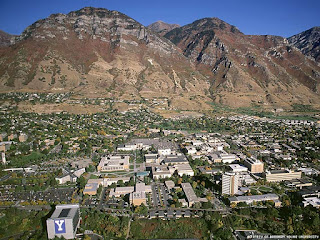 Ryannah Quigley grew up in a modest home in Kaysville, Utah, with 22 siblings. Her father was a bishop, the head of a congregation, in the Church of Jesus Christ of Latter-day Saints. The family was staunchly Mormon.
By age 7, Quigley — who was assigned male at birth — began to wear women’s clothing, at times taking down the curtains to make dresses. On many occasions, her parents attempted to quash the problem — as they saw it — but to little avail. Worried that this behavior not only would induce their other children into perversion, but might hinder the entire family’s chances of meeting God in the hereafter, the Quigleys relinquished custody of their child to the state foster care system, where she bounced around from foster homes to treatment centers to hospitals around the state.
At 15, Quigley was living at the Mill Creek Youth Center, in Ogden, where over the next 18 months she would be raped four times by four different men residing at the state custody facility. When she nearly became victim to a fifth rape, Quigley fought back and injured the assailant. The police were called. Although Quigley had acted in self-defense, she was arrested for assault. Standing before an orthodox Mormon judge, she was tried as an adult with a fourth-degree felony and sentenced to two years at the Weber County Jail, where she would be placed in solitary confinement (called “protective custody,” due to her gender identity), raped an additional 11 times, and assaulted many more times, once ending up in the hospital to get 27 stitches after being stabbed. She attempted suicide by hanging and was in a coma for three days.
In Utah, the covert theocracy behind policy-making, the insular and unquestioning faith of Mormon families, and vague, often contradictory statements and actions from LDS church leadership combine to form a unique and particularly dire crisis for LGBT and gender-nonconforming kids. There are, by most estimates, 5,000 kids experiencing homelessness in Utah at any given time. Roughly 42 percent of them identify as LGBT, and most come from Mormon households. This means, of the 450,000 people in Utah between the ages of 15 and 24, a projected 22,000 to 35,000 of them will experience homelessness at some point, according to data provided by outreach workers.
The LDS church has a well-documented anti-LGBT agenda. By 2008, it had funneled more than $20 million to support Proposition 8, California’s anti–marriage-equality initiative. The church had been aggressively battling same-sex marriage since 1994 (when it stepped into Hawaii’s court battle), but as the national tide turned to favor marriage equality, church leadership appeared to back off. The faithful lawmakers in Utah, however, did not.
In early 2015, attempting to bridge the gap between so-called religious freedom and LGBT rights, Utah’s governor, Gary Herbert, a Mormon, with the support of the LDS church and the ACLU, signed an antidiscrimination bill into law, referred to as the “Utah compromise,” that protects LGBT citizens in housing and employment. It was soon revealed that the law had provisions that would not fly in other states or under federal law, allowing religious groups and religiously affiliated nonprofits — such as schools and hospitals — to be exempt from the antidiscrimination laws protecting LGBT people, just as they are exempt from many women’s equal rights laws. LGBT people are also not protected in Utah from discrimination in public accommodations like restaurants, hotels, or restrooms.
Following the Supreme Court’s marriage equality decision last year, Utah lawmakers pushed at least three bills through the legislature that targeted the rights of LGBT people, all sponsored by Representative LaVar Christensen, a member of the LDS church. Another bill which was presented earlier that year but did not become law, would have given heterosexual couples preferential treatment over gay couples when adopting children.
Then, on November 5, 2015, in response to the Supreme Court legalizing gay marriage nationwide, the church leadership secretly issued an edict to the leaders of its 30,000 congregations worldwide. The order instructed them that children being raised in same-sex headed households cannot be blessed, baptized, or ordained, nor can they serve as missionaries — regardless of that child’s sexual orientation or gender identity — and that church members in “same-gender” relationships — married or unmarried — are apostates subject to excommunication. The policy, which was issued as an update to a confidential handbook, was leaked to the press. There were mass resignations by former church members partial to the gay rights cause or embarrassed by the punish-the-child policy. Within a month of the policy being made public, suicides of LGBT kids in Utah reportedly soared to 32 deaths in a span of four weeks — a figure that would typically have accounted for half the yearly average for the state.
The number-one cause of death for people under the age of 24 in Utah is suicide. Nationally, Utah ranks among the top five states for youth suicides, and by some estimates it has the highest rate of LGBT youth suicides in the country.
Rev. Marian Edmonds-Allen, a United Church of Christ minister who acts as a liaison between LGBT youth and the Mormon church, is heading a state-funded suicide-prevention program. She used to run a youth center in Ogden that served about 700 individuals a month.
“Every single youth I spoke to had a friend or acquaintance who died of suicide. And over 60 percent had attempted suicide themselves,” she tells The Advocate. “The culture of the church has to change. It’s a culture of fear. It’s a culture where if you break the ranks, you can be shunned. There’s a real disconnect between the leaders of the church that I deal with — who say, ‘We tell families to not throw their children out, we tell families to love your children no matter what’ — and the rank-and-file members and the bishops who say, ‘You need to kick your child out if they don’t straighten up.’”
Edmonds-Allen also says there’s a rampant culture of homespun reparative or "ex-gay" therapy, of Mormon parents isolating their children and trying their own brands of pray-the-gay-away.
“The approach here is, ‘We are going to scare you straight.’ They don’t have the sort of mental-health access here as they do in other places where I’ve lived. [Families] just refer to their bishops,” she says.
Activists say the November 5 policy may have caused a spike in homeless numbers as well. In the entire state, there is one LGBT youth homeless shelter, in Ogden, 40 miles north of Salt Lake City. And it has a mere 14 beds.
“There are more services for animals in this state than there are for homeless youth,” one activist says. Because many kids fear entering the foster care system, which is dominated by orthodox Mormon homes — similar to the ones many youth have fled — these homeless kids in Utah have established roving tent cities in the parks and canyons outside Salt Lake City and Provo, 45 miles to the south, and elsewhere.
For the runaways living in these canyons and riverbeds — they call it being “off-grid” — it is perhaps the best of many bad options. The shelter system, like in many cities, is saturated with drugs, alcohol, violence, and prostitution. Mormon children grow up notoriously sheltered and naive and are particularly ill-prepared for life on the streets, outreach workers say. Scores of them become funneled into the sex trade and trafficked out of state. Outreach activists say nearly 100 percent of unaccompanied youth in Utah are approached by sex traffickers within the first 48 hours of hitting the streets, and many of them are shipped off to major cities on the East Coast.
The LDS church entered mainstream politics in the 1970s; the church’s massive lobbying effort was one of the reasons for the demise of the Equal Rights Amendment. In 1993, LDS apostle Boyd Packer, who was second in line for the presidency of the church, proclaimed that the three greatest threats to Mormonism were the gay rights movement, the feminist movement, and intellectuals. The church’s attitude toward LGBT people has not improved.
Openly supporting gay rights is an excommunicable offense; excommunication means the loss of a place to worship, and also the loss of one’s entire culture, community, and often family. As many told this publication, the tightly knit nature of Mormon communities is wonderful and supportive — until it turns brutal.
Starting in 1989, the LDS church referred gay members to a Salt Lake City–based nonprofit called Evergreen, a reparative therapy program that attempted to diminish same-sex attraction through widely discredited, borderline-abusive therapy techniques. In January 2014, fearing potential litigation as governments cracked down on such programs, Evergreen disbanded and reformed as North Star. Literature, personal essays, and confessional videos found on North Star’s website, which has a separate resource section for youths, encourage gay Mormons to enter into opposite-sex marriages and continue onto the heteronormative family path. Same-sex attractions are not a sin, North Star reassures, but acting on them is a very different story.
On whether to tell parents and bishops about same-sex attraction or gender dysphoria, the literature is discouragingly vague, telling young people to pray on it and come to their own conclusions. It goes without saying that there are zero referrals outside of family or church recommended to young people through North Star, and kids are also told they may experience a backlash from the gay community if they don’t dive headfirst into the gay lifestyle.
Berta Marquez was born in Guatemala. Her parents were members of the LDS church, which deploys a massive proselytizing effort in Central and South America. Mormons believe the native inhabitants of the Americas are descended from the tribes of Israel, that they arrived here on a boat, and that they need to be brought back to their ancestral faith.
Marquez’s religious upbringing differed from the Mormonism most people imagine. She says many Hispanic Mormons grow up with a variegated religion that is more similar to socialism than it is to the neo-con, pro-capitalist, American-exceptionalism version of Utah Mormonism (see: Mitt Romney). Though Utah is the uber-Mormon environment, many Mormons across the United States, and around the world, often raise their eyebrows at what happens in Utah, she says.
When she went to Brigham Young University, the Mormon-owned and operated private university in Provo, in 2005, she was shocked by the ultraconservative atmosphere.
“It’s a very heavy courtship culture. You’re expected to seek out marriage as a part of the plan of salvation,” she says, sitting in her living room in a small town near Provo.
The pressures on family members and congregations to keep one another in line is intense, cultish, and debilitating for anyone who doesn’t fit the mold. Before she came out as gay, Marquez had a very specific suicide plan to make it look like a hiking accident, to avoid casting shame on her loved ones.
“It can be a beautiful way to grow up. You are cradled in this culture where there is a network of support and a whole community is rooting for you,” Marquez says. “As an LDS kid, you’re raised to want a family very acutely. From the time you are tiny, you learn about being [married] in the temple. At BYU, all of your friends are dating actively, all seeking out their eternal companion, and you’re raised to want that, to want companionship.
“There’s a lot of shame, secrecy, and terror if you have an LGBT child. ‘My child no longer fits this narrative; what’s going to happen to us? We’re not going to be together forever.’ It’s not necessarily spite or malice, but parents are not prepared with the skill sets for inclusive thinking,” she says.
Since the November policy, Marquez and her wife Cathy, a fellow Mormon who is also a survivor of the Columbine High School massacre, stopped going to church.
In Mormonism, there is a mantra that goes something like, “When the prophet has spoken, the thinking is done.” The prophet, or the president of the church, is believed to have a direct line of communication with God.
“You’re expected to fall in line,” Marquez says. “So you never have to examine if what you’re doing is ethically correct.”
Slight rain washes through City Creek Canyon just outside downtown Salt Lake City as I make my way off the tidy jogging path and up the muddy and wooded eastern slope. The Utah State Capitol building looms marbled and elephantine atop the opposing western ridge, nearly casting a shadow on this landscape littered with hundreds of sleeping bags nestled between the trees. For any kids who might still be living here, they would be gone during daylight hours to avoid drawing attention to themselves, or risk having the police confiscate or destroy their few belongings. Some trees have been rudimentarily hacked down and bushes twisted into makeshift shelters, and there are backpacks and scant belongings hidden among the rocks. I come across one sleeping bag with dozens of discarded snail shells surrounding it, as though someone had been eating them. Along another site, with three makeshift beds, someone had adorned a leafless tree in several pairs of ballet slippers tied at the laces and looped over the branches. It is a virtual city unto itself here. Alongside a brook, there’s a scrubby pine tree with tattered silver garland and a few Christmas ornaments still clinging to it. Yesterday was Easter, and next to one sleeping bag I find a pink plastic egg, where inside, the words “Love yourself enough to love all beings” are scribbled on a scrap of paper.
Before the November 5 policy was made public, the LDS church made a donation of an undisclosed amount of money to the Utah Pride Center, a Salt Lake City LGBT nonprofit. It was reported that the money was meant for homeless youth services. It seemed to be a strange, almost guilty gesture. Or perhaps it was meant to buy influence and suppress discontent. According to multiple sources with intimate knowledge of the Pride Center who wished to remain anonymous, the nonprofit routinely, almost as policy, turns away homeless youth who enter its doors, whether they’re seeking a shower, a meal, social services, a respite from the elements, or just someone to talk to.
Once upon a time weekly breakfasts were held there to feed homeless LGBT youth, some days attracting more than 50 kids, but as the Pride Center came under new leadership, the breakfasts stopped. One of the most popular programs at the Pride Center was free HIV testing provided by the state health department. This year, that service stopped as well.
“They continue to solicit and accept donations for homeless youth services and they’ve discontinued services for homeless youth. They turn youth away,” one source said. “Kids come in there, and maybe they smell and maybe they’re dirty and the Pride Center doesn’t want that image, so they kick them out,” another source said. The Pride Center was unable to be reached for comment.
Cai Noble spent her entire 20s being homeless in Utah. She’s since helped found Operation Shine America, a youth homelessness advocacy group, after she walked across the United States a few years ago to visit homeless camps and raise awareness. She grew up in a trailer in Cheyenne, Wyo. Her mother was married 12 times, and Noble lived through persistent trauma and abuse. After ending up in the hospital, at age 14, she was put into foster care and sent to live with a Mormon family in Utah. Her adoptive father was a bishop. She went from failing her classes to getting straight A’s in school, but as she began to express her queer identity, her adoptive siblings abused her, physically and verbally. When she came out to her adoptive father, he, naive but well-intentioned, plunged himself into learning everything he could about the Mormon church’s beliefs on homosexuality.
“He came home with a stack of books,” Noble says. “He says, ‘You’ve been hurt. All you’ve known is brutality. You’ve been sexually abused, so of course you’re gay.’ What he found in the literature was that gay men are pedophiles and sex addicts and beyond salvation. But for women, it appears they’re merely sick and they can be cured.”
Noble and I drive to an encampment site along the Jordan River outside Salt Lake City that looks to have been recently cleared by law enforcement. In a clearing, a mound of belongings appears to have been bulldozed to the center, but some settlements remain, many of them impressive structures built from plywood and tree limbs. Some even have doors. Some are dug into the muddy slopes along the river, like pueblo homes. There’s evidence of children being reared here: diapers and bibs and cans of formula are littered about.
When Noble left home, after being expelled from a homeless shelter in suburban Sandy, Utah, she was approached by a sex trafficker. “The predators go out and look for certain kinds of kids. They know exactly what they’re looking for,” she says. She ended up in the guy’s car, almost robotically, and as he drove her out of town, the car overheated; when he pulled over, she snapped to and fled.
“The Mormon ones don’t have the street smarts, and they are more trusting. They get sold and shipped all over the country. They just disappear,” Marian Edmonds-Allen says.
Laurin Crosson runs a safe house in Utah, called Rockstarr Ministries, for the victims of sex trafficking. She was trafficked for 20 years and says the average age of children who are picked up by pimps on the street is 13; they end up in the “West Coast circuit” — Las Vegas, Phoenix, San Diego, Los Angeles, Oakland — and many of them will be murdered before they reach 21.
“We have this horrific culture of throwing away kids here in Utah,” she says. “These pimps are waiting for these people. They are exactly what they are looking for. They don’t care about your sexuality or your gender identity. You’re flesh, and you’ll bring in a paycheck of about $150,000–200,000 a year.”
It was many years into Crosson’s forced prostitution before she heard the terms “human trafficking” or “sex trafficking,” and she sees the situation in Utah as clandestine and grim. For those kids who may be on the verge of homelessness, because of Utah’s conservative policies, people like her are forbidden to address public-school students about human trafficking.
“The church is the state here,” she says. “In Provo, there’s even an image of the Mormon temple on the metal badges that police officers wear. What else do I need to say?”
http://www.advocate.com/current-issue/2016/4/29/ghost-children-mormon-country
Advocate
APRIL 29 2016

By age 7, Quigley — who was assigned male at birth — began to wear women’s clothing, at times taking down the curtains to make dresses. On many occasions, her parents attempted to quash the problem — as they saw it — but to little avail. Worried that this behavior not only would induce their other children into perversion, but might hinder the entire family’s chances of meeting God in the hereafter, the Quigleys relinquished custody of their child to the state foster care system, where she bounced around from foster homes to treatment centers to hospitals around the state.
At 15, Quigley was living at the Mill Creek Youth Center, in Ogden, where over the next 18 months she would be raped four times by four different men residing at the state custody facility. When she nearly became victim to a fifth rape, Quigley fought back and injured the assailant. The police were called. Although Quigley had acted in self-defense, she was arrested for assault. Standing before an orthodox Mormon judge, she was tried as an adult with a fourth-degree felony and sentenced to two years at the Weber County Jail, where she would be placed in solitary confinement (called “protective custody,” due to her gender identity), raped an additional 11 times, and assaulted many more times, once ending up in the hospital to get 27 stitches after being stabbed. She attempted suicide by hanging and was in a coma for three days.
In Utah, the covert theocracy behind policy-making, the insular and unquestioning faith of Mormon families, and vague, often contradictory statements and actions from LDS church leadership combine to form a unique and particularly dire crisis for LGBT and gender-nonconforming kids. There are, by most estimates, 5,000 kids experiencing homelessness in Utah at any given time. Roughly 42 percent of them identify as LGBT, and most come from Mormon households. This means, of the 450,000 people in Utah between the ages of 15 and 24, a projected 22,000 to 35,000 of them will experience homelessness at some point, according to data provided by outreach workers.
The LDS church has a well-documented anti-LGBT agenda. By 2008, it had funneled more than $20 million to support Proposition 8, California’s anti–marriage-equality initiative. The church had been aggressively battling same-sex marriage since 1994 (when it stepped into Hawaii’s court battle), but as the national tide turned to favor marriage equality, church leadership appeared to back off. The faithful lawmakers in Utah, however, did not.
In early 2015, attempting to bridge the gap between so-called religious freedom and LGBT rights, Utah’s governor, Gary Herbert, a Mormon, with the support of the LDS church and the ACLU, signed an antidiscrimination bill into law, referred to as the “Utah compromise,” that protects LGBT citizens in housing and employment. It was soon revealed that the law had provisions that would not fly in other states or under federal law, allowing religious groups and religiously affiliated nonprofits — such as schools and hospitals — to be exempt from the antidiscrimination laws protecting LGBT people, just as they are exempt from many women’s equal rights laws. LGBT people are also not protected in Utah from discrimination in public accommodations like restaurants, hotels, or restrooms.
Following the Supreme Court’s marriage equality decision last year, Utah lawmakers pushed at least three bills through the legislature that targeted the rights of LGBT people, all sponsored by Representative LaVar Christensen, a member of the LDS church. Another bill which was presented earlier that year but did not become law, would have given heterosexual couples preferential treatment over gay couples when adopting children.
Then, on November 5, 2015, in response to the Supreme Court legalizing gay marriage nationwide, the church leadership secretly issued an edict to the leaders of its 30,000 congregations worldwide. The order instructed them that children being raised in same-sex headed households cannot be blessed, baptized, or ordained, nor can they serve as missionaries — regardless of that child’s sexual orientation or gender identity — and that church members in “same-gender” relationships — married or unmarried — are apostates subject to excommunication. The policy, which was issued as an update to a confidential handbook, was leaked to the press. There were mass resignations by former church members partial to the gay rights cause or embarrassed by the punish-the-child policy. Within a month of the policy being made public, suicides of LGBT kids in Utah reportedly soared to 32 deaths in a span of four weeks — a figure that would typically have accounted for half the yearly average for the state.
The number-one cause of death for people under the age of 24 in Utah is suicide. Nationally, Utah ranks among the top five states for youth suicides, and by some estimates it has the highest rate of LGBT youth suicides in the country.
Rev. Marian Edmonds-Allen, a United Church of Christ minister who acts as a liaison between LGBT youth and the Mormon church, is heading a state-funded suicide-prevention program. She used to run a youth center in Ogden that served about 700 individuals a month.
“Every single youth I spoke to had a friend or acquaintance who died of suicide. And over 60 percent had attempted suicide themselves,” she tells The Advocate. “The culture of the church has to change. It’s a culture of fear. It’s a culture where if you break the ranks, you can be shunned. There’s a real disconnect between the leaders of the church that I deal with — who say, ‘We tell families to not throw their children out, we tell families to love your children no matter what’ — and the rank-and-file members and the bishops who say, ‘You need to kick your child out if they don’t straighten up.’”
Edmonds-Allen also says there’s a rampant culture of homespun reparative or "ex-gay" therapy, of Mormon parents isolating their children and trying their own brands of pray-the-gay-away.
“The approach here is, ‘We are going to scare you straight.’ They don’t have the sort of mental-health access here as they do in other places where I’ve lived. [Families] just refer to their bishops,” she says.
Activists say the November 5 policy may have caused a spike in homeless numbers as well. In the entire state, there is one LGBT youth homeless shelter, in Ogden, 40 miles north of Salt Lake City. And it has a mere 14 beds.
“There are more services for animals in this state than there are for homeless youth,” one activist says. Because many kids fear entering the foster care system, which is dominated by orthodox Mormon homes — similar to the ones many youth have fled — these homeless kids in Utah have established roving tent cities in the parks and canyons outside Salt Lake City and Provo, 45 miles to the south, and elsewhere.
For the runaways living in these canyons and riverbeds — they call it being “off-grid” — it is perhaps the best of many bad options. The shelter system, like in many cities, is saturated with drugs, alcohol, violence, and prostitution. Mormon children grow up notoriously sheltered and naive and are particularly ill-prepared for life on the streets, outreach workers say. Scores of them become funneled into the sex trade and trafficked out of state. Outreach activists say nearly 100 percent of unaccompanied youth in Utah are approached by sex traffickers within the first 48 hours of hitting the streets, and many of them are shipped off to major cities on the East Coast.
The LDS church entered mainstream politics in the 1970s; the church’s massive lobbying effort was one of the reasons for the demise of the Equal Rights Amendment. In 1993, LDS apostle Boyd Packer, who was second in line for the presidency of the church, proclaimed that the three greatest threats to Mormonism were the gay rights movement, the feminist movement, and intellectuals. The church’s attitude toward LGBT people has not improved.
Openly supporting gay rights is an excommunicable offense; excommunication means the loss of a place to worship, and also the loss of one’s entire culture, community, and often family. As many told this publication, the tightly knit nature of Mormon communities is wonderful and supportive — until it turns brutal.
Starting in 1989, the LDS church referred gay members to a Salt Lake City–based nonprofit called Evergreen, a reparative therapy program that attempted to diminish same-sex attraction through widely discredited, borderline-abusive therapy techniques. In January 2014, fearing potential litigation as governments cracked down on such programs, Evergreen disbanded and reformed as North Star. Literature, personal essays, and confessional videos found on North Star’s website, which has a separate resource section for youths, encourage gay Mormons to enter into opposite-sex marriages and continue onto the heteronormative family path. Same-sex attractions are not a sin, North Star reassures, but acting on them is a very different story.
On whether to tell parents and bishops about same-sex attraction or gender dysphoria, the literature is discouragingly vague, telling young people to pray on it and come to their own conclusions. It goes without saying that there are zero referrals outside of family or church recommended to young people through North Star, and kids are also told they may experience a backlash from the gay community if they don’t dive headfirst into the gay lifestyle.
Berta Marquez was born in Guatemala. Her parents were members of the LDS church, which deploys a massive proselytizing effort in Central and South America. Mormons believe the native inhabitants of the Americas are descended from the tribes of Israel, that they arrived here on a boat, and that they need to be brought back to their ancestral faith.
Marquez’s religious upbringing differed from the Mormonism most people imagine. She says many Hispanic Mormons grow up with a variegated religion that is more similar to socialism than it is to the neo-con, pro-capitalist, American-exceptionalism version of Utah Mormonism (see: Mitt Romney). Though Utah is the uber-Mormon environment, many Mormons across the United States, and around the world, often raise their eyebrows at what happens in Utah, she says.
When she went to Brigham Young University, the Mormon-owned and operated private university in Provo, in 2005, she was shocked by the ultraconservative atmosphere.
“It’s a very heavy courtship culture. You’re expected to seek out marriage as a part of the plan of salvation,” she says, sitting in her living room in a small town near Provo.
The pressures on family members and congregations to keep one another in line is intense, cultish, and debilitating for anyone who doesn’t fit the mold. Before she came out as gay, Marquez had a very specific suicide plan to make it look like a hiking accident, to avoid casting shame on her loved ones.
“It can be a beautiful way to grow up. You are cradled in this culture where there is a network of support and a whole community is rooting for you,” Marquez says. “As an LDS kid, you’re raised to want a family very acutely. From the time you are tiny, you learn about being [married] in the temple. At BYU, all of your friends are dating actively, all seeking out their eternal companion, and you’re raised to want that, to want companionship.
“There’s a lot of shame, secrecy, and terror if you have an LGBT child. ‘My child no longer fits this narrative; what’s going to happen to us? We’re not going to be together forever.’ It’s not necessarily spite or malice, but parents are not prepared with the skill sets for inclusive thinking,” she says.
Since the November policy, Marquez and her wife Cathy, a fellow Mormon who is also a survivor of the Columbine High School massacre, stopped going to church.
In Mormonism, there is a mantra that goes something like, “When the prophet has spoken, the thinking is done.” The prophet, or the president of the church, is believed to have a direct line of communication with God.
“You’re expected to fall in line,” Marquez says. “So you never have to examine if what you’re doing is ethically correct.”
Slight rain washes through City Creek Canyon just outside downtown Salt Lake City as I make my way off the tidy jogging path and up the muddy and wooded eastern slope. The Utah State Capitol building looms marbled and elephantine atop the opposing western ridge, nearly casting a shadow on this landscape littered with hundreds of sleeping bags nestled between the trees. For any kids who might still be living here, they would be gone during daylight hours to avoid drawing attention to themselves, or risk having the police confiscate or destroy their few belongings. Some trees have been rudimentarily hacked down and bushes twisted into makeshift shelters, and there are backpacks and scant belongings hidden among the rocks. I come across one sleeping bag with dozens of discarded snail shells surrounding it, as though someone had been eating them. Along another site, with three makeshift beds, someone had adorned a leafless tree in several pairs of ballet slippers tied at the laces and looped over the branches. It is a virtual city unto itself here. Alongside a brook, there’s a scrubby pine tree with tattered silver garland and a few Christmas ornaments still clinging to it. Yesterday was Easter, and next to one sleeping bag I find a pink plastic egg, where inside, the words “Love yourself enough to love all beings” are scribbled on a scrap of paper.
Before the November 5 policy was made public, the LDS church made a donation of an undisclosed amount of money to the Utah Pride Center, a Salt Lake City LGBT nonprofit. It was reported that the money was meant for homeless youth services. It seemed to be a strange, almost guilty gesture. Or perhaps it was meant to buy influence and suppress discontent. According to multiple sources with intimate knowledge of the Pride Center who wished to remain anonymous, the nonprofit routinely, almost as policy, turns away homeless youth who enter its doors, whether they’re seeking a shower, a meal, social services, a respite from the elements, or just someone to talk to.
Once upon a time weekly breakfasts were held there to feed homeless LGBT youth, some days attracting more than 50 kids, but as the Pride Center came under new leadership, the breakfasts stopped. One of the most popular programs at the Pride Center was free HIV testing provided by the state health department. This year, that service stopped as well.
“They continue to solicit and accept donations for homeless youth services and they’ve discontinued services for homeless youth. They turn youth away,” one source said. “Kids come in there, and maybe they smell and maybe they’re dirty and the Pride Center doesn’t want that image, so they kick them out,” another source said. The Pride Center was unable to be reached for comment.
Cai Noble spent her entire 20s being homeless in Utah. She’s since helped found Operation Shine America, a youth homelessness advocacy group, after she walked across the United States a few years ago to visit homeless camps and raise awareness. She grew up in a trailer in Cheyenne, Wyo. Her mother was married 12 times, and Noble lived through persistent trauma and abuse. After ending up in the hospital, at age 14, she was put into foster care and sent to live with a Mormon family in Utah. Her adoptive father was a bishop. She went from failing her classes to getting straight A’s in school, but as she began to express her queer identity, her adoptive siblings abused her, physically and verbally. When she came out to her adoptive father, he, naive but well-intentioned, plunged himself into learning everything he could about the Mormon church’s beliefs on homosexuality.
“He came home with a stack of books,” Noble says. “He says, ‘You’ve been hurt. All you’ve known is brutality. You’ve been sexually abused, so of course you’re gay.’ What he found in the literature was that gay men are pedophiles and sex addicts and beyond salvation. But for women, it appears they’re merely sick and they can be cured.”
Noble and I drive to an encampment site along the Jordan River outside Salt Lake City that looks to have been recently cleared by law enforcement. In a clearing, a mound of belongings appears to have been bulldozed to the center, but some settlements remain, many of them impressive structures built from plywood and tree limbs. Some even have doors. Some are dug into the muddy slopes along the river, like pueblo homes. There’s evidence of children being reared here: diapers and bibs and cans of formula are littered about.
When Noble left home, after being expelled from a homeless shelter in suburban Sandy, Utah, she was approached by a sex trafficker. “The predators go out and look for certain kinds of kids. They know exactly what they’re looking for,” she says. She ended up in the guy’s car, almost robotically, and as he drove her out of town, the car overheated; when he pulled over, she snapped to and fled.
“The Mormon ones don’t have the street smarts, and they are more trusting. They get sold and shipped all over the country. They just disappear,” Marian Edmonds-Allen says.
Laurin Crosson runs a safe house in Utah, called Rockstarr Ministries, for the victims of sex trafficking. She was trafficked for 20 years and says the average age of children who are picked up by pimps on the street is 13; they end up in the “West Coast circuit” — Las Vegas, Phoenix, San Diego, Los Angeles, Oakland — and many of them will be murdered before they reach 21.
“We have this horrific culture of throwing away kids here in Utah,” she says. “These pimps are waiting for these people. They are exactly what they are looking for. They don’t care about your sexuality or your gender identity. You’re flesh, and you’ll bring in a paycheck of about $150,000–200,000 a year.”
It was many years into Crosson’s forced prostitution before she heard the terms “human trafficking” or “sex trafficking,” and she sees the situation in Utah as clandestine and grim. For those kids who may be on the verge of homelessness, because of Utah’s conservative policies, people like her are forbidden to address public-school students about human trafficking.
“The church is the state here,” she says. “In Provo, there’s even an image of the Mormon temple on the metal badges that police officers wear. What else do I need to say?”
http://www.advocate.com/current-issue/2016/4/29/ghost-children-mormon-country
Apr 16, 2016
Lawyer Peter Kelso Shares His Memories About Growing Up In State Care
Published on Apr 14, 2016
I haven’t always talked openly about growing up as a ward of the State. I kept it quiet for most of my life, because I was ashamed. But now, I think it’s important to tell my clients what I went through.
Meet Peter Kelso, a lawyer who grew up in State care. Peter is the sole director of Kelso Lawyers.
I haven’t always talked openly about growing up as a ward of the State. I kept it quiet for most of my life, because I was ashamed. But now, I think it’s important to tell my clients what I went through. When they hear my story it makes them feel safer in telling theirs. They seem reassured to learn that although I’m a lawyer, I’m not from a privileged background. My childhood was one of beatings, anger, disapproval and loneliness. As a child, and for years of my adult life, I felt worthless and unlovable. I was convinced I was a bad person.
I was born in Geelong, Victoria, and am the second youngest of eight children. We were very poor. My father left home when I was six-months-old, and my mother gave me away when I was five. It was 1962. I remember the big black car arriving. My two youngest brothers and I were given a bath, before being driven away by two men.
My welfare file explains that my mother had a new boyfriend, who had left his wife and six children. My mother phoned the State welfare department and convinced them to take three of her boys off her hands.
I was separated from my two brothers and put into Winbin Depot, a home for young children in Sydney, while I was waiting for a foster placement. I didn’t see anyone in my family for 17 years and I missed my brothers terribly. Many times I asked where they were and whether I could see them. I promised myself that I would not forget their faces, or their names, and that when I was old enough, I would go looking for them.
I was fostered by a couple in Sydney who raised me as their only child. They physically and emotionally abused me. I know what it is like to be beaten so hard and for so long that it feels like it will never stop. The only reason my foster mother ever stopped was because she was so physically exhausted she couldn’t carry on. I was beaten so badly I planned to kill my foster parents. I plotted carefully how I would murder them, though I’m glad I never did.
I grew up thinking the abuse was my fault. When I left home at 22, I sat my foster parents down and apologised for ruining their lives.
My foster parents abused me emotionally too. My foster mother said I was nothing but a creature and one day, if I was ever good enough, I could change my surname to hers. I believed I was bad and I’d done something terrible. I longed for the day I would be worthy of her name. I grew up thinking the abuse was my fault. When I left home at 22, I sat my foster parents down and apologised for ruining their lives.
Once I left home though, things started to improve. I found my mother and my siblings in Newcastle after 17 years of us being apart. When we were reunited they were all crying. But I couldn’t cry – I hadn’t been able to from the age of 10. Crying had been beaten out of me.
It wasn’t until I went on a men’s retreat in 2005 that I cried for the first time. I cry a fair bit now and I’m happy that I can do that. It feels good to be connected to my emotions again.
Growing up in foster care made me feel like I was different to everyone else and that’s something many of my clients can relate to. I felt I was weird or unusual. It was overwhelming and I longed for the day I would be the same as everyone else. It seemed impossible that anyone could ever love me. As a young man, I honestly believed that no-one would want to marry me.
But six years after the reunion with my family, I was married. My wife, Michelle, agreed to move from Sydney to Newcastle, so I could be close to my brothers and sisters. This was important to me because we had missed out on spending our childhoods together.
Michelle and I have four adult children and I see my siblings regularly. I go on road trips with them every year. I really enjoy long drives. They give you lots of time to talk.
Being fostered did give me the advantage of getting an education, which my brothers and sisters missed out on. All of them left school at 14 years and 9 months, but I won a scholarship in Year 10 that enabled me to do the HSC. My foster parents wouldn’t support me to go to uni, but I got a bank job and studied law at night. I didn’t think anything of it at the time, but I look back now and think, ‘How did I do that?’
As a lawyer, I represent victims of abuse who are making claims against churches, religious organisations, charities, State governments and other institutions.
These courageous people are helping to make sure that reforms are put in place, so that the abuse of children, in an institutional context, never happens again.
Most recently, I’ve been supporting people who were sexually abused as children and who are telling their stories to the Royal Commission into Institutional Responses to Child Sexual Abuse. These courageous people are helping to make sure that reforms are put in place, so that the abuse of children, in an institutional context, never happens again.
Many of these people have such a low opinion of themselves, they never dreamed they could make a difference. I’ve sat at the bar table and watched the public gallery break out in applause, acknowledging the courage of Indigenous women, people who have lived in poverty and those who have battled a lifetime of mental illness. Some of those people have never felt approved of, so to receive a standing ovation at the Royal Commission is amazing.
Giving evidence at the Royal Commission has helped many of my clients achieve a breakthrough in their life. So many victims have perpetrators living rent-free in their heads, but giving evidence has helped them to be set free from their memories.
If you tell your story to the Royal Commission, you never have to tell it again. The government will pay me to represent you and I do all the negotiating with people from your past. We help to achieve what you need, whether that is an acknowledgement of what happened, an apology that is meaningful, or a detailed understanding of events that have been hidden.
After the commission, I may be able to work on your behalf to achieve financial compensation, even if you have received payouts before.
This work has become my purpose in life. I am passionate about it. I know that when I take my last breath, I will have helped thousands of people to achieve what they needed, in order to start healing. There is a lot of personal joy and reward in that.
http://kelsolawyers.com/au/peter-kelso/
I haven’t always talked openly about growing up as a ward of the State. I kept it quiet for most of my life, because I was ashamed. But now, I think it’s important to tell my clients what I went through.
Meet Peter Kelso, a lawyer who grew up in State care. Peter is the sole director of Kelso Lawyers.
I haven’t always talked openly about growing up as a ward of the State. I kept it quiet for most of my life, because I was ashamed. But now, I think it’s important to tell my clients what I went through. When they hear my story it makes them feel safer in telling theirs. They seem reassured to learn that although I’m a lawyer, I’m not from a privileged background. My childhood was one of beatings, anger, disapproval and loneliness. As a child, and for years of my adult life, I felt worthless and unlovable. I was convinced I was a bad person.
I was born in Geelong, Victoria, and am the second youngest of eight children. We were very poor. My father left home when I was six-months-old, and my mother gave me away when I was five. It was 1962. I remember the big black car arriving. My two youngest brothers and I were given a bath, before being driven away by two men.
My welfare file explains that my mother had a new boyfriend, who had left his wife and six children. My mother phoned the State welfare department and convinced them to take three of her boys off her hands.
I was separated from my two brothers and put into Winbin Depot, a home for young children in Sydney, while I was waiting for a foster placement. I didn’t see anyone in my family for 17 years and I missed my brothers terribly. Many times I asked where they were and whether I could see them. I promised myself that I would not forget their faces, or their names, and that when I was old enough, I would go looking for them.
I was fostered by a couple in Sydney who raised me as their only child. They physically and emotionally abused me. I know what it is like to be beaten so hard and for so long that it feels like it will never stop. The only reason my foster mother ever stopped was because she was so physically exhausted she couldn’t carry on. I was beaten so badly I planned to kill my foster parents. I plotted carefully how I would murder them, though I’m glad I never did.
I grew up thinking the abuse was my fault. When I left home at 22, I sat my foster parents down and apologised for ruining their lives.
My foster parents abused me emotionally too. My foster mother said I was nothing but a creature and one day, if I was ever good enough, I could change my surname to hers. I believed I was bad and I’d done something terrible. I longed for the day I would be worthy of her name. I grew up thinking the abuse was my fault. When I left home at 22, I sat my foster parents down and apologised for ruining their lives.
Once I left home though, things started to improve. I found my mother and my siblings in Newcastle after 17 years of us being apart. When we were reunited they were all crying. But I couldn’t cry – I hadn’t been able to from the age of 10. Crying had been beaten out of me.
It wasn’t until I went on a men’s retreat in 2005 that I cried for the first time. I cry a fair bit now and I’m happy that I can do that. It feels good to be connected to my emotions again.
Growing up in foster care made me feel like I was different to everyone else and that’s something many of my clients can relate to. I felt I was weird or unusual. It was overwhelming and I longed for the day I would be the same as everyone else. It seemed impossible that anyone could ever love me. As a young man, I honestly believed that no-one would want to marry me.
But six years after the reunion with my family, I was married. My wife, Michelle, agreed to move from Sydney to Newcastle, so I could be close to my brothers and sisters. This was important to me because we had missed out on spending our childhoods together.
Michelle and I have four adult children and I see my siblings regularly. I go on road trips with them every year. I really enjoy long drives. They give you lots of time to talk.
Being fostered did give me the advantage of getting an education, which my brothers and sisters missed out on. All of them left school at 14 years and 9 months, but I won a scholarship in Year 10 that enabled me to do the HSC. My foster parents wouldn’t support me to go to uni, but I got a bank job and studied law at night. I didn’t think anything of it at the time, but I look back now and think, ‘How did I do that?’
As a lawyer, I represent victims of abuse who are making claims against churches, religious organisations, charities, State governments and other institutions.
These courageous people are helping to make sure that reforms are put in place, so that the abuse of children, in an institutional context, never happens again.
Most recently, I’ve been supporting people who were sexually abused as children and who are telling their stories to the Royal Commission into Institutional Responses to Child Sexual Abuse. These courageous people are helping to make sure that reforms are put in place, so that the abuse of children, in an institutional context, never happens again.
Many of these people have such a low opinion of themselves, they never dreamed they could make a difference. I’ve sat at the bar table and watched the public gallery break out in applause, acknowledging the courage of Indigenous women, people who have lived in poverty and those who have battled a lifetime of mental illness. Some of those people have never felt approved of, so to receive a standing ovation at the Royal Commission is amazing.
Giving evidence at the Royal Commission has helped many of my clients achieve a breakthrough in their life. So many victims have perpetrators living rent-free in their heads, but giving evidence has helped them to be set free from their memories.
If you tell your story to the Royal Commission, you never have to tell it again. The government will pay me to represent you and I do all the negotiating with people from your past. We help to achieve what you need, whether that is an acknowledgement of what happened, an apology that is meaningful, or a detailed understanding of events that have been hidden.
After the commission, I may be able to work on your behalf to achieve financial compensation, even if you have received payouts before.
This work has become my purpose in life. I am passionate about it. I know that when I take my last breath, I will have helped thousands of people to achieve what they needed, in order to start healing. There is a lot of personal joy and reward in that.
Subscribe to:
Posts (Atom)