Showing posts with label Ethiopia. Show all posts

Jun 13, 2023

Church Christ Disciples cult followers repatriated from Ethiopia to Uganda - ministry

News24
June 13, 2023
  • Cult members who believed was going to end, have been deported from Ethiopia.
  • Church Christ Disciples followers travelled to Ethiopia from Uganda.
  • Their pastor told them they would find Jesus after a 40-day fast.

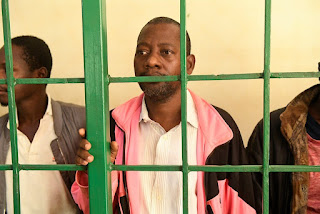
Ugandan authorities said on Tuesday that 80 followers of a religious cult from the country's east had been deported from Ethiopia where they travelled believing they would find salvation through starving.

The followers of Church Christ Disciples from Soroti travelled to Ethiopia in February after their pastor claimed they would find Jesus there after 40 days of fasting, said a spokesperson for Uganda's internal affairs ministry.

"Working with the Ethiopian government, we were able to process their repatriation and they are all safely in Uganda," said the spokesperson, Simon Mundeyi.

"A joint security and intelligence team has put the religious cult leader, Pastor Simon Opolot, who is a Ugandan, on the wanted list and he will be apprehended."

He said the followers were drawn from across Soroti, a largely rural area, and told to sell all their possessions because the world was coming to an end.

Mundeyi said:

They were fasting for 40 days and on the 41st day is when they were to meet Jesus Christ.

"But Ethiopian officials learnt of their arrival in the country, picked them (up) and confined them until their repatriation documents were ready."

Authorities in Uganda were alerted to the plan by concerned residents in Soroti after the cult followers began leaving for Ethiopia.

In 2000, some 700 members from the Movement for the Restoration of the Ten Commandments of God in Uganda burned to death in one of the world's worst cult-related massacres.

Members of the cult, which believed the world would come to an end at the turn of the millennium, had been locked inside a church, with the doors and windows nailed shut from the outside.

The building in southwestern Uganda's Kanungu district was then set alight.

In neighbouring Kenya, more than 250 people linked to a doomsday cult that also believed in extreme fasting have been exhumed from a forest near the country's coast since April.

Cult leader Paul Nthenge Mackenzie is facing various charges in the grisly case, accused of driving his followers to death by preaching that starvation was the only path to God.


https://www.news24.com/news24/africa/news/church-christ-disciples-cult-followers-repatriated-from-ethiopia-to-uganda-ministry-20230613


Oct 10, 2019

CultNEWS101 Articles: 10/10/2019


Anti-Vax, Religious Freedom, Extremism Researchers, Trauma, Ethiopia, Aboriginal culture, Australia, Uighur, China 
" ... State health officials told BuzzFeed News that 26,217 unvaccinated New York children in public schools, private schools, parochial schools, daycare centers, and prekindergarten programs claimed religious exemptions during the 2017–18 school year. New York ended religious exemptions for vaccines in June, following the worst measles outbreaks the state had seen in decades."

"Charlie Winter, a London-based terrorism researcher, was dining with friends one recent evening when the conversation turned to whether it is ethical to eat meat.

Someone brought up slaughterhouse conditions, Winter said, and he instantly grew uneasy. He stayed for a while longer, squirming, and then finally left the room. That word — "slaughterhouse" — had conjured images of one of the most gruesome ISIS videos he'd come across. The militants had filmed a mass execution in a slaughterhouse, casting their prisoners as the animals.

"There are moments, I find, where my everyday life is invaded by these scenes," said Winter, a senior fellow at the International Centre for the Study of Radicalisation.

Because of his work, Winter has dozens of such images lodged in his brain, and there's no telling what might activate a memory. ISIS atrocities interrupt dinner parties, casual conversations, peaceful moments with his family. Winter searched for information about how to process the graphic pictures swirling in his head, but he found almost nothing about potential trauma in his field.

"If you're asking someone to look closely at materials like that, then they need to be fully aware of what it is that they're about to do," he said.

In May, Winter wrote publicly about the mental toll of extremism study. Tucked into a broader essay about studying jihadist propaganda, Winter included a section called "Recognizing and Addressing Trauma." The piece swiftly made the rounds among burned-out researchers, including several who had switched from tracking jihadists to white supremacists without a break."
"Churches belonging to the Ethiopian Orthodox Tewahedo Church (EOTC) are being burned to the ground throughout Ethiopia — one of the world's most religious countries, where about 98% of Ethiopians claim a religious affiliation. Church members have also reportedly been killed while trying to protect their churches. 

These incidents of arson and murder come at a time when tensions between the country's ethnic groups  —  including Oromo, Amhara and Tigrayan — are already high. Since the end of 2015, Oromo people have protested against land encroachment by the government, while the Amhara people have protested over regional integrity threats by their Tigrayan neighbors."
"Christian missionaries are causing a fresh wave of upset in outback Australia, promising to bring people back from the dead, and promoting the idea traditional Aboriginal culture is a type of devil worship.

An investigation by Background Briefing has uncovered dramatic scenes in the Kimberley region, where Aboriginal followers of a Tongan-born preacher have set fire to artefacts considered sacred by many local elders, and dismantled and burned a spiritual law ground.

The approach of some recently arrived evangelists has been slammed by some Aboriginal leaders, including Labor senator Pat Dodson.

"They are a type of virus that has really got no credibility," he said. "If they really understood the gospel then the gospel is about liberation.

Space to play or pause, M to mute, left and right arrows to seek, up and down arrows for volume.

"It's about an accommodation of the diversity and differences that we have in our belief systems."

He believes the destruction of traditional culture is "an act of bastardry".

'It's about the lowest act you could perform in trying to indicate to a fellow human being that you have total disdain for anything for anything they represent.'"

"The Uighurs, a Muslim minority ethnic group of around 12 million in northwest China, are required by the police to carry their smartphones and IDs listing their ethnicity.

As they pass through one of the thousands of newly built digital media and face surveillance checkpoints located at jurisdictional boundaries, entrances to religious spaces and transportation hubs, the image on their ID is matched to their face.

If they try to pass without these items, a digital device scanner alerts the police.

But even complying with the rules won't necessarily keep them out of trouble. During random spot-checks the police at times demand that an individual hands over their unlocked phone which the police then examine manually or plug into a scanner.

I did ethnographic research with Han and Uighur migrants for more than 24 months between 2011 and 2018 in Xinjiang Uighur Autonomous Region, in northwest China. During this period, I was affiliated with the Xinjiang Arts Institute. My position allowed me to interview hundreds of Han and Uighur people. I read and speak both Uighur and Chinese so I was able to communicate with people in their own language.

When I first began my research in the region, smartphone use was not that tightly controlled by the police. But by 2018 it had became common knowledge among my Uighur interviewees that if they did not carry their phone with them or failed to produce it they could be detained.

The Uighur majority areas on the border of Central Asia only became a fully integrated part of China in the 2000s. They were effectively colonized when millions of non-Muslim Han settlers moved into their community in the 1990s and 2000s to extract natural resources such as oil and natural gas.

Earlier they lived much more autonomously in desert oasis towns and villages much like the Uzbeks in Uzbekistan, a group that shares a similar history and language as the Uighurs.

In 2011, the Chinese government built 3-G networks in the Xinjiang Uyghur Autonomous Region. Cheap smartphones soon became available in local markets of this region and Uighurs began to use the new social media app WeChat.

WeChat, which is owned by the Chinese company Tencent, was put into general use across the whole country in 2012 after Facebook and Twitter were banned in 2009.

Smartphones became a common feature of daily life for millions of Uighur villagers. At the time, the way Uighurs used them was unique. In other parts of China, the Chinese language was used in social media communication. Uighur uses Arabic script – radically different from the character based Chinese – and acted as a form of coded speech that state censors couldn't understand.

When I began my research project, I was interested in the way online culture produced forms of Islamic, Chinese and Western identity and the way it brought people of different ethnicities together.

I found that Uighurs used smartphones differently than other internet users. On traditional internet sites that required text-based communication, Uighur web users faced tighter forms of censorship since state authorities viewed them as potential terrorists. They were viewed this way since Uighurs had long protested the way their briefly independent nation had been subsumed by China and their religious practices were restricted, lashing out violently at times.

Using WeChat on smartphones gave Uighurs the ability to circulate short audio messages, videos and images. Beginning in 2012 this allowed Uighurs to develop semi-autonomous forums in Uighur spoken language.

Initially Chinese state authorities did not have the technical capabilities to monitor and control Uighur oral speech or Uighur text embedded in images as memes. They could turn the Uighur internet on and off, but they could not fully regulate what Uighurs said because they spoke in another language.

Based on hundreds of interviews and my own observations Uighurs used these forums to discuss cultural knowledge, political events and economic opportunities outside their local communities.

Over the course of only a few years, online Islamic teachers based in the region and elsewhere in the Islamic world, in places like Turkey and Uzbekistan, became influential throughout Uighur social media. Their messages focused primarily on Islamic piety. They described what types of practices were halal, and how people should dress and pray.

According to scholars Rachel Harris and Aziz Isa the vast majority of those who began to study Islam by smartphone were simply interested in instruction on what it might mean to be a contemporary Muslim, something they felt was lacking in government-censored state-run mosques.

But Chinese state authorities interpreted it differently.

They regarded the Islamic appearance and practice of Uighurs, such as young men growing beards and praying five times per day, as signs of what state authorities described as the "extremification" of the Uighur population.

They began to link violent incidents, such as a suicide attack in the city of Kunming in Eastern China, to what government officials told me was the "Talibanization" of the Uighurs.

In response to this Chinese authorities declared what they called a "People's War On Terror." They began to use techniques of counterinsurgency, a mode of military engagement that stresses mass intelligence gathering, to assess the Uighur population.

As part of this process, in 2016, they began to collect biometric data, such as DNA, high-fidelity voice recordings and face scans, from the entire population of the region in order to track the activities of people on WeChat and in their daily lives using their voice signature and faceprint.

They also began a process of interviewing millions of Uighurs and other Muslim minorities to determine who could be categorized as trustworthy or "normal" as stated on official population assessment forms. In order to determine this, state authorities mapped out the person's social network and history of Islamic practice, both in their local community and online.

Since the total Muslim population of the region, including other Muslim groups such as the Kazakhs, Hui, Kyrgyz, Tajiks and others, is around 15 million, these assessments and activity checkpoints required the deployment of more than 90,000 police officers and more than 1.1 million civil servants.

The majority of the security forces are of Han ethnicity. Han people are settlers in the Uighur region. They are not Muslim, they do not speak Uighur, and many of my Han interviewees described the Uighur culture as "backward," "primitive," or even "dangerous."


News, Education, Intervention, Recovery

Intervention101.com to help families and friends understand and effectively respond to the complexity of a loved one's cult involvement.
CultRecovery101.com assists group members and their families make the sometimes difficult transition from coercion to renewed individual choice.
CultNEWS101.com news, links, resources.
Cults101.org resources about cults, cultic groups, abusive relationships, movements, religions, political organizations and related topics.

Selection of articles for CultNEWS101 does not mean that Patrick Ryan or Joseph Kelly agree with the content. We provide information from many points of view in order to promote dialogue.

Sep 15, 2019

Ethiopia: Why Ethiopia's Rastafari Community Keeps Dwindling

Maria Gerth-Niculescu
All africa
SEPTEMBER 9, 2019

Rastafarians from around the world have been settling in Ethiopia for the last 50 years, after being given land by Emperor Haile Selassie. Today, life in "the promised land" is far from the paradise they had imagined.

A purple tint covers the evening sky over Shashamane, home to Ethiopia's remaining Rastafarians. Inside the house of the Ethiopian World Federation (EWF), a few Rastafarians are watching a documentary about how science is threatening people of color. "Yeah, that's right", they mutter now and then. In the front row, Ras Paul, wearing a red, yellow and green beanie, is in charge of the projector.

Initially, "the EWF [was] a black organization, not a Rastafarian one", said Ras Paul, the only employee of the place. The federation was launched in the US in the 1930s to support Ethiopia during the Italian invasion and to promote black unity. After World War II, Ethiopia's Emperor Haile Selassie granted 200 hectares of land to descendants of slaves who wished to find a home on the continent. The EWF was to administer and attribute the land in Shashamane. "We can only gain political power if we become self-sufficient and rule ourselves, and the only way we [people of color] can do that, is to return home to Africa", Ras Paul explained.

Whereas the Rastafarians were not the only ones being targeted by Selassie's land donation, they ended up being the vast majority to undertake the journey from Jamaica and other countries to Ethiopia. Haile Selassie was widely viewed by Rastafarians as the Messiah who would one day bring them back to Africa. This belief added a strong religious component to the repatriation movement. It was encouraged by Selassie himself, who visited Jamaica in 1966 and urged the Rastafarians to move to Shashamane.

"The land grant was originally corporate land, but the Rastafarians spiritualized it", Ras Paul said in a British accent. He arrived in Ethiopia from the UK 20 years ago. "Religiously speaking, we were enslaved by the Roman Catholic Church and the Protestant Church. We learnt that for most world religions, you can find their foundations inside of Africa."

Rastafarian belief is founded on an interpretation of the Old Testament. "The Bible was the only thing we were given to read as slaves, we see Ethiopia in the Bible and we identify with that. We can also identify with the story of Israelis going into Egypt and being slaves for 400 years", said Ras Paul. But for the Rastafarians, the Holy Land is in Ethiopia. In Ras Paul's office, the thin face of Haile Selassie gazes down from every wall. Rastas see him as the true reincarnation of the Christ, in accordance with a biblical prophecy.

Clash of Rastafari generations


A first influx of Rastafarians into Shashamane started in the late 60s until the mid-70s. A second wave arrived from Jamaica in the early 1990s, after the Ethiopian Civil War. Nowadays, a discrepancy persists between the ones who were here "from the beginning" and those who made the journey in recent decades.

The older generation prefers not to talk about their past which they describe as a traumatic experience. But for those who settled over 50 years ago, the newcomers had it easy here and don't have the legitimacy to speak in the name of the community.

"For many decades, they've held the political power within our community because they have some legitimacy, and for many years they were the only legitimate ones", Ras Paul recalled. "So you find there will be a clash in that way: I've personally witnessed this." The tall Rasta-man regrets that his community is to some extent "dysfunctional".

Legal status and integration


Internal squabbles, economic struggles and the difficulty of integrating with the local Ethiopian community have led many Rastafarians to leave town, either to find work in the capital Addis Ababa, or to move to another country. Only about 200 still live in Shashamane. In the late 90s, they numbered approximately 2,000.

Recently, the Ethiopian government started the allocation of national residence cards to Rastafarians who have been living in the country for over 10 years. This was an important step, not only because it gave them the right to legally live in Ethiopia, but also because it stopped the payments "illegal residents" had to make in order to be able to travel outside Ethiopia. According to Ras Paul, "Now it's their chance to travel, see their families, they can come back when they want to.... I'd say about a third of the population is out of the country now".

The allocation of the residence permit, which gives Rastafarians the status of "Foreign National of Ethiopian Origin", was celebrated as a major step towards the community's recognition and integration. They now have the right to work and can legally send their children to school. But ist is not enouigh for some. "I consider myself to be an Ethiopian returned home, and I have no desire to leave this country to live anywhere else," Ras Kawintesseb, who born in Trinidad and Tobago, said.

"It makes sense to me that I get to become an Ethiopian citizen. I'm not satisfied with being a foreign national, so I've applied for my Ethiopian citizenship," the Rastafarian who landed in Addis Ababa 23 years ago added. Married to an Ethiopian, Ras Kawintesseb is in touch with the Ethiopian community through his family and his multi-lingual music. But that's not the case for all Rastafarians in Shashamane: some are afraid that Ethiopians want to take their land away; others haven't had the chance to learn Amharic or adapt to the Ethiopian culture.

Ras Paul says he wishes to mingle more with Ethiopians. "But here it's very tense, because of the political problems of the country and the political emphasis on the land grant. There is big tension here, attacks on Rastafarians, seizing of Rastafarian land... Most of us have a story of a house being burgled, especially on his Imperial Majesty's birthday. On our most holy days they target us", he exclaimed, aggrieved. Others disagree and say that Ethiopians appreciate the Rastafarians and are flattered that their country is seen as the Holy Land.

Rejecting colonialism


Over the years, some European Rastafarians have also settled in Shashamane, adding an element of complexity to the interpretation of the movement. "Some of them are much more learned than most of the Caribbeans. Rastafarian brotherins and sisterins are from all nations, from around the world!," assured Ras Paul. Although when it comes to the land grant, he is categorical.

"What is their position on repatriation? What is their position on reparations? If a group of people have had something done to them over a period of 500 years, those people need repair. If you're talking about going from one country to the next, to inhabit land that was given [for a specific purpose], nobody should have the right to take itaway", Ras Paul said angrily. "We've had Europeans come on this land grant, take the land and sell it to other Europeans. That is colonialism", he complained.

It was precisely to flee colonialism in all its forms that the Rastafarians settled here. Ethiopia, though briefly occupied by the Italians, was never officially colonized.

Here in Shashamane, Ras Kawintesseb feels free to express his spirituality more than ever. "As a musician, I am not only free to live it, but to express it to the world: the simple proclamation and chanting and vibration have that spiritual power," he said.

"We're not taught in school, or hardly ever, about basic ideas of your inner mind, your inner being," said Ras Kawintesseb as he climbed into his favorite tree for his daily reading routine. "You've got to go and look for those ideas yourself."

https://allafrica.com/stories/201909100084.html